
Cancer Treatment Drugs Market Trends, Size & Forecast by 2034
Coverage: By Product Type (Chemotherapy, Targeted Therapy, Immunotherapy, Hormonal Therapy) ; Application (Blood Cancer, Breast Cancer, Lung Cancer, Stomach Cancer, Colorectal Cancer, Prostate Cancer, Esophagus Cancer, Liver Cancer, Cervical Cancer, Bladder Cancer, Kidney Cancer, Others) , and Geography (North America, Europe, Asia Pacific, and South and Central America)
- Status : Data Released
- Report Code : TIPRE00008658
- Category : Life Sciences
- No. of Pages : 150
- Available Report Formats :


- Last update date : August 17, 2026


2025 Market Size
US$ 268.99 Bn
Base year value
2034 Forecast
US$ 799.15 Bn
Projected by 2034
CAGR 2026-2034
12.86 %
Growth rate
Addressable Market
US$ 4,652.20 Bn
(2026-2034)
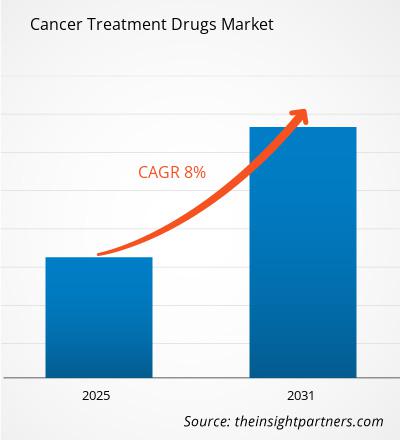
The Cancer Treatment Drugs Market was valued at US$ 268.99 Billion in 2025 and forecast to be US$ 799.15 Billion by 2034, registering a CAGR of 12.86%. Market growth will be fueled by increased incidence of oncology diagnoses, wider use of biomarker tests, swift uptake of targeted and immunotherapy drugs, and gradual shift towards molecularly defined therapy from conventional cytotoxic therapy.
North America is seeing growth in the Cancer Treatment Drugs Market due to good oncology reimbursement, high concentration of clinical trials, and fast adoption of next-generation biologic products. It is anticipated that the market in this region will grow with a CAGR of 11.8% to 12.4% during 2026–2034, due to presence of integrated cancer facilities, diagnostic partners, specialty pharmacies, and approvals for breast, lung, blood, and bladder cancers.
Cancer Treatment Drugs Market Assessment and Insights
- North America: Share in 2025 stood at 43–46%, with CAGR between 2026 – 2034 of 11.8–12.4%, supported by early access pathways, oncology trial concentration, and higher use of immunotherapy combinations.
- US: Share in 2025 represented 82–85% of North America, with CAGR between 2026 – 2034 of 11.6–12.2%, led by specialty oncology prescribing and FDA label expansion.
- Europe: Share in 2025 stood at 24–27%, with CAGR between 2026 – 2034 of 11.3–11.9%, led by Germany, the UK, France, Italy, and Spain through organized oncology reimbursement.
- Asia Pacific: Share in 2025 reached 20–23%, with CAGR between 2026 – 2034 of 14.1–14.7%, driven by China, Japan, South Korea, India, and Australia.
- Largest Segment: Targeted Therapy held a market share of 34–37% in 2025, with CAGR between 2026 – 2034 of 12.2–12.8%, reflecting biomarker-led prescribing.
- High Growth Segment: Immunotherapy held a market share of 26–29% in 2025, with CAGR between 2026 – 2034 of 14.3–15.1%, supported by checkpoint and combination regimens.
- Key companies analyzed in detail: AbbVie Inc., Astellas Pharma Inc., AstraZeneca PLC, Bristol-Myers Squibb Company, Celgene Corporation, F. Hoffmann-La Roche Ltd, Johnson & Johnson, Merck & Co., Inc., Novartis AG, Pfizer Inc.
Source: The Insight Partners' analysis based on proprietary research, government publications, company annual reports, investor presentations, industry databases, and expert interviews.
The trend in therapeutic innovation in oncology has changed the paradigm of drug discovery, moving from a broad-spectrum anti-cancer agent towards a biomarker-based approach, immunomodulation therapy, and targeted pathways. The production process is evolving, as well, since monoclonal antibodies, antibody-drug conjugates, immunoengagement technologies, and oral targeted therapies require special manufacturing processes, cold chain logistics, and batch identification. As pipelines progress to earlier disease states, companies are aligning clinical development with diagnostic, surgery and real-world evidence considerations.
In future, the contribution of emerging regions will be more meaningful due to the expansion of oncology infrastructure beyond the developed countries. China, India, Gulf States, and Brazil are establishing cancer centers, conducting localized studies, and implementing insurance systems. The regulatory trends, such as expedited review for unmet cancer needs, are pushing companies to focus on differentiated indications, durable survival improvements, and diagnostic readiness besides commercial access.
Cancer Treatment Drugs Market Report Scope
| Report Attribute | Details |
|---|---|
| Market size in 2025 | US$ 268.99 Billion |
| Market Size by 2034 | US$ 799.15 Billion |
| Global CAGR (2026 - 2034) | 12.86% |
| Historical Data | 2021-2024 |
| Forecast period | 2026-2034 |
Cancer Treatment Drugs Market Analysis
Rise in Diagnosis Volume, Aging Populations, and Earlier Genetic Profiling are Key Trends Driving Cancer Treatment Drugs Market Growth. Growing reliance on treatment continuity is driving increased demand as patients shift between neoadjuvant, adjuvant, metastatic, maintenance, and relapse indications. Value chain now encompasses diagnostic labs, oncologists, hospital pharmacies, specialty distributors, payers, and real-world data platforms.
Complex supply chain dynamics still prevail in this market, as high-value biologics need validation of fill-finish processes, logistics, and quality systems for launch globally. In 2022, IARC noted almost 20 million new cases of cancer, with an estimated annual total of 35 million cases by 2050, providing strong rationale for long-term treatment demand across solid cancers and hematological malignancies.
Competitive positioning is evolving through differentiated mechanisms, lifecycle management, and evidence development in a variety of cancers. According to the Cancer Treatment Drugs Market analysis, competitive positioning in this market is characterized by AbbVie Inc., AstraZeneca PLC, Bristol-Myers Squibb Company, Merck & Co., Inc., Novartis AG, Pfizer Inc., and F. Hoffmann-La Roche Ltd.
Investment is moving toward antibody-drug conjugates, bispecific antibodies, oral degraders, and checkpoint combinations. Astellas Pharma Inc. and Johnson & Johnson are strengthening urologic and hematologic oncology footprints, while Celgene Corporation remains relevant through legacy hematology assets integrated within Bristol-Myers Squibb Company. Strategic success increasingly depends on trial speed, manufacturing reliability, and payer-aligned outcomes.
● REPORT CUSTOMIZATION
Tailor This Report To Align With Your Specific Business Requirements
This report can be customized to align precisely with your business objectives, scope, and target markets. Customization options include tailored segmentation, geography, competitive analysis, and strategic insights to support informed decision-making.
Customize This Report →WHAT YOU CAN ADJUST
- ● Segmentations
- ● Geography
- ● Competitive Analysis
- ● Language Preferences
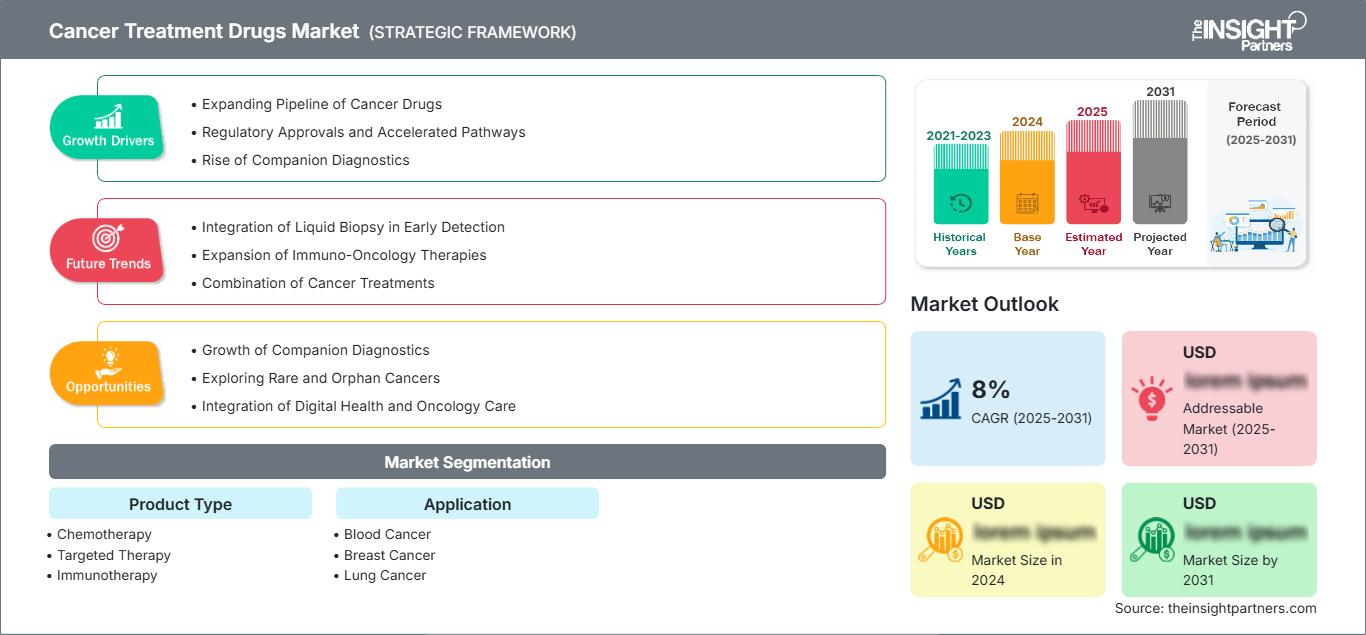
Cancer Treatment Drugs Market: Strategic Insights
Regional Insights
North America Cancer Treatment Drugs Market
North America constituted 43-46% market share in 2025 and expected to grow at CAGR of 11.8-12.4% during 2026-2034. North America enjoys advanced genomic testing capabilities, comprehensive oncology insurance coverage, and speedy adoption of immunotherapy and targeted therapies by academic centers. Cancer Treatment Drugs Market share is concentrated due to reimbursement for high-cost biologics and specialty oral medications in the developed system.
Structural demand is driven by the integration of cancer networks, central purchasing, and active clinical trial engagement. Predictable regulation is the advantage of manufacturers, however, payers increase their focus on the survival benefit and appropriate drug sequences. Expansion will be the highest in lung, breast, blood, bladder, and colorectal cancers due to biomarkers-based labeling.
U.S. Cancer Treatment Drugs Market
The U.S. represented 82–85% of North America in 2025 and is expected to expand at a CAGR of 11.6–12.2% through 2034. Adoption is supported by FDA oncology review activity, high molecular testing penetration, and strong specialist access. Company presence is broad, with Merck & Co., Inc., Pfizer Inc., Johnson & Johnson, Bristol-Myers Squibb Company, and AbbVie Inc. maintaining major commercial operations.
Application trends show heavy utilization in lung cancer, blood cancer, breast cancer, and bladder cancer, particularly where trial data support perioperative, maintenance, or post-progression use. The U.S. also drives early uptake of subcutaneous oncology formulations, companion diagnostics, and antibody-drug conjugate combinations. Pricing pressure is rising, but innovation-linked reimbursement continues to sustain premium therapeutic categories.
Europe Cancer Treatment Drugs Market
The Europe region had a market share of 24–27% in 2025 and is projected to register a CAGR of 11.3–11.9% from 2026–2034. Germany continues to be the market leader owing to the presence of early benefit assessment mechanisms, advanced capabilities in hospital-based oncology, and adoption of precision medicines.
The UK focuses on health technology assessment expertise, managed access approaches, and real-world evidence for the utilization of high-cost oncology medications. France, Italy, and Spain have been expanding access to cancer treatments via national cancer policies, regional oncology networks, and reimbursement frameworks for innovative medications. Germany and France dominate in the use of biologics, whereas Italy and Spain exhibit an increasing trend in lung, breast, colorectal, and prostate cancers.
APAC Cancer Treatment Drugs Market
The share of APAC was 20-23% in 2025 and is expected to register a growth rate of 14.1-14.7% CAGR between 2026 and 2034. In China, the leading market, there will be a growth due to regulatory acceleration, innovations in oncology medicines in the country, and increasing number of hospitals.
Drivers in the industrial sector include local manufacturing, biosimilar production and collaborations with international companies. The support from policies for cancer screenings, insurance, and approvals will drive up the treatment numbers. The highest demand will be observed for lung, liver, stomach, breast, and colorectal cancers.
Middle East & Africa Cancer Treatment Drugs Market
The Middle East & Africa is projected to grow at a CAGR of 9.6–10.2% during 2026–2034, with Saudi Arabia leading regional adoption. Saudi Arabia and the UAE are investing in oncology hospitals, specialty procurement, and genomic medicine programs. South Africa remains the largest access hub in sub-Saharan Africa.
Energy-linked fiscal capacity supports healthcare infrastructure in Gulf countries, while broader MEA growth is limited by reimbursement gaps and diagnostic variability. Cancer centers in Saudi Arabia and the UAE are increasing use of immunotherapy and targeted therapy, particularly for lung, breast, colorectal, and blood cancer applications.
Segmentation Analysis
Product Type
The Product Type segment is projected to expand at a CAGR of 12.4–13.0% during 2026–2034. The Cancer Treatment Drugs Market scope across product classes is widening as oncology treatment shifts from conventional chemotherapy alone toward targeted agents, immunotherapies, and hormone-based maintenance strategies. Adoption is influenced by biomarker availability, toxicity profiles, patient survival outcomes, and payer willingness to support high-value combinations.
- Chemotherapy: Chemotherapy remains essential in perioperative, first-line, and combination settings, especially where tumor biology is aggressive, diagnostics are limited, or treatment affordability shapes prescribing decisions.
- Targeted Therapy: Targeted Therapy leads revenue contribution because biomarker-defined drugs are widely used across lung, breast, colorectal, blood, and prostate cancers with measurable clinical differentiation.
- Immunotherapy: Immunotherapy is expanding rapidly as checkpoint inhibitors, immune combinations, and tumor-agnostic approaches move into earlier stages and broader patient populations.
- Hormonal Therapy: Hormonal Therapy retains strategic importance in breast and prostate cancer due to long treatment duration, oral dosing convenience, and use in maintenance pathways.
Application
The Application segment is expected to register a CAGR of 12.1–12.9% from 2026 to 2034. Demand differs by disease prevalence, biomarker testing maturity, recurrence risk, and the availability of approved regimens across treatment lines. Blood cancer and lung cancer attract intensive innovation, while breast, colorectal, prostate, liver, stomach, cervical, bladder, kidney, and esophagus cancers create diversified prescribing opportunities.
- Blood Cancer: Blood cancer remains a high-value application, driven by chronic treatment cycles, relapse management, cellular approaches, bispecific antibodies, and sustained demand for hematology specialist care.
- Breast Cancer: Breast cancer demand is shaped by endocrine pathways, HER2 targeting, antibody-drug conjugates, and broader treatment sequencing across early-stage and metastatic disease.
- Lung Cancer: Lung cancer is strategically critical because high incidence, biomarker fragmentation, and immunotherapy combinations create repeated treatment opportunities across disease stages.
- Stomach Cancer: Stomach cancer adoption is improving as perioperative immunotherapy and HER2-directed approaches gain relevance in selected patient groups with resectable or advanced disease.
- Colorectal Cancer: Colorectal cancer treatment demand is supported by established chemotherapy backbones, targeted agents, immunotherapy for selected biomarkers, and rising screening-linked diagnosis.
- Prostate Cancer: Prostate cancer contributes durable demand through hormonal agents, androgen receptor inhibitors, radioligand therapies, and long treatment pathways in advanced disease.
- Esophagus Cancer: Esophagus cancer remains an emerging oncology focus as immunotherapy combinations enter advanced and perioperative settings, improving treatment intensity in specialized centers.
- Liver Cancer: Liver cancer demand is rising in Asia and developing regions, supported by immunotherapy combinations, targeted agents, and increasing diagnosis among chronic liver disease patients.
- Cervical Cancer: Cervical cancer treatment growth reflects immunotherapy adoption in advanced disease, public screening programs, and stronger access initiatives in middle-income countries.
- Bladder Cancer: Bladder cancer is increasingly important due to perioperative immunotherapy, antibody-drug conjugate combinations, and high unmet need in muscle-invasive disease.
- Kidney Cancer: Kidney cancer demand is driven by immune checkpoint combinations, targeted kinase inhibitors, and treatment sequencing across first-line and relapsed settings.
Opportunity Snapshot
| Segment Name | Revenue Contribution | Trend Tag | Adoption Stage |
| Blood Cancer | High | Bispecifics | Scaling |
| Breast Cancer | High | ADC Sequencing | Mature |
| Lung Cancer | High | Biomarker Testing | Scaling |
| Stomach Cancer | Medium | Perioperative IO | Scaling |
| Colorectal Cancer | Medium | MSI Selection | Mature |
| Prostate Cancer | High | Radioligands | Scaling |
| Esophagus Cancer | Medium | IO Combos | Emerging |
| Liver Cancer | Medium | Dual Immunotherapy | Scaling |
| Cervical Cancer | Low | Access Expansion | Emerging |
| Bladder Cancer | Medium | Perioperative ADC | Scaling |
| Kidney Cancer | Medium | IO-TKI | Mature |
Cancer Treatment Drugs Market Growth Drivers and Impact Analysis
Rising Cancer Burden and Longer Treatment Pathways
Prevalence of cancer is growing with aging populations, better diagnosis, and increased survivorship for various forms of cancers. Statistics released by WHO and IARC show that the global cancer burden is high and increasing, with about 20 million estimated new cases in 2022, and projections indicating nearly 35 million new cases per year in 2050. Epidemiologically, this creates a situation whereby more people are being diagnosed with cancer requiring treatments, hence increased demand for multiple courses of treatments. The market effect is felt the most where patients are undergoing surgery, adjuvant, recurrence, and maintenance treatment in a single episode of the disease.
Precision Medicine and Biomarker-Led Prescribing
Precision medicine is enhancing the patient selection process through the use of actionable mutations, receptor expression, immune biomarkers, and tumor-agnostic characteristics. Evidence of this is found in the development of companion diagnostics in cancers such as lung, breast, colorectal, blood, and kidney, which increasingly decide eligibility and sequencing of patients for these cancers. This trend creates a situation where there is a move from prescribing broadly to prescribing to specific subgroups of patients with a higher probability of responding to the therapy. Premium pricing of novel therapies becomes possible under this trend. It creates a situation where the provision of the diagnosis is a prerequisite for doing business.
Expansion of Immunotherapy and Combination Regimens
Immunotherapy is changing oncology economics by extending treatment into perioperative, metastatic, maintenance, and recurrence-prevention settings. Checkpoint inhibitors are increasingly paired with chemotherapy, targeted agents, antibody-drug conjugates, or other immune modulators to improve survival outcomes. This increases revenue per patient, as well as increasing the criteria of evaluation, as payers expect a clear incremental benefit to be provided over existing therapies. Implications on the market include more extensive clinical trials, greater complexities in adverse event management, and increased demand for training of oncologists. For companies with comprehensive immuno-oncology portfolios, position defense is achievable through expanded labeling, while new players need to prove efficacy/tolerability/better delivery.
Cancer Treatment Drugs Market Future Trends
Shift Toward Earlier-Stage Oncology Treatment
Cancer Treatment Drugs Market trends are increasingly moving from late-stage disease management toward neoadjuvant, adjuvant, and minimal residual disease settings. This is significant for business because earlier stage therapies can include cures and have larger patient pools. Future acceptance will rely on trials demonstrating event-free survival, overall survival, or decreased risk of recurrence rather than only response. Technologies such as circulating tumor DNA testing may be used to determine when therapy should be escalated or de-escalated. This will lead to more personalized treatment duration choices, a closer link between surgical and medical oncology, and an increased role of therapies that help reduce recurrence risk.
Growth of Subcutaneous and Convenient Oncology Delivery
Drug delivery innovation is expected to become a stronger differentiator by 2034. Subcutaneous formulations, fixed-dose combinations, oral targeted agents, and less frequent dosing schedules can reduce infusion chair pressure, improve patient convenience, and support decentralized cancer care. These formats are especially relevant in mature markets where health systems face staffing constraints and growing treatment volumes. Convenience alone will not secure adoption, but equivalent efficacy, manageable safety, and operational savings may influence payer and provider decisions. Companies that combine clinical performance with easier administration can improve adherence, broaden access, and extend lifecycle value in competitive oncology categories.
Cancer Treatment Drugs Market Opportunities
Emerging Market Oncology Access Expansion
Cancer Treatment Drugs Market Forecasts indicate meaningful opportunity in countries expanding oncology insurance, diagnostics, and specialty hospital infrastructure. China, India, Indonesia, Saudi Arabia, the UAE, and Brazil offer attractive investment routes where cancer burden is rising but standardized access remains uneven. Companies can prioritize tiered pricing, local partnerships, physician education, and diagnostic capacity-building to improve uptake. The opportunity is not limited to premium biologics; oral targeted therapies, biosimilars, and selected immunotherapy regimens can scale rapidly when reimbursement improves. Success will require aligning product launches with national cancer plans, procurement rules, and evidence needs specific to each healthcare system.
Lifecycle Strategies Around Combination and Sequencing
Combination and sequencing strategies offer manufacturers a practical route to extend product relevance beyond initial approvals. Oncology brands can expand through earlier-line use, perioperative regimens, biomarker-defined subgroups, fixed combinations, and companion diagnostic updates. This opportunity is attractive because it leverages existing safety databases, physician familiarity, and established commercial infrastructure. Companies should invest in comparative trials that clarify optimal sequencing against standard care, especially in lung, breast, bladder, colorectal, and blood cancers. Strong lifecycle planning can protect revenue from biosimilar or generic pressure while offering clinicians clearer evidence for treatment order, duration, and patient selection.
Recent Developments
- July 2026: F. Hoffmann-La Roche Ltd announced positive Phase III Krascendo 1 results for divarasib in previously treated KRAS G12C non-small cell lung cancer. The investigational therapy showed statistically significant improvement in progression-free survival and overall survival versus approved KRAS G12C inhibitors, supporting planned regulatory submissions and reinforcing Roche’s targeted lung cancer pipeline.
- July 2026: Merck & Co., Inc. received FDA approval for Keytruda and Keytruda Qlex, each with Padcev from Astellas Pharma Inc., as neoadjuvant and adjuvant treatment for adults with muscle-invasive bladder cancer. The approval was based on KEYNOTE-B15 data showing significant event-free survival and overall survival improvement.
- November 2025: AstraZeneca PLC received FDA approval for Imfinzi with FLOT chemotherapy as neoadjuvant and adjuvant treatment, followed by Imfinzi monotherapy, for adults with resectable gastric or gastroesophageal junction adenocarcinoma. The MATTERHORN trial showed improved event-free survival and overall survival versus chemotherapy alone.
Frequently Asked Questions

- Comprehensive Market Sizing and Forecast Analysis
- Detailed Segmentation Analysis
- In-Depth Market Dynamics Assessment
- Regional and Country-Level Insights
- Competitive Landscape and Company Benchmarking
- Strategic Business Intelligence
Recent Reports
Testimonials

The Insight Partners' SCADA System Market report is comprehensive, with valuable insights on current trends and future forecasts. The team was highly professional, responsive, and supportive throughout. We are very satisfied and highly recommend their services.
RAN KEDEM Partner, Reali Technologies LTDs
I requested a report on a very specific software market and the team produced the report in a few days. The information was very relevant and well presented. I then requested some changes and additions to the report. The team was again very responsive and I got the final report in less than a week.
JEAN-HERVE JENN Chairman, Future Analytica
We worked with The Insight Partners for an important market study and forecast. They gave us clear insights into opportunities and risks, which helped shape our plans. Their research was easy to use and based on solid data. It helped us make smart, confident decisions. We highly recommend them.
PIYUSH NAGPAL Sr. Vice President, High Beam Global
The Insight Partners delivered insightful, well-structured market research with strong domain expertise. Their team was professional and responsive throughout. The user-friendly website made accessing industry reports seamless. We highly recommend them for reliable, high-quality research services
YUKIHIKO ADACHI CEO, Deep Blue, LLC.
This is the first time I have purchased a market report from The Insight Partners.While I was unsure at first, I visited their web site and felt more comfortable to take the risk and purchase a market report.I am completely satisfied with the quality of the report and customer service. I had several questions and comments with the initial report, but after a couple of dialogs over email with their analyst I believe I have a report that I can use as input to our strategic planning process.Thank you so much for taking the extra time and making this a positive experience.I will definitely recommend your service to others and you will be my first call when we need further market data.
JOHN SUZUKI President and Chief Executive Officer, Board Director, BK Technologies
I wish to appreciate your support and the professionalism you displayed in the course of attending to my request for information regarding to infectious disease IVD market in Nigeria. I appreciate your patience, your guidance, and the fact that you were willing to offer a discount, which eventually made it possible for us to close a deal. I look forward to engaging The Insight Partners in the future, all thanks to the impression you have created in me as a result of this first encounter.
DR CHIJIOKE ONYIA MANAGING DIRECTOR, PineCrest Healthcare Ltd.Reason to Buy
- Informed Decision-Making
- Understanding Market Dynamics
- Competitive Analysis
- Identifying Emerging Markets
- Customer Insights
- Market Forecasts
- Risk Mitigation
- Boosting Operational Efficiency
- Strategic Planning
- Investment Justification
- Tracking Industry Innovations
- Aligning with Regulatory Trends





 Get Free Sample for