
Canned Seafood Market Trends, Demand & Growth by 2034
Coverage: By Product (Tuna, Salmon, Sardines, Mackerel, Shrimps and Prawns, Clams, Crabs, Lobsters, and Others) and Distribution Channel (Supermarket and Hypermarkets, Convenience Stores, Online Retail, and Others)
- Status : Published
- Report Code : TIPRE00011272
- Category : Food and Beverages
- No. of Pages : 436
- Available Report Formats :


- Last update date : April 21, 2026


2025 Market Size
US$ 33.45 Bn
Base year value
2034 Forecast
US$ 56.56 Bn
Projected by 2034
CAGR 2026-2034
6.0 %
Growth rate
Addressable Market
US$ 407.45 Bn
(2026-2034)
The canned seafood market size is projected to reach US$ 56.56 billion by 2034 from US$ 33.45 billion in 2025. The market is expected to register a CAGR of 6.0% during 2026–2034
Canned Seafood Market Analysis
The canned seafood market is growing due to an increasing demand for convenient, nutritious, and long-lasting food products among households, food service providers, and institutional buyers. These products provide key benefits. They are easy to store, ready to eat, consistently high quality, and have a long shelf life. This makes them perfect for modern, fast-paced lifestyles. Urbanization is increasing, dietary preferences are changing, and more people are aware of the health benefits of seafood, including its high protein and omega-3 content. The growth of organized retail and e-commerce platforms has also made canned seafood products more accessible and available. Improvements in processing and packaging technologies, such as better sterilization, BPA-free cans, and vacuum sealing, have made products safer, tastier, and more nutritious. The introduction of new options, such as flavored and ready-to-eat seafood, with a focus on sustainable sourcing, is broadening the market. Canned seafood is essential for meeting consumer needs for convenience, affordability, and nutrition. It also helps manufacturers improve supply chain efficiency and keep up with changing food safety and sustainability standards.
Canned Seafood Market Overview
Canned seafood products are made through controlled processing methods, preservation techniques, and standard quality measures. This ensures consistent taste, texture, and nutritional value. High-quality canned seafood prioritizes freshness, safety, long shelf life, and ease of use, making it ideal for both home cooks and large-scale food services. Current market trends show a move toward new canning technologies, automation in seafood processing, and a focus on clean-label, preservative-free, health-oriented products, including low-sodium and high-protein options. Sustainable sourcing and eco-friendly packaging are becoming more important as consumers grow more environmentally aware. The demand for convenient, ready-to-eat meals is rising. North America and Europe remain established and competitive markets, driven by product innovation and high demand for premium, sustainably sourced seafood. Asia Pacific is the fastest-growing region, fueled by urbanization, rising incomes, expanding retail infrastructure, and an increasing preference for convenient and nutritious seafood products.
Market Assessment and Insights
- Global market for Canned Seafood was valued at US$ 37.67 Billion in 2025
- Annual market size is expected to reach US$ 54.42 Billion by 2034
- Total addressable market (TAM) during 2026-2034 is projected to reach approximately US$ 418.18 Billion
- Market is anticipated to register a CAGR of 4.17% during the forecast period
- The United States represents a key market, supported by Demand for Ready-to-Eat Food, Health Awareness, Population Growth and Globalization, as well as evolving industry dynamics
- Market analysis covers North America, Europe, Asia-Pacific, South and Central America, Middle East and Africa, with growth evaluated across the forecast period
- Market opportunities such as Product Line Extension and Value Addition, Partnerships with Foodservice Providers, Sustainability and Ethical Sourcing are expected to influence market dynamics and addressable market
- Report profiles industry participants, including American Tuna, Inc., Bumble Bee Seafoods, Icicle Seafoods Inc., LDH (La Doria) Ltd, Maruha Nichiro Corporation, Nippon Suisan Kaisha, Ltd, StarKist Co., Thai Union Frozen Products, Universal Canning, Inc., Wild Planet Foods, while analyzing competitive strategies and innovation developments
-
Source: The Insight Partners' analysis based on proprietary research, government publications, company annual reports, investor presentations, industry databases, and expert interviews.
● REPORT CUSTOMIZATION
Tailor This Report To Align With Your Specific Business Requirements
This report can be customized to align precisely with your business objectives, scope, and target markets. Customization options include tailored segmentation, geography, competitive analysis, and strategic insights to support informed decision-making.
Customize This Report →WHAT YOU CAN ADJUST
- ● Segmentations
- ● Geography
- ● Competitive Analysis
- ● Language Preferences
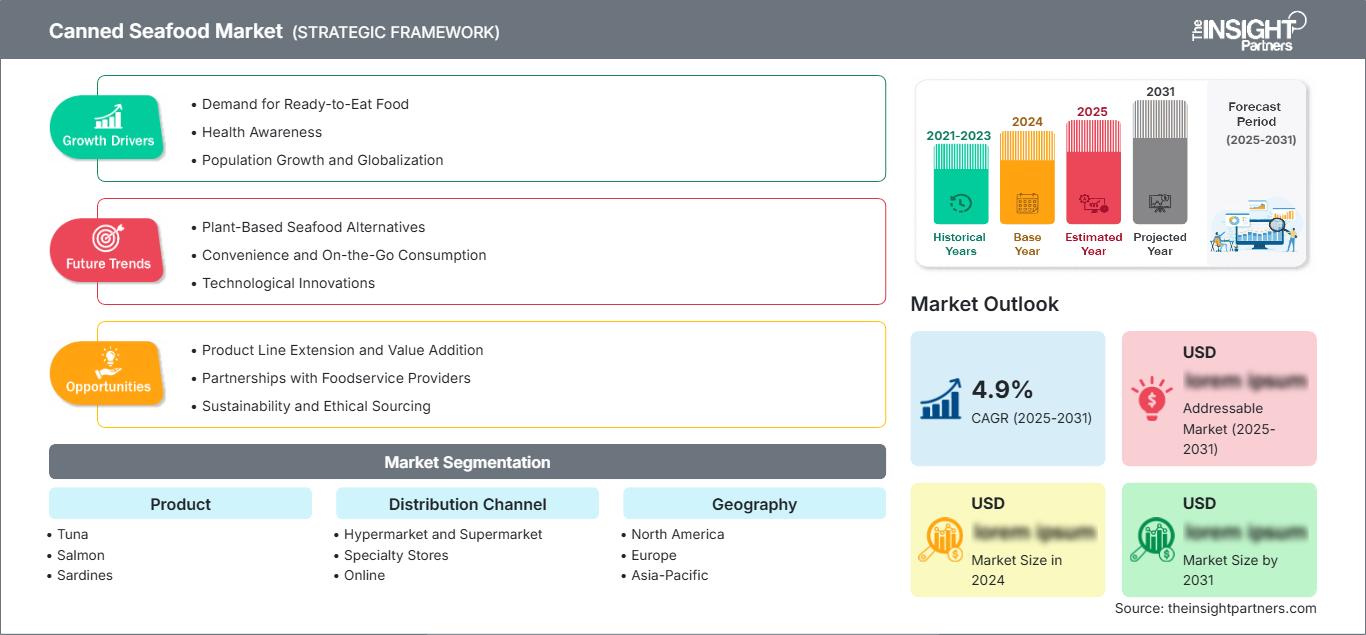
Canned Seafood Market: Strategic Insights
-
Get Top Key Market Trends of this report.This FREE sample will include data analysis, ranging from market trends to estimates and forecasts.
Canned Seafood Market Drivers and Opportunities
Market Drivers:
- Rising Demand for Convenient and Ready-to-Eat Protein Sources: Busy lifestyles, increasing urbanization, and the growing preference for quick meal solutions are driving demand for canned seafood as a convenient, nutritious, and long-lasting food option.
- Extended Shelf Life and Reduced Food Waste: The ability of canned seafood to remain shelf-stable for long periods without refrigeration, with its role in minimizing food spoilage, is boosting its adoption across households and food service sectors.
- Growth of Organized Retail and E-Commerce Channels: Expanding supermarket chains, online grocery platforms, and improved cold chain logistics are enhancing product availability and accessibility, supporting market growth.
Market Opportunities:
- Product Innovation with Flavored and Value-Added Offerings: Rising consumer interest in diverse flavors, ready-to-eat meals, and premium seafood options is creating opportunities for manufacturers to introduce seasoned, marinated, and gourmet canned seafood products.
- Sustainable and Traceable Seafood Sourcing: Increasing consumer awareness about environmental impact and responsible fishing practices is opening opportunities for brands to differentiate through certified sustainable sourcing and eco-friendly packaging.
- Health-Focused and Functional Seafood Products: Growing demand for high-protein, low-fat, and omega-3-rich diets is encouraging the development of health-oriented canned seafood products, including low-sodium and preservative-free variants tailored to health-conscious consumers.
Canned Seafood Market Report Segmentation Analysis
The canned seafood market is divided into different segments to give a clearer view of its growth potential and the latest trends. Below is the standard segmentation approach used in industry reports:
By Product:
- Tuna: Tuna is one of the most widely consumed canned seafood products due to its high protein content, affordability, and versatility. It is used in salads, sandwiches, and ready-to-eat meals, offering convenience along with consistent taste and long shelf life.
- Salmon: Canned salmon is valued for its rich omega-3 fatty acids, premium quality, and nutritional benefits. It is often used in salads, spreads, and cooked dishes, providing a convenient alternative to fresh salmon while maintaining flavor and health value.
- Sardines: Sardines are popular for their strong flavor, high calcium, and omega-3 content. They are packed in oil, water, or sauces and are consumed as a ready-to-eat snack or as an ingredient in various traditional dishes.
- Mackerel: Canned mackerel is known for its rich taste and high nutritional value, particularly its healthy fats. It is used in cooked meals and ready-to-eat preparations, offering affordability and extended shelf stability.
- Shrimps and Prawns: Canned shrimps and prawns provide convenience and ease of use in including salads, pasta, and seafoods. They maintain their flavor and texture while reducing preparation time compared to fresh options.
- Clams: Canned clams are used in soups, chowders, and pasta dishes. They offer a consistent flavor profile and eliminate the need for cleaning and shucking, making them a convenient option for both households and food service providers.
- Crabs: Canned crab meat is considered a premium product, often used in gourmet recipes such as crab cakes, salads, and dips. It provides ready-to-use, high-quality meat with minimal preparation effort.
- Lobsters: Canned lobster products cater to the premium segment, offering convenience while preserving the rich taste and texture of lobster. They are used in high-end recipes and specialty dishes.
- Others: This category includes canned seafood such as anchovies, mussels, and mixed seafood products. These offerings support product diversification and cater to regional tastes and specialized culinary applications.
By Distribution Channel:
- Supermarket and Hypermarkets
- Convenience Stores
- Online Retail
- Others
By Geography:
- North America
- Europe
- Asia Pacific
- Middle East & Africa
- South & Central America
Canned Seafood Market Report Scope
| Report Attribute | Details |
|---|---|
| Market size in 2025 | US$ 33.45 Billion |
| Market Size by 2034 | US$ 56.56 Billion |
| Global CAGR (2026 - 2034) | 6.0% |
| Historical Data | 2021-2024 |
| Forecast period | 2026-2034 |
| Segments Covered |
By Product
|
| Regions and Countries Covered |
North America
|
| Market leaders and key company profiles |
|
Canned Seafood Market Players Density: Understanding Its Impact on Business Dynamics
The Canned Seafood Market is growing rapidly, driven by increasing end-user demand due to factors such as evolving consumer preferences, technological advancements, and greater awareness of the product's benefits. As demand rises, businesses are expanding their offerings, innovating to meet consumer needs, and capitalizing on emerging trends, which further fuels market growth.
Canned Seafood Market Share Analysis by Geography
The global canned seafood market growth is driven by an increasing demand for convenient, nutritious, and long-lasting food products in households and food service areas. Canned seafood makes meal preparation easier by providing ready-to-eat or simple-to-cook options. This reduces the need for extensive cleaning and cooking, while ensuring consistent quality and taste. More people are consuming protein-rich diets. There is also a growing awareness of the health benefits of seafood, such as omega-3 fatty acids. The need for shelf-stable food products plays a significant role. Urbanization and busy lifestyles are contributing to this trend, with the growth of retail and e-commerce channels. Health and sustainability trends are also influencing the market. There is an increasing demand for low-sodium, preservative-free, and responsibly sourced seafood products. Key regions include North America and Europe, which are mature markets driven by product innovation and premium offerings. The rapidly growing Asia Pacific benefits from rising disposable incomes, changing dietary habits, and improving retail infrastructure, boosting canned seafood consumption.
The canned seafood market growth differs in each region due to the rate of economic development and consumer preferences. Below is a summary of market share and trends by region:
1. North America
- Market Share: Holds a significant portion of the global market
- Key Drivers:
- High demand for convenient, ready-to-eat, and shelf-stable protein sources.
- Strong presence of organized retail, supermarkets, and e-commerce platforms.
- Advanced seafood processing, packaging technologies, and strict food safety standards.
- Trends: Increasing demand for sustainably sourced, low-sodium, and premium canned seafood products, along with flavored and value-added options.
2. Europe
- Market Share: Has the largest market share in the global market.
- Key Drivers:
- Strong seafood consumption culture and preference for high-quality products.
- Growing demand for sustainably sourced and certified seafood.
- Well-established retail networks and seafood processing industries.
- Trends: Rising shift toward organic, eco-labeled, and gourmet canned seafood, along with clean-label and traceable sourcing practices.
3. Asia Pacific
- Market Share: The significant and fastest-growing market
- Key Drivers:
- Rapid urbanization and rising disposable incomes boost demand for convenient foods.
- Expanding retail infrastructure and growing penetration of packaged food products.
- Increasing awareness of seafood’s nutritional benefits.
- Trends: Growing demand for affordable, locally preferred seafood varieties and innovative flavors tailored to regional tastes.
4. Middle East and Africa
- Market Share: A steadily progressing market with strong growth potential
- Key Drivers:
- Rising demand for long shelf-life and easily transportable food products.
- Growth in the retail and food service sectors, especially in urban areas.
- Increasing reliance on imported seafood products.
- Trends: Gradual increase in demand for budget-friendly and fortified canned seafood, along with expanding distribution networks.
5. South and Central America
- Market Share: Holds a small but steadily growing market share
- Key Drivers:
- Abundant seafood resources support local production and consumption.
- Increasing demand for affordable and convenient protein sources.
- Growing retail sector and improving economic conditions.
- Trends: Rising focus on cost-effective canned seafood products and export-oriented production, with gradual adoption of value-added offerings.
High Market Density and Competition
Competition is intense due to the presence of established players such as Bolton Group S.p.A, Princes Limited, and John West Foods Limited.
This high level of competition urges companies to stand out by:
- Delivering high-quality canned seafood with consistent taste, texture, and nutritional value across a wide range of products such as tuna, salmon, sardines, and shellfish, ensuring reliability for both retail and foodservice applications.
- Ensuring quality, safety, and traceability through standardized processing methods, strict quality control, and compliance with international food safety regulations to meet consumer and industry expectations.
- Adopting innovative and sustainable practices, including responsible sourcing, eco-friendly packaging, reduced use of additives, and advanced preservation technologies to enhance product appeal and align with growing environmental and health concerns.
Opportunities and Strategic Moves
- Develop specialized canned seafood products, such as low-sodium, preservative-free, high-protein, and ready-to-eat flavored options, along with regionally tailored offerings to meet evolving consumer preferences.
- From partnerships with retail chains, foodservice providers, and meal solution companies to co-developing convenient, value-added seafood products for both mass consumption and premium segments.
- Strengthening supply chains and sourcing networks by collaborating with fisheries, aquaculture providers, and distributors to ensure consistent quality, sustainable sourcing, regulatory compliance, and broader global market reach.
Major companies operating in the canned seafood market are:
- Bolton Group S.p.A
- Princes Limited
- Frinsa
- Petrossian
- John West Foods Limited
- King Oscar AS
- Pinhais & Ca Lda
- RAMIREZ
- Conservas Ortiz S.A.
- FANGST
Disclaimer: The companies listed above are not ranked in any particular order.
Other companies analyzed during research:
- American Tuna
- Bumble Bee Foods, LLC
- Icicle Seafoods, Inc.
- Maruha Nichiro Corporation
- Thai Union Group PCL
Canned Seafood Market News and Recent Developments
- Bolton Inaugurates First “Bolton Food Research & Innovation Center” to Advance Sustainable Seafood Science: In Jan 2026, Bolton, through its Food Business Unit, inaugurated its first Bolton Food Research & Innovation Center, marking a significant milestone in the company's long-standing commitment to innovation, science, and sustainable development in the global seafood industry. Conceived as a permanent platform, the Center is designed to deepen scientific understanding of the impacts of seafood products on both people and the planet, and to translate this knowledge into concrete solutions that optimize resources, reduce waste, and support more resilient food systems.
- King Oscar launches a new line of skinless and boneless Atlantic salmon in extra virgin olive oil: In Nov 2024, King Oscar took seafood to a whole new level in 2024. The premium canned seafood company announced the launch of a new line of skinless and boneless Atlantic salmon in extra virgin olive oil.
Canned Seafood Market Report Coverage and Deliverables
The " Canned Seafood Market Size and Forecast (2021–2034)" report provides a detailed analysis of the market covering the following areas:
- Canned seafood market size and forecast at global, regional, and country levels for all segments covered under the scope
- Canned seafood market trends, as well as dynamics such as drivers, restraints, and key opportunities
- Detailed Porter's five forces analysis and SWOT analysis
- Canned seafood market analysis covering market trends, global and regional framework, major players, regulations, and recent developments.
- Industry landscape and competition analysis covering market concentration, heat map analysis, prominent players, and recent developments for the canned seafood market
- Detailed company profiles
Frequently Asked Questions

- Comprehensive Market Sizing and Forecast Analysis
- Detailed Segmentation Analysis
- In-Depth Market Dynamics Assessment
- Regional and Country-Level Insights
- Competitive Landscape and Company Benchmarking
- Strategic Business Intelligence
Recent Reports
Testimonials

The Insight Partners provided valuable market intelligence that supported our global go-to-market strategy. Their team was professional, responsive, and attentive to our feedback, providing thoughtful analysis and helpful methodological clarifications throughout the project.
Junmo Kim Chief Financial Officer (CFO), Enertech Co., Ltd.
The Insight Partners' SCADA System Market report is comprehensive, with valuable insights on current trends and future forecasts. The team was highly professional, responsive, and supportive throughout. We are very satisfied and highly recommend their services.
RAN KEDEM Partner, Reali Technologies LTDs
I requested a report on a very specific software market and the team produced the report in a few days. The information was very relevant and well presented. I then requested some changes and additions to the report. The team was again very responsive and I got the final report in less than a week.
JEAN-HERVE JENN Chairman, Future Analytica
We worked with The Insight Partners for an important market study and forecast. They gave us clear insights into opportunities and risks, which helped shape our plans. Their research was easy to use and based on solid data. It helped us make smart, confident decisions. We highly recommend them.
PIYUSH NAGPAL Sr. Vice President, High Beam Global
The Insight Partners delivered insightful, well-structured market research with strong domain expertise. Their team was professional and responsive throughout. The user-friendly website made accessing industry reports seamless. We highly recommend them for reliable, high-quality research services
YUKIHIKO ADACHI CEO, Deep Blue, LLC.
This is the first time I have purchased a market report from The Insight Partners.While I was unsure at first, I visited their web site and felt more comfortable to take the risk and purchase a market report.I am completely satisfied with the quality of the report and customer service. I had several questions and comments with the initial report, but after a couple of dialogs over email with their analyst I believe I have a report that I can use as input to our strategic planning process.Thank you so much for taking the extra time and making this a positive experience.I will definitely recommend your service to others and you will be my first call when we need further market data.
JOHN SUZUKI President and Chief Executive Officer, Board Director, BK Technologies
I wish to appreciate your support and the professionalism you displayed in the course of attending to my request for information regarding to infectious disease IVD market in Nigeria. I appreciate your patience, your guidance, and the fact that you were willing to offer a discount, which eventually made it possible for us to close a deal. I look forward to engaging The Insight Partners in the future, all thanks to the impression you have created in me as a result of this first encounter.
DR CHIJIOKE ONYIA MANAGING DIRECTOR, PineCrest Healthcare Ltd.Reason to Buy
- Informed Decision-Making
- Understanding Market Dynamics
- Competitive Analysis
- Identifying Emerging Markets
- Customer Insights
- Market Forecasts
- Risk Mitigation
- Boosting Operational Efficiency
- Strategic Planning
- Investment Justification
- Tracking Industry Innovations
- Aligning with Regulatory Trends





 Get Free Sample for