
Caprylic/Capric Triglycerides Market Share, Size & Demand by 2034
Caprylic/Capric Triglycerides Market Size and Forecasts (2021 - 2034), Global and Regional Share, Trends, and Growth Opportunity Analysis Report Coverage : by Form (Liquid and Semi-solid); Source (Coconut oil, Palm oil); End Use (Cosmetic and Personal Care Industry, Pharmaceutical Industry, Food and Beverage Industry, Health and Wellness Industry); and Geography (North America, Europe, Asia Pacific, and South and Central America)
- Status : Data Released
- Report Code : TIPRE00040281
- Category : Chemicals and Materials
- No. of Pages : 150
- Available Report Formats :


- Last update date : July 24, 2026


2025 Market Size
US$ 1.35 Bn
Base year value
2034 Forecast
US$ 2.54 Bn
Projected by 2034
CAGR 2026-2034
7.23 %
Growth rate
Addressable Market
US$ 17.51 Bn
(2026-2034)
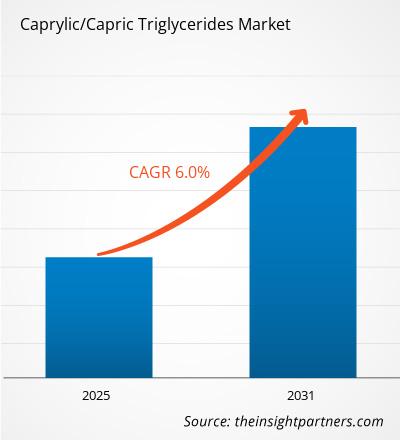
The Caprylic/Capric Triglycerides market size was US$ 1.35 Billion in 2025 and will be estimated to reach US$ 2.54 Billion by 2034, with a CAGR of 7.23% between 2026 and 2034. This growth in demand can be attributed to the rising use of medium chain triglycerides derivatives in premium skin care, pharmaceutical excipient, nutraceuticals, and speciality food ingredients applications. The oxidation stability, emollient characteristics, and suitability of the ingredient in clean label formulations have driven the commercial success of the ingredient.
In the North American region, players will get to enjoy benefits of a well-established cosmetics industry, proficiency in formulating pharmaceutical products, and consumer preference for natural ingredients. The Caprylic/Capric Triglycerides Market in the region is expected to register growth at a rate of 6.6%–7.0% CAGR by 2034.
Caprylic/Capric Triglycerides Market Assessment and Insights
- North America: Accounted for a 31–35% share in 2025 and is projected to grow at a CAGR of 6.6–7.0% during 2026–2034, supported by strong personal care manufacturing, pharmaceutical innovation, and increasing demand for naturally sourced emollients.
- U.S.: Represented 79–83% of the North American market in 2025 and is anticipated to expand at a CAGR of 6.7–7.1% during 2026–2034, driven by premium skincare launches, nutraceutical innovation, and advanced formulation capabilities.
- Europe: Held 25–29% share in 2025 and is forecast to register a CAGR of 6.8–7.2% during 2026–2034. Germany, France, Italy, and the UK remain leading markets due to established cosmetic manufacturing, sustainable ingredient adoption, and pharmaceutical production.
- Asia Pacific: Captured 28–32% of the Caprylic/Capric Triglycerides market share in 2025 and is expected to record the fastest regional expansion at a CAGR of 8.1–8.6% during 2026–2034, led by China, Japan, South Korea, and India through expanding cosmetics manufacturing and oleochemical processing.
- Largest Segment: Cosmetic and Personal Care Industry accounted for 46–50% market share in 2025 and is projected to grow at a CAGR of 7.4–7.8% during 2026–2034, supported by rising consumption of moisturizers, serums, sunscreens, and clean beauty formulations.
- High Growth Segment: The Health and Wellness Industry represented 12–16% market share in 2025 and is anticipated to expand at a CAGR of 8.5–9.0% during 2026–2034, reflecting the growing use of medium-chain triglycerides in functional nutrition and dietary supplements.
- Key companies analyzed in detail: Kao Corporation, ABITEC Corporation, American International Chemical, LLC, Alzo International, Inc., Charkit Chemical Corporation, Vigon International, LLC, Jarchem Industries, Inc., Lonza Group Ltd., Lipo Chemicals, Inc., and Penta International Corporation.
Source: The Insight Partners' analysis based on proprietary research, government publications, company annual reports, investor presentations, industry databases, and expert interviews.
Advancements in processing of oleochemicals, improvement in purification technologies and sustainable source of feedstocks are some of the reasons behind the changes in Caprylic/Capric Triglycerides market over the past decade. Manufacturers have been relying more on fractionated coconut oil and palm oils as well as optimizing their processes for efficient esterification to enhance product uniformity. The inclusion of renewable feedstock, traceable supply chain and use of low impurities manufacturing process has enhanced acceptance in cosmetics, pharmaceuticals and food products. In addition, growing awareness about the need of biodegradable ingredients has motivated manufacturers to increase capacity for bio-based manufacturing.
In the coming years, there would be an increase in investments in Asia Pacific region and certain Latin American countries because of the diversification of production sites by multinational companies in proximity to sources of raw material. The regulatory push for use of sustainable cosmetics, growing requirement of pharmaceutical excipients and increasing usage of MCT in nutritionals would enhance industry fundamentals. Digital formulation tools and ingredient traceability systems would help in increasing transparency in supply chain as well as premium positioning in international markets.
Caprylic/Capric Triglycerides Market Report Scope
| Report Attribute | Details |
|---|---|
| Market size in 2025 | US$ 1.35 Billion |
| Market Size by 2034 | US$ 2.54 Billion |
| Global CAGR (2026 - 2034) | 7.23% |
| Historical Data | 2021-2024 |
| Forecast period | 2026-2034 |
Caprylic/Capric Triglycerides Market Analysis
Increasing consumer knowledge of cosmetics made with natural ingredients is driving demand further in the value chain. High-end skin care companies have been incorporating caprylic/capric triglycerides in their formulations due to their light consistency and oxidative stability as well as suitability for sensitive skin formulations. The ingredient is used in pharmaceutical preparations in drug delivery systems because of its stability and safety characteristics. It is used in different formulation methods, namely topicals, oral, and nutraceuticals.
The supply situation is highly dependent on the availability of coconut oil and palm oil, efficiency of processing and sustainable certification. Companies are implementing vertical integration into their sourcing strategy to secure supply and maintain high-quality standards. Improved purification technology and logistics network increase manufacturing flexibility according to consumer specifications.
Competitive environment in the Caprylic/Capric Triglycerides Market report framework revolves around differentiation, sustainability of sources used, and formulation assistance instead of being purely focused on prices. Kao Corporation, Lonza Group Ltd., ABITEC Corporation, and Jarchem Industries, Inc. still keep developing their specialized lipid technology platforms for use in cosmetics and pharmaceutical industry, while regional players improve their product customization for contract manufacturers.
Increasingly growing investments in the Caprylic/Capric Triglycerides Market are centered on manufacturing efficiencies, utilization of renewable raw materials, and entry into premium application sectors. American International Chemical, LLC, Alzo International, Inc., Lipo Chemicals, Inc., Penta International Corporation, Vigon International, LLC, and Charkit Chemical Corporation continue developing their technical services and application development expertise in order to enhance customer loyalty. The emerging cooperation between ingredient producers and cosmetics formulators is likely to drive innovation in the areas of multi-functional emollients, bio-based pharmaceutical excipients, and specialty wellness ingredients.
● REPORT CUSTOMIZATION
Tailor This Report To Align With Your Specific Business Requirements
This report can be customized to align precisely with your business objectives, scope, and target markets. Customization options include tailored segmentation, geography, competitive analysis, and strategic insights to support informed decision-making.
Customize This Report →WHAT YOU CAN ADJUST
- ● Segmentations
- ● Geography
- ● Competitive Analysis
- ● Language Preferences
Caprylic/Capric Triglycerides Market: Strategic Insights

Regional Insights
North America Caprylic/Capric Triglycerides Market
The North American market held a share of 31–35% in the market in 2025 and is forecasted to grow at a CAGR of 6.6–7.0% over 2026–2034. The growth drivers include a well-developed cosmetics and personal care industry in the region, enhanced innovation in the pharmaceutical sector, and a growing preference among consumers for bio-based ingredients. Effective regulatory control in place from the U.S. FDA and Health Canada has driven manufacturers to use ingredients that have high purity levels.
Top ingredient manufacturers are enhancing their technical services to cater to cosmetic, pharmaceutical, and nutraceutical companies looking forward to developing innovative multifunctional products. With growing interest among consumers for clean label products, innovative lipids for drug delivery, and premium formulations, the investments in the region's value chain will stay healthy.
U.S. Caprylic/Capric Triglycerides Market
The U.S. comprised 79-83% share in the North American market in 2025 and is projected to experience a CAGR of 6.7-7.1% during 2025-2034. Domestic consumption is propelled by a significant cosmetic industry production base, rising pharmaceuticals research, and growing preference for use of MCT-based ingredients in the manufacture of nutraceuticals. Luxury skin care brands remain focused on inclusion of naturally occurring emollients for improved performance, stability, and consumer appeal. Presence of globally recognized formulators facilitates continuous development of ingredients.
Formulators present in the U.S. market keep making efforts towards sustainable source procurement, improved esterification processes, and custom formulation solutions for cosmetics and pharmaceutical customers. Growing preference for dermatologist recommended skincare products, functional nutritional supplements, and specialty topical applications ensures sustained consumption. Consistent innovations and strict regulations help the country become the major contributor to regional market growth.
Europe Caprylic/Capric Triglycerides Market
Europe accounts for 25–29% of the market worldwide in 2025 and is expected to grow with a CAGR of 6.8–7.2% in 2026–2034. Germany is the dominant country-level market owing to its advanced chemical manufacturing facility and robust cosmetic ingredients manufacturing base. Demand is strong in the United Kingdom on account of premium beauty products and pharmaceutical products. There is also a push toward sustainability regulations which will drive the uptake of renewable oleochemical ingredients.
Research strength, established specialty chemicals players, and exports of cosmetic ingredients to the international market have kept Germany in the dominant position. On the other hand, the United Kingdom witnesses steady demand on account of luxury skincare makers and contract pharmaceutical manufacturers requiring multifunctional emollients with a good safety profile. Combined efforts from France, Italy, and Spain through increased beauty products, fragrance products, and premium personal care products due to high consumer demands for natural origin of ingredients.
APAC Caprylic/Capric Triglycerides Market
In 2025, Asia Pacific was responsible for 28-32% of global demand for the product and is expected to show the highest CAGR among all regions, that is, 8.1-8.6%. This is due to the fact that China is the largest manufacturer and consumer, while Japan, South Korea, and India are still developing their high-end cosmetic and pharmaceutical industries.
The advantages of the region include an abundance of feedstock of coconuts and palm oils, investment in oleochemicals industry, government initiatives to develop specialty chemicals industry. Higher incomes, developing wellness sector, and increasing personal care goods export contribute to the growth of demand.
Middle East & Africa Caprylic/Capric Triglycerides Market
The Middle East & Africa is expected to experience steady expansion with a CAGR of 6.2–6.7% during 2026–2034. Saudi Arabia and the United Arab Emirates continue investing in specialty chemical distribution and pharmaceutical manufacturing, while South Africa remains an important consumer market for cosmetics and healthcare formulations.
Higher costs of healthcare, higher demand for personal care products, and investment in diversifying industries are some factors that help in driving the market growth in the region. Better logistics infrastructure, expanding retails distribution network, and higher demand for premium skincare products may help the adoption of caprylic/capric triglycerides to continue its slow growth.
Segmentation Analysis
Form
The Form segment is expected to register a CAGR of 7.0–7.4% during 2026–2034. Product selection depends primarily on formulation requirements, processing characteristics, and end-use performance. Liquid variants dominate high-volume cosmetic and pharmaceutical applications because of superior handling properties, while semi-solid grades remain important for creams, ointments, and specialty formulations requiring higher viscosity. The Caprylic/Capric Triglycerides Market scope continues expanding as manufacturers introduce customized formulations for diverse industrial applications.
- Liquid – Widely preferred across skincare products, pharmaceutical formulations, nutraceuticals, and food applications due to excellent spreadability, oxidative stability, ease of blending, and compatibility with active ingredients requiring consistent formulation performance.
- Semi-solid – Used primarily in creams, balms, ointments, and specialty cosmetic formulations where enhanced viscosity, product stability, and controlled texture improve consumer experience and formulation functionality.
Source
The Source segment is projected to grow at a CAGR of 7.2–7.6% during 2026–2034. Availability of renewable feedstocks, sustainability certifications, and regional agricultural production significantly influence sourcing strategies. Manufacturers continue balancing performance, cost efficiency, and environmental compliance while diversifying raw material procurement to minimize supply risks and support long-term production stability.
- Coconut oil – Preferred for premium cosmetic and pharmaceutical formulations because of high purity, renewable sourcing potential, consumer acceptance, and suitability for clean-label ingredient positioning across international markets.
- Palm oil – Remains commercially significant due to reliable availability, cost competitiveness, and well-established global processing infrastructure. Certified sustainable palm oil continues gaining importance among multinational ingredient manufacturers.
End Use
The End Use segment is expected to expand at a CAGR of 7.4–7.8% during 2026–2034. Increasing utilization across personal care, pharmaceutical, food, and wellness industries reflects the ingredient's multifunctional properties, excellent formulation compatibility, and favorable safety profile. Innovation in premium consumer products and specialized pharmaceutical delivery systems continues to create new commercial opportunities.
- Cosmetic and Personal Care Industry – The leading application area where the ingredient functions as an emollient, carrier oil, dispersing agent, and texture enhancer in moisturizers, sunscreens, serums, makeup, hair care, and premium skincare formulations.
- Pharmaceutical Industry – Utilized extensively in topical medicines, lipid-based drug delivery systems, capsules, and specialty formulations requiring high stability, biocompatibility, and controlled ingredient performance.
- Food and Beverage Industry – Incorporated into selected specialty food formulations and functional ingredients where oxidation stability, neutral sensory characteristics, and compatibility with food-grade processing are essential.
- Health and Wellness Industry – Increasingly adopted in dietary supplements, sports nutrition, ketogenic formulations, and functional wellness products utilizing medium-chain triglyceride technology to support premium nutritional applications.
Opportunity Snapshot
| End Use | Revenue Contribution | Trend Tag | Adoption Stage |
|---|---|---|---|
| Cosmetic and Personal Care Industry | High | Clean Beauty | Mature |
| Pharmaceutical Industry | High | Lipid Delivery | Scaling |
| Food and Beverage Industry | Medium | Functional Foods | Scaling |
| Health and Wellness Industry | Medium | MCT Nutrition | Emerging |
Caprylic/Capric Triglycerides Market Growth Drivers and Impact Analysis
Growing Demand for Clean-Label and Naturally Derived Cosmetic Ingredients
Consumer purchasing behavior is increasingly shifting toward products formulated with renewable, biodegradable, and naturally derived ingredients, creating sustained demand for caprylic/capric triglycerides in personal care applications. Regulatory agencies, including the U.S. Food and Drug Administration, the European Commission, and industry organizations such as Cosmetics Europe, continue emphasizing ingredient safety, transparency, and traceability. As beauty brands reformulate products to eliminate mineral oils and certain synthetic emollients, manufacturers are incorporating plant-derived triglycerides that offer excellent skin compatibility and oxidative stability. This transition has accelerated product launches across moisturizers, sunscreens, facial serums, hair conditioners, and baby care products. Ingredient suppliers are responding by expanding certified sustainable coconut- and palm-derived production while investing in purification technologies and formulation support. These developments are strengthening long-term demand throughout the global cosmetics value chain while encouraging premium product positioning and higher-value ingredient adoption.
Expansion of Lipid-Based Drug Delivery and Pharmaceutical Formulations
The pharmaceutical industry continues to increase the use of lipid excipients to improve the bioavailability and stability of poorly water-soluble active pharmaceutical ingredients. Caprylic/capric triglycerides market are widely incorporated into soft gel capsules, topical medications, oral suspensions, and self-emulsifying drug delivery systems because of their high purity, chemical stability, and favorable toxicological profile. Growing investments in specialty therapeutics, personalized medicine, and advanced drug delivery technologies are supporting broader utilization across pharmaceutical manufacturing. Contract development and manufacturing organizations are also expanding lipid formulation capabilities to address increasing demand from global drug developers. As pharmaceutical companies continue prioritizing formulation efficiency and regulatory compliance, demand for multifunctional triglyceride excipients is expected to strengthen, creating stable long-term growth opportunities for ingredient manufacturers serving regulated healthcare markets.
Rising Consumption of Functional Nutrition and Wellness Products
The growing popularity of ketogenic diets, sports nutrition, healthy aging products, and preventive healthcare is increasing the use of medium-chain triglyceride ingredients across the wellness sector. Caprylic/capric triglycerides market serve as important functional lipids in nutritional supplements because of their rapid metabolism, formulation flexibility, and compatibility with premium health products. Consumers are increasingly seeking clean-label dietary supplements containing recognizable, naturally sourced ingredients, encouraging manufacturers to expand innovative formulations targeting energy management, cognitive wellness, and active lifestyles. The expansion of e-commerce health platforms and direct-to-consumer nutrition brands has further accelerated product availability across developed and emerging markets. Continued scientific research on lipid nutrition and functional ingredients is expected to reinforce commercial adoption while supporting investments in specialized manufacturing capacity and application development.
Caprylic/Capric Triglycerides Market Future Trends
Greater Integration of Sustainable Feedstock Certification Across Supply Chains
The Caprylic/Capric Triglycerides Market trends increasingly reflect the transition toward certified sustainable sourcing of coconut oil and palm oil. Ingredient manufacturers are expanding partnerships with certified agricultural suppliers while implementing digital traceability systems to improve transparency throughout the value chain. Sustainability reporting requirements from multinational consumer goods companies are encouraging broader adoption of responsibly sourced raw materials. Companies are also investing in lower-carbon manufacturing processes, renewable energy integration, and waste reduction technologies to improve environmental performance. These initiatives are expected to strengthen customer confidence, support premium pricing strategies, and improve long-term competitiveness in international cosmetics, pharmaceutical, and specialty ingredient markets.
Increasing Development of Multifunctional Specialty Lipid Ingredients
Manufacturers are expanding research activities to develop multifunctional triglyceride ingredients capable of serving simultaneously as emollients, dispersing agents, solubilizers, and delivery vehicles. This trend is particularly evident within premium skincare, dermatological formulations, and advanced pharmaceutical applications where simplified ingredient systems improve formulation efficiency. Advances in lipid chemistry, esterification technologies, and purification methods are enabling higher-performance products with improved stability and broader compatibility. Continued collaboration between ingredient suppliers, contract manufacturers, and consumer product companies is expected to accelerate the commercialization of innovative specialty lipids that address evolving formulation requirements across multiple end-use industries.
Caprylic/Capric Triglycerides Market Opportunities
Expansion into High-Growth Nutraceutical and Medical Nutrition Applications
Growing consumer awareness regarding preventive healthcare and specialized nutrition is creating significant commercial opportunities for manufacturers supplying high-purity triglyceride ingredients. The Caprylic/Capric Triglycerides Market Forecasts indicate increasing investment in functional nutrition products designed for healthy aging, sports performance, metabolic wellness, and clinical nutrition. Manufacturers can strengthen competitive positioning by developing pharmaceutical-grade ingredients with enhanced purity, traceability, and regulatory documentation suitable for international markets. Collaboration with nutraceutical companies and medical nutrition formulators can accelerate product innovation while expanding long-term revenue opportunities. Investments in application research, technical services, and customized formulations will further support penetration into premium healthcare segments where quality and consistency remain key purchasing criteria.
Investment in Advanced Oleochemical Manufacturing Across Emerging Economies
Emerging economies with strong coconut and palm oil production present attractive opportunities for capacity expansion and localized value addition. Investments in modern esterification technologies, renewable energy utilization, and integrated oleochemical complexes can improve production efficiency while reducing logistics costs for global customers. Governments across Southeast Asia continue supporting downstream processing industries through industrial development initiatives and export-oriented manufacturing policies. Ingredient manufacturers establishing regional production facilities can strengthen supply chain resilience, shorten delivery timelines, and improve responsiveness to evolving customer requirements. Strategic partnerships with agricultural suppliers and downstream formulation companies are expected to create sustainable competitive advantages while supporting long-term industry expansion.
Recent Developments
- December 2025: Cremer Volunteer Pastilles announced a US$40 million expansion of its Lake Charles, Louisiana, facility. The project will establish a full-service logistics and manufacturing terminal with rail, truck, and waterfront access while expanding oleochemical processing capabilities and supporting increased production of specialty oleochemical products for industrial and consumer applications.
- August 2025: BN Holdings Limited announced plans to establish India's largest integrated oleochemical manufacturing facility in Gujarat. The project will produce specialty oleochemicals derived from vegetable oils and fats, strengthening domestic manufacturing capacity and supporting growing demand from cosmetics, pharmaceuticals, food ingredients, and personal care industries.
- January 2026: NEXTCHEM signed a binding agreement to acquire 100% of Ballestra Group, a global provider of proprietary oleochemical, surfactant, soap, and specialty chemical process technologies. The acquisition significantly expands NEXTCHEM's engineering and technology portfolio while strengthening its capabilities in sustainable oleochemical processing and downstream specialty chemical manufacturing.
Frequently Asked Questions

- Comprehensive Market Sizing and Forecast Analysis
- Detailed Segmentation Analysis
- In-Depth Market Dynamics Assessment
- Regional and Country-Level Insights
- Competitive Landscape and Company Benchmarking
- Strategic Business Intelligence
Recent Reports
Testimonials

The Insight Partners' SCADA System Market report is comprehensive, with valuable insights on current trends and future forecasts. The team was highly professional, responsive, and supportive throughout. We are very satisfied and highly recommend their services.
RAN KEDEM Partner, Reali Technologies LTDs
I requested a report on a very specific software market and the team produced the report in a few days. The information was very relevant and well presented. I then requested some changes and additions to the report. The team was again very responsive and I got the final report in less than a week.
JEAN-HERVE JENN Chairman, Future Analytica
We worked with The Insight Partners for an important market study and forecast. They gave us clear insights into opportunities and risks, which helped shape our plans. Their research was easy to use and based on solid data. It helped us make smart, confident decisions. We highly recommend them.
PIYUSH NAGPAL Sr. Vice President, High Beam Global
The Insight Partners delivered insightful, well-structured market research with strong domain expertise. Their team was professional and responsive throughout. The user-friendly website made accessing industry reports seamless. We highly recommend them for reliable, high-quality research services
YUKIHIKO ADACHI CEO, Deep Blue, LLC.
This is the first time I have purchased a market report from The Insight Partners.While I was unsure at first, I visited their web site and felt more comfortable to take the risk and purchase a market report.I am completely satisfied with the quality of the report and customer service. I had several questions and comments with the initial report, but after a couple of dialogs over email with their analyst I believe I have a report that I can use as input to our strategic planning process.Thank you so much for taking the extra time and making this a positive experience.I will definitely recommend your service to others and you will be my first call when we need further market data.
JOHN SUZUKI President and Chief Executive Officer, Board Director, BK Technologies
I wish to appreciate your support and the professionalism you displayed in the course of attending to my request for information regarding to infectious disease IVD market in Nigeria. I appreciate your patience, your guidance, and the fact that you were willing to offer a discount, which eventually made it possible for us to close a deal. I look forward to engaging The Insight Partners in the future, all thanks to the impression you have created in me as a result of this first encounter.
DR CHIJIOKE ONYIA MANAGING DIRECTOR, PineCrest Healthcare Ltd.Reason to Buy
- Informed Decision-Making
- Understanding Market Dynamics
- Competitive Analysis
- Identifying Emerging Markets
- Customer Insights
- Market Forecasts
- Risk Mitigation
- Boosting Operational Efficiency
- Strategic Planning
- Investment Justification
- Tracking Industry Innovations
- Aligning with Regulatory Trends





 Get Free Sample for