
Capryloyl Glycine Market Size, Share & Trends by 2034
Coverage: by Purity/Grade (Cosmetic Grade, Pharmaceutical Grade); Form (Powder, Liquid/Solution); Application (Facial Cleansers and Foaming Gels, Oral Care, Medicated Cleansers, Antimicrobial Creams, Wound Care Preparations, Others), and Geography (North America, Europe, Asia Pacific, and South and Central America)
- Status : Data Released
- Report Code : TIPRE00013373
- Category : Chemicals and Materials
- No. of Pages : 150
- Available Report Formats :


- Last update date : August 05, 2026


2025 Market Size
US$ 91.2 Mn
Base year value
2034 Forecast
US$ 182.53 Mn
Projected by 2034
CAGR 2026-2034
8.01 %
Growth rate
Addressable Market
US$ 1,230.60 Mn
(2026-2034)
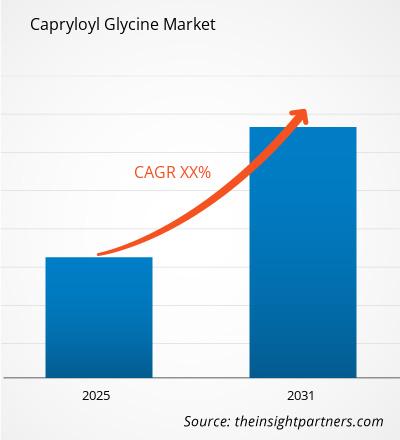
The Capryloyl Glycine market was valued at US$ 91.2 Million in 2025 and is projected to reach US$ 182.53 Million by 2034, expanding at a CAGR of 8.01% during 2026–2034. Growing demand for multifunctional cosmetic ingredients, increasing preference for mild antimicrobial actives, and wider incorporation into premium personal care formulations continue to support market expansion. Product innovation focused on skin microbiome balance and clean-label formulations is further strengthening commercial adoption across developed and emerging economies.
Across North America, manufacturers focus on high-performance cosmetic ingredients that offer both antimicrobial effectiveness and compatibility with skin. This creates favorable conditions for lasting demand. The Capryloyl Glycine Market size in the region benefits from the rising demand for premium skincare, growing investments in dermatological products, and strict product quality standards. These factors are likely to support regional growth, with an estimated CAGR of 7.5% to 8.3% through 2034.
Capryloyl Glycine Market Assessment and Insights
- North America has a strong demand for premium skincare, dermocosmetics, and multifunctional active ingredients. This makes it a leading regional market. Share in 2025 is expected to be 32 to 35 percent, with a CAGR between 2026 and 2034 of 7.5 to 8.3 percent.
- The United States leads regional consumption due to its cosmetic manufacturing, established dermatology brands, and ongoing ingredient innovation. The share of North America in 2025 is projected to be 76 to 80 percent, with a CAGR between 2026 and 2034 of 7.6 to 8.4 percent.
- Europe benefits from established cosmetic regulations, the rise of clean beauty, and strong ingredient manufacturing in France, Germany, Italy, and the UK. The share in 2025 is expected to be 28 to 31 percent, with a CAGR between 2026 and 2034 of 7.7 to 8.5 percent.
- In the Asia Pacific, rising disposable income, expanding skincare manufacturing, and increased cosmetic exports from China, Japan, South Korea, and India drive rapid growth. The share in 2025 is projected to be 25 to 28 percent, with a CAGR between 2026 and 2034 of 8.8 to 9.6 percent.
- The largest segment is Cosmetic Grade, which remains the dominant segment due to its widespread use in skincare, cleansers, and personal care formulations. The market share in 2025 is expected to be 66 to 70 percent, with a CAGR between 2026 and 2034 of 7.9 to 8.6 percent.
- The high-growth segment: Medicated Cleansers, is expanding quickly due to increasing demand for antimicrobial and microbiome-friendly skincare products. The market share in 2025 is projected to be 12 to 15 percent, with a CAGR between 2026 and 2034 of 9.4 to 10.2 percent.
- Key companies analyzed in detail include AE Chemie, Inc., PRODOTTI GIANNI S.R.L., Biosynth Carbosynth Limited, Minasolve, Novephene, Taian Green Industry Co., Ltd., Wuhan Jetide Biotech Co., Ltd., Seppic SA, Sinerga S.p.A., and Zley Holdings (Suzhou) Co., Ltd.
Source: The Insight Partners' analysis based on proprietary research, government publications, company annual reports, investor presentations, industry databases, and expert interviews.
Continuous innovation in cosmetic chemistry has shifted ingredient development from basic antimicrobial functions to multifunctional performance. Manufacturers are engineering Capryloyl Glycine for better compatibility with botanical extracts, peptides, ceramides, and ingredients that support the microbiome. This allows formulators to simplify ingredient lists while maintaining effectiveness. Production technologies have also improved the consistency of purity and formulation stability. This enables wider use in facial cleansers, medicated skincare, oral care products, and applications for sensitive skin. These improvements boost supply chain efficiency and help meet regulations in major cosmetic markets.
The future of the industry will depend more on the demand for premium skincare, the harmonization of regulations, and sustainable ingredient manufacturing. Increased investments in biotechnology-based cosmetic ingredients, expanding formulation capacity in Asia, and growing consumer awareness about skin health are likely to create new commercialization opportunities. Companies are also forming stronger partnerships with contract formulators and specialty chemical distributors. They are investing in eco-friendly production processes, paving the way for sustained long-term growth in both established and emerging markets.
Capryloyl Glycine Market Report Scope
| Report Attribute | Details |
|---|---|
| Market size in 2025 | US$ 91.2 Million |
| Market Size by 2034 | US$ 182.53 Million |
| Global CAGR (2026 - 2034) | 8.01% |
| Historical Data | 2021-2024 |
| Forecast period | 2026-2034 |
Capryloyl Glycine Market Analysis
Consumer preference for multifunctional skincare ingredients is driving growth in the Capryloyl Glycine market in both cosmetics and pharmaceuticals. This ingredient has seboregulating, antimicrobial, and skin-conditioning properties. It allows formulators to address multiple consumer concerns with one active ingredient. The rising rates of acne-prone skin, greater awareness of skin microbiome health, and a move toward sulfate-free cleansing products are increasing demand. Premium beauty brands are using multifunctional ingredients more often to simplify their formulations while meeting clean-label standards.
The value chain includes specialty chemical manufacturers, amino acid derivative producers, ingredient distributors, cosmetic formulators, contract manufacturers, and branded personal care companies. Improvements in sourcing raw materials, formulation technology, and global distribution networks have made supply more reliable. Manufacturers are investing in higher-purity production methods to meet stricter cosmetic quality requirements. They are also developing custom ingredient solutions for dermatological and premium skincare.
To stand out in the market, companies are focusing on product purity, formulation expertise, regulatory support, and collaboration with cosmetic brands. This forms the basis for analyzing the Capryloyl Glycine market worldwide. Companies such as Seppic SA, Minasolve, Sinerga S.p.A., and PRODOTTI GIANNI S.R.L. are increasing their specialty ingredient offerings by providing formulation support and product development focused on application. In contrast, Asian suppliers like Taian Green Industry Co., Ltd., Wuhan Jetide Biotech Co., Ltd., and Zley Holdings (Suzhou) Co., Ltd. are enhancing their global competitiveness through larger manufacturing scales and cost-effective production.
Investment is increasingly aimed at sustainable production methods, microbiome-friendly ingredients, and new formulation technologies. AE Chemie, Inc., Biosynth Carbosynth Limited, and Novephene are expanding their specialty chemical capabilities to meet changing needs in cosmetics and pharmaceuticals. Collaborations between ingredient makers and personal care brands are speeding up the launch of innovative formulations. More research into multifunctional bio-based cosmetic ingredients is expected to improve long-term product differentiation and strengthen competitive positions across the global value chain.
● REPORT CUSTOMIZATION
Tailor This Report To Align With Your Specific Business Requirements
This report can be customized to align precisely with your business objectives, scope, and target markets. Customization options include tailored segmentation, geography, competitive analysis, and strategic insights to support informed decision-making.
Customize This Report →WHAT YOU CAN ADJUST
- ● Segmentations
- ● Geography
- ● Competitive Analysis
- ● Language Preferences
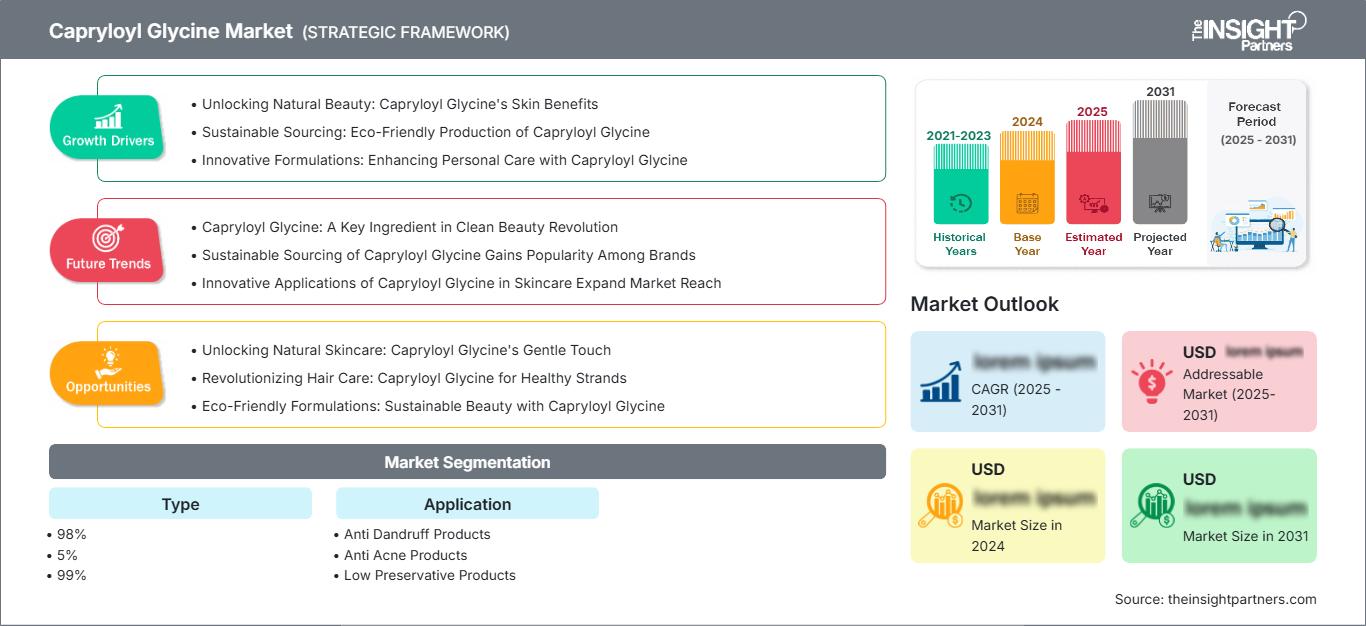
Capryloyl Glycine Market: Strategic Insights
Regional Insights
North America Capryloyl Glycine
North America made up 32% to 35% of the global market in 2025. It is expected to grow at a CAGR of 7.5% to 8.3% from 2026 to 2034. The region has a well-established personal care industry, high consumer spending on premium skincare products, and ongoing innovation in multifunctional cosmetic ingredients. Regulatory oversight of cosmetic formulations and rising demand for microbiome-friendly products encourage manufacturers to use Capryloyl Glycine in their formulations. The Capryloyl Glycine Market share continues to benefit from strong demand from dermocosmetic and premium cleansing product makers.
Increasing consumer preference for sulfate-free cleansers, anti-acne products, and items with fewer preservatives is boosting ingredient demand. Local manufacturers collaborate with specialty ingredient suppliers to create tailored formulas for sensitive skin. The rise of e-commerce beauty brands and investment in eco-friendly cosmetic ingredients are likely to improve regional competitiveness throughout the forecast period.
U.S. Capryloyl Glycine Market
The U.S. represented 76–80% of the North American market in 2025 and is expected to register a CAGR of 7.6 to 8.4% through 2034. The country has many premium skincare brands, contract manufacturers, and specialty ingredient distributors that constantly invest in new cosmetic formulations. Growing consumer awareness about skin microbiome health and multifunctional active ingredients has increased the use of facial cleansers, anti-acne products, and medicated skincare items.
Demand comes from strong research capabilities and collaboration between ingredient suppliers and cosmetic manufacturers. Effective retail distribution through specialty beauty stores, pharmacies, and online platforms boosts the sales of premium formulations. Ongoing product launches targeting oily and acne-prone skin are expected to maintain steady demand for high-purity Capryloyl Glycine throughout the forecast period.
Europe Capryloyl Glycine Market
Europe captured 28 to 31% of the global market in 2025 and is expected to grow at a rate of 7.7 to 8.5% from 2026 to 2034. The region has well-established cosmetic manufacturing clusters, solid ingredient research, and strict regulatory standards that promote high-quality specialty ingredients. France remains the top country due to its globally recognized cosmetic industry and the concentration of premium skincare manufacturers.
The United Kingdom is experiencing steady growth because of an increase in premium skincare consumption, more investment in dermatological cosmetics, and a rising demand for multifunctional ingredients that improve formulation efficiency and comply with regulations. Local beauty brands are introducing products that support the microbiome and cater to sensitive skin.
Germany continues to be a key hub for manufacturing and formulation, due to its strong development of specialty chemicals and cosmetic ingredients. Investments in sustainable production technologies and ingredients from biotechnology are driving innovation and boosting export opportunities in Europe and beyond.
France, Italy, and Spain together generate significant regional demand through premium cosmetics manufacturing, luxury skincare brands, and increased exports. Companies in these countries are investing in multifunctional active ingredients that improve product effectiveness, simplify formulations, and promote sustainability while addressing the growing consumer interest in clean beauty products.
APAC Capryloyl Glycine Market
Asia Pacific made up 25 to 28% of the global market in 2025. It is expected to grow at a rate of 8.8 to 9.6%, making it the fastest-growing regional market. China has the highest production capacity in the region. Meanwhile, Japan and South Korea are leading the way in developing premium skincare ingredients and innovative cosmetic products.
India and Australia are experiencing more growth due to an expanding cosmetic manufacturing sector, rising disposable income, and favorable industrial policies that support specialty chemicals. Increased exports of personal care products, along with ongoing investments in research and development, will likely drive market growth in the region throughout the forecast period.
Middle East & Africa Capryloyl Glycine Market
The Middle East and Africa market is expected to grow at a rate of 7.2 to 8.0% from 2026 to 2034. Saudi Arabia and the UAE are boosting premium personal care consumption by developing their retail infrastructure. Meanwhile, South Africa continues to be a key cosmetics manufacturing hub in the region.
More investment in consumer goods production, increasing urbanization, and higher spending on skincare products are driving demand in the area. The growth of specialty ingredient distribution networks and updates to cosmetic manufacturing facilities will likely create better market opportunities in the rest of MEA.
Segmentation Analysis
Purity/Grade
The Purity/Grade segment is projected to grow at a CAGR of 7.9–8.6% during 2026–2034. This section explains the commercial use of Capryloyl Glycine in cosmetic, pharmaceutical, and specialized industrial applications. The purity of the product directly affects formulation stability, regulatory standards, antimicrobial effectiveness, and how well it works with products for sensitive skin. The use of Capryloyl Glycine is growing as manufacturers create higher-purity grades to meet the demands of premium personal care and dermatological formulations.
- Cosmetic Grade: This is the largest category due to its widespread use in facial cleansers, shampoos, skin creams, deodorants, and premium personal care products that need multifunctional antimicrobial and sebum-regulating properties.
- Pharmaceutical Grade: Usage is increasing for topical dermatological formulations, medicated skincare products, and wound care applications, where higher purity, strict manufacturing standards, and consistent quality are crucial.
Form
The Form segment is anticipated to register a CAGR of 8.0–8.8% during 2026–2034. Availability in several physical forms helps formulators improve manufacturing efficiency and product compatibility in different personal care and pharmaceutical uses. Manufacturers are increasingly adjusting physical properties to enhance ingredient mixing, stability, and processing flexibility.
- Powder: This form is preferred for products needing long shelf life, easier shipping, precise dosing, and compatibility with dry cosmetic mixes and concentrated manufacturing steps
- Liquid/Solution: This is commonly used in liquid cleansers, foaming products, and pharmaceutical preparations due to its easy mixing, even distribution, and better manufacturing efficiency during formulation.
Application
The Application segment is expected to expand at a CAGR of 8.5–9.3% during 2026–2034. Growing use in cosmetic and healthcare products shows a greater awareness of Capryloyl Glycine's multiple benefits, including its antimicrobial, skin-conditioning, and microbiome-supporting properties. Manufacturers are expanding how they use this ingredient through product innovation and testing clinical performance.
- Facial Cleansers and Foaming Gels: These account for the greatest demand because many consumers prefer gentle cleansing products that control oil while keeping the skin barrier intact.
- Oral Care: More mouthwashes, toothpaste, and specialty oral hygiene products now include Capryloyl Glycine to support microbial balance and enhance existing antimicrobial systems.
- Medicated Cleansers: The rapid growth in this area comes from the increasing number of people with acne-prone skin, recommendations from dermatologists, and the need for effective multi-purpose cleansing products.
- Antimicrobial Creams: Ongoing use reflects a growing focus on topical products that are efficient in preservatives and combine skin conditioning with antimicrobial effects for skin care.
- Wound Care Preparations: New medical applications benefit from antimicrobial properties and work well with advanced topical formulas that promote hygienic wound management.
Opportunity Snapshot
| Application | Revenue Contribution | Trend Tag | Adoption Stage |
|---|---|---|---|
| Facial Cleansers and Foaming Gels | High | Microbiome Care | Mature |
| Oral Care | Medium | Bio Protection | Scaling |
| Medicated Cleansers | High | Acne Control | Scaling |
| Antimicrobial Creams | Medium | Skin Defense | Scaling |
| Wound Care Preparations | Low | Clinical Care | Emerging |
| Others | Low | Niche Uses | Emerging |
Capryloyl Glycine Market Growth Drivers and Impact Analysis
Growing Preference for Multifunctional Cosmetic Ingredients
Consumer demand for simpler skincare formulas is pushing cosmetic manufacturers to use multifunctional active ingredients that offer several benefits at once. Capryloyl Glycine gives antimicrobial properties, regulates oil production, conditions skin, and works well in products for sensitive skin. This makes it a desirable ingredient for high-end personal care items. As consumers look for sulfate-free, preservative-light, and microbiome-friendly cosmetics, brands are changing their product lines to include ingredients with various functions. The focus on ingredient safety and clear formulation practices supports this change. Manufacturers are spending on research and development to improve how well ingredients work with plant extracts, peptides, ceramides, and bio-based actives. These advancements help products stand out while making formulations simpler, which boosts steady demand for facial cleansers, foaming gels, and high-quality skincare items worldwide.
Expansion of Dermatological and Therapeutic Skincare Applications
Growing awareness of acne treatment, skin barrier health, and microbiome balance is broadening the use of specialty cosmetic ingredients in therapeutic skincare. Dermatologists are increasingly recommending formulas with gentle antimicrobial agents that keep skin healthy while tackling excess oil and bacterial imbalance. Capryloyl Glycine fits these needs because it offers cleansing support and skin-conditioning benefits without adding significant complexity to formulations. As a result, pharmaceutical and cosmeceutical manufacturers are including this ingredient in medicated cleansers, antimicrobial creams, and specialized skincare products designed for sensitive or acne-prone skin. Increased healthcare spending, wider access to dermatologist-backed skincare brands, and greater consumer understanding of preventive care are expected to boost its use in both developed and developing markets during the forecast period.
Increasing Investments in Premium and Sustainable Personal Care Formulations
Global beauty manufacturers continue to invest in premium formulas that focus on ingredient effectiveness, sustainability, and compliance with regulations. Capryloyl Glycine benefits from this investment trend because it helps create simpler formulas while improving product performance and consumer attraction. Companies are boosting production capacity, enhancing manufacturing efficiency, and building stronger partnerships with specialty ingredient suppliers to meet the growing demand for high-quality cosmetic actives. Sustainability initiatives that promote responsible sourcing, eco-friendly production, and less complex formulations are enhancing market opportunities. The rapid growth of premium skincare brands across Asia Pacific, North America, and Europe also provides new chances for specialty ingredients with proven multifunctional benefits. Ongoing investment in biotechnology, ingredient innovation, and formulation science is expected to support long-term market growth.
Capryloyl Glycine Market Future Trends
Growing Integration of Microbiome-Friendly Skincare Technologies
The growth of microbiome-focused skincare is one of the major Capryloyl Glycine Market trends that is shaping future product development. Cosmetic manufacturers are creating formulations that maintain beneficial skin microorganisms while managing unwanted bacterial growth using gentle, multifunctional ingredients. Capryloyl Glycine fits this strategy due to its balanced antimicrobial properties and its compatibility with sensitive skin formulas. Future innovations are likely to combine this ingredient with probiotics, postbiotics, fermented cosmetic actives, peptides, and naturally sourced ingredients to provide personalized skincare solutions. Ongoing collaboration among ingredient suppliers, biotechnology companies, and cosmetic brands is expected to speed up the launch of microbiome-supporting formulations in high-end skincare markets worldwide.
Digital Formulation and Biotechnology-Driven Ingredient Development
Artificial intelligence, digital formulation platforms, and biotechnology are changing how specialty ingredients are developed. They speed up formulation optimization and shorten development timelines. Manufacturers are using predictive modeling to assess ingredient compatibility, stability, and product performance before mass production. Capryloyl Glycine is likely to benefit from these technological improvements, leading to better formulation accuracy and more application options. Production methods based on biotechnology are also becoming more popular because they offer greater consistency, sustainable manufacturing practices, and a lower environmental impact. These advancements are expected to boost innovation, enhance production efficiency, and allow cosmetic manufacturers to launch unique products that meet changing consumer demands for performance, safety, and sustainability.
Capryloyl Glycine Market Opportunities
Expansion into Advanced Medical and Pharmaceutical Topical Products
Increasing demand for multifunctional topical formulations offers significant chances beyond standard cosmetic uses. The rising occurrence of chronic skin conditions, wider wound management options, and higher investment in pharmaceutical dermatology all contribute to favorable conditions for greater use of Capryloyl Glycine in therapeutic products. Manufacturers are looking at this ingredient for antimicrobial creams, post-procedure skincare, wound care products, and combination dermatological items where skin compatibility is crucial. Capryloyl Glycine Market Forecasts suggest that ongoing clinical research, better regulatory documentation, and closer partnerships between specialty chemical manufacturers and pharmaceutical companies could speed up the introduction of new healthcare products while creating varied revenue opportunities across different industries.
Rising Demand Across Emerging Beauty Manufacturing Economies
Emerging economies in the Asia Pacific, Latin America, and the Middle East are investing more in cosmetic manufacturing, premium skincare brands, and sourcing specialty ingredients. These markets offer great opportunities for ingredient manufacturers who want long-term volume growth. This can be achieved through local production, strategic partnerships, and technical support services. Rapid urbanization, rising disposable income, increased online shopping, and growing consumer awareness of scientifically formulated skincare products are driving the demand for multifunctional cosmetic ingredients. Companies that can deliver consistent product quality, regulatory support, formulation expertise, and sustainable manufacturing solutions will be well positioned to strengthen their presence in the regional market and foster innovation among both local and international personal care manufacturers.
Recent Developments
- December 2025: Cremer Volunteer Pastilles announced a US$40 million expansion of its Lake Charles, Louisiana, facility. The project will establish a full-service logistics and manufacturing terminal with rail, truck, and waterfront access while expanding oleochemical processing capabilities and supporting increased production of specialty oleochemical products for industrial and consumer applications.
- August 2025: BN Holdings Limited announced plans to establish India's largest integrated oleochemical manufacturing facility in Gujarat. The project will produce specialty oleochemicals derived from vegetable oils and fats, strengthening domestic manufacturing capacity and supporting growing demand from cosmetics, pharmaceuticals, food ingredients, and personal care industries.
Frequently Asked Questions

- Comprehensive Market Sizing and Forecast Analysis
- Detailed Segmentation Analysis
- In-Depth Market Dynamics Assessment
- Regional and Country-Level Insights
- Competitive Landscape and Company Benchmarking
- Strategic Business Intelligence
Recent Reports
Testimonials

The Insight Partners' SCADA System Market report is comprehensive, with valuable insights on current trends and future forecasts. The team was highly professional, responsive, and supportive throughout. We are very satisfied and highly recommend their services.
RAN KEDEM Partner, Reali Technologies LTDs
I requested a report on a very specific software market and the team produced the report in a few days. The information was very relevant and well presented. I then requested some changes and additions to the report. The team was again very responsive and I got the final report in less than a week.
JEAN-HERVE JENN Chairman, Future Analytica
We worked with The Insight Partners for an important market study and forecast. They gave us clear insights into opportunities and risks, which helped shape our plans. Their research was easy to use and based on solid data. It helped us make smart, confident decisions. We highly recommend them.
PIYUSH NAGPAL Sr. Vice President, High Beam Global
The Insight Partners delivered insightful, well-structured market research with strong domain expertise. Their team was professional and responsive throughout. The user-friendly website made accessing industry reports seamless. We highly recommend them for reliable, high-quality research services
YUKIHIKO ADACHI CEO, Deep Blue, LLC.
This is the first time I have purchased a market report from The Insight Partners.While I was unsure at first, I visited their web site and felt more comfortable to take the risk and purchase a market report.I am completely satisfied with the quality of the report and customer service. I had several questions and comments with the initial report, but after a couple of dialogs over email with their analyst I believe I have a report that I can use as input to our strategic planning process.Thank you so much for taking the extra time and making this a positive experience.I will definitely recommend your service to others and you will be my first call when we need further market data.
JOHN SUZUKI President and Chief Executive Officer, Board Director, BK Technologies
I wish to appreciate your support and the professionalism you displayed in the course of attending to my request for information regarding to infectious disease IVD market in Nigeria. I appreciate your patience, your guidance, and the fact that you were willing to offer a discount, which eventually made it possible for us to close a deal. I look forward to engaging The Insight Partners in the future, all thanks to the impression you have created in me as a result of this first encounter.
DR CHIJIOKE ONYIA MANAGING DIRECTOR, PineCrest Healthcare Ltd.Reason to Buy
- Informed Decision-Making
- Understanding Market Dynamics
- Competitive Analysis
- Identifying Emerging Markets
- Customer Insights
- Market Forecasts
- Risk Mitigation
- Boosting Operational Efficiency
- Strategic Planning
- Investment Justification
- Tracking Industry Innovations
- Aligning with Regulatory Trends





 Get Free Sample for