
Cardiac Arrhythmia Monitoring Devices Market Share, Size & Demand by 2034
Coverage: by Device ( Holter monitor, Event recorder, Mobile cardiac telemetry, Implantable cardiac monitor, Electrocardiogram (ECG) monitor, Others ); Application ( Tachycardia, Bradycardia, Premature contraction, Others ); End User ( Hospitals and clinics, Diagnostic centers, Ambulatory surgical centers, Homecare settings, Others ), and Geography (North America, Europe, Asia Pacific, and South and Central America)
- Status : Data Released
- Report Code : TIPRE00007630
- Category : Life Sciences
- No. of Pages : 150
- Available Report Formats :


- Last update date : August 21, 2026


2025 Market Size
US$ 8.5 Bn
Base year value
2034 Forecast
US$ 15.02 Bn
Projected by 2034
CAGR 2026-2034
6.52 %
Growth rate
Addressable Market
US$ 106.31 Bn
(2026-2034)
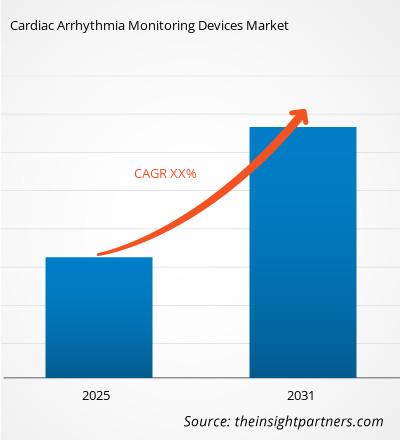
The Cardiac Arrhythmia Monitoring Devices Market is projected to grow from US$ 8.5 Billion in 2025 to US$ 15.02 Billion by 2034, registering a CAGR of 6.52% during 2026–2034. The market reflects rising diagnostic demand for intermittent rhythm disorders, greater use of ambulatory ECG technologies, and broader clinical acceptance of continuous monitoring across hospitals, outpatient cardiology, and homecare environments.
Across North America, the Cardiac Arrhythmia Monitoring Devices Market size is supported by high procedure volumes, reimbursement for ambulatory ECG monitoring, and rapid conversion from periodic testing to connected cardiac surveillance. The region is estimated to expand at a CAGR range of 5.8–6.4% during 2026–2034, driven by atrial fibrillation screening, clinician adoption of patch-based monitoring, and payer interest in reducing avoidable emergency visits.
Cardiac Arrhythmia Monitoring Devices Market Assessment and Insights
- North America accounted for 37–40% share in 2025 and is projected to grow at a CAGR between 5.8–6.4% during 2026–2034, supported by reimbursement maturity, cardiology networks, and remote patient monitoring models.
- US represented 82–86% of North America in 2025 and is expected to grow at a CAGR between 5.9–6.5% during 2026–2034, led by ambulatory ECG services and AI-enabled interpretation.
- Europe held 25–28% share in 2025 and is forecast to grow at a CAGR between 5.4–6.0% during 2026–2034, with Germany, the UK, France, Italy, and Spain leading clinical adoption.
- Asia Pacific represented 21–24% share in 2025 and is projected to grow at a CAGR between 7.2–7.8% during 2026–2034, led by China, Japan, India, South Korea, and Australia.
- Largest Segment: Device held 58–62% market share in 2025 and is expected to grow at a CAGR between 6.1–6.7% during 2026–2034, supported by ECG and ambulatory monitoring demand.
- High Growth Segment: Homecare settings held 13–16% market share in 2025 and is forecast to grow at a CAGR between 7.6–8.4% during 2026–2034, driven by remote monitoring.
- Key companies analyzed in detail: ACS Diagnostics, Inc.; AliveCor, Inc.; Biotricity, Inc.; BIOTRONIK SE & Co. KG; GE HealthCare Technologies Inc.; iRhythm Technologies, Inc.; Koninklijke Philips N.V.; Medtronic plc; Nihon Kohden Corporation; St. Jude Medical, LLC, an Abbott company.
Source: The Insight Partners' analysis based on proprietary research, government publications, company annual reports, investor presentations, industry databases, and expert interviews.
Technology migration in the Cardiac Arrhythmia Monitoring Devices Market has moved from short-duration Holter recording toward adhesive patches, mobile telemetry, cloud analytics, and implantable monitors. Production dynamics are also changing as manufacturers prioritize miniaturized sensors, longer battery life, automated report generation, and scalable service operations. Hospitals still drive purchasing decisions, but device value is increasingly measured through diagnostic yield, workflow efficiency, and integration with electronic medical records.
Over the forecast period, growth momentum is expected to broaden beyond mature cardiology centers. Emerging geographies are investing in ECG infrastructure, private diagnostic chains, and ambulatory care pathways. Regulatory acceptance of software-assisted interpretation, telehealth reimbursement, and guideline-driven atrial fibrillation detection will strengthen adoption. Cardiac Arrhythmia Monitoring Devices Market growth will depend on balancing device accuracy, data burden, patient adherence, and payer confidence.
Cardiac Arrhythmia Monitoring Devices Market Report Scope
| Report Attribute | Details |
|---|---|
| Market size in 2025 | US$ 8.5 Billion |
| Market Size by 2034 | US$ 15.02 Billion |
| Global CAGR (2026 - 2034) | 6.52% |
| Historical Data | 2021-2024 |
| Forecast period | 2026-2034 |
Cardiac Arrhythmia Monitoring Devices Market Analysis
Demand is shaped by the rising burden of atrial fibrillation, stroke prevention programs, and the need to capture intermittent arrhythmias missed during resting ECG tests. Cardiologists increasingly prefer extended monitoring because diagnostic yield improves when data are captured over days or weeks rather than minutes. The Cardiac Arrhythmia Monitoring Devices Market growth is also tied to home-based care, where monitoring can begin earlier after symptoms, procedures, or medication changes.
Ecosystem members include sensor manufacturers, software development organizations, cloud computing platforms, cardiologists, diagnostic centers, payers, and hospital IT departments. Suppliers are favored by those who have hardware that has a level of reliability and combines technician review, automated sorting, and reporting. The vendors are competing based on the wearable, high-quality signals, reimbursement strategies, and clinical proof that reduce follow-up testing.
Competitive pressure has increased with the improved enterprise ECG platform of GE Healthcare Technologies Inc. and Koninklijke Philips N.V. and the growing ambulatory model using data by iRhythm Technologies, Inc., AliveCor, Inc., and Biotricity, Inc. Medtronic plc, BIOTRONIK SE & Co. KG, and St. Jude Medical, LLC, an Abbott company, have a significant impact on implantable monitoring and rhythm management ecosystems.
Investment patterns indicate a shift toward software-enabled diagnostics, AI classification, and longitudinal patient engagement. Cardiac Arrhythmia Monitoring Devices Market analysis shows that strategic positioning increasingly depends on evidence generation, regulatory execution, and the ability to serve hospitals, clinics, and homecare with consistent reporting quality. Companies with interoperable platforms are better placed to defend their share as care moves outside hospitals.
● REPORT CUSTOMIZATION
Tailor This Report To Align With Your Specific Business Requirements
This report can be customized to align precisely with your business objectives, scope, and target markets. Customization options include tailored segmentation, geography, competitive analysis, and strategic insights to support informed decision-making.
Customize This Report →WHAT YOU CAN ADJUST
- ● Segmentations
- ● Geography
- ● Competitive Analysis
- ● Language Preferences
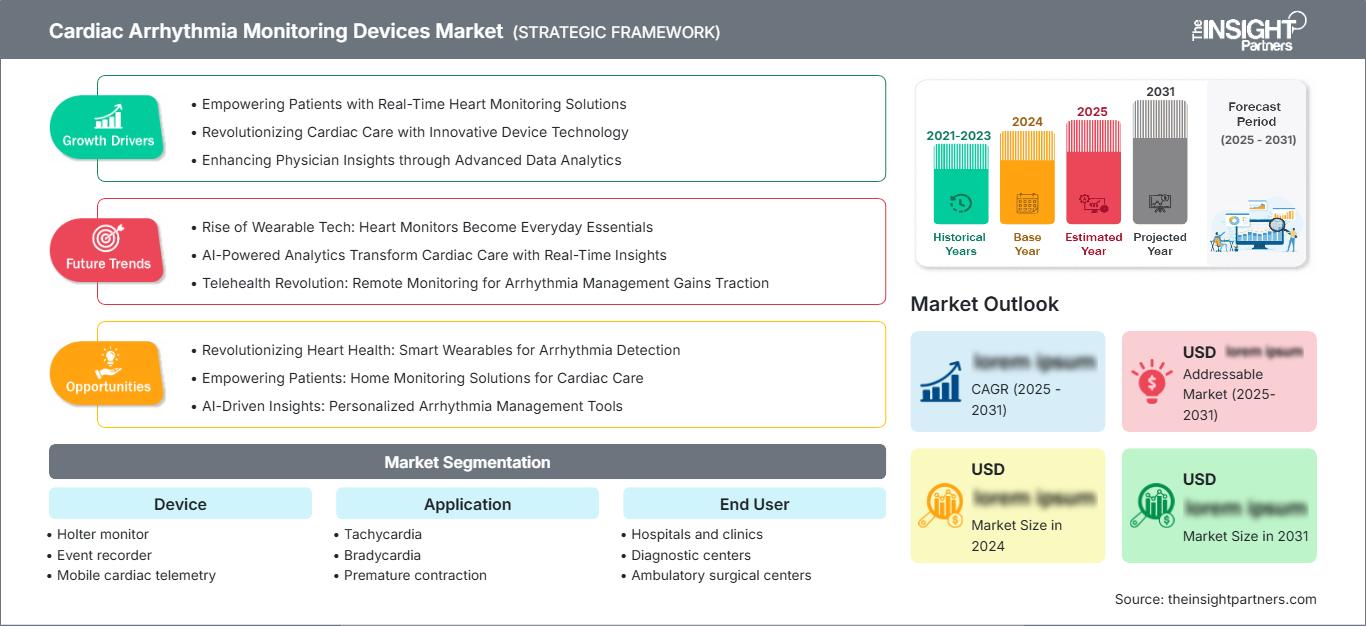
Cardiac Arrhythmia Monitoring Devices Market: Strategic Insights
Regional Insights
North America Cardiac Arrhythmia Monitoring Devices Market
North America held 37–40% share in 2025 and is projected to grow at a CAGR between 5.8–6.4% during 2026–2034. The Cardiac Arrhythmia Monitoring Devices Market share remains highest in this region because cardiology practices use ambulatory ECG monitoring for syncope, palpitations, suspected atrial fibrillation, and post-ablation follow-up. Established billing pathways and strong device availability support steady utilization.
The region’s structural advantage comes from dense electrophysiology networks, digital health investment, and provider familiarity with patch monitoring and mobile cardiac telemetry. Demand is shifting toward longer wear times, faster report turnaround, and AI-assisted prioritization. Canada contributes through public hospital procurement, while the US remains the core commercial engine.
U.S. Cardiac Arrhythmia Monitoring Devices Market
The US accounted for 82–86% of North America in 2025 and is expected to grow at a CAGR between 5.9–6.5% during 2026–2034. Adoption is most prominent within ambulatory cardiology, which makes use of extended ECG monitoring in the pre-diagnosis phase before initiating anticoagulation, ablation, pacemaker assessment, and medication modification. Mobile cardiac telemetry companies have much to gain from large installations.
The company's presence centers on services-based monitoring, cloud interpretations, and programs for implantable cardiac monitors. iRhythm Technologies, Inc., AliveCor, Inc., Biotricity, Inc., GE HealthCare Technologies Inc., Medtronic plc, and St. Jude Medical, LLC, an Abbott company, influence applications for tachycardia, bradycardia, and premature contraction detection. The demand is bolstered by demographics that age and home monitoring growth.
Europe Cardiac Arrhythmia Monitoring Devices Market
Europe represented 25–28% share in 2025 and is projected to grow at a CAGR between 5.4–6.0% during 2026–2034. Germany stands first owing to hospital-based cardiologic capacity, insurance compliance and structured diagnosis. In the UK, progress in remote rhythm monitoring comes from outpatient care and the reduction of diagnostic delays.
In Germany, progress is driven by advanced electrophysiology capacity and high penetration of implantable cardiac monitors within unexplained syncope and cryptogenic stroke workflows. Adoption in the UK is fueled by NHS efficiency goals, centralized purchasing, and the need for efficient ECG technologies that ensure diagnostic precision.
France, Italy, and Spain make steady progress due to cardiac rehabilitation services, private diagnostics, and hub-and-spoke cardiology delivery. In France, progress is based on connected care and hospital digitalization initiatives; Italy builds regional outpatient diagnostics capacity; in Spain, progress is achieved through public-private partnerships. Evidence quality continues to be the key criterion of supplier selection due to regulation under EU medical device legislation.
APAC Cardiac Arrhythmia Monitoring Devices Market
APAC held 21–24% share in 2025 and is forecast to grow at a CAGR between 7.2–7.8% during 2026–2034. China is the leading country due to hospital expansion, rising cardiovascular screening, and local digital health investment. Japan and South Korea adopt advanced ECG technologies through aging-population care pathways.
India and Australia add momentum through private diagnostic chains, telecardiology, and wider homecare acceptance. Regional policy drivers include universal health coverage expansion, digital hospital programs, and chronic disease screening. Industrial growth is supported by electronics manufacturing capability, cloud health platforms, and lower-cost wearable device innovation.
Middle East & Africa Cardiac Arrhythmia Monitoring Devices Market
The Middle East & Africa is projected to grow at a CAGR between 6.0–6.6% during 2026–2034. Saudi Arabia leads regional adoption through healthcare infrastructure investment, tertiary cardiac centers, and national chronic disease programs. The UAE follows with private hospital networks, medical tourism, and digital care models.
South Africa anchors demand in sub-Saharan Africa through specialist cardiology services and diagnostic center expansion. The rest of MEA growth is uneven but improving as hospital modernization programs, energy-funded infrastructure spending, and connected care investments increase access. Adoption remains strongest where reimbursement, trained technicians, and cardiology referral networks are available.
Segmentation Analysis
Device
Device is the largest main segment, growing at a CAGR between 6.1–6.7% during 2026–2034. The Cardiac Arrhythmia Monitoring Devices Market scope across devices is widening as physicians combine short-duration, extended, mobile, and implantable monitoring based on symptom frequency and risk profile. Product design focuses on patient comfort, data clarity, and faster interpretation.
- Holter monitor remains essential for 24–48-hour rhythm assessment, especially in hospitals and diagnostic centers where physicians need familiar, reimbursable, and standardized recordings for symptomatic patients.
- Event recorder supports intermittent symptom capture and is strategically important for lower-frequency palpitations, enabling patients to activate recordings when symptoms occur outside traditional clinical settings.
- Mobile cardiac telemetry is preferred for higher-risk patients requiring near-real-time rhythm surveillance, particularly after hospitalization, medication changes, or suspected clinically significant arrhythmias.
- Implantable cardiac monitor addresses long-term detection needs in unexplained syncope and cryptogenic stroke, offering durable data capture when noninvasive monitoring fails to identify rhythm events.
- An electrocardiogram monitor provides foundational rhythm assessment across emergency, inpatient, outpatient, and home settings, supporting diagnosis, pre-procedure evaluation, and longitudinal cardiac surveillance.
Application
Application is expected to grow at a CAGR between 6.3–6.9% during 2026–2034. Demand is strongest where rhythm characterization affects clinical decisions such as anticoagulation, pacing, electrophysiology referral, or medication management. Applications differ by episode type, urgency, and monitoring duration, making device selection increasingly protocol-driven.
- Tachycardia monitoring attracts close clinical attention because rapid rhythms can signal atrial fibrillation, supraventricular tachycardia, or ventricular events requiring timely diagnosis and therapeutic escalation.
- Bradycardia detection is important for syncope evaluation, conduction disease assessment, and pacemaker decision-making, especially among aging patients and those taking rhythm-modifying drugs.
- Premature contraction monitoring supports differentiation between benign ectopy and clinically relevant burden, helping physicians evaluate symptoms, cardiomyopathy risk, and treatment response over time.
End User
End User is forecast to grow at a CAGR between 6.5–7.1% during 2026–2034. Adoption patterns reflect the broader migration of rhythm diagnostics from inpatient settings toward distributed care. Hospitals remain central for acute evaluation, but diagnostic centers, ambulatory surgical centers, and homecare settings are increasing monitoring access and continuity.
- Hospitals and clinics lead purchasing because they manage acute symptoms, referrals, electrophysiology workups, and post-procedure follow-up, requiring dependable ECG workflows and report integration.
- Diagnostic centers benefit from outsourced testing volumes, private patient access, and standardized Holter or patch monitoring services that shorten wait times for cardiology interpretation.
- Ambulatory surgical centers use monitoring for preoperative cardiac risk assessment and post-procedure surveillance, particularly where cardiovascular comorbidities affect anesthesia planning or recovery.
- Homecare settings are the fastest-scaling environment as remote monitoring, patient-friendly wearables, and virtual cardiology programs reduce facility visits while preserving diagnostic continuity.
Opportunity Snapshot
| Segment Name | Revenue Contribution | Trend Tag | Adoption Stage |
| Hospitals and clinics | High | ECG Workflow | Mature |
| Diagnostic centers | Medium | Outsourced Testing | Scaling |
| Ambulatory surgical centers | Low | Perioperative ECG | Emerging |
| Homecare settings | Medium | Remote Rhythm | Scaling |
Cardiac Arrhythmia Monitoring Devices Market Growth Drivers and Impact Analysis
Rising Clinical Burden of Intermittent Arrhythmias
Intermittent arrhythmias are characterized by a diagnostic challenge due to the fact that the patient's symptoms may disappear before visiting the doctor or the emergency room. Long-term monitoring helps to solve this problem by recording the arrhythmias over longer periods of time, which leads to better treatment choices and greater assurance on the part of doctors. Such results have the greatest value in the cases of atrial fibrillation, syncope, palpitations, and stroke, since misdiagnosis will result in additional visits or delay the start of the therapy. The presence of an aging population, as well as hypertension, diabetes, and obesity, stimulates physicians to use ambulatory ECGs at an early stage.
Shift from Episodic Testing to Connected Cardiac Surveillance
The healthcare industry is transitioning from single-use ECG testing to surveillance that relies on wearables, telemetry, cloud, and analysis by a clinician. This trend provides a greater understanding of the rhythm patterns to clinicians while limiting the need for testing at hospitals. The operational significance of the trend is notable in that remote processes can help reduce the time for diagnosis, ease administrative processes, and allow timely intervention. Manufacturers profit when the system connects to electronic health records and automates triaging, along with scaling of technician analysis. Payors and providers will be interested in surveillance if it helps to avoid repeat tests and delays in referrals. The Cardiac Arrhythmia Monitoring Devices Market is therefore becoming more service-oriented.
Growing Acceptance of Home-Based Cardiology Pathways
Cardiological pathways conducted from home are increasing as all parties involved look for more streamlined approaches to testing heart rhythm abnormalities. Wearable ECG patches, pocket ECG devices, and mobile telemetric solutions allow for testing without the need for multiple visits to the clinic, and this helps to increase compliance in elderly and remotely located patients. The market effects include usage in post-discharge care, treatment of chronic diseases, and virtual cardiology programs. Another effect of homecare is regular revenue streams for manufacturers of medical equipment and diagnostic services, especially when test results are available quickly and incorporated into the workflow.
Cardiac Arrhythmia Monitoring Devices Market Future Trends
AI-Assisted Rhythm Interpretation Becomes a Standard Workflow Layer
AI-assisted rhythm interpretation is expected to become a routine workflow layer rather than a differentiated add-on. Cardiac Arrhythmia Monitoring Devices Market trends point toward algorithms that prioritize clinically meaningful events, reduce manual review time, and standardize reporting across distributed care sites. In the coming stages, more rigorous validation of the software, clear-cut performance data, and mutual accountability between the algorithms and trained technicians are needed. Hospitals would look for products that reduce work without generating more false positives. The vendors that are able to validate their products’ accuracy and explainability and integrate them with the cardiology information systems have an edge as the volumes grow.
Longitudinal Monitoring Platforms Expand Beyond Single Episodes
The future platforms will be beyond one diagnostic encounter towards the longitudinal approach to rhythm management that ties up the data with medications, procedures, other co-morbidities, and actions. It will be important for the recurrence of atrial fibrillation, heart failure, post-ablation surveillance, and stroke prevention. The platforms won’t provide just isolated data but will enable risk stratification and personalized escalation. Their adoption will rely on good data management, interoperability, and clinical evidence of better results. Companies that will be able to integrate hand-held ECG, patches, telemetry, and implantable monitoring devices through a single patient’s chart will have stronger relationships with doctors.
Cardiac Arrhythmia Monitoring Devices Market Opportunities
Expansion of Remote Diagnostic Services in Emerging Markets
Emerging markets offer a practical opportunity for remote diagnostic services because specialist cardiology capacity is concentrated in urban centers, while rhythm symptoms are widely distributed. Cardiac Arrhythmia Monitoring Devices Market Forecasts indicate that scalable monitoring networks can combine low-cost ECG capture, centralized interpretation, and telecardiology referral. There is an opportunity for investors to target diagnostic chains, hospitals, and public health systems where there is a requirement for a cost-effective rhythm assessment process, which does not require much infrastructure. The most promising business models will be those that provide multilingual assistance, logistical options, and compatibility with reimbursement programs in the area.
Integrated Platforms for Hospitals and Ambulatory Networks
The hospitals and ambulatory networks would require systems that coordinate ECG acquisition, ambulatory monitoring, reporting processes, billing, and patient follow-up from the same platform. In this case, there is an opening for vendors who will be able to eliminate the fragmented processes that exist in the EDs, outpatient cardiology, diagnostic centers, and home care. The areas of investment include the development of systems with capabilities of integration, cybersecurity, fleet management, and analytics that demonstrate test status, turnaround time, and diagnostic yield. The integrated systems will enhance the vendor lock-in effect, where the costs of switching become higher as the monitoring data and processes become integrated.
Recent Developments
- January 2026: AliveCor, Inc. received US FDA clearance for the next generation of KAI 12L, the AI powering its Kardia 12L ECG System, adding five cardiac determinations and bringing the system total to 39 cleared determinations. The update expanded rhythm and morphology detection for portable 12-lead ECG use across clinical settings.
- March 2026: iRhythm Technologies, Inc. presented three retrospective analyses at ACC.26 supporting the clinical utility of its Zio ambulatory ECG portfolio across cardiovascular-kidney-metabolic patient populations. The company also launched iRhythm Academy to expand clinician education in ambulatory cardiac monitoring and AI-enabled cardiology workflows.
- June 2024: Koninklijke Philips N.V. introduced Cardiac Workstation in Europe, the Middle East, and Africa to accelerate diagnostic cardiology workflows. The platform uses algorithms to collect, analyze, and manage ECG data remotely or at the point of care, helping clinicians prioritize at-risk patients and reduce administrative burden.
Frequently Asked Questions

- Comprehensive Market Sizing and Forecast Analysis
- Detailed Segmentation Analysis
- In-Depth Market Dynamics Assessment
- Regional and Country-Level Insights
- Competitive Landscape and Company Benchmarking
- Strategic Business Intelligence
Recent Reports
Testimonials

The Insight Partners' SCADA System Market report is comprehensive, with valuable insights on current trends and future forecasts. The team was highly professional, responsive, and supportive throughout. We are very satisfied and highly recommend their services.
RAN KEDEM Partner, Reali Technologies LTDs
I requested a report on a very specific software market and the team produced the report in a few days. The information was very relevant and well presented. I then requested some changes and additions to the report. The team was again very responsive and I got the final report in less than a week.
JEAN-HERVE JENN Chairman, Future Analytica
We worked with The Insight Partners for an important market study and forecast. They gave us clear insights into opportunities and risks, which helped shape our plans. Their research was easy to use and based on solid data. It helped us make smart, confident decisions. We highly recommend them.
PIYUSH NAGPAL Sr. Vice President, High Beam Global
The Insight Partners delivered insightful, well-structured market research with strong domain expertise. Their team was professional and responsive throughout. The user-friendly website made accessing industry reports seamless. We highly recommend them for reliable, high-quality research services
YUKIHIKO ADACHI CEO, Deep Blue, LLC.
This is the first time I have purchased a market report from The Insight Partners.While I was unsure at first, I visited their web site and felt more comfortable to take the risk and purchase a market report.I am completely satisfied with the quality of the report and customer service. I had several questions and comments with the initial report, but after a couple of dialogs over email with their analyst I believe I have a report that I can use as input to our strategic planning process.Thank you so much for taking the extra time and making this a positive experience.I will definitely recommend your service to others and you will be my first call when we need further market data.
JOHN SUZUKI President and Chief Executive Officer, Board Director, BK Technologies
I wish to appreciate your support and the professionalism you displayed in the course of attending to my request for information regarding to infectious disease IVD market in Nigeria. I appreciate your patience, your guidance, and the fact that you were willing to offer a discount, which eventually made it possible for us to close a deal. I look forward to engaging The Insight Partners in the future, all thanks to the impression you have created in me as a result of this first encounter.
DR CHIJIOKE ONYIA MANAGING DIRECTOR, PineCrest Healthcare Ltd.Reason to Buy
- Informed Decision-Making
- Understanding Market Dynamics
- Competitive Analysis
- Identifying Emerging Markets
- Customer Insights
- Market Forecasts
- Risk Mitigation
- Boosting Operational Efficiency
- Strategic Planning
- Investment Justification
- Tracking Industry Innovations
- Aligning with Regulatory Trends





 Get Free Sample for