
Cardiac Pacemakers Market Share, Size & Demand by 2034
Cardiac Pacemakers Market Size and Forecasts (2021 - 2034), Global and Regional Share, Trends, and Growth Opportunity Analysis Report Coverage : by Product Type (Single-chamber Pacemaker, Dual-chamber Pacemaker, Biventricular Pacemaker); Implantability (Implantable Pacemakers and External Pacemakers); End User (Hospitals, Cardiac Clinics, Ambulatory Surgical Centers); and Geography (North America, Europe, Asia Pacific, and South and Central America)
- Status : Data Released
- Report Code : TIPRE00040078
- Category : Life Sciences
- No. of Pages : 150
- Available Report Formats :


- Last update date : September 08, 2026


2025 Market Size
US$ 4.30 Bn
Base year value
2034 Forecast
US$ 6.24 Bn
Projected by 2034
CAGR 2026-2034
4.22 %
Growth rate
Addressable Market
US$ 47.86 Bn
(2026-2034)
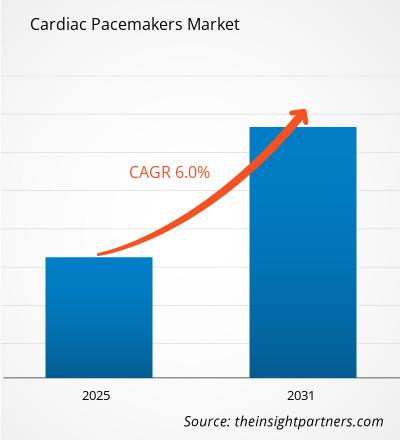
The Cardiac Pacemakers Market was valued at US$ 4.30 Billion in 2025 and is projected to reach US$ 6.24 Billion by 2034, registering a CAGR of 4.22% during 2026–2034. Expanding clinical use of implantable rhythm-management devices, increasing diagnosis of bradyarrhythmias, and continued improvements in battery longevity, device miniaturization, and pacing algorithms are shaping demand across established and developing healthcare systems.
Across North America, the Cardiac Pacemakers Market size is expected to expand at a CAGR of 3.8–4.2% during 2026–2034. Growth is supported by a large population requiring rhythm-management therapy, established electrophysiology infrastructure, and reimbursement pathways for clinically indicated implantation. Replacement procedures, remote device surveillance, and hospital adoption of leadless and MRI-conditional systems provide additional structural support for regional demand.
Cardiac Pacemakers Market Assessment and Insights
- North America: Accounted for 40–44% Cardiac Pacemakers Market share in 2025 and is expected to record a CAGR of 3.8–4.2% during 2026–2034, supported by high implantation capacity, replacement procedures, and adoption of leadless pacing.
- US: Represented 82–86% of North American revenue in 2025 and is projected to register a CAGR of 3.9–4.3% during 2026–2034 amid advanced electrophysiology infrastructure.
- Europe: Held 27–31% share in 2025 and is anticipated to grow at a CAGR of 3.6–4.0% during 2026–2034, with Germany, France, the UK, Italy, and Spain leading demand.
- Asia Pacific: Captured 20–24% share in 2025 and is forecast to expand at a CAGR of 5.4–5.9% during 2026–2034, led by China, Japan, India, South Korea, and Australia.
- Largest Segment: Dual-chamber pacemakers held a 49–53% market share in 2025 and are expected to register a CAGR of 4.0–4.4% during 2026–2034.
- High Growth Segment: Biventricular pacemakers represented a 17–21% market share in 2025 and are projected to expand at a CAGR of 5.0–5.5% during 2026–2034.
- Key companies analyzed in detail: Medtronic plc, Boston Scientific Corporation, Abbott Laboratories, BIOTRONIK SE & Co. KG, LivaNova PLC, Koninklijke Philips N.V., Osypka Medical GmbH, Cook Group Incorporated, MicroPort Scientific Corporation, and Shree Pacetronix Ltd.
Source: The Insight Partners' analysis based on proprietary research, government publications, company annual reports, investor presentations, industry databases, and expert interviews.
Technological advancement has transformed cardiac pacing devices from fixed-rate pulse generators into programmable, MRI-conditional, remotely monitorable, and leadless options. Device manufacturers have minimized the size of their devices while enhancing power management capabilities, diagnostic memory storage, and automatic adaptation to patient activity level changes. Consequently, production dynamics will be driven by factors such as semiconductor reliability, biocompatibility of materials, battery reliability, sterilization capability, and specialized manufacturing processes. Healthcare institutions will take into account the overall cost of treatment, involving surgery time, follow-ups, leads, generator replacements, and compatibility with other cardiac rhythm management systems.
Demand during the forecast period will extend to include non-mature electrophysiology centers with increasing healthcare investments in diagnosing patients across Asia Pacific, the Middle East, and selected countries in Africa. The regulatory approval of clinically proven leadless and conduction-system pacing technology would promote the development of new product portfolios. Investments will focus on training physicians, capacity for catheter insertion procedures, logistics, remote monitoring integration, and evidence generation for various patients.
Cardiac Pacemakers Market Report Scope
| Report Attribute | Details |
|---|---|
| Market size in 2025 | US$ 4.30 Billion |
| Market Size by 2034 | US$ 6.24 Billion |
| Global CAGR (2026 - 2034) | 4.22% |
| Historical Data | 2021-2024 |
| Forecast period | 2026-2034 |
Cardiac Pacemakers Market Analysis
The growth of Cardiac Pacemakers Market is driven by rising clinical burden of conduction disorders, increased life expectancy, and greater availability of electrocardiography and ambulatory rhythm monitoring. The demand starts from diagnosis via primary care facilities, emergency departments, and cardiology departments followed by electrophysiology evaluation, pacemaker selection, implantation, programming, and follow-up. Hospitals play a vital role within the value chain since they integrate surgical capacity, imaging, anesthesiology, stock, and post-implantation management. Suppliers need to provide reliable access to pulse generators, leads, programmers, delivery catheters, batteries, and sterile accessories.
Market supply favors manufacturers that have control over key engineering, regulatory, and distribution processes. Long qualification period for medical-grade components limits quick supplier changeover, and device recalls influence physicians' confidence and buying decisions. Manufacturers thus enhance dual sourcing, traceability, cybersecurity, and post-market surveillance. Distributors stay relevant in geographies where there is fragmented volume of implantations, while direct clinical support is strategically important due to the requirement of electrophysiologists to get help in programming, training, and inventory management.
Cardiac Pacemakers Market report highlights the high level of competition driven by clinical evidence, installed base of programmers, physician's experience, and complete ecosystems of remote care. Medtronic plc and Abbott Laboratories show strong performance in leadless pacing, while Boston Scientific Corporation and BIOTRONIK SE & Co. KG demonstrate strong position in transvenous, diagnostic, and connected care solutions. LivaNova PLC, Osypka Medical GmbH, and Shree Pacetronix Ltd. cover specific geographic, procedural, or temporary pacing needs, thereby creating differentiation from large global players.
Investment is focused on miniaturization, atrioventricular synchronization, physiologic pacing, improved battery life, cloud-based follow-up, and workflow integration. MicroPort Scientific Corporation and regional manufacturers can compete by means of targeted pricing and partnerships with distributors, while Koninklijke Philips N.V. and Cook Group Incorporated offer additional monitoring, imaging, and procedural solutions. Increasingly strategic positioning relies on generation of comparative clinical evidence, submission of reimbursement applications, training of the teams that perform implants, and proving that premium device utilization will decrease the complications related expenses during the treatment process.
● REPORT CUSTOMIZATION
Tailor This Report To Align With Your Specific Business Requirements
This report can be customized to align precisely with your business objectives, scope, and target markets. Customization options include tailored segmentation, geography, competitive analysis, and strategic insights to support informed decision-making.
Customize This Report →WHAT YOU CAN ADJUST
- ● Segmentations
- ● Geography
- ● Competitive Analysis
- ● Language Preferences
Cardiac Pacemakers Market: Strategic Insights

Regional Insights
North America Cardiac Pacemakers Market
North America accounted for 40–44% of global revenue in 2025 and is projected to register a CAGR of 3.8–4.2% during 2026–2034. Market share for cardiac pacemakers in the region is influenced by existing electrophysiology networks, replacement needs, availability of specialists, and familiarity with remote device interrogation. Leadless devices are gaining clinical popularity due to the high risk associated with pocket and lead problems in such patients.
Canada’s contribution lies in its publicly funded cardiac care program and referral networks, whereas the US is the major source of income. Procurement processes take into account battery lifetime, availability of MRI scanning, cybersecurity features, remote monitoring capabilities, and complication data. The manufacturers help promote their products through clinical education and technical representatives; however, budget considerations, staffing issues, and procedure approvals may influence the purchase rate.
U.S. Cardiac Pacemakers Market
The US generated 82–86% of North American revenue in 2025 and is expected to grow at a CAGR of 3.9–4.3% during 2026–2034. The company enjoys strong leadership in the presence of well-endowed hospital structures, electrophysiology centers, Medicare reimbursement for applicable procedures, and quick clinical assessment of leadless pacing and conduction system pacing.
There is strong business and clinical infrastructure in place at Medtronic plc, Abbott Laboratories, Boston Scientific Corporation, and BIOTRONIK SE & Co. KG in the country. There is a change in application practices towards customized device selection depending upon anatomy, risk of infection, anticipated pacing load, imaging needs, and co-morbid conditions. ASCs are selective participants due to the continuing need of procedure complexity, emergency backup, and reimbursement considerations favoring hospital procedures, especially among medically complex patients.
Europe Cardiac Pacemakers Market
Europe represented 27–31% of global revenue in 2025 and is forecast to expand at a CAGR of 3.6–4.0% during 2026–2034. German dominance is facilitated by the presence of cardiological infrastructure and procedures. The German hospitals emphasize clinical proof, longevity, remote monitoring, and procurement efficiency; well-organized reimbursement ensures indication-based implants and generator changes.
The UK relies on its centralized assessment process and its well-developed pace makers services, but long waiting lists and workforce issues may influence the scheduling of procedures. In France, specialist centers and well-developed reimbursement help. In Italy and Spain, pace maker implantation procedures continue actively in public hospitals; variations in budgeting between regions determine technology adoption. European Medical Device Regulation regulations impose higher obligations related to evidence and surveillance, which is beneficial for large suppliers but costly for small enterprises.
APAC Cardiac Pacemakers Market
Asia Pacific held 20–24% of global revenue in 2025 and is projected to record a CAGR of 5.4–5.9% during 2026–2034. China leads by revenue, Japan sustains premium technology adoption, and India offers substantial volume potential as cardiac diagnosis and insurance coverage improve.
South Korea and Australia contribute advanced procedural capacity and demand for connected devices. Public hospital construction, electrophysiology training, domestic manufacturing policies, and wider diagnostic access support expansion. Price sensitivity remains influential, encouraging manufacturers to develop differentiated portfolios, localized service models, and efficient channel partnerships.
Middle East & Africa Cardiac Pacemakers Market
The region is anticipated to register a CAGR of 4.5–5.0% during 2026–2034. Saudi Arabia leads through hospital investment and specialized cardiac centers, while the UAE supports advanced private and public care. South Africa functions as an important clinical and distribution hub.
Healthcare infrastructure programs linked to economic diversification are improving cardiac-service capacity in Gulf markets. Across the rest of the region, limited electrophysiology staffing, uneven reimbursement, import dependence, and constrained referral pathways restrict access, creating opportunities for training, service partnerships, and durable device portfolios.
Segmentation Analysis
Product Type
The product type segment is expected to expand at a CAGR of 4.1–4.5% during 2026–2034. The Cardiac Pacemakers Market scope includes single-chamber, dual-chamber, and biventricular systems serving distinct conduction disorders and heart-failure requirements. Device selection depends on rhythm diagnosis, synchronization needs, anatomy, pacing burden, age, infection risk, and physician assessment. Manufacturers balance established transvenous platforms with emerging leadless and physiologic pacing configurations.
- Single-chamber Pacemaker: These devices remain important for selected ventricular or atrial pacing indications, particularly when simplified implantation, limited hardware, lower acquisition cost, or specific rhythm characteristics guide clinical decision-making.
- Dual-chamber Pacemaker: Dual-chamber products lead demand because coordinated atrial and ventricular pacing supports physiological rhythm management across common bradycardia indications and offers flexibility for changing patient requirements.
- Biventricular Pacemaker: Biventricular systems hold strategic importance in cardiac resynchronization therapy for eligible heart-failure patients whose electrical dyssynchrony and reduced ventricular function require coordinated stimulation.
Implantability
The implantability segment is projected to register a CAGR of 4.0–4.4% during 2026–2034. Implantable devices generate most recurring demand because they provide long-term rhythm management, while external systems support urgent or temporary stabilization. Adoption depends on clinical indication, expected treatment duration, infection profile, procedural resources, and monitoring requirements. Leadless implantation is expanding the strategic range of permanent therapies without replacing every conventional configuration.
- Implantable Pacemakers: Permanent implantable systems dominate routine pacing therapy, supported by programmable settings, extended battery life, remote follow-up, MRI-conditional designs, and broad applicability across conduction disorders.
- External Pacemakers: External systems address temporary pacing in emergency, perioperative, intensive-care, and bridging situations, making rapid availability, intuitive controls, dependable electrodes, and staff readiness central purchasing considerations.
End User
The end-user segment is anticipated to grow at a CAGR of 4.0–4.4% during 2026–2034. Hospitals remain the principal implantation setting because they combine electrophysiology expertise, surgical backup, imaging, anesthesia, intensive care, and inventory capacity. Cardiac clinics concentrate on diagnosis, programming, and follow-up, while ambulatory surgical centers participate where reimbursement, patient selection, emergency protocols, and physician privileges support safe outpatient implantation.
- Hospitals: Hospitals account for the broadest procedural demand, handling complex implantation, device replacement, lead management, inpatient monitoring, emergency pacing, and multidisciplinary treatment of patients with significant comorbidities.
- Cardiac Clinics: Cardiac clinics provide diagnostic evaluation, device programming, remote-monitoring review, and longitudinal management, making them influential in product selection, adherence, early intervention, and referral decisions.
- Ambulatory Surgical Centers: These facilities present a selective growth channel for lower-complexity procedures, provided they maintain appropriate imaging, sterile workflows, trained teams, transfer arrangements, and favourable reimbursement coverage.
Opportunity Snapshot
| End User | Revenue Contribution | Trend Tag | Adoption Stage |
| Hospitals | High | Leadless Implantation | Mature |
| Cardiac Clinics | Medium | Remote Follow-up | Scaling |
| Ambulatory Surgical Centers | Low | Outpatient Pacing | Emerging |
Cardiac Pacemakers Market Growth Drivers and Impact Analysis
Increasing Clinical Need for Bradyarrhythmia Management
Age-related degeneration of the cardiac conduction system, sinus-node dysfunction, and atrioventricular block create sustained demand for pacing therapy. There is still an epidemic burden of cardiovascular disease, and the increased survival rate of individuals with heart structural defects means more people need to be rhythm monitored and managed. With enhanced ambulatory ECG monitoring and referral pathway to detect bradycardia symptoms, the market impact is not only limited to the initial placement but also the programming, monitoring, ancillaries, and generator replacement needs of patients. Suppliers of diagnostic-to-therapeutic solutions may use this to solidify ties with hospitals, which can help in cases where quick implantation prevents complications due to conduction disorders.
Clinical Expansion of Leadless Pacing Technologies
Leadless pacing reduces dependence on subcutaneous generator pockets and transvenous leads, addressing complications that may include infection, lead fracture, displacement, and venous obstruction. The dual-chamber leadless platform extends the patient population from previous single-ventricle technologies with its ability to pace both the atria and ventricles. However, adoption will still require specialist training, catheterization capability, accurate anatomical mapping, and long-term information on device retrieval and replacement. The biggest impact from a commercial perspective will occur at high-volume electrophysiology centers that have the capacity to absorb the training and capital expense. As physician experience increases, manufacturers can gain advantage by offering better delivery systems, battery life, device communications, remote monitoring, and lower downstream costs.
Expansion of Connected Cardiac Device Management
Remote interrogation enables clinical teams to examine battery status, function of the device, arrhythmia occurrences, and certain physiological data without depending entirely on visit scheduling. The need for such feature has become increasingly important as the number of people having implanted devices exceeds the specialists’ capabilities. Remote systems can allow an early detection of changes in condition, focus on patients who are at risk and decrease the workload in clinics. Market implications include purchase decisions since hospitals nowadays take into account platform user-friendliness, data integration, security issues, alerts management and electronic health record system integration along with hardware features.
Cardiac Pacemakers Market Future Trends
Convergence of Leadless and Physiologic Pacing
Cardiac Pacemakers Market trends increasingly point toward systems that combine reduced hardware burden with more physiological ventricular activation. Developers have been looking into atrioventricular synchronization, conduction system stimulation, multisite communication, and adaptive pacing algorithms based on patient activity. This is no longer about small pacemakers but therapy that will maintain heart function with reduced risk of lead and pocket problems. Acceptance will require successful implants, electrical function, ability to retrieve the device, battery life, and how it measures up compared to existing transvenous devices. Manufacturers who can integrate devices for delivery, support for mapping, training, remote monitoring, and credible scientific evidence will have a chance to shape the future of pacing therapy.
Lifecycle-Based Procurement and Predictive Follow-up
The Cardiac Pacemakers Market forecast shows that hospital procurement will increasingly assess total therapy cost rather than generator price alone. Pacemaker models are supposed to take into account implantation duration, risk of infection, revision possibility, battery lifetime, imaging capability, monitoring load, and replacement difficulty. Analytical algorithms can assist healthcare professionals in planning follow-ups using detection of abnormal parameter changes not seen through routine schedule planning. Effective models should ensure that notifications are clear, data is safe to handle, and there is a clear link between process improvement and its value for clinical practice. This new development will be favorable to manufacturers who can offer devices linked with good service and software rather than just pacemakers.
Cardiac Pacemakers Market Opportunities
Building Implantation Capacity in Underserved Healthcare Systems
Emerging economies contain substantial unmet need because rhythm diagnosis, electrophysiology expertise, and implantation capacity remain concentrated in major cities. Manufacturers can invest in structured physician training, referral education, inventory planning, technical support, and regional service centers. Partnerships with public hospitals and specialist societies can improve patient identification while reducing procedural delays. Product strategies should combine dependable implantable systems with programmers, temporary pacing support, and affordable follow-up pathways. Investment cases are strongest where health insurance coverage, hospital construction, and cardiovascular screening expand together. Sustainable entry requires local evidence, regulatory planning, distributor accountability, and service capabilities that continue beyond initial product placement.
Developing Integrated Remote-Care Service Models
Connected pacing creates opportunities for manufacturers and providers to design monitoring services around risk-based patient management. Potential investments include interoperable dashboards, automated data routing, cybersecurity, multilingual patient applications, clinic workflow redesign, and technical triage. The commercial opportunity is broader than software licensing because connected services can strengthen replacement-cycle retention and differentiate clinically similar devices. Hospitals will expect evidence of reduced administrative burden, timely escalation, and dependable connectivity before scaling programs. Suppliers should therefore combine technology with implementation support, staff training, service-level commitments, and outcome measurement. Cardiac clinics represent particularly suitable partners because they manage recurring interrogation and medication decisions after implantation.
Recent Developments
- May 2026: BIOTRONIK SE & Co. KG announced the first European implantations of its LivIQ leadless pacemaker within the BIO-LivIQ study. The study is evaluating safety, efficacy, and atrioventricular synchronous pacing at rest and during exercise, with the intended objective of supporting a broader group of patients, including younger and more active individuals.
- April 2026: Abbott Laboratories presented initial first-in-human findings from the LEAP2 chronic early feasibility study of its investigational AVEIR conduction-system leadless pacemaker system. The program evaluates an approach combining leadless implantation with conduction-system pacing and forms part of Abbott’s broader clinical development activity in novel cardiac pacing.
- February 2026: Medtronic plc reported that its Tolochenaz manufacturing site in Switzerland had produced 10 million implantable devices. The company marked the milestone with implantation of a leadless pacemaker at Inselspital, Bern University Hospital, highlighting the location’s continuing role in high-precision production of cardiac rhythm-management devices.
Frequently Asked Questions

- Comprehensive Market Sizing and Forecast Analysis
- Detailed Segmentation Analysis
- In-Depth Market Dynamics Assessment
- Regional and Country-Level Insights
- Competitive Landscape and Company Benchmarking
- Strategic Business Intelligence
Recent Reports
Testimonials

The Insight Partners provided valuable market intelligence that supported our global go-to-market strategy. Their team was professional, responsive, and attentive to our feedback, providing thoughtful analysis and helpful methodological clarifications throughout the project.
Junmo Kim Chief Financial Officer (CFO), Enertech Co., Ltd.
The Insight Partners' SCADA System Market report is comprehensive, with valuable insights on current trends and future forecasts. The team was highly professional, responsive, and supportive throughout. We are very satisfied and highly recommend their services.
RAN KEDEM Partner, Reali Technologies LTDs
I requested a report on a very specific software market and the team produced the report in a few days. The information was very relevant and well presented. I then requested some changes and additions to the report. The team was again very responsive and I got the final report in less than a week.
JEAN-HERVE JENN Chairman, Future Analytica
We worked with The Insight Partners for an important market study and forecast. They gave us clear insights into opportunities and risks, which helped shape our plans. Their research was easy to use and based on solid data. It helped us make smart, confident decisions. We highly recommend them.
PIYUSH NAGPAL Sr. Vice President, High Beam Global
The Insight Partners delivered insightful, well-structured market research with strong domain expertise. Their team was professional and responsive throughout. The user-friendly website made accessing industry reports seamless. We highly recommend them for reliable, high-quality research services
YUKIHIKO ADACHI CEO, Deep Blue, LLC.
This is the first time I have purchased a market report from The Insight Partners.While I was unsure at first, I visited their web site and felt more comfortable to take the risk and purchase a market report.I am completely satisfied with the quality of the report and customer service. I had several questions and comments with the initial report, but after a couple of dialogs over email with their analyst I believe I have a report that I can use as input to our strategic planning process.Thank you so much for taking the extra time and making this a positive experience.I will definitely recommend your service to others and you will be my first call when we need further market data.
JOHN SUZUKI President and Chief Executive Officer, Board Director, BK Technologies
I wish to appreciate your support and the professionalism you displayed in the course of attending to my request for information regarding to infectious disease IVD market in Nigeria. I appreciate your patience, your guidance, and the fact that you were willing to offer a discount, which eventually made it possible for us to close a deal. I look forward to engaging The Insight Partners in the future, all thanks to the impression you have created in me as a result of this first encounter.
DR CHIJIOKE ONYIA MANAGING DIRECTOR, PineCrest Healthcare Ltd.Reason to Buy
- Informed Decision-Making
- Understanding Market Dynamics
- Competitive Analysis
- Identifying Emerging Markets
- Customer Insights
- Market Forecasts
- Risk Mitigation
- Boosting Operational Efficiency
- Strategic Planning
- Investment Justification
- Tracking Industry Innovations
- Aligning with Regulatory Trends





 Get Free Sample for