
Carmustine Market Share, Growth & Demand by 2034
Coverage: by Type (100mg Injection, 125mg Injection); Applications (Glioma, Glioblastoma Multiforme, Medulloblastoma and Astrocytoma, Multiple Myeloma, Lymphoma, Other), and Geography (North America, Europe, Asia Pacific, and South and Central America)
- Status : Data Released
- Report Code : TIPRE00009108
- Category : Life Sciences
- No. of Pages : 150
- Available Report Formats :


- Last update date : September 07, 2026


2025 Market Size
US$ 85.01 Mn
Base year value
2034 Forecast
US$ 129.15 Mn
Projected by 2034
CAGR 2026-2034
4.76 %
Growth rate
Addressable Market
US$ 972.33 Mn
(2026-2034)
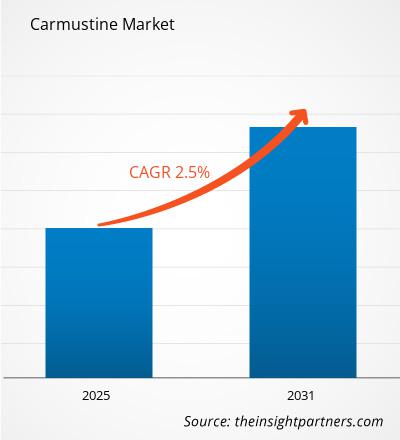
The Carmustine Market was valued at US$ 85.01 Million in 2025 and is projected to reach US$ 129.15 Million by 2034, expanding at a CAGR of 4.76% during 2026–2034. Demand will be driven by carmustine’s proven use in the treatment of glioma, glioblastoma multiforme, medulloblastoma, astrocytoma, multiple myeloma, and lymphoma where physicians need alkylating agents in chemotherapy regimes.
In North America, the Carmustine Market size is forecast to see steady growth at a calculated CAGR of 4.3% - 4.7% up until 2034. Specifics that help include specialized neuro-oncology facilities, established reimbursement for hospital chemotherapy administration, and access to FDA-listed carmustine lyophilized vials at 100 mg strength. Growth will also benefit from investment into sterile injectables manufacturing and centralized oncology procurement, but toxicity concerns and competing targeted therapies prevent broader demand growth.
Carmustine Market Assessment and Insights
- North America: The region represented an estimated 35–38% share in 2025 and is modeled to grow at a CAGR between 4.3–4.7% during 2026–2034, supported by specialist oncology infrastructure, reimbursement coverage, and multiple approved suppliers.
- US: The country accounted for approximately 82–86% of North American revenue in 2025 and is projected to record a 4.2–4.6% CAGR through 2034.
- Europe: Europe held an estimated 27–30% share in 2025 and is expected to register a 4.0–4.4% CAGR during 2026–2034, led by Germany, the UK, France, Italy, and Spain.
- Asia Pacific: Asia Pacific captured approximately 23–26% of revenue in 2025 and is forecast to expand at a 5.6–6.0% CAGR, with China, Japan, India, and South Korea leading demand.
- Largest Segment: The 100mg injection segment represented an estimated 72–76% market share in 2025 and is projected to expand at a 4.4–4.8% CAGR during 2026–2034.
- High Growth Segment: Glioblastoma multiforme accounted for approximately 31–35% market share in 2025 and is expected to record a 5.4–5.8% CAGR through 2034.
- Key companies analyzed in detail: Amneal Pharmaceuticals, LLC; Azurity Pharmaceuticals, Inc.; Bristol-Myers Squibb Company; Eisai Co., Ltd.; Emcure Pharmaceuticals Limited; Marcan Pharmaceuticals Inc.; MGI PHARMA, INC.; Navinta LLC; Pharmaplan; and Sandoz Inc.
Source: The Insight Partners' analysis based on proprietary research, government publications, company annual reports, investor presentations, industry databases, and expert interviews.
Carmustine has moved from being an intravenous chemotherapy branded drug to being a multisupplier, hospital-centered product based on generics, lyophilization, and cold chain logistics. 100 mg dosage form has been developed owing to the drug’s compatibility with previous BiCNU experience, pharmacy practice and dosage forms. Competition will be all about manufacturing skills in aseptic processing, batch consistency, solvent formulation, temperature control and availability of the product, not about the unique chemistry of the compound. FDA labeling requirements for extensive hematologic and pulmonary monitoring have remained intact.
Future innovation will center on securing supply, registration in new geography, manufacturing capacity and distribution within new oncology networks. AP manufacturers can leverage under-served hospital demand by utilizing cost-effective manufacturing; however, harmonization of regulations would help with dossier submission. Investments in aseptic manufacturing and shortage response capabilities would help to enhance supply credibility. Growth will be moderate because of competition from emerging immunotherapy and targeted drugs, however established effectiveness in refractory cancers therapy and conditioning will guarantee the drug’s place.
Carmustine Market Report Scope
| Report Attribute | Details |
|---|---|
| Market size in 2025 | US$ 85.01 Million |
| Market Size by 2034 | US$ 129.15 Million |
| Global CAGR (2026 - 2034) | 4.76% |
| Historical Data | 2021-2024 |
| Forecast period | 2026-2034 |
Carmustine Market Analysis
Carmustine Market growth is mostly linked to the persistent treatment burden related to brain malignancies and hematologic cancers. According to IARC estimates, there were 324,095 incident cases of brain and central nervous system cancers worldwide in 2024; 182,499 cases in Asia and 63,079 cases in Europe. Increasing number of patients who can be diagnosed and prescribed chemotherapy in cases of recurrence or resistance leads to increased market potential. The value chain includes manufacturing of active pharmaceutical ingredient, lyophilization, sterile filling, diluent packaging, cold chain logistics, hospital procurement and preparation in oncology pharmacy.
Production economics is still relatively sensitive to small batch volumes, hazardous drug controls, need for cold chain management and strict sterility controls. Carmustine vials are normally bought by hospitals and specialist distributors rather than retail pharmacies. Slow intravenous infusion according to FDA recommendations and post-infusion monitoring of blood counts for at least six weeks lead to specific requirements which make cancer centers more suitable venues for use of the drug.
Carmustine Market Report reveals that competition is scattered among originator-related portfolios, generics companies, regional marketers and institutional suppliers. Bristol-Myers Squibb Company continues to have history with BiCNU, whereas Amneal Pharmaceuticals, LLC, Sandoz Inc., Emcure Pharmaceuticals Limited, Marcan Pharmaceuticals Inc., Navinta LLC and Pharmaplan compete via availability, regulations coverage and tenders participation. Further, Eisai Co., Ltd. continues to be strategically relevant through carmustine wafer manufacturing in their local facilities for glioblastoma management.
Competitive investment in carmustine is moving towards sterile manufacturing and reliable local supply. Recently, Amneal Pharmaceuticals, LLC announced construction of 75,000 sqft sterile manufacturing plant in New York, while the differentiation through ready-to-use oncology injections reflects company's strategy to avoid complexities during pharmacy compounding. Positioning in the market becomes more dependent on service levels, multiproduct hospital contract capabilities, pharmacovigilance services and geographic filings. Small specialists can continue competing by providing markets where multinational portfolios don't have commercial priority.
● REPORT CUSTOMIZATION
Tailor This Report To Align With Your Specific Business Requirements
This report can be customized to align precisely with your business objectives, scope, and target markets. Customization options include tailored segmentation, geography, competitive analysis, and strategic insights to support informed decision-making.
Customize This Report →WHAT YOU CAN ADJUST
- ● Segmentations
- ● Geography
- ● Competitive Analysis
- ● Language Preferences
Carmustine Market: Strategic Insights
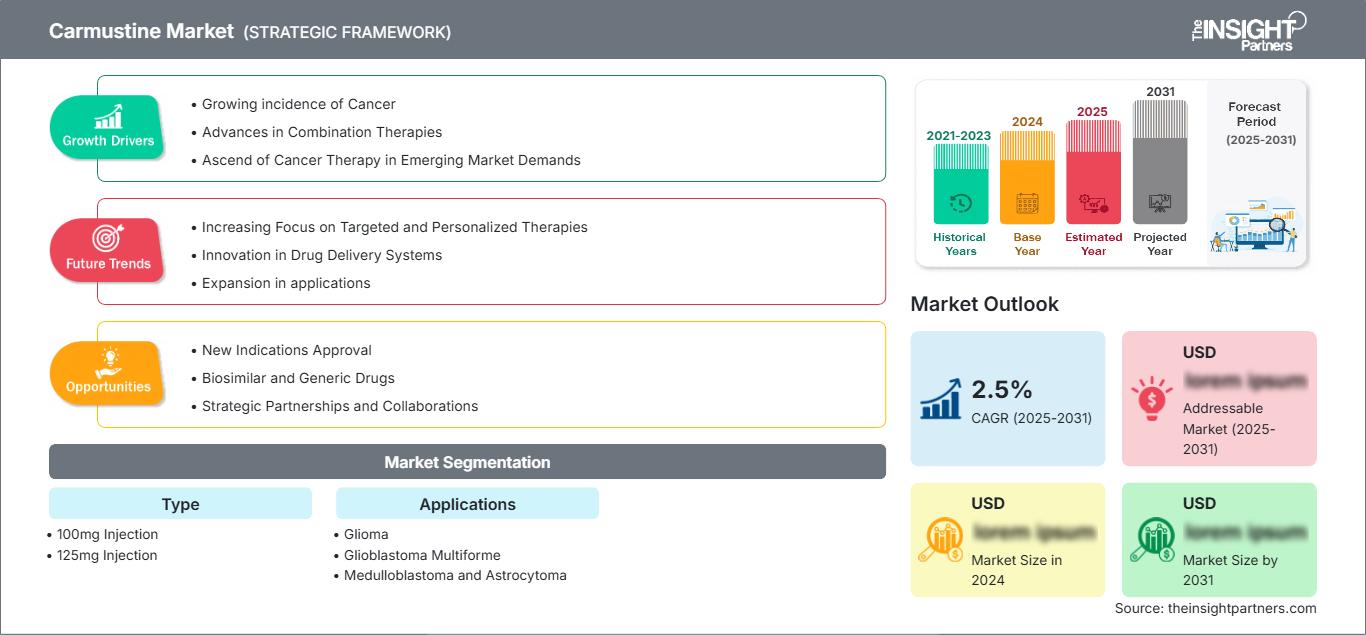
Regional Insights
North America Carmustine Market
North America was responsible for 35-38% of Carmustine Market shares in 2025 and will experience an expansion at a 4.3-4.7% CAGR from 2026 to 2034. North America boasts specialized expertise in neuro-oncology, well-established hospital procurement infrastructure, wide availability of imaging-based diagnosis, and reimbursement for intravenous chemotherapy. Carmustine is still applicable in certain protocols involving brain tumors, lymphomas, and multiple myeloma, especially for recurrence and combined treatments.
The growth will be restrained by boxed warning requirements, substitution, and low frequency of eligible tumors. On the other hand, the number of FDA approved presentations and steady development of sterile injectable manufacturing increase supply stability. Canada is represented via provincial cancer agencies and centralized formularies, while Mexico presents long-term opportunities through private oncology networks. Buyers in the region are increasingly concerned about cold chain management, history of shortages, number of vials, and total preparation costs along with purchase prices.
U.S. Carmustine Market
The US accounted for about 82–86% of North America’s revenue in 2025 and is forecasted to register a 4.2–4.6% CAGR till 2034. The standing of the US is due to having a large number of comprehensive cancer centers, availability of generics approved by FDA, specialty hematology services, and reimbursement facilities. SEER estimates 24,740 brain and nervous system cancers in 2026 and continues with a well-defined patient population requiring multimodal therapy.
Amneal Pharmaceuticals, LLC, Bristol-Myers Squibb Company, Eisai Co., Ltd., Navinta LLC, and Sandoz Inc. are relevant companies to the national oncology supply setting. There are applications in glioblastomas, high-grade gliomas, and relapsed lymphomas. The market still has a clinical focus since the myelosuppression effect comes late and needs weekly counting of blood cells. Moreover, the cumulative dose increases the possibility of pulmonary toxicity, so hospital pharmacies’ ability and constant cold chain transportation matter.
Europe Carmustine Market
The European region had an estimated market share of 27–30% in 2025 and is forecasted to grow at a rate of 4.0–4.4% CAGR during 2025-2034. In terms of revenues, Germany holds the lead position owing to its hospitals' capacity for oncology treatments, reimbursement policies, and access to advanced diagnostics. Second comes the United Kingdom due to the centralization of specialist cancer services and purchasing, despite its cost effectiveness assessments and protocols, limiting the non-priority chemotherapy treatments.
France ensures institutional demand for stable growth by providing cancer centers and national reimbursement, whereas Italy and Spain depend more on their hospital tenders in the region. Collectively, all of them make up the major users from Southern Europe. Europe witnessed 63,079 new cases of brain and CNS cancers in 2024, highlighting the need for treatment alternatives in the region. Harmonized regulation allows for multi-national product registrations; however, national pricing limits supplier margins.
APAC Carmustine Market
Asia Pacific accounted for an estimated 23–26% share in 2025 and is projected to record a 5.6–6.0% CAGR through 2034. China is the leading country, supported by its patient base, expanding cancer-center network, domestic pharmaceutical production, and wider access to neuroimaging. Asia recorded 182,499 brain and CNS cancer cases in 2024.
Japan contributes through mature specialist care, while India emphasizes lower-cost generics and export-oriented manufacturing. South Korea and Australia offer advanced hospital infrastructure but smaller patient pools. Policy-backed oncology access, local sterile manufacturing, and broader insurance coverage support regional expansion.
Middle East & Africa Carmustine Market
The Middle East and Africa region is modeled to expand at a 4.6–5.0% CAGR through 2034. Saudi Arabia leads through government-funded oncology infrastructure and hospital investment, followed by the UAE’s specialist medical centers. South Africa remains the principal sub-Saharan market because of its private hospital network and established oncology practices.
Demand elsewhere is constrained by diagnostic access, cold-chain limitations, and specialist shortages. Centralized procurement, healthcare infrastructure programs, and refrigerated pharmaceutical distribution can improve availability, particularly across Gulf countries. Rest of MEA demand remains concentrated in referral hospitals and import-dependent urban centers.
Segmentation Analysis
Type
The type segment is projected to expand at a 4.5–4.9% CAGR during 2026–2034. Carmustine Market scope across injection strengths is shaped by hospital dosing practices, vial optimization, regulatory approvals, and tender availability. Lyophilized formulations require controlled refrigeration and reconstitution, making stability documentation and diluent compatibility important procurement criteria. The established 100 mg strength leads, while the 125 mg presentation serves narrower institutional requirements.
- 100mg Injection: This presentation holds the leading position because it aligns with established BiCNU-equivalent products, hospital formularies, standard vial-based preparation, and widely recognized dosing practices across brain tumor and hematology protocols.
- 125mg Injection: Demand is comparatively selective and depends on regional registrations, manufacturer availability, and institutional dose-planning preferences, offering suppliers a differentiation opportunity where alternative vial configurations can reduce preparation requirements.
Applications
The applications segment is expected to register a 4.7–5.1% CAGR during 2026–2034. Demand is strongest where carmustine’s DNA-cross-linking mechanism and ability to penetrate the blood-brain barrier remain clinically useful. Brain cancers account for the largest opportunity, while lymphoma and multiple myeloma provide narrower combination-therapy demand. Adoption depends on treatment line, patient fitness, marrow reserve, cumulative exposure, and institutional protocol selection.
- Glioma: Utilization is concentrated in aggressive or recurrent disease managed by specialist neuro-oncology teams, where carmustine may complement surgery, radiotherapy, and other chemotherapy within individualized treatment pathways.
- Glioblastoma Multiforme: This application provides the largest revenue contribution because of severe disease progression, recurrence risk, and the continued use of systemic or localized carmustine approaches in selected patients.
- Medulloblastoma and Astrocytoma: Demand is limited but strategically relevant within specialist protocols, with prescribing influenced by patient age, prior treatment, marrow tolerance, tumor characteristics, and access to multidisciplinary neurological cancer care.
- Multiple Myeloma: Carmustine has a selective role in combination therapy and conditioning strategies, although utilization faces competition from proteasome inhibitors, immunomodulators, antibodies, and emerging cellular or immune-directed treatments.
- Lymphoma: Demand arises mainly in relapsed or refractory Hodgkin and non-Hodgkin lymphoma regimens, making reliable hospital supply and integration with other approved chemotherapies essential commercial considerations.
Opportunity Snapshot
| Application | Revenue Contribution | Trend Tag | Adoption Stage |
| Glioma | High | Recurrent Care | Mature |
| Glioblastoma Multiforme | High | Neuro-Oncology | Scaling |
| Medulloblastoma and Astrocytoma | Medium | Specialist Protocols | Mature |
| Multiple Myeloma | Low | Conditioning Use | Mature |
| Lymphoma | Medium | Salvage Therapy | Mature |
Carmustine Market Growth Drivers and Impact Analysis
Persistent Burden of Aggressive Brain Tumors
The continuing incidence of malignant brain and central nervous system tumors creates a stable clinical basis for carmustine demand. IARC recorded 324,095 new brain and CNS cancer cases worldwide in 2024, with Asia contributing 56.3% and Europe 19.5%. High-grade gliomas frequently recur after initial treatment, sustaining the need for multiple therapeutic options even as targeted medicines develop. Carmustine’s lipophilic properties support penetration of the blood-brain barrier, while its established indications provide clinicians with a recognized option for selected glioblastoma, medulloblastoma, astrocytoma, and metastatic brain tumor patients. Commercial impact is concentrated in tertiary hospitals because safe administration requires trained oncology personnel, controlled infusion, regular blood counts, and careful cumulative-dose assessment. Suppliers that maintain reliable stock near specialist centers can capture recurring institutional orders and reduce treatment delays associated with shortages.
Expansion of Sterile Injectable Manufacturing Capacity
Investment in automated aseptic processing strengthens the ability of manufacturers to supply small-volume oncology injectables with consistent quality. Carmustine requires lyophilization, specialized packaging, refrigeration, and hazardous-substance controls, creating higher entry requirements than conventional oral generics. New sterile facilities can improve batch scheduling, contamination controls, surge production, and supply continuity. Amneal Pharmaceuticals, LLC disclosed a planned 75,000-square-foot New York facility intended to manufacture sterile finished dosage forms through advanced aseptic processing and automation. Such projects have broader implications for the Carmustine Market Forecast because enhanced injectable capacity allows suppliers to support hospital contracts, respond to shortages, and distribute production risk across sites. Capacity additions also strengthen negotiating positions with group-purchasing organizations, provided manufacturers maintain competitive pricing, FDA compliance, validated cold-chain logistics, and sufficient demand aggregation to keep low-volume production economically sustainable.
Wider Access to Specialized Oncology Services
The expansion of cancer centers, diagnostic imaging, hematology services, and reimbursement programs is increasing identification and treatment of patients in emerging healthcare systems. Carmustine utilization depends on MRI-supported diagnosis, pathology, treatment planning, infusion infrastructure, and longitudinal toxicity monitoring. Consequently, healthcare investment can convert previously untreated disease into addressable institutional demand. The impact will be strongest in urban China, India, Gulf countries, and selected Southeast Asian markets where specialist capacity is expanding from a low base. Manufacturers can support access through regional regulatory filings, smaller minimum-order quantities, distributor training, temperature-monitoring systems, and pharmacovigilance infrastructure. However, growth will not follow diagnosis alone. Hospitals must also possess trained pharmacists and resources for delayed marrow-suppression monitoring. Companies that pair affordable supply with dependable technical and distribution support will be better positioned than vendors competing solely through vial price.
Carmustine Market Future Trends
Greater Emphasis on Supply Resilience and Local Production
Carmustine Market trends will increasingly reflect procurement concerns surrounding medicine shortages, geographic production concentration, and refrigerated distribution. Governments and hospital systems are placing greater value on domestic or regionally diversified sterile manufacturing, secondary suppliers, and measurable inventory continuity. Producers are expected to adopt automated fill-finish systems, electronic batch records, real-time environmental monitoring, and validated temperature tracking. These investments can lower deviation risk and improve tender performance, although they raise fixed costs for a relatively specialized product. Contract manufacturing partnerships will become more important where brand owners lack dedicated lyophilization capacity. Over time, supplier evaluations will incorporate manufacturing redundancy, shortage-response capability, and delivery reliability alongside unit pricing, shifting competitive advantage toward companies with resilient networks and transparent quality systems. Amneal’s FDA PreCheck participation illustrates this broader strategic direction.
More Selective Positioning Within Personalized Oncology
Future utilization will become more selective as molecular diagnostics, tumor profiling, immunotherapies, targeted agents, and cellular treatments reshape cancer pathways. Rather than driving uniform displacement, this transition will concentrate carmustine use among clinically defined patients, including those with recurrent brain tumors, refractory lymphomas, or specific conditioning requirements. Manufacturers will need stronger medical-information capabilities and clearer evidence positioning to support appropriate institutional use. Neuro-oncology centers may increasingly integrate systemic treatment with localized delivery, radiotherapy, surgery, and biomarker-informed sequencing. The commercial result will be modest volume expansion accompanied by greater account concentration. Suppliers should therefore focus on specialist-center mapping, protocol monitoring, and dependable access instead of broad promotional activity. Eisai’s investment in a dedicated glioblastoma wafer facility demonstrates continuing interest in localized carmustine-based treatment infrastructure.
Carmustine Market Opportunities
Expansion Through Emerging-Market Regulatory Filings
Manufacturers can pursue incremental revenue by registering established injection presentations in countries where specialist oncology capacity is improving but supplier choice remains limited. The most attractive markets combine growing diagnosis, centralized hospital procurement, refrigerated distribution, and workable generic approval pathways. Priority actions include identifying dossier gaps, generating stability data for warmer climatic zones, appointing qualified local pharmacovigilance partners, and developing supply plans suited to low-volume tenders. Regional packaging and multilingual labeling can further improve responsiveness. Opportunity assessment should distinguish theoretical cancer burden from treatable demand because carmustine requires infusion facilities and prolonged laboratory monitoring. A phased strategy focused on national referral hospitals can limit commercial risk. Companies that secure early formulary inclusion and maintain dependable stock may establish durable positions before additional generic competitors enter.
Differentiated Institutional Services and Contract Supply
An attractive opportunity exists in pairing carmustine supply with services that reduce procurement and pharmacy complexity. Manufacturers can provide temperature indicators, demand forecasting, validated shipping containers, shortage alerts, preparation guidance, and consolidated oncology contracts. These capabilities are particularly valuable because lyophilized carmustine requires refrigeration, reconstitution, slow infusion, and careful handling. Suppliers with excess sterile capacity may also pursue contract manufacturing arrangements for regional marketers that possess commercial reach but lack aseptic infrastructure. Investment should concentrate on quality systems, flexible batch sizes, solvent-vial packaging, and secondary-source qualification. The resulting model can improve asset utilization while expanding geographic reach without building full commercial organizations in every country. Success depends on maintaining regulatory accountability, traceable distribution, and pharmacovigilance standards across all partners.
Recent Developments
- September 2025: Eisai Co., Ltd. opened a 40,080-square-foot manufacturing facility in Baltimore after receiving site approvals from the FDA, EMA, and Japan’s PMDA. The facility manufactures and distributes a specialized implantable wafer used in glioblastoma treatment and research, maintaining capacity for more than 2,000 patients annually while strengthening localized supply continuity.
- July 2025: Amneal Pharmaceuticals, LLC was selected for the FDA PreCheck Pilot Program for its planned 75,000-square-foot sterile manufacturing facility in Brookhaven, New York. The site is designed around advanced aseptic processing, automation, and integrated quality systems intended to increase domestic sterile-injectable capacity and provide surge capability during pharmaceutical shortages.
- June 2025: Sandoz Inc. launched interchangeable denosumab biosimilars in the US, expanding its oncology-supportive care presence and institutional contracting capabilities. Although the products do not contain carmustine, the launch strengthens Sandoz’s relationships with oncology providers and demonstrates the commercial infrastructure available for hospital-administered medicines and cancer-related skeletal-event treatments.
Frequently Asked Questions

- Comprehensive Market Sizing and Forecast Analysis
- Detailed Segmentation Analysis
- In-Depth Market Dynamics Assessment
- Regional and Country-Level Insights
- Competitive Landscape and Company Benchmarking
- Strategic Business Intelligence
Recent Reports
Testimonials

The Insight Partners provided valuable market intelligence that supported our global go-to-market strategy. Their team was professional, responsive, and attentive to our feedback, providing thoughtful analysis and helpful methodological clarifications throughout the project.
Junmo Kim Chief Financial Officer (CFO), Enertech Co., Ltd.
The Insight Partners' SCADA System Market report is comprehensive, with valuable insights on current trends and future forecasts. The team was highly professional, responsive, and supportive throughout. We are very satisfied and highly recommend their services.
RAN KEDEM Partner, Reali Technologies LTDs
I requested a report on a very specific software market and the team produced the report in a few days. The information was very relevant and well presented. I then requested some changes and additions to the report. The team was again very responsive and I got the final report in less than a week.
JEAN-HERVE JENN Chairman, Future Analytica
We worked with The Insight Partners for an important market study and forecast. They gave us clear insights into opportunities and risks, which helped shape our plans. Their research was easy to use and based on solid data. It helped us make smart, confident decisions. We highly recommend them.
PIYUSH NAGPAL Sr. Vice President, High Beam Global
The Insight Partners delivered insightful, well-structured market research with strong domain expertise. Their team was professional and responsive throughout. The user-friendly website made accessing industry reports seamless. We highly recommend them for reliable, high-quality research services
YUKIHIKO ADACHI CEO, Deep Blue, LLC.
This is the first time I have purchased a market report from The Insight Partners.While I was unsure at first, I visited their web site and felt more comfortable to take the risk and purchase a market report.I am completely satisfied with the quality of the report and customer service. I had several questions and comments with the initial report, but after a couple of dialogs over email with their analyst I believe I have a report that I can use as input to our strategic planning process.Thank you so much for taking the extra time and making this a positive experience.I will definitely recommend your service to others and you will be my first call when we need further market data.
JOHN SUZUKI President and Chief Executive Officer, Board Director, BK Technologies
I wish to appreciate your support and the professionalism you displayed in the course of attending to my request for information regarding to infectious disease IVD market in Nigeria. I appreciate your patience, your guidance, and the fact that you were willing to offer a discount, which eventually made it possible for us to close a deal. I look forward to engaging The Insight Partners in the future, all thanks to the impression you have created in me as a result of this first encounter.
DR CHIJIOKE ONYIA MANAGING DIRECTOR, PineCrest Healthcare Ltd.Reason to Buy
- Informed Decision-Making
- Understanding Market Dynamics
- Competitive Analysis
- Identifying Emerging Markets
- Customer Insights
- Market Forecasts
- Risk Mitigation
- Boosting Operational Efficiency
- Strategic Planning
- Investment Justification
- Tracking Industry Innovations
- Aligning with Regulatory Trends





 Get Free Sample for