
CDKL5 Deficiency Disorder Market Demand, Trends & Forecast by 2034
CDKL5 Deficiency Disorder Market Size and Forecasts (2021 - 2034), Global and Regional Share, Trends, and Growth Opportunity Analysis Report Coverage : by Therapies (First Line of Therapies, Second Line of Therapies); Distribution Channels (Hospital Pharmacies, Retail Pharmacies,); and Geography (North America, Europe, Asia Pacific, and South and Central America)
- Status : Data Released
- Report Code : TIPRE00040726
- Category : Life Sciences
- No. of Pages : 150
- Available Report Formats :


- Last update date : September 09, 2026


2025 Market Size
US$ 126.04 Mn
Base year value
2034 Forecast
US$ 609.20 Mn
Projected by 2034
CAGR 2026-2034
19.13 %
Growth rate
Addressable Market
US$ 3,008.29 Mn
(2026-2034)
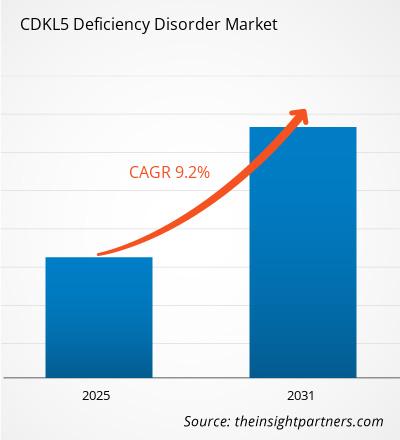
The CDKL5 Deficiency Disorder Market was valued at US$ 126.04 Million in 2025 and is projected to reach US$ 609.20 Million by 2034, expanding at a CAGR of 19.13% during 2026–2034. Commercial expansion is being shaped by improved molecular diagnosis, greater recognition of developmental and epileptic encephalopathies, broader availability of targeted antiseizure medicines, and sustained clinical investment in therapies addressing seizures and underlying genetic dysfunction.
North America remains the principal commercial region, with an estimated CAGR of 18.4–19.4% through 2034. The CDKL5 Deficiency Disorder Market size in the region is supported by established genetic-testing pathways, specialist pediatric neurology networks, and relatively early access to orphan medicines. Continued payer engagement and improved referral from community pediatricians to comprehensive epilepsy centers are expected to increase the proportion of genetically confirmed and pharmacologically treated patients.
CDKL5 Deficiency Disorder Market Assessment and Insights
- North America: The region represented a 42–46% share in 2025 and is expected to record a CAGR of 18.4–19.4% during 2026–2034, supported by genetic screening, specialist treatment centers, and established reimbursement pathways.
- US: The country accounted for 84–88% of North American revenue in 2025 and is projected to expand at a CAGR of 18.6–19.6% through 2034.
- Europe: Europe held a 27–31% share in 2025 and is anticipated to register a CAGR of 18.0–19.0% during 2026–2034. Germany, the UK, France, Italy, and Spain are leading markets.
- Asia Pacific: Asia Pacific represented a 17–21% share in 2025 and is forecast to grow at a CAGR of 20.5–21.5% through 2034, led by China, Japan, Australia, South Korea, and India.
- Largest Segment: First Line of Therapies captured a 61–65% market share in 2025 and is expected to grow at a CAGR of 17.8–18.8% during 2026–2034.
- High Growth Segment: Second Line of Therapies represented a 35–39% market share in 2025 and is projected to register a CAGR of 20.8–21.8% during 2026–2034.
- Key companies analyzed in detail: GW Pharmaceuticals plc, Biogen Inc., Novartis AG, AbbVie Inc., Bayer AG, Eisai Co., Ltd., Ionis Pharmaceuticals, Inc., Astellas Pharma Inc., UCB S.A. including Zogenix, Inc., Ovid Therapeutics Inc., Immedica Pharma AB, Marinus Pharmaceuticals, Inc., and Elaaj Bio.
Source: The Insight Partners' analysis based on proprietary research, government publications, company annual reports, investor presentations, industry databases, and expert interviews.
Therapeutic research has moved from trial-and-error combinations of anti-seizure drugs to genotypically validated approaches and disease-specific endpoints. The first generation of oral neuroactive steroids has defined the first commercially viable targeted therapy category, whereas second-generation therapeutic pipelines are exploring serotonin pathway modulation, antisense techniques, protein replacement and adeno-associated virus-mediated delivery. Commercial manufacturing considerations have therefore been moving from traditional solid dose production processes to controlled oral suspensions, biologics processing, pediatric dosage devices and small volume manufacturing suitable for distributed rare disease populations.
Commercial interest in the forecast period will move from major US and European epilepsy centers into Gulf states, East Asia and some Latin American countries. Orphan product incentives, multinational patient registries and alliances between biotech sponsors and specialized manufacturers will make development more feasible. Commercial investments will be driven by long-lasting seizure control, developmental gain, caregiver-based endpoints and scalable distribution within regions that lack a sufficient number of qualified pediatric neurologists.
CDKL5 Deficiency Disorder Market Report Scope
| Report Attribute | Details |
|---|---|
| Market size in 2025 | US$ 126.04 Million |
| Market Size by 2034 | US$ 609.20 Million |
| Global CAGR (2026 - 2034) | 19.13% |
| Historical Data | 2021-2024 |
| Forecast period | 2026-2034 |
CDKL5 Deficiency Disorder Market Analysis
Primary CDKL5 Deficiency Disorder Market growth factors include increased utilization of molecular panels to diagnose infants with early-onset and treatment-refractory seizures. This will set a pathway involving genetic laboratories, pediatric neurologists, epilepsy centers, specialty pharmacies, payers, and caregiver support groups. Prevalence estimates at about one case in 40,000 – 60,000 live births indicate that commercial success will be dependent on proper diagnosis, sustained adherence and global availability more than on mass production. Supply methods will focus on pediatric formulations, controlled distribution, pharmacovigilance and transition from hospitals to homes.
Demand will be driven by treatment resistance. Many patients will need more than one anticonvulsant, rescue medications, nutrition and supportive treatments for problems with movement, gastrointestinal tract, vision, respiration and sleep disorders. The dedicated product could become a part of the already established system of polytherapy without replacement of all existing medications. However, manufacturers will have to consider weight-dependent dosing, administration by caregivers, sedation surveillance and interactions with central nervous system depressants in different orphan drug reimbursement systems of different countries.
According to the CDKL5 Deficiency Disorder Market report, there is a concentration competition market where a small set of targeted products co-exists with comprehensive neurological portfolios. Immedica Pharma AB and Marinus Pharmaceuticals, Inc. drive the ganaxolone franchise, while UCB S.A. (in combination with Zogenix capabilities) is working on fenfluramine. Ovid Therapeutics Inc. has commercialized royalty rights on ganaxolone as an example of intellectual property deals where the value of a development platform is transferred without transferring the development platform itself.
In today’s scenario, positioning has become more of an evidential matter than having anything to do with size of the portfolio. Biogen Inc., Novartis AG, Ionis Pharmaceuticals, Inc., and Astellas Pharma Inc. possess capabilities associated with genetics and neuroscience, while GW Pharmaceuticals plc, AbbVie Inc., Bayer AG, and Eisai Co., Ltd. possess knowledge pertaining to epilepsy, specialty care or challenging market access. The investment focus is shifting towards longitudinal natural history, caregiver reported outcomes, pediatric study capability and manufacturing collaborations for ultra-rare patients across multiple jurisdictions.
● REPORT CUSTOMIZATION
Tailor This Report To Align With Your Specific Business Requirements
This report can be customized to align precisely with your business objectives, scope, and target markets. Customization options include tailored segmentation, geography, competitive analysis, and strategic insights to support informed decision-making.
Customize This Report →WHAT YOU CAN ADJUST
- ● Segmentations
- ● Geography
- ● Competitive Analysis
- ● Language Preferences
CDKL5 Deficiency Disorder Market: Strategic Insights

Regional Insights
North America CDKL5 Deficiency Disorder Market
North America accounted for a 42–46% CDKL5 Deficiency Disorder Market share in 2025 and is projected to expand at a CAGR of 18.4–19.4% during 2026–2034. The region benefits from readily available multigene epilepsy panels, advanced pediatric neurology centers, formal orphan-drug pathways, and specialist pharmacies equipped to manage controlled medicines and complex prior-authorization requirements.
This is supported by clinical registries, education campaigns spearheaded by advocacy groups, and referral systems which link neonatal clinics with genetic counselors and epileptologists. Canada plays its role in the form of provincial rare disease programs, although there may be differences in when reimbursement is available. This is the case for the US due to the fact that the country has FDA designation programs, specialized knowledge, and specialty distribution channels. Mexico shows promise in the long run since it has expanding genetic testing services and pediatric clinics.
U.S. CDKL5 Deficiency Disorder Market
US accounts for 84–88% of North American revenues in 2025 and is projected to exhibit a CAGR of 18.6–19.6% until 2034. The commercial landscape is shaped by FDA approval of a disease-specific seizure treatment, treatment through comprehensive epilepsy centers, and the use of sequencing in infants who have not responded to several treatment options for their uncontrolled seizures. Specialty pharmacy coordination continues to be critical due to the need for weight-based titration and patient training during treatment initiation.
The development of the ganaxolone franchise is ongoing following the acquisition of Marinus Pharmaceuticals, Inc. by Immedica Pharma AB, as well as the development of fenfluramine by UCB S.A. There has been a change in application trends from episodic rescue therapy to adjunctive and long-term treatment. Mutations, seizure diaries, past medication history, and treatment response are evaluated by insurance companies. Real-world evidence relating to persistence, hospitalization, and caregiver burden will influence formulary and contract decisions as other targeted medications receive regulatory approval.
Europe CDKL5 Deficiency Disorder Market
Europe accounts for 27–31% in 2025 and is forecast to register a CAGR of 18.0–19.0% during 2026–2034. Germany emerges as the regional leader on the back of dedicated neurology infrastructure and reimbursement, and the UK is driven by its genome-based testing programs and rare-epilepsy expertise. Implementation is impacted by health technology assessment and negotiations.
France takes advantage of its rare disease reference center schemes and systematized hospital prescriptions. Genomic diagnostics show growth in Italy and Spain, but differences in funding between regions cause delays in the implementation process. Multidisciplinary approach is chosen in this region, which includes neurology, physiotherapy, nutrition, ophthalmology, respiration, and anti-seizure therapy.
The future success of Europe depends on the ability to convert centralized authorizations to market access. Marketing authorization transfer, post-authorization surveillance, pediatric forms, and negotiations affect the launch sequence. Germany will be leading, while France, Italy, and Spain will make their valuable contributions due to the systematic population diagnosis.
APAC CDKL5 Deficiency Disorder Market
The Asia Pacific region held 17% to 21% market share in 2025 and is expected to grow at a CAGR of 20.5% to 21.5% until 2034. China ranks highest in terms of revenue generation after the approval of ganaxolone, whereas Japan, South Korea, and Australia are providing state-of-the-art genomic medicines and neurology expertise.
There is immense diagnostic opportunity in the Indian market, but there are constraints related to accessibility and affordability. Rare diseases awareness, genetic testing in India, pediatric centers, and fast approvals will contribute toward the development of the regional market environment. Commercial success will depend on localizing data, providing oral suspension, training clinicians, and partnering to remove barriers in treatment access.
Middle East & Africa CDKL5 Deficiency Disorder Market
The Middle East and Africa region is expected to grow at a CAGR of 17.0–18.0% through 2034. Saudi Arabia leads through genomic initiatives, tertiary hospitals, and rare-disease procurement, while the UAE and Kuwait are developing regulatory access to disease-specific treatment. South Africa represents the principal sub-Saharan clinical hub.
Growth hinges on laboratory facilities and not on the operations in the energy sector, even though investment in health care, funded by hydrocarbons, leads to specialist hospitals in the Gulf. Sequencing is unequally available, and there are insufficiently trained specialists in the larger region, which also suffers from fractured reimbursement. Partnerships of distributors and pharmacovigilance in the region are crucial.
Segmentation Analysis
Therapies
Therapies are projected to expand at a CAGR of 18.7–19.7% during 2026–2034. The CDKL5 Deficiency Disorder Market scope covers established antiseizure regimens, disease-specific adjunctive medicines, treatment sequencing, and emerging genetically directed candidates. Adoption depends on mutation confirmation, seizure phenotype, previous therapeutic failures, tolerability, administration burden, and payer requirements. Greater diagnostic precision will support earlier movement from empirical polytherapy to structured, evidence-based treatment pathways.
- First Line of Therapies: Initial management commonly uses established antiseizure medicines selected according to seizure type and clinical experience. This category remains strategically important because it determines subsequent response assessment, combination choices, and eligibility for targeted adjunctive treatment.
- Second Line of Therapies: This category addresses persistent seizures following inadequate response to initial regimens. Demand is increasing for disease-specific products, rational combinations, ketogenic interventions, and candidates capable of providing durable benefits without an unmanageable sedation burden.
Distribution Channels
Distribution channels are forecast to register a CAGR of 18.5–19.5% during 2026–2034. Channel development is influenced by specialist prescribing, controlled-product handling, initial titration, reimbursement authorization, and recurring home delivery. Hospital pharmacies retain an important role at diagnosis and treatment initiation, while retail and specialty pharmacy models support refill continuity, caregiver counseling, safety monitoring, and geographic access.
- Hospital Pharmacies: Hospital pharmacies support initiation within pediatric neurology centers, coordinate multidisciplinary care, and manage complex reimbursement documentation. Their strategic position is strongest where rare-disease medicines are funded through institutional or national procurement pathways.
- Retail Pharmacies: Retail and specialty pharmacy networks provide recurring dispensing, adherence support, dosage coordination, and home delivery. Their importance rises after clinical stabilization, particularly where manufacturers use limited-distribution arrangements and dedicated patient-support programs.
Opportunity Snapshot
| Therapies | Revenue Contribution (High/Medium/Low) | Trend Tag | Adoption Stage (Emerging/Scaling/Mature) |
| First Line of Therapies | High | Early Sequencing | Mature |
| Second Line of Therapies | High | Targeted Adjuncts | Scaling |
CDKL5 Deficiency Disorder Market Growth Drivers and Impact Analysis
Earlier Molecular Diagnosis of Infantile Epilepsy
Genetic testing is becoming more deeply integrated into the evaluation of infants with refractory seizures, reducing dependence on prolonged trial-and-error diagnosis. CDKL5 pathogenic variants can be identified through epilepsy panels, exome sequencing, or genome sequencing, enabling clinicians to distinguish the disorder from Rett syndrome and other developmental epileptic encephalopathies. Earlier confirmation expands the treated population by establishing eligibility for disease-specific therapy and specialist support before repeated hospitalizations accumulate. Commercially, this produces a clearer patient-finding pathway connecting neonatal units, diagnostic laboratories, genetic counselors, neurologists, and specialty pharmacies. The impact is strongest in health systems that reimburse sequencing and maintain referral networks capable of converting a laboratory result into a documented treatment plan.
Persistent Need for Better Seizure Control
CDD commonly involves seizures beginning within the first months of life, with conventional medicines frequently producing incomplete or temporary responses. This creates sustained demand for targeted adjunctive therapies that can be incorporated into existing regimens without requiring immediate withdrawal of every baseline medicine. The FDA’s pivotal assessment of ganaxolone involved patients with substantial pretreatment exposure, illustrating the clinically complex population addressed by commercial products. Market impact extends beyond prescription volume because reduced seizure frequency can affect emergency care, inpatient utilization, caregiver supervision, and treatment persistence. Developers that demonstrate statistically credible seizure reductions alongside manageable sedation, practical pediatric administration, and durable open-label evidence are better positioned to obtain specialist adoption and payer renewal.
Orphan-Drug Policies and Rare-Disease Networks
Orphan-drug incentives improve the feasibility of developing products for a disorder with a small, geographically dispersed population. Regulatory mechanisms may provide scientific advice, fee relief, development support, exclusivity, or accelerated engagement, while rare-disease networks help sponsors locate investigators and qualified participants. These structures do not eliminate evidentiary requirements, but they reduce coordination barriers associated with multinational pediatric studies. Market impact occurs through shorter patient-identification cycles, more consistent endpoint selection, and improved post-authorization surveillance. Companies can further strengthen execution by aligning natural-history studies, caregiver priorities, seizure definitions, and pediatric formulation plans before pivotal development. Jurisdictions combining regulatory incentives with funded genetic diagnosis are likely to convert scientific progress into commercial access more efficiently.
CDKL5 Deficiency Disorder Market Future Trends
Transition Toward Gene and Protein Restoration
CDKL5 Deficiency Disorder Market trends increasingly point toward interventions designed to restore biological function rather than solely suppress seizures. Investigational strategies include adeno-associated virus delivery, RNA-based modulation, protein replacement concepts, and approaches addressing downstream neuronal signaling. Development will require careful control of brain distribution, dose selection, immunogenicity, and treatment timing because established neurodevelopmental impairment may not be fully reversible. Future trials are expected to combine seizure endpoints with communication, vision, motor function, sleep, and caregiver-observed measures. Successful translation would create a distinct high-value category, but manufacturing complexity and long-term follow-up obligations will make specialized partnerships essential.
Broader Use of Digital and Real-World Endpoints
Development programs are expected to supplement caregiver seizure diaries with wearable monitoring, video assessment, electronic patient-reported outcomes, and standardized developmental measures. Rare pediatric trials are vulnerable to small samples, variable seizure types, and substantial day-to-day fluctuations, making data quality particularly important. Digital tools could improve event capture and reduce retrospective reporting, while registries may provide external context for long-term outcomes. Regulators and payers will still require validated methods and transparent handling of missing information. Companies that establish interoperable datasets across clinical trials, access programs, specialty pharmacies, and natural-history cohorts can generate stronger evidence on persistence, safety, healthcare utilization, and functional change.
CDKL5 Deficiency Disorder Market Opportunities
Geographic Expansion Through Specialist Partnerships
CDKL5 Deficiency Disorder Market Forecasts indicate an actionable opportunity in countries where genetic diagnosis is improving faster than commercial treatment availability. Developers can pursue licensing, regional marketing authorization, named-patient supply, and controlled distributor models rather than building full local infrastructure. Priority markets include Gulf states, selected Asian economies, and European countries where centralized authorization has not yet produced routine availability. Investment should focus on regulatory transfer capabilities, pharmacovigilance, pediatric neurology education, and reliable formulation supply. Programs that map diagnostic laboratories and referral centers before launch can identify eligible patients efficiently while avoiding broad, low-yield promotional expenditure across general healthcare channels.
Development of Multidomain Treatment Portfolios
A substantial opportunity exists for therapies addressing functional burdens beyond seizure frequency. Families manage motor impairment, cortical visual dysfunction, sleep disruption, gastrointestinal complications, respiratory issues, and severe communication limitations. Companies can invest in candidates targeting defined non-seizure manifestations or develop combination strategies that measure broader benefit through validated instruments. Portfolio design should reflect caregiver priorities and avoid assuming that seizure reduction automatically produces developmental improvement. Partnerships with academic centers and patient organizations can support endpoint validation, age-stratified natural-history research, and recruitment. A multidomain strategy may also differentiate new entrants if additional antiseizure products narrow the efficacy gap within the established adjunctive category.
Recent Developments
- June 2026: Immedica Pharma AB announced that the Emirates Drug Establishment granted marketing authorization for Ztalmy, or ganaxolone, for seizures associated with CDKL5 deficiency disorder in patients aged two years and older. The authorization expanded the product’s approved geographic presence to the UAE following earlier approvals in the US, European Union, UK, China, and Kuwait.
- May 2026: Viralgen Vector Core S.L. partnered with Elaaj Bio to advance an investigational adeno-associated virus gene therapy program. The collaboration combines Viralgen’s recombinant AAV development and manufacturing capabilities with Elaaj Bio’s disorder-focused therapeutic program, supporting technical advancement toward clinical development and illustrating growing investment in treatments directed at the underlying genetic deficiency.
- December 2025: UCB S.A. presented positive GEMZ Phase 3 results showing that adjunctive fenfluramine achieved the primary endpoint and key secondary endpoints in patients with uncontrolled seizures. Fenfluramine produced a 47.6% median reduction in countable motor seizure frequency, compared with 2.8% for placebo, and UCB stated that regulatory submissions were planned.
Frequently Asked Questions

- Comprehensive Market Sizing and Forecast Analysis
- Detailed Segmentation Analysis
- In-Depth Market Dynamics Assessment
- Regional and Country-Level Insights
- Competitive Landscape and Company Benchmarking
- Strategic Business Intelligence
Recent Reports
Testimonials

The Insight Partners' SCADA System Market report is comprehensive, with valuable insights on current trends and future forecasts. The team was highly professional, responsive, and supportive throughout. We are very satisfied and highly recommend their services.
RAN KEDEM Partner, Reali Technologies LTDs
I requested a report on a very specific software market and the team produced the report in a few days. The information was very relevant and well presented. I then requested some changes and additions to the report. The team was again very responsive and I got the final report in less than a week.
JEAN-HERVE JENN Chairman, Future Analytica
We worked with The Insight Partners for an important market study and forecast. They gave us clear insights into opportunities and risks, which helped shape our plans. Their research was easy to use and based on solid data. It helped us make smart, confident decisions. We highly recommend them.
PIYUSH NAGPAL Sr. Vice President, High Beam Global
The Insight Partners delivered insightful, well-structured market research with strong domain expertise. Their team was professional and responsive throughout. The user-friendly website made accessing industry reports seamless. We highly recommend them for reliable, high-quality research services
YUKIHIKO ADACHI CEO, Deep Blue, LLC.
This is the first time I have purchased a market report from The Insight Partners.While I was unsure at first, I visited their web site and felt more comfortable to take the risk and purchase a market report.I am completely satisfied with the quality of the report and customer service. I had several questions and comments with the initial report, but after a couple of dialogs over email with their analyst I believe I have a report that I can use as input to our strategic planning process.Thank you so much for taking the extra time and making this a positive experience.I will definitely recommend your service to others and you will be my first call when we need further market data.
JOHN SUZUKI President and Chief Executive Officer, Board Director, BK Technologies
I wish to appreciate your support and the professionalism you displayed in the course of attending to my request for information regarding to infectious disease IVD market in Nigeria. I appreciate your patience, your guidance, and the fact that you were willing to offer a discount, which eventually made it possible for us to close a deal. I look forward to engaging The Insight Partners in the future, all thanks to the impression you have created in me as a result of this first encounter.
DR CHIJIOKE ONYIA MANAGING DIRECTOR, PineCrest Healthcare Ltd.Reason to Buy
- Informed Decision-Making
- Understanding Market Dynamics
- Competitive Analysis
- Identifying Emerging Markets
- Customer Insights
- Market Forecasts
- Risk Mitigation
- Boosting Operational Efficiency
- Strategic Planning
- Investment Justification
- Tracking Industry Innovations
- Aligning with Regulatory Trends





 Get Free Sample for