
Chlorinated Polyvinyl Chloride Market Size, Trends & Forecast by 2034
Coverage: By Process (Solvent Method, Solid-Phase Method, Aqueous Suspension Method, and Others), Grade (Injection Grade, Extrusion Grade, and Others), Application (Pipe and Fitments, Fire Sprinkler Systems, Power Cable Casing, Coatings And Adhesives, and Others)
- Status : Data Released
- Report Code : TIPRE00003675
- Category : Chemicals and Materials
- No. of Pages : 150
- Available Report Formats :


- Last update date : September 01, 2026


2025 Market Size
US$ 4.82 Bn
Base year value
2034 Forecast
US$ 11.26 Bn
Projected by 2034
CAGR 2026-2034
9.89 %
Growth rate
Addressable Market
US$ 71.59 Bn
(2026-2034)
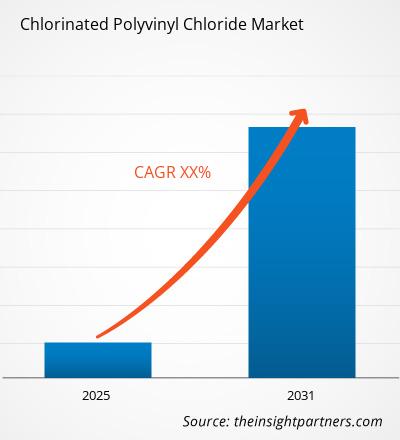
The Chlorinated Polyvinyl Chloride Market is valued at US$ 4.82 Billion in 2025 and is projected to reach US$ 11.26 Billion by 2034, registering a CAGR of 9.89% during 2026–2034. Demand is supported by durable piping, fire protection systems, water infrastructure, industrial processing, and specialized polymer applications. Corrosion resistance, thermal stability, and installation efficiency continue to strengthen adoption across construction, utilities, industrial facilities, and infrastructure projects worldwide.
North America remains a mature but resilient regional market, supported by the replacement of metallic piping, commercial construction, fire-safety requirements, and water infrastructure modernization. The regional market is estimated to expand at a 7.0–8.0% CAGR during 2026–2034. The Chlorinated Polyvinyl Chloride Market size opportunity is reinforced by established distribution networks, technical standards, contractor familiarity, and application-specific certification requirements across plumbing and fire protection.
Chlorinated Polyvinyl Chloride Market Assessment and Insights
- North America: North America accounted for approximately a 28–32% Chlorinated Polyvinyl Chloride Market in 2025 and is projected to grow at a 7.0–8.0% CAGR between 2026 and 2034, supported by infrastructure replacement, plumbing modernization, fire protection, and industrial piping requirements.
- U.S.: The U.S. represented approximately 24–27% of global demand in 2025 and is expected to register a 7.0–8.0% CAGR during 2026–2034, led by plumbing replacement and fire-safety applications.
- Europe: Europe held approximately 19–22% share in 2025 and is forecast to expand at a 6.5–7.5% CAGR between 2026 and 2034, with Germany, the UK, France, Italy, and Spain supporting retrofit and industrial applications.
- Asia Pacific: Asia Pacific captured approximately 34–37% share in 2025 and is projected to grow at a 10.0–11.0% CAGR during 2026–2034, led by China, India, Japan, South Korea, and Australia.
- Largest Segment: Pipe and Fitments represented approximately 48–52% market share in 2025 and is projected to expand at a 9.0–10.0% CAGR during 2026–2034, retaining application leadership.
- High Growth Segment: Fire Sprinkler Systems accounted for approximately 14–18% market share in 2025 and is projected to register a 10.0–11.0% CAGR during 2026–2034, supported by safety requirements.
- Key companies analyzed in detail: BASF SE, Jiangsu Tianteng Chemical Industry Co., Ltd., KANEKA CORPORATION, KEM ONE, Panjin Rester Chemical Industry Co., Ltd., SEKISUI CHEMICAL CO., LTD., Shandong Tianchen Chemical Co., Ltd., The Lubrizol Corporation, Shandong Ketian Chemical Co., Ltd., and Astral Limited.
Source: The Insight Partners' analysis based on proprietary research, government publications, company annual reports, investor presentations, industry databases, and expert interviews.
CPC (Chlorinated Polyvinyl Chloride) manufacturers have evolved from standard resin production into a more comprehensive approach involving chlorination, compounding, formulation, and application systems. There is greater attention paid to controlled chlorination, molecular uniformity, processing properties, and product formulations for specific applications. Process economics are becoming more integrated geographically, depending upon the availability of chlorine and PVC raw materials. Such a development allows more advanced plumbing applications, fire protection, and piping applications.
Process economics in the Chlorinated Polyvinyl Chloride Market are becoming more dependent on feedstock integration, process control, and downstream technologies. Manufacturers are developing stronger alliances with pipe manufacturers, compounders, distributors, contractors, and engineering companies for better qualification. Such a development tends to favor those suppliers who can integrate resin quality with formulation technology and technical services. There is a bright future ahead for Chlorinated Polyvinyl Chloride in view of the developing economies in Asia, where there is a need for long-lasting pipe made from polymer materials to provide housing, water infrastructure, industry, and fire protection. Manufacturing in this region would make the country less dependent on imports and improve its delivery system.
Chlorinated Polyvinyl Chloride Market Report Scope
| Report Attribute | Details |
|---|---|
| Market size in 2025 | US$ 4.82 Billion |
| Market Size by 2034 | US$ 11.26 Billion |
| Global CAGR (2026 - 2034) | 9.89% |
| Historical Data | 2021-2024 |
| Forecast period | 2026-2034 |
Chlorinated Polyvinyl Chloride Market Analysis
The forecast for growth in the market for Chlorinated Polyvinyl Chloride is tightly associated with construction, water distribution, process industry and fire protection. Its value chain consists of manufacturers of PVC, of chlorine, of CPVC resins, of compounding facilities, pipe and fitting producers, distributors, construction contractors, engineering firms and developers of infrastructure. Increasing demand is driven by the need for corrosion resistance, temperature properties, easy installation and long term maintenance.
Supply factors include feedstocks availability, technology, regional capacity and transport economics. Integrated producers may benefit from better cost and supply management, while downstream compounders compete on stabilization system, additives and special formulas for different applications. Regional production allows for faster delivery and development of technical cooperation with pipe manufacturers.
Chlorinated Polyvinyl Chloride Market Analysis shows a competitive structure comprised of global chemical manufacturers, specialty polymers producers, regional manufacturers, and downstream systems producers. The Lubrizol Corporation is a competitor that adopts a technology-based strategy for its plumbing, fire protection, and industrial segments. The KANEKA CORPORATION, BASF SE, KEM ONE, SEKISUI CHEMICAL CO., LTD., and regional Chinese manufacturers add value to their offerings via resins, polymers, compounding, and downstream manufacturing.
Competitive positioning in the Chlorinated Polyvinyl Chloride Market is based more on localization, product certification, technical assistance, and application development in addition to resin availability. Competitors such as BASF SE, Jiangsu Tianteng Chemical Industry Co., Ltd., Panjin Rester Chemical Industry Co., Ltd., Shandong Tianchen Chemical Co., Ltd., and Shandong Ketian Chemical Co., Ltd. diversify the regional supply chain. Astral Limited offers Indian downstream expertise, whereas SEKISUI CHEMICAL CO., LTD. is experienced in CPVC systems manufacturing.
● REPORT CUSTOMIZATION
Tailor This Report To Align With Your Specific Business Requirements
This report can be customized to align precisely with your business objectives, scope, and target markets. Customization options include tailored segmentation, geography, competitive analysis, and strategic insights to support informed decision-making.
Customize This Report →WHAT YOU CAN ADJUST
- ● Segmentations
- ● Geography
- ● Competitive Analysis
- ● Language Preferences
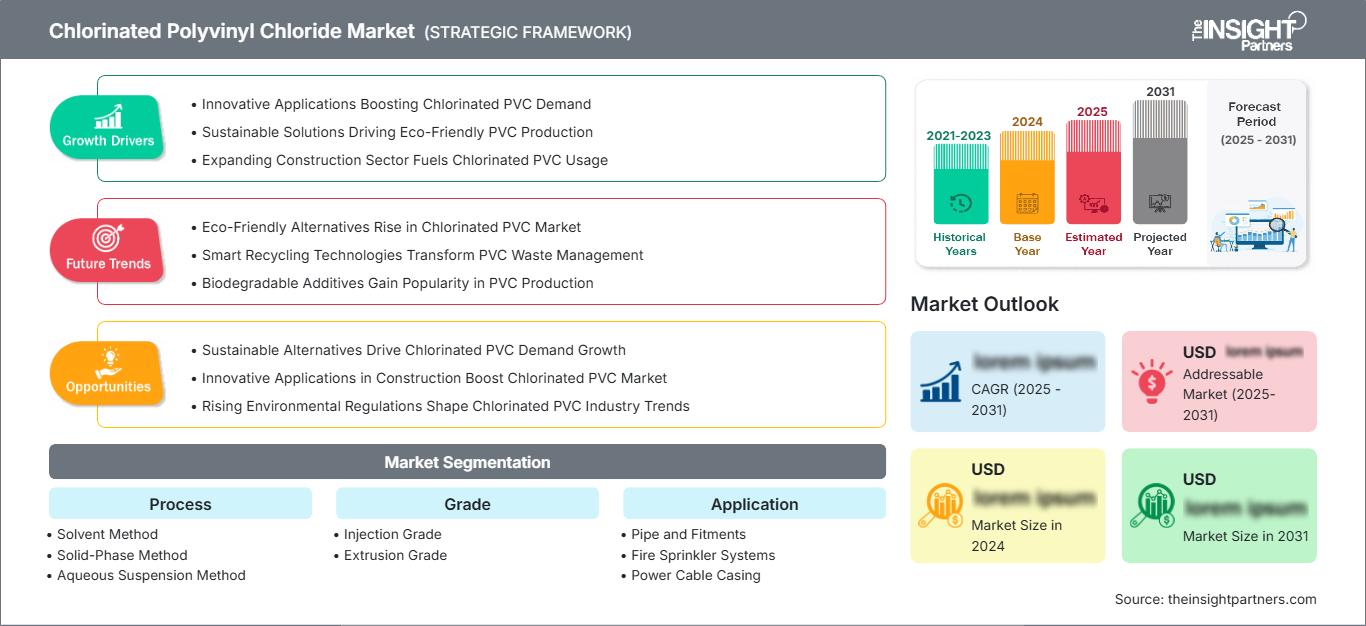
Chlorinated Polyvinyl Chloride Market: Strategic Insights
Regional Insights
North America Chlorinated Polyvinyl Chloride Market
North America accounted for approximately 30.04% share in 2025 and is projected to grow at a 7.0–8.0% CAGR through 2034. Domination of demand comes from the U.S., aided by residential plumbing, commercial building, industrial processes, and fire sprinklers. The need for replacement of the old metallic pipes is another channel of demand that will continue periodically.
Corrosion resistant pipes are required for some chemicals' processing, water treatment, and industrial processing. The contribution to the demand comes from Canada and Mexico because of their construction and modernization of the existing facilities. The characteristics of the region are maturity and constant demand due to replacements.
The Chlorinated Polyvinyl Chloride Market share position in North America reflects established application penetration and a large installed base. Future gains are expected to come primarily from renovation, replacement, fire protection expansion, and selected industrial applications rather than rapid first-time adoption. Technical specifications and local building requirements remain important determinants of material selection.
U.S. Chlorinated Polyvinyl Chloride Market
The U.S. represented approximately 80–85% of North American demand in 2025 and is expected to grow at a 7.0–8.0% CAGR during 2026–2034. Plumbing for residential and commercial uses continues to be relevant, whereas specification-based demand comes from fire sprinkler systems. Industrial sites require chemical-resistant process piping.
It receives advantages such as the presence of relevant technical standards, well-established distribution system, and the general awareness of contractors. Lubrizol Corporation and its downstream manufacturers provide technical expertise and application promotion. Demand arises from replacement needs, remodeling, building of houses, commercial structures, and industrial sites, thus not depending on one type of application.
Europe Chlorinated Polyvinyl Chloride Market
Europe held approximately 19–22% share in 2025 and is projected to expand at a 6.5–7.5% CAGR through 2034. Industrial activities, renovations, and modern building systems make Germany an important market for CPVC. The United Kingdom creates demand for CPVC through plumbing renovation and fire safety systems, whereas France, Italy, and Spain generate demand from modernizing construction and industrial renovations.
The market for CPVC in the United Kingdom is driven by renovation of buildings, replacement of water systems, and fire safety regulations. CPVC may be utilized in some specific cases where the corrosion resistance of the system and efficient installation are important.
In Germany, there is an overlap between the needs for industrial processing and renovations in housing and commercial buildings. The engineering standards and performance needs play a role in the choice of materials, which favor polymer-based systems in appropriate uses. Germany also represents an important market as customers for industrial piping, water management, and technical buildings.
France, Italy, and Spain represent markets that are distinctive, associated with renovation, upgrading infrastructure, commercial building and industry. Italy and Spain benefit from the needs for renovation and building modernization, whereas France is a market for water management and industrial buildings.
APAC Chlorinated Polyvinyl Chloride Market
APAC accounted for approximately 34–37% share in 2025 and is projected to grow at a 10.0–11.0% CAGR through 2034. Demand can be seen coming from China and India, while Japan, South Korea, and Australia have uses for the product within their infrastructure and industry. India is rapidly becoming a producer and consumer of the product.
Urbanization, house building, water infrastructure and industrial growth drive regional acceptance. Improvements in infrastructure projects and local production could increase availability. China has the scale, India has infrastructure possibilities, Japan has proven applications, South Korea has industrial demand, and Australia has water and construction needs.
Middle East & Africa Chlorinated Polyvinyl Chloride Market
Middle East and Africa accounted for approximately 6.06% share in 2025 and is expected to grow at a 7.0–8.0% CAGR through 2034. The Saudi Arab and UAE dominate in demand because of construction work, water works, industrial facilities, and fire safety projects. South Africa is key to residential, commercial, and industrial pipe works.
Energy infrastructure, urbanization, water shortages, and construction programs present opportunities in the region. The Saudi Arab dominates regional demand, while the UAE benefits from commercial and infrastructure developments. South Africa and the Rest of MEA hold long-term prospects with the expansion of sanitation, water distribution, industrial facilities, and infrastructure buildings.
Segmentation Analysis
Process
Process selection influences chlorination efficiency, resin morphology, production economics, and downstream processing behavior. Solvent, solid-phase, and aqueous suspension routes provide different operating characteristics and production requirements. The segment is projected to grow at a 9.0–10.0% CAGR during 2026–2034 as producers improve process control and develop application-specific resin characteristics. The Chlorinated Polyvinyl Chloride Market scope, therefore, includes technology choices affecting resin quality and conversion performance.
- Solvent Method: The Solvent Method provides controlled chlorination and supports consistent resin characteristics. Its strategic importance is associated with quality-sensitive applications requiring predictable processing and controlled material performance.
- Solid-Phase Method: The Solid-Phase Method supports chlorination without extensive solvent handling. Its relevance increases where manufacturers prioritize process simplification, operational efficiency, and scalable CPVC production.
- Aqueous Suspension Method: The Aqueous Suspension Method provides practical industrial processing and scalable production. It remains important for producers to seek reliable throughput, consistent resin characteristics, and efficient manufacturing.
Grade
Grade segmentation reflects downstream processing requirements and finished-product specifications. Injection and extrusion grades address different conversion conditions, affecting melt behavior, dimensional stability, and product performance. The segment is projected to grow at an 8.5–9.5% CAGR during 2026–2034 as molded components and continuous piping systems expand.
- Injection Grade: Injection Grade CPVC supports molded fittings and precision components requiring dimensional control. Demand is associated with standardized fittings, specialized plumbing assemblies, and components requiring consistent processing characteristics.
- Extrusion Grade: Extrusion Grade remains strategically important for continuous products such as pipes and profiles. Demand is supported by water distribution, industrial piping, fire protection, and infrastructure projects.
Application
Application demand is concentrated in piping and infrastructure systems, where performance requirements determine resin and formulation specifications. The segment is projected to grow at a 9.0–10.0% CAGR during 2026–2034. Pipe and Fitments remain the largest application, while fire protection represents a significant growth opportunity.
- Pipe and Fitments: Pipe and Fitments form the core application base because CPVC provides corrosion resistance, thermal performance, and installation flexibility. They remain central to residential, commercial, industrial, and water distribution systems.
- Fire Sprinkler Systems: Fire Sprinkler Systems benefit from corrosion-resistant nonmetallic piping and fire-safety requirements. Their strategic importance is increasing across residential, commercial, institutional, and selected industrial buildings.
- Power Cable Casing: Power Cable Casing provides a specialized application where electrical infrastructure requires durable protective materials. Demand is linked to utility modernization, construction, and cable protection requirements.
- Coatings and Adhesives: Coatings and Adhesives represent a technically relevant application area. CPVC-based formulations can provide chemical resistance and specialized performance for selected construction and industrial applications.
Opportunity Snapshot
| Application | Revenue Contribution | Trend Tag | Adoption Stage |
| Pipe and Fittings | High | Water Infrastructure | Mature |
| Fire Sprinkler Systems | Medium | Fire Safety | Scaling |
| Power Cable Casing | Low | Cable Protection | Emerging |
| Coatings And Adhesives | Low | Chemical Resistance | Emerging |
Chlorinated Polyvinyl Chloride Market Growth Drivers and Impact Analysis
Expansion of Water Infrastructure and Building Construction
Water infrastructure investment remains a fundamental catalyst because CPVC provides a durable option for hot and cold water distribution. Residential development, commercial buildings, institutional facilities, and municipal upgrades require piping systems capable of withstanding corrosion and elevated temperatures. Emerging economies generate incremental demand through new infrastructure, while developed markets create replacement opportunities through renovation. Higher pipe consumption increases requirements for resin, compounds, fittings, solvent cements, and technical services. Producers with regional manufacturing capabilities can respond faster to customer specifications and reduce transportation exposure. The impact, therefore, extends across the value chain, supporting investment in resin capacity, compounding, distribution, certification, and application engineering while increasing the importance of dependable product quality.
Increasing Adoption of Nonmetallic Fire Protection Systems
Fire protection is an attractive application because building owners and contractors increasingly evaluate corrosion-resistant alternatives for sprinkler networks. CPVC can provide lightweight handling, installation efficiency, and resistance to internal corrosion for specified systems. Demand is influenced by fire codes, insurance considerations, building safety requirements, and expanding sprinkler coverage. High-rise housing, commercial facilities, warehouses, and institutional buildings create recurring project opportunities. Suppliers can strengthen competitive positions by providing certified systems rather than commodity resin alone, combining material technology with engineering guidance, compatible components, installer education, and project-level support. This integrated approach improves specification acceptance and can reduce installation risks, creating additional value for manufacturers with established technical-service networks.
Shift from Metal Toward Corrosion-Resistant Polymer Piping
Industrial users increasingly evaluate polymer piping when corrosion, scaling, maintenance, and lifecycle costs affect metallic systems. CPVC is relevant to chemical processing, water treatment, industrial utilities, and selected process applications because its chemical resistance can extend service intervals under appropriate operating conditions. Replacement projects provide another demand channel as existing metallic networks require refurbishment after prolonged exposure to aggressive fluids. Suppliers combining resin technology with application engineering can address material compatibility, temperature, pressure, and installation requirements more effectively. Competitive differentiation is therefore moving toward documented performance, system design assistance, testing, and long-term application reliability. These capabilities can improve qualification rates and strengthen relationships with industrial customers.
Chlorinated Polyvinyl Chloride Market Future Trends
Regionalization of CPVC Resin Manufacturing
The Chlorinated Polyvinyl Chloride Market trends landscape is expected to increasingly reflect regional manufacturing as producers seek greater control over feedstock availability, transportation costs, inventory exposure, and customer responsiveness. Capacity is likely to concentrate near integrated chlorine and PVC infrastructure, allowing manufacturers to capture feedstock synergies and shorten supply routes. Regional production can also facilitate product customization because technical teams can work closely with pipe manufacturers and contractors. Over time, localized manufacturing should create advantages beyond logistics, including application development, certification support, quality consistency, and faster troubleshooting. This direction may reduce dependence on long-distance imports in high-growth markets while encouraging partnerships between technology providers and local chemical producers seeking scalable production capabilities.
Greater Emphasis on Application-Specific Formulations
Product development is expected to move toward application-specific formulations rather than uniform resin offerings. Plumbing, fire protection, industrial piping, and electrical applications have different requirements for impact strength, thermal performance, processing behavior, chemical resistance, and regulatory compliance. Compounders can differentiate grades by adjusting stabilizers, processing aids, impact modifiers, pigments, and related additives. Digital process monitoring may further improve batch consistency as customers demand predictable performance across large projects. Suppliers with research laboratories, technical service networks, and downstream processing expertise can accelerate qualification. The direction should benefit companies capable of translating customer requirements into formulation improvements, reducing development cycles, improving conversion efficiency, and supporting specialized CPVC applications across regional markets.
Chlorinated Polyvinyl Chloride Market Opportunities
Expansion of Local Manufacturing in High-Growth Asian Markets
The Chlorinated Polyvinyl Chloride Market Forecasts indicate that Asian markets offer substantial opportunities for localized resin and compound manufacturing as infrastructure demand expands alongside domestic chemical production. India is particularly attractive because plumbing consumption, water infrastructure, housing development, and industrial construction create multiple demand channels. Local manufacturing can reduce import exposure, improve delivery reliability, and support customer-specific formulations. Investors can also benefit from integration with chlorine and PVC feedstocks, reducing logistics complexity. Partnerships between technology providers and regional chemical manufacturers can accelerate commercialization while providing established distribution access. A successful capacity strategy should prioritize feedstock integration, qualification, technical support, downstream relationships, and regional customer service rather than focusing only on nominal production capacity.
Development of Integrated CPVC System Solutions
Integrated CPVC system solutions provide another opportunity by combining resin, pipe, fittings, compatible joining products, engineering support, and certification. Customers increasingly value predictable system performance because failures can generate significant replacement and operational costs. Integrated offerings can improve specification control and strengthen relationships with distributors, contractors, engineering firms, and building owners. The opportunity is particularly relevant for fire protection, industrial piping, and large commercial projects where material compatibility and installation quality are critical. Suppliers can develop packages tailored to regional codes and operating conditions while investing in technical training, testing laboratories, project support, and digital specification tools. Such capabilities can improve adoption and create higher-value customer engagement across the supply chain.
Recent Developments
- June 2026: Grasim Industries Limited and The Lubrizol Corporation commissioned the first phase of a CPVC resin manufacturing facility at Vilayat, Gujarat. The facility has an initial capacity of 50,000 metric tons per year and is integrated with Grasim’s chlor-alkali complex. The project is intended to strengthen domestic CPVC resin availability, reduce import dependence, and support demand from plumbing, water management, fire protection, and industrial piping applications.
- March 2026: DCW Limited completed a 10,000-metric-ton annual CPVC capacity expansion, increasing its total installed CPVC capacity from 40,000 to 50,000 metric tons per year. The company stated that its previous capacity was operating at 100% utilization and planned to progressively ramp up the additional capacity during Q1 FY27. The expansion strengthens DCW’s ability to serve increasing CPVC demand in the specialty chemicals market.
Frequently Asked Questions

- Comprehensive Market Sizing and Forecast Analysis
- Detailed Segmentation Analysis
- In-Depth Market Dynamics Assessment
- Regional and Country-Level Insights
- Competitive Landscape and Company Benchmarking
- Strategic Business Intelligence
Recent Reports
Testimonials

The Insight Partners provided valuable market intelligence that supported our global go-to-market strategy. Their team was professional, responsive, and attentive to our feedback, providing thoughtful analysis and helpful methodological clarifications throughout the project.
Junmo Kim Chief Financial Officer (CFO), Enertech Co., Ltd.
The Insight Partners' SCADA System Market report is comprehensive, with valuable insights on current trends and future forecasts. The team was highly professional, responsive, and supportive throughout. We are very satisfied and highly recommend their services.
RAN KEDEM Partner, Reali Technologies LTDs
I requested a report on a very specific software market and the team produced the report in a few days. The information was very relevant and well presented. I then requested some changes and additions to the report. The team was again very responsive and I got the final report in less than a week.
JEAN-HERVE JENN Chairman, Future Analytica
We worked with The Insight Partners for an important market study and forecast. They gave us clear insights into opportunities and risks, which helped shape our plans. Their research was easy to use and based on solid data. It helped us make smart, confident decisions. We highly recommend them.
PIYUSH NAGPAL Sr. Vice President, High Beam Global
The Insight Partners delivered insightful, well-structured market research with strong domain expertise. Their team was professional and responsive throughout. The user-friendly website made accessing industry reports seamless. We highly recommend them for reliable, high-quality research services
YUKIHIKO ADACHI CEO, Deep Blue, LLC.
This is the first time I have purchased a market report from The Insight Partners.While I was unsure at first, I visited their web site and felt more comfortable to take the risk and purchase a market report.I am completely satisfied with the quality of the report and customer service. I had several questions and comments with the initial report, but after a couple of dialogs over email with their analyst I believe I have a report that I can use as input to our strategic planning process.Thank you so much for taking the extra time and making this a positive experience.I will definitely recommend your service to others and you will be my first call when we need further market data.
JOHN SUZUKI President and Chief Executive Officer, Board Director, BK Technologies
I wish to appreciate your support and the professionalism you displayed in the course of attending to my request for information regarding to infectious disease IVD market in Nigeria. I appreciate your patience, your guidance, and the fact that you were willing to offer a discount, which eventually made it possible for us to close a deal. I look forward to engaging The Insight Partners in the future, all thanks to the impression you have created in me as a result of this first encounter.
DR CHIJIOKE ONYIA MANAGING DIRECTOR, PineCrest Healthcare Ltd.Reason to Buy
- Informed Decision-Making
- Understanding Market Dynamics
- Competitive Analysis
- Identifying Emerging Markets
- Customer Insights
- Market Forecasts
- Risk Mitigation
- Boosting Operational Efficiency
- Strategic Planning
- Investment Justification
- Tracking Industry Innovations
- Aligning with Regulatory Trends





 Get Free Sample for