
Animal Parasiticides Market Share, Demand & Growth by 2034
Coverage: By Product (Endoparasiticides, Ectoparasiticides, Endectocides); Animal Type (Dairy and Food Producing Animals and Pet Animals) , and Geography (North America, Europe, Asia Pacific, and South and Central America)
- Status : Data Released
- Report Code : TIPRE00003838
- Category : Life Sciences
- No. of Pages : 150
- Available Report Formats :


- Last update date : August 05, 2026


2025 Market Size
US$ 14.26 Bn
Base year value
2034 Forecast
US$ 22.13 Bn
Projected by 2034
CAGR 2026-2034
5.01 %
Growth rate
Addressable Market
US$ 165.18 Bn
(2026-2034)
The animal parasiticides market is projected to grow from US$ 14.26 Billion in 2025 to US$ 22.13 Billion by 2034, registering a CAGR of 5.01% during 2026–2034. Demand is being shaped by companion animal parasite prevention, livestock productivity protection, zoonotic disease awareness, and wider veterinary access across developed and emerging economies, where year-round flea, tick, worm, mite, and multi-parasite control remains central to animal health management.
North America remains a mature but resilient region, with the animal parasiticides market size supported by an estimated CAGR range of 4.6–5.2% during 2026–2034. Growth is driven by high pet healthcare spending, prescription parasiticide adherence, livestock herd health programs, and climate-linked parasite pressure that is extending seasonal prevention into continuous annual protocols across dogs, cats, cattle, and horses.
Animal Parasiticides Market Assessment and Insights
- North America held 34–37% share in 2025 and is expected to grow at a CAGR between 2026–2034 of 4.6–5.2%, supported by companion animal prescriptions, cattle parasite control, and veterinary-led preventive care.
- US accounted for 81–84% of North America in 2025 and is projected to grow at a CAGR between 2026–2034 of 4.7–5.3%, led by dogs, cats, and cattle treatment protocols.
- Europe represented 26–29% share in 2025 and is expected to grow at a CAGR between 2026–2034 of 4.2–4.8%, with Germany, France, the UK, Italy, and Spain leading.
- Asia Pacific captured 23–26% share in 2025 and is forecast to grow at a CAGR between 2026–2034 of 5.8–6.5%, led by China, India, Japan, Australia, and South Korea.
- Largest Segment Ectoparasiticides held 43–47% market share in 2025 and is expected to expand at a CAGR range of 4.8–5.4% during 2026–2034 due to flea and tick prevention.
- High Growth Segment Endectocides held 24–28% market share in 2025 and is projected to grow at a CAGR range of 5.6–6.3% during 2026–2034, supported by broad-spectrum treatment convenience.
- Key companies analyzed in detail: Merck & Co., Inc., Bayer AG, Boehringer Ingelheim International GmbH, Eli Lilly and Company, Zoetis Inc., Virbac S.A., Perrigo Company plc, Vetoquinol S.A., Ceva Santé Animale S.A., Sanofi S.A.
Source: The Insight Partners' analysis based on proprietary research, government publications, company annual reports, investor presentations, industry databases, and expert interviews.
The evolution of product formulations in the animal parasiticide market segment has shifted from periodic deworming and topical treatment of fleas to the development of prescription-grade, broad-spectrum, long-acting, and combination products. Product production trends are currently evolving as companies make investments in isoxazolines, macrocyclic lactones, injection, palatability, and large animal dosage administration.
Adoption in future will be driven by factors such as increased ownership of pets, climate-induced vector distribution, livestock intensification, and enhanced surveillance of animal health conditions. Emerging markets will drive demand as veterinary retail distribution networks mature and farmers focus on protecting their productivity. The regulatory trend that will influence future adoption includes approved, species-specific products that have defined claims and responsible use practices.
Animal Parasiticides Market Report Scope
| Report Attribute | Details |
|---|---|
| Market size in 2025 | US$ 14.26 Billion |
| Market Size by 2034 | US$ 22.13 Billion |
| Global CAGR (2026 - 2034) | 5.01% |
| Historical Data | 2021-2024 |
| Forecast period | 2026-2034 |
Animal Parasiticides Market Analysis
The animal parasiticides market market growth is fueled by parasite-caused productivity loss, willingness to pay by pet owners, and increasing awareness of zoonotic transmission. Market growth within the animal parasiticides category is higher in regions where veterinarians have managed to establish a regimen for prevention, rather than an occasional therapy. Companion animal products cater to fleas, ticks, heartworms, mites, and intestinal worms, while livestock products safeguard gains in weight, lactation, fertility, hide quality, and grazing efficiency.
The value chain consists of API manufacturers, formulators, animal health firms, distributors, veterinarians, pharmacies, cooperative farms, and retail outlets. Factors that shape supply conditions include time-to-market, residue compliance, resistance surveillance, and product differentiation. Broader-spectrum products are becoming more popular because of easier dosing, but still, specific labeling based on species is important.
Factors that influence competition include innovation depth, veterinary channel management, life cycle management, and brand trust. The animal parasiticides market report reveals that Merck & Co., Inc., Zoetis Inc., Boehringer Ingelheim International GmbH, Virbac S.A., Vetoquinol S.A., and Ceva Santé Animale S.A. compete through companion and livestock product portfolios, while Bayer AG, Eli Lilly and Company, Perrigo Company plc, and Sanofi S.A. retain their relevance through brand names, consumer health channels, and animal health heritage.
Strategic investments are being made in longer-lasting injectable products, palatable oral drugs, preventive combinations, and parasite education programs. Positioning is becoming increasingly about achieving a balance between efficacy and compliance. Firms that assist veterinarians in diagnosing, reminding, educating about drug resistance, and managing pharmacovigilance data will be better positioned to defend premium pricing in mature markets and earn trust in emerging livestock and pet care channels.
● REPORT CUSTOMIZATION
Tailor This Report To Align With Your Specific Business Requirements
This report can be customized to align precisely with your business objectives, scope, and target markets. Customization options include tailored segmentation, geography, competitive analysis, and strategic insights to support informed decision-making.
Customize This Report →WHAT YOU CAN ADJUST
- ● Segmentations
- ● Geography
- ● Competitive Analysis
- ● Language Preferences
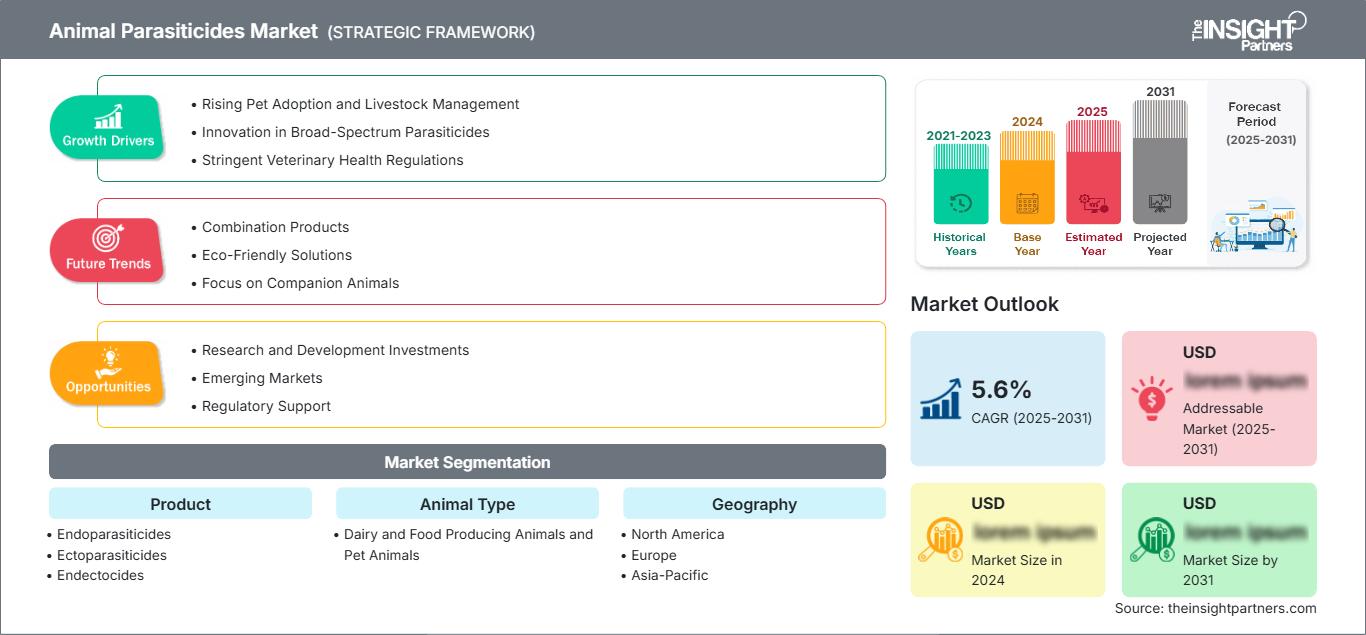
Animal Parasiticides Market: Strategic Insights
Regional Insights
North America animal parasiticides market
North America held 34–37% share in 2025 and is expected to grow at a CAGR range of 4.6–5.2% during 2026–2034. The animal parasiticides market share is supported by high pet insurance penetration, annual wellness plans, and veterinary prescription models for heartworm, flea, and tick prevention. Livestock demand is sustained by cattle, dairy, equine, and small ruminant parasite management.
Annual prevention is gaining popularity due to milder winters and pet travel broadening the parasite window for infection. Companion animal facilities use risk-based approach to choose products, while livestock producers focus on parasite rotation, withdrawal period and economics of herds. Demand in North America is also driven by advanced retail pharmacies, online refills and educating owners for compliance.
U.S. animal parasiticides Market
The U.S. accounted for 81–84% of North America in 2025 and is expected to grow at a CAGR range of 4.7–5.3% during 2026–2034. Its leadership reflects large pet populations, strong veterinary clinic networks, and high use of prescription flea, tick, heartworm, and intestinal worm products. Cattle and equine parasite programs add steady demand.
Presence of the companies is quite wide, with Zoetics Inc., Merck & Co., Inc., Boehringer Ingelheim International GmbH, Virbac S.A., Vetoquinol S.A., and Ceva Santé Animale S.A. present in companion animal as well as production animal segments. Application trends in the industry comprise monthly combinations, yearly injections, feline-specific topical applications, and livestock deworming that uses FEC, pasture management, and targeted therapy.
Europe animal parasiticides Market
Europe held a share of 26-29% in 2025 and is expected to register a CAGR of 4.2-4.8% in 2026-2034. Germany dominates Europe as a leader due to the high quality of veterinary practice, organized approach towards pet health care, and developed segments of cattle and swine. In the UK, there is a steady demand generated through companion animals, equine medicines, and parasitic diseases controlled by the veterinary associations.
Germany and France are major players within the region owing to the prescription drugs utilized within the controlled practices of veterinarians. Germany places an emphasis on evidence-based prevention of companion animals and increasing productivity of cattle, whereas France covers broad requirements for pets, dairy, beef, and small ruminants. Documentation and responsible application are key factors of the segment.
Italy and Spain generate their value through companion animal ownership, Mediterranean ticks and livestock production, while Nordic countries remain strong players due to the high standards of preventive measures. The market in Europe is advanced yet innovative, with the growing contribution of combination formulations, feline-friendly preparations, and farm parasite management minimizing the risks of resistance.
APAC animal parasiticides Market
APAC had a 23-26% share in 2025 and is projected to experience CAGR of 5.8-6.5% from 2026-2034. Leading nations include China, which will benefit due to pet care expansion, larger swine and poultry farms, and growing veterinary commercialization. In Japan and South Korea, premium pet medicines and parasite prevention due to regulatory requirements will be the main drivers.
Individually, India and Australia will benefit from different sources of growth: India due to its livestock size and city pet clinics, Australia because of grazing systems and strong need for tick, worm, fly, and mite control. APAC growth will also benefit from rising disposable incomes, veterinary chain growth, livestock productivity initiatives, and food safety and exports concerns.
Middle East & Africa animal parasiticides Market
MEA market is expected to register a CAGR rate between 5.1-5.8% from 2026-2034, with South Africa taking lead in usage due to companion animals, cattle raising, and veterinary usage of parasites in wild life. Saudi Arabia and UAE will contribute towards the market growth through high-end pet clinics, equine facilities, and livestock health care.
Rest of MEA demand remains mixed due to different levels of distribution, prices, and diagnosis of parasites. Nevertheless, presence of heat, exposure to grazing, and food security programs result in demand for effective ectoparasite and worm control. Suppliers with field education, packaging, and high temperature product logistics will develop slow adoption of the product in small holder and commercial production practices.
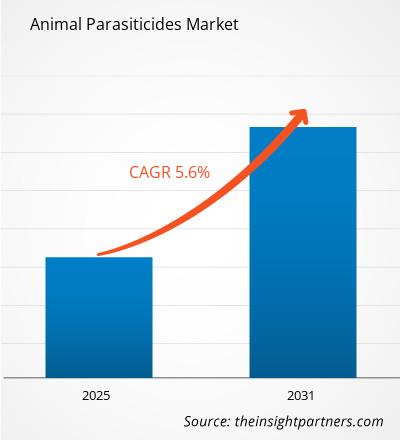
Segmentation Analysis
Product
The Product segment is expected to grow at a CAGR range of 4.9–5.5% during 2026–2034. The animal parasiticides market scope by product is shaped by parasite type, route of administration, duration, resistance concerns, and user compliance. Ectoparasiticides lead through flea and tick prevention, endoparasiticides remain essential for gastrointestinal worms, and endectocides are gaining strategic value because they address internal and external parasites in fewer treatment decisions.
- Endoparasiticides remain essential for controlling gastrointestinal roundworms, tapeworms, flukes, and other internal parasites that reduce growth, feed conversion, milk yield, and companion animal health.
- Ectoparasiticides lead demand because fleas, ticks, mites, lice, and flies create visible owner concern, disease transmission risk, skin disease, and productivity losses across pets and livestock.
- Endectocides are strategically important because broad-spectrum control simplifies parasite programs, improves compliance, and supports farm efficiency where internal worms and external parasites overlap seasonally.
Animal Type
The Animal Type segment is expected to grow at a CAGR range of 4.7–5.3% during 2026–2034. Dairy and food producing animals account for significant volume because parasite control protects meat, milk, and herd productivity, while pet animals generate high value through premium prescription products. Market dynamics differ by channel: farms focus on economics and withdrawal periods, while pet owners prioritize convenience, safety, and year-round protection.
- Dairy and Food Producing Animals require parasite control to protect weight gain, milk yield, fertility, hide quality, and food-chain compliance, making herd-level protocols important for profitability.
- Pet Animals generate high-value demand through monthly chewables, topical solutions, collars, and injectables that address fleas, ticks, heartworm, mites, and intestinal worms with owner-friendly formats.
Opportunity Snapshot
| Animal Type | Revenue Contribution | Trend Tag | Adoption Stage |
|---|---|---|---|
| Dairy and Food Producing Animals | High | Herd Protocols | Mature |
| Pet Animals | High | Year-Round Care | Scaling |
Animal Parasiticides Market Growth Drivers and Impact Analysis
Year-Round Companion Animal Parasite Prevention
Year-round prevention is becoming a major market driver as fleas, ticks, and mosquitoes remain active for longer periods in many regions. Companion animal veterinarians increasingly recommend continuous protection rather than seasonal dosing, especially where heartworm, Lyme disease, flea allergy dermatitis, and tick-borne pathogens are recognized risks. This changes purchasing behavior by increasing refill frequency and encouraging adherence to monthly or long-duration products. The commercial impact is strongest in dogs and cats because owners value convenience and visible protection. Prescription combination parasiticides also improve clinic revenue continuity, while reminder systems and online pharmacies help reduce missed doses. Suppliers benefit when products combine broad claims, palatability, and clear owner education.
Livestock Productivity Protection and Food Security
Parasite control is central to livestock productivity because internal and external parasites reduce feed efficiency, fertility, growth, milk output, wool quality, and carcass value. FAO estimates that animal-source foods remain critical to global nutrition, making herd health a productivity and food security issue rather than only a veterinary concern. The market impact is practical: commercial farms use dewormers, tick control products, pour-ons, injectables, and strategic rotation programs to limit losses. Dairy and beef producers increasingly evaluate parasiticides through return per treated animal, residue compliance, and withdrawal management. This encourages demand for products that provide reliable efficacy, clear dosing, and compatibility with herd health planning.
Expanding Vector-Borne Disease and Zoonotic Risk Awareness
Vector-borne disease awareness is increasing the perceived value of parasite prevention across both pet and production animal markets. Ticks, fleas, mosquitoes, mites, and flies can transmit pathogens that affect animals and, in some cases, people. WOAH and national veterinary authorities continue to emphasize surveillance, prevention, and responsible veterinary medicine when controlling animal diseases. This supports wider use of ectoparasiticides and broad-spectrum products in regions where vectors are expanding geographically or seasonally. The impact includes stronger veterinary recommendations, owner acceptance of preventive regimens, and farm-level protocols linked to biosecurity. Demand also rises after outbreaks or invasive parasite alerts, when producers and pet owners reassess risk.
Animal Parasiticides Market Future Trends
Long-Duration and Clinic-Administered Parasiticides
The next phase of animal parasiticides market trends will include longer-duration products that reduce missed doses and shift prevention closer to the veterinary clinic. Annual injectables, extended collars, and multi-month oral products are expected to gain traction where convenience and adherence are critical. These formats can improve protection continuity, especially for pet owners who forget monthly dosing or farms managing large animal groups. They also support veterinary oversight because administration, eligibility, adverse event counseling, and follow-up can occur in a clinical setting. Suppliers will compete on duration, safety, spectrum, reversibility, and cost per protected month, not only headline efficacy.
Resistance-Aware Parasite Control Programs
Resistance-aware parasite management will become more important as repeated use of the same active classes can reduce long-term efficacy, particularly in grazing livestock and equine systems. Future protocols will rely on diagnostics, fecal egg count reduction testing, targeted selective treatment, refugia management, and product rotation. This will not eliminate parasiticide demand; instead, it will shift demand toward products supported by technical guidance and stewardship programs. Veterinary distributors and manufacturers will need to educate farms on when to treat, which animals to prioritize, and how to document outcomes. Data-supported control plans will become a differentiator for premium suppliers.
Animal Parasiticides Market Opportunities
Broad-Spectrum Companion Animal Compliance Platforms
Companion animal compliance platforms offer a strong opportunity because product efficacy depends on correct and timely administration. animal parasiticides market Forecasts indicate that value will shift toward bundled prevention programs combining broad-spectrum products, refill reminders, veterinary dashboards, and owner education. Clinics can use wellness plans to improve adherence, while manufacturers can support digital tools that track dosing gaps and seasonal risk. The investment case is strongest for dogs and cats in urban markets where owners prefer single-product protection against multiple parasites. Suppliers that connect parasiticides with practice management software and pharmacy fulfillment can capture repeat revenue more efficiently.
Integrated Parasite Programs for Grazing Livestock
Grazing livestock programs create an opportunity for suppliers that combine products with diagnostics, advisory services, and resistance management. Cattle, sheep, goats, and horses require treatment decisions that account for pasture conditions, parasite burden, climate, animal age, and production goals. Companies can differentiate by offering fecal testing partnerships, dosing calculators, field training, and rotation protocols that protect product efficacy. This opportunity is especially relevant in Australia, Latin America, Africa, and parts of Asia where parasite exposure is high, and productivity losses are visible. Investment should prioritize practical farm economics, residue compliance, and easy-to-use products for large herds.
Recent Developments
- March 2026: Merck & Co., Inc. announced U.S. FDA approval of an expanded BRAVECTO QUANTUM label for dogs, adding treatment and control of Asian longhorned tick and Gulf Coast tick for 12 months after one veterinarian-delivered injection. The development strengthened long-duration ectoparasite protection and broadened clinically important tick coverage in companion animal care.
- February 2026: Boehringer Ingelheim International GmbH received U.S. FDA emergency use authorization for NexGard chewables in dogs and NexGard COMBO topical solution in cats for treatment of New World screwworm myiasis. The authorization addressed a specific animal health preparedness need while reinforcing the relevance of prescription isoxazoline-based parasite control.
- January 2025: Zoetis Inc. received U.S. FDA approvals for expanded parasiticide indications across Simparica Trio, Simparica Chewables, and Revolution Plus. The updates included Asian longhorned tick treatment and control claims for dogs and flea tapeworm prevention at the source in cats, strengthening broad-spectrum companion animal protection.
Frequently Asked Questions

- Comprehensive Market Sizing and Forecast Analysis
- Detailed Segmentation Analysis
- In-Depth Market Dynamics Assessment
- Regional and Country-Level Insights
- Competitive Landscape and Company Benchmarking
- Strategic Business Intelligence
Recent Reports
Testimonials

The Insight Partners' SCADA System Market report is comprehensive, with valuable insights on current trends and future forecasts. The team was highly professional, responsive, and supportive throughout. We are very satisfied and highly recommend their services.
RAN KEDEM Partner, Reali Technologies LTDs
I requested a report on a very specific software market and the team produced the report in a few days. The information was very relevant and well presented. I then requested some changes and additions to the report. The team was again very responsive and I got the final report in less than a week.
JEAN-HERVE JENN Chairman, Future Analytica
We worked with The Insight Partners for an important market study and forecast. They gave us clear insights into opportunities and risks, which helped shape our plans. Their research was easy to use and based on solid data. It helped us make smart, confident decisions. We highly recommend them.
PIYUSH NAGPAL Sr. Vice President, High Beam Global
The Insight Partners delivered insightful, well-structured market research with strong domain expertise. Their team was professional and responsive throughout. The user-friendly website made accessing industry reports seamless. We highly recommend them for reliable, high-quality research services
YUKIHIKO ADACHI CEO, Deep Blue, LLC.
This is the first time I have purchased a market report from The Insight Partners.While I was unsure at first, I visited their web site and felt more comfortable to take the risk and purchase a market report.I am completely satisfied with the quality of the report and customer service. I had several questions and comments with the initial report, but after a couple of dialogs over email with their analyst I believe I have a report that I can use as input to our strategic planning process.Thank you so much for taking the extra time and making this a positive experience.I will definitely recommend your service to others and you will be my first call when we need further market data.
JOHN SUZUKI President and Chief Executive Officer, Board Director, BK Technologies
I wish to appreciate your support and the professionalism you displayed in the course of attending to my request for information regarding to infectious disease IVD market in Nigeria. I appreciate your patience, your guidance, and the fact that you were willing to offer a discount, which eventually made it possible for us to close a deal. I look forward to engaging The Insight Partners in the future, all thanks to the impression you have created in me as a result of this first encounter.
DR CHIJIOKE ONYIA MANAGING DIRECTOR, PineCrest Healthcare Ltd.Reason to Buy
- Informed Decision-Making
- Understanding Market Dynamics
- Competitive Analysis
- Identifying Emerging Markets
- Customer Insights
- Market Forecasts
- Risk Mitigation
- Boosting Operational Efficiency
- Strategic Planning
- Investment Justification
- Tracking Industry Innovations
- Aligning with Regulatory Trends





 Get Free Sample for