
Contactless Ticketing Solutions Market Trends, Size & Forecast by 2034
Coverage: By Device Type (Smart Cards, NFC Chips, Mobile Handsets, Others); Vertical (Transportation, Media and Entertainment, Others) , and Geography (North America, Europe, Asia Pacific, and South and Central America)
- Status : Data Released
- Report Code : TIPRE00019821
- Category : Electronics and Semiconductor
- No. of Pages : 150
- Available Report Formats :


- Last update date : July 28, 2026


2025 Market Size
US$ 11.99 Bn
Base year value
2034 Forecast
US$ 31.05 Bn
Projected by 2034
CAGR 2026-2034
11.15 %
Growth rate
Addressable Market
US$ 189.96 Bn
(2026-2034)
The Contactless Ticketing Solutions Market reached a valuation of US$ 11.99 Billion in 2025 and is projected to grow to US$ 31.05 Billion in 2034; the Compound Annual Growth Rate of the market from 2026 to 2034 will be 11.15%. The growth will come from transit modernization, cashless mobility solutions, mobile payment and venue access systems that can minimize waiting times, promote fare integration and optimize passenger traffic flows.
In North America, the growth of the Contactless Ticketing Solutions market size comes from open fare systems, account-based ticketing, and growing acceptance of contactless NFC-enabled cards and payment wallets. The growth rate in the region will be 10.6-11.2% per annum in 2026-2034 and will be driven by transit organizations that are working on updating their fare systems and entertainment facilities with digital access control systems.
Contactless Ticketing Solutions Market Assessment and Insights
- North America held 31–34% share in 2025 and is projected to grow at 10.6–11.2% CAGR during 2026–2034, supported by account-based transit fare programs, venue digitization, and rapid wallet adoption.
- US represented 76–80% of North America in 2025 and is expected to grow at 10.8–11.4% CAGR, led by metro, bus, airport, and stadium deployments.
- Europe accounted for 27–30% of the Contactless Ticketing Solutions Market share in 2025 and is forecast to grow at 10.2–10.8% CAGR, with the UK, Germany, France, Italy, and Spain leading interoperability upgrades.
- Asia Pacific captured 25–28% share in 2025 and is expected to advance at 12.0–12.8% CAGR, driven by China, Japan, South Korea, India, and Australia.
- Largest Segment Smart Cards held 42–46% market share in 2025 and is projected to grow at 8.8–9.6% CAGR as installed transit systems remain card-centric.
- High Growth Segment Mobile Handsets held 28–32% share in 2025 and is forecast to grow at 13.4–14.2% CAGR as wallets, apps, and QR-based access scale.
- Key companies analyzed in detail: iRobot Corporation, Jibo, Inc., 3D Robotics, Inc., Honda Motor Co., Ltd., Bossa Nova Robotics, Neato Robotics, SoftBank Robotics Group Corp., Blue Frog Robotics, RoboDynamics Corporation, Ecovacs Robotics Co., Ltd.
Source: The Insight Partners' analysis based on proprietary research, government publications, company annual reports, investor presentations, industry databases, and expert interviews.
The move away from magnetic tickets and proprietary stored value cards has been toward cloud-based fare engines, tokenization, NFC acceptance, and mobile validation. The production process has come to rely less on hardware deployment and more on validator interoperability, credential provision, back-office settlements, and software maintenance. There is increasing consideration of the combination of closed loop smart card usage with open loop payment systems in order to protect earlier infrastructure investments while accommodating future multimodal travels.
Going forward, new corridors being created in Asia Pacific and selected locations in the Middle East will garner more attention as governments incorporate fare media into their smart city solutions. Regulations supporting security around digital identities, reduced handling of cash, and passenger data will impact the procurement process. Suppliers able to combine flexible devices, cyber-secure settlement solutions, and easy deployment models will be best positioned for upgrades in transport and entertainment scenarios.
Contactless Ticketing Solutions Market Report Scope
| Report Attribute | Details |
|---|---|
| Market size in 2025 | US$ 11.99 Billion |
| Market Size by 2034 | US$ 31.05 Billion |
| Global CAGR (2026 - 2034) | 11.15% |
| Historical Data | 2021-2024 |
| Forecast period | 2026-2034 |
Contactless Ticketing Solutions Market Analysis
Growth in Demand for Contactless Ticketing Solutions Market is driven by the desire for quicker access, less cash leakage, and increased analytical capabilities. The transit network is adopting an account-based model, which decouples fare computation from the physical ticket, enabling smart cards, NFC chips, and hand-held devices to work within one and the same payment system.
This includes producers of equipment, processors, integration systems, software firms, transit authorities, entertainment providers, banks, and wallets. The supply chain process is determined by availability of semiconductors, renewals of validators, availability of cloud computing, and cybersecurity certification. The operators prefer modular systems which can handle fare capping, discounts, settlements between multiple operators, and usage statistics without changing the entire system.
Contactless Ticketing Solutions Market report highlights the presence of a competitive industry where there is a race between big technology integrators, payment solution providers, and mobility software companies in terms of the speed and lifecycle costs associated with implementation. The identified list of companies consists of iRobot Corporation, Jibo, Inc., 3D Robotics, Inc., Honda Motor Co., Ltd., Bossa Nova Robotics, Neato Robotics, SoftBank Robotics Group Corp., Blue Frog Robotics, RoboDynamics Corporation, and Ecovacs Robotics Co., Ltd.
Business investment trends are shifting toward solutions which require less dependence on hardware and offer revenue opportunities through maintenance, analytics, and software upgrades. Strategic advantage lies in the ability of the vendor to be able to integrate with bank card and mobile wallet programs, as well as access and transport layer solutions.
● REPORT CUSTOMIZATION
Tailor This Report To Align With Your Specific Business Requirements
This report can be customized to align precisely with your business objectives, scope, and target markets. Customization options include tailored segmentation, geography, competitive analysis, and strategic insights to support informed decision-making.
Customize This Report →WHAT YOU CAN ADJUST
- ● Segmentations
- ● Geography
- ● Competitive Analysis
- ● Language Preferences
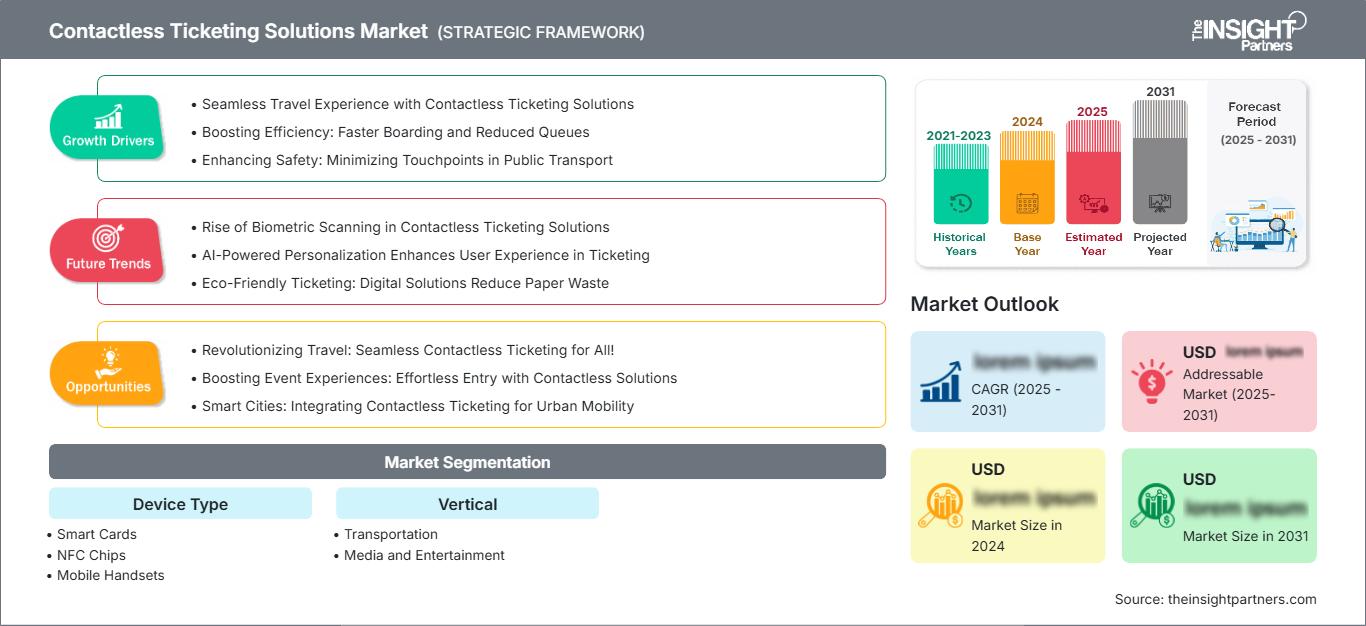
Contactless Ticketing Solutions Market: Strategic Insights
Regional Insights
North America Contactless Ticketing Solutions Market
The North American market holds a share of 31-34% in 2025 and is forecasted to witness growth in the range of 10.6-11.2% CAGR during 2026-2034. The region is supported by established card-based payment rail infrastructure, budget allocation for public transport system modernization, and increasing adoption of mobile payments for daily commute journeys. Contactless Ticketing Solutions Market share is driven by the large metro organizations' need to upgrade magnetic fare media with account-based systems.
The factors contributing to the growth include fare capping, multimodal solutions, and event-based ticketing solutions for stadiums and entertainment areas. In addition to that, the growing demand among public transport providers includes the need for validator devices accepting smart card payments, NFC bank cards, and phone credential payment through single device layer.
U.S. Contactless Ticketing Solutions Market
The U.S. accounted for 76-80% of North America in 2025 and is projected to grow by a CAGR of 10.8-11.4% until 2034. The adoption is primarily found in metropolitan rail, buses, airport shuttle, university transport, and high-volume entertainment zones. They are focusing on tap-and-go ease, lower maintenance costs associated with ticket vending machines, and electronic concessions for senior citizens, students, and poor people.
Strong presence is found in the area of fare collection software, validators, payment gateways, and system integration. Emerging applications include increasing attention towards mobile-first ticketing in regional buses and event shuttles, and big cities continuing to hybrid transition from closed-loop card to open-loop acceptance. Their key business objective is to minimize boarding time, but preserve the complexity of the fare policy.
Europe Contactless Ticketing Solutions Market
The Europe segment captured 27-30% market share in 2025 and is projected to expand at a CAGR of 10.2-10.8% between 2026-2034. UK takes the lead owing to contactless technology acceptance in its urban rail and bus networks, while Germany stresses on interoperable regional fare solutions and robust smart card functionality. France focuses on multimodal ticketing in metros, trams, and suburbs.
Bank card and mobile payments have seen quick adoption in Italy and Spain because of the requirement for smooth access for tourism and urban transit services, such as rail and bus transport. Data protection, accessibility, and inter-operator clearing are key factors in European procurement processes. Although the lead country is the UK, the rest of Europe is starting to catch up through regional integration programs.
APAC Contactless Ticketing Solutions Market
Share of Asia Pacific was 25-28% in 2025 and expected to witness a 12.0–12.8% CAGR till 2034. China stands out for size, Japan & South Korea for advanced transit card systems, India for metro network expansion, and Australia for open-loop system development.
The key industrial drivers include high density of urban commuters, indigenous capacity for electronics, and government-sponsored smart mobility initiatives. Policy backing for mobile payments and integrated public transport systems will continue to increase the addressable market. The need for cost-effective validators, mobile QR code compatibility, and scalable back-office software remains important.
Middle East & Africa Contactless Ticketing Solutions Market
MEA & Africa are expected to expand at a rate of 11.0-11.8% CAGR through 2026-2034, led by technology implementation in the UAE and development of metro, bus and event infrastructure in Saudi Arabia. South Africa is seen to be a selective market emphasizing corridors.
Demand from energy-backed infrastructure projects, tourism and smart-cities drives adoption of fare collection systems. Rest of MEA region’s adoption would take a more measured pace owing to funding issues and disjointed operator networks. Providers with managed service offerings and sturdy equipment would serve well in budget-driven applications.
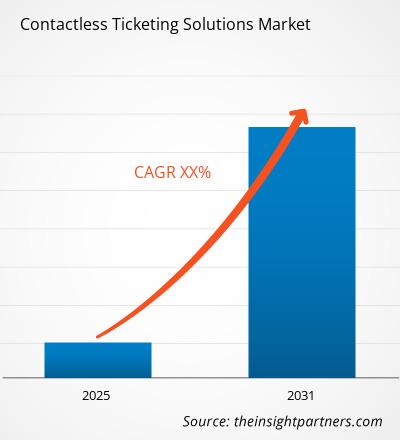
Segmentation Analysis
Device Type
Device Type is expected to grow at 10.9–11.7% CAGR during 2026–2034. The Contactless Ticketing Solutions Market scope within this segment covers durable cards, embedded chips, and handset-based credentials that support varied cost, security, and convenience requirements. Operators often deploy multiple device types together to serve commuters, tourists, unbanked users, and occasional event attendees.
- Smart Cards remain the largest installed base because they support concessions, stored value, offline validation, and reliable use in high-throughput transit environments.
- NFC Chips are strategically important for cards, wearables, and secure elements, enabling fast tap performance, cryptographic protection, and compatibility with legacy readers.
- Mobile Handsets are the fastest scaling interface as wallet adoption, app ticketing, QR codes, and account-based credentials reduce dependence on physical issuance.
Vertical
Vertical is projected to grow at 10.7–11.5% CAGR during 2026–2034. Transportation remains the anchor vertical because fare systems require reliability, settlement accuracy, and policy flexibility at scale. Media and entertainment adoption is rising as venues digitize admissions, integrate loyalty, and reduce counterfeit ticketing through authenticated mobile and contactless credentials.
- Transportation generates high recurring transaction volumes and requires fare capping, multimodal settlement, accessible validation, and resilient devices across buses, metro systems, rail, ferries, and shuttles.
- Media and Entertainment uses contactless entry to shorten queues, authenticate tickets, connect purchases with loyalty data, and improve access control at concerts, sports, cinemas, and exhibitions.
Opportunity Snapshot
| Industry Vertical | Revenue Contribution | Trend Tag | Adoption Stage |
| Transportation | High | Open Loop | Scaling |
| Media and Entertainment | Medium | Digital Entry | Scaling |
Contactless Ticketing Solutions Market Growth Drivers and Impact Analysis
Open-Loop Fare Acceptance Reduces Passenger Friction
Open-loop acceptance is becoming a core procurement requirement because it lets riders use bank cards, phones, or wearables without buying a proprietary ticket first. The impact is strongest in cities with tourists, occasional riders, and fragmented fare zones, where unfamiliar payment steps suppress ridership. Agencies also reduce cash handling, vending machine service, and card distribution costs. For vendors, this driver shifts value from single-purpose hardware toward payment certification, tokenization, back-office clearing, and analytics that help operators manage discounts, transfers, and fare caps.
Account-Based Platforms Enable Multimodal Integration
Account-based ticketing changes fare collection by storing passenger value and entitlement in the back office rather than only on a card. This architecture allows one customer account to connect metro, bus, rail, parking, bike sharing, and event mobility. The market impact is a broader software opportunity, because operators need rules engines, customer portals, fraud controls, and settlement tools. It also extends the life of legacy cards while adding mobile and NFC credentials, making migration less disruptive for agencies with large installed systems.
Venue Digitization Expands Beyond Public Transport
Media and entertainment venues are adopting contactless ticketing to improve crowd movement, reduce counterfeit tickets, and link admission with concessions, parking, and loyalty programs. Unlike transit, venue demand is event-driven and requires rapid validation during short entry windows. The commercial impact is attractive because stadiums, cinemas, exhibitions, and concert operators value integration with customer relationship systems and dynamic pricing. This expands the addressable base for ticketing vendors beyond transport agencies and creates higher-margin software, identity, and access-control opportunities.
Contactless Ticketing Solutions Market Future Trends
Digital Identity Will Reshape Passenger Eligibility
Contactless Ticketing Solutions Market trends will increasingly intersect with verified digital identity as agencies seek automated eligibility for discounts, age-based concessions, accessibility benefits, and event credentials. Instead of showing separate documents, riders may authenticate entitlement through secure wallets linked to fare accounts. This trend could reduce manual checks, improve inclusion, and lower fraud. Implementation will depend on privacy-by-design, consent management, and interoperability with government or institution-issued credentials. Vendors that embed identity verification without exposing sensitive passenger data will gain strategic relevance in regulated procurement.
AI-Assisted Fare Operations Will Improve Asset Use
AI-enabled fare operations are expected to move from pilot projects into routine back-office functions. Algorithms can flag abnormal validation patterns, predict validator failures, forecast station demand, and optimize customer service responses. In large networks, even small reductions in downtime or fare leakage can justify analytics investment. The trend will not replace core payment rules, but it will make ticketing systems more adaptive. Suppliers with explainable models, secure data handling, and integration experience will be better positioned as agencies modernize operations.
Contactless Ticketing Solutions Market Opportunities
Managed Fare Platforms for Mid-Sized Agencies
Mid-sized transit agencies offer a practical opportunity because many need modern fare tools but cannot fund large custom deployments. Cloud-hosted managed platforms can package validators, payment processing, customer accounts, reporting, and support under predictable contracts. Contactless Ticketing Solutions Market Forecasts favor vendors that reduce implementation time and offer configuration rather than heavy customization. The opportunity is strongest where agencies want fare capping, smart cards, mobile tickets, and bank-card acceptance in one roadmap. Scalable service models can also create recurring revenue and lower procurement risk.
Integrated Ticketing for Tourism and Events
Tourism corridors, airports, conventions, and sports events create opportunities for integrated tickets that combine transit, venue access, parking, and promotions. Cities can use temporary or reusable digital passes to simplify visitor movement and collect anonymized demand insights. Vendors should target partnerships among transport authorities, event organizers, hotels, and payment networks. The investment case rests on higher visitor satisfaction, lower congestion, and measurable spending links. Solutions that work without complex enrollment will be most attractive for international and occasional users.
Recent Developments
- July 2026: Modeshift has partnered with rabbittransit to launch a modern, unified fare collection system designed to make public transportation payments easier, more flexible, and more convenient for riders. The new rabbitPAY platform introduces an account-based fare solution that combines contactless payments, mobile ticketing, smart cards, fare capping, and real-time data insights into a single integrated system. The platform is designed to simplify fare management for passengers while helping transit agencies improve operational efficiency.
- March 2024: Unicard has launched Ticketing Hub, a universal contactless ticketing platform designed to simplify and accelerate the deployment of modern fare solutions across the UK’s transport networks. The platform enables passengers to use contactless debit and credit cards for seamless tap-in and tap-out journeys across multiple transport modes and operators, eliminating the need for multiple tickets. Designed to work alongside existing ticketing systems, Ticketing Hub helps transport providers deliver a more connected and convenient travel experience.
- December 2025: Merseyrail has launched a pilot programme for the next phase of its smart ticketing system, introducing contactless payment options to make rail travel faster, simpler, and more convenient for passengers. The new phase of the Tap & Go system allows passengers to use contactless bank cards and smart devices, including digital wallets, alongside existing MetroCard options. The initiative is a key step toward creating a fully integrated contactless travel experience across the Merseyrail network.
Frequently Asked Questions

- Comprehensive Market Sizing and Forecast Analysis
- Detailed Segmentation Analysis
- In-Depth Market Dynamics Assessment
- Regional and Country-Level Insights
- Competitive Landscape and Company Benchmarking
- Strategic Business Intelligence
Recent Reports
Testimonials

The Insight Partners' SCADA System Market report is comprehensive, with valuable insights on current trends and future forecasts. The team was highly professional, responsive, and supportive throughout. We are very satisfied and highly recommend their services.
RAN KEDEM Partner, Reali Technologies LTDs
I requested a report on a very specific software market and the team produced the report in a few days. The information was very relevant and well presented. I then requested some changes and additions to the report. The team was again very responsive and I got the final report in less than a week.
JEAN-HERVE JENN Chairman, Future Analytica
We worked with The Insight Partners for an important market study and forecast. They gave us clear insights into opportunities and risks, which helped shape our plans. Their research was easy to use and based on solid data. It helped us make smart, confident decisions. We highly recommend them.
PIYUSH NAGPAL Sr. Vice President, High Beam Global
The Insight Partners delivered insightful, well-structured market research with strong domain expertise. Their team was professional and responsive throughout. The user-friendly website made accessing industry reports seamless. We highly recommend them for reliable, high-quality research services
YUKIHIKO ADACHI CEO, Deep Blue, LLC.
This is the first time I have purchased a market report from The Insight Partners.While I was unsure at first, I visited their web site and felt more comfortable to take the risk and purchase a market report.I am completely satisfied with the quality of the report and customer service. I had several questions and comments with the initial report, but after a couple of dialogs over email with their analyst I believe I have a report that I can use as input to our strategic planning process.Thank you so much for taking the extra time and making this a positive experience.I will definitely recommend your service to others and you will be my first call when we need further market data.
JOHN SUZUKI President and Chief Executive Officer, Board Director, BK Technologies
I wish to appreciate your support and the professionalism you displayed in the course of attending to my request for information regarding to infectious disease IVD market in Nigeria. I appreciate your patience, your guidance, and the fact that you were willing to offer a discount, which eventually made it possible for us to close a deal. I look forward to engaging The Insight Partners in the future, all thanks to the impression you have created in me as a result of this first encounter.
DR CHIJIOKE ONYIA MANAGING DIRECTOR, PineCrest Healthcare Ltd.Reason to Buy
- Informed Decision-Making
- Understanding Market Dynamics
- Competitive Analysis
- Identifying Emerging Markets
- Customer Insights
- Market Forecasts
- Risk Mitigation
- Boosting Operational Efficiency
- Strategic Planning
- Investment Justification
- Tracking Industry Innovations
- Aligning with Regulatory Trends





 Get Free Sample for