
Controlled and Slow Release Fertilizers Market Share, Growth & Demand by 2034
Coverage: By Type (Urea Reaction Products, Encapsulated/ Coated); Application (Agricultural areas, Commercial lawns and turfs, Others), and Geography (North America, Europe, Asia Pacific, and South and Central America)
- Status : Data Released
- Report Code : TIPRE00015886
- Category : Chemicals and Materials
- No. of Pages : 150
- Available Report Formats :


- Last update date : September 01, 2026


2025 Market Size
US$ 7.77 Bn
Base year value
2034 Forecast
US$ 14.53 Bn
Projected by 2034
CAGR 2026-2034
7.20 %
Growth rate
Addressable Market
US$ 100.60 Bn
(2026-2034)
The Controlled and Slow Release Fertilizers Market is expanding as nutrient-efficiency requirements become more important across intensive agriculture and managed turf. The market is valued at US$ 7.77 Billion in 2025 and is projected to reach US$ 14.53 Billion by 2034, registering a CAGR of 7.20% during 2026–2034. Expansion is supported by demand for more precise nutrient delivery, reduced application frequency, improved fertilizer-use efficiency, and growing interest in technologies that moderate nutrient availability according to crop requirements.
North America remains a technologically mature market, with Controlled and Slow Release Fertilizers Market size supported by specialty crop production, turf management, and nutrient-loss mitigation initiatives. The regional market is expected to expand at approximately 5.8–6.5% CAGR during 2026–2034. Precision agriculture adoption and demand for labor-efficient fertilizer programs are key structural factors supporting continued penetration across commercial farms and managed landscapes.
Controlled and Slow Release Fertilizers Market Assessment and Insights
- North America: North America accounted for a 27–31% share in 2025 and is projected to grow at a 5.8–6.5% CAGR between 2026–2034, supported by precision nutrient management, specialty crops, turf applications, and increasing emphasis on nutrient-use efficiency.
- US: The US represented 22–25% share of the global market in 2025 and is expected to expand at a 5.9–6.6% CAGR between 2026–2034, led by specialty agriculture and turf management.
- Europe: Europe held a 20–24% share in 2025 and is projected to register a 6.2–6.9% CAGR between 2026–2034. Germany, France, the UK, Italy, and Spain support adoption through efficiency-oriented farming and environmental priorities.
- Asia Pacific: Asia Pacific represented 31–35% share in 2025 and is expected to grow at a 7.8–8.6% CAGR between 2026–2034. China, India, Japan, and South Korea remain important demand centers because of intensive cultivation and fertilizer-efficiency initiatives.
- Largest Segment: Encapsulated/ Coated represented a 57–61% market share in 2025 and is expected to grow at a 7.4–8.1% CAGR, reflecting controlled nutrient-release advantages.
- High Growth Segment: Commercial lawns and turfs held a 16–20% market share in 2025 and is forecast to grow at a 7.8–8.6% CAGR, supported by managed landscaping and sports-turf requirements.
- Key companies analyzed in detail: AGLUKON Spezialduenger GmbH and Co. KG, Nutrien Ltd., Haifa Group, ICL Group Ltd., Kingenta Ecological Engineering Group Co., Ltd., Koch Fertilizer, LLC, Yara International ASA, Florikan ESA LLC, Pursell Agri-Tech, and The Scotts Miracle-Gro Company.
Source: The Insight Partners' analysis based on proprietary research, government publications, company annual reports, investor presentations, industry databases, and expert interviews.
Product innovation in the Controlled and Slow Release Fertilizers Market has evolved from basic nutrient coating to release profiles optimized with respect to temperature, humidity, crop cycle, and timing of application. Increasing differentiation has been achieved with coating chemistry, granule uniformity, nutrient formulation, and biodegradability of ingredients. The product ecosystem consequently includes not only manufacturing of nitrogen fertilizers and compound fertilizers but also polymer manufacturing, coating machinery, formulation technology, agronomic testing, distribution, and support services. This trend enhances the value of one-shot solutions while generating higher need for field trials and formulation consistency.
During the forecast period, adoption in the Controlled and Slow Release Fertilizers Market is expected to expand in developing agricultural countries where efficiency of fertilizer use and availability of labor impact the economics of farms. The concern for regulatory bodies on losses of nutrients can lead to increased interest in solutions that enhance the efficiency of nutrient usage without need for increased use of fertilizers. Investment will be focused on local manufacturing, biodegradable coating technologies, agronomic services, and regional formulation of products.
Controlled and Slow Release Fertilizers Market Report Scope
| Report Attribute | Details |
|---|---|
| Market size in 2025 | US$ 7.77 Billion |
| Market Size by 2034 | US$ 14.53 Billion |
| Global CAGR (2026 - 2034) | 7.20% |
| Historical Data | 2021-2024 |
| Forecast period | 2026-2034 |
Controlled and Slow Release Fertilizers Market Analysis
The demand for such fertilizers will continue to rise due to the increasing necessity of increasing nutrient use efficiency while retaining crop productivity. Controlled and Slow Release Fertilizers Market is highly dependent on intensive farming, specialty farming, labor issues, and decreasing nutrient loss. The value chain consists of the manufacturers, suppliers of coating materials, formulators, distributors, agronomists, farmers, turf managers, and agricultural services.
Urea reaction-based products offer differentiation in moderated nitrogen release, while the encapsulated products allow better management of nutrient release timing. Manufacturers will compete in terms of the period of release, nutrient content, coating properties, and applicability to application equipment. The demand for such products will be high where the cost premium for the product can be justified.
The competitive environment consists of fertilizer diversified companies and experts specialized in controlled-release technologies. The Controlled and Slow Release Fertilizers Market report shows that strategic positioning relies increasingly on proprietary coatings, regional distribution, formulations, and agronomic services rather than on volumes of fertilizers only. Yara International ASA, ICL Group Ltd., Haifa Group, Nutrien Ltd., and Koch Fertilizer, LLC have diversified fertilizer portfolios and well-established distribution channels.
Experts such as AGLUKON Spezialduenger GmbH and Co. KG, Florikan ESA LLC, and Pursell Agri-Tech differentiate themselves through specialized products and technologies. Kingenta Ecological Engineering Group Co., Ltd. improves its internationalization, whereas The Scotts Miracle-Gro Company allows entering managed turf and landscapes applications market. The investments are directed at local production, sustainable coatings, digital agronomy, and products that can ensure predictable nutrient availability in changing field conditions.
● REPORT CUSTOMIZATION
Tailor This Report To Align With Your Specific Business Requirements
This report can be customized to align precisely with your business objectives, scope, and target markets. Customization options include tailored segmentation, geography, competitive analysis, and strategic insights to support informed decision-making.
Customize This Report →WHAT YOU CAN ADJUST
- ● Segmentations
- ● Geography
- ● Competitive Analysis
- ● Language Preferences
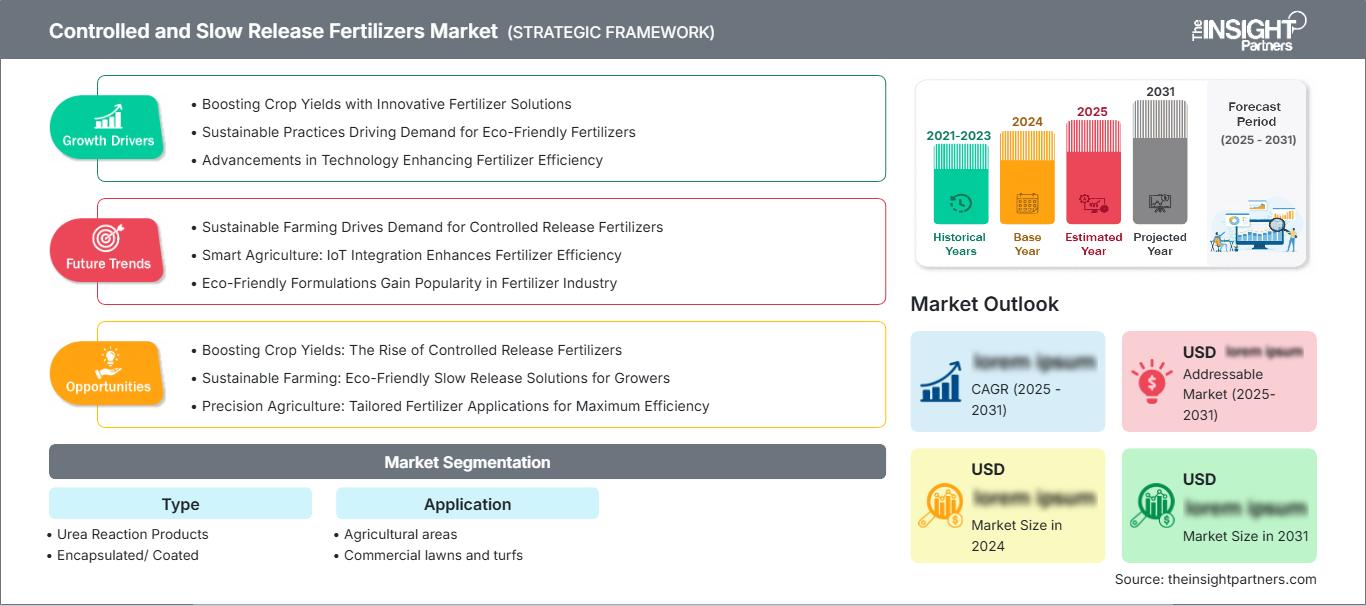
Controlled and Slow Release Fertilizers Market: Strategic Insights
Regional Insights
North America Controlled and Slow Release Fertilizers Market
North America accounted for a 27–31% Controlled and Slow Release Fertilizers Market share in 2025 and is projected to grow at a 5.8–6.5% CAGR through 2034. The United States leads regional consumption because of specialty crop production, commercial turf and farming operations. The Canadian contribution comes from controlled environment agriculture, specialty crop production and fertilizer management practices. Higher labor costs favor products that are applied less often.
Precision agriculture and fertilizer stewardship have become more common in regional fertilizer use. Controlled release products may fit the needs of growers who desire predictable nutrients and reduced applications. Commercial lawns, golf courses, sports fields, nurseries, and landscape contractors are key users outside of crop production. Manufacturers who have agronomic support and distribution arrangements are well positioned to succeed in this situation.
U.S. Controlled and Slow Release Fertilizers Market
The US represented 22–25% of global demand in the Controlled and Slow Release Fertilizers Market and approximately 80–83% of North American consumption in 2025. The market is expected to grow at a 5.9–6.6% CAGR through 2034, supported by specialty crops, turf, and precision nutrient programs. Major suppliers operate through agricultural distributors, direct channels, and technical agronomy networks.
The Controlled and Slow Release Fertilizers Market forecast shows that application patterns vary according to crop types and geographic locations. The use of high value horticulture, nurseries, turf, as well as select row crop production systems can warrant the use of special formulations where reduced application frequency or enhanced nutrient management results in economic savings. Other factors that influence demand include regional nutrient management regulations and the desire to minimize field trips.
Europe Controlled and Slow Release Fertilizers Market
Europe held a 20–24% Controlled and Slow Release Fertilizers Market in 2025 and is projected to expand at a 6.2–6.9% CAGR. Germany is an important market driven by advanced technology in the manufacture of fertilizers, specialization in agriculture, and efficient nutrient use. UK also creates demand for fertilizers through its turf, horticulture and professional landscaping applications.
Germany has an intensive agriculture coupled with advanced agronomy services that will drive demand for products that enhance nutrient timing and prevent over-application. France has a significant agricultural sector that creates demand in cereals, horticulture and specialty crops. Italy and Spain will create demand for products through horticulture, vineyards, orchards, turf, and protected crops.
APAC Controlled and Slow Release Fertilizers Market
APAC represented a 31–35% share in 2025 and is forecast to grow at a 7.8–8.6% CAGR. The biggest markets are China, India, Japan, South Korea, and Australia. High-intensity agriculture, food needs, and efficiencies with fertilizers will lead to usage.
In China, there is a high output of fertilizer coupled with increased use of specialty fertilizers, while in India, there is great potential due to intensive farming practices and initiatives for efficient nutrient management. High-efficiency agricultural practices are preferred in Japan and South Korea, while in Australia, the potential lies in broadacre and specialty fertilizers.
Middle East & Africa Controlled and Slow Release Fertilizers Market
Middle East & Africa is projected to grow at a 6.0–6.8% CAGR through 2034, with Saudi Arabia leading regional demand. The UAE supports controlled-release applications through horticulture, landscaping, and protected agriculture, while South Africa contributes through commercial farming and turf management.
Energy-intensive fertilizer production, water scarcity, and investment in agricultural infrastructure shape regional purchasing decisions. Controlled-release technologies can become more relevant where irrigation management and nutrient efficiency are closely linked. Rest of MEA provides longer-term opportunities as greenhouse cultivation, commercial landscaping, and modern irrigation systems expand, although affordability and distribution remain important adoption considerations.
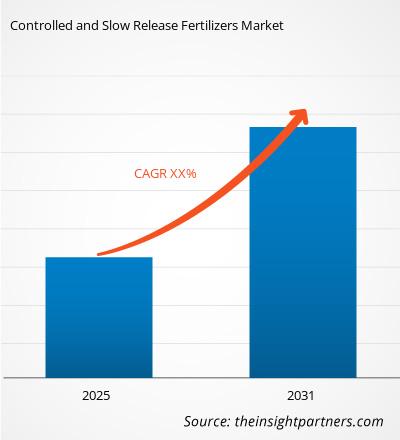
Segmentation Analysis
Type
The Type segment is characterized by differentiated nutrient-release mechanisms, with formulations selected according to crop duration, application method, climatic conditions, and required nutrient availability. The segment is expected to expand at a 6.9–7.6% CAGR during 2026–2034. Product development is increasingly focused on predictable release behavior, improved coating performance, and compatibility with precision application.
- Urea Reaction Products: These products provide moderated nitrogen availability through chemically reacted urea structures. Their strategic relevance comes from extended nutrient delivery and reduced application frequency, particularly where nitrogen timing strongly influences crop performance.
- Encapsulated/ Coated: Coated formulations dominate premium controlled-release applications because coating properties can regulate nutrient diffusion. Demand is supported by horticulture, turf, specialty crops, and intensive farming systems requiring predictable nutrient-release periods.
Application
The Application segment is projected to grow at a 7.3–8.0% CAGR during 2026–2034. Adoption depends on the economic value of reduced application frequency, nutrient efficiency, crop quality, labor savings, and management convenience. Agricultural users provide the broadest demand base, while professional turf applications support premium formulations.
- Agricultural areas: Agricultural areas represent the principal application base, encompassing field crops, horticulture, orchards, and specialty cultivation. Adoption is strongest where nutrient losses, labor costs, or crop value justify controlled nutrient delivery.
- Commercial lawns and turfs: Commercial turf applications include golf courses, sports fields, landscaping, and institutional grounds. Predictable release and fewer application cycles are strategically important because appearance, uniformity, labor efficiency, and maintenance schedules directly affect operating costs.
Opportunity Snapshot
| Application | Revenue Contribution | Trend Tag | Adoption Stage |
|---|---|---|---|
| Agricultural areas | High | Nutrient Efficiency | Scaling |
| Commercial lawns and turfs | Medium | Turf Longevity | Mature |
Controlled and Slow Release Fertilizers Market Growth Drivers and Impact Analysis
Increasing emphasis on fertilizer-use efficiency
Increasing nutrient use efficiency is a key criterion being developed through greater emphasis on yield per dollar spent for control of input costs. Controlled release technologies have the capability of matching nutrient release patterns with crop needs more effectively, and thus minimizing losses through unnecessary or untimely applications. This offers an economic incentive above and beyond mere fertilizer substitution. The response from the manufacturer side involves the development of release patterns that suit crop cycles, soil types, temperatures and irrigation. It means that distributors and agronomists now move towards solution-oriented selling based on both the choice of the product and application technology. The effect will spread to the whole range of high-value horticulture, specialist crops, nursery products and selected broadacre systems. Given that fertilizer economics are vulnerable to energy price and raw material volatility, products that enhance nutrient efficiency can be preferred in their economic context.
Expansion of precision and protected agriculture
Precision agriculture is creating a more favorable environment for fertilizers with predictable nutrient-release characteristics. Digital field mapping, variable-rate application, soil testing, irrigation controls, and crop monitoring allow growers to make more detailed decisions about nutrient timing. Controlled release products have potential to be useful for enhancing these technologies as they will address the problem of misalignment of fertilizer application and plant uptake of nutrients. Protected agriculture creates a chance in that farmers involved in greenhouse farming control water, nutrients, heat, and even the life cycle of plants more carefully than in other types of farming systems. Hence, formulators can create products specific to the particular crops’ calendar and growing conditions as opposed to creating general formulations for fertilizer types. In terms of business relevance, this is especially important for horticulture, nursery farming, and special vegetables.
Demand for lower labor intensity in fertilizer programs
Labor availability and application costs influence fertilizer selection, particularly for horticulture, landscaping, turf, and specialty farming. Products capable of extending nutrient availability can reduce the number of fertilizer applications required during a production cycle. This can lower equipment use, field passes, scheduling complexity, and labor requirements. The resulting economics are especially relevant for commercial turf managers, nurseries, and growers operating in regions where agricultural labor costs are elevated. Manufacturers can strengthen this driver by offering formulations with predictable longevity and clear application protocols. Distribution companies also benefit when products are easier to position around total program economics rather than unit fertilizer price. As farm and landscape operators increasingly assess input decisions through labor, water, and equipment costs together, controlled-release formulations can become part of broader operational-efficiency strategies.
Controlled and Slow Release Fertilizers Market Future Trends
Biodegradable coating technologies gain strategic importance
The Controlled and Slow Release Fertilizers Market trends show that future product development is likely to place greater emphasis on biodegradable and environmentally compatible coating materials. Regulatory scrutiny and customer expectations could encourage manufacturers to reduce persistent polymer residues while retaining predictable nutrient-release performance. Research is likely to focus on bio-based materials, degradation behavior, coating thickness, and release consistency under different soil temperatures and moisture conditions. Suppliers that demonstrate both agronomic performance and credible environmental characteristics may gain stronger access to markets with stringent sustainability requirements. The trend could also influence procurement specifications among professional growers and landscape operators. Rather than treating sustainability as a separate product attribute, manufacturers are likely to incorporate biodegradable coatings into mainstream controlled-release portfolios. This transition may increase formulation complexity initially, but scale, improved material availability, and manufacturing optimization could gradually improve commercial feasibility across multiple crop and turf applications.
Crop-specific release profiles become more precise
Product portfolios are expected to move toward increasingly crop-specific release profiles rather than generalized longevity categories. Advances in coating design, granulation, modeling, and field testing can allow manufacturers to match nutrient release with crop development stages and local climatic conditions. This approach could support formulations for orchards, vegetables, cereals, turf, nurseries, and protected cultivation with different nutrient timing requirements. Temperature-responsive release is particularly relevant because nutrient availability can otherwise vary significantly across seasons and geographic zones. Digital agronomy may further improve customization by connecting soil, weather, irrigation, and crop-growth information with fertilizer recommendations. As the market becomes more specialized, manufacturers with formulation laboratories, agronomic datasets, and regional testing capabilities may have an advantage. Commercial differentiation will increasingly depend on verified release performance rather than simple claims about product longevity.
Controlled and Slow Release Fertilizers Market Opportunities
Localized manufacturing in high-growth agricultural economies
Manufacturers can pursue localized production and formulation partnerships in Asia, Latin America, and selected Middle Eastern markets where fertilizer consumption is substantial and supply chains can be exposed to freight volatility. Local facilities can shorten delivery times, reduce logistics costs, and enable formulations adapted to regional crops and climatic conditions. Partnerships with fertilizer distributors, agronomy networks, and agricultural cooperatives can accelerate field validation and customer education. Investors should prioritize markets combining intensive cultivation, specialty crops, irrigation development, and growing interest in nutrient efficiency. Local manufacturing can also support regulatory compliance and packaging requirements while improving responsiveness to seasonal demand. Companies with established global technology but limited regional production footprints may consider licensing, contract manufacturing, or joint ventures. Such approaches can reduce initial capital requirements while providing access to local market knowledge and distribution infrastructure.
Premium solutions for professional turf and horticulture
Professional turf, landscaping, nurseries, and horticulture offer opportunities for higher-value formulations where nutrient consistency and appearance have direct commercial consequences. Golf courses, sports facilities, commercial landscapes, and ornamental producers often value predictable growth, uniformity, and reduced maintenance interruptions. Suppliers can develop premium products around defined release durations, nutrient combinations, and application schedules. Opportunity creation can extend beyond fertilizer sales through agronomic consulting, maintenance programs, seasonal subscriptions, and digital application planning. Companies entering these niches should segment customers according to turf quality requirements, labor availability, irrigation practices, and maintenance budgets. Demonstration trials and performance-based recommendations can help justify premium pricing more effectively than broad product positioning. The opportunity is particularly attractive for specialists able to combine formulation expertise with technical support, distribution relationships, and customer-specific nutrient-management programs.
Recent Developments
- July 2026: Koch Ag & Energy Solutions (Koch) and OCP Nutricrops S.A. (OCP) signed an agreement for Koch to invest in Jorf Fertilizers Company I (JFC I), from OCP Nutricrops. Upon closing, the transaction will establish a 50/50 operating joint venture between Koch and OCP. This agreement enhances the long-standing relationship between Koch and OCP that was strengthened in 2022 when Koch acquired a 50% interest in Jorf Fertilizers Company III, renamed Kofert. JFC I owns and operates a phosphate fertilizer production facility in Jorf Lasfar, Morocco, with the capacity to produce up to 1.2 million metric tons annually of phosphate-based fertilizers. It is one component of the Jorf Fertilizer Complex, the world's largest phosphate fertilizer production platform.
- May 2025: Coromandel Chemicals Limited, a wholly-owned subsidiary of Coromandel International Limited, signed definitive agreements to form a joint venture with Sakarni Plaster for the manufacture and sale of Phospho Gypsum-based Green Building Materials. This Joint Venture enables Coromandel to diversify beyond its core agri-inputs business, enhance integration synergies and create long-term value. For Sakarni, the alliance facilitates expansion of its product portfolio, market diversification and reinforces its leadership in the gypsum plaster industry.
Frequently Asked Questions

- Comprehensive Market Sizing and Forecast Analysis
- Detailed Segmentation Analysis
- In-Depth Market Dynamics Assessment
- Regional and Country-Level Insights
- Competitive Landscape and Company Benchmarking
- Strategic Business Intelligence
Recent Reports
Testimonials

The Insight Partners provided valuable market intelligence that supported our global go-to-market strategy. Their team was professional, responsive, and attentive to our feedback, providing thoughtful analysis and helpful methodological clarifications throughout the project.
Junmo Kim Chief Financial Officer (CFO), Enertech Co., Ltd.
The Insight Partners' SCADA System Market report is comprehensive, with valuable insights on current trends and future forecasts. The team was highly professional, responsive, and supportive throughout. We are very satisfied and highly recommend their services.
RAN KEDEM Partner, Reali Technologies LTDs
I requested a report on a very specific software market and the team produced the report in a few days. The information was very relevant and well presented. I then requested some changes and additions to the report. The team was again very responsive and I got the final report in less than a week.
JEAN-HERVE JENN Chairman, Future Analytica
We worked with The Insight Partners for an important market study and forecast. They gave us clear insights into opportunities and risks, which helped shape our plans. Their research was easy to use and based on solid data. It helped us make smart, confident decisions. We highly recommend them.
PIYUSH NAGPAL Sr. Vice President, High Beam Global
The Insight Partners delivered insightful, well-structured market research with strong domain expertise. Their team was professional and responsive throughout. The user-friendly website made accessing industry reports seamless. We highly recommend them for reliable, high-quality research services
YUKIHIKO ADACHI CEO, Deep Blue, LLC.
This is the first time I have purchased a market report from The Insight Partners.While I was unsure at first, I visited their web site and felt more comfortable to take the risk and purchase a market report.I am completely satisfied with the quality of the report and customer service. I had several questions and comments with the initial report, but after a couple of dialogs over email with their analyst I believe I have a report that I can use as input to our strategic planning process.Thank you so much for taking the extra time and making this a positive experience.I will definitely recommend your service to others and you will be my first call when we need further market data.
JOHN SUZUKI President and Chief Executive Officer, Board Director, BK Technologies
I wish to appreciate your support and the professionalism you displayed in the course of attending to my request for information regarding to infectious disease IVD market in Nigeria. I appreciate your patience, your guidance, and the fact that you were willing to offer a discount, which eventually made it possible for us to close a deal. I look forward to engaging The Insight Partners in the future, all thanks to the impression you have created in me as a result of this first encounter.
DR CHIJIOKE ONYIA MANAGING DIRECTOR, PineCrest Healthcare Ltd.Reason to Buy
- Informed Decision-Making
- Understanding Market Dynamics
- Competitive Analysis
- Identifying Emerging Markets
- Customer Insights
- Market Forecasts
- Risk Mitigation
- Boosting Operational Efficiency
- Strategic Planning
- Investment Justification
- Tracking Industry Innovations
- Aligning with Regulatory Trends





 Get Free Sample for