
Cyanocobalamin Injection Market Size, Trends & Growth by 2034
Coverage: By Type (Vitamins, Supplements); End User (Hospitals, Clinics, others), and Geography (North America, Europe, Asia Pacific, and South and Central America)
- Status : Data Released
- Report Code : TIPRE00021886
- Category : Life Sciences
- No. of Pages : 150
- Available Report Formats :


- Last update date : August 13, 2026


2025 Market Size
US$ 167.13 Mn
Base year value
2034 Forecast
US$ 269.26 Mn
Projected by 2034
CAGR 2026-2034
5.44 %
Growth rate
Addressable Market
US$ 1,978.69 Mn
(2026-2034)
The Cyanocobalamin Injection Market size was valued at US$ 167.13 Million in 2025 and is projected to reach US$ 269.26 Million by 2034, registering a CAGR of 5.44% from 2026 to 2034. The market reflects sustained demand for vitamin B12 deficiency management, driven by clinical usage in anemia treatment, nutritional disorders, and neurological applications requiring injectable supplementation.
The North America Cyanocobalamin Injection Market is expected to expand at an estimated CAGR range of 5.1–5.8% during 2026–2034, supported by increasing diagnosis of vitamin deficiencies, aging populations, and established reimbursement structures. Growing physician awareness regarding parenteral vitamin therapies and continued healthcare spending across the US and Canada are strengthening regional adoption patterns.
Cyanocobalamin Injection Market Assessment and Insights
- North America The region demonstrates a strong position with an estimated Cyanocobalamin Injection Market share of 34–38% in 2025 and is projected to grow at a CAGR of 5.1–5.8% between 2026–2034, supported by advanced healthcare infrastructure and deficiency management programs.
- US The US represents a significant regional contributor with a share of 27–31% in 2025 and is anticipated to expand at a CAGR of 5.0–5.7% during 2026–2034 due to broad clinical adoption.
- Europe Europe accounts for an estimated share of 28–32% in 2025 and is expected to register a CAGR of 4.9–5.6% through 2034, with Germany, the UK, France, Italy, and Spain supporting demand.
- Asia Pacific Asia Pacific holds an estimated share of 22–26% in 2025 and is forecast to achieve a CAGR of 5.8–6.5% between 2026–2034, led by China, India, Japan, and South Korea.
- Largest Segment Prescription-based clinical applications represent the largest segment with a market share of 42–46% in 2025 and a CAGR of 5.2–5.8% from 2026–2034.
- High Growth Segment Nutritional deficiency management applications show higher expansion potential with a market share of 24–28% in 2025 and a CAGR of 5.8–6.4% during 2026–2034.
- Key companies analyzed in detail: Luitpold Pharmaceuticals (Daiichi Sankyo), Endo International, Bristol-Myers Squibb, Sanofi-Aventis, Jamieson, Teva Pharmaceuticals, Merck & Co., Mylan, Bayer HealthCare, Pfizer, ANGELINI, Biological E, CCEPCD, Huaxin Pharmaceutical.
Source: The Insight Partners' analysis based on proprietary research, government publications, company annual reports, investor presentations, industry databases, and expert interviews.
The development of better formulations with regard to stability, efficiency of manufacturing process, and advancements in terms of injectable drug delivery system has affected the market dynamics of the Cyanocobalamin Injection Market. The pharmaceutical companies are emphasizing on maintaining the quality of their products, shelf life, and the sterile manufacturing processes. The regulatory compliance measures and the quality assurance measures will be further influencing the manufacturing process, while the focus on the use of injectables for rapid treatment of patients having deficiency of B12 is growing among the healthcare service providers.
The growth factors in future include growing accessibility of health care services in developing economies, increasing investment in manufacturing of pharmaceuticals, and increasing emphasis on nutrition-related health programs. The regulatory policies related to the manufacture of injectable drugs will continue to encourage better production process and increased supply of the product. The developing countries in Asia and Latin America will offer good opportunities for the growth of the market because of the increasing diagnostic capabilities and improved health infrastructure.
Cyanocobalamin Injection Market Report Scope
| Report Attribute | Details |
|---|---|
| Market size in 2025 | US$ 167.13 Million |
| Market Size by 2034 | US$ 269.26 Million |
| Global CAGR (2026 - 2034) | 5.44% |
| Historical Data | 2021-2024 |
| Forecast period | 2026-2034 |
Cyanocobalamin Injection Market Analysis
Factors driving the growth of the Cyanocobalamin Injection Market include the growing prevalence of vitamin B12 deficiency, aging population demographics, and the need for efficient treatment options. Players within the market include active pharmaceutical ingredient (API) manufacturers, formulation companies, distributors, hospitals, specialty care centers, and retail healthcare outlets. Availability of raw materials, ability to manufacture the drug in sterile form, and regulatory compliance drive efficiency in the supply chain. Some of the pharmaceutical firms have started adjusting their production methods in response to changing trends in the healthcare sector.
The Cyanocobalamin Injection Market trends are driven by the use of the product in the treatment of pernicious anemia, malabsorption syndromes, and nutritional deficiencies that require injection treatment. Injectables are chosen in some instances where oral supplementation may not be enough. This is done by healthcare practitioners.
According to the Cyanocobalamin Injection Market report, there is competition in terms of manufacturing capacity, product availability, approval for use, and geographical presence. There are existing pharmaceutical companies like Pfizer, Sanofi-Aventis, Merck & Co., and Teva Pharmaceuticals that hold good position through their extensive health care portfolios. The specialty companies like Biological E and Huaxin Pharmaceutical add value with their regional production capabilities and availability. Manufacturers are concentrating on diversifying their portfolio and effective manufacturing strategies to meet the changing healthcare demands.
The investment pattern in this industry includes manufacturing capacity, compliance and collaboration. Luitpold Pharmaceuticals (Daiichi Sankyo), Endo International, Bristol-Myers Squibb, Jamieson, Mylan, Bayer HealthCare, ANGELINI, and CCEPCD continue to participate in the pharmaceuticals through their product and distribution portfolio. The differentiation among competitors will depend on reliable manufacturing process, regional accessibilities and ability to serve healthcare professionals through injectable products. The market environment is moderately competitive with participation of global and regional players.
● REPORT CUSTOMIZATION
Tailor This Report To Align With Your Specific Business Requirements
This report can be customized to align precisely with your business objectives, scope, and target markets. Customization options include tailored segmentation, geography, competitive analysis, and strategic insights to support informed decision-making.
Customize This Report →WHAT YOU CAN ADJUST
- ● Segmentations
- ● Geography
- ● Competitive Analysis
- ● Language Preferences
Cyanocobalamin Injection Market: Strategic Insights
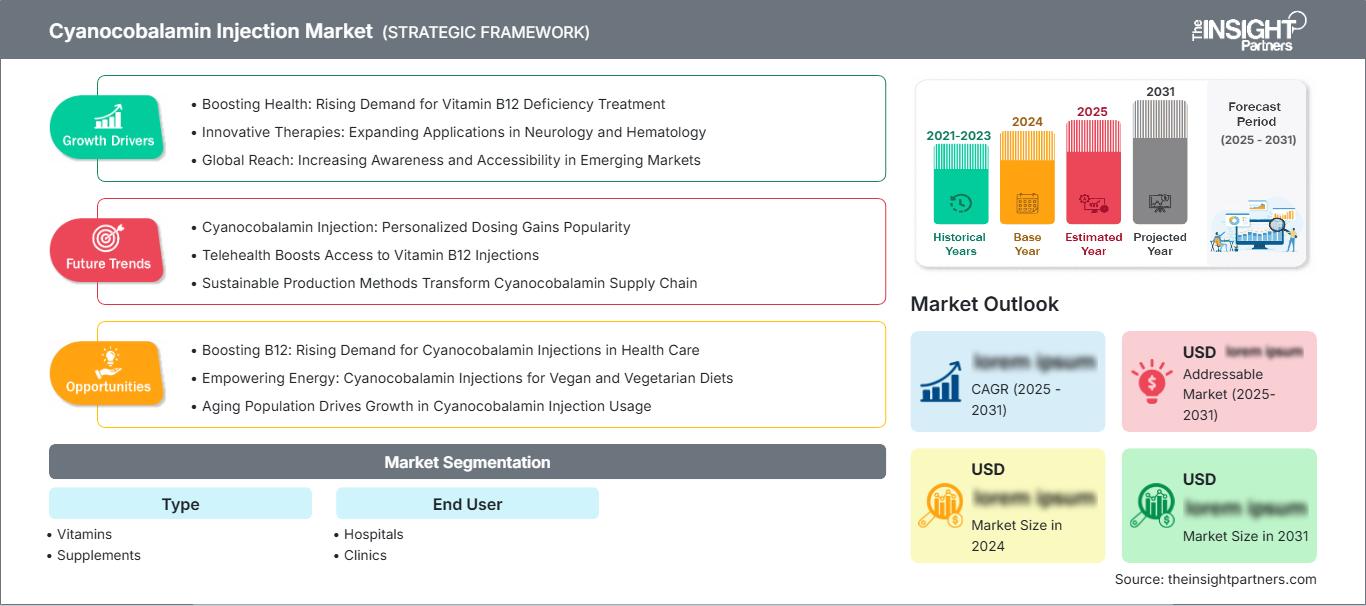
Regional Insights
North America Cyanocobalamin Injection Market
North America accounted for an estimated share of 34–38% in 2025 and is expected to expand at a CAGR of 5.1–5.8% during 2026–2034. The region benefits from established healthcare infrastructure, advanced diagnostic capabilities, and strong awareness regarding vitamin deficiency management. The Cyanocobalamin Injection Market share in this region is supported by hospital-based treatment practices, physician adoption, and availability of approved pharmaceutical products.
The US and Canada remain major contributors due to developed healthcare systems and consistent demand from patients requiring injectable supplementation. Aging demographics, increasing nutritional disorder screening, and reimbursement support for medically necessary treatments continue influencing regional demand. Pharmaceutical manufacturers are strengthening distribution networks to maintain product accessibility across hospitals, clinics, and specialty care facilities.
U.S. Cyanocobalamin Injection Market Market
The United States comprises about 27-31% of the North American market by 2025 and is expected to witness a CAGR of 5.0-5.7% during 2026-2034. Clinical acceptance, strong supply chain infrastructure of pharmaceuticals, and growing awareness about the deficiency of vitamin B12 help market growth. Availability of firms like Pfizer, Merck & Co., and Luitpold Pharmaceuticals is one of the key factors behind product availability.
Trends in application of the market are affected by hospital use, outpatient treatment programs, and preference of physicians for injectable products where there is difficulty in absorption. There is constant integration of preventive diagnostics and nutritional assessment programs in the US health care system, creating continuous demand.
Europe Cyanocobalamin Injection Market
The Europe region constituted an approximate share of 28%–32% in 2025 and is expected to register a CAGR of 4.9%–5.6% for 2026–2034. The region continues to be a mature pharmaceutical market, with Germany, the UK, France, Italy, and Spain making major contributions. Germany continues to hold a prominent position owing to its well-developed health care infrastructure and pharmaceutical manufacturing facilities.
The market in the UK continues to derive advantages owing to the presence of clinical guidelines and health care initiatives for the management of deficiencies. Germany continues to exhibit stable growth on the back of hospitals and specialty clinics that require dependable injectable medicines. France, Italy, and Spain continue to grow owing to improved diagnoses, aging population, and increased health care availability.
APAC Cyanocobalamin Injection Market
Asia Pacific accounted for an estimated share of 22–26% in 2025 and is projected to grow at a CAGR of 5.8–6.5% during 2026–2034. China represents a leading contributor, supported by pharmaceutical production capabilities and expanding healthcare access.
Japan, South Korea, India, and Australia are also contributing through improved diagnostic practices and healthcare investment. Industrial development in pharmaceutical manufacturing and government initiatives focused on healthcare accessibility are strengthening regional opportunities. Increasing awareness of nutritional deficiencies and improved medical infrastructure are expected to support long-term adoption.
Middle East & Africa Cyanocobalamin Injection Market
The Middle East & Africa region is expected to grow at a CAGR of 4.8–5.5% between 2026–2034, supported by healthcare infrastructure development and improving access to essential medicines. Saudi Arabia and the UAE are key contributors due to healthcare modernization initiatives and investment in medical facilities.
South Africa and other MEA countries are witnessing gradual adoption through expanded healthcare networks and improved disease awareness. Growth is also influenced by infrastructure investments, pharmaceutical distribution improvements, and public health initiatives. The region presents opportunities for companies focused on strengthening supply availability and improving access to injectable therapies.
Segmentation Analysis
Application
The application segment plays a central role in shaping the Cyanocobalamin Injection Market scope, with demand influenced by therapeutic requirements, physician recommendations, and patient conditions requiring vitamin B12 supplementation. The segment is expected to expand at a CAGR of 5.2–5.9% during 2026–2034. Increasing diagnosis of deficiency-related disorders and broader use across medical specialties continue supporting adoption.
- General Surgery: This segment benefits from the use of vitamin supplementation in patient management before and after selected procedures. Demand is supported by hospital protocols and nutritional support practices.
- Gynecology Surgery: Adoption is influenced by clinical attention toward nutritional status management among patients undergoing gynecological procedures. Injectable supplementation supports targeted treatment approaches in specific cases.
- Urologic Surgery: Usage is associated with hospital-based care pathways where nutritional assessment and deficiency correction may form part of patient management strategies.
- Orthopedic Surgery: Demand is supported by growing focus on patient recovery and nutritional optimization, with supplementation used when deficiency management is clinically required.
- Cardiovascular surgery: This application segment reflects demand from specialized healthcare settings where comprehensive patient care includes monitoring and addressing nutritional deficiencies.
- Cosmetic Surgery: Adoption remains linked to elective procedures where patient wellness considerations and recovery support influence supplementation practices.
- Neurosurgery: The segment is supported by clinical attention toward neurological conditions associated with vitamin B12 deficiency and the need for targeted therapeutic interventions.
End User
The end user segment is expected to register a CAGR of 5.5–6.1% during 2026–2034, driven by healthcare facility demand, outpatient treatment expansion, and increasing preference for controlled medication administration. Hospitals and ambulatory centers remain important purchasing channels due to their role in diagnosis, treatment planning, and patient monitoring.
- Hospital: Hospitals represent a major end user due to centralized pharmaceutical procurement, availability of specialized departments, and frequent treatment of patients requiring injectable vitamin therapies.
- Ambulatory Surgery Center: These facilities are gaining importance through increasing outpatient procedures, streamlined care delivery models, and demand for efficient medication management solutions.
Opportunity Snapshot
| Segment Name | Revenue Contribution (High/Medium/Low) | Trend Tag (MAX 2 words) | Adoption Stage |
| General Surgery | Medium | Surgical Support | Mature |
| Gynecology Surgery | Medium | Clinical Adoption | Scaling |
| Urologic Surgery | Low | Procedure Care | Scaling |
| Orthopedic Surgery | Medium | Recovery Support | Scaling |
| Cardiovascular surgery | High | Cardiac Care | Mature |
| Cosmetic Surgery | Low | Elective Care | Emerging |
| Neurosurgery | Medium | Neuro Support | Scaling |
Cyanocobalamin Injection Market Growth Drivers and Impact Analysis
Rising Diagnosis of Vitamin B12 Deficiency Disorders
A rising number of cases of vitamin B12 deficiency diagnoses are some of the factors affecting pharmaceutical demand due to the importance of early identification and subsequent treatment. Increased awareness from the medical fraternity and the general public has led to the increase in the use of screening processes in medical institutions. Aging population, restricted diet, and illnesses leading to poor absorption of nutrients are some of the issues affecting the rise in the medical demand for the medication. Healthcare organizations have invested in prevention measures in their systems aimed at the assessment and treatment of deficiencies.
Expansion of Healthcare Infrastructure in Emerging Economies
Healthcare infrastructure development across emerging economies is creating new opportunities for injectable vitamin therapies through improved access to hospitals, diagnostic facilities, and pharmaceutical products. Capacity-building efforts in healthcare in the Asia-Pacific region, Latin America, and certain countries in the Middle East will ensure greater availability of treatment. With improvements in healthcare facilities, more doctors will be able to diagnose nutritional deficiencies and suggest treatments accordingly. There is an ongoing effort by pharmaceutical firms to broaden their distribution network in the region to cover the neglected markets and increase their presence there. The government healthcare programs aimed at availability of essential medicines are another factor that is helping with adoption.
Growing Preference for Injectable Nutritional Therapies
The preference for injectable nutritional therapies is increasing among healthcare providers managing patients with absorption challenges or severe deficiencies. Injectable administration offers an alternative approach when oral supplementation may not provide sufficient therapeutic outcomes. Hospitals and specialty clinics continue incorporating injectable vitamin treatments into patient care pathways based on clinical requirements. This trend is encouraging pharmaceutical manufacturers to maintain product quality, enhance sterile manufacturing processes, and improve supply reliability. The shift toward personalized treatment approaches is also supporting demand for targeted therapies. As healthcare professionals increasingly evaluate treatment effectiveness and patient-specific needs, injectable nutritional solutions are expected to maintain relevance within clinical practice.
Cyanocobalamin Injection Market Future Trends
Integration of Digital Health and Deficiency Monitoring
Digital health platforms are expected to influence future deficiency management by improving patient monitoring, diagnostic tracking, and treatment coordination. Electronic health records, remote consultations, and data-based healthcare management systems can support earlier identification of nutritional issues. Healthcare providers may increasingly use integrated patient information to evaluate supplementation requirements and improve treatment planning. These developments are expected to enhance clinical decision-making and encourage more structured management of vitamin deficiencies. Pharmaceutical companies may benefit by aligning product strategies with evolving healthcare workflows and data-driven care models. The adoption of connected healthcare solutions is likely to create new opportunities for improving patient engagement and long-term nutritional management.
Expansion of Personalized Nutritional Treatment Approaches
Personalized healthcare approaches are expected to shape future demand as clinicians increasingly focus on patient-specific nutritional requirements. Advances in diagnostics and biomarker evaluation may allow healthcare providers to identify deficiency patterns more accurately and select appropriate interventions. This trend can encourage targeted use of injectable therapies in patients with specific medical needs. Pharmaceutical manufacturers are likely to focus on formulation quality, consistent dosing, and improved treatment support solutions. Growing interest in preventive healthcare may further expand the role of nutritional therapies beyond traditional deficiency treatment. The Cyanocobalamin Injection Market trends are expected to reflect increasing alignment between precision healthcare practices and individualized supplementation strategies.
Cyanocobalamin Injection Market Opportunities
Expansion Through Untapped Emerging Healthcare Markets
Emerging healthcare markets provide significant opportunities for pharmaceutical companies seeking geographic expansion and improved product accessibility. Countries with growing healthcare expenditure, increasing diagnostic capabilities, and expanding hospital networks represent potential areas for market development. Companies can strengthen regional presence by establishing partnerships with healthcare providers, improving distribution infrastructure, and adapting supply strategies to local requirements. The Cyanocobalamin Injection Market Forecasts indicate that future opportunities will be influenced by healthcare modernization and broader access to essential therapies. Strategic investments in manufacturing capabilities and regional supply chains can support long-term participation. Expanding awareness programs and physician education initiatives may further improve adoption across developing healthcare systems.
Strategic Partnerships for Pharmaceutical Supply Optimization
Strategic collaborations between pharmaceutical manufacturers, distributors, and healthcare organizations can create opportunities for improving supply efficiency and market reach. Partnerships focused on production capabilities, regulatory alignment, and distribution networks can help companies address regional demand variations. Manufacturers may explore agreements that enhance manufacturing flexibility and strengthen access to healthcare facilities. Supply optimization is becoming increasingly important as healthcare systems require consistent availability of essential injectable medications. Companies with established regulatory expertise and production infrastructure can leverage partnerships to improve operational efficiency. These approaches can support sustainable market participation while enabling healthcare providers to access reliable therapeutic solutions across different geographic regions.
Recent Developments
- January 2026: Pfizer Inc. continued strengthening its global pharmaceutical portfolio through investments in healthcare solutions and supply capabilities, supporting availability of essential medicines across international markets. Pfizer’s ongoing manufacturing and distribution initiatives reflect continued focus on maintaining reliable pharmaceutical access and meeting healthcare system requirements.
- September 2025: Sanofi expanded its focus on healthcare innovation and pharmaceutical accessibility through continued investments in global healthcare operations. Sanofi’s initiatives include strengthening operational capabilities and supporting treatment availability across multiple therapeutic areas through established manufacturing and distribution networks.
- March 2025: Teva Pharmaceuticals continued advancing its generic medicines portfolio with operational initiatives focused on improving global medicine availability. Teva’s manufacturing network and regulatory expertise support consistent access to widely used pharmaceutical products across healthcare markets.
Frequently Asked Questions

- Comprehensive Market Sizing and Forecast Analysis
- Detailed Segmentation Analysis
- In-Depth Market Dynamics Assessment
- Regional and Country-Level Insights
- Competitive Landscape and Company Benchmarking
- Strategic Business Intelligence
Recent Reports
Testimonials

The Insight Partners' SCADA System Market report is comprehensive, with valuable insights on current trends and future forecasts. The team was highly professional, responsive, and supportive throughout. We are very satisfied and highly recommend their services.
RAN KEDEM Partner, Reali Technologies LTDs
I requested a report on a very specific software market and the team produced the report in a few days. The information was very relevant and well presented. I then requested some changes and additions to the report. The team was again very responsive and I got the final report in less than a week.
JEAN-HERVE JENN Chairman, Future Analytica
We worked with The Insight Partners for an important market study and forecast. They gave us clear insights into opportunities and risks, which helped shape our plans. Their research was easy to use and based on solid data. It helped us make smart, confident decisions. We highly recommend them.
PIYUSH NAGPAL Sr. Vice President, High Beam Global
The Insight Partners delivered insightful, well-structured market research with strong domain expertise. Their team was professional and responsive throughout. The user-friendly website made accessing industry reports seamless. We highly recommend them for reliable, high-quality research services
YUKIHIKO ADACHI CEO, Deep Blue, LLC.
This is the first time I have purchased a market report from The Insight Partners.While I was unsure at first, I visited their web site and felt more comfortable to take the risk and purchase a market report.I am completely satisfied with the quality of the report and customer service. I had several questions and comments with the initial report, but after a couple of dialogs over email with their analyst I believe I have a report that I can use as input to our strategic planning process.Thank you so much for taking the extra time and making this a positive experience.I will definitely recommend your service to others and you will be my first call when we need further market data.
JOHN SUZUKI President and Chief Executive Officer, Board Director, BK Technologies
I wish to appreciate your support and the professionalism you displayed in the course of attending to my request for information regarding to infectious disease IVD market in Nigeria. I appreciate your patience, your guidance, and the fact that you were willing to offer a discount, which eventually made it possible for us to close a deal. I look forward to engaging The Insight Partners in the future, all thanks to the impression you have created in me as a result of this first encounter.
DR CHIJIOKE ONYIA MANAGING DIRECTOR, PineCrest Healthcare Ltd.Reason to Buy
- Informed Decision-Making
- Understanding Market Dynamics
- Competitive Analysis
- Identifying Emerging Markets
- Customer Insights
- Market Forecasts
- Risk Mitigation
- Boosting Operational Efficiency
- Strategic Planning
- Investment Justification
- Tracking Industry Innovations
- Aligning with Regulatory Trends





 Get Free Sample for