
Deflazacort Market Growth, Demand & Size by 2034
Coverage: By Type (Suspension, and Tablets); Application (Anti-Inflammatory, Immunosuppressant, and Others), and Geography (North America, Europe, Asia Pacific, and South and Central America)
- Status : Data Released
- Report Code : TIPRE00020009
- Category : Life Sciences
- No. of Pages : 150
- Available Report Formats :


- Last update date : August 18, 2026


2025 Market Size
US$ 1.34 Bn
Base year value
2034 Forecast
US$ 2.75 Bn
Projected by 2034
CAGR 2026-2034
8.34 %
Growth rate
Addressable Market
US$ 18.39 Bn
(2026-2034)
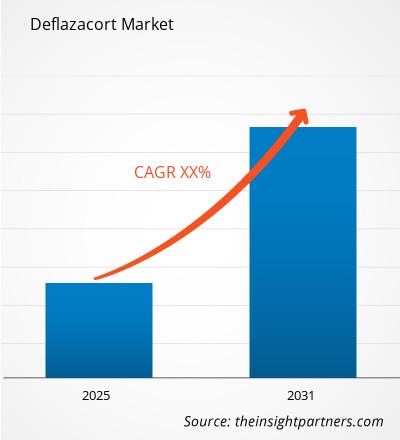
The Deflazacort Market was valued at US$ 1.34 Billion in 2025 and is projected to reach US$ 2.75 Billion by 2034, registering a CAGR of 8.34% during 2026–2034. There is sustained demand for corticosteroids in the market, especially in the management of Duchenne muscular dystrophy, even as the threat of generic competition and the emergence of differentiated oral corticosteroids continue to alter product offerings, prices, and positioning within the key healthcare markets.
North America will be an important market due to its existing mechanisms for treating rare diseases, specialist neuromuscular facilities, infrastructure for reimbursement, and availability of generics. The growth of deflazacort market size in North America during the period from 2026 through 2034 is expected to model a CAGR between 8.80% and 9.40%.
Deflazacort Market Assessment and Insights
- North America: North America is estimated to represent a 34–38% share in 2025, supported by mature rare-disease infrastructure and established corticosteroid utilization, with the region growing at a CAGR of 8.80–9.40% between 2026–2034.
- US: The US accounts for an estimated 72–76% share of North America in 2025, supported by specialist care and generic entry, with a CAGR of 8.60–9.30% between 2026–2034.
- Europe: Europe is estimated at a 27–31% share in 2025, with the UK, Germany, France, Italy, and Spain representing important demand centers and collectively supporting a CAGR of 8.10–8.70% between 2026–2034.
- Asia Pacific: Asia Pacific represents an estimated 20–24% share in 2025, led by China, Japan, India, and South Korea, with improving pharmaceutical access supporting a CAGR of 10.80–11.60% between 2026–2034.
- Largest Segment: Tablets are modeled to hold a 68–72% market share in 2025, supported by established prescribing and distribution, with a CAGR of 7.80–8.40% during 2026–2034.
- High Growth Segment: Suspension is modeled at a 28–32% market share in 2025, benefiting from pediatric administration requirements, with a CAGR of 10.90–11.80% during 2026–2034.
- Key companies analyzed in detail: PTC Therapeutics, Inc.; Zydus Lifesciences Limited; Sun Pharmaceutical Industries Limited; Aucta Pharmaceuticals, Inc.; Amneal Pharmaceuticals, Inc.; Upsher-Smith Laboratories, LLC; Aurobindo Pharma Limited; Cipla Limited; Lupin Limited; Intas Pharmaceuticals Limited.
Source: The Insight Partners' analysis based on proprietary research, government publications, company annual reports, investor presentations, industry databases, and expert interviews.
The market is moving from being dominated by the corticosteroid class to being more specialized rare disease treatments. Oral tablets are important due to familiarity, stability, and established treatment protocols, whereas oral suspensions cater to administration in younger populations. Generics are also making formulations available, providing increased competition and better opportunities for procurement across various healthcare systems in different nations.
Further growth is most likely to occur where diagnosis, specialist referrals, and reimbursement come together. There is potential in emerging Asian markets where the infrastructure of neuromuscular treatment expands, and North America and Europe will continue to be commercially attractive due to existing DMD treatments. Regulatory changes that encourage rare diseases evidence generation can lower risks in drug development and lifecycles. The FDA created Rare Disease Evidence Principles in 2025 to increase predictability of small patient population and unmet need treatments.
Deflazacort Market Report Scope
| Report Attribute | Details |
|---|---|
| Market size in 2025 | US$ 1.34 Billion |
| Market Size by 2034 | US$ 2.75 Billion |
| Global CAGR (2026 - 2034) | 8.34% |
| Historical Data | 2021-2024 |
| Forecast period | 2026-2034 |
Deflazacort Market Analysis
Treatment continuity is increasingly being associated with demand fundamentals, pediatric dosing needs, and increased awareness regarding Duchenne muscular dystrophy. Deflazacort Demand for the drug is driven by the interplay between prescribing doctors, specialist clinics, pharmacies, generic companies, API suppliers, and reimbursement bodies. The product value is thus dependent not just on API availability but also on formulation, regulatory clearance, dosing flexibility, and distribution reach.
Supply chain consists of API procurement, formulation production, analytical tests, regulatory approval, packaging, specialty distribution, and pharmacy distribution. Tablets have a relatively easier manufacturing and logistics process while suspensions involve more focus on formulation uniformity, packaging, storage, and patient dosing. Growing involvement from generic companies is slowly widening the supply chain options available, while companies that have experience in dealing with regulations can capitalize on their strengths.
Deflazacort Market Report reveals a competitive environment with a branded rare-disease approach together with growing generics. PTC Therapeutics, Inc. enjoys a robust branded environment through its Emflaza brand. In addition, Zydus Lifesciences Limited, Sun Pharmaceutical Industries Limited, Aucta Pharmaceuticals, Inc., Amneal Pharmaceuticals, Inc. and Upsher-Smith Laboratories, LLC boost the pool of generic products. Aurobindo Pharma Limited extends US access while Cipla Limited, Lupin Limited and Intas Pharmaceuticals Limited augment the regional generics.
Competitive advantage becomes an issue of regulatory approval, diversification, manufacturing and channel issues, more than just product differentiation. Examples of recent approvals show that new entrants influence procurement processes in many ways. For example, Sun Pharmaceutical Industries Limited became a US generic competitor in tablets in March 2025 while Zydus diversified its US generic deflazacort in 2025.
● REPORT CUSTOMIZATION
Tailor This Report To Align With Your Specific Business Requirements
This report can be customized to align precisely with your business objectives, scope, and target markets. Customization options include tailored segmentation, geography, competitive analysis, and strategic insights to support informed decision-making.
Customize This Report →WHAT YOU CAN ADJUST
- ● Segmentations
- ● Geography
- ● Competitive Analysis
- ● Language Preferences
Deflazacort Market: Strategic Insights
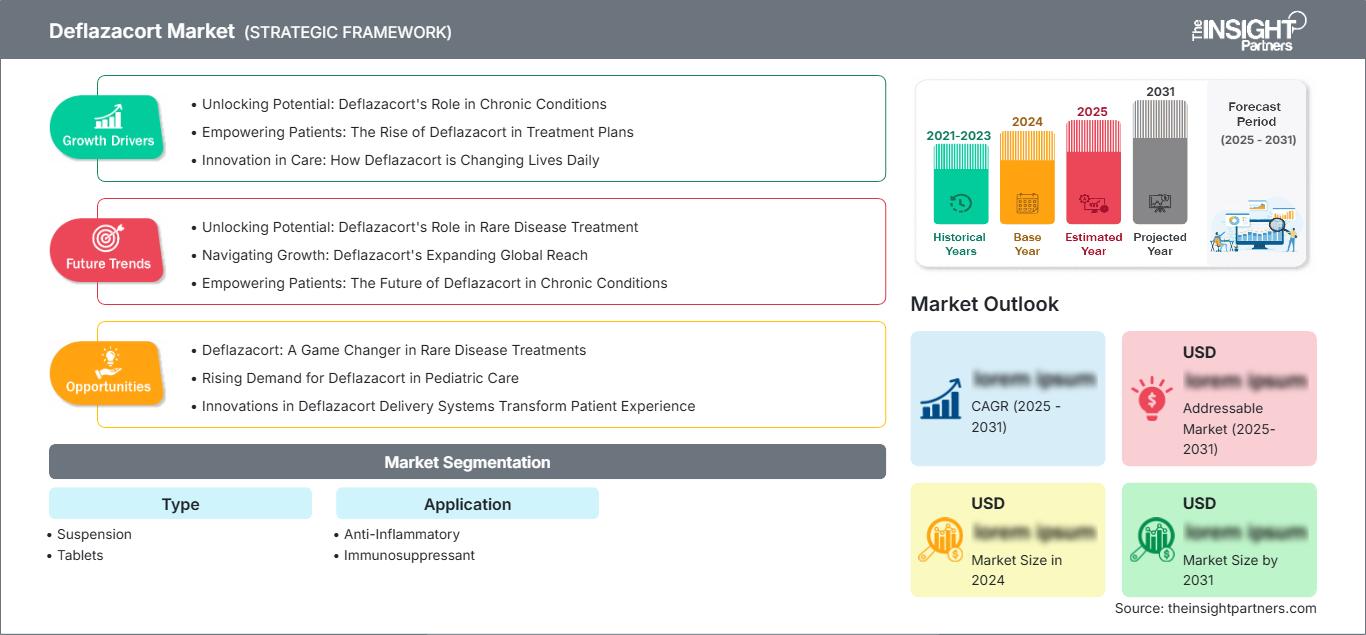
Regional Insights
North America Deflazacort Market
North America is profiled in a range of 34–38% in 2025 and a CAGR of 8.80–9.40% to 2034. The US is a dominant regional market on account of established neuromuscular centers, specialist prescribing, and systematic access to DMD medicines. Canada adds to demand via specialist networks, but its accessible commercial market size is lower.
Market expansion is enabled by greater generic presence and competition in both tablet and suspension formulations. The US regulatory regime is also important due to the effect of FDA approvals on supply dynamics and participation of pharmaceutical companies. Increased need for treatment continuity, specialist involvement, and pharmacy coordination benefit providers able to ensure consistent product availability in different strengths and formulations.
U.S. Deflazacort Market Market
North America accounts for a projected 72–76% share in the United States, growing at a CAGR of 8.60–9.30% up to 2034. PTC Therapeutics, Inc. stays commercially viable using its Emflaza drug, while Sun Pharmaceutical Industries Limited, Zydus Lifesciences Limited, Aurobindo Pharma Limited, Amneal Pharmaceuticals, Inc., Aucta Pharmaceuticals, Inc., and Upsher-Smith Laboratories, LLC increase competition with generics.
Demand in application terms is focused on DMD treatment, specifically in cases when treatment with long-acting corticosteroids is combined with neuromuscular therapy. Tableting is widely used due to already formed prescription practice, while suspension products help to treat younger patients. The competitive landscape becomes focused on access and product differentiation as well as reimbursement issues rather than mere molecule recognition.
Europe Deflazacort Market
Europe is projected to account for a modeled 27-31% share by 2025 with a CAGR of 8.10-8.70%. Some of the key countries that comprise Europe’s demand base include the UK, Germany, France, Italy, and Spain with demand driven by specialty neuromuscular services, national reimbursement schemes, and pharmaceutical procurement policies.
The UK continues to play a vital role in specialist care delivery, driven by its rare disease clinical networks and centralized healthcare procurement model. Germany is a blend of specialty treatment capability and pharmaceuticals distribution network, which makes it an important regional commercial market. The contribution of France, Italy, and Spain is through specialty hospitals and pediatric neurology services and national/regional reimbursement schemes.
APAC Deflazacort Market
APAC is projected at 20%-24% by 2025 with a CAGR of 10.80-11.60%. The mature markets include China and Japan, while India and South Korea are contributors in the form of growing pharmaceutical manufacture and specialist services. Australia has a mature framework of both regulatory and clinical environment.
India’s contribution is especially significant because of generic manufacturing and distribution requirements, whereas China possesses pharmaceutical capacity along with increasing specialized capacity. Japan, due to an aging healthcare system, does not have a direct connection with pediatric DMD but is significant because of pharmaceutical regulations and clinical services.
Middle East & Africa Deflazacort Market Market
Middle East and Africa is modeled at a CAGR of 8.00–9.00% through 2034. Saudi Arabia and the UAE lead the regional opportunity because of higher healthcare investment, advanced hospital infrastructure, and expanding specialty-care capacity. South Africa remains an important gateway market for advanced pharmaceutical distribution.
The wider area is faced by the problem of unequal access, shortage of specialists and coverage of insurance payments. The country of Saudi Arabia is favored by healthcare advancement and hospitals, while the UAE is characterized by specialization environment. Markets of Rest of MEA still depend on the availability of imports and government purchasing.
Segmentation Analysis
Type
Type dynamics are led by established tablet prescribing, while suspension is gaining strategic importance where pediatric administration is required. The segment is expected to register a modeled CAGR of 8.10–8.90% during 2026–2034. Formulation choice is influenced by patient age, swallowing ability, dosing flexibility, product availability, and pharmacy handling requirements.
- Suspension: Oral suspension supports younger patients who may have difficulty swallowing tablets. Demand is increasingly linked to pediatric DMD treatment, administration convenience, specialty pharmacy access, and availability of stable liquid formulations.
- Tablets: Tablets remain the principal formulation because they provide established dosing practices, straightforward storage, efficient packaging, and broad pharmacy familiarity. They are strategically important across mature and generic pharmaceutical markets.
Application
Application segmentation reflects the established pharmacological role of deflazacort as a corticosteroid while highlighting its relevance in both inflammation control and immune modulation. The segment is projected to register a modeled CAGR of 8.20–9.00% during 2026–2034. Regulatory labeling, physician preference, patient characteristics, and treatment duration influence application patterns.
- Anti-Inflammatory: Anti-inflammatory use provides a broad therapeutic context for corticosteroid utilization, with demand influenced by physician prescribing practices, formulation availability, treatment protocols, and national regulatory indications.
- Immunosuppressant: Immunosuppressant applications are strategically relevant where corticosteroid-mediated immune modulation is clinically required. Market participation depends on regulatory labeling, specialist oversight, safety monitoring, and availability of alternative immunomodulatory therapies.
Opportunity Snapshot
| Application | Revenue Contribution | Trend Tag | Adoption Stage |
| Anti-Inflammatory | High | Steroid Therapy | Mature |
| Immunosuppressant | Medium | Immune Control | Scaling |
Deflazacort Market Growth Drivers and Impact Analysis
Expansion of Generic Product Availability
Generic competition is becoming a central market driver as additional manufacturers obtain approvals and commercialize established formulations. Greater supplier participation can improve procurement flexibility, reduce dependence on individual manufacturers, and encourage pharmacies to maintain multiple sourcing options. The impact is particularly significant in markets where payers emphasize cost containment for long-term therapies. FDA records show multiple generic manufacturers receiving approvals for deflazacort products, including Sun Pharmaceutical Industries Limited and Zydus Pharmaceuticals. This expanding competitive base can shift purchasing decisions toward price, reliability, regulatory compliance, and continuity of supply. For healthcare providers, broader availability may reduce treatment disruption risk, while manufacturers face greater pressure to optimize production costs, packaging efficiency, inventory planning, and regulatory maintenance.
Rising Focus on Rare-Disease Treatment Infrastructure
Investment in rare-disease diagnosis and multidisciplinary care can increase the addressable treatment population for established corticosteroid therapies. DMD management requires coordinated neurology, rehabilitation, respiratory, cardiac, orthopedic, and pharmacy services, making infrastructure development an important demand multiplier. FDA guidance specifically addresses clinical development for DMD and related dystrophinopathies, reflecting continued regulatory attention to the disease area. As diagnostic pathways improve, previously underdiagnosed patients can enter specialist treatment systems earlier. The resulting market impact extends beyond medicine volumes because improved referral systems can support treatment persistence, monitoring, and dose management. Manufacturers that align commercial distribution with specialist networks can therefore strengthen access while reducing logistical friction.
Greater Emphasis on Affordable Quality-Assured Medicines
Affordability is becoming increasingly important for long-duration corticosteroid treatment, particularly in health systems where patients or public programs bear substantial medicine costs. WHO's 2025 roadmap emphasizes access to safe, effective, quality-assured and affordable medicines as a component of stronger health systems. This environment supports demand for reliable generic alternatives while raising expectations for manufacturing quality and regulatory compliance. Market participants can benefit from efficient API sourcing, scalable production, and transparent quality systems. The commercial effect is likely to be strongest in emerging markets, where lower-cost products can improve availability but must still satisfy national registration, pharmacovigilance, and procurement requirements. Consequently, affordability increasingly operates alongside quality assurance as a competitive criterion.
Deflazacort Market Future Trends
Formulation Personalization for Pediatric Administration
Deflazacort Market trends are expected to increasingly favor formulations designed around patient administration requirements rather than molecule availability alone. Oral suspensions can offer practical advantages for younger patients who cannot reliably swallow tablets, creating opportunities for manufacturers to differentiate through concentration, packaging, dosing accuracy, and administration devices. Specialty pharmacy channels may also become more important as rare-disease therapies require coordinated dispensing and reimbursement support. Over time, manufacturers are likely to invest in user-friendly packaging, stability optimization, clearer dosing systems, and patient-support materials. These changes could shift competition toward the complete treatment experience, particularly in pediatric populations where caregivers manage administration. Regulatory acceptance of equivalent formulations should further encourage competition across both branded and generic supply channels.
Digital Coordination Across Rare-Disease Care Pathways
Digital coordination is positioned to become more relevant as DMD treatment increasingly involves multiple specialists and long-term monitoring. Electronic prescribing, pharmacy coordination, patient-support platforms, and remote follow-up can improve visibility across treatment journeys without changing the underlying pharmacology. For manufacturers, these systems can provide structured channels for adherence support, refill management, safety communication, and reimbursement navigation. Healthcare providers can use integrated records to coordinate corticosteroid treatment with respiratory, cardiac, rehabilitation, and orthopedic care. The long-term opportunity lies in reducing fragmentation rather than simply adding digital tools. Companies that build compliant patient-support infrastructure around existing medicines may strengthen treatment continuity and generate more reliable demand patterns while maintaining appropriate boundaries around clinical decision-making and patient privacy.
Deflazacort Market Opportunities
Localized Manufacturing and Regional Supply Partnerships
Deflazacort Market Forecasts point toward opportunities for regional manufacturing partnerships, particularly in Asia Pacific, where established pharmaceutical production ecosystems can support cost-efficient supply. Localized formulation, packaging, or secondary manufacturing can shorten distribution routes and reduce exposure to international logistics disruptions. Strategic partnerships with domestic pharmaceutical companies can also facilitate regulatory registration, public procurement participation, and pharmacy penetration. India provides an especially relevant environment because of its large generic manufacturing base and established export capabilities. Companies seeking expansion should evaluate opportunities across API sourcing, contract manufacturing, technology transfer, and regional distribution rather than relying solely on direct commercial launches. Such models can lower market-entry barriers while allowing established manufacturers to retain control over quality systems and regulatory oversight.
Specialty Pharmacy and Patient Access Models
Another opportunity lies in strengthening specialty pharmacy and patient-access models around long-term rare-disease treatment. The commercial challenge is not limited to product availability because patients may encounter reimbursement, prescription, dispensing, and continuity barriers. A coordinated access model can connect manufacturers, specialty pharmacies, providers, and payers while reducing administrative delays. The opportunity is particularly relevant for oral suspension products and pediatric populations requiring caregiver support. Companies can develop compliant assistance programs, refill coordination, educational materials, and reimbursement navigation without altering clinical treatment decisions. Such models may also provide manufacturers with better visibility into distribution patterns and supply requirements. The resulting strategic advantage is improved channel reliability, particularly where rare-disease patient populations are geographically dispersed.
Recent Developments
- February 2026: Aucta Pharmaceuticals, Inc. launched PYQUVI oral suspension 22.75 mg/mL in the US for patients with Duchenne muscular dystrophy aged 5 years and older. The product is bioequivalent to Emflaza oral suspension and is distributed exclusively through a specialty pharmacy channel, adding a new branded-generic option focused on treatment access and patient administration.
- February 2026: Sun Pharmaceutical Industries, Inc. began marketing its deflazacort oral suspension 22.75 mg/mL in the US. DailyMed records the product with a February 2, 2026 marketing start date and identifies Sun Pharmaceutical Industries, Inc. as distributor and Ohm Laboratories Inc. as manufacturer, expanding generic suspension availability.
- October 2025: Zydus Lifesciences Limited received final US FDA approval for deflazacort oral suspension 22.75 mg/mL, indicated for Duchenne muscular dystrophy in patients aged 5 years and older. The product is manufactured at Doppel Farmaceutici S.r.l. in Italy, strengthening Zydus's participation in the US generic suspension segment.
Frequently Asked Questions

- Comprehensive Market Sizing and Forecast Analysis
- Detailed Segmentation Analysis
- In-Depth Market Dynamics Assessment
- Regional and Country-Level Insights
- Competitive Landscape and Company Benchmarking
- Strategic Business Intelligence
Recent Reports
Testimonials

The Insight Partners provided valuable market intelligence that supported our global go-to-market strategy. Their team was professional, responsive, and attentive to our feedback, providing thoughtful analysis and helpful methodological clarifications throughout the project.
Junmo Kim Chief Financial Officer (CFO), Enertech Co., Ltd.
The Insight Partners' SCADA System Market report is comprehensive, with valuable insights on current trends and future forecasts. The team was highly professional, responsive, and supportive throughout. We are very satisfied and highly recommend their services.
RAN KEDEM Partner, Reali Technologies LTDs
I requested a report on a very specific software market and the team produced the report in a few days. The information was very relevant and well presented. I then requested some changes and additions to the report. The team was again very responsive and I got the final report in less than a week.
JEAN-HERVE JENN Chairman, Future Analytica
We worked with The Insight Partners for an important market study and forecast. They gave us clear insights into opportunities and risks, which helped shape our plans. Their research was easy to use and based on solid data. It helped us make smart, confident decisions. We highly recommend them.
PIYUSH NAGPAL Sr. Vice President, High Beam Global
The Insight Partners delivered insightful, well-structured market research with strong domain expertise. Their team was professional and responsive throughout. The user-friendly website made accessing industry reports seamless. We highly recommend them for reliable, high-quality research services
YUKIHIKO ADACHI CEO, Deep Blue, LLC.
This is the first time I have purchased a market report from The Insight Partners.While I was unsure at first, I visited their web site and felt more comfortable to take the risk and purchase a market report.I am completely satisfied with the quality of the report and customer service. I had several questions and comments with the initial report, but after a couple of dialogs over email with their analyst I believe I have a report that I can use as input to our strategic planning process.Thank you so much for taking the extra time and making this a positive experience.I will definitely recommend your service to others and you will be my first call when we need further market data.
JOHN SUZUKI President and Chief Executive Officer, Board Director, BK Technologies
I wish to appreciate your support and the professionalism you displayed in the course of attending to my request for information regarding to infectious disease IVD market in Nigeria. I appreciate your patience, your guidance, and the fact that you were willing to offer a discount, which eventually made it possible for us to close a deal. I look forward to engaging The Insight Partners in the future, all thanks to the impression you have created in me as a result of this first encounter.
DR CHIJIOKE ONYIA MANAGING DIRECTOR, PineCrest Healthcare Ltd.Reason to Buy
- Informed Decision-Making
- Understanding Market Dynamics
- Competitive Analysis
- Identifying Emerging Markets
- Customer Insights
- Market Forecasts
- Risk Mitigation
- Boosting Operational Efficiency
- Strategic Planning
- Investment Justification
- Tracking Industry Innovations
- Aligning with Regulatory Trends





 Get Free Sample for