
Dengue Vaccine Market Share, Size & Demand by 2034
Coverage: By Product (CYD-TDV); Distribution Channel (Hospital Pharmacies, Retail Pharmacies, Drug Stores, Online Pharmacies, Others) , and Geography (North America, Europe, Asia Pacific, and South and Central America)
- Status : Data Released
- Report Code : TIPRE00006927
- Category : Life Sciences
- No. of Pages : 150
- Available Report Formats :


- Last update date : August 17, 2026


2025 Market Size
US$ 504.86 Mn
Base year value
2034 Forecast
US$ 1,866.00 Mn
Projected by 2034
CAGR 2026-2034
15.63 %
Growth rate
Addressable Market
US$ 10,066.28 Mn
(2026-2034)
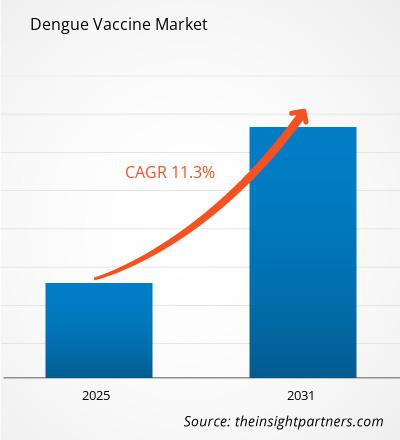
The Dengue Vaccine Market is valued at US$ 504.86 Million in 2025 and is projected to reach US$ 1,866.00 Million by 2034, registering a CAGR of 15.63% from 2026 to 2034. Factors driving the growth of expansion include the rise in dengue cases, increased immunization programs, better access to vaccines, and awareness about preventive measures in endemic and emerging regions.
The North American region holds potential for continuous expansion because of better surveillance, exposure due to travel, and preparedness against imported and indigenous spread of the disease. Growth of the Dengue Vaccine Market Size is forecasted to grow at a CAGR of 8.5-10.0% during 2026-2034.
Dengue Vaccine Market Assessment and Insights
- North America: North America is expected to account for a 23–27% share in 2025 and expand at a CAGR of 8.5–10.0% between 2026–2034, supported by surveillance, travel medicine, preparedness planning, and expanding consideration of preventive vaccination.
- US: The US is estimated to represent 82–86% of North America's 2025 market, growing at a CAGR of 8.0–9.5% between 2026–2034 as clinical evidence and prevention strategies influence adoption.
- Europe: Europe is projected to hold a 12–16% share in 2025 and grow at a CAGR of 10.0–12.0% between 2026–2034, led by France, Germany, Italy, Spain, and the UK as dengue transmission expands.
- Asia Pacific: Asia Pacific is estimated at a 38–42% share in 2025 and is expected to grow at a CAGR of 16.0–18.0% between 2026–2034, with India, Indonesia, Japan, Thailand, and the Philippines shaping regional demand.
- Largest Segment: CYD-TDV represents the largest defined product segment, with a 100% market share in 2025 and a CAGR of 15.63% between 2026–2034 under the supplied segmentation structure.
- High Growth Segment: Online Pharmacies are positioned as the high-growth distribution channel, with a 9–13% market share in 2025 and a CAGR of 18.0–21.0% between 2026–2034.
- Key companies analyzed in detail: Sanofi Pasteur Limited, Takeda Pharmaceutical Company Limited, Merck Sharp & Dohme Corp, GlaxoSmithKline plc, GeneOne Life Science, Medigen Vaccine Biologics Corp., Panacea Biotec Limited, Sun Pharmaceutical Industries Ltd, Serum Institute of India Pvt. Ltd., Biological E. Limited.
Source: The Insight Partners' analysis based on proprietary research, government publications, company annual reports, investor presentations, industry databases, and expert interviews.
The vaccination strategy is shifting from population-specific vaccines to more generalized preventive strategies that are based on serostatus, age, levels of transmission, and efficacy. Vaccine development is emphasizing tetravalence, long-lasting immunity, easier scheduling, and scalable production of vaccines. The manufacturing trends have also altered, with the aim of having regional production capability, multivalent vaccines, technology partnerships, and manufacturing agreements for national vaccine programs in severely affected nations.
Any future development will probably be based on results derived from post-marketing experience, clinical pediatric trials, health economics evaluation, and decision-making at the country level. New opportunities exist for emerging markets in Asia, Latin America, and selected African countries due to government efforts aimed at improving preparedness against vector-borne diseases. Regulatory harmonization with WHO recommendations will lower the barrier to adoption; procurement procedures and partnerships in manufacturing could help in making the vaccines more affordable.
Dengue Vaccine Market Report Scope
| Report Attribute | Details |
|---|---|
| Market size in 2025 | US$ 504.86 Million |
| Market Size by 2034 | US$ 1,866.00 Million |
| Global CAGR (2026 - 2034) | 15.63% |
| Historical Data | 2021-2024 |
| Forecast period | 2026-2034 |
Dengue Vaccine Market Analysis
With rising incidence of dengue cases, the Dengue Vaccine Market growth prospects are being bolstered through increased value addition of preventive measures in public health strategy planning. According to WHO, there were over 14 million dengue cases reported in 2024, with the transmission spreading to new geographic regions. The ecosystem consists of vaccine manufacturers, antigen and adjuvant producers, contract manufacturers, regulators, government immunization programs, distributors, pharmacies and healthcare providers. The supply chain is becoming increasingly dependent on validated capacity, cold storage, consistency in batches, and regulatory compliance.
Demand is highly influenced by the intensity of the epidemiology as well as government purchases. In balancing supply for commercial markets and governmental programs, manufacturers need to ensure that the vaccine comes in multi-dose packaging, has favorable economics for purchase, wastage reduction capabilities, and consistent delivery schedules that affect the purchasing decision. Collaboration of multinational developers and regional manufacturers can hence reduce supply constraints as well as sharing of manufacturing risks.
Competitive positioning in the Dengue Vaccine Market Report is being increasingly influenced by the quality of evidence, extent of regulatory approval, manufacturing scale, and ability to provide public health deployments. Dengvaxia provides Sanofi Pasteur Limited with its strategic importance, while Takeda Pharmaceutical Company Limited has been able to build a wide QDENGA commercialization platform. Merck Sharp & Dohme Corp. is building a competitive pipeline with its V181 product development, thus giving future opportunities for differentiation based on dosage and previous exposure.
There are other companies holding unique positions in vaccines, biologics, and regional manufacturing. GlaxoSmithKline plc, GeneOne Life Science, Medigen Vaccine Biologics Corp., Panacea Biotec Limited, Sun Pharmaceutical Industries Ltd, Serum Institute of India Pvt. Ltd., and Biological E. Limited bring to the table vaccine development technologies, manufacturing capabilities, regional logistics, and infectious diseases development expertise. The investments are therefore shifting towards scalable platforms, regional manufacturing, clinical differentiation, and strategic alliances that will enable the analysis of the market.
● REPORT CUSTOMIZATION
Tailor This Report To Align With Your Specific Business Requirements
This report can be customized to align precisely with your business objectives, scope, and target markets. Customization options include tailored segmentation, geography, competitive analysis, and strategic insights to support informed decision-making.
Customize This Report →WHAT YOU CAN ADJUST
- ● Segmentations
- ● Geography
- ● Competitive Analysis
- ● Language Preferences
Dengue Vaccine Market: Strategic Insights
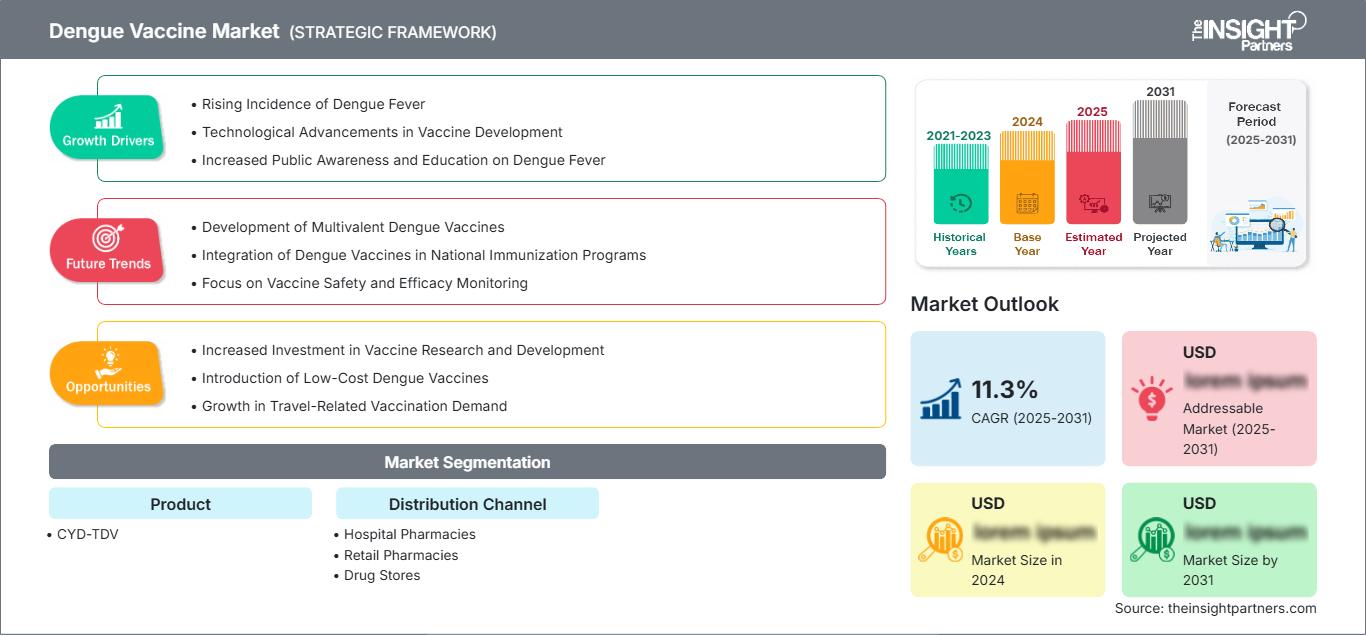
Regional Insights
North America Dengue Vaccine Market
North America is expected to have a Dengue Vaccine Market share of 23-27% in 2025 and to exhibit a CAGR of 8.5-10.0% through 2034. The regional opportunity is related to surveillance of imported dengue, international travel, local spread of the vector and preparedness planning. The US is expected to be the key regional market, while Canada is contributing in terms of travel-based prevention and infectious diseases monitoring. Regulatory scrutiny is relevant in view of the close connection between vaccination policy and evidence related to population selection, efficacy, safety and epidemiology of exposure.
Other factors influencing the regional market include research infrastructure and pharmaceutical investment. Clinical trials and post-market evidence generation take place within the framework of an advanced research infrastructure consisting of academic institutions, public health authorities and vaccine producers. Awareness of the climate-induced spread of vectors may promote preventive planning; however, this depends on regulatory recommendations and reimbursement mechanisms. Opportunities in the region are related to evidence generation and vaccination programs.
U.S. Dengue Vaccine Market
The US comprises an estimated 82-86% of the North American 2025 market and will grow at a CAGR of 8.0-9.5% to 2034. The market is affected by travel-related dengue, Puerto Rico and other territories, imported cases, and ongoing evaluation of risk from local transmission. Regulations play a significant role in business planning, making clinical data and population-based recommendations crucial to market entry.
The company’s presence includes international vaccine manufacturers and organizations conducting tests for new vaccines. Further, applications may remain restricted only to those individuals at risk and associated with travel while the state of readiness may get enhanced depending on vector distribution changes. Modes for administration of vaccines by pharmacists and physicians would offer an opportunity for vaccination upon receiving approval. The business environment favors vaccine products that offer sustained protection, dosage convenience, safety information and positioning as preventive medicine as against the outbreak-driven demand.
Europe Dengue Vaccine Market
Europe is estimated to hold a 12–16% share in 2025 and grow at a CAGR of 10.0–12.0% through 2034, with France representing the leading market. The UK, Germany, France, Italy, and Spain combine travel-related demand with growing attention to autochthonous transmission and vector surveillance.
A developed framework for travel health in the UK along with existing mechanisms for vaccine acquisition make it suitable for preventive use. The advanced healthcare system and surveillance system in Germany are favorable for the evidence-based adoption of vaccines. Countries such as France, Italy, and Spain may find it increasingly relevant due to the incidence of local dengue transmission in southern Europe and overseas territories.
APAC Dengue Vaccine Market
APAC is projected to represent a 38–42% share in 2025 and grow at a CAGR of 16.0–18.0% through 2034, making it the leading region. India, Indonesia, Japan, South Korea, Australia, Thailand, and the Philippines contribute through different combinations of endemic exposure, travel, healthcare infrastructure, and public-health programs. India and Indonesia provide especially important long-term opportunities.
The prospects in the region are being bolstered by industrial capacity and supportive policies. Collaboration in manufacturing in the region will enhance supply dynamics, while the government-led immunization program will facilitate faster adoption where there is an epidemiological threshold for the need for vaccination. Japan and Australia offer their strengths in regulatory expertise and travel health demands, while Southeast Asian markets offer their strengths in disease burden.
Middle East & Africa Dengue Vaccine Market
MEA is forecast to grow at a CAGR of 11.0-13.0% until 2034, with Saudi Arabia acting as one of the dominant markets in this region. The UAE offers an advantage due to its advanced healthcare system and tourism, whereas South Africa stands out as an essential location for surveillance and regional distribution of vaccines. Markets in RoMEA are heterogeneous due to the different epidemiological reporting rates and healthcare accessibility.
Investments in the energy sector and other areas of infrastructure development could help to build more efficient cold-chain logistics, increase the efficiency of diagnostic surveillance and overall improve the connections in the healthcare systems. However, uptake of vaccines will be determined by epidemiological data, costs, procurement system, and regulatory approval.
Segmentation Analysis
Product
Product segmentation is centered on CYD-TDV under the supplied market structure and therefore represents the complete defined product scope. The segment's CAGR is 15.63% for 2026–2034. Adoption is influenced by regulatory authorization, clinical evidence, tetravalent protection, target-population criteria, and national vaccination policies. Competitive development of newer candidates remains strategically important because future product differentiation could alter purchasing decisions.
- CYD-TDV: CYD-TDV remains strategically relevant because it established an important commercial precedent for dengue vaccination. Its positioning depends on regulatory eligibility, prior exposure considerations, clinical evidence, and country-specific vaccination policies.
Distribution Channel
Distribution Channel is expected to expand alongside broader commercialization, improved provider access, and diversification beyond institutional procurement. The segment is projected to grow at a CAGR of 16.5–18.5% during 2026–2034. Channel selection will depend on vaccine handling requirements, cold-chain availability, prescribing rules, reimbursement, patient convenience, and the relative importance of public versus private vaccination.
- Hospital Pharmacies: Hospital pharmacies remain important for vaccination programs linked with specialist care, institutional procurement, travel medicine, and public-health campaigns requiring controlled storage and professional administration.
- Retail Pharmacies: Retail pharmacies can improve accessibility where local regulation permits pharmacist-led vaccination. Their strategic importance increases when vaccination shifts from centralized programs toward routine preventive healthcare.
- Drug Stores: Drug stores provide an additional community-facing channel, particularly in markets with established pharmacy networks. Their role depends on vaccine availability, trained personnel, storage standards, and local dispensing regulations.
- Online Pharmacies: Online Pharmacies can support appointment discovery, product information, and coordinated delivery services where legally permitted. Their strategic value is strongest when integrated with verified providers and controlled cold-chain logistics.
Opportunity Snapshot
| Segment Name | Revenue Contribution (High/Medium/Low) | Trend Tag (MAX 2 words) | Adoption Stage |
|---|---|---|---|
| Hospital Pharmacies | High | Institutional Access | Mature |
| Retail Pharmacies | Medium | Community Access | Scaling |
| Drug Stores | Medium | Local Access | Scaling |
| Online Pharmacies | Low | Digital Booking | Emerging |
Dengue Vaccine Market Growth Drivers and Impact Analysis
Increasing Dengue Incidence and Geographic Expansion
The growing footprint of Dengue in terms of its epidemiology makes the strategic importance of preventative vaccination even greater. WHO noted that in 2024 there were 14.6 million cases registered, which was the largest annual case load observed by the organization, while the geographical spread of dengue virus transmission is now observed in more than 100 countries. The factors such as warming up, changes in precipitation, urbanization, movements of people, and increased presence of Aedes mosquitoes can lead to larger populations needing preventive measures. For vaccine companies, this means a bigger addressable population, but also the need to prove region-specific results and sustainable access. Governments may start looking at vaccinations not as a single measure but in relation to vector control, surveillance, diagnostics, and outbreak management.
Expansion of Public Immunization Programs
National and subnational vaccination programs can materially change the demand profile by converting sporadic private purchases into predictable institutional procurement. Brazil's experience demonstrates how government programs can influence vaccination volume, provider utilization, and public-health awareness. Expansion depends on epidemiological thresholds, age-group recommendations, budget availability, safety monitoring, and procurement negotiations. Public programs also create operational requirements around multi-dose packaging, cold-chain capacity, wastage management, workforce training, and adverse-event surveillance. Manufacturers able to provide reliable supply and country-specific implementation support can improve their positioning in government tenders. For healthcare systems, successful deployment can reduce pressure associated with recurrent outbreaks and hospitalization. Consequently, policy decisions represent a major market driver because they determine not only eligibility but also procurement scale, channel structure, and the pace at which preventive vaccination moves from specialist use toward broader population health strategies.
Advances in Vaccine Platforms and Clinical Evidence
Technological progress is strengthening competition by encouraging development of vaccines with broader serotype protection, simplified schedules, durable efficacy, and potentially improved suitability across prior-exposure groups. Merck's V181 program illustrates continued investment in alternative approaches, while long-term data from established products are increasing the evidence base for durability and safety. Such developments can influence physicians, regulators, procurement agencies, and investors simultaneously. Clinical differentiation may become particularly important as more candidates enter late-stage development and governments compare products on effectiveness, dosing convenience, safety, manufacturing scalability, and total program cost. The impact extends beyond individual products because stronger evidence can improve confidence in dengue vaccination as a public-health tool. Manufacturers are therefore incentivized to invest in longitudinal studies, real-world evidence, pharmacovigilance, and health-economic evaluations alongside conventional efficacy trials.
Dengue Vaccine Market Future Trends
Real-World Evidence Will Shape Vaccine Selection
Future purchasing decisions are likely to rely increasingly on real-world evidence rather than clinical-trial efficacy alone. Health authorities may compare hospitalization reduction, breakthrough infections, age-specific effectiveness, serotype performance, duration of protection, and safety outcomes across vaccinated populations. Longitudinal evidence can also clarify the economic value of vaccination during periods of high transmission and help governments refine target populations. Digital surveillance systems should improve the speed at which epidemiological and safety information reaches decision-makers. As evidence accumulates, national recommendations may become more differentiated according to transmission intensity, previous exposure, age, travel patterns, and healthcare capacity. This shift can favor manufacturers with established pharmacovigilance infrastructure and broad post-authorization datasets. The resulting Dengue Vaccine Market trends are likely to emphasize measurable population outcomes and evidence transparency rather than relying primarily on theoretical efficacy comparisons.
Regional Manufacturing Will Become More Strategic
Regional manufacturing is expected to gain importance as governments seek greater resilience in essential vaccine supply. Partnerships between multinational developers and manufacturers in high-volume emerging markets can reduce transportation complexity, diversify production risk, and improve access to multi-dose formats. Technology transfer may also strengthen local pharmaceutical capabilities while supporting procurement requirements in low- and middle-income countries. Manufacturing strategies will increasingly consider local regulatory standards, workforce capability, quality systems, raw-material availability, and cold-chain infrastructure. Companies with established vaccine facilities may therefore become attractive partners even when they do not originate the underlying technology. Over time, regional capacity could influence tender competitiveness, pricing structures, and delivery reliability. Manufacturers are also likely to invest in flexible facilities capable of supporting multiple vaccine technologies, helping them manage demand variability across mosquito-borne and other infectious diseases.
Dengue Vaccine Market Opportunities
Targeted Vaccination Programs in High-Burden Cities
High-burden urban areas represent a practical investment opportunity because dense populations, recurring transmission, and concentrated healthcare infrastructure can facilitate targeted vaccination programs. Developers and healthcare providers can collaborate with municipal authorities to identify populations with the greatest epidemiological and economic need. Investment cases can incorporate hospitalization costs, productivity losses, outbreak response expenditure, and vaccination logistics rather than focusing only on vaccine acquisition prices. Cities can also combine vaccination with vector surveillance and digital disease reporting to improve program evaluation. Such integrated models may generate evidence that supports subsequent geographic expansion. Companies seeking market entry can prioritize cities with established immunization infrastructure, strong laboratory networks, and clear public-health leadership. The opportunity is especially relevant in Asia and Latin America, where recurrent outbreaks create measurable demand for prevention and where successful localized programs can provide scalable implementation models for neighboring jurisdictions.
Partnerships for Affordable Multi-Dose Supply
Affordable multi-dose supply offers a significant opportunity for manufacturers, governments, and development partners seeking to expand vaccination beyond private markets. Multi-dose presentations can improve procurement economics when programs vaccinate large eligible populations, provided storage, administration, wastage, and open-vial policies are appropriately managed. Partnerships can combine multinational clinical and regulatory capabilities with regional manufacturing expertise, creating supply models tailored to endemic-country requirements. Companies can also use these partnerships to build local workforce capability, strengthen quality systems, and improve distribution reliability. The Dengue Vaccine Market Forecasts increasingly depend on how efficiently manufacturers can translate clinical authorization into scalable public-health delivery. Investment priorities should therefore include fill-finish capacity, quality control, cold-chain infrastructure, procurement readiness, and pharmacovigilance. These capabilities can create durable competitive advantages even as additional dengue vaccine candidates enter development.
Recent Developments
- January 2026: Takeda Pharmaceutical Company Limited reported additional Phase 3 evidence supporting sustained QDENGA protection through seven years, reinforcing the two-dose regimen and long-term safety profile. The company also highlighted continued expansion through public immunization programs, private payers, and public-health partnerships, with 18.6 million doses distributed across 11 endemic countries as of September 2025.
- June 2025: Merck Sharp & Dohme Corp initiated the MOBILIZE-1 Phase 3 trial of V181, an investigational quadrivalent dengue vaccine designed for a single-dose regimen and intended to prevent disease caused by all four dengue serotypes regardless of previous dengue exposure. The study began enrollment in Singapore, marking the first Phase 3 trial for the candidate.
- February 2024: Biological E. Limited announced a strategic manufacturing partnership with Takeda Pharmaceutical Company Limited to produce multi-dose QDENGA presentations for endemic-country public programs. Biological E. Limited is expected to build capacity toward 50 million doses annually, supporting Takeda's broader objective of expanding manufacturing capacity and access.
Frequently Asked Questions

- Comprehensive Market Sizing and Forecast Analysis
- Detailed Segmentation Analysis
- In-Depth Market Dynamics Assessment
- Regional and Country-Level Insights
- Competitive Landscape and Company Benchmarking
- Strategic Business Intelligence
Recent Reports
Testimonials

The Insight Partners' SCADA System Market report is comprehensive, with valuable insights on current trends and future forecasts. The team was highly professional, responsive, and supportive throughout. We are very satisfied and highly recommend their services.
RAN KEDEM Partner, Reali Technologies LTDs
I requested a report on a very specific software market and the team produced the report in a few days. The information was very relevant and well presented. I then requested some changes and additions to the report. The team was again very responsive and I got the final report in less than a week.
JEAN-HERVE JENN Chairman, Future Analytica
We worked with The Insight Partners for an important market study and forecast. They gave us clear insights into opportunities and risks, which helped shape our plans. Their research was easy to use and based on solid data. It helped us make smart, confident decisions. We highly recommend them.
PIYUSH NAGPAL Sr. Vice President, High Beam Global
The Insight Partners delivered insightful, well-structured market research with strong domain expertise. Their team was professional and responsive throughout. The user-friendly website made accessing industry reports seamless. We highly recommend them for reliable, high-quality research services
YUKIHIKO ADACHI CEO, Deep Blue, LLC.
This is the first time I have purchased a market report from The Insight Partners.While I was unsure at first, I visited their web site and felt more comfortable to take the risk and purchase a market report.I am completely satisfied with the quality of the report and customer service. I had several questions and comments with the initial report, but after a couple of dialogs over email with their analyst I believe I have a report that I can use as input to our strategic planning process.Thank you so much for taking the extra time and making this a positive experience.I will definitely recommend your service to others and you will be my first call when we need further market data.
JOHN SUZUKI President and Chief Executive Officer, Board Director, BK Technologies
I wish to appreciate your support and the professionalism you displayed in the course of attending to my request for information regarding to infectious disease IVD market in Nigeria. I appreciate your patience, your guidance, and the fact that you were willing to offer a discount, which eventually made it possible for us to close a deal. I look forward to engaging The Insight Partners in the future, all thanks to the impression you have created in me as a result of this first encounter.
DR CHIJIOKE ONYIA MANAGING DIRECTOR, PineCrest Healthcare Ltd.Reason to Buy
- Informed Decision-Making
- Understanding Market Dynamics
- Competitive Analysis
- Identifying Emerging Markets
- Customer Insights
- Market Forecasts
- Risk Mitigation
- Boosting Operational Efficiency
- Strategic Planning
- Investment Justification
- Tracking Industry Innovations
- Aligning with Regulatory Trends





 Get Free Sample for