
Dental Laboratory Workstation Market Growth, Demand & Size by 2034
Coverage: By Type (Single Tables, Double Tables, Other); Application (Hospital, Clinic) , and Geography (North America, Europe, Asia Pacific, and South and Central America)
- Status : Data Released
- Report Code : TIPRE00027683
- Category : Life Sciences
- No. of Pages : 150
- Available Report Formats :


- Last update date : August 27, 2026


2025 Market Size
US$ 130.9 Mn
Base year value
2034 Forecast
US$ 171.49 Mn
Projected by 2034
CAGR 2026-2034
3.05 %
Growth rate
Addressable Market
US$ 1,373.18 Mn
(2026-2034)
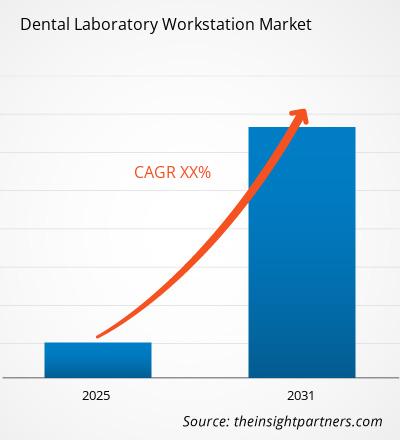
The Dental Laboratory Workstation market was valued at US$ 130.9 million in 2025 and is expected to reach US$ 171.49 million by 2034; it is estimated to record a CAGR of 3.05% during 2026-2034.
Dental Laboratory Workstation Market Assessment and Insights
- North America: North America maintains a substantial position, with a 2025 Dental Laboratory Workstation Market share of 31–35% and a CAGR of 3.0–3.8% between 2026–2034, supported by established laboratory infrastructure, replacement demand, ergonomic upgrades, and continuing adoption of digitally connected dental production workflows.
- US: The US accounts for 78–82% of North America's 2025 demand, with a CAGR of 3.1–3.9% between 2026–2034, reflecting laboratory consolidation and investment in efficient technician work environments.
- Europe: Europe holds a 2025 share of 34–38% and is expected to grow at 3.2–4.0% CAGR between 2026–2034. Germany, Italy, France, and the UK remain important markets because of established laboratory networks, equipment manufacturing capabilities, and stringent workplace expectations.
- Asia Pacific: Asia Pacific represents 20–24% of 2025 demand and is projected to expand at 4.0–4.8% CAGR between 2026–2034. China, Japan, South Korea, and India provide the principal demand base as laboratory capacity and digital dentistry adoption broaden.
- Largest Segment: Single Tables lead with a 2025 market share of 54–58% and a CAGR of 3.1–3.8% between 2026–2034, reflecting broad laboratory compatibility and efficient space utilization.
- High Growth Segment: Double Tables hold a 2025 share of 42–46% and are expected to grow at 3.7–4.5% CAGR between 2026–2034, benefiting from collaborative and higher-throughput laboratory configurations.
- Key companies analyzed in detail: KaVo Dental, Lista International Corp., Dental Art, DentalEZ Group, Saratoga, Sinol Dental, KPF Dental, REITEL Feinwerktechnik GmbH, ERIO, LOC Scientific, MULTY DENT, Iride International, ZILFOR, CATO S.r.l., ASTRA MOBILI METALLICI.
Source: The Insight Partners' analysis based on proprietary research, government publications, company annual reports, investor presentations, industry databases, and expert interviews.
The Dental Laboratory Workstation Market has been seen to change from traditional workbenches towards the use of equipment that takes into consideration ergonomics, modularity, lighting, storage capabilities, compatibility with extraction units and compatibility with laboratory machines. Work stations must now be able to accommodate the production of zirconia, resin, ceramics and digitally produced restorations. In order to differentiate, manufacturers will be seen to focus on configurations, robust construction, light integration and other features that help minimize operator movement during repetitive actions.
The Dental Laboratory Workstation Market forecast indicates trend towards smaller labs, modular installations and equipment that is capable of adapting to evolving digital workflows. New markets for dental labs such as Asia Pacific and some Middle Eastern countries are expected to lead to new incremental demand in order to increase laboratory capacity. Occupational exposures, hygiene, electrical and ergonomic issues have all led to a need for replacing traditional workbenches with proper systems.
Dental Laboratory Workstation Market Report Scope
| Report Attribute | Details |
|---|---|
| Market size in 2025 | US$ 130.9 Million |
| Market Size by 2034 | US$ 171.49 Million |
| Global CAGR (2026 - 2034) | 3.05% |
| Historical Data | 2021-2024 |
| Forecast period | 2026-2034 |
Dental Laboratory Workstation Market Analysis
Factors driving the Dental Laboratory Workstation Market include increasing demand for structured laboratory workstations that cater to the changing range of restorative materials and processes used in their creation. In fact, dental laboratories fall between manufacturers of materials, manufacturers of equipment, CAD/CAM systems, dentists, and the final users. WHO notes that billions of people suffer from oral health conditions around the world while FDI highlights that digitalization and technology have become key factors that impact the work of dental technicians.
According tLaboratory size and technician workflow are also important determinants of demand. Single table units are ideal for independent technicians and small laboratories while double table units can be justified for large laboratories for preparation, finishing, and inspection processes. The supply chain for such products relies on metalworking, work surfaces, exhaust systems, lighting, electrical fixtures, storage cabinets, and distribution networks. Standardized modules from manufacturers will lead to faster installation and ability of laboratories to customize the equipment using the available floor space.
Dental Laboratory Workstation Market Report reveals fragmentation within the competitive environment comprising dental equipment suppliers, laboratory furniture producers, and precision-workstations providers. The advantage for KaVo Dental consists in the wide range of dental technologies, Lista International Corp., Dental Art, DentalEZ Group, and Saratoga supply lab infrastructure and equipment. REITEL Feinwerktechnik GmbH pays attention to ergonomic workstations, extraction, lighting, and stainless steel construction, proving that the area of differentiation is wider than just the surface of the workstation.
Purchasing decisions are becoming more focused on modular architecture of the product, its durability, ergonomic adjustment, integration with extraction systems, and possibility of use with digital manufacturing areas. Companies Sinol Dental, KPF Dental, ERIO, LOC Scientific, MULTY DENT, Iride International, ZILFOR, CATO S.r.l., ASTRA MOBILI METALLICI are among competitors. Regional distribution and configuration flexibility could be important for purchasing companies. Suppliers, which provide effective installation service and replacement parts, could benefit from recurring customer relationship as labs are changing incrementally.
● REPORT CUSTOMIZATION
Tailor This Report To Align With Your Specific Business Requirements
This report can be customized to align precisely with your business objectives, scope, and target markets. Customization options include tailored segmentation, geography, competitive analysis, and strategic insights to support informed decision-making.
Customize This Report →WHAT YOU CAN ADJUST
- ● Segmentations
- ● Geography
- ● Competitive Analysis
- ● Language Preferences
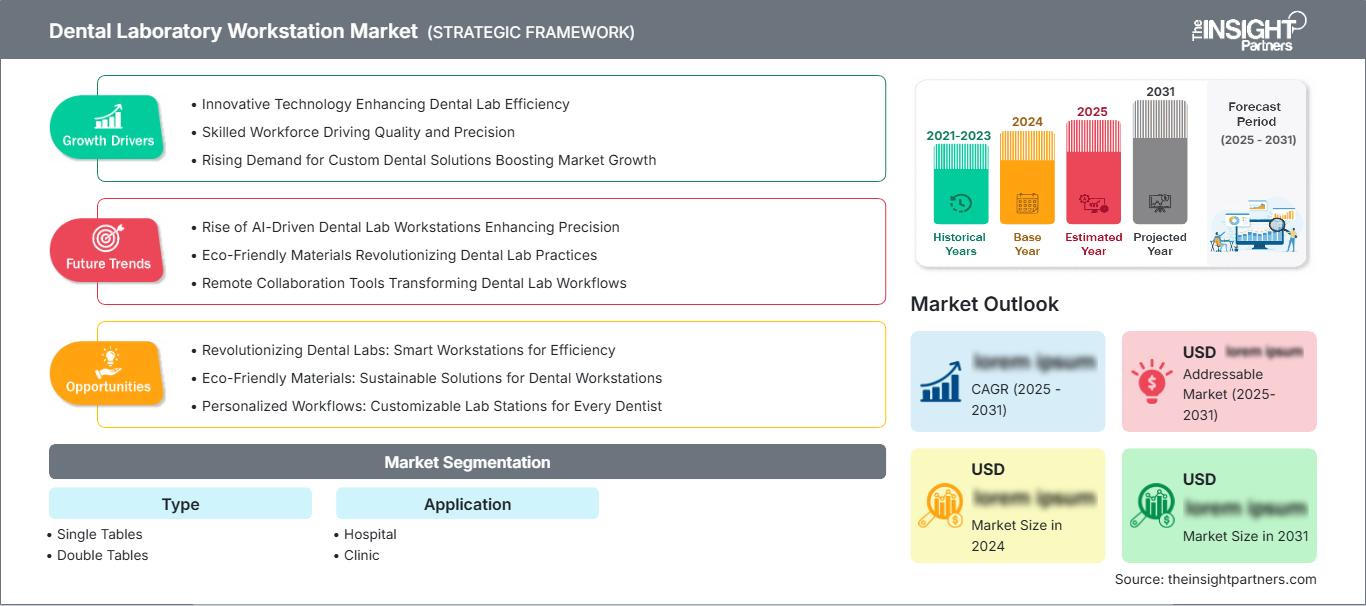
Dental Laboratory Workstation Market: Strategic Insights
Regional Insights
North America Dental Laboratory Workstation Market
North America held a 31–35% share in 2025, with a projected CAGR of 3.0–3.8% through 2034. The U.S. plays an important role in regional demand, whereas Canada supports it through existing laboratories and dental services network. Purchase cycles, technician ergonomics, consolidation of laboratories, and demand for organized production area guarantee continuous purchase.
The Dental Laboratory Workstation Market share in North America is strengthened through existing dental technology infrastructure and higher investment in laboratory equipment. Purchasers consider integrated lighting, storage, electrical connections, and compatibility with extraction more than furniture. Digital manufacturing affects the workstation demands since technicians have to switch from design, printing, milling, to finish and inspection processes without disturbing existing bench process.
U.S. Dental Laboratory Workstation Market
The US represents 78–82% of North America's 2025 demand and is expected to grow at a 3.1–3.9% CAGR through 2034. Lab consolidation promotes standardization of the workstations purchased, but there will always be a need for replacement in both independent laboratories and larger commercial operations. KaVo Dental and other trusted vendors are supporting a wide range of equipment in the country.
Usage trends show that there is an increasing trend toward workstations that allow for restoration finishing, model making, inspection, and digitally fabricated parts. In large laboratories, there may be an option for dual workstations when the technicians perform separate tasks and use common utilities, whereas smaller practices and laboratories prefer a single table system.
Europe Dental Laboratory Workstation Market
Europe accounted for a 34–38% share in 2025 and is projected to expand at a 3.2–4.0% CAGR. Germany continues to be the market leader thanks to a well-established dental technology environment, with Italy, France, the UK, and Spain contributing substantial specialized demand from both laboratory and clinical settings.
For the UK, emphasis on laboratory efficiency and modernization is key, with the buying process now taking into consideration ergonomic design and ease of use in relation to contemporary restorative techniques. Germany is aided by indigenous equipment experience and high expectations of resilient, high-tech laboratory facilities. France is a combination of well-established laboratories and dental technology distribution companies, with Italy being important due to its manufacture of dental furniture and equipment.
APAC Dental Laboratory Workstation Market
APAC represented 20–24% of 2025 demand and is forecast to grow at 4.0–4.8% CAGR. China is the market leader, followed by Japan, South Korea, India, and Australia. Growth in laboratory capacity, urban dental care facilities, digital manufacturing, and upgrading the lab environment help boost the market.
Industrial growth and adoption of dental technologies drive the growth of laboratories from furniture-based to configurable spaces. India and China offer excellent opportunities for growth in the future due to expansion of laboratory networks, while Japan and South Korea prefer accurate and reliable designs. Australia gets advantages from well-developed dental care and laboratory industry.
Middle East & Africa Dental Laboratory Workstation Market
Middle East and Africa is projected to expand at a 2.8–3.6% CAGR through 2034. Saudi Arabia dominates regional demand, with the UAE and South Africa following, while the Rest of MEA is more fragmented. Infrastructure programs for healthcare and investments in the dental market drive the modernization of equipment.
Availability of energy sources, ongoing construction, and growth in specialist healthcare infrastructure drive the establishment of laboratories. The Gulf countries are capable of supporting high-specification labs, while South Africa and other countries favor practical and durable systems. It is thus predicted that the Dental Laboratory Workstation Market will develop through new laboratory builds and replacement sales.
Segmentation Analysis
Type
Type segmentation reflects differences in laboratory space, technician density, workflow organization, and budget. The Type segment is expected to expand at a 3.2–4.0% CAGR between 2026–2034. Single-table configurations remain widely applicable, while double-table designs gain relevance where laboratories require parallel work areas and higher utilization.
- Single Tables: Single Tables provide a compact configuration for individual technicians and smaller laboratories. Their broad compatibility, lower footprint, and straightforward installation make them strategically important for replacements and incremental laboratory upgrades.
- Double Tables: Double Tables support shared or parallel workflows and provide greater surface capacity for laboratories managing multiple production stages. Their strategic importance rises where technician density and equipment integration justify additional workspace.
Application
Application requirements shape workstation specifications according to clinical workflow, laboratory support, staffing levels, and available floor space. The Application segment is estimated to grow at a 3.4–4.2% CAGR during 2026–2034. Clinics prioritize compact flexibility, while hospitals can require standardized installations for broader departmental use.
- Hospital: Hospital installations typically emphasize durability, cleanable surfaces, utility organization, and workflow consistency. Procurement can involve centralized specifications, making modular designs strategically useful for facilities managing multiple dental service areas.
- Clinic: Clinic demand favors space-efficient configurations that support restoration preparation, adjustment, polishing, and inspection. Flexible workstations can help smaller facilities accommodate laboratory functions without requiring extensive dedicated infrastructure.
Opportunity Snapshot
| Segment Name | Revenue Contribution (High/Medium/Low) | Trend Tag | Adoption Stage |
|---|---|---|---|
| Hospital | Medium | Modular Labs | Scaling |
| Clinic | High | Compact Labs | Mature |
Dental Laboratory Workstation Market Growth Drivers and Impact Analysis
Rising integration of digital and conventional laboratory workflows
Digital impressions, CAD/CAM design, milling, printing, and conventional finishing increasingly operate as connected stages rather than isolated activities. This transition changes how technicians organize work surfaces, equipment access, storage, lighting, and inspection areas. The Dental Laboratory Workstation Market benefits because laboratories need physical infrastructure that accommodates digital production while preserving manual craftsmanship. FDI has highlighted digitalization and technology as important changes affecting the dental technician profession. Workstations that provide organized access to handpieces, materials, lighting, and adjacent equipment can reduce unnecessary movement and support workflow continuity. The commercial impact is strongest where laboratories are replacing fragmented benches with modular installations that can be reconfigured as production technology changes.
Greater emphasis on technician ergonomics and occupational cleanliness
Ergonomics is becoming a purchasing consideration because dental technicians perform detailed tasks for prolonged periods, often involving repetitive hand movements and visually demanding finishing operations. Modern workstation designs can address posture, illumination, extraction, access, and surface organization within a single configuration. REITEL's workstation portfolio illustrates the increasing integration of dust extraction, protective panels, LED lighting, and adjustable working arrangements. Such features can influence replacement decisions even when existing benches remain functional. The market impact extends beyond comfort because better organization can support consistent task execution and reduce interruptions. Laboratories handling zirconia, plaster, resins, and other particulate-generating materials have additional reasons to consider workstations that integrate environmental controls with the technician's primary work area.
Expansion of dental laboratory capacity in emerging markets
Growing dental service capacity in emerging economies creates a broader installed base for laboratory furniture and associated infrastructure. WHO identifies oral disease as a major global health burden, with access challenges particularly pronounced in lower-income settings. As dental services expand, laboratories require practical work environments for technicians involved in restoration fabrication, adjustment, and finishing. The commercial effect is not limited to premium installations. Cost-sensitive markets can favor modular products that allow laboratories to add tables, storage, lighting, or utility connections as workloads increase. Suppliers capable of offering standardized configurations with localized distribution and service can capture replacement and expansion demand. This driver also supports demand for compact systems in facilities where floor space and capital budgets remain constrained.
Dental Laboratory Workstation Market Future Trends
Connected workstation planning for hybrid production environments
The Dental Laboratory Workstation Market trends are likely to shift toward workstation planning that treats the bench as one component of a connected production cell. Future layouts may position scanners, computers, printers, milling equipment, finishing tools, and inspection stations around technician movement patterns rather than arranging furniture independently. Modular utility channels could simplify power, extraction, illumination, and equipment connections while supporting future reconfiguration. Suppliers may increasingly provide planning tools that allow laboratories to visualize floor layouts before installation. The strategic implication is a move from furniture purchasing toward workflow engineering, with workstation specifications determined by restoration volume, technology mix, technician specialization, and available space. This approach can support incremental modernization without requiring laboratories to redesign entire facilities whenever a new digital process is introduced.
Greater modularity and sustainability in laboratory furniture design
Future products are expected to place greater emphasis on modular construction, repairability, material durability, and lower resource consumption. Laboratories seeking longer replacement cycles may prefer stainless steel, replaceable components, standardized modules, and surfaces that withstand repeated cleaning. Manufacturers can respond by designing tables and accessories that permit component replacement rather than complete unit disposal. Energy-efficient LED lighting and demand-controlled extraction may also become more common as laboratories evaluate operating costs alongside purchase prices. Sustainability considerations could influence tenders from larger institutions, especially where procurement policies assess product lifecycle characteristics. For suppliers, modularity can create a more flexible portfolio, allowing common components to serve multiple laboratory configurations while reducing manufacturing complexity and supporting aftermarket revenue.
Dental Laboratory Workstation Market Opportunities
Modular retrofit solutions for established laboratories
Established laboratories represent an actionable opportunity because modernization does not always require complete facility replacement. Suppliers can develop retrofit packages combining worktops, storage, lighting, extraction interfaces, utility management, and ergonomic accessories around existing laboratory infrastructure. These packages can reduce disruption and allow customers to prioritize the most productivity-sensitive areas first. Dental Laboratory Workstation Forecasts should therefore consider replacement and retrofit demand separately from new laboratory construction. Vendors can strengthen adoption by offering standardized modules, site assessment, installation support, and upgrade paths. A retrofit-oriented strategy also enables suppliers to address smaller laboratories that may lack the capital or floor space for comprehensive redesigns. The opportunity is particularly relevant in mature markets where installed equipment remains serviceable but no longer matches contemporary workflow requirements.
Localized configurations for high-growth dental service markets
Emerging dental service markets create an opportunity for suppliers to adapt workstation configurations to local laboratory economics, building standards, technician practices, and available floor space. Instead of exporting a single premium configuration, manufacturers can create tiered systems with optional lighting, storage, extraction, electrical modules, and ergonomic accessories. This strategy can improve affordability while preserving upgrade potential. Distribution partnerships with dental equipment specialists can further reduce installation complexity and improve access to replacement components. India, China, Southeast Asia, and selected Gulf markets offer differentiated opportunities because laboratory expansion can occur alongside modernization of private dental services. Companies that combine standardized manufacturing with localized configuration and service may achieve stronger market penetration without assuming that purchasing requirements are identical across regions.
Recent Developments
- May 2026: KaVo Dental received the German Innovation Award 2026 on May 12, recognizing its user-focused lighting technology, technical quality, economic efficiency, and sustainability considerations. The development illustrates continued emphasis on visibility, ergonomics, and technology-led workflow improvements across dental environments.
- May 2026: ZILFOR participated in the Expo Dental Meeting in Rimini from May 14–16, 2026, presenting its product range to dental professionals. The event reinforced the company's continued engagement with European dental markets and provided a platform for showcasing laboratory and practice equipment solutions.
- April 2026: REITEL Feinwerktechnik GmbH presented its ERGORET EASY workstation during Dental Forum 2026 in Paris, highlighting integrated extraction, compact dimensions, protective screening, and ergonomic operation for dust-intensive plaster and zirconium processing. The launch expands the company's workstation offering toward smaller laboratories and practices requiring self-contained environmental control.
Frequently Asked Questions

- Comprehensive Market Sizing and Forecast Analysis
- Detailed Segmentation Analysis
- In-Depth Market Dynamics Assessment
- Regional and Country-Level Insights
- Competitive Landscape and Company Benchmarking
- Strategic Business Intelligence
Recent Reports
Testimonials

The Insight Partners' SCADA System Market report is comprehensive, with valuable insights on current trends and future forecasts. The team was highly professional, responsive, and supportive throughout. We are very satisfied and highly recommend their services.
RAN KEDEM Partner, Reali Technologies LTDs
I requested a report on a very specific software market and the team produced the report in a few days. The information was very relevant and well presented. I then requested some changes and additions to the report. The team was again very responsive and I got the final report in less than a week.
JEAN-HERVE JENN Chairman, Future Analytica
We worked with The Insight Partners for an important market study and forecast. They gave us clear insights into opportunities and risks, which helped shape our plans. Their research was easy to use and based on solid data. It helped us make smart, confident decisions. We highly recommend them.
PIYUSH NAGPAL Sr. Vice President, High Beam Global
The Insight Partners delivered insightful, well-structured market research with strong domain expertise. Their team was professional and responsive throughout. The user-friendly website made accessing industry reports seamless. We highly recommend them for reliable, high-quality research services
YUKIHIKO ADACHI CEO, Deep Blue, LLC.
This is the first time I have purchased a market report from The Insight Partners.While I was unsure at first, I visited their web site and felt more comfortable to take the risk and purchase a market report.I am completely satisfied with the quality of the report and customer service. I had several questions and comments with the initial report, but after a couple of dialogs over email with their analyst I believe I have a report that I can use as input to our strategic planning process.Thank you so much for taking the extra time and making this a positive experience.I will definitely recommend your service to others and you will be my first call when we need further market data.
JOHN SUZUKI President and Chief Executive Officer, Board Director, BK Technologies
I wish to appreciate your support and the professionalism you displayed in the course of attending to my request for information regarding to infectious disease IVD market in Nigeria. I appreciate your patience, your guidance, and the fact that you were willing to offer a discount, which eventually made it possible for us to close a deal. I look forward to engaging The Insight Partners in the future, all thanks to the impression you have created in me as a result of this first encounter.
DR CHIJIOKE ONYIA MANAGING DIRECTOR, PineCrest Healthcare Ltd.Reason to Buy
- Informed Decision-Making
- Understanding Market Dynamics
- Competitive Analysis
- Identifying Emerging Markets
- Customer Insights
- Market Forecasts
- Risk Mitigation
- Boosting Operational Efficiency
- Strategic Planning
- Investment Justification
- Tracking Industry Innovations
- Aligning with Regulatory Trends





 Get Free Sample for