
Diisostearyl Malate Market Size, Demand & Growth by 2034
Coverage: by Type (99% Purity, 99.9% Purity, Others); Application (Makeup Products, Skin Care Products) , and Geography (North America, Europe, Asia Pacific, and South and Central America)
- Status : Data Released
- Report Code : TIPRE00013040
- Category : Chemicals and Materials
- No. of Pages : 150
- Available Report Formats :


- Last update date : July 22, 2026


2025 Market Size
US$ 502.32 Mn
Base year value
2034 Forecast
US$ 821.26 Mn
Projected by 2034
CAGR 2026-2034
5.61 %
Growth rate
Addressable Market
US$ 5,998.63 Mn
(2026-2034)
The Diisostearyl Malate Market was valued at US$ 502.32 Million in 2025 and is projected to reach US$ 821.26 Million by 2034, registering a CAGR of 5.61% during 2026–2034. The market is supported by increasing utilization of premium emollients in color cosmetics and skin care formulations. Demand for sensory-enhancing ingredients, clean-label formulations, and multifunctional cosmetic additives is strengthening adoption across developed and emerging personal care markets.
Across North America, demand remains supported by premium beauty products, formulation innovation, and growing consumer preference for long-lasting makeup products. The Diisostearyl Malate Market size in the region benefits from strong research capabilities, established cosmetic brands, and rising demand for high-performance texture-enhancing ingredients. Regional growth is estimated within a CAGR range of 4.8–5.4% through 2034.
Diisostearyl Malate Market Assessment and Insights
- North America: Share in 2025 estimated at 31–35%, supported by premium cosmetics demand and formulation innovation. CAGR between 4.8–5.4% from 2026–2034.
- US: Accounts for 73–77% of North American demand in 2025, driven by beauty and personal care manufacturing. CAGR between 4.9–5.5%.
- Europe: Holds 25–29% share in 2025 led by Germany, France, Italy, and the UK. CAGR between 5.0–5.6%.
- Asia Pacific: Represents 30–34% share in 2025, driven by China, Japan, South Korea, and India. CAGR between 6.1–6.8%.
- Largest Segment: Makeup Products account for 58–62% market share in 2025 and are projected to grow at 5.2–5.8% CAGR.
- High Growth Segment: Skin Care Products hold 38–42% share in 2025 and are expected to expand at 6.0–6.7% CAGR.
- Key companies analyzed in detail: Stearinerie Dubois, Kokyu Alcohol Kogyo Co., Ltd., Domus Chemicals S.p.A., Phoenix Chemical, Inc., Alzo International Inc., The Lubrizol Corporation, The Nisshin OilliO Group, Ltd., Bernel Chemical Co., Inc., Pavilion Chemicals Co., Ltd., Nikkol Group Corporation.
Source: The Insight Partners' analysis based on proprietary research, government publications, company annual reports, investor presentations, industry databases, and expert interviews.
Production technologies have evolved toward higher-purity cosmetic esters that deliver superior spreadability, gloss enhancement, and pigment dispersion characteristics. Manufacturers are increasingly emphasizing ingredient consistency, enhanced sensory performance, and compliance with international cosmetic regulations. Demand for premium lip products, foundations, and multifunctional skincare formulations continues to reshape sourcing strategies and expand commercial opportunities.
Market expansion is projected to come from beauty markets in Asia-Pacific, Latin America, and the Middle East. Development of innovative formulations, clean beauty trends, and bio-based ingredients will drive market penetration. Government regulations related to the transparency of ingredients and a high-quality cosmetic experience preferred by consumers will continue to sustain the market environment until 2027. Current production technologies are aimed at ensuring the purity, consistency, and compatibility of ingredients. Companies invest in modern esterification techniques that satisfy the increasing needs of high-end cosmetics manufacturers. This tendency is especially observed in markets where consumers prefer high-quality sensory properties of the products, such as easy application and better stability of cosmetics. Development of multifunctional ingredients, which can be used as emollients, texture modifiers, and pigment wetting agents, opens up new possibilities for the cosmetic industry. At the same time, the growing demand for sustainable ingredients results in the need to reconsider the raw materials supply chain management.
Diisostearyl Malate Market Report Scope
| Report Attribute | Details |
|---|---|
| Market size in 2025 | US$ 502.32 Million |
| Market Size by 2034 | US$ 821.26 Million |
| Global CAGR (2026 - 2034) | 5.61% |
| Historical Data | 2021-2024 |
| Forecast period | 2026-2034 |
Diisostearyl Malate Market Analysis
The Diisostearyl Malate Market growth trajectory is closely linked to expanding consumer expenditure on cosmetics and personal care products. The ingredient is widely used to improve texture, lubrication, pigment wetting, and product stability in beauty formulations. Growing demand for premium lip products and complexion cosmetics continues to support consumption. Demand is also benefiting from increasing product differentiation strategies among cosmetic brands seeking enhanced sensory performance. Growth in global beauty spending continues to support ingredient adoption across multiple product categories. Consumers increasingly prefer premium products that provide both performance and sensory benefits. Cosmetic manufacturers are therefore incorporating specialty emollients into formulations to improve texture and user experience. Product innovation cycles have shortened considerably over the past decade, resulting in greater demand for versatile cosmetic ingredients capable of delivering multiple performance advantages within a single formulation.
Supply dynamics remain relatively stable due to established raw material sourcing networks and specialized esterification capabilities. Manufacturers are investing in product quality improvements and high-purity grades to satisfy stringent formulation requirements. The value chain includes raw material suppliers, specialty chemical manufacturers, formulation developers, contract manufacturers, brand owners, and retail channels. The supply ecosystem includes feedstock providers, specialty chemical processors, formulation partners, contract manufacturers, cosmetic brands, e-commerce channels, and retail distributors. Strategic collaboration between ingredient suppliers and cosmetic formulators is becoming increasingly important as manufacturers seek customized solutions for premium products. Technical support services and formulation expertise have emerged as key competitive differentiators among leading market participants.
The Diisostearyl Malate Market analysis indicates a moderately consolidated competitive environment characterized by formulation expertise, global distribution capabilities, and technical support services. Industry participants compete through product purity, regulatory compliance, and customized ingredient offerings tailored to beauty applications. Strategic relationships with cosmetic formulators remain critical for long-term growth.
The Lubrizol Corporation, Nikkol Group Corporation, Stearinerie Dubois, and The Nisshin OilliO Group, Ltd. are constantly beefing up their offerings of specialty ingredients. In addition, companies such as Alzo International Inc., Domus Chemicals S.p.A., and Phoenix Chemical, Inc. target specific niches as well as cater to the needs of individual customers. Continuous efforts in developing high-quality esters will be instrumental in further driving market growth. In addition to quality products, competition in terms of sustainability, global supply, regulatory compliance, and formulation support is becoming increasingly common among players in the market. Companies that can offer complete technical support and help with application development are developing strong partnerships with key beauty brands.
● REPORT CUSTOMIZATION
Tailor This Report To Align With Your Specific Business Requirements
This report can be customized to align precisely with your business objectives, scope, and target markets. Customization options include tailored segmentation, geography, competitive analysis, and strategic insights to support informed decision-making.
Customize This Report →WHAT YOU CAN ADJUST
- ● Segmentations
- ● Geography
- ● Competitive Analysis
- ● Language Preferences
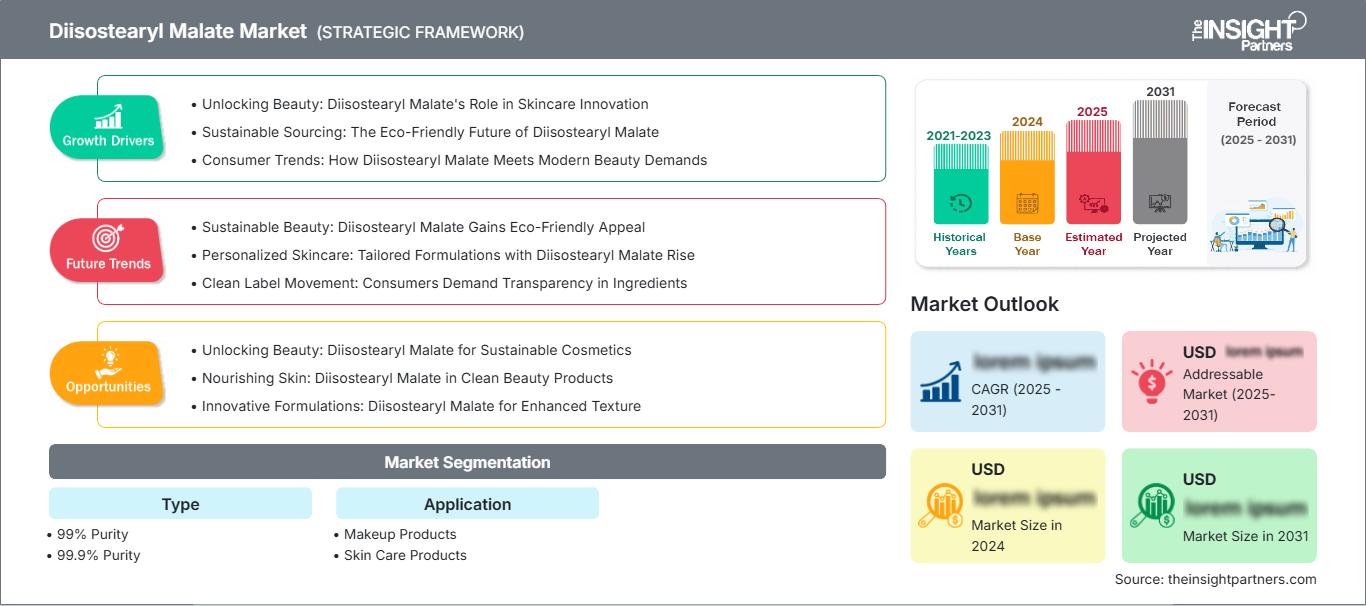
Diisostearyl Malate Market: Strategic Insights
Regional Insights
North America Diisostearyl Malate Market
North America accounted for an estimated 31–35% share of global revenue in 2025 and remains an important center for cosmetic innovation. Growth is primarily supported by premium beauty products, advanced formulation research, and consumer demand for improved sensory attributes. Regional CAGR is estimated at 4.8–5.4% through 2034.
North America boasts one of the most advanced cosmetic innovation ecosystems around the globe. The synergy between raw material suppliers, contract manufacturers, and consumer brands results in the quick commercialization of innovative formulas. High demand for clean beauty products and multipurpose personal care ingredients provides many chances for suppliers of high-purity cosmetic esters. Premium beauty segments, especially premium skincare and luxury cosmetics, provide substantial sources of income in the entire region.
In Canada, rising demand for premium personal care goods contributes to incremental demand. In Mexico, increased knowledge about beauty products and the availability of global cosmetic brands have led to it becoming an important production and consumption center. Further innovations in formulations are believed to drive regional growth during the forecast period.
U.S. Diisostearyl Malate Market
The United States represents approximately 73–77% of North American demand in 2025. Market development is supported by extensive cosmetic manufacturing activity, premium beauty product launches, and a strong influence of consumer trends on formulation innovation. CAGR is estimated at 4.9–5.5%.
The Diisostearyl Malate Market share within the country benefits from substantial consumption of lip care, color cosmetics, and skin treatment products. The presence of global cosmetic brands and ingredient suppliers contributes to product development activity and stable demand.
Europe Diisostearyl Malate Market
Europe holds an estimated 25–29% share in 2025 and is projected to expand at a CAGR of 5.0–5.6%. Germany remains a leading production and innovation hub, supported by a strong specialty chemicals ecosystem and advanced cosmetic manufacturing capabilities.
Demand in the UK is maintained by the positioning of high-end beauty products and the use of multi-purpose ingredients in cosmetics. France and Italy will continue to benefit from their already well-established beauty industries. In Spain, regional growth is facilitated by personal care consumption and innovation. Germany sustains its position through its highly developed specialty chemicals industry and advanced research capacity. Innovation of ingredients and manufacturing expertise ensures that there is demand for high-end cosmetic ingredients. The UK market features high-end beauty consumption and an active independent cosmetics industry. Product differentiation continues to be the key to success for both local and foreign brands in the country. France remains a global beauty product hub, hence sustained demand for specialty ingredients. Italy benefits from its high-end cosmetic manufacturing and formulation capabilities.
APAC Diisostearyl Malate Market
Asia Pacific accounts for 30–34% share in 2025 and is expected to achieve the fastest CAGR of 6.1–6.8%. China and Japan remain leading markets due to mature cosmetics industries and established ingredient supply chains.
Beauty spending increase and premiumization of products in South Korea, India, and Australia have brought more opportunities. Expansion of capacity, increased consumer awareness, and innovation in skincare products help ensure regional growth for the long run. The increasing middle-class population and e-commerce in the beauty industry are making people turn to premium skincare products in the Asia-Pacific region. Beauty trends driven by social media keep bringing new products and innovations regularly. China and Japan are key regions when it comes to formulating cosmetics. South Korea is leading the global beauty trend via its product innovations in skincare.
Middle East & Africa Diisostearyl Malate Market
The Middle East & Africa market is smaller but expanding steadily, with an estimated CAGR of 5.3–5.9%. Saudi Arabia and the UAE continue witnessing growth in premium beauty and personal care product categories.
South Africa remains an important regional market, while other countries benefit from improving retail infrastructure and increasing cosmetics penetration. Rising disposable incomes and international brand presence support demand expansion.
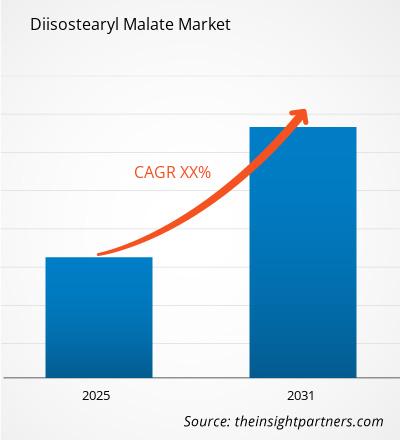
Segmentation Analysis
Type
The Diisostearyl Malate Market scope within the type segment is influenced by cosmetic formulation requirements and quality standards. High-purity grades are increasingly preferred due to formulation consistency, safety expectations, and premium product positioning. The segment is expected to grow at a 5.4–6.0% CAGR during 2026–2034. High-purity grades are gaining greater acceptance because cosmetic manufacturers increasingly prioritize formulation stability and premium sensory characteristics. Regulatory expectations and consumer awareness regarding ingredient quality have further encouraged the adoption of specialized product grades. While 99% purity products continue serving large-volume applications, premium brands increasingly favor higher-purity alternatives.
- 99% Purity: Widely utilized across mainstream cosmetic products where cost-performance balance remains important. Demand is supported by broad applicability in makeup and personal care formulations.
- 99.9% Purity: Increasingly adopted in premium and high-performance formulations requiring enhanced stability, sensory profile, and formulation consistency across luxury cosmetic applications.
Application
Application trends remain heavily influenced by product innovation within the beauty and skincare industries. Demand for improved texture, shine, spreadability, and conditioning effects continues to support ingredient adoption. The application segment is projected to expand at a 5.6–6.2% CAGR from 2026–2034. Application growth is supported by continuous innovation in both decorative cosmetics and skincare products. Manufacturers increasingly formulate products capable of delivering aesthetic and functional benefits simultaneously. This trend favors specialty ingredients that enhance both product performance and consumer experience.
- Makeup Products: Largest revenue contributor due to extensive use in lipsticks, lip glosses, foundations, and color cosmetics. Its sensory performance characteristics support sustained commercial significance.
- Skin Care Products: Growing utilization in moisturizers, treatment creams, and specialty formulations. Rising consumer preference for premium skincare products enhances long-term strategic importance.
Opportunity Snapshot
| Application | Revenue Contribution | Trend Tag | Adoption Stage |
| Makeup Products | High | Lip Luxury | Mature |
| Skin Care Products | Medium | Barrier Care | Scaling |
Diisostearyl Malate Market Growth Drivers and Impact Analysis
Premium Beauty Product Expansion
Premium beauty category growth is further contributing to an increase in the need for sensory-enhanced ingredients that provide outstanding product performance. Consumers are now connecting texture, glide, shine, and comfort as factors that define the quality of the product and prompting brands to add emollients to their formulations. This move towards premiumization in products such as lipsticks, foundations, and multitasking beauty products will continue to drive commercial demand. Brands that are competing in user experience, not just functionality, are allowing ingredient suppliers to enjoy more commercial opportunities. Prestige cosmetics are gaining more popularity with younger consumers; thus, there is a need for better-performing formulas. In essence, brands are positioning their products based on premium textures, long wear, and sensory benefits. Thus, ingredient suppliers that can meet this demand are benefiting from expanded commercial opportunities.
Rising Skincare Innovation
High investment in skincare technology has led to an increase in the need for ingredients that can improve the aesthetics and skin feel in their formulations. Many companies have started producing high-end moisturizers and corrective products that will incorporate ingredients with multiple functionalities. Formulations that provide conditioning, stabilization and better application attributes keep getting favored. This is anticipated to lead to higher usage of ingredients in beauty markets.
Growth of Clean Beauty Formulations
Consumer focus on ingredient transparency and product quality is encouraging cosmetic manufacturers to upgrade formulation strategies. Clean beauty positioning often emphasizes ingredient performance, compatibility, and consistency. Suppliers offering high-purity grades are increasingly benefiting from premium formulation requirements. Continued regulatory attention toward safety and labeling standards further supports the transition toward specialized cosmetic ester ingredients.
Diisostearyl Malate Market Future Trends
Premium Skincare Integration
The Diisostearyl Malate Market trends indicate increasing integration into advanced skincare formulations beyond traditional color cosmetics. Manufacturers are exploring multifunctional ingredient systems capable of supporting hydration, texture enhancement, and luxurious sensory properties simultaneously. As consumers increasingly value product experience, premium skincare adoption is expected to create new formulation opportunities and expand application diversity across global markets. Manufacturers are increasingly using digital formulation platforms and predictive modeling tools to accelerate product development. These technologies can improve ingredient selection processes and optimize product performance characteristics. As cosmetic companies reduce development timelines, demand for ingredients with predictable and well-documented performance profiles is expected to increase.
Higher Purity Ingredient Preference
There will be an increasing demand for better purity levels because cosmetic companies are concentrating more on consistency, functionality, and compliance. Higher formulations usually have more stringent specifications for their ingredients. There will also be an increasing trend towards investments in technology and development capabilities because of this. Companies that operate in the high-value formulation space will have above-average growth prospects. Increasing attention towards performance of products with regard to environment is driving suppliers to improve efficiencies and implement sustainable sourcing programs.
Diisostearyl Malate Market Opportunities
Expansion Across Emerging Beauty Markets
Emerging economies continue demonstrating strong growth in beauty and personal care consumption. Rising disposable incomes, increasing urbanization, and expanding retail networks contribute to favorable conditions for premium ingredient suppliers. Companies developing localized partnerships and technical support capabilities can capitalize on growing demand. Long-term Diisostearyl Malate Market Forecasts remain supported by increasing product sophistication across these markets. Several emerging economies remain underpenetrated relative to developed cosmetic markets. Rising consumer awareness, increasing urbanization, and broader access to premium personal care products are creating favorable conditions for specialty ingredient suppliers. Strategic partnerships with regional distributors and local manufacturers can support market penetration and long-term revenue growth.
Customized Formulation Solutions
There is room for growth and innovation in the production of ingredients that are aimed at specific applications such as superior lip care, skin complexions, and advanced skincare solutions. Tailored performance attributes may help enhance the relationship with formulators and ensure a better competitive edge. The continuous partnership between ingredient producers and cosmetic brands might create more value in terms of products and business potential in the specialty cosmetics sector. Cosmetic brands’ increasing product differentiation is creating a need for specific ingredient solutions. Ingredient producers that can work effectively with formulators are likely to retain their customers.
Recent Developments
- March 2026: Savita Oil Technologies Limited inaugurated Phase II of its Synthetic Ester manufacturing facility at the Mahad plant in Raigad, Maharashtra. This expansion demonstrates the company's commitment to sustainable and environmentally responsible solutions for power infrastructure. The ceremony featured Chief Guest Upendra Pande, Managing Director of Gujarat Energy Transmission Corporation Limited, along with senior representatives from the power sector and the leadership team of Savita Oil.
- June 2025: Perstorp, a leading innovator in specialty chemicals, has launched a new portfolio of saturated synthetic polyol esters, which includes three products: Synthetic-EF 5, Synthetic-EF 15, and Synthetic-EF 22. These high-performing synthetic esters are designed to meet the technical, environmental, and performance demands of the lubricant industry, supporting Perstorp's goal of becoming a prominent supplier in the synthetic lubricants market.
Frequently Asked Questions

- Comprehensive Market Sizing and Forecast Analysis
- Detailed Segmentation Analysis
- In-Depth Market Dynamics Assessment
- Regional and Country-Level Insights
- Competitive Landscape and Company Benchmarking
- Strategic Business Intelligence
Recent Reports
Testimonials

The Insight Partners provided valuable market intelligence that supported our global go-to-market strategy. Their team was professional, responsive, and attentive to our feedback, providing thoughtful analysis and helpful methodological clarifications throughout the project.
Junmo Kim Chief Financial Officer (CFO), Enertech Co., Ltd.
The Insight Partners' SCADA System Market report is comprehensive, with valuable insights on current trends and future forecasts. The team was highly professional, responsive, and supportive throughout. We are very satisfied and highly recommend their services.
RAN KEDEM Partner, Reali Technologies LTDs
I requested a report on a very specific software market and the team produced the report in a few days. The information was very relevant and well presented. I then requested some changes and additions to the report. The team was again very responsive and I got the final report in less than a week.
JEAN-HERVE JENN Chairman, Future Analytica
We worked with The Insight Partners for an important market study and forecast. They gave us clear insights into opportunities and risks, which helped shape our plans. Their research was easy to use and based on solid data. It helped us make smart, confident decisions. We highly recommend them.
PIYUSH NAGPAL Sr. Vice President, High Beam Global
The Insight Partners delivered insightful, well-structured market research with strong domain expertise. Their team was professional and responsive throughout. The user-friendly website made accessing industry reports seamless. We highly recommend them for reliable, high-quality research services
YUKIHIKO ADACHI CEO, Deep Blue, LLC.
This is the first time I have purchased a market report from The Insight Partners.While I was unsure at first, I visited their web site and felt more comfortable to take the risk and purchase a market report.I am completely satisfied with the quality of the report and customer service. I had several questions and comments with the initial report, but after a couple of dialogs over email with their analyst I believe I have a report that I can use as input to our strategic planning process.Thank you so much for taking the extra time and making this a positive experience.I will definitely recommend your service to others and you will be my first call when we need further market data.
JOHN SUZUKI President and Chief Executive Officer, Board Director, BK Technologies
I wish to appreciate your support and the professionalism you displayed in the course of attending to my request for information regarding to infectious disease IVD market in Nigeria. I appreciate your patience, your guidance, and the fact that you were willing to offer a discount, which eventually made it possible for us to close a deal. I look forward to engaging The Insight Partners in the future, all thanks to the impression you have created in me as a result of this first encounter.
DR CHIJIOKE ONYIA MANAGING DIRECTOR, PineCrest Healthcare Ltd.Reason to Buy
- Informed Decision-Making
- Understanding Market Dynamics
- Competitive Analysis
- Identifying Emerging Markets
- Customer Insights
- Market Forecasts
- Risk Mitigation
- Boosting Operational Efficiency
- Strategic Planning
- Investment Justification
- Tracking Industry Innovations
- Aligning with Regulatory Trends





 Get Free Sample for