
Diphtheria Toxoid Market Growth, Demand & Size by 2034
Coverage: by Product ( Reducing Toxin, Denatured Toxin ); Application ( Hospitals, Clinics, Ambulatory Surgical Centers ), and Geography (North America, Europe, Asia Pacific, and South and Central America)
- Status : Data Released
- Report Code : TIPRE00010956
- Category : Life Sciences
- No. of Pages : 150
- Available Report Formats :


- Last update date : July 03, 2026


2025 Market Size
US$ 204.39 Mn
Base year value
2034 Forecast
US$ 314.02 Mn
Projected by 2034
CAGR 2026-2034
4.89 %
Growth rate
Addressable Market
US$ 2,353.24 Mn
(2026-2034)
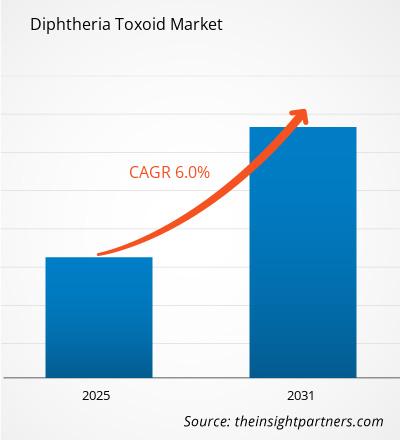
The global Diphtheria Toxoid market was valued at US$ 204.39 million in 2025 and is expected to reach US$ 314.02 million by 2034; it is estimated to record a CAGR of 4.89% during 2026-2034.
Diphtheria Toxoid Market Assessment and Insights
- North America: North America accounted for 33–37% of the diphtheria toxoid market share in 2025 and is projected to expand at a CAGR of 4.8%–5.3% during 2026–2034. Growth is driven by mature immunization infrastructure, sustained government vaccine procurement, and well-established public vaccination programs.
- U.S.: The U.S. represented 79–83% of the North American market in 2025 and is anticipated to register a CAGR of 4.9%–5.4% during 2026–2034, supported by high immunization coverage, continuous federal vaccine purchasing, and advanced healthcare delivery infrastructure.
- Europe: Europe held 26–30% market share in 2025 and is expected to grow at a CAGR of 5.0%–5.5% during 2026–2034. Germany, the United Kingdom, and France remain the leading markets, supported by robust vaccine manufacturing capabilities, stringent regulatory standards, and comprehensive public immunization initiatives.
- Asia Pacific: Asia Pacific accounted for 24–28% market share in 2025 and is forecast to expand at a CAGR of 6.3%–6.8% during 2026–2034. China, India, and Japan drive regional growth through expanding vaccine production capacity, strengthening national immunization programs, and increasing investments in preventive healthcare.
- Largest Segment – Hospitals: The hospitals segment represented the largest market share and is expected to grow at a CAGR of 5.2%–5.7% during 2026–2034, driven by extensive vaccination services, inpatient immunization programs, and well-established cold-chain infrastructure.
- High Growth Segment – Ambulatory Surgical Centers: The ambulatory surgical centers segment is projected to register the fastest growth with a CAGR of 6.2%–6.7% during 2026–2034, supported by increasing outpatient vaccination services and expanding preventive healthcare delivery models.
- Key companies analyzed in detail: Biocompare Inc.; GlaxoSmithKline plc; Haffkine Bio-Pharmaceutical Corporation Limited; List Biological Laboratories, Inc.; Medicare Pharma; Merck & Co., Inc.; Sanofi; Vigilomed Pharmaceuticals; VWR International, LLC; Zoetis Inc.
Source: The Insight Partners' analysis based on proprietary research, government publications, company annual reports, investor presentations, industry databases, and expert interviews.
The diphtheria toxoid market size has increased due to industry changes, as it has shifted from traditional monovalent toxoids to more technologically advanced multivalent vaccines that protect against multiple infectious diseases. With innovations in purification techniques, quality control, and large-scale manufacturing of biological products, the efficiency and effectiveness of production have been significantly improved. In addition, harmonization of regulation is one of the key factors enabling the commercial success and development of diphtheria toxoid vaccines on the international market.
The diphtheria toxoid market forecast will increasingly depend on expanding immunization access across emerging economies, investments in domestic vaccine manufacturing, and modernization of public healthcare infrastructure. Improved preparedness for pandemics, increased government vaccine stockpiles, and further innovations in biologics manufacturing are likely to contribute to market growth.
Diphtheria Toxoid Market Report Scope
| Report Attribute | Details |
|---|---|
| Market size in 2025 | US$ 204.39 Million |
| Market Size by 2034 | US$ 314.02 Million |
| Global CAGR (2026 - 2034) | 4.89% |
| Historical Data | 2021-2024 |
| Forecast period | 2026-2034 |
Diphtheria Toxoid Market Analysis
Global demand for diphtheria toxoid continues to be supported by mandatory childhood immunization schedules, periodic adult booster recommendations, and increasing awareness regarding vaccine-preventable diseases. Public-sector procurement remains the principal revenue contributor, while international immunization initiatives continue improving vaccine accessibility across lower- and middle-income economies. Rising healthcare expenditure and strengthening cold-chain logistics further support wider vaccine availability.
The diphtheria toxoid market report highlights an ecosystem that includes toxoid manufacturers, biological raw material suppliers, contract manufacturing organizations, regulatory authorities, healthcare providers, and national immunization agencies. Supply-side dynamics increasingly emphasize manufacturing scalability, compliance with stringent quality standards, and uninterrupted distribution networks. Expansion of domestic biologics manufacturing in emerging economies is reducing dependence on imported vaccines while improving supply resilience.
The competition in the diphtheria toxoid market is highly concentrated among existing vaccine producers who have high knowledge on regulations, sophisticated production facilities and global distribution networks. Sanofi, GlaxoSmithKline plc, Merck & Co., Inc., and Zoetis Inc. continue to add products to their portfolios through improvements in production, partnerships, and research on the development of biological products.
The investment drive in vaccines is increasingly being channeled towards upgrading vaccine production processes, automation, biosafety upgrades, and filling and finishing capacities. This is done by companies such as Haffkine Bio-Pharmaceutical Corporation Limited, List Biological Laboratories, Inc., and VWR International, LLC through their biological products, lab services, and research efforts which serve to improve the overall vaccine value chain.
● REPORT CUSTOMIZATION
Tailor This Report To Align With Your Specific Business Requirements
This report can be customized to align precisely with your business objectives, scope, and target markets. Customization options include tailored segmentation, geography, competitive analysis, and strategic insights to support informed decision-making.
Customize This Report →WHAT YOU CAN ADJUST
- ● Segmentations
- ● Geography
- ● Competitive Analysis
- ● Language Preferences
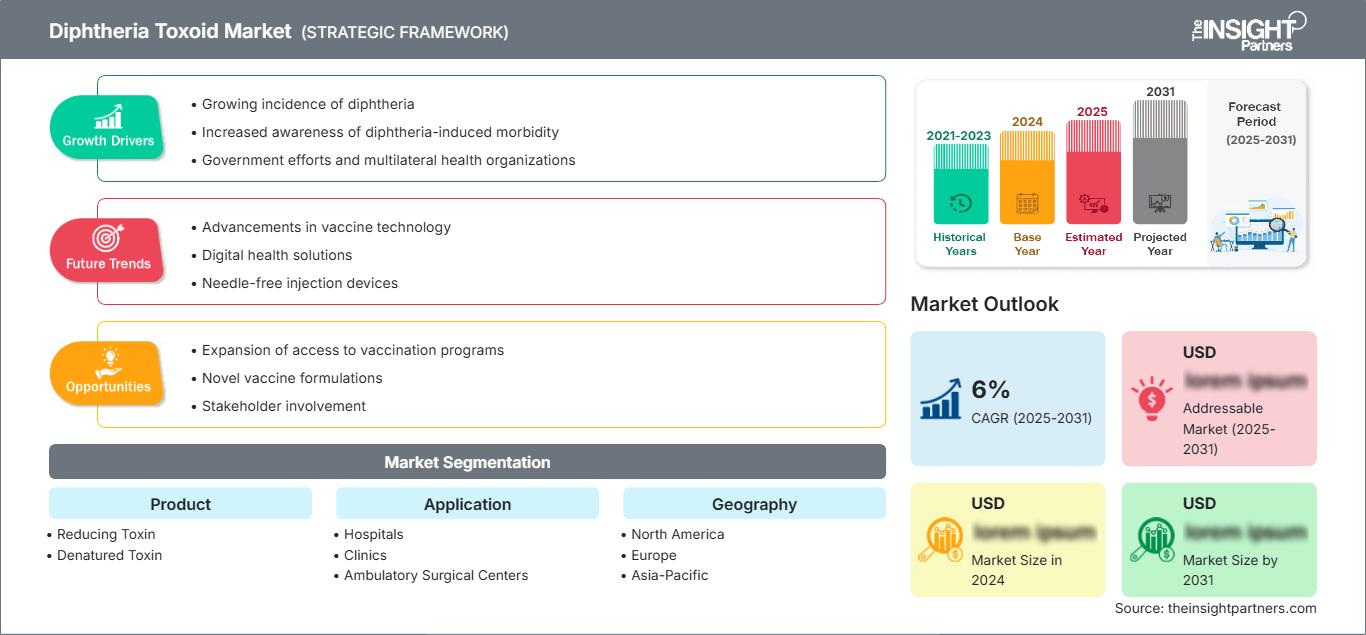
Diphtheria Toxoid Market: Strategic Insights
Regional Insights
North America Diphtheria Toxoid Market
North America contributed 33-37% to the total global diphtheria toxoid market in 2025 and is expected to grow at a 4.8-5.3% CAGR until 2034. Well-established childhood vaccination programs, large expenditures for health care, and effective procurement practices for public health systems continue to drive consistent demand in the market.
Increased focus on adult booster vaccination programs, better disease surveillance programs, and public health funding are expected to contribute to future growth of the diphtheria toxoid market. Pharmaceutical manufacturers are continuously focusing on their manufacturing capacity, whereas the healthcare systems remain compliant with national immunization recommendations.
U.S. Diphtheria Toxoid Market
The U.S. accounted for 79-83% of the diphtheria toxoid market in North America and is expected to exhibit a CAGR of 4.9-5.4% during 2026-2034. Government-led vaccination programs, effective reimbursement strategies, and regular immunization in pediatrics will ensure constant procurement of vaccines. Administration of vaccines takes place mainly through hospitals and outpatient vaccine centers.
Some of the key players operating in the diphtheria toxoid market include Merck & Co., Inc., GlaxoSmithKline plc, and Sanofi, which have a large commercial footprint throughout the nation. Combination vaccines, increased preventive health care campaigns, and upgrades in vaccine storage infrastructure will all contribute to the growth of the market.
Europe Diphtheria Toxoid Market
Europe had a market revenue share of 26-30% during 2025 and is expected to grow at 5.0-5.5% CAGR during the forecast period. Stringent regulation, existing biological manufacturing facilities, and national immunization programs have been key factors in driving the market demand within the region. Germany still holds its position as the major market because of the presence of advanced pharmaceutical production facilities and investments in vaccine research.
United Kingdom has been improving its vaccination rate by using existing public healthcare facilities and immunization schedules. Rising awareness of adult booster vaccination and increasing government spending on healthcare drive market demand for both the pediatric and adult population.
France, Italy, and Spain together account for a large portion of regional demand due to increased preventative healthcare programs and procurement of vaccines. Collaboration between public health departments and vaccine producers ensures continuous supply and modernization of biological manufacturing facilities in Western Europe.
APAC Diphtheria Toxoid Market
The Asia Pacific market made up 24% to 28% of the total market share in 2025 and is expected to have the fastest regional CAGR of 6.3% to 6.8%. China is the largest market because of vaccine manufacturing facilities at home, growing investment in health care, and government-sponsored immunization programs. Industrialization continues to boost biologics manufacturing capabilities.
Japan sustains its demand through developed health care infrastructure, a strict regulatory framework, and well-developed national immunization programs. South Korea keeps investing in biotech development and developing home-based vaccine manufacturing and exports through industrial policies.
India will continue to grow its vaccine production through both private and public vaccine makers. Australia will sustain its high vaccination rates through organized immunization programs and good access to health care. Growth in modernization in health care, government initiatives, and regional investments make Asia Pacific the fastest-growing region.
Middle East & Africa Diphtheria Toxoid Market
The Middle East & Africa market is projected to expand at a 5.6–6.1% CAGR through 2034. Saudi Arabia leads regional demand through substantial healthcare investment, expanding vaccine procurement, and modernization of public healthcare infrastructure. Continued immunization campaigns support sustained market development across pediatric healthcare services.
The United Arab Emirates continues investing in advanced healthcare delivery systems and vaccine accessibility through strategic public health initiatives. South Africa remains an important market supported by national immunization programs, improving healthcare infrastructure, and increasing collaboration with international public health organizations.
The remaining Middle East and African countries continue to strengthen immunization coverage through international funding programs, healthcare infrastructure expansion, and improved cold-chain logistics. Continued investments in healthcare modernization and disease prevention strategies are anticipated to support long-term regional market development.
Segmentation Analysis
Product
The Product segment is anticipated to expand at a 5.4–5.9% CAGR during 2026–2034, supported by continuous improvements in vaccine formulation technologies, increasing regulatory emphasis on product quality, and expanding immunization programs requiring standardized diphtheria toxoid products across hospitals and outpatient healthcare facilities.
- Reducing Toxin: Reducing toxin products account for the larger share of the market due to their widespread use in vaccine manufacturing, well-established production methods, and consistent immunogenic performance. Their compatibility with combination vaccine formulations supports sustained demand among major vaccine manufacturers.
- Denatured Toxin: Denatured toxin products are gaining greater adoption owing to continuous advancements in biological processing, improved manufacturing consistency, and increasing investments in vaccine quality enhancement. Their application supports production flexibility while meeting stringent regulatory standards for biological safety.
Application
The Application segment is projected to register a 5.5–6.0% CAGR during the forecast period, driven by expanding immunization coverage, increasing preventive healthcare initiatives, and growing investments in vaccine delivery infrastructure across both developed and emerging healthcare systems.
- Hospitals: Hospitals remain the leading application segment due to comprehensive vaccination services, reliable cold-chain infrastructure, experienced healthcare professionals, and their central role in implementing national immunization schedules. Large procurement volumes and integrated healthcare delivery continue supporting their dominant market position.
- Clinics: Clinics continue expanding their contribution through routine childhood immunization, adult booster administration, and improved accessibility in urban and semi-urban communities. Their growing participation in preventive healthcare programs enables broader vaccine coverage while reducing dependence on large hospital networks.
- Ambulatory Surgical Centers: Ambulatory Surgical Centers represent the fastest-growing application owing to rising outpatient healthcare utilization, shorter patient turnaround times, and increasing integration of preventive vaccination services into ambulatory care settings. Continued expansion of outpatient healthcare infrastructure further strengthens future adoption.
Opportunity Snapshot
| Segment Name | Revenue Contribution | Trend Tag | Adoption Stage |
| Hospitals | High | Routine Immunization | Mature |
| Clinics | Medium | Community Vaccination | Scaling |
| Ambulatory Surgical Centers | Low | Preventive Care | Emerging |
Diphtheria Toxoid Market Growth Drivers and Impact Analysis
Expansion of National Immunization Programs
National immunization programs continue to represent the most significant growth catalyst for the diphtheria toxoid market. Governments across developed and emerging economies maintain comprehensive childhood vaccination schedules that incorporate diphtheria-containing vaccines as essential components of routine immunization. Sustained public funding, international vaccination initiatives, and stronger disease surveillance systems have significantly improved vaccine accessibility while reducing disease incidence. These long-term public health commitments create stable procurement cycles that support predictable manufacturing demand for vaccine producers.
The impact extends throughout the biological manufacturing value chain. Public procurement contracts encourage manufacturers to expand production capacity, invest in quality assurance systems, and strengthen supply-chain resilience. Growing collaboration between health ministries, international organizations, and vaccine suppliers also supports uninterrupted vaccine availability during periods of increased demand. As more countries strengthen booster vaccination recommendations for adolescents and adults, procurement volumes continue expanding beyond traditional pediatric immunization programs, creating additional commercial opportunities for manufacturers while reinforcing long-term market stability.
Growing Adoption of Combination Vaccines
Increased adoption of combination vaccines, including diphtheria toxoid, has created greater demand due to simpler vaccine programs and improved vaccination compliance. Health care professionals now tend to use multivalent vaccines that protect against several infectious diseases with fewer doses in a typical immunization schedule. The demand for high-quality diphtheria toxoid is therefore closely related to the production of various combination vaccine formulations.
Combination vaccines also offer benefits in production and supply chain management, as they allow the inclusion of multiple antigens in standardized vaccine formulations. Modern pharmaceutical companies continue to invest in vaccine formulation development, stabilization, and production techniques that increase biological uniformity and reduce production complexity. Regulatory agencies also encourage the use of such vaccines due to their simplicity of administration, which poses no safety risks and does not reduce vaccine efficacy.
Expansion of Global Vaccine Manufacturing Capacity
Large investments in developing vaccine production infrastructure help transform the global diphtheria toxoid market by improving production scalability and reducing supply constraints. Governments and private producers are continuously building new facilities for biologics production, fill-and-finish, quality control labs, and cold chain logistics to increase vaccine production in the country. These investments became especially relevant due to the need for supply security and a reduced reliance on imported biologicals. New technologies help increase production efficiency and enable compliance with the growing requirements of international regulations.
Increased capacity leads to many positive effects, including technology transfer, regional cooperation, and better preparedness for potential supply risks. Developing countries are becoming increasingly active in establishing biological manufacturing capacities, which help implement immunization programs in their countries and enable product export. In addition, increased investment in automation, digital quality management, and biological production makes the process more reliable and consistent. All these measures lead to greater global vaccine availability and increased market competitiveness.
Diphtheria Toxoid Market Future Trends
Regionalization of Vaccine Manufacturing Networks
One of the most visible diphtheria toxoid market trends is the regionalization of vaccine manufacturing to ensure a reliable supply and enhance healthcare resilience. Regionalization is encouraged by governments through various incentives, private-sector partnerships, and technology transfers. Regional vaccine manufacturing is a practical way to minimize transportation complications, improve timeliness, and enhance preparedness for disruptions to global vaccine supply chains.
This trend is especially significant for countries trying to ensure vaccine self-sufficiency and modernize their healthcare systems. Manufacturers have begun implementing measures such as establishing geographically diverse manufacturing facilities and entering into collaborative manufacturing arrangements across regions to increase flexibility and reduce reliance on single-source manufacturing processes. Increased regional production capacity also promotes regulatory coordination and knowledge exchange, and ensures that countries have greater control over their vaccine procurement processes.
Digital Integration Across Vaccine Supply Chains
The digitization of the process is increasingly influential in the production, delivery, and inventory management of diphtheria toxoid vaccines in the market. Digitization is being used in areas such as real-time inventory management, automation, predictive maintenance, and digital quality management tools, which are making operations more efficient. These are making it easier for manufacturers to plan production processes without waste while complying with stringent biological production standards. Better data visibility also facilitates coordination among the different players.
Healthcare institutions are increasingly using digital vaccination registries and electronic immunization tracking systems to increase immunization coverage rates. The use of digital logistics solutions, coupled with cold-chain monitoring technologies, helps ensure greater integrity during transport and storage. It will be easier for vaccine companies to develop a competitive edge and respond more effectively to changes in immunization needs within the healthcare sector through increased government investment in healthcare digitization.
Diphtheria Toxoid Market Opportunities
Expansion of Domestic Vaccine Manufacturing in Emerging Economies
Investment in emerging economies is quite profitable, as many countries aim to become independent in vaccine production. Numerous Asian, Middle Eastern, African, and Latin American countries are actively investing in the construction of biologics manufacturing plants, conducting technology transfer, and modernizing their regulatory frameworks. Such actions create a good environment for the sale of diphtheria toxoid, production equipment, laboratory reagents, and contract manufacturing services. Organizations capable of developing regional partnerships and creating a local production network will be able not only to enter the market but also to support national immunization goals.
Vaccine production, quality assurance, fill-and-finish procedures, cold chain management, and staff training offer significant opportunities for companies. The increase in domestic vaccine production will improve supply security, shorten procurement times, and increase producers' response speed during emergencies. Organizations that integrate production with regulatory support and training can profit from government investments in healthcare. Collaborations between multinational vaccine developers and regional biological manufacturers are likely to accelerate technology adoption and expand commercial opportunities in the global diphtheria toxoid market.
Development of Next-Generation Combination Vaccines
The continued evolution of multivalent vaccines provides substantial opportunities for manufacturers with expertise in advanced formulation technologies. Healthcare providers increasingly prefer combination vaccines that reduce the number of injections while maintaining comprehensive protection against multiple infectious diseases. As immunization schedules become more streamlined, demand for highly standardized diphtheria toxoid components integrated into innovative vaccine formulations is expected to increase. Companies investing in formulation research, antigen stability, and scalable biological manufacturing are likely to strengthen their competitive positioning.
Investment in new vaccine adjuvant technology, manufacturing techniques, and testing technologies that improve vaccine stability and longevity is another avenue for investment. Regulatory bodies are increasingly encouraging innovation to enhance compliance and make healthcare more efficient without compromising safety requirements. Firms that can reduce their research and development period through research collaboration and advanced manufacturing technologies will be able to capitalize on this new opportunity in both developed and developing healthcare sectors.
Recent Developments
- June 2024: Merck & Co., Inc. and Sanofi reported that CDC’s ACIP voted to add VAXELIS, a pediatric hexavalent combination vaccine containing diphtheria and tetanus toxoids, to a preferential recommendation for American Indian and Alaska Native infants based on the Hib component.
- January 2025: The CDC issued the current Tdap Vaccine Information Statement, reinforcing guidance that Tdap protects against tetanus, diphtheria, and pertussis, including recommendations for adolescents, pregnant women, and adults needing boosters. This update supports continued market relevance for reduced diphtheria toxoid-containing booster vaccines.
- December 2024: UNICEF Supply Division released a DTP-containing vaccines market and supply update, noting increased pentavalent demand during 2023–2025 due to diphtheria outbreak responses and catch-up activity. The update emphasized supplier coordination, routine immunization continuity, and hexavalent vaccine rollout planning.
Frequently Asked Questions

- Comprehensive Market Sizing and Forecast Analysis
- Detailed Segmentation Analysis
- In-Depth Market Dynamics Assessment
- Regional and Country-Level Insights
- Competitive Landscape and Company Benchmarking
- Strategic Business Intelligence
Recent Reports
Testimonials

The Insight Partners' SCADA System Market report is comprehensive, with valuable insights on current trends and future forecasts. The team was highly professional, responsive, and supportive throughout. We are very satisfied and highly recommend their services.
RAN KEDEM Partner, Reali Technologies LTDs
I requested a report on a very specific software market and the team produced the report in a few days. The information was very relevant and well presented. I then requested some changes and additions to the report. The team was again very responsive and I got the final report in less than a week.
JEAN-HERVE JENN Chairman, Future Analytica
We worked with The Insight Partners for an important market study and forecast. They gave us clear insights into opportunities and risks, which helped shape our plans. Their research was easy to use and based on solid data. It helped us make smart, confident decisions. We highly recommend them.
PIYUSH NAGPAL Sr. Vice President, High Beam Global
The Insight Partners delivered insightful, well-structured market research with strong domain expertise. Their team was professional and responsive throughout. The user-friendly website made accessing industry reports seamless. We highly recommend them for reliable, high-quality research services
YUKIHIKO ADACHI CEO, Deep Blue, LLC.
This is the first time I have purchased a market report from The Insight Partners.While I was unsure at first, I visited their web site and felt more comfortable to take the risk and purchase a market report.I am completely satisfied with the quality of the report and customer service. I had several questions and comments with the initial report, but after a couple of dialogs over email with their analyst I believe I have a report that I can use as input to our strategic planning process.Thank you so much for taking the extra time and making this a positive experience.I will definitely recommend your service to others and you will be my first call when we need further market data.
JOHN SUZUKI President and Chief Executive Officer, Board Director, BK Technologies
I wish to appreciate your support and the professionalism you displayed in the course of attending to my request for information regarding to infectious disease IVD market in Nigeria. I appreciate your patience, your guidance, and the fact that you were willing to offer a discount, which eventually made it possible for us to close a deal. I look forward to engaging The Insight Partners in the future, all thanks to the impression you have created in me as a result of this first encounter.
DR CHIJIOKE ONYIA MANAGING DIRECTOR, PineCrest Healthcare Ltd.Reason to Buy
- Informed Decision-Making
- Understanding Market Dynamics
- Competitive Analysis
- Identifying Emerging Markets
- Customer Insights
- Market Forecasts
- Risk Mitigation
- Boosting Operational Efficiency
- Strategic Planning
- Investment Justification
- Tracking Industry Innovations
- Aligning with Regulatory Trends





 Get Free Sample for