
Disposable Protective Clothing Market Growth, Trends & Demand by 2034
Coverage: by Material (Polyethylene, Polypropylene, Polyester, Others); End Use (Healthcare, Oil and Gas, Mining, Defense, Construction, Energy and Power), and Geography (North America, Europe, Asia Pacific, and South and Central America)
- Status : Data Released
- Report Code : TIPRE00006808
- Category : Chemicals and Materials
- No. of Pages : 150
- Available Report Formats :


- Last update date : July 28, 2026


2025 Market Size
US$ 7.89 Bn
Base year value
2034 Forecast
US$ 17.58 Bn
Projected by 2034
CAGR 2026-2034
9.31 %
Growth rate
Addressable Market
US$ 113.77 Bn
(2026-2034)
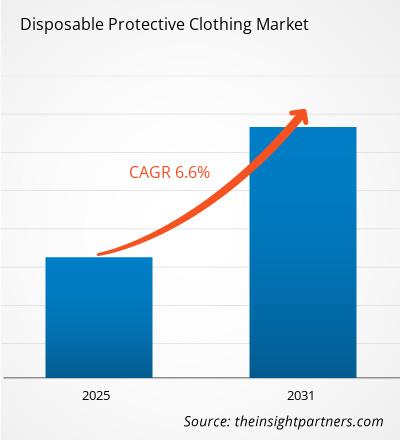
The global disposable protective clothing market size was worth US$ 7.89 Billion in 2025 and will be worth US$ 17.58 Billion by 2034, posting a CAGR of 9.31% between 2026 and 2034. The market continues to see gains owing to increased needs for workplace safety, infection prevention, and compliance with regulations in healthcare and industrial segments. Increasing usage of single-use protective garments in hospitals, construction, energy plants, and other hazardous industrial applications is driving demand globally.
In North America, the market is witnessing healthy demand due to occupational safety regulations, a developed healthcare industry, and an active industrial segment. Growth in the disposable protective clothing market is driven by consistent investments in workforce safety programs and increased awareness of contamination prevention. Growth is expected in the range of 8.3–9.1% CAGR due to health care preparedness efforts and increasing use in energy, mining, and construction segments.
Disposable Protective Clothing Market Assessment and Insights
- North America: Share in 2025 estimated at 31–35%, supported by stringent workplace safety standards, healthcare expenditures, and industrial safety initiatives. The region is projected to grow at a CAGR between 8.3–9.1% during 2026–2034.
- US: Accounts for 76–80% of North American demand in 2025, driven by healthcare facility consumption, industrial compliance requirements, and worker safety investments. CAGR between 8.5–9.3% during 2026–2034.
- Europe: Holds 24–28% share in 2025, led by Germany, France, the UK, and Italy. Strong occupational safety regulations and healthcare infrastructure support CAGR between 8.0–8.8% during 2026–2034.
- Asia Pacific: Represents 29–33% disposable protective clothing market share in 2025, driven by China, India, Japan, and South Korea. Industrialization and healthcare expansion support CAGR between 10.4–11.2% during 2026–2034.
- Largest Segment: Healthcare accounts for 31–35% market share in 2025 owing to extensive use in infection prevention and contamination control applications. CAGR between 9.5–10.3%.
- High Growth Segment: Energy and Power represents 8–12% share in 2025 and is projected to expand at a CAGR between 10.8–11.6%.
- Key companies analyzed in detail: 3M Company, Alpha Pro Tech, Ltd., Ansell Limited, DuPont de Nemours, Inc., Honeywell International Inc., Lakeland Industries, Inc., Kimberly-Clark Corporation, International Enviroguard, Inc., Tronex International, Inc., Derekduck Industries Corp.
Source: The Insight Partners' analysis based on proprietary research, government publications, company annual reports, investor presentations, industry databases, and expert interviews.
Material engineering advancements lead to further improvements in terms of garment efficiency, comfort, breathability, and barrier qualities. Garment producers start using lighter nonwoven materials that are able to provide better protection from biological contamination, dust, chemicals, and particles. Expansion of production capacities along with enhancements of automated manufacturing technologies help to ensure reliable supply and satisfy the increased demands of regulatory authorities and industry standards.
Further development is predicted to be driven by industrialization in developing countries, increased attention to workplace safety, and readiness for biological and environmental threats. Investments into healthcare infrastructure, energy, and industrial safety projects will provide a steady demand for disposable protective garments producers. Increasing awareness about worker health and contamination control in different industries will positively affect the market demand.
Disposable Protective Clothing Market Report Scope
| Report Attribute | Details |
|---|---|
| Market size in 2025 | US$ 7.89 Billion |
| Market Size by 2034 | US$ 17.58 Billion |
| Global CAGR (2026 - 2034) | 9.31% |
| Historical Data | 2021-2024 |
| Forecast period | 2026-2034 |
Disposable Protective Clothing Market Analysis
The growth prospects for disposable protective garments industry will be largely dictated by the growing awareness towards workplace safety needs and the compliance issues among different industries. Disposables play an essential role in protecting individuals from exposure to harmful substances, materials, and pathogens and help to maintain safety of operations in general. This market shows significant growth in healthcare organizations, pharmaceutical industry, construction sites and other industrial segments where the issue of safety remains relevant. More frequent workplace audits and implementation of global safety standards help to drive the demand.
The disposable protective clothing market value chain consists of raw materials suppliers, manufacturers of nonwoven fabrics, garment manufacturers, distributors, safety equipment suppliers, and end-users' industries. Supply drivers are associated with the supply of polymers, product features, occupational safety regulations, and procurement rules of the healthcare industry. Manufacturers remain concerned about the efficiency of production processes and innovative materials used. Market competition structure shows high focus on quality, certifications, distribution channels, and innovations.
Investments in high-quality barrier materials, ergonomic garment design, and eco-friendly manufacturing processes continue to be made by market players. Compliance with regulations stands out as one of the primary distinguishing factors for the healthcare and industrial market segments where protective standards are becoming ever more rigorous. Among the major players, DuPont de Nemours, Inc., Honeywell International Inc., Ansell Limited, and 3M Company leverage their extensive distribution channels and research expertise to strengthen their market positions. On the other hand, Lakeland Industries, Inc., Kimberly-Clark Corporation, Alpha Pro Tech, Ltd., and Derekduck Industries Corp. are focusing on developing specialized product lines for healthcare and industrial customers.
● REPORT CUSTOMIZATION
Tailor This Report To Align With Your Specific Business Requirements
This report can be customized to align precisely with your business objectives, scope, and target markets. Customization options include tailored segmentation, geography, competitive analysis, and strategic insights to support informed decision-making.
Customize This Report →WHAT YOU CAN ADJUST
- ● Segmentations
- ● Geography
- ● Competitive Analysis
- ● Language Preferences
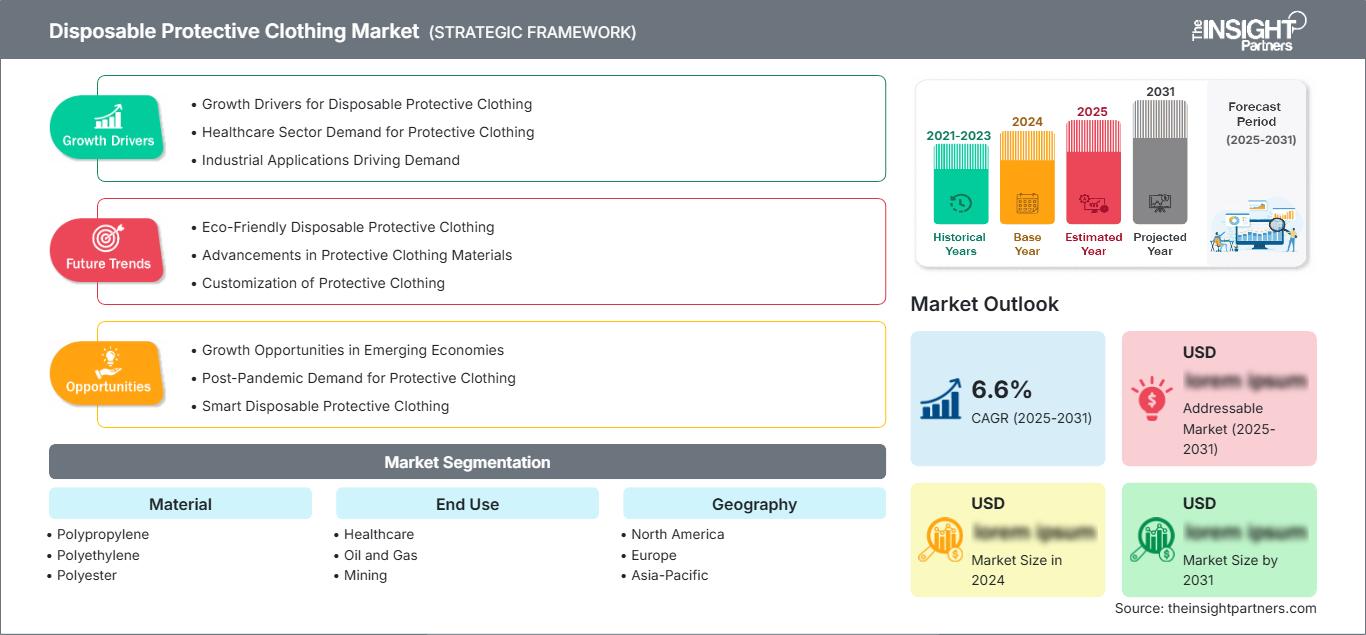
Disposable Protective Clothing Market: Strategic Insights
Regional Insights
North America Disposable Protective Clothing Market
Share of North America is estimated to be 31-35% in 2025 and is expected to expand at a CAGR of 8.3-9.1% between 2025 and 2034. The high demand is driven by stringent occupational safety laws, well-developed healthcare sector infrastructure, and high-level adoption of protective clothing across various industries. Healthcare establishments will still constitute important consumers because of their need for protection against infections and emergencies. Users in the industrial sector, such as the oil and gas, mining, and construction industries, will also add substantially to demand in the region.
There are already solid regulatory standards in place in the region along with high levels of awareness about workplace safety and developed distribution channels. Both government institutions and private enterprises emphasize worker safety and contamination prevention procedures. Procurement skills and increased investment in healthcare preparedness will ensure continued demand in the region.
U.S. Disposable Protective Clothing Market
The United States is said to account for about 76-80% of demand in North America in 2025 and continues to be the largest market among all nations in the region. Demand will come from healthcare systems, pharmacies, industries, and public-sector preparedness programs. The market is expected to register CAGR of 8.5-9.3% during the forecast period.
The market share of disposable protective clothing in the country will get support from its extensive usage in hospitals, laboratories, factories, and construction settings. Compliance with occupational safety norms and contamination control needs will keep driving purchase activities. Growth will further gain support from increased industrial automation, healthcare spending, and use of PPE products in various end user segments.
Europe Disposable Protective Clothing Market
Europe had a revenue share of 24–28% in 2025 and is expected to grow at a rate of 8.0–8.8% CAGR till 2034. Germany was the dominant market in the region owing to its highly developed industrial manufacturing sector and culture of workplace safety. The region makes consistent investments in the field of worker safety and industrial compliance, which fuels the demand for disposable protective garments.
UK retains its demand through healthcare procurement plans and workplace safety norms. France and Italy generate demand via healthcare expansion and pharmaceutical production and infrastructure construction, whereas Spain sees growth due to the rise in industrial production and workplace safety programs. Occupational safety norms and focus on workers' welfare are anticipated to drive market growth in the region.
APAC Disposable Protective Clothing Market
Asia Pacific represents 29–33% share of global demand in 2025 and is expected to record the highest CAGR of 10.4–11.2% through 2034. China remains the largest regional market due to extensive manufacturing activity and large-scale healthcare requirements.
India, Japan, South Korea, and Australia continue supporting growth through industrial expansion, healthcare modernization, and increasing workplace safety awareness. Government initiatives promoting worker protection and industrial compliance are expected to reinforce regional demand.
Middle East & Africa Disposable Protective Clothing Market
The Middle East & Africa market is projected to grow at a CAGR of 8.7–9.5% through 2034. Demand is supported by expanding energy projects, industrial construction activity, and investments in healthcare infrastructure.
Saudi Arabia and the UAE continue strengthening workplace safety programs across industrial sectors, while South Africa remains an important market due to mining and manufacturing activities. Growing attention to occupational health standards is expected to support future adoption of disposable protective garments.
Segmentation Analysis
Material
The disposable protective clothing market scope within the material segment is influenced by protection requirements, user comfort, durability, breathability, and regulatory standards across healthcare and industrial environments. Material innovation remains a key competitive factor as end users increasingly demand garments that provide enhanced barrier protection without compromising mobility or comfort. Manufacturers continue investing in lightweight nonwoven technologies and advanced polymer formulations. The Material segment is projected to expand at a CAGR of 8.9–9.7% during 2026–2034, supported by rising workplace safety requirements and increasing adoption across high-risk occupational settings.
- Polypropylene: The most widely utilized material due to its cost-effectiveness, lightweight structure, chemical resistance, and suitability for healthcare, industrial, and contamination-control applications requiring disposable protective apparel.
- Polyethylene: Preferred in applications involving moisture resistance, chemical splash protection, and hazardous environments where enhanced barrier performance is required to protect workers from external contaminants.
- Polyester: Utilized in specialized disposable garments requiring improved strength, dimensional stability, and comfort. Demand remains supported by industrial applications where durability and performance are important purchase considerations.
End Use
End-use industries drive market demand through varying regulatory requirements, workplace hazards, and safety performance standards. Organizations continue increasing investment in personal protective equipment programs to improve worker safety and operational compliance. Growing awareness regarding occupational health, contamination prevention, and regulatory accountability supports widespread adoption across industries. The End Use segment is expected to expand at a CAGR of 9.4–10.2% during the forecast period.
- Healthcare: The largest application segment due to extensive utilization in hospitals, clinics, laboratories, pharmaceutical manufacturing facilities, and emergency response operations requiring contamination control and infection prevention.
- Oil and Gas: Demand remains supported by worker protection requirements associated with hazardous environments, chemical exposure risks, and safety regulations governing offshore and onshore operations.
- Mining: Protective garments play a critical role in minimizing exposure to dust, contaminants, and hazardous working conditions. Increasing mining activity contributes to continued product demand.
- Defense: Military personnel and defense organizations utilize disposable protective apparel in biological, chemical, and contamination-control applications where occupational safety remains a priority.
- Construction: Expanding infrastructure projects and stricter workplace safety requirements continue increasing the use of disposable protective clothing among construction workers exposed to dust and hazardous materials.
- Energy and Power: Rising investments in power generation facilities, utility infrastructure, and renewable energy projects contribute to growing adoption of protective apparel designed for worker safety and hazard mitigation.
Opportunity Snapshot
| End Use | Revenue Contribution | Trend Tag | Adoption Stage |
| Healthcare | High | Infection Control | Mature |
| Oil and Gas | Medium | Hazard Protection | Mature |
| Mining | Medium | Worker Safety | Scaling |
| Defense | Medium | Chemical Defense | Scaling |
| Construction | High | Site Protection | Mature |
| Energy and Power | Medium | Utility Safety | Emerging |
Disposable Protective Clothing Market Growth Drivers and Impact Analysis
Increasing Occupational Safety Regulations Worldwide
Workplace safety regulations have been made stricter by governments and regulatory bodies across industries, including manufacturing, healthcare, and infrastructure development. Employers are responsible for providing their workers with approved protective clothing if their jobs involve exposure to hazardous materials, contaminants, or unsafe environments. The implementation of the standards of occupational health has encouraged organizations to procure disposable protective clothing in industries like construction, mining, oil and gas, and manufacturing industries. There is an increasing adoption of safety management programs by organizations to avoid workplace accidents and ensure compliance. This awareness of workers' well-being and legal liability has increased investment in protective clothing.
Expanding Healthcare and Infection Prevention Requirements
Industry keeps witnessing continuous migration from traditional wood to healthcare system keeps focusing on infection prevention and contamination control in hospitals, laboratories, clinics, and pharmaceutical plants. The use of disposable protective garments becomes a part of healthcare safety strategy due to reduced risk of cross-contamination and adherence to hygiene requirements. Infrastructure development, increased number of patients, and preparedness plans are leading procurement efforts all around the world. Safety stock continues being kept by healthcare providers in order to ensure resilience in case of any outbreak or public health emergency. With more infection-control regulations introduced by healthcare facilities, there will be a growing demand for certification of disposable protective garments.
Growth in Industrial and Infrastructure Development Activities
Further industrial development and infrastructure projects will ensure a favorable demand scenario for makers of protective clothing. In all construction, power production plants, mines, and industrial processes, workers will need disposable protective clothing to minimize their risk of exposure to hazardous materials and environments. Investments in infrastructure and energy production, as well as in industrial production,, will contribute to greater growth in worker protection programs. Companies are becoming increasingly aware of the importance of safety performance in risk management operations. As industries grow faster in developing economies and infrastructural investment rises worldwide, there will be higher demand for disposable protective clothing.
Disposable Protective Clothing Market Future Trends
Adoption of Advanced Lightweight Protective Materials
The disposable protective clothing market trends increasingly indicate a shift toward lightweight protective materials that enhance wearer comfort while maintaining high safety performance. Manufacturers are investing in advanced nonwoven technologies capable of providing improved breathability, flexibility, and barrier protection. End users across healthcare and industrial sectors increasingly prefer garments that reduce fatigue during extended periods of use. Product development efforts are therefore focusing on balancing protection, mobility, and ergonomics. Future innovation is expected to emphasize improved material efficiency, enhanced contaminant resistance, and greater user acceptance. These developments are likely to support broader adoption across industries where comfort and productivity influence purchasing decisions.
Growing Focus on Sustainable Protective Apparel Solutions
Sustainability considerations are becoming increasingly important across the personal protective equipment industry. Manufacturers are evaluating material alternatives, waste-reduction strategies, and environmentally responsible manufacturing practices to address customer expectations and regulatory requirements. Organizations seeking to improve environmental performance are increasingly assessing the lifecycle impact of disposable products. This trend encourages innovation in recyclable materials, resource-efficient manufacturing processes, and packaging optimization. As environmental considerations gain prominence in procurement decisions, suppliers that successfully balance safety performance with sustainability objectives are expected to strengthen market competitiveness. Ongoing research and development activities are likely to accelerate the adoption of more sustainable protective apparel solutions.
Disposable Protective Clothing Market Opportunities
Expansion of Manufacturing and Safety Programs in Emerging Economies
The expansion of industrial manufacturing operations across Asia Pacific, Latin America, and parts of the Middle East presents significant opportunities for protective apparel suppliers. Governments continue investing in infrastructure, energy, mining, and industrial development programs that require enhanced worker safety measures. Increasing enforcement of occupational health regulations is encouraging organizations to modernize personal protective equipment procurement practices. Localized manufacturing facilities, distribution partnerships, and workforce safety awareness initiatives can help suppliers strengthen regional market penetration. According to long-term disposable protective clothing market Forecasts, emerging economies are expected to contribute a growing proportion of global demand as industrial activity increases and regulatory frameworks become more stringent. Companies capable of delivering certified, cost-effective garments with reliable supply capabilities are likely to benefit from these expanding opportunities.
Development of Specialized Products for High-Risk Work Environments
Manufacturers have opportunities to expand product portfolios through development of specialized disposable garments designed for complex and hazardous operating conditions. Industries such as energy, defense, pharmaceuticals, chemicals, and mining increasingly require application-specific protective solutions capable of addressing unique workplace risks. Product innovation focusing on improved barrier performance, comfort, durability, and contamination control can support differentiation in competitive markets. Collaboration with industrial employers and safety professionals may accelerate development of customized solutions tailored to specific end-user requirements. Growing emphasis on worker protection and operational risk management is expected to support demand for advanced disposable protective apparel. Suppliers that address evolving workplace safety challenges effectively can strengthen customer relationships and capture additional market value.
Recent Developments
- July 2026: FlamePro, a firefighter PPE manufacturer, has introduced a new app called FlamePro Central to address the challenges faced by emergency services in managing firefighting gear. This app assists with tracking garments during cleaning, monitoring the service life of items, and ensuring that fire crews have the necessary equipment readily available, thereby enhancing safety and efficiency in critical situations..
- November 2025: Sioen announces the launch of Sioen PRO, a new brand for multinorm protective clothing, highlighting its commitment to safety, innovation, and expertise based on decades of experience in Professional Protective Clothing.
Frequently Asked Questions

- Comprehensive Market Sizing and Forecast Analysis
- Detailed Segmentation Analysis
- In-Depth Market Dynamics Assessment
- Regional and Country-Level Insights
- Competitive Landscape and Company Benchmarking
- Strategic Business Intelligence
Recent Reports
Testimonials

The Insight Partners provided valuable market intelligence that supported our global go-to-market strategy. Their team was professional, responsive, and attentive to our feedback, providing thoughtful analysis and helpful methodological clarifications throughout the project.
Junmo Kim Chief Financial Officer (CFO), Enertech Co., Ltd.
The Insight Partners' SCADA System Market report is comprehensive, with valuable insights on current trends and future forecasts. The team was highly professional, responsive, and supportive throughout. We are very satisfied and highly recommend their services.
RAN KEDEM Partner, Reali Technologies LTDs
I requested a report on a very specific software market and the team produced the report in a few days. The information was very relevant and well presented. I then requested some changes and additions to the report. The team was again very responsive and I got the final report in less than a week.
JEAN-HERVE JENN Chairman, Future Analytica
We worked with The Insight Partners for an important market study and forecast. They gave us clear insights into opportunities and risks, which helped shape our plans. Their research was easy to use and based on solid data. It helped us make smart, confident decisions. We highly recommend them.
PIYUSH NAGPAL Sr. Vice President, High Beam Global
The Insight Partners delivered insightful, well-structured market research with strong domain expertise. Their team was professional and responsive throughout. The user-friendly website made accessing industry reports seamless. We highly recommend them for reliable, high-quality research services
YUKIHIKO ADACHI CEO, Deep Blue, LLC.
This is the first time I have purchased a market report from The Insight Partners.While I was unsure at first, I visited their web site and felt more comfortable to take the risk and purchase a market report.I am completely satisfied with the quality of the report and customer service. I had several questions and comments with the initial report, but after a couple of dialogs over email with their analyst I believe I have a report that I can use as input to our strategic planning process.Thank you so much for taking the extra time and making this a positive experience.I will definitely recommend your service to others and you will be my first call when we need further market data.
JOHN SUZUKI President and Chief Executive Officer, Board Director, BK Technologies
I wish to appreciate your support and the professionalism you displayed in the course of attending to my request for information regarding to infectious disease IVD market in Nigeria. I appreciate your patience, your guidance, and the fact that you were willing to offer a discount, which eventually made it possible for us to close a deal. I look forward to engaging The Insight Partners in the future, all thanks to the impression you have created in me as a result of this first encounter.
DR CHIJIOKE ONYIA MANAGING DIRECTOR, PineCrest Healthcare Ltd.Reason to Buy
- Informed Decision-Making
- Understanding Market Dynamics
- Competitive Analysis
- Identifying Emerging Markets
- Customer Insights
- Market Forecasts
- Risk Mitigation
- Boosting Operational Efficiency
- Strategic Planning
- Investment Justification
- Tracking Industry Innovations
- Aligning with Regulatory Trends





 Get Free Sample for