
Dyslipidemia Drugs Market Trends, Share & Demand by 2034
Coverage: By Drug Class (Antibiotics, Antivirals, Antifungals, Antihistamines, Corticosteroids, Glucocorticoids); Dosage Form (Tablet, Capsule, Ophthalmic Ointment, Eye Drops, Others); Indications (Conjunctivitis, Keratitis, Endophthalmitis, Blepharitis, Stye or Sty (Hordeolum), Uveitis, Cellulitis, Ocular herpes); Causative Agents (Virus, Bacteria, Fungus, Allergens); End User (Hospital Pharmacies, Retail Pharmacies, Online Pharmacies, Others), and Geography (North America, Europe, Asia Pacific, and South and Central America)
- Status : Data Released
- Report Code : TIPRE00016856
- Category : Life Sciences
- No. of Pages : 150
- Available Report Formats :


- Last update date : July 17, 2026


2025 Market Size
US$ 17.63 Bn
Base year value
2034 Forecast
US$ 32.51 Bn
Projected by 2034
CAGR 2026-2034
7.03 %
Growth rate
Addressable Market
US$ 226.30 Bn
(2026-2034)
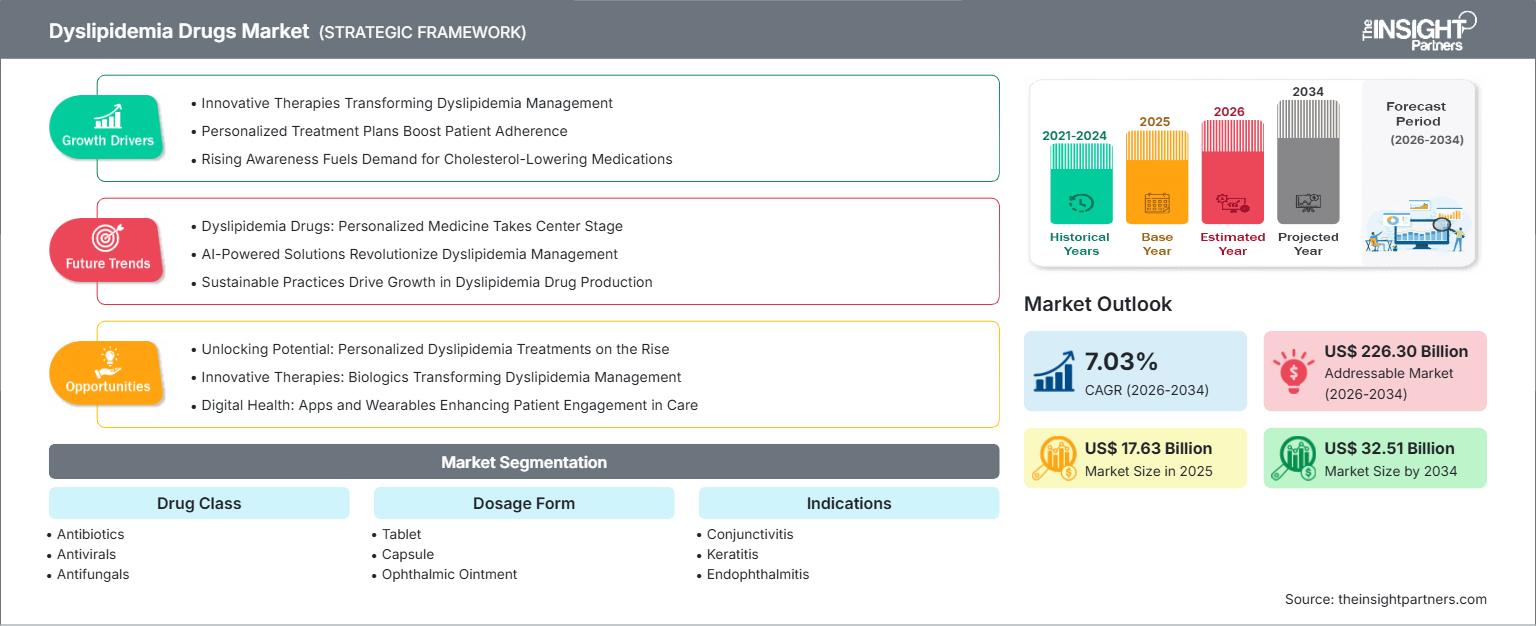
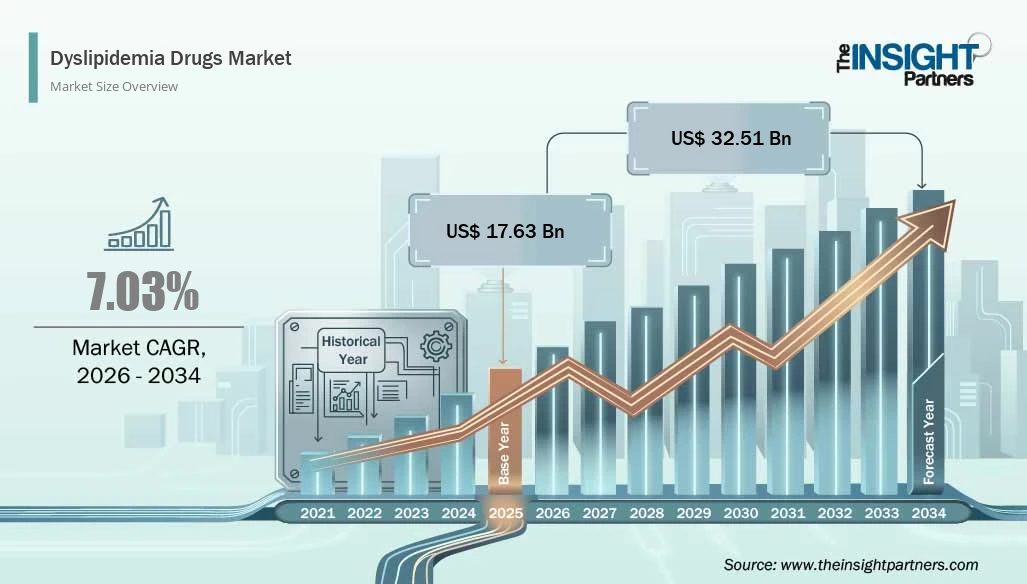
The Dyslipidemia Drugs Market was valued at US$ 17.63 Billion in 2025 and is projected to reach US$ 32.51 Billion by 2034, growing at a CAGR of 7.03% during 2026–2034. The factors that drive the market growth are the growing incidence of cardiovascular diseases, the growing number of diagnoses of lipids disorders, the growing popularity of treatments that lower lipids levels, and constant innovations in the pharmaceutical industry concerning the treatment of lipids disorders and metabolic disorders.
North America is considered to be a mature but still growing market due to the presence of well-developed healthcare infrastructure, good reimbursement models, and high use of lipid management treatments. The CAGR in the region will vary between 6.50% and 7.50% from 2026 to 2034, driven by preventive cardiovascular care initiatives, increasing screening programs, and adoption of newer therapeutic approaches for patients with uncontrolled lipid levels.
Dyslipidemia Drugs Market Assessment and Insights
- North America: The market for North America holds an important place because of the presence of cardiovascular treatment pathways, higher expenditure on healthcare, and presence of pharmaceutical innovators. North America holds a market share of around 38-42% in 2025 and is projected to exhibit a CAGR growth rate of 6.50-7.50% from 2026 to 2034.
- US: The US market has advantages of advanced clinical adoption, insurance coverage, and rise in demand for cholesterol-lowering agents. The United States held around 75-80% of the market share of dyslipidemia drugs in North America in 2025 and is estimated to demonstrate a CAGR of 6.80-7.80% during the forecast period from 2026 to 2034.
- Europe: Europe demonstrates steady growth supported by cardiovascular disease management programs and pharmaceutical innovation across Germany, the UK, France, Italy, and Spain. The region held a 24–28% share in 2025 and is anticipated to register a CAGR range of 6.20–7.20% between 2026–2034.
- Asia Pacific: Asia Pacific is witnessing increasing adoption due to expanding healthcare access, rising metabolic disorders, and improving diagnostic capabilities in China, Japan, India, South Korea, and Australia. The region captured a 20–24% share in 2025 and is expected to grow at a CAGR range of 7.50–8.50% through 2026–2034.
- Largest Segment: Drug Class represented the largest segment with a 2025 market share range of 45–50%, supported by broad utilization of established lipid-lowering medicines and continuous therapeutic advancements. The segment is projected to grow at a CAGR range of 6.80–7.80% between 2026–2034.
- High Growth Segment: Dosage Form is expected to demonstrate strong expansion with a 2025 market share range of 30–35%, driven by preference for convenient administration formats and improved patient adherence. The segment is estimated to grow at a CAGR range of 7.50–8.50% during 2026–2034.
- Key companies analyzed in detail: Pfizer Inc., Novartis AG, Merck & Co., Inc., Amgen Inc., Viatris Inc., AstraZeneca PLC, Bristol-Myers Squibb Company, Shionogi & Co., Ltd., Bayer AG, Esperion Therapeutics, Inc.
Source: The Insight Partners' analysis based on proprietary research, government publications, company annual reports, investor presentations, industry databases, and expert interviews.
Innovation in the Dyslipidemia Drugs Market has been driven through transitions from traditionally used statin-based treatment methods towards lipid management using various drug combination, mechanism targeting, and individualized treatment methods. The production of drugs has involved efforts geared towards enhancing efficacy, minimizing side effects, and providing treatments to patients resistant to conventional drugs. The dyslipidemia drugs market report presents various details on innovations that have driven developments within molecular research and clinical trials while enhanced capabilities in production have been facilitated by new formulation techniques and distribution network across the globe. Future trends in the dyslipidemia drugs market are projected to be driven by the emergence of new healthcare markets, increased investment into prevention of cardiovascular diseases, and regulation favoring innovative treatments.
The economies of the Asia Pacific region are expected to attract more attention because of their improved healthcare infrastructure and increasing diagnoses. Collaboration and investment in research of innovative lipid modifying treatments will strengthen competitive positions during the forecast period.
Dyslipidemia Drugs Market Report Scope
| Report Attribute | Details |
|---|---|
| Market size in 2025 | US$ 17.63 Billion |
| Market Size by 2034 | US$ 32.51 Billion |
| Global CAGR (2026 - 2034) | 7.03% |
| Historical Data | 2021-2024 |
| Forecast period | 2026-2034 |
Dyslipidemia Drugs Market Analysis
The demand for dyslipidemia drugs has been on the rise because of the growing emphasis on the prevention and management of the cardiovascular complications caused by abnormal levels of lipids. Ecosystem includes pharmaceutical companies, research firms, health care providers, diagnostic firms, and supply chains.
The growing awareness about the importance of cholesterol screening and treatment encourages the use of treatments, whereas, supply factors include production capacity, approvals, and raw materials required for producing the drugs. Value chain is slowly evolving towards integration of diagnostics, medication, and monitoring.
The competitive environment of the Dyslipidemia Drugs Market comprises of large pharmaceutical companies focusing on innovation, partnerships, and the development of diversified treatment options.
Some of the top companies that have been investing and strengthening their position in the dyslipidemia drugs market include Pfizer Inc., Novartis AG, Merck & Co., Inc., Amgen Inc., and AstraZeneca PLC. These companies have been investing through the cardiovascular drug discovery and commercialization activities. Other major players such as Viatris Inc., Bristol-Myers Squibb Company, Shionogi & Co., Ltd., Bayer AG, and Esperion Therapeutics, Inc. are also making an effort in developing new therapies and expanding the portfolio of products.
● REPORT CUSTOMIZATION
Tailor This Report To Align With Your Specific Business Requirements
This report can be customized to align precisely with your business objectives, scope, and target markets. Customization options include tailored segmentation, geography, competitive analysis, and strategic insights to support informed decision-making.
Customize This Report →WHAT YOU CAN ADJUST
- ● Segmentations
- ● Geography
- ● Competitive Analysis
- ● Language Preferences
Dyslipidemia Drugs Market: Strategic Insights
Regional Insights
North America Dyslipidemia Drugs Market
North America continues to be the leading regional market in terms of effective healthcare infrastructure, high levels of disease diagnosis, and widespread use of lipid-management therapy. The region captured a share of 38% to 42% in 2025 and is projected to grow at a CAGR of 6.50% to 7.50% from 2026 to 2034. The United States is the largest contributor, owing to advanced clinical practice, technical research, and reimbursement policies.
Rising cardiovascular risks, preventive healthcare measures, and investments in new treatment options are driving the regional environment. Contributions also come from Canada due to better access to specialty medications and public healthcare facilities. The focus of pharmaceutical firms lies in introducing more effective treatment options to further develop the global dyslipidemia drugs market.
U.S. Dyslipidemia Drugs Market
The U.S. Dyslipidemia Drugs Market represents a major share of North America, accounting for 75–80% of the regional market in 2025. The country is projected to grow at a CAGR range of 6.80–7.80% during 2026–2034, supported by high healthcare expenditure, cardiovascular disease prevention programs, and widespread use of cholesterol management therapies.
Major pharmaceutical companies including Pfizer Inc., Amgen Inc., AstraZeneca PLC, and Esperion Therapeutics, Inc. maintain strong market presence through cardiovascular-focused portfolios and ongoing innovation. Application trends are shifting toward personalized treatment approaches, combination therapies, and improved adherence solutions. Increasing physician awareness and patient screening programs are expected to sustain demand for advanced dyslipidemia management options across healthcare settings.
Europe Dyslipidemia Drugs Market
Europe held a 24–28% share of the Dyslipidemia Drugs Market in 2025 and is anticipated to register a CAGR range of 6.20–7.20% between 2026–2034. The region benefits from established healthcare systems, strong regulatory standards, and coordinated cardiovascular disease management initiatives. Germany represents a leading country in the dyslipidemia drugs market due to healthcare accessibility and pharmaceutical innovation.
The UK dyslipidemia drugs market is supported by preventive healthcare programs, increasing lipid monitoring, and adoption of advanced treatment options across clinical settings. Germany continues to demonstrate strong demand due to its healthcare infrastructure, research capabilities, and high awareness of cardiovascular risk management.
France, Italy, and Spain contribute through expanding healthcare programs, increasing diagnosis rates, and improving access to innovative therapies. These countries are adopting modern lipid-lowering approaches while balancing healthcare cost considerations. Europe’s competitive environment is influenced by pharmaceutical research, regulatory approvals, and efforts to improve long-term cardiovascular outcomes.
APAC Dyslipidemia Drugs Market
APAC accounted for a 20–24% share in 2025 and is expected to grow at a CAGR range of 7.50–8.50% during 2026–2034. China represents a leading contributor due to its expanding healthcare system and increasing cardiovascular disease awareness.
Japan and South Korea support market development through advanced medical systems and research capabilities. India and Australia are witnessing improved diagnosis and treatment adoption. Industrial expansion, healthcare investments, and policy initiatives supporting disease prevention are strengthening regional growth opportunities.
Middle East & Africa Dyslipidemia Drugs Market
The Middle East & Africa market is developing with increasing healthcare infrastructure investments and improving access to cardiovascular therapies. Saudi Arabia represents a leading market supported by healthcare modernization programs and rising medical spending.
The UAE contributes through advanced healthcare facilities and adoption of innovative treatment approaches, while South Africa remains an important market due to increasing disease awareness. The region is projected to grow at a CAGR range of 5.50–6.50% during 2026–2034, supported by infrastructure expansion and healthcare diversification initiatives.
Energy-driven economic development in several Middle Eastern countries is enabling healthcare investment, while the Rest of MEA continues to experience gradual improvement in diagnosis and treatment availability.
Segmentation Analysis
Drug Class
The Drug Class segment accounted for the largest portion of the Dyslipidemia Drugs Market, with a CAGR range of 6.80–7.80% during 2026–2034. Growth is supported by continued prescription demand for established lipid management therapies, increasing cardiovascular risk screening, and advancements in targeted mechanisms. Pharmaceutical companies are focusing on improving therapeutic outcomes, expanding treatment options, and developing drugs that address patients with persistent lipid abnormalities.
- Antibiotics: Antibiotics represent a specialized therapeutic category with limited relevance in lipid management applications. Their role is primarily associated with addressing secondary infections rather than direct dyslipidemia treatment, maintaining niche utilization patterns.
- Antivirals: Antivirals contribute to specialized treatment pathways where lipid metabolism concerns may intersect with broader disease management. Demand is influenced by clinical considerations involving long-term medication effects and patient monitoring.
- Antifungals: Antifungals maintain limited application within the segment framework, primarily associated with supportive treatment environments. Their market relevance depends on broader healthcare utilization patterns rather than direct lipid regulation requirements.
- Antihistamines: Antihistamines represent a supportive pharmaceutical category with indirect market relevance. Their usage is connected to broader patient care environments where multiple therapeutic requirements influence overall medication management.
- Corticosteroids: Corticosteroids have clinical relevance due to their effects on metabolic pathways and lipid profiles. Their monitoring requirements create opportunities for integrated healthcare management strategies and research initiatives.
- Glucocorticoids: Glucocorticoids are evaluated within metabolic care discussions because prolonged exposure may influence lipid parameters. Their role highlights the importance of comprehensive treatment monitoring and risk management.
Dosage Form
The Dosage Form segment is projected to expand at a CAGR range of 7.50–8.50% during 2026–2034. Growth is supported by patient preference for convenient administration, improved adherence strategies, and pharmaceutical efforts to optimize formulation performance. Tablet and capsule formats continue to dominate due to familiarity, while newer delivery approaches are being evaluated to enhance treatment convenience.
- Tablet: Tablets remain a widely adopted dosage format due to ease of administration, cost efficiency, and established manufacturing processes. They continue to support large-scale treatment accessibility across healthcare systems.
- Capsule: Capsules provide formulation flexibility and patient convenience. Their adoption is supported by pharmaceutical development strategies focused on improving stability, absorption characteristics, and patient acceptance.
- Ophthalmic Ointment: Ophthalmic ointment applications represent a specialized category within pharmaceutical delivery. Their relevance depends on targeted treatment needs and specialized clinical usage patterns.
- Eye Drops: Eye drops are associated with localized administration requirements and remain important in specific therapeutic contexts. Their adoption is influenced by ease of use and targeted delivery advantages.
Indications
The Indications segment is expected to register a CAGR range of 6.70–7.70% during 2026–2034, driven by increasing disease recognition, rising cardiovascular risk awareness, and expanding treatment applications. Healthcare providers are emphasizing early diagnosis and effective management of lipid-related disorders to reduce long-term complications and improve patient outcomes.
- Conjunctivitis: Conjunctivitis-related treatments represent a distinct ophthalmic application area within broader pharmaceutical categories. Demand patterns are influenced by infection prevalence and healthcare access.
- Keratitis: Keratitis treatment requirements are supported by growing awareness of ocular health management. Specialized therapies continue to address infection-related and inflammatory conditions.
- Endophthalmitis: Endophthalmitis represents a critical clinical indication requiring specialized treatment approaches. Market relevance is driven by advances in infection management and healthcare capabilities.
- Blepharitis: Blepharitis treatments support demand for targeted ophthalmic therapies. Increasing awareness of eye health contributes to diagnosis and management improvements.
- Stye or Sty: Stye treatment applications remain associated with common ocular conditions. Consumer healthcare awareness and accessibility influence treatment adoption patterns.
- Uveitis: Uveitis management requires specialized therapeutic strategies. Increasing clinical focus on inflammatory eye disorders supports continued research and treatment development.
- Cellulitis: Cellulitis-related treatment demand is influenced by infection management requirements. Healthcare systems focus on effective diagnosis and timely intervention.
- Ocular herpes: Ocular herpes treatment adoption is supported by continued demand for antiviral management solutions. Clinical innovation remains focused on improving treatment effectiveness.
Causative Agents
The Causative Agents segment is projected to grow at a CAGR range of 6.60–7.60% during 2026–2034. Market development is influenced by improved diagnostic capabilities, increasing awareness of disease origins, and demand for targeted therapeutic interventions. Identification of underlying causes supports more effective treatment selection and healthcare resource allocation.
- Virus: Viral-related treatment demand is supported by increasing focus on targeted antiviral approaches and improved diagnostic methods. Clinical research continues to strengthen therapeutic management strategies.
- Bacteria: Bacterial applications remain significant due to continued healthcare requirements for infection management. Diagnostic advancements support appropriate treatment selection and improved outcomes.
- Fungus: Fungal-related applications represent specialized treatment needs. Increasing awareness and improved detection capabilities contribute to better management approaches.
- Allergens: Allergen-related applications are influenced by rising awareness of immune-related conditions. Healthcare providers emphasize targeted management and patient-specific treatment approaches.
Opportunity Snapshot
| Indications | Revenue Contribution | Trend Tag | Adoption Stage |
| Conjunctivitis | Medium | Infection Care | Mature |
| Keratitis | Medium | Ocular Therapy | Scaling |
| Endophthalmitis | Low | Surgical Care | Emerging |
| Blepharitis | Medium | Eye Health | Mature |
| Stye or Sty | Low | Consumer Care | Mature |
| Uveitis | Medium | Inflammation Control | Scaling |
| Cellulitis | Medium | Infection Control | Scaling |
| Ocular herpes | Medium | Antiviral Care | Scaling |
Dyslipidemia Drugs Market Growth Drivers and Impact Analysis
Rising Cardiovascular Disease Prevention Focus
Increasing emphasis on cardiovascular disease prevention is a major factor influencing demand for lipid management therapies. Healthcare systems are expanding screening programs, improving risk assessment practices, and encouraging early intervention among high-risk populations. This shift creates sustained demand for effective dyslipidemia treatments and supports pharmaceutical investment in improved therapeutic solutions. The growing integration of preventive care models into healthcare strategies is also encouraging physicians to adopt evidence-based approaches for cholesterol management. As healthcare providers focus on reducing long-term cardiovascular complications, demand for innovative and accessible treatment options is expected to increase across developed and emerging markets.
Advancement in Lipid-Lowering Therapeutic Technologies
Technological progress in pharmaceutical research is transforming treatment approaches through improved drug mechanisms, combination strategies, and patient-specific therapies. Research investments are increasingly focused on developing therapies that provide better control of lipid levels while addressing unmet patient needs. These advancements are influencing competitive strategies among pharmaceutical companies and encouraging collaboration between research organizations and manufacturers. Improved understanding of lipid metabolism pathways is enabling the development of targeted treatment solutions. As clinical expectations evolve, companies are prioritizing innovation, regulatory approvals, and commercialization strategies to strengthen their presence in the expanding healthcare market.
Expansion of Healthcare Access in Emerging Economies
Improving healthcare infrastructure in emerging economies is creating new opportunities for dyslipidemia treatment adoption. Countries across Asia Pacific, Latin America, and selected Middle Eastern markets are investing in diagnostic facilities, medical services, and disease awareness initiatives. These developments are increasing patient identification and improving access to cardiovascular therapies. Pharmaceutical companies are increasingly evaluating expansion strategies in developing regions to address growing healthcare needs. Enhanced distribution networks, government healthcare initiatives, and rising awareness regarding chronic disease management are supporting broader availability of treatment options. This expansion is expected to contribute significantly to long-term market development.
Dyslipidemia Drugs Market Future Trends
Growth of Personalized Lipid Management Approaches
Future dyslipidemia drugs market trends are expected to move toward personalized lipid management approaches supported by improved diagnostics, patient profiling, and advanced clinical decision-making. Healthcare providers are increasingly seeking therapies that align with individual risk factors and treatment responses. Developments in precision medicine are likely to influence future pharmaceutical pipelines by encouraging targeted therapies and optimized treatment combinations. This trend may reshape competitive strategies as companies focus on differentiated products that address specific patient groups. The integration of digital health tools and monitoring technologies could further enhance treatment personalization and improve long-term disease management outcomes.
Increasing Adoption of Combination Therapy Models
The combination therapy paradigm is expected to become more prominent as healthcare practitioners explore holistic solutions for patients who require further lipid regulation. Possible developments could include combining various methods to improve treatment efficacy by accommodating complex patient profiles. The pharmaceutical industry will likely pay attention to the development of alternative treatment methods and to expanding its product portfolio through research collaborations. Combination therapy could be an innovative direction within cardiovascular treatment strategies.
Dyslipidemia Drugs Market Opportunities
Investment Potential in Emerging Healthcare Markets
The dyslipidemia drugs market forecast indicates that the growing number of emerging healthcare markets creates opportunities for pharmaceutical companies to expand their distribution networks, form partnerships, and improve access to treatment. Increased healthcare spending, heightened public awareness of chronic diseases, and improved diagnostic tools create favorable market entry conditions. Companies can adopt regional approaches that include affordability, development of logistics infrastructure, and regional cooperation in healthcare. Growth prospects can be especially valuable in countries with rapidly developing healthcare systems and an increasing need for cardiovascular solutions. Strategic investments in these markets may support broader patient reach and long-term business development.
Development of Next-Generation Therapeutic Solutions
Investment opportunities will grow in the development of next-generation treatments that emphasize improved efficacy, safety, and patient outcomes. Innovators in the pharmaceutical industry are seeking new avenues of research to overcome shortcomings in traditional treatment methods. Organizations that have the potential to develop unique treatments can gain a competitive advantage and meet the upcoming demand. Collaboration between biotechnology firms, research institutions, and pharmaceutical companies will help spur innovation. Future opportunities are expected to emerge from therapies designed for complex patient populations, improved treatment adherence, and evolving healthcare requirements.
Recent Developments
- November 2025: Daewoong Pharmaceutical Indonesia announced it has officially launched its dyslipidemia treatment, a fixed-dose combination of Ezetimibe and Rosuvastatin, in Indonesia. Daewoong is introducing three dosage strengths of Ezetimibe/Rosuvastatin (10/5mg 10/5mg, 10/10mg, and 10/20mg), offering more precise and personalized prescriptions according to each patient’s cardiovascular risk level.
- November 2025: Esperion announced that Otsuka Pharmaceutical Co., Ltd. (Otsuka), the Company’s partner in Japan for the development and commercialization of NEXLETOL (bempedoic acid) tablets, received National Health Insurance Price Listing and launched NEXLETOL for the treatment of hypercholesterolemia and familial hypercholesterolemia.
- October 2024: AstraZeneca entered into an exclusive license agreement with CSPC Pharmaceutical Group Ltd (CSPC) to advance the development of an early-stage, novel small molecule Lipoprotein (a) (Lp(a)) disruptor that has the potential to offer additional benefits for patients with dyslipidaemia. This asset further strengthens the company’s cardiovascular portfolio to help address the major risk factors driving chronic cardiovascular disease.
Frequently Asked Questions

- Comprehensive Market Sizing and Forecast Analysis
- Detailed Segmentation Analysis
- In-Depth Market Dynamics Assessment
- Regional and Country-Level Insights
- Competitive Landscape and Company Benchmarking
- Strategic Business Intelligence
Recent Reports
Testimonials

The Insight Partners provided valuable market intelligence that supported our global go-to-market strategy. Their team was professional, responsive, and attentive to our feedback, providing thoughtful analysis and helpful methodological clarifications throughout the project.
Junmo Kim Chief Financial Officer (CFO), Enertech Co., Ltd.
The Insight Partners' SCADA System Market report is comprehensive, with valuable insights on current trends and future forecasts. The team was highly professional, responsive, and supportive throughout. We are very satisfied and highly recommend their services.
RAN KEDEM Partner, Reali Technologies LTDs
I requested a report on a very specific software market and the team produced the report in a few days. The information was very relevant and well presented. I then requested some changes and additions to the report. The team was again very responsive and I got the final report in less than a week.
JEAN-HERVE JENN Chairman, Future Analytica
We worked with The Insight Partners for an important market study and forecast. They gave us clear insights into opportunities and risks, which helped shape our plans. Their research was easy to use and based on solid data. It helped us make smart, confident decisions. We highly recommend them.
PIYUSH NAGPAL Sr. Vice President, High Beam Global
The Insight Partners delivered insightful, well-structured market research with strong domain expertise. Their team was professional and responsive throughout. The user-friendly website made accessing industry reports seamless. We highly recommend them for reliable, high-quality research services
YUKIHIKO ADACHI CEO, Deep Blue, LLC.
This is the first time I have purchased a market report from The Insight Partners.While I was unsure at first, I visited their web site and felt more comfortable to take the risk and purchase a market report.I am completely satisfied with the quality of the report and customer service. I had several questions and comments with the initial report, but after a couple of dialogs over email with their analyst I believe I have a report that I can use as input to our strategic planning process.Thank you so much for taking the extra time and making this a positive experience.I will definitely recommend your service to others and you will be my first call when we need further market data.
JOHN SUZUKI President and Chief Executive Officer, Board Director, BK Technologies
I wish to appreciate your support and the professionalism you displayed in the course of attending to my request for information regarding to infectious disease IVD market in Nigeria. I appreciate your patience, your guidance, and the fact that you were willing to offer a discount, which eventually made it possible for us to close a deal. I look forward to engaging The Insight Partners in the future, all thanks to the impression you have created in me as a result of this first encounter.
DR CHIJIOKE ONYIA MANAGING DIRECTOR, PineCrest Healthcare Ltd.Reason to Buy
- Informed Decision-Making
- Understanding Market Dynamics
- Competitive Analysis
- Identifying Emerging Markets
- Customer Insights
- Market Forecasts
- Risk Mitigation
- Boosting Operational Efficiency
- Strategic Planning
- Investment Justification
- Tracking Industry Innovations
- Aligning with Regulatory Trends





 Get Free Sample for