
Egg Packaging Market Size, Trends & Demand by 2034
Coverage: By Material Type (Paper, Plastic, and Others) and Packaging Type (Cartons, Containers, Trays, and Others)
- Status : Data Released
- Report Code : TIPRE00019634
- Category : Chemicals and Materials
- No. of Pages : 150
- Available Report Formats :


- Last update date : July 30, 2026


2025 Market Size
US$ 5.52 Bn
Base year value
2034 Forecast
US$ 8.20 Bn
Projected by 2034
CAGR 2026-2034
4.5 %
Growth rate
Addressable Market
US$ 62.31 Bn
(2026-2034)
The Egg Packaging Market had a valuation of US$ 5.52 Billion in 2025 and will have an estimated valuation of US$ 8.20 Billion by 2034, registering a growth rate of 4.5% between 2026 and 2034. Some of the key drivers are the increasing demand for eggs, the increase in organized retail sector, and the need for protective packaging because of the possibility of damage to the eggs.
North American Egg Packaging Market size projections are driven by 4.0-5.0% CAGR over 2034 owing to increased usage of molded fiber cartons, regulatory issues for foam products, preference of retailers for recyclable packaging, large scale egg farming, private label groceries programs, and installation of automatic packing lines demanding reliable carton and trays performance. The North American market is also fueled by fast procurement cycles in poultry clusters, converters, and national grocery chains.
Egg Packaging Market Assessment and Insights
- North America: Share in 2025 of 32–36% and CAGR between 4.0–5.0%. Retail conversion toward recyclable cartons, high egg output, and regional molded fiber capacity support steady demand.
- US: Share in 2025 of 78–82% of North America and CAGR between 4.1–5.1%. Large egg farms, branded grocery channels, and foam-reduction policies sustain packaging replacement.
- Europe: Share in 2025 of 24–28% and CAGR between 3.8–4.8%. Germany, the UK, France, Italy, and Spain lead demand through sustainability regulation and premium retail presentation.
- Asia Pacific: Share in 2025 of 28–32% and CAGR between 5.0–6.0%. China, India, Japan, South Korea, and Australia benefit from urban grocery penetration and poultry-sector modernization.
- Largest Segment: Paper material with market share of 58–62% in 2025 and CAGR of 4.3–5.3% during 2026–2034, driven by molded pulp adoption.
- High Growth Segment: Cartons packaging with market share of 52–56% in 2025 and CAGR of 4.8–5.8% during 2026–2034, benefiting from retail shelf visibility.
- Key companies analyzed in detail: Sonoco Products Company, Placon Corporation, Mauser Packaging Solutions, Jin Fu Hua Packaging Industrial Co., Ltd., Huhtamäki Oyj, CKF Inc., Cascades Inc., Brødrene Hartmann A/S, Pactiv Evergreen Inc., Tekni-Plex, Inc., Reynolds Group Holdings Limited.
Source: The Insight Partners' analysis based on proprietary research, government publications, company annual reports, investor presentations, industry databases, and expert interviews.
The Egg Packaging Market share has moved beyond merely providing protective packaging to become an engineered packaging category due to automation, food safety, and sustainability. Molded fiber solutions are becoming more popular, given the shift among retailers away from foam packaging and due to producers looking for packaging to protect eggshells while grading, stacking, and distributing at faster speeds. Plastic trays still play a role if visibility, washability, or reusable logistics are necessary; however, paper solutions define the current value proposition. More attention is being paid to the efficiency of denesting, quality of fiber, label area, and compression.
Future demand in the Egg Packaging Market would be influenced by new poultry centers, upgrade in supermarkets, and recyclable packaging through legislation. Investments in molded fiber lines, lighter carton boxes, digital printing, and close proximity to egg farms in production are expected. The positive regulatory climate in North America and Europe, and growth of retail packaging in Asia Pacific would ensure continuous growth of the market. The suppliers having scale, documentation, and technical assistance would benefit greatly from this position.
Egg Packaging Market Report Scope
| Report Attribute | Details |
|---|---|
| Market size in 2025 | US$ 5.52 Billion |
| Market Size by 2034 | US$ 8.20 Billion |
| Global CAGR (2026 - 2034) | 4.5% |
| Historical Data | 2021-2024 |
| Forecast period | 2026-2034 |
Egg Packaging Market Analysis
Increasing per-household egg consumption, along with usage in foodservices, drives the Egg Packaging Market; particularly the trend of moving away from loose eggs to packed products. Packaging ensures protection from damage, contamination, and moisture, while making labeling and traceability possible. Packaging includes value chain participants such as poultry farms, egg graders, converters of molded fiber, plastic thermoformers, distributors, and modern retailers that require standard packaging strength and stackability. FAO-based production statistics reveal that the global egg production base is large and geographically diversified.
Availability of recycled paper, price trends for resin, energy prices, and closeness to regions of egg production affect supply. Producers require packaging suppliers able to provide consistent sizes to allow packing via automated systems and minimize downtime. In addition, the demand increases during disease outbreaks or transport across larger distances due to the necessity of using protective and tamper-proof packaging. The buyer evaluates supplier redundancy, as carton shortage could lead to halting grading, even with sufficient egg production.
According to Current Egg Packaging Market report, competitive positioning revolves around material knowledge, production capabilities, and reliability of services regionally. Huhtamäki Oyj acquired Zellwin Farms to enhance its molded fiber capabilities, while Brødrene Hartmann A/S and CKF Inc. are associated with specialization in fiber cartons. Sonoco Products Company, Cascades Inc., Tekni-Plex, Inc. and Pactiv Evergreen Inc. compete by means of more diverse packaging portfolios and customers. Competitive advantage becomes a matter of balance between green claims and actual product efficiency on automated packing equipment.
The trend of strategic investments is shifting towards low-plastic solutions, trays that fit into automated packing lines, and packaging that offers a balance between cushioning and material economy. Placon Corporation and Jin Fu Hua Packaging Industrial Co., Ltd. cater to the demands for packaging that requires clear plastic and rigid protection. Mauser Packaging Solutions and Reynolds Group Holdings Limited bring in scale capabilities and knowledge of packaging systems, meeting the requirements for reliability and compliance of packaging providers. Mergers, certifications, and capacity enhancement will remain relevant since egg producers need fewer, technically savvy packaging providers.
● REPORT CUSTOMIZATION
Tailor This Report To Align With Your Specific Business Requirements
This report can be customized to align precisely with your business objectives, scope, and target markets. Customization options include tailored segmentation, geography, competitive analysis, and strategic insights to support informed decision-making.
Customize This Report →WHAT YOU CAN ADJUST
- ● Segmentations
- ● Geography
- ● Competitive Analysis
- ● Language Preferences
Egg Packaging Market: Strategic Insights
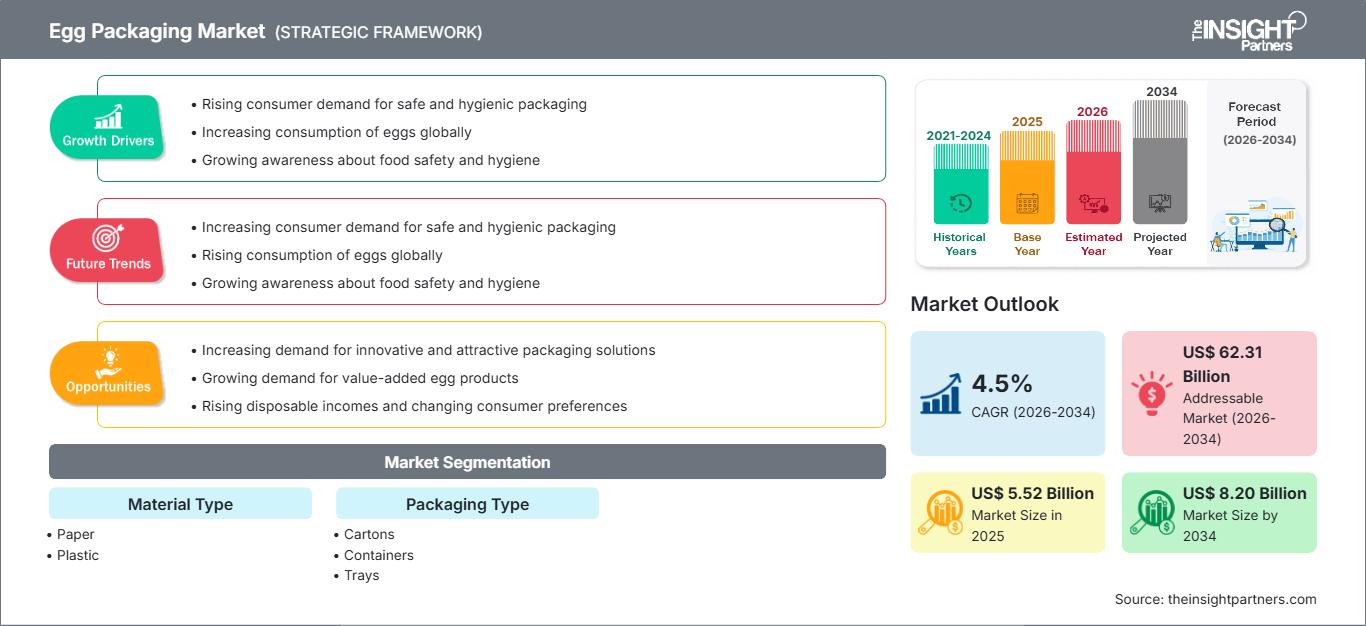
Regional Insights
North America Egg Packaging Market
The share of North America is estimated to be 32–36% in 2025, whereas its growth rate is forecasted to be 4.0–5.0% CAGR up to 2034. The Egg Packaging Market share of the region depends on commercial egg production facilities, organized distribution within groceries and retail sales programs where cartons should be branded and have guaranteed compression resistance. Restrictions on the use of expanded polystyrene as a result of legislation encourage substitution with molded fibers. In addition, there are several drivers of demand related to promotional packaging, private labels, and cold chain distribution.
Regional producers become increasingly interested in packaging which is compatible with automatic egg grading and packing machinery. At the same time, the U.S. is the primary center of demand, while Canadian market needs are associated with retailer sustainability targets, ensuring steady fiber carton consumption. Recently installed molded fiber capacity ensures more reliable supply chain and reduces the distance between converters and egg producers. It is important for buyers to have local technical assistance, since successful line testing and pack adjustment may define the efficiency of a carton.
U.S. Egg Packaging Market
U.S. accounted for 78%-82% of North American revenues in 2025 and is expected to post a 4.1%-5.1% CAGR. Huge poultry farms, supermarket house brands and substantial packaged eggs have resulted in the continuous requirement for cartons, boxes and trays. Presence in molded fiber and plastic categories facilitates product availability. State packaging mandates and retailer sustainability scorecards play an influential role in material selection.
There is a shift in applications towards fiber cartons produced using recycled material, especially where there are state and retailer policies against foam packaging. Producers make use of plastic trays and boxes for specialty, organic and premium eggs where visibility and stacking strength is important. Huhtamäki Oyj, CKF Inc., Sonoco Products Company, Placon Corporation and Pactiv Evergreen Inc. are still significant for U.S. sourcing plans. High level of automation in the grading facility provides an advantage to this market.
Europe Egg Packaging Market
Europe was responsible for 24–28% of global revenue in 2025 and is projected to grow at a CAGR of 3.8–4.8%. Germany leads the market owing to regulations on packaging, developed retail distribution channels, and consumer demand for eco-friendly containers. The UK progresses molded fiber cartons in supermarkets based on sustainability requirements and branding of free-range eggs.
France, Italy, and Spain generate demand by way of grocery chain modernization, hospitality industry consumption, and superior appearance of the eggs. European companies focus on fiber sourcing, efficient denesting operations, and high-quality printing as retailers use packages to convey attributes of welfare, origin, and sustainability. Brødrene Hartmann A/S, Huhtamäki Oyj, Cascades Inc., and Tekni-Plex, Inc. gain from this demand.
APAC Egg Packaging Market
In 2025, Asia Pacific region accounted for 28-32% market share and forecasted to grow at a 5.0-6.0% CAGR. China retains its leadership position owing to the large production of eggs and rising modern retailing. Indian egg market is making slow progress towards the packaged forms due to the growing organization of grocery and quick commerce channels. In urban areas, consumers are inclined to purchase eggs packed in the branded packages.
Quality, traceability, and clean pack become key issues in Japan, South Korea, and Australia markets driving the cartons and rigid trays. Food safety, industrial scale poultry farming, and urban logistics favor standardization. Jin Fu Hua Packaging Industrial Co., Ltd. operates in regional supply chains, which require volume production of molded pulp and plastic packaging products. Regional converters have an opportunity to increase their market share by offering cost-effective solutions for retail and logistics.
Middle East & Africa Egg Packaging Market
MEA is predicted to witness a growth of 4.2-5.2% CAGR till 2034. Demand from the Middle East & Africa will be fueled by efforts related to food security, investments in the poultry industry and modernization of retail. The United Arab Emirates needs superior packaging for both imported and locally produced eggs through supermarkets and hotel chains.
South Africa adds demand with its existing production of poultry along with established retail chains, while the other MEA countries add demand because of the growing cold chain and grocery infrastructure. Logistics and energy costs affect materials choice, thus, light weight paper trays and cartons may work well here.
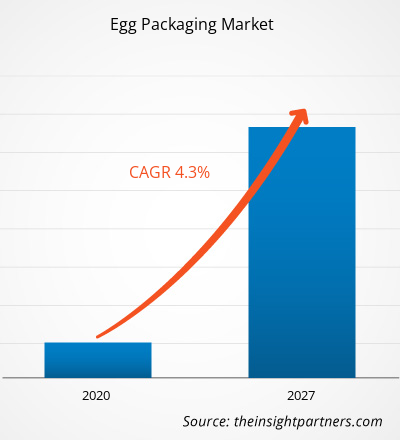
Segmentation Analysis
Material Type
The Material Type segment is projected to grow at a 4.2–5.2% CAGR during 2026–2034. The Egg Packaging Market scope is defined by the shift from petroleum-based formats to renewable, recyclable, and molded paper solutions. Paper dominates because it combines cushioning, printability, recyclability, and compatibility with automated packing lines, while plastic remains important in reusable, transparent, and moisture-sensitive applications. Procurement teams increasingly evaluate materials through lifecycle performance, regulatory exposure, and ability to support retailer packaging commitments.
- Paper: Paper-based cartons and trays hold the strongest position because they use molded pulp, recycled fiber, and branded surfaces that align with retailer sustainability programs and consumer preference for recyclable packaging.
- Plastic: Plastic packaging remains strategically relevant for clear containers, washable trays, and specialty egg formats requiring visibility, moisture resistance, and durable stacking performance across selected distribution environments.
Packaging Type
The Packaging Type segment is expected to register a 4.4–5.4% CAGR through 2034. Cartons lead because they combine protection, labeling space, and consumer convenience in retail channels. Containers support premium and specialty egg presentation, while trays remain essential for bulk transport, institutional supply, and intermediate handling between farms, graders, wholesalers, and foodservice buyers. Format selection depends on egg count, distribution distance, shelf strategy, and breakage tolerance across the supply chain.
- Cartons: Cartons are the primary retail format, offering shell protection, brand communication, stackability, and compatibility with six-count, ten-count, twelve-count, and eighteen-count egg programs.
- Containers: Containers serve premium, specialty, and convenience-driven products where transparency, tamper evidence, and shelf presentation help retailers differentiate organic, free-range, and value-added egg offerings.
- Trays: Trays are vital for bulk handling, farm-to-grader movement, institutional distribution, and foodservice procurement because they reduce breakage while allowing efficient stacking and transport.
Opportunity Snapshot
| Segment Name | Revenue Contribution | Trend Tag | Adoption Stage |
| Cartons | High | Fiber Retail | Mature |
| Containers | Medium | Premium Visibility | Scaling |
| Trays | Medium | Bulk Handling | Mature |
Egg Packaging Market Growth Drivers and Impact Analysis
Expansion of Organized Egg Retailing
Organized retail growth is a central driver because supermarkets, convenience chains, and online grocery platforms require packaging that protects eggs while supporting labeling, barcodes, and visual differentiation. As more eggs move through branded retail channels, demand rises for cartons and containers that can withstand repeated handling, stacking, and last-mile distribution. Packaging also reduces shrinkage from breakage, which directly affects producer margins and retailer profitability. In developing markets, the movement from loose egg sales to packaged formats increases packaging intensity per unit of egg production. This driver has practical market impact because it encourages investment in standardized carton sizes, better printing, stronger quality checks, and supply agreements between converters and poultry producers.
Shift Toward Recyclable Molded Fiber Packaging
Sustainability requirements are accelerating the shift toward molded fiber and paper-based solutions. Retailers and regulators are reducing reliance on foam and difficult-to-recycle plastics, while consumers increasingly associate paper cartons with responsible packaging choices. Molded fiber offers cushioning, stackability, printability, and compatibility with recycled feedstock, making it suitable for mainstream egg distribution. The market impact is visible in capacity additions and acquisitions focused on fiber carton production, especially in North America and Europe. Converters that secure recovered paper supply, improve water efficiency, and deliver consistent denesting performance are better positioned to serve large egg producers. This transition also helps retailers align packaging with broader waste-reduction, extended producer responsibility, and circular-economy commitments.
Automation in Poultry Packing Operations
Automation across egg grading, sorting, and packing operations is increasing the need for dimensionally consistent cartons, containers, and trays. High-speed lines require packaging that opens cleanly, nests accurately, resists crushing, and performs reliably without frequent stoppages. As poultry producers scale operations, packaging quality becomes a productivity factor rather than a simple consumable cost. The Egg Packaging Market benefits because automated facilities prefer suppliers with tight quality control, predictable delivery, and packaging designs compatible with robotic handling. This driver supports premiumization within standard formats, as producers are willing to pay for packs that reduce downtime and breakage. It also strengthens long-term supplier relationships through technical support, equipment trials, and recurring performance audits.
Egg Packaging Market Future Trends
Fiber Innovation and Material Optimization
Egg Packaging Market trends are expected to center on stronger molded fiber structures made with less material and improved moisture resistance. Producers will seek cartons that reduce weight without sacrificing cushioning, because freight costs and sustainability reporting are becoming more important. Future designs will likely use optimized rib geometry, improved pulp blends, and coatings that remain recyclable. This trend is forward-looking because it links packaging engineering with measurable lifecycle performance. Suppliers that combine recycled fiber, lower water usage, and automated molding efficiency can support both cost and environmental targets. Material optimization will also help brands differentiate premium egg lines while maintaining affordability in mass retail formats and reducing packaging waste per dozen eggs.
Traceability-Ready Retail Packaging
Retail packaging will increasingly carry data features that support origin visibility, welfare claims, freshness communication, and recall readiness. QR codes, batch identification, and improved print surfaces can help retailers and producers communicate farm information and handling instructions directly to consumers. The trend is not limited to premium eggs, as food safety expectations and digital grocery platforms require clearer product information. Packaging converters will need to improve print consistency and surface quality while maintaining speed and cost discipline. Over time, traceability-ready cartons and containers may become a standard requirement for large retailers, particularly in markets where food safety regulation and consumer scrutiny are intensifying.
Egg Packaging Market Opportunities
Localized Molded Fiber Capacity Expansion
Investment in localized molded fiber capacity offers a practical opportunity because egg packaging is bulky and costly to transport over long distances. Producers prefer nearby suppliers that can respond quickly to demand swings, seasonal peaks, and flock-related disruptions. Egg Packaging Market Forecasts point to sustained need for paper cartons, creating room for converters to add regional lines near poultry clusters. Capacity expansion can also reduce lead times, improve supply security, and lower logistics emissions. Companies that combine local sourcing of recovered paper with efficient molding equipment can gain cost advantages. Partnerships with egg producers and retailers may further de-risk investment by securing volume commitments before new capacity comes online, especially in regions converting from foam to fiber.
Premium Packaging for Specialty Eggs
Specialty eggs, including organic, free-range, cage-free, enriched, and branded regional products, create opportunities for packaging that communicates value beyond basic protection. Retailers use pack design to highlight welfare claims, origin, freshness, and sustainability credentials, making cartons and containers part of the merchandising strategy. Premium packaging can include higher-quality print, color differentiation, improved opening features, and stronger shelf impact. This opportunity is attractive because specialty eggs typically carry higher margins, allowing producers to invest in better packaging without undermining price positioning. Suppliers that offer design support, small-batch flexibility, and reliable food-contact compliance can capture incremental value from premiumization across mature and emerging retail markets while helping brands reduce breakage complaints.
Recent Developments
- March 2026: Domino Printing Sciences has introduced the Egg Pack Printing Traverser (EPPT), a specialized coding solution for high-speed egg grading and packing lines. The EPPT enhances accuracy and traceability while lowering operating costs by integrating Domino’s Gx-Series thermal Inkjet printers with a reliable traverser system. It is designed to work seamlessly with Moba Omnia and Sanovo GraderPro graders, facilitating continuous production across various packaging types, including moulded fibre and rigid plastic.
- January 2026: TekniPlex Consumer Products, a leader in advanced materials for food packaging, will showcase its protein and egg carton innovations at the International Production & Processing Expo (IPPE) 2026, from January 27–29 in Atlanta, at Booth B36029. Highlights include the new TekniTray™ portfolio for protein trays and fully recyclable egg carton solutions, aimed at meeting sustainability and operational demands.
- April 2025: Huhtamaki has acquired Zellwin Farms for USD 18 million, enhancing its presence in the molded fiber industry, particularly in egg cartons and flats. Zellwin Farms, located in Zellwood, Florida, has been operational for over 20 years, generating annual net sales of approximately USD 20 million. This acquisition will provide Huhtamaki with greater capacity and capabilities in molded fiber packaging.
Frequently Asked Questions

- Comprehensive Market Sizing and Forecast Analysis
- Detailed Segmentation Analysis
- In-Depth Market Dynamics Assessment
- Regional and Country-Level Insights
- Competitive Landscape and Company Benchmarking
- Strategic Business Intelligence
Recent Reports
Testimonials

The Insight Partners' SCADA System Market report is comprehensive, with valuable insights on current trends and future forecasts. The team was highly professional, responsive, and supportive throughout. We are very satisfied and highly recommend their services.
RAN KEDEM Partner, Reali Technologies LTDs
I requested a report on a very specific software market and the team produced the report in a few days. The information was very relevant and well presented. I then requested some changes and additions to the report. The team was again very responsive and I got the final report in less than a week.
JEAN-HERVE JENN Chairman, Future Analytica
We worked with The Insight Partners for an important market study and forecast. They gave us clear insights into opportunities and risks, which helped shape our plans. Their research was easy to use and based on solid data. It helped us make smart, confident decisions. We highly recommend them.
PIYUSH NAGPAL Sr. Vice President, High Beam Global
The Insight Partners delivered insightful, well-structured market research with strong domain expertise. Their team was professional and responsive throughout. The user-friendly website made accessing industry reports seamless. We highly recommend them for reliable, high-quality research services
YUKIHIKO ADACHI CEO, Deep Blue, LLC.
This is the first time I have purchased a market report from The Insight Partners.While I was unsure at first, I visited their web site and felt more comfortable to take the risk and purchase a market report.I am completely satisfied with the quality of the report and customer service. I had several questions and comments with the initial report, but after a couple of dialogs over email with their analyst I believe I have a report that I can use as input to our strategic planning process.Thank you so much for taking the extra time and making this a positive experience.I will definitely recommend your service to others and you will be my first call when we need further market data.
JOHN SUZUKI President and Chief Executive Officer, Board Director, BK Technologies
I wish to appreciate your support and the professionalism you displayed in the course of attending to my request for information regarding to infectious disease IVD market in Nigeria. I appreciate your patience, your guidance, and the fact that you were willing to offer a discount, which eventually made it possible for us to close a deal. I look forward to engaging The Insight Partners in the future, all thanks to the impression you have created in me as a result of this first encounter.
DR CHIJIOKE ONYIA MANAGING DIRECTOR, PineCrest Healthcare Ltd.Reason to Buy
- Informed Decision-Making
- Understanding Market Dynamics
- Competitive Analysis
- Identifying Emerging Markets
- Customer Insights
- Market Forecasts
- Risk Mitigation
- Boosting Operational Efficiency
- Strategic Planning
- Investment Justification
- Tracking Industry Innovations
- Aligning with Regulatory Trends





 Get Free Sample for