
Fermentation Defoamer Market Growth, Trends & Demand by 2034
Coverage: by Product (Silicone-based, Oil-based, Others); End-user (Dairy Products, Alcoholic Beverages, Food Products, Pharmaceuticals, Chemicals, Others) , and Geography (North America, Europe, Asia Pacific, and South and Central America)
- Status : Data Released
- Report Code : TIPRE00005983
- Category : Chemicals and Materials
- No. of Pages : 150
- Available Report Formats :


- Last update date : September 22, 2026


2025 Market Size
US$ 2.11 Bn
Base year value
2034 Forecast
US$ 2.79 Bn
Projected by 2034
CAGR 2026-2034
3.53 %
Growth rate
Addressable Market
US$ 22.68 Bn
(2026-2034)
The Fermentation Defoamer Market was valued at US$ 2.11 Billion in 2025 and is projected to reach US$ 2.79 Billion by 2034, registering a CAGR of 3.53% during 2026–2034. The market supports fermentation operations across food, beverage, pharmaceutical, biotechnology, and chemical manufacturing by controlling excessive foam that can reduce vessel capacity, interfere with processing, complicate downstream operations, and affect production consistency.
North America represents a mature but strategically important demand center because of its large food and beverage, pharmaceutical, biotechnology, and specialty chemical industries. The Fermentation Defoamer Market size in the region is estimated to expand at a 3.1–3.8% CAGR during 2026–2034, supported by investment in biologics manufacturing and continued demand for efficient industrial fermentation. Regulatory requirements for food-contact and process chemicals also favor technically qualified suppliers.
Fermentation Defoamer Market Assessment and Insights
- North America: North America accounted for an estimated 30–34% Fermentation Defoamer Market share in 2025 and is projected to grow at a 3.1–3.8% CAGR during 2026–2034. Pharmaceutical fermentation, beverage processing, biotechnology capacity, and stringent product qualification requirements support stable demand for specialized foam-control formulations.
- US: The US represented approximately 78–84% of North American demand in 2025 and is expected to expand at a 3.2–3.9% CAGR during 2026–2034, supported by biopharmaceutical manufacturing, food processing, industrial biotechnology, and large-scale fermentation capacity.
- Europe: Europe represented an estimated 25–29% share in 2025 and is forecast to grow at a 2.9–3.6% CAGR during 2026–2034. Germany, the UK, France, Italy, and Spain support demand through pharmaceutical production, brewing, dairy processing, and specialty chemical manufacturing.
- Asia Pacific: Asia Pacific accounted for approximately 31–35% share in 2025 and is projected to register a 4.2–5.1% CAGR during 2026–2034. China, Japan, South Korea, India, and Australia are expanding food processing, biologics manufacturing, industrial biotechnology, and fermentation-based production.
- Largest Segment: Silicone-based held an estimated 58–63% market share in 2025 and is projected to expand at a 3.8–4.6% CAGR during 2026–2034, supported by high defoaming efficiency and low dosage requirements.
- High Growth Segment: Pharmaceuticals represented an estimated 17–22% market share in 2025 and is expected to grow at a 4.6–5.5% CAGR during 2026–2034, benefiting from continued expansion of biologics and fermentation-derived products.
- Key companies analyzed in detail: Accepta Ltd., ADDAPT Chemicals B.V., Blackburn Chemicals Ltd., Dow Inc., Hydrite Chemical Co., Momentive Performance Materials LLC, PennWhite Ltd., Shin-Etsu Chemical Co., Ltd., Struktol Company of America, LLC, and Wacker Chemie AG.
Source: The Insight Partners' analysis based on proprietary research, government publications, company annual reports, investor presentations, industry databases, and expert interviews.
There has been a shift in the Fermentation Defoamer Market from managing foams merely to ensure that vessels do not overflow to managing foam as a process parameter whose presence could influence fermenter capacity, mass transfer, downstream processing, and process reproducibility. Emulsified and compounded silicones are critical in applications where immediate foam reduction is needed in small quantities. Dow offers food-grade silicone emulsions that are suggested for food fermentation and beverage processes.
The forward-looking future is increasingly tied to biotechnological investments, precision fermentation, and wider pharmaceutical manufacturing. In 2025, the Food and Agriculture Organization reported that precision fermentation was becoming an important production method in the food industry and noted that food safety concerns were part of it. Regulatory interest will therefore drive the need for products whose formulation is well defined, food contact safe, process reproducible, and supplier documented.
Fermentation Defoamer Market Report Scope
| Report Attribute | Details |
|---|---|
| Market size in 2025 | US$ 2.11 Billion |
| Market Size by 2034 | US$ 2.79 Billion |
| Global CAGR (2026 - 2034) | 3.53% |
| Historical Data | 2021-2024 |
| Forecast period | 2026-2034 |
Fermentation Defoamer Market Analysis
Factors influencing demand growth in the Fermentation Defoamer Market include the necessity to maintain effective fermentation on a commercially scalable level for food products, beverages, pharmaceuticals, chemicals, and industrial biotechnology. Foam may be taking up space within the reactor and cause additional challenges while conducting aeration process. Effective antifoaming and defoaming agents allow the manufacturer to handle the problem without having to make substantial changes to the manufacturing equipment. The company states that fermentation is one of the areas where silicone and polyglycol-based defoamers are used.
Ingredients include silicone fluids, mineral and vegetable oils, emulsifying agents, hydrophobic particles, and specialized surfactants. Concentration, dispersibility, compatibility and persistence are optimized for each individual case of fermentation processes. Product distribution often includes technical sales to major producers and specialized chemical distributors to small processors. Supply of the product is especially important in pharmaceutical and food industries as changing the processing aid requires evaluation and certification of the client.
The study of the Fermentation Defoamer Market highlights the rivalry among global silicone makers and formulation companies. Companies like Dow Inc., Momentive Performance Materials LLC, Shin-Etsu Chemical Co., Ltd., and Wacker Chemie AG have great competence with silicone chemistry, whereas companies like Accepta Ltd., ADDAPT Chemicals B.V., Blackburn Chemicals Ltd., Hydrite Chemical Co., PennWhite Ltd., and Struktol Company of America, LLC cater to application-related industrial needs.
Strategic positioning now becomes important through application testing, regulatory experience, and the capability to reduce dosage without affecting fermentation. Customers will be judging the formulations depending on pH, temperature, agitation, compatibility, food or pharmaceutical requirements, and downstream processing considerations. As such, investment is made into technically differentiated emulsion, dispersibility, residue-free systems, and customer-oriented formulations. Companies with a global manufacturing network gain an advantage, although regional companies are not left behind if they offer good technical service and customization.
● REPORT CUSTOMIZATION
Tailor This Report To Align With Your Specific Business Requirements
This report can be customized to align precisely with your business objectives, scope, and target markets. Customization options include tailored segmentation, geography, competitive analysis, and strategic insights to support informed decision-making.
Customize This Report →WHAT YOU CAN ADJUST
- ● Segmentations
- ● Geography
- ● Competitive Analysis
- ● Language Preferences
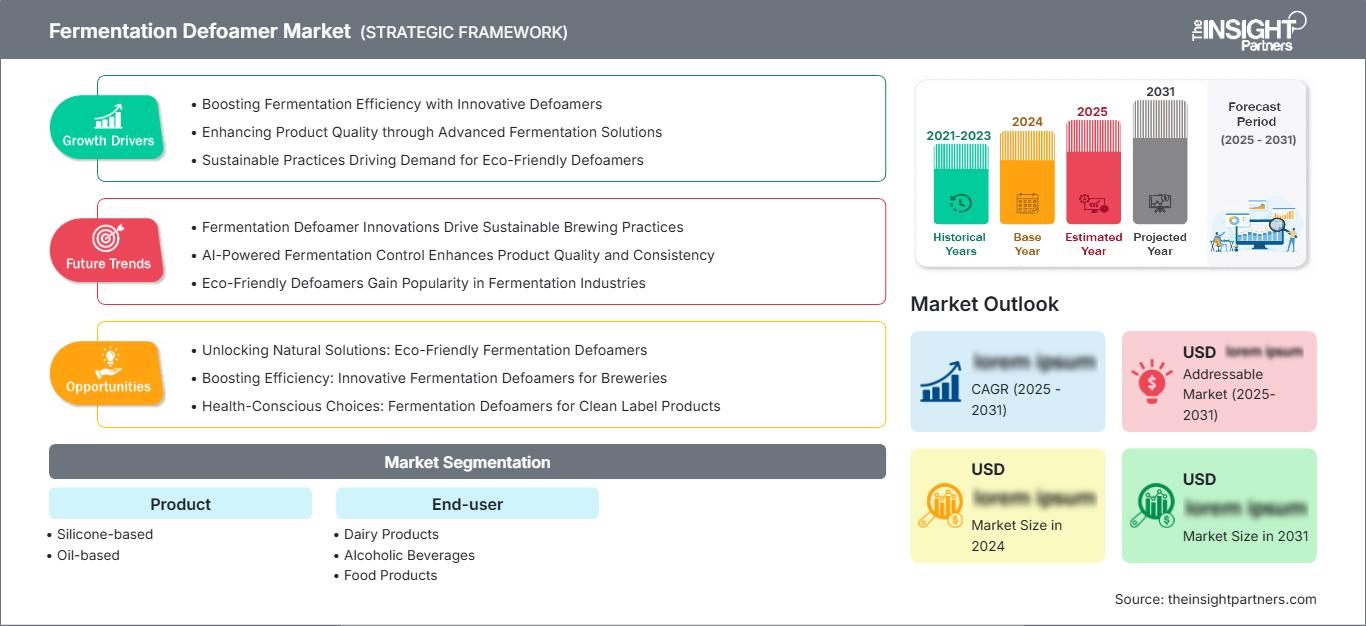
Fermentation Defoamer Market: Strategic Insights
Regional Insights
North America Fermentation Defoamer Market
North America accounted for an estimated 30–34% share in 2025 and is projected to expand at a 3.1–3.8% CAGR during 2026–2034. The area has both established food and beverage production and processing, as well as pharmaceutical, biotechnology, and fermentation-based industries. The market growth drivers include manufacturers that need consistency in process control, regulatory compliance, and the reliable sourcing of additives with high levels of technical qualifications. High value-added fermentation processes have preference for suppliers that have detailed technical and regulatory documents available.
In addition to robust activity in the biotechnology industry, as well as investments in the biopharmaceutical sector, North America holds a large portion of the Fermentation Defoamer Market. Silicone defoamers still have their relevance due to effectiveness at low dosage levels. Nevertheless, oil and non-silicone defoamers are used for the reasons of process compatibility or for further processing.
U.S. Fermentation Defoamer Market
The US represented approximately 78–84% of North American demand in 2025 and is expected to grow at a 3.2–3.9% CAGR during 2026–2034. There is a broad range of demand from its large pharmaceuticals industry, biotech industry, brewing capacity, food manufacturing, and industrial chemical manufacturing industries. Precise addition of additives has become increasingly important in fermentation processes due to the difficulty in separating excess antifoams added.
Both Dow Inc. and Hydrite Chemical Co. have a presence in the regional supply chain, while other suppliers worldwide will sell silicone and other specialty products through direct sales and distributors. The silicone antifoam emulsions from Dow Inc. include products suited for both hot and cold water-based fermentation in food and chemical industries. There will be a greater emphasis on traceability and formulation compatibility in the pharmaceutical sector, while food and beverages are expected to continue as economic foam control systems consumers.
Europe Fermentation Defoamer Market
Europe accounted for an estimated 25–29% share in 2025 and is expected to register a 2.9–3.6% CAGR during 2026–2034. The area is home to an existing brewing, dairy, pharmaceutical, biotech, and specialty chemical industry. It is expected that Germany will continue to be the most prominent market due to the large-scale manufacturing of chemical and pharmaceutical products and industrial processing technology.
The UK continues to have a high level of consumption due to pharmaceutical manufacturing, biotechnology, brewing, and specialty food manufacturing. The fermentation infrastructure in the UK is geared towards established industrial applications as well as precision fermentation initiatives. Germany continues to be strategic for suppliers since their large-scale industrial clients increasingly demand consistency in product formulation and technical documentation from all of their production sites.
The combined food processing, beverages, dairy products, pharmaceuticals, and specialty chemical consumption in France, Italy, and Spain is notable. France has the diverse range of manufacturing of food and pharmaceutical products, while Italy provides beverages and food production. Spain has the important dairy and beverages processing industry. There are regulatory considerations in Europe that make suppliers provide adequate documentation.
APAC Fermentation Defoamer Market
Asia Pacific represented approximately 31–35% share in 2025 and is forecast to expand at a 4.2–5.1% CAGR during 2026–2034. It is predicted that China will continue being the leading regional market, with Japan, South Korea, India, and Australia offering additional high-value opportunities. This is driven by the growth in food processing, biologics manufacture, fermentation based ingredients, and industrial biotechnology.
There is growing government support for biotechnology and local manufacturing, thus regional investments. China and India are key due to their size and industrial growth, while Japan and South Korea offer high-end pharmaceuticals and specialty manufacturing. Australia provides premium food, beverages, and biotech applications. These developments increase the demand for foaming control technologies that are both technically dependable and regulation compliant.
Middle East & Africa Fermentation Defoamer Market
Middle East & Africa is expected to grow at a 3.4–4.2% CAGR during 2026–2034. Saudi Arabia and the UAE are increasingly investing in food security, food processing, pharmaceutical manufacturing, and industrial diversification, while South Africa remains a significant regional food and beverage production center.
Energy and infrastructure investment supports industrial development across several Middle Eastern economies. Saudi Arabia is expected to lead regional expansion through manufacturing diversification and food-production investment, while the UAE serves as a regional processing and logistics center. In Africa, South Africa offers the most established industrial base, while demand elsewhere depends on food-processing capacity and investment in local manufacturing.
Segmentation Analysis
Product
The Product segment is projected to expand at a 3.6–4.4% CAGR during 2026–2034. Product selection depends on foam intensity, fermentation conditions, dosage efficiency, compatibility with microorganisms and media, and downstream processing requirements. The Fermentation Defoamer Market scope covers both silicone-based and oil-based formulations because no single chemistry is optimal for every fermentation system. Silicone products provide strong low-dose performance, while oil-based alternatives remain relevant where process economics and compatibility favor conventional formulations.
- Silicone-based: This segment holds the leading position because silicone chemistry can provide strong foam knockdown at low addition levels. Its broad temperature and chemical resistance support demanding food, pharmaceutical, and industrial fermentation conditions.
- Oil-based: Oil-based products remain strategically important for processors requiring cost-effective foam control and chemistry compatible with specific fermentation media. Formulation selection depends on downstream processing, product sensitivity, and customer regulatory requirements.
End-user
The End-user segment is expected to expand at a 3.7–4.6% CAGR during 2026–2034, reflecting the broad use of fermentation in food, beverages, pharmaceuticals, and industrial chemical production. Different customers require distinct balances between foam suppression, regulatory compliance, process economics, and downstream compatibility. The highest-value opportunities are increasingly associated with technically complex and regulated production environments.
- Dairy Products: Fermentation in yogurt, cultured dairy, and ingredient production creates foam-control requirements during processing. Suppliers must provide formulations compatible with food regulations and production conditions while avoiding undesirable effects on product quality.
- Alcoholic Beverages: Brewing and other beverage fermentation processes generate significant aeration and foam challenges. Demand favors reliable, economical formulations that support process throughput while meeting food and beverage regulatory requirements.
- Food Products: Fermentation-derived food ingredients and emerging precision-fermentation processes create opportunities for specialized additives. Product selection increasingly considers food safety, dosage, residue management, and compatibility with downstream separation processes.
- Pharmaceuticals: This is the fastest-growing end-user segment, supported by expansion in biologics, enzymes, and fermentation-derived products. Customers prioritize formulation consistency, traceability, technical support, and compatibility with highly controlled manufacturing processes.
- Chemicals: Chemical fermentation applications use defoamers to maintain vessel efficiency and stable processing conditions. Cost performance and compatibility with process chemistry remain important selection criteria in these industrial environments.
Opportunity Snapshot
| End-user | Revenue Contribution | Trend Tag | Adoption Stage |
| Dairy Products | Medium | Cultured Dairy | Mature |
| Alcoholic Beverages | High | Brewery Processing | Mature |
| Food Products | High | Precision Fermentation | Scaling |
| Pharmaceuticals | High | Biologics Production | Scaling |
| Chemicals | Medium | Industrial Bioprocessing | Mature |
Fermentation Defoamer Market Growth Drivers and Impact Analysis
Expansion of Biopharmaceutical and Biologics Manufacturing
Foam formation is becoming more and more common in biopharmaceuticals production, in which fermentation and cell culture operations are often conducted under strictly controlled conditions, as foam may impact the effective working volume of vessels used and process reproducibility. As the geographical coverage of biologics production increases, there will be an increasing need for defoaming agents backed up with comprehensive technical data and good consistency of batches. Proper defoamer selection might have an impact on downstream processes, thus requiring testing of defoamer applicability on a case-by-case basis prior to commercial use.Consequently, expanding biologics capacity is increasing demand for higher-value formulations and technical service, supporting the projected 4.6–5.5% CAGR during 2026–2034 for pharmaceutical applications.
Growing Industrial Use of Fermentation Technologies
Fermentation is becoming increasingly common outside the traditional use of food and alcohol production in enzyme, specialty product, chemical, and biological production. The 2025 project by the FAO regarding precision fermentation is an indication that more institutions are taking notice of the potential of this production process and its food safety considerations. An increase in the number and diversity of fermentation operations presents more business opportunities for defoamer manufacturers since foam properties change depending on feedstock, organisms, aeration, agitation, temperature, and processing time. Consequently, there is a need for varied formulations instead of the same chemistry. This development favors global companies with application labs and those with the capability to produce customized solutions for customers.
Need to Improve Fermenter Capacity Utilization
An excess of foam can fill the headspace of reactors, cause interruptions in the process, cause overflow problems, and limit effective capacity. Defoamers are becoming more widely used as manufacturers incorporate defoaming agents into process optimization schemes, which aim to increase efficiency through improved processes rather than costly capital investment. They can inhibit current foam or prevent future foam formation depending on the composition and delivery technique of the products. Dow defines two types of activities that a defoamer or an antifoam agent can perform while offering products for fermentation and food processes. The advantage of this application makes defoamers useful in mature markets since manufacturers always look for increased efficiency and reliability in their processes.
Fermentation Defoamer Market Future Trends
Formulations Designed for Precision Fermentation
Future product development will increasingly focus on fermentation systems producing specialized proteins, ingredients, enzymes, and other biological outputs. Precision fermentation introduces new microbial strains and process conditions, requiring careful evaluation of additive compatibility and downstream processing effects. The Fermentation Defoamer Market trends will therefore shift toward customized products tested with specific fermentation media rather than broadly positioned industrial formulations. Suppliers are likely to invest in faster application screening and analytical methods that evaluate residual impacts. Regulatory and food-safety requirements will further increase demand for transparent formulation information. Companies capable of supporting pilot-scale customers through commercial production are expected to benefit as new precision-fermentation facilities move from development toward larger-scale manufacturing.
Lower-Dosage and Process-Efficient Foam Control
Manufacturers will increasingly seek products that deliver effective foam control at lower addition levels. Reduced dosage can lower additive consumption, simplify logistics, and potentially minimize downstream processing concerns. Silicone technologies are well positioned because of their high defoaming efficiency and broad operating characteristics, although alternative chemistries will remain important for specific systems. Future innovation will focus on improving emulsion stability, dispersion, persistence, and compatibility under demanding fermentation conditions. Suppliers will also increasingly provide technical recommendations based on aeration rates, agitation, pH, temperature, and media composition. This trend will strengthen the importance of application laboratories and customer-specific testing rather than standardized product selection based solely on industry classification.
Fermentation Defoamer Market Opportunities
Regional Production and Technical Support in Asia Pacific
Asia Pacific offers opportunities for investment in regional formulation, technical service, and distribution infrastructure. The Fermentation Defoamer Market Forecasts indicate faster regional growth than mature North American and European markets, driven by expanding food processing, pharmaceuticals, biotechnology, and industrial manufacturing. Companies can improve competitiveness by establishing local technical laboratories that rapidly evaluate foam behavior under customer-specific conditions. Regional production can also reduce lead times and provide greater supply-chain flexibility. Investment should prioritize China and India while maintaining access to advanced markets such as Japan and South Korea. Successful strategies will combine locally responsive service with globally consistent quality and regulatory support, particularly for food and pharmaceutical applications.
Specialized Solutions for High-Value Pharmaceutical Processing
High-value pharmaceutical fermentation provides opportunities to develop premium formulations supported by detailed technical documentation and application-specific validation. Suppliers can invest in controlled manufacturing, enhanced traceability, and laboratory services that help customers optimize dosing before commercial production. Strategic partnerships with contract development and manufacturing organizations may provide early access to emerging biologics programs. Companies should also assess how foam-control chemistry interacts with downstream purification because this issue can influence customer acceptance. The opportunity favors technically sophisticated suppliers capable of supporting long qualification cycles and reliable commercial supply. Rather than competing primarily on volume, suppliers can create value through regulatory knowledge, consistent specifications, and integrated process-development support.
Recent Developments
- July 2025: WACKER opened its Biotechnology Center in Munich and expanded fermentation capacities and systems within its pilot-plant infrastructure, including capabilities dedicated to food applications. The investment is relevant to fermentation processing because WACKER develops fermentation-based ingredients while also supplying silicone foam-control products for food and pharmaceutical applications, reinforcing its exposure to expanding industrial biotechnology activities.
- February 2025: PennWhite India Private Limited (“PWI”) company incorporated in India for speciality chemicals, , wholly owned subsidiary of PennWhite Limited, UK announced the successful acquisition of defoamer business of the Speciality Chemicals Division of Sicagen India Limited.
Frequently Asked Questions

- Comprehensive Market Sizing and Forecast Analysis
- Detailed Segmentation Analysis
- In-Depth Market Dynamics Assessment
- Regional and Country-Level Insights
- Competitive Landscape and Company Benchmarking
- Strategic Business Intelligence
Recent Reports
Testimonials

The Insight Partners' SCADA System Market report is comprehensive, with valuable insights on current trends and future forecasts. The team was highly professional, responsive, and supportive throughout. We are very satisfied and highly recommend their services.
RAN KEDEM Partner, Reali Technologies LTDs
I requested a report on a very specific software market and the team produced the report in a few days. The information was very relevant and well presented. I then requested some changes and additions to the report. The team was again very responsive and I got the final report in less than a week.
JEAN-HERVE JENN Chairman, Future Analytica
We worked with The Insight Partners for an important market study and forecast. They gave us clear insights into opportunities and risks, which helped shape our plans. Their research was easy to use and based on solid data. It helped us make smart, confident decisions. We highly recommend them.
PIYUSH NAGPAL Sr. Vice President, High Beam Global
The Insight Partners delivered insightful, well-structured market research with strong domain expertise. Their team was professional and responsive throughout. The user-friendly website made accessing industry reports seamless. We highly recommend them for reliable, high-quality research services
YUKIHIKO ADACHI CEO, Deep Blue, LLC.
This is the first time I have purchased a market report from The Insight Partners.While I was unsure at first, I visited their web site and felt more comfortable to take the risk and purchase a market report.I am completely satisfied with the quality of the report and customer service. I had several questions and comments with the initial report, but after a couple of dialogs over email with their analyst I believe I have a report that I can use as input to our strategic planning process.Thank you so much for taking the extra time and making this a positive experience.I will definitely recommend your service to others and you will be my first call when we need further market data.
JOHN SUZUKI President and Chief Executive Officer, Board Director, BK Technologies
I wish to appreciate your support and the professionalism you displayed in the course of attending to my request for information regarding to infectious disease IVD market in Nigeria. I appreciate your patience, your guidance, and the fact that you were willing to offer a discount, which eventually made it possible for us to close a deal. I look forward to engaging The Insight Partners in the future, all thanks to the impression you have created in me as a result of this first encounter.
DR CHIJIOKE ONYIA MANAGING DIRECTOR, PineCrest Healthcare Ltd.Reason to Buy
- Informed Decision-Making
- Understanding Market Dynamics
- Competitive Analysis
- Identifying Emerging Markets
- Customer Insights
- Market Forecasts
- Risk Mitigation
- Boosting Operational Efficiency
- Strategic Planning
- Investment Justification
- Tracking Industry Innovations
- Aligning with Regulatory Trends





 Get Free Sample for