
Glycerin Market Size, Growth & Demand by 2034
Coverage: By Process (Transesterification, Saponification, Fat Splitting) ; Source (Vegetable Oils, Biodiesel, Soaps, Synthetic) ; Grade (Technical Grade, Pharmaceutical Grade) ; Application (Industrial Application, Chemical Intermediate) , and Geography (North America, Europe, Asia Pacific, and South and Central America)
- Status : Data Released
- Report Code : TIPRE00005764
- Category : Chemicals and Materials
- No. of Pages : 150
- Available Report Formats :


- Last update date : July 21, 2026


2025 Market Size
US$ 3.16 Bn
Base year value
2034 Forecast
US$ 4.79 Bn
Projected by 2034
CAGR 2026-2034
4.73 %
Growth rate
Addressable Market
US$ 36.09 Bn
(2026-2034)
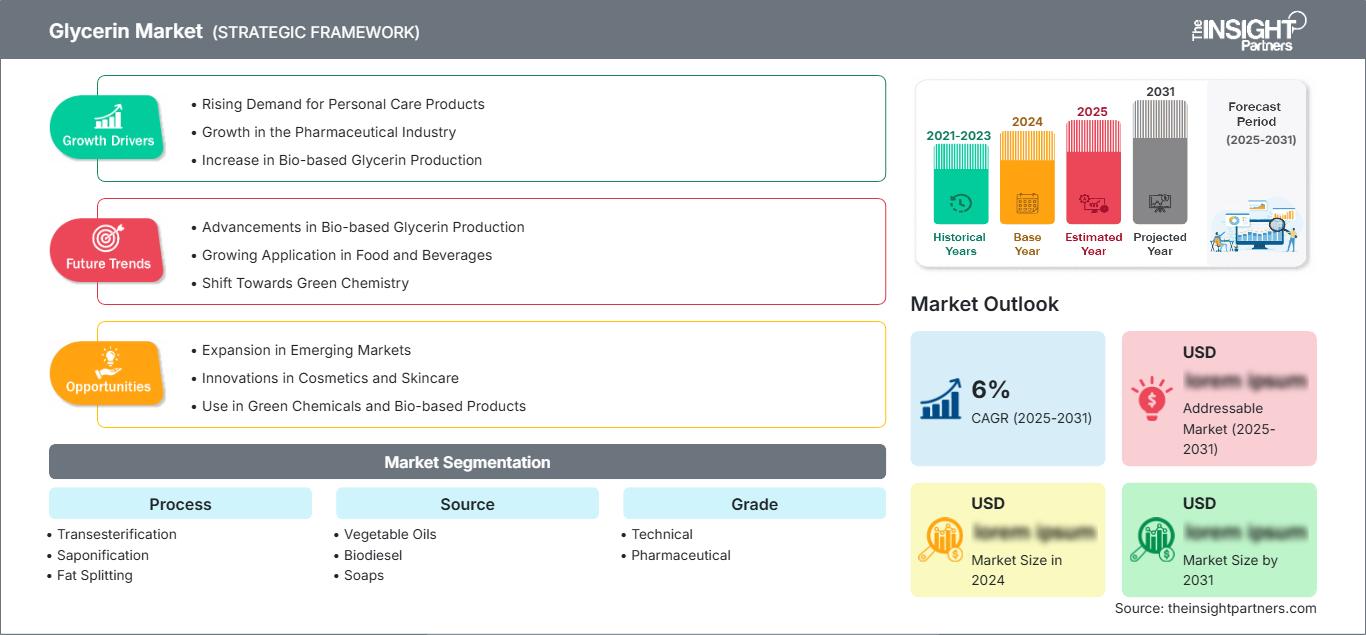
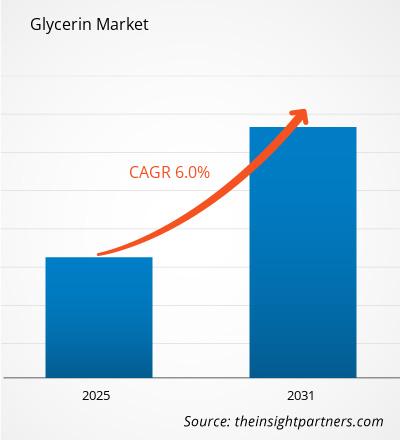
The glycerin market size was valued at US$ 3.16 Billion in 2025 and is projected to reach US$ 4.79 Billion by 2034, expanding at a CAGR of 4.73% during 2026–2034. The growth of the industry is facilitated by the increased use in pharmaceutical, personal care, food and beverages, chemical, and biodiesel sectors. Expansion in the use of the bio-based chemicals and the need for renewable feedstock will help in the growth of the industry in the long term, while companies concentrate on improving the production processes and sources.
North American demand benefits from the growing pharmaceutical manufacturing, renewable fuels manufacturing, and premium personal care products. The market size of glycerin in North America depends on the well-developed oleochemicals sector, biodiesel production, and preference for natural products. It is expected that CAGR will be within 4.2%-4.8% up to 2034.
Glycerin Market Assessment and Insights
- North America: North America accounted for 30%–34% of the glycerin market share in 2025 and is projected to expand at a CAGR of 4.2%–4.8% during 2026–2034. Strong biodiesel production, pharmaceutical manufacturing, and personal care product demand continue to support regional market expansion.
- U.S.: The U.S. represented 76%–80% of the North American market in 2025 and is expected to grow at a CAGR of 4.3%–4.9% during 2026–2034, supported by well-established chemical processing and renewable fuel industries.
- Europe: Europe captured 25%–29% share in 2025 and is forecast to grow at a CAGR of 4.1%–4.7% during 2026–2034. Germany, France, Italy, the UK, and the Netherlands remain leading producers and consumers owing to strong oleochemical and pharmaceutical industries.
- Asia Pacific: Asia Pacific accounted for 31%–35% share in 2025 and is anticipated to witness the fastest regional expansion at a CAGR of 5.2%–5.8% during 2026–2034. China, India, Japan, Indonesia, and Malaysia continue to strengthen regional production and downstream consumption.
- Largest Segment: Vegetable Oils remained the largest source segment with 47%–51% market share in 2025 and is projected to register a CAGR of 4.8%–5.4% during 2026–2034, supported by abundant palm and soybean oil processing capacities.
- High Growth Segment: Pharmaceutical Grade is projected to be the fastest-growing grade segment with 30%–34% market share in 2025 and a CAGR of 5.8%–6.4% during 2026–2034, driven by increasing pharmaceutical formulations and stringent purity requirements.
- Key companies analyzed in detail: Cargill, Incorporated; Cremer Oleo GmbH & Co. KG; Croda International Plc; Emery Oleochemicals Group; Godrej Industries Limited; IOI Oleochemical Industries Berhad; Kao Corporation; Kuala Lumpur Kepong Berhad; P&G Chemicals; PT SMART Tbk.; Oleon NV; Wilmar International Limited.
Source: The Insight Partners' analysis based on proprietary research, government publications, company annual reports, investor presentations, industry databases, and expert interviews.
Fast-changing industrial scenario has also transformed the glycerin value chain as producers are looking for greater integration of biodiesel production, oleochemicals and vegetable oils in order to ensure greater efficiency in feedstock consumption and production processes. Rising focus on renewable feedstocks, advancements in purification process and pharmaceutical-grade refining process have resulted in better quality products along with more widespread adoption in various industries including cosmetics, healthcare, food processing and specialty chemicals. These factors will keep boosting glycerin market development in the coming years.
Going forward, investment trends are likely to pick up pace in Southeast Asia, Latin America and select Middle Eastern countries that will see rising production capacities in terms of vegetable oils and renewable fuels. Policies favoring sustainability practices, growing use of bio-chemicals and strict quality standards in pharmaceuticals and food products will drive capacity additions and technological innovations in the glycerin industry. As producers look for diversity in feedstock sources and strengthen their regional supply chain, the future outlook for the glycerin market looks positive.
Glycerin Market Report Scope
| Report Attribute | Details |
|---|---|
| Market size in 2025 | US$ 3.16 Billion |
| Market Size by 2034 | US$ 4.79 Billion |
| Global CAGR (2026 - 2034) | 4.73% |
| Historical Data | 2021-2024 |
| Forecast period | 2026-2034 |
Glycerin Market Analysis
The growing demand by pharmaceuticals, food processors, cosmetic products, and chemicals producers from renewable sources is continuously reinforcing the glycerin value chain. Glycerin acts as a humectant, solvent, sweetener, plasticizer, and stabilizer; therefore, it is essential in various industrial formulations. Biodiesel production is also contributing towards the increasing availability of supply because crude glycerin is produced as one of the major by-products during transesterification. With the increasing interest in sustainability, there have been developments in technology to ensure that glycerin with high purity can be produced for pharmaceutical and specialty chemicals use.
Supply continues to be dependent on the availability of vegetable oils, biodiesel production quantity, and oleochemicals processing capacity globally. Southeast Asia, North America, and Europe still hold a leading position in terms of production due to their well-established production of palm oil, soybean oil, and rapeseed. There have been advancements in refining processes, production systems, and quality control systems which are reducing costs while complying with the regulations in the industry.
The competition landscape of the glycerin market report involves significant integration of players involved in biodiesel production, oleochemical production, and specialty chemicals production. The major players such as Cargill, Incorporated, Croda International Plc, Emery Oleochemicals Group, IOI Oleochemical Industries Berhad, Wilmar International Limited, Oleon NV, Kao Corporation, and Godrej Industries Limited are constantly increasing their refining capacities and concentrating on high purity glycerin for use in pharmaceutical and cosmetics.
Competitive strategies in the industry are focused on efficient operation, product differentiation, and increased resiliency of supply chains. The companies are expanding their cooperation with biodiesel producers in order to have access to the raw material, crude glycerin, and developing advanced distillation and purification processes. Digital manufacturing, energy-efficient production process, and sustainability certifications play an increasingly important role as competitive advantages. Investments made in Asia Pacific and North America should increase the flexibility of production and support growing demand from the pharmaceutical, food, personal care, and specialty industrial sectors.
● REPORT CUSTOMIZATION
Tailor This Report To Align With Your Specific Business Requirements
This report can be customized to align precisely with your business objectives, scope, and target markets. Customization options include tailored segmentation, geography, competitive analysis, and strategic insights to support informed decision-making.
Customize This Report →WHAT YOU CAN ADJUST
- ● Segmentations
- ● Geography
- ● Competitive Analysis
- ● Language Preferences
Glycerin Market: Strategic Insights
Regional Insights
North America Glycerin Market
North America accounted for 30%–34% of the global glycerin market share in 2025 and is projected to expand at a CAGR of 4.2%–4.8% during 2026–2034. The region enjoys the advantage of an established biodiesel industry, oleochemicals manufacture and strong pharmaceutical production. Rising use of bio-sourced materials in cosmetic, food and healthcare applications is set to sustain high demand for refined glycerine. With the availability of sophisticated purification methods, manufacturers are now able to produce pharmaceutical grade and food grade materials that meet strict regulations.
Government encouragement towards the production of renewable fuels along with growing investment in sustainable chemical manufacture will contribute to competitiveness during the forecast period. Increased biodiesel production capability provides a reliable source of crude glycerine, while downstream manufacturers keep improving their value chain through better processing technology. Rising demand for renewable solvents, humectants and excipients in different industries is expected to fuel good market growth.
U.S. Glycerin Market
The U.S. represented 76%–80% of the North American market in 2025 and is expected to register a CAGR of 4.3%–4.9% during 2026–2034. Due to excellent biodiesel production, high levels of pharmaceutical production, and an advanced personal care industry, the country is the largest consumer and producer in the region. Chemical corporations have been continuously making investments in technology that will enable them to produce pharmaceuticals and cosmetic quality glycerin products.
There has been an increased use of renewable products in healthcare, food processing, and other industries, which has been driving up demand. The increasing production of biodiesel from soybean oil and waste cooking oil will increase the availability of feedstock for glycerin refinement.
Europe Glycerin Market
Europe accounted for 25%–29% of the global market in 2025 and is forecast to grow at a CAGR of 4.1%–4.7% during 2026–2034. Germany is still the dominant market due to its highly developed chemical manufacturing industry, pharmaceutical industry, and production of biodiesel. The integrated oleochemical industry of Germany enables an effective production of glycerin along with other chemicals.
The United Kingdom sees steady demand because of the pharmaceutical formulations, personal care, and food processing sectors. France, Italy, and Spain together make up for a considerable regional demand due to the growing cosmetics, food ingredients, and specialty chemical industries. The increasing focus on renewable chemicals and circular economy will lead to further investment in refined glycerin production.
APAC Glycerin Market
Asia Pacific held 31%–35% of the global market in 2025 and is anticipated to expand at a CAGR of 5.2%–5.8% during 2026–2034, making it the fastest-growing regional market. China is the regional leader in consumption, whereas Indonesia and Malaysia are the feedstock providers by having vast palm oil production facilities. India, Japan, South Korea, and Australia are continuing to boost their pharmaceuticals, foods, and cosmetics manufacturing activities.
Government policies favoring biodiesel blending, expansion in vegetable oil production facilities, and increased demand for bio-based chemicals are set to boost the regional production further. Increased investment in downstream oleochemical plants and export-oriented refineries would improve the region's competitive edge.
Middle East & Africa Glycerin Market
The Middle East & Africa market is projected to grow at a CAGR of 4.4%–5.0% during 2026–2034. Saudi Arabia and the United Arab Emirates continue investing in specialty chemicals and downstream industrial diversification, creating additional opportunities for glycerin utilization across pharmaceutical, food, and personal care applications. South Africa remains one of the region's major consuming markets.
Increased investments in renewable chemicals, increased industrial manufacturing processes, and improvements in healthcare infrastructure may contribute to sustained market growth. Increased demand for sustainable ingredients in both consumer products and industrial uses along with the gradual increase in capacity for chemical processing in the region is expected to drive future growth prospects.
Segmentation Analysis
Process
The Process segment is projected to register a CAGR of 4.5%–5.1% during 2026–2034. Production technologies continue evolving to improve glycerin yield, feedstock efficiency, and product purity. Manufacturers increasingly adopt integrated processing systems that maximize utilization of renewable feedstocks while reducing operational costs and environmental impact. The glycerin market scope continues expanding as process innovations improve scalability and enable production of higher-value refined grades for pharmaceutical, food, and specialty chemical applications.
- Transesterification – The dominant production route due to expanding biodiesel manufacturing. It generates significant volumes of crude glycerin that are subsequently refined for pharmaceutical, food, cosmetic, and industrial applications, strengthening supply availability worldwide.
- Saponification – Widely utilized in soap manufacturing, producing glycerin as a valuable co-product. Demand remains stable owing to consistent global consumption of soaps, detergents, and personal hygiene products across residential and commercial sectors.
- Fat Splitting – Primarily employed in oleochemical manufacturing to produce fatty acids and glycerin simultaneously. The process supports high-purity glycerin production for specialty chemicals, pharmaceuticals, and premium personal care formulations.
Source
The Source segment is expected to witness a CAGR of 4.6%–5.2% during 2026–2034. Availability of renewable raw materials, biodiesel production volumes, and regional vegetable oil processing capacity significantly influence supply dynamics. Manufacturers increasingly prioritize sustainable feedstocks to align with regulatory expectations and customer demand for environmentally responsible ingredients.
- Vegetable Oils – The leading source due to abundant palm, soybean, rapeseed, and sunflower oil processing. Renewable origin, reliable availability, and compatibility with biodiesel production continue supporting its dominant industry position.
- Biodiesel – Represents a rapidly expanding source as increasing renewable fuel production generates larger quantities of crude glycerin requiring purification for downstream industrial, pharmaceutical, and cosmetic applications.
- Soaps – Traditional soap manufacturing continues producing glycerin as a valuable co-product, supporting regional supply particularly in established personal care manufacturing hubs.
- Synthetic – Synthetic glycerin addresses applications requiring highly consistent purity and quality characteristics, particularly where supply reliability or specific technical performance requirements outweigh renewable sourcing considerations.
Grade
The Grade segment is projected to record a CAGR of 5.0%–5.6% during 2026–2034. Increasing quality requirements across pharmaceuticals, food processing, and cosmetics continue encouraging investments in advanced purification technologies. Higher-value refined grades are expected to witness stronger demand as regulatory standards become increasingly stringent across global end-use industries.
- Technical – Widely consumed across industrial applications including chemicals, resins, antifreeze formulations, and manufacturing processes where ultra-high purity is not essential but performance consistency remains important.
- Pharmaceutical – High-purity glycerin is increasingly utilized in medicines, oral care products, syrups, topical formulations, and healthcare products owing to stringent quality requirements and expanding global pharmaceutical production.
Opportunity Snapshot
| Source | Revenue Contribution | Trend Tag | Adoption Stage |
| Vegetable Oils | High | Palm Processing | Mature |
| Biodiesel | High | Renewable Fuels | Scaling |
| Soaps | Medium | Personal Hygiene | Mature |
| Synthetic | Low | High Purity | Emerging |
Glycerin Market Growth Drivers and Impact Analysis
Expansion of Biodiesel Production Strengthening Feedstock Availability
The steady increase in biodiesel manufacturing on the international level will continue to be one of the key factors driving demand for glycerin as glycerin is produced as a byproduct of transesterification reactions. The growing renewable fuel requirements in North America, Europe, Southeast Asia, and Latin America will boost the biodiesel production, thus contributing to the higher volumes of crude glycerin available for processing. The integrated facilities that are being built for producing both biodiesel and oleochemicals reduce the production expenses and ensure a stable supply of glycerin to pharmaceuticals, food, and other industries. Moreover, the efficiency of the refining processes is also increasing, and companies are able to produce high-quality glycerin using less energy.
Growing Demand for Pharmaceutical and Personal Care Ingredients
Need for pharma grade glycerin is constantly increasing owing to rising expenditure on health care, increasing age of population, and greater output of drugs, syrups, topicals, and health care products. Cosmetics and personal care industry is also using a lot of glycerin due to its excellent moisturizing, humectant, and stabilizing qualities. Consumers now want natural ingredients in their cosmetics products, leading to substitution of petrochemicals by biological glycerin by manufacturers. In addition, greater emphasis on quality has increased investments in purification technology for making high purity glycerin.
Increasing Adoption of Renewable Oleochemicals Across Industries
Growing environmental awareness and stricter sustainability regulations continue encouraging industries to adopt renewable raw materials in chemical manufacturing. Glycerin has emerged as an important bio-based intermediate for producing solvents, polymers, resins, plasticizers, surfactants, and specialty chemicals with lower environmental impact. Manufacturers are investing in circular production systems that maximize utilization of renewable feedstocks while reducing waste generation. Research into glycerin-derived chemicals and bio-based intermediates is also expanding, opening new commercial opportunities beyond traditional applications. These developments improve resource efficiency, diversify end-use demand, and strengthen the long-term competitiveness of glycerin within the global transition toward sustainable industrial manufacturing.
Glycerin Market Future Trends
Expansion of Bio-Based Specialty Chemical Manufacturing
The glycerin market trends indicate increasing utilization of glycerin as a renewable building block for specialty chemicals, biodegradable polymers, solvents, and advanced intermediates. Manufacturers are investing in research to develop higher-value applications that improve profitability while reducing dependence on conventional petrochemicals. Growing sustainability commitments across chemical, packaging, automotive, and consumer goods industries are expected to accelerate commercialization of glycerin-derived products. Continued innovation in catalytic conversion technologies will further expand industrial applications throughout the forecast period.
Digitalization and Advanced Refining Technologies
Digital manufacturing systems, automation, and artificial intelligence are increasingly improving production efficiency within glycerin refining facilities. Advanced monitoring technologies help manufacturers optimize purification processes, reduce energy consumption, minimize waste generation, and maintain consistent product quality. Companies are also investing in predictive maintenance and process analytics to improve operational reliability. These technological advancements are expected to strengthen supply chain resilience while supporting production of higher-value pharmaceutical and food-grade glycerin products.
Glycerin Market Opportunities
Investment in High-Purity Pharmaceutical Production Facilities
The glycerin market Forecasts suggest continued investment opportunities in pharmaceutical-grade refining capacity, particularly across Asia Pacific and North America. Rising healthcare expenditure, expanding pharmaceutical manufacturing, and increasingly stringent purity regulations continue creating demand for premium-grade glycerin. Companies investing in advanced purification systems, quality certification, and integrated manufacturing operations are expected to strengthen competitive positioning while capturing higher-margin business opportunities. Strategic partnerships between biodiesel producers and pharmaceutical ingredient manufacturers are also likely to improve feedstock security and operational efficiency over the coming years.
Expansion into Emerging Bioeconomy Value Chains
Emerging economies are increasingly investing in renewable chemicals, sustainable manufacturing, and circular economy initiatives, creating new opportunities for glycerin producers. Governments continue promoting domestic bio-based industries through supportive industrial policies and renewable fuel programs. Manufacturers can capitalize on these developments by expanding production capacity, establishing regional refining facilities, and developing innovative glycerin-derived specialty chemicals. Investments in downstream product diversification and collaborative research with academic institutions are expected to generate additional long-term revenue streams while strengthening participation in the evolving global bioeconomy.
Recent Developments
- October 2025: Croda International Plc provided an update on its sales performance in the third quarter of 2025 (the three months ended 30 September 2025). The company reported continued growth in a more challenging environment led by Beauty Actives, Fragrances and Flavours (F&F) and Crop Protection.
- May 2025: Louis Dreyfus Company (LDC) announced the inauguration of its new glycerin refining plant and edible oil packaging line in Lampung, expanding existing activities in Indonesia in line with the Group’s strategic growth plans and continued commitment to the country.
Frequently Asked Questions

- Comprehensive Market Sizing and Forecast Analysis
- Detailed Segmentation Analysis
- In-Depth Market Dynamics Assessment
- Regional and Country-Level Insights
- Competitive Landscape and Company Benchmarking
- Strategic Business Intelligence
Recent Reports
Testimonials

The Insight Partners' SCADA System Market report is comprehensive, with valuable insights on current trends and future forecasts. The team was highly professional, responsive, and supportive throughout. We are very satisfied and highly recommend their services.
RAN KEDEM Partner, Reali Technologies LTDs
I requested a report on a very specific software market and the team produced the report in a few days. The information was very relevant and well presented. I then requested some changes and additions to the report. The team was again very responsive and I got the final report in less than a week.
JEAN-HERVE JENN Chairman, Future Analytica
We worked with The Insight Partners for an important market study and forecast. They gave us clear insights into opportunities and risks, which helped shape our plans. Their research was easy to use and based on solid data. It helped us make smart, confident decisions. We highly recommend them.
PIYUSH NAGPAL Sr. Vice President, High Beam Global
The Insight Partners delivered insightful, well-structured market research with strong domain expertise. Their team was professional and responsive throughout. The user-friendly website made accessing industry reports seamless. We highly recommend them for reliable, high-quality research services
YUKIHIKO ADACHI CEO, Deep Blue, LLC.
This is the first time I have purchased a market report from The Insight Partners.While I was unsure at first, I visited their web site and felt more comfortable to take the risk and purchase a market report.I am completely satisfied with the quality of the report and customer service. I had several questions and comments with the initial report, but after a couple of dialogs over email with their analyst I believe I have a report that I can use as input to our strategic planning process.Thank you so much for taking the extra time and making this a positive experience.I will definitely recommend your service to others and you will be my first call when we need further market data.
JOHN SUZUKI President and Chief Executive Officer, Board Director, BK Technologies
I wish to appreciate your support and the professionalism you displayed in the course of attending to my request for information regarding to infectious disease IVD market in Nigeria. I appreciate your patience, your guidance, and the fact that you were willing to offer a discount, which eventually made it possible for us to close a deal. I look forward to engaging The Insight Partners in the future, all thanks to the impression you have created in me as a result of this first encounter.
DR CHIJIOKE ONYIA MANAGING DIRECTOR, PineCrest Healthcare Ltd.Reason to Buy
- Informed Decision-Making
- Understanding Market Dynamics
- Competitive Analysis
- Identifying Emerging Markets
- Customer Insights
- Market Forecasts
- Risk Mitigation
- Boosting Operational Efficiency
- Strategic Planning
- Investment Justification
- Tracking Industry Innovations
- Aligning with Regulatory Trends





 Get Free Sample for