
Hearable Market Size, Trends & Growth by 2034
Coverage: by Product (Headsets, Earbuds, Hearing Aids); Type (In Ear, Over Ear); Connectivity Type (Wired, Wireless); End-User (Consumer, Industrial, Others) , and Geography (North America, Europe, Asia Pacific, and South and Central America)
- Status : Data Released
- Report Code : TIPRE00009862
- Category : Electronics and Semiconductor
- No. of Pages : 150
- Available Report Formats :


- Last update date : August 19, 2026


2025 Market Size
US$ 43.67 Bn
Base year value
2034 Forecast
US$ 101.49 Bn
Projected by 2034
CAGR 2026-2034
9.82 %
Growth rate
Addressable Market
US$ 646.34 Bn
(2026-2034)
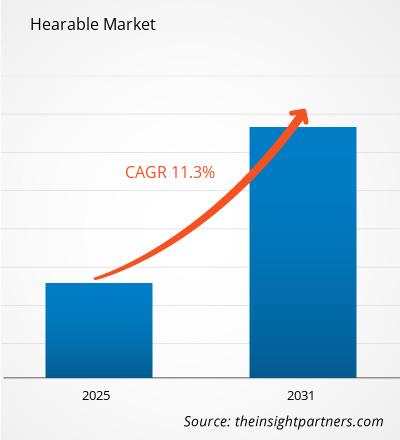
The Hearable Market was valued at US$ 43.67 Billion in 2025 and is projected to reach US$ 101.49 Billion by 2034; it is expected to register a CAGR of 9.82% from 2026 to 2034. There is an increase in the demand for audio devices as they transition from being music devices to being used for health, communication, productivity, and safety in various industrial applications.
North America continues to be the major focus area as the Hearable Market size receives a boost through the ecosystem development for smartphones, over-the-counter regulations for hearing aids, and premium wellness devices. The region is expected to register a CAGR of 8.8% to 9.4% during 2026 to 2034 due to increased disposable income and Bluetooth device usage.
Hearable Market Assessment and Insights
- North America held 32–35% share in 2025 and is projected to grow at 8.8–9.4% CAGR between 2026–2034, supported by premium device penetration.
- US represented 78–82% of North America in 2025 and is expected to grow at 8.9–9.5% CAGR between 2026–2034.
- Europe accounted for 23–26% share in 2025 and is forecast to grow at 8.1–8.8% CAGR between 2026–2034, led by Germany, the UK, and France.
- Asia Pacific captured 28–31% share in 2025 and is projected to grow at 10.8–11.6% CAGR between 2026–2034, led by China, Japan, South Korea, and India.
- Largest Segment Earbuds held 55–60% market share in 2025 and are projected to grow at 10.0–10.7% CAGR between 2026–2034.
- High Growth Segment Healthcare held 14–17% market share in 2025 and is projected to grow at 11.4–12.2% CAGR between 2026–2034.
- Key companies analyzed in detail: Apple Inc., Bose Corporation, BRAGI GmbH, GN Store Nord A/S, Koninklijke Philips N.V., LG Electronics Inc., Samsung Electronics Co., Ltd., Sennheiser electronic SE & Co. KG, Skullcandy, Inc., Sony Corporation.
Source: The Insight Partners' analysis based on proprietary research, government publications, company annual reports, investor presentations, industry databases, and expert interviews.
Technology migrations have resulted in hearables evolving from being mere audio accessories to become multi-purpose edge devices. Suppliers of components are focusing on power-efficient chipsets, beamforming microphones, biometric sensors, and signal-processing techniques that adapt to user needs. Compactness and battery life are among the trade-offs that brands have to make. Other factors affecting the Hearables include the scale of contract manufacturing in Asia, software-based differentiators, and faster refresh cycles.
Over the next few years, there will be growth in the adoption of hearables in India, Southeast Asia, the Gulf, and select countries in Latin America thanks to the convergence of smartphones, telehealth apps, and occupational health and safety programs. Support from regulations for hearing assistive devices, enterprises’ investment in communication headsets, and validation by clinics of consumer audio technology performance will fuel investments in hearables with comfort, compliance, and performance.
Hearable Market Report Scope
| Report Attribute | Details |
|---|---|
| Market size in 2025 | US$ 43.67 Billion |
| Market Size by 2034 | US$ 101.49 Billion |
| Global CAGR (2026 - 2034) | 9.82% |
| Historical Data | 2021-2024 |
| Forecast period | 2026-2034 |
Hearable Market Analysis
The drivers of growth in the Hearable Market include always-on connectivity, hybrid working models, streaming of content, and hearing healthcare use cases. Consumers look for features like instant noise cancellation, voice assistants, spatial sound, and switching between devices, while enterprises utilize rugged headsets for the purpose of communicating amid noisy surroundings. The supply chain aspects are semiconductors availability, miniaturization of speakers, battery chemistry, and software updates extending product lifetime value post-purchase.
The market players have adopted hardware, mobile apps, cloud technology, and service ecosystems as their defense mechanism. Apple Inc. and Samsung Electronics Co., Ltd. benefit from smartphone ecosystems in order to gain market traction. GN Store Nord A/S, Bose Corporation, Sennheiser electronic SE & Co. KG, and Sony Corporation compete among themselves on the basis of superior acoustic performance and audio engineering.
The degree of competition in the industry increases because of converging consumer electronics and medical grade hearing support demonstrated by Hearable Market report. Koninklijke Philips N.V., LG Electronics Inc., BRAGI GmbH, and Skullcandy, Inc. occupy positions through branded audio experience, connected health solutions, and design features. Investment focus areas include personalized AI-driven sound management, Bluetooth LE Audio, lower latency codecs, and partnerships minimizing friction between application ecosystems and hearing certification.
● REPORT CUSTOMIZATION
Tailor This Report To Align With Your Specific Business Requirements
This report can be customized to align precisely with your business objectives, scope, and target markets. Customization options include tailored segmentation, geography, competitive analysis, and strategic insights to support informed decision-making.
Customize This Report →WHAT YOU CAN ADJUST
- ● Segmentations
- ● Geography
- ● Competitive Analysis
- ● Language Preferences
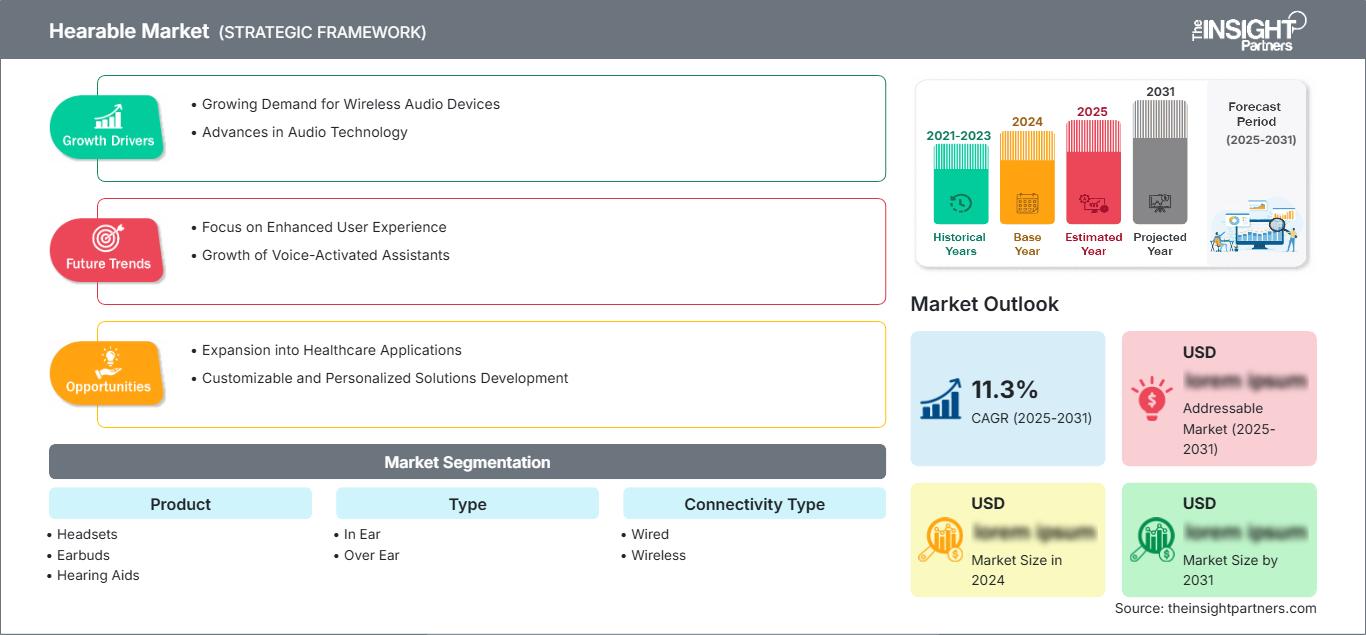
Hearable Market: Strategic Insights
Regional Insights
North America Hearable Market
The North American region held a Hearable Market share of 32-35% in 2025 and is anticipated to witness growth at a 8.8-9.4% CAGR from 2026 to 2034. The share of the North American region in the Hearables market is driven by high smartphone penetrance, premium audio replacement, and fast acceptance of hearing aids via applications owing to the clarity provided by regulations for over-the-counter hearing aids.
There is also a demand for hearables for hybrid work, fitness, and collaboration requirements in the enterprises. Product specifications in the region are impacted by the U.S. brands while adoption in Canada and Mexico depends on e-commerce sales, mobile accessories stores, and improved workplace communications.
U.S. Hearable Market
The U.S. accounts for 78–82% of North America in 2025 and is expected to witness 8.9–9.5% CAGR during 2026-2034 due to factors such as good iOS/Android devices ecosystem, wide availability at retailer channels, and consumer awareness about active noise canceling technology, fitness tracker features, and voice assistant.
The U.S. channels in terms of visibility of Apple Inc., Bose Corporation, Samsung Electronics Co., Ltd., Skullcandy, Inc., and Sony Corporation are seen on the Internet, telecom packages, and specialized audio stores. There are applications which are shifting from entertainment to assistive listening devices, work-based calls, gaming, traveling, and wellness coach, leaving some scope for subscription fees and accessory replacements.
Europe Hearable Market
Europe’s share was estimated to be at 23-26% and it is projected to witness a CAGR of 8.1-8.8% over 2026-2034. Germany emerges as a frontrunner owing to the factors such as higher disposable income, hearing care ecosystem, and audio professional legacy, whereas the UK is boosted by online electronics sales and premium earbud popularity.
Retail changes, mobile first entertainment usage, and investments in business communications are what is driving France, Italy, and Spain. The hearable technology that is used in the healthcare industry is gaining relevance due to aging population, and the growing need for invisible support, however, the issues with payments and privacy require the distinction between well-being and medicine.
APAC Hearable Market
Share held by APAC was recorded at 28-31% in 2025 and the region is expected to grow at 10.8-11.6% CAGR from 2026-2034, representing the fastest growth rate among all regions. China holds leadership in manufacturing capability and local consumption whereas Japan and South Korea focus on sound quality, miniaturization, and integration into a branded ecosystem. Demand from India and Australia will arise due to upgrades in smartphones, usage in fitness and e-commerce. Adoption in industrial applications is rising in sectors like logistics, electronics manufacturing, and transportation where hands-free communications and hearing protection needs overlap.
Middle East & Africa Hearable Market
While being the smallest region, Middle East & Africa is forecasted to experience the fastest growth of 9.0%-9.8% CAGR between 2026-2034, driven by the adoption rates in premium electronics stores, aviation centers, enterprises collaboration tools, and smart city infrastructure allowing connected personal devices use.
In South Africa, the drivers of the adoption include consumer electronics sales in urban centers and the need for communication in working environments, whereas Rest of MEA is characterized as price-sensitive one. Operations related to energy, construction, transport, and security allow creating use cases when durable wireless headsets with noise cancellation, multilingual capabilities, and long operation time matter more than fashion positioning. The growth in demand in industrial hearables is caused by energy and infrastructure development projects in GCC countries which need industrial hearables in construction, oil, gas, and manufacturing industries for communications and noise protection. Rest of MEA category comprises different markets at different stages of adoption and the driving factor behind the growth of the consumer audio devices category is the increase in smartphone adoption rate and usage of digital content there.
Segmentation Analysis
Product
The Product segment encompasses headsets, earbuds, and hearing aids, each serving distinct consumer needs and application contexts. This segment is projected to grow at a CAGR of approximately 9-11% from 2026 to 2034, driven by continuous innovation across all three product categories and expanding use cases beyond traditional audio consumption.
- Headsets: Headsets represent a significant product category encompassing over-ear and on-ear wireless audio devices favored for immersive audio experiences, gaming, and professional communication applications. Demand remains steady among professionals and enthusiasts who prioritize sound quality and comfort for extended usage sessions.
- Earbuds: Earbuds constitute the largest product category within the market, driven by the widespread popularity of true wireless stereo designs that offer portability, convenience, and increasingly sophisticated feature sets including active noise cancellation and biometric sensors.
- Hearing Aids: Hearing aids represent the fastest-growing product category, benefiting from regulatory changes enabling over-the-counter sales and the integration of advanced audio technologies that appeal to consumers seeking both hearing assistance and premium audio experiences.
Type
The Type segment categorizes hearable devices by their physical form factor and wearing style, encompassing in-ear, over-ear, and on-ear configurations. This segment is projected to grow at a CAGR of approximately 9-10% from 2026 to 2034, with in-ear devices maintaining dominance due to their portability and suitability for active lifestyles.
- In Ear: In-ear hearables dominate the market due to their compact form factor, portability, and suitability for active use cases including fitness, commuting, and travel. The category includes true wireless earbuds and neckband-style devices that offer convenience without compromising audio quality.
- Over Ear: Over-ear hearables appeal to consumers seeking immersive audio experiences, superior sound isolation, and extended comfort for prolonged usage. This category remains popular among audiophiles, gamers, and professionals requiring high-fidelity audio reproduction.
Connectivity Type
The Connectivity Type segment distinguishes between wired and wireless hearable devices, reflecting the industry's ongoing transition toward untethered audio solutions. This segment is projected to grow at a CAGR of approximately 9-11% from 2026 to 2034, with wireless devices capturing increasing market share.
- Wired: Wired hearables maintain a presence in professional audio applications, high-fidelity listening, and budget-conscious consumer segments where reliable connectivity and zero latency are prioritized over convenience.
- Wireless: Wireless hearables dominate the market, driven by consumer preference for tangle-free convenience, Bluetooth connectivity, and integration with smartphones and other mobile devices. True wireless stereo earbuds represent the fastest-growing sub-category within wireless hearables.
End-User
The End-User segment categorizes hearable device adoption across consumer, industrial, and healthcare applications. This segment is projected to grow at a CAGR of approximately 9-12% from 2026 to 2034, with healthcare applications exhibiting the strongest growth trajectory.
- Consumer: Consumer applications represent the largest end-user segment, encompassing entertainment, communication, fitness tracking, and everyday audio consumption. This segment benefits from continuous product innovation and marketing efforts targeting lifestyle enhancement.
- Industrial: Industrial hearables serve workforce communication, noise protection, and safety monitoring requirements in manufacturing, construction, logistics, and energy sectors. Adoption is driven by workplace safety regulations and productivity enhancement initiatives.
- Healthcare: Healthcare applications represent the fastest-growing end-user segment, driven by the integration of hearing assistance, biometric monitoring, and telehealth capabilities into hearable devices. Regulatory support for OTC hearing aids and growing health awareness among consumers underpin this growth.
Opportunity Snapshot
| End-User Segment | Revenue Contribution | Trend Tag | Adoption Stage |
|---|---|---|---|
| Consumer | High | Wireless Audio | Mature |
| Industrial | Medium | Workforce Comms | Scaling |
| Healthcare | High | OTC Hearing | Emerging |
Hearable Market Growth Drivers and Impact Analysis
Wireless Audio Technology Adoption
The accelerating shift from wired to wireless audio solutions represents a foundational growth driver for the Market. The removal of headphone jacks from smartphones, coupled with improvements in Bluetooth connectivity, battery efficiency, and audio codec quality, has made wireless hearables the default choice for most consumers. Bluetooth LE Audio, introduced with the latest specifications, enables longer battery life and new broadcast-audio services that expand use cases beyond personal listening. This technological transition has been further accelerated by the proliferation of streaming services offering high-resolution audio content, which incentivizes consumers to upgrade their audio devices for enhanced listening experiences. Manufacturers have responded by investing heavily in wireless chipset development, antenna design, and power management solutions that deliver reliable connectivity and extended playback times. The wireless audio trend has also enabled new form factors and use cases, including true wireless stereo earbuds that have become the dominant product category in the market.
Health and Wellness Feature Integration
The incorporation of health and wellness monitoring capabilities into hearable devices has significantly expanded their addressable market and value proposition. Consumers increasingly expect their audio devices to deliver more than just sound, driving demand for features including heart rate monitoring, step counting, stress detection, and hearing health management. This trend has been reinforced by the regulatory framework for over-the-counter hearing aids, which has enabled mainstream hearable brands to offer medically-relevant functionality at accessible price points. The integration of biometric sensors, AI-driven health analytics, and personalized wellness insights transforms hearables from entertainment accessories into comprehensive health management tools. This convergence of audio and health technology creates new revenue opportunities through hardware differentiation, subscription-based health services, and partnerships with healthcare providers and insurance companies. The growing consumer focus on preventive health and personal wellness ensures sustained demand for health-enabled hearable devices.
AI and Voice Assistant Integration
Artificial intelligence integration has become a critical differentiator in the Market, enabling advanced features that enhance user experience and expand device capabilities. AI-powered adaptive noise cancellation adjusts to environmental conditions in real time, delivering superior audio quality across diverse usage scenarios. Real-time language translation capabilities position hearables as essential tools for cross-cultural communication and international business. Voice assistant integration with major platforms including Apple's Siri, Google Assistant, and Amazon Alexa enables hands-free control and seamless interaction with broader smart ecosystems. Contextual awareness powered by edge AI allows hearables to automatically adjust audio settings based on user activity, location, and preferences. These intelligent features drive product differentiation, premium pricing, and consumer upgrade cycles, sustaining market growth through continuous technological advancement.
Hearable Market Future Trends
AI-Powered Personalized Audio Experiences Artificial intelligence is increasingly central to delivering personalized audio experiences that adapt to individual user preferences, environmental conditions, and usage contexts. AI algorithms analyze listening habits, ambient noise levels, and user activity to automatically optimize sound profiles, noise cancellation intensity, and transparency modes. The Hearable Market trend extends to hearing health, where AI-enabled hearables can perform personalized hearing assessments and adjust amplification settings accordingly, effectively serving as over-the-counter hearing solutions. The integration of machine learning enables devices to learn user preferences over time, creating increasingly refined audio experiences that enhance satisfaction and reduce the need for manual adjustments. As AI capabilities continue to advance, hearables are evolving from passive audio playback devices into intelligent assistants that proactively manage the user's audio environment.
Biometric Sensing and Health Monitoring Expansion
The integration of advanced biometric sensors into hearable devices is rapidly expanding their health monitoring capabilities beyond basic activity tracking. Manufacturers are incorporating sensors capable of measuring heart rate, blood oxygen levels, body temperature, and even electroencephalogram signals for brain activity monitoring. These capabilities position hearables as valuable tools for continuous health monitoring, fitness optimization, and early detection of health conditions. The trend is being accelerated by partnerships between hearable manufacturers and healthcare providers, as well as growing consumer acceptance of wearable devices for health management. Future developments are expected to include non-invasive blood glucose monitoring, hydration level tracking, and more sophisticated stress and fatigue detection algorithms. This convergence of consumer audio and medical technology represents a significant growth opportunity, with hearables potentially becoming the preferred platform for personal health monitoring due to their comfort, convenience, and continuous wearability.
Hearable Market Opportunities
Over-the-Counter Hearing Aid Market Expansion
The regulatory approval of over-the-counter hearing aids in the United States and similar frameworks emerging in Europe and Asia presents a substantial growth opportunity for the Hearable Market Forecast. This regulatory shift enables consumers with mild-to-moderate hearing loss to purchase hearing assistance devices directly without medical prescriptions, dramatically expanding the addressable market. Hearable manufacturers can leverage their existing wireless audio technology platforms, consumer brand recognition, and distribution channels to capture this emerging segment. Product development opportunities include hearables that function as both premium audio devices and hearing aids, offering consumers a single device for both entertainment and hearing health needs. The convergence of consumer audio and medical device markets also creates opportunities for partnerships with hearing health professionals, insurance providers, and corporate wellness programs.
Enterprise and Industrial Hearable Applications
The adoption of hearable devices in enterprise and industrial settings represents an underpenetrated growth opportunity with significant revenue potential. Industrial hearables provide workforce communication, noise protection, and safety monitoring capabilities in manufacturing, construction, logistics, and energy sectors. These devices can integrate with enterprise communication platforms, provide real-time translation for multilingual workforces, and monitor environmental noise levels to prevent hearing damage. The expansion of industrial Internet of Things (IoT) infrastructure creates opportunities for hearables to serve as wearable interfaces for machine monitoring, maintenance alerts, and safety notifications. Enterprise applications also include professional use cases such as conference calling, transcription services, and language interpretation, where hearable devices can enhance productivity and communication effectiveness. As workplace safety regulations tighten and organizations invest in digital transformation, demand for specialized industrial and enterprise hearables is expected to accelerate.
Recent Developments
- August 2026: CMF — the company launched the Clip Pro, its first open-ear earbuds, featuring a 3-point clip design, 10.8mm dual-magnet drivers, LDAC support, and Hi-Res Audio certification. The earbuds are designed to keep users aware of their surroundings while listening and are initially unavailable in India.
- May 2026: Cearvol — the company launched Wave, an AI-powered hearing solution incorporating NeuroFlow AI 2.0 and a touchscreen charging case. The system enables users to adjust volume, switch listening modes, reduce background noise, and manage calls directly from the case without relying on a smartphone.
- January 2026: Sony Corporation — Sony launched the LinkBuds Clip, open-ear true wireless earbuds featuring a C-shaped clip design that avoids blocking the ear canal. The product is designed for comfortable extended wear while maintaining awareness of surrounding sounds, with AI-powered voice pickup for clearer calls.
Frequently Asked Questions

- Comprehensive Market Sizing and Forecast Analysis
- Detailed Segmentation Analysis
- In-Depth Market Dynamics Assessment
- Regional and Country-Level Insights
- Competitive Landscape and Company Benchmarking
- Strategic Business Intelligence
Recent Reports
Testimonials

The Insight Partners' SCADA System Market report is comprehensive, with valuable insights on current trends and future forecasts. The team was highly professional, responsive, and supportive throughout. We are very satisfied and highly recommend their services.
RAN KEDEM Partner, Reali Technologies LTDs
I requested a report on a very specific software market and the team produced the report in a few days. The information was very relevant and well presented. I then requested some changes and additions to the report. The team was again very responsive and I got the final report in less than a week.
JEAN-HERVE JENN Chairman, Future Analytica
We worked with The Insight Partners for an important market study and forecast. They gave us clear insights into opportunities and risks, which helped shape our plans. Their research was easy to use and based on solid data. It helped us make smart, confident decisions. We highly recommend them.
PIYUSH NAGPAL Sr. Vice President, High Beam Global
The Insight Partners delivered insightful, well-structured market research with strong domain expertise. Their team was professional and responsive throughout. The user-friendly website made accessing industry reports seamless. We highly recommend them for reliable, high-quality research services
YUKIHIKO ADACHI CEO, Deep Blue, LLC.
This is the first time I have purchased a market report from The Insight Partners.While I was unsure at first, I visited their web site and felt more comfortable to take the risk and purchase a market report.I am completely satisfied with the quality of the report and customer service. I had several questions and comments with the initial report, but after a couple of dialogs over email with their analyst I believe I have a report that I can use as input to our strategic planning process.Thank you so much for taking the extra time and making this a positive experience.I will definitely recommend your service to others and you will be my first call when we need further market data.
JOHN SUZUKI President and Chief Executive Officer, Board Director, BK Technologies
I wish to appreciate your support and the professionalism you displayed in the course of attending to my request for information regarding to infectious disease IVD market in Nigeria. I appreciate your patience, your guidance, and the fact that you were willing to offer a discount, which eventually made it possible for us to close a deal. I look forward to engaging The Insight Partners in the future, all thanks to the impression you have created in me as a result of this first encounter.
DR CHIJIOKE ONYIA MANAGING DIRECTOR, PineCrest Healthcare Ltd.Reason to Buy
- Informed Decision-Making
- Understanding Market Dynamics
- Competitive Analysis
- Identifying Emerging Markets
- Customer Insights
- Market Forecasts
- Risk Mitigation
- Boosting Operational Efficiency
- Strategic Planning
- Investment Justification
- Tracking Industry Innovations
- Aligning with Regulatory Trends





 Get Free Sample for