
home energy management systems (hems) Market Size, Demand & Growth by 2034
Coverage: By Component (Hardware, Software, and Services), System Type (Lighting Controls, Thermostats, Self-Monitoring Systems, Advanced Central Controllers, and Intelligent HVAC Controllers), and Geography (North America, Europe, Asia Pacific, Middle East and Africa, and South and Central America)
- Status : Data Released
- Report Code : TIPRE00039456
- Category : Energy and Power
- No. of Pages : 258
- Available Report Formats :


- Last update date : March 26, 2026


2025 Market Size
US$ 5.51 Bn
Base year value
2034 Forecast
US$ 17.68 Bn
Projected by 2034
CAGR 2026-2034
13.82 %
Growth rate
Addressable Market
US$ 100.11 Bn
(2026-2034)
The home energy management systems (hems) Market size is expected to reach US$ 17.68 Billion by 2034 from US$ 5.51 Billion in 2025. The market is estimated to record a CAGR of 13.82% from 2026 to 2034.
Home Energy Management System Market Analysis
Home energy management systems are a combination of smart home devices, energy monitoring, and automated control that work together to help homeowners reduce their energy consumption patterns. They cover all the stages of energy management: monitoring, analysis, control, and optimization of energy; provide real-time energy usage data; allow for automated load scheduling; and facilitate easy integration with rooftop solar, battery storage, and electric vehicle charging. Home energy management systems contribute significantly to improving household energy self-sufficiency, enhancing grid stability, and supporting carbon neutrality goals by increasing energy efficiency, reducing peak demand, enabling demand response participation, and facilitating greater integration of renewable energy sources.
Home Energy Management System Market Overview
Key factors that drive the market growth include rising electricity costs; increasing consumer consciousness on energy conservation; energy efficiency being mandated by regulations; proliferation of smart home technology; the adoption of cloud, native energy platforms; and the integration of renewable energy systems with intelligent load management features. Advancements in AI, the use of machine learning algorithms for predictive optimization, and improvements in virtual power plant (VPP) participation models are additional growth drivers. The market is, however, restrained by high initial costs of implementation, low consumer awareness in the less developed regions, incompatibility issues of various smart home devices, and the increasing concerns over data privacy and cybersecurity.
Market Assessment and Insights
- Global market for home energy management systems (hems) was valued at US$ 5.51 Billion in 2025
- Annual market size is expected to reach US$ 17.68 Billion by 2034
- Total addressable market (TAM) during 2026-2034 is projected to reach approximately US$ 100.11 Billion
- Market is anticipated to register a CAGR of 13.82% during the forecast period
- The United States represents a key market, supported by Increased Electricity Costs, Regulatory Certification and Standardization Drive Adoption, Rapid Rise of Smart Home Adoption, as well as evolving industry dynamics
- Market analysis covers North America, Europe, Asia-Pacific, South and Central America, Middle East and Africa, with growth evaluated across the forecast period
- Market opportunities such as Green Building Initiatives, Edge Computing in HEMS, Multisite Energy Management are expected to influence market dynamics and addressable market
- Report profiles industry participants, including ABB Ltd, GE Vernova Inc., Schneider Electric SE, Honeywell International Inc, Siemens AG, Johnson Controls International Plc, Emerson Electric Co,, Eaton Corporation plc, Mitsubishi Electric Corp, International Business Machines Corp, while analyzing competitive strategies and innovation developments
-
Source: The Insight Partners' analysis based on proprietary research, government publications, company annual reports, investor presentations, industry databases, and expert interviews.
● REPORT CUSTOMIZATION
Tailor This Report To Align With Your Specific Business Requirements
This report can be customized to align precisely with your business objectives, scope, and target markets. Customization options include tailored segmentation, geography, competitive analysis, and strategic insights to support informed decision-making.
Customize This Report →WHAT YOU CAN ADJUST
- ● Segmentations
- ● Geography
- ● Competitive Analysis
- ● Language Preferences
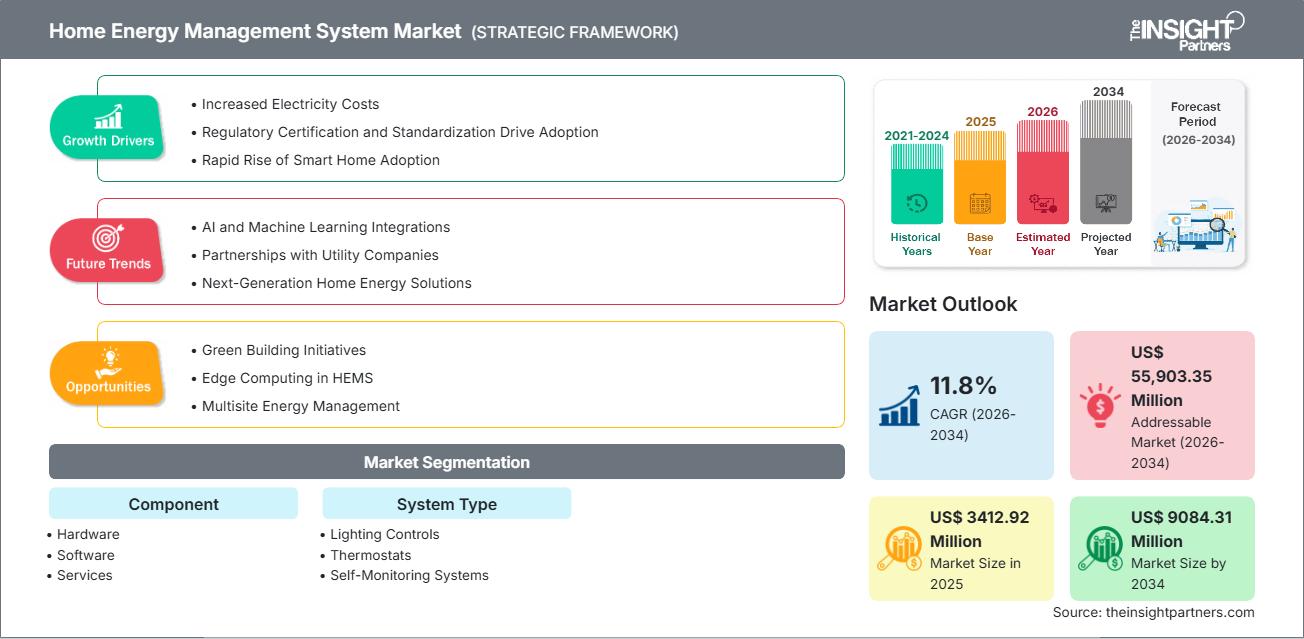
Home Energy Management System Market: Strategic Insights
-
Get Top Key Market Trends of this report.This FREE sample will include data analysis, ranging from market trends to estimates and forecasts.
Market Drivers:
- Increased Energy Costs and Consumer Demand for Savings: There is a rising trend among homeowners to use home energy management systems to reduce energy costs. HEMS features such as real-time monitoring, load scheduling, and automated optimization of energy-consuming appliances help householders achieve their goals.
- Government Initiatives and Regulatory Mandates: Governments worldwide are actively promoting initiatives through new policies in energy efficiency, carbon emission reduction, and smart home technology adoption. Financial incentives such as rebates, tax credits, and subsidies drive consumers to invest in energy-efficient home management systems. Additionally, regulatory measures that set energy efficiency standards for new constructions and major renovation projects stimulate demand for smart home technologies.
- Smart Grid Expansion and Smart Meter Penetration: Expansion of smart grid infrastructure and smart meter deployments is enabling two-way communication between utilities and households. Smart meters are vital parts of HEMS, which record detailed energy usage data for billing, load management, and demand response programs. Such a system lays the groundwork for HEMS uptake as it provides the essential data for effective energy optimization.
Market Opportunities:
- Expansion of AI-Enabled Predictive Energy Optimization: The transition to AI-powered, predictive energy management opens up great possibilities as algorithms get better at understanding the patterns of human behavior, predicting the energy needs, and automatically optimizing the loads without compromising comfort. An important point of differentiation would be machine learning models, which provide targeted energy savings recommendations.
- Strategic Partnerships Between Technology Companies and Utilities: Partnerships between HEMS vendors and utility companies would allow the implementation of integrated demand response programs, time-of-use rate optimization, and value-added services, resulting in advantages for both consumers and grid operators. These kinds of partnerships generate channel opportunities and quicken the pace of market penetration via utility, sponsored incentive programs.
- Adoption of Cloud-Native and Service-Based Models: The shift to cloud-native platforms, subscription-based pricing, and managed energy services opens up the possibilities for vendors to set up recurring revenue streams while lowering the initial cost barriers for consumers. Service-oriented models that combine installation, maintenance, and long-term support with software subscriptions leverage downstream value and raise customer loyalty.
Home Energy Management System Market Report Segmentation
Analysis
The home energy management system market is segmented into distinct categories to provide a clearer understanding of its operation, growth potential, and current trends. Below is the standard segmentation approach used in industry reports:
By Component:
- Hardware: The hardware component is the tangible infrastructure through which data capture, communication, and automated control become possible in a HEMS. It refers to smart thermostats, lighting control devices, energy monitors, sensors, gateways, smart plugs, and in-home displays, which essentially lay down the groundwork for residential energy management.
- Software: The software is the smart brain of a HEMS, enabling consumers and service providers to access, analyze, and use energy data in real time. Key software components include energy monitoring dashboards, analytics and AI-based optimization engines, mobile apps, automation rule engines, and cloud-based energy management platforms.
- Services: The services segment includes professional activities that help in the deployment of a HEMS and its continued operation over time. These activities include system integration, professional installation, maintenance and support, training, and managed energy services that contribute to improved reliability and consumer value.
By System:
- Lighting Controls
- Thermostats
- Self-Monitoring Systems
- Advanced Central Controllers
- Intelligent HVAC Controllers
By Geography:
- North America
- Europe
- Asia Pacific
- Latin America
- Middle East & Africa
Home Energy Management System Market Report Scope
| Report Attribute | Details |
|---|---|
| Market size in 2025 | US$ 5.51 Billion |
| Market Size by 2034 | US$ 17.68 Billion |
| Global CAGR (2026 - 2034) | 13.82% |
| Historical Data | 2021-2024 |
| Forecast period | 2026-2034 |
| Segments Covered |
By Component
|
| Regions and Countries Covered |
North America
|
| Market leaders and key company profiles |
|
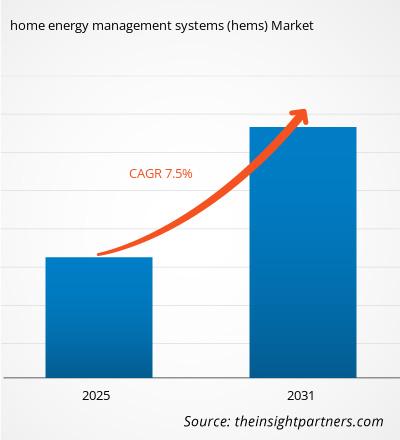
Home Energy Management System Market Players Density: Understanding Its Impact on Business Dynamics
The Home Energy Management System Market is growing rapidly, driven by increasing end-user demand due to factors such as evolving consumer preferences, technological advancements, and greater awareness of the product's benefits. As demand rises, businesses are expanding their offerings, innovating to meet consumer needs, and capitalizing on emerging trends, which further fuels market growth.
Home Energy Management System Market Share Analysis by Geography
North America is witnessing the fastest growth. Emerging markets in Latin America, the Middle East, and Africa offer untapped opportunities for home energy management system providers.
The home energy management system market experiences varying growth rates across different regions. Below is a summary of market share and trends by region:
1. North America
- North America hosts the most developed home energy management system market, driven by factors such as high penetration of smart home technologies, utility-led demand response programs, a favorable regulatory environment, and strong consumer awareness of energy efficiency benefits. The US is the largest market in the region, supported by substantial utility investments in grid modernization and comprehensive consumer incentive programs.
2. Europe
- Europe benefits from a well-developed regulatory framework, strict energy efficiency requirements, and coordinated initiatives among European Union member states. Germany, the UK, France, and Italy are key home energy management system markets, demonstrating strong environmental commitment through measures such as carbon neutrality targets, building energy performance standards, and smart grid development.
3. Asia Pacific
- The Asia Pacific home energy management system market is driven by rapid urbanization, rising disposable incomes, growing smart home adoption, and government initiatives promoting energy efficiency. China, Japan, South Korea, India, and Australia are the key growth markets where demand for electricity and environmental concerns are the primary drivers of investment in residential energy management solutions.
4. South and Central America
- The South & Central America home energy management system market is developing as governments and consumers put a higher premium on energy efficiency, grid reliability, and cost savings. Countries such as Brazil and Argentina are actively adopting smart home technologies and energy monitoring solutions, although market growth varies significantly across the region.
5. Middle East and Africa
- Middle East and Africa presents a promising market for HEMS providers, particularly in the Gulf Cooperation Council countries, where smart city initiatives aligned with sustainability goals and high per-capita energy consumption are driving demand for energy management solutions. South Africa and the UAE are regional frontrunners in adoption, supported by grid challenges and government modernization programs.
High Market Density and Competition
The market is highly competitive. ABB, Johnson Controls International, Siemens AG, and Honeywell International Inc. are among the key players dominating the market. Regional and niche manufacturers offer specialized solutions tailored to specific industries or applications.
This high level of competition drives companies to stand out by offering:
- Advanced technology integration, including AI/ML-driven predictive analytics, real-time energy optimization, behavioral learning algorithms, and intelligent decision support systems
- End-to-end HEMS platforms encompassing system design, deployment, integration, training, and ongoing operations, maintenance, and optimization
- Interoperable and scalable solutions connecting diverse devices, appliances, renewable energy systems, and grid interfaces across residential applications.
Opportunities and Strategic Moves
- Forming strategic alliances with utilities, homebuilders, and smart home platform providers
- Focusing on software and services layers for recurring revenue and differentiation
- Leading the sustainability charge through carbon reduction analytics and renewable integration
Other companies analyzed during the course of research:
- Mitsubishi Electric Corporation
- Emerson Electric Co.
- General Electric Company
- Panasonic Corporation
- Samsung Electronics
- LG Electronics
- EcoFactor
- Tendril Networks Inc.
- C3 IoT
- Opower (Oracle Utilities)
- Allure Energy
- SmartThings
Disclaimer: The companies listed above are not ranked in any particular order.
Home Energy Management System Market News and Recent Developments
- ABB Introduces ReliaHome Flex: Modular Energy Management for Smarter Home Electrification: In January 2026, ABB announced the launch of ReliaHome Flex, a new modular energy management system that empowers homeowners and builders to add electric appliances without costly service upgrades. Designed to work with any brand of load center, ReliaHome Flex installs in minutes and scales easily for retrofits or new construction. Managed through the intuitive ReliaHome app, it delivers real-time insights and customizable automations, giving homeowners confidence and control over their energy use.
- Rheem and ecobee partner to launch the ecobee Smart Thermostat Lite: In February 2026, Rheem—a leader in the HVAC and water heating industry—and ecobee, a leader in smart home technology, announced a partnership to launch the ecobee Smart Thermostat Lite | Works with EcoNet Technology. This innovative solution delivers energy savings, seamless compatibility, and enhanced convenience for homeowners and contractors.
Home Energy Management System Market Report Coverage and Deliverables
The "Home Energy Management System Market Size and Forecast (2021–2034)" report provides a detailed analysis of the market covering below areas:
- Home Energy Management System Market size and forecast at global, regional, and country levels for all the key segments covered under the scope
- Home Energy Management System Market trends, as well as dynamics such as drivers, restraints, and key opportunities
- Detailed PEST and SWOT analysis
- Home Energy Management System Market analysis covering key trends, global and regional framework, major players, regulations, and recent market developments
- Industry landscape and competition analysis covering market concentration, heat map analysis, prominent players, and recent developments for the home energy management system market
- Detailed company profiles
Frequently Asked Questions

- Comprehensive Market Sizing and Forecast Analysis
- Detailed Segmentation Analysis
- In-Depth Market Dynamics Assessment
- Regional and Country-Level Insights
- Competitive Landscape and Company Benchmarking
- Strategic Business Intelligence
Recent Reports
Testimonials

The Insight Partners' SCADA System Market report is comprehensive, with valuable insights on current trends and future forecasts. The team was highly professional, responsive, and supportive throughout. We are very satisfied and highly recommend their services.
RAN KEDEM Partner, Reali Technologies LTDs
I requested a report on a very specific software market and the team produced the report in a few days. The information was very relevant and well presented. I then requested some changes and additions to the report. The team was again very responsive and I got the final report in less than a week.
JEAN-HERVE JENN Chairman, Future Analytica
We worked with The Insight Partners for an important market study and forecast. They gave us clear insights into opportunities and risks, which helped shape our plans. Their research was easy to use and based on solid data. It helped us make smart, confident decisions. We highly recommend them.
PIYUSH NAGPAL Sr. Vice President, High Beam Global
The Insight Partners delivered insightful, well-structured market research with strong domain expertise. Their team was professional and responsive throughout. The user-friendly website made accessing industry reports seamless. We highly recommend them for reliable, high-quality research services
YUKIHIKO ADACHI CEO, Deep Blue, LLC.
This is the first time I have purchased a market report from The Insight Partners.While I was unsure at first, I visited their web site and felt more comfortable to take the risk and purchase a market report.I am completely satisfied with the quality of the report and customer service. I had several questions and comments with the initial report, but after a couple of dialogs over email with their analyst I believe I have a report that I can use as input to our strategic planning process.Thank you so much for taking the extra time and making this a positive experience.I will definitely recommend your service to others and you will be my first call when we need further market data.
JOHN SUZUKI President and Chief Executive Officer, Board Director, BK Technologies
I wish to appreciate your support and the professionalism you displayed in the course of attending to my request for information regarding to infectious disease IVD market in Nigeria. I appreciate your patience, your guidance, and the fact that you were willing to offer a discount, which eventually made it possible for us to close a deal. I look forward to engaging The Insight Partners in the future, all thanks to the impression you have created in me as a result of this first encounter.
DR CHIJIOKE ONYIA MANAGING DIRECTOR, PineCrest Healthcare Ltd.Reason to Buy
- Informed Decision-Making
- Understanding Market Dynamics
- Competitive Analysis
- Identifying Emerging Markets
- Customer Insights
- Market Forecasts
- Risk Mitigation
- Boosting Operational Efficiency
- Strategic Planning
- Investment Justification
- Tracking Industry Innovations
- Aligning with Regulatory Trends





 Get Free Sample for