
Inorganic Antimicrobial Coatings Market Demand, Share & Growth by 2034
Coverage: By Type (Silver-based, Copper-based, Zinc-based, Others); Application (HVAC, Medical, Building and Construction, Foods and Beverages, Textiles, Others), and Geography (North America, Europe, Asia Pacific, and South and Central America)
- Status : Data Released
- Report Code : TIPRE00014799
- Category : Chemicals and Materials
- No. of Pages : 150
- Available Report Formats :


- Last update date : August 19, 2026


2025 Market Size
US$ 2.67 Bn
Base year value
2034 Forecast
US$ 5.46 Bn
Projected by 2034
CAGR 2026-2034
8.27 %
Growth rate
Addressable Market
US$ 36.51 Bn
(2026-2034)
The global inorganic antimicrobial coatings market size stood at US$ 2.67 Billion in 2025 and is estimated to grow at a CAGR of 8.27% between 2026 and 2034, reaching a value of US$ 5.46 Billion by 2034. Growth will be driven by rising adoption of antimicrobial surface coatings within healthcare facilities, HVAC systems, construction industry, food processing industry, and textiles, among others, on account of growing need for durable hygiene solutions and surface coatings that can prevent growth of microbes on contact surfaces.
North America is an appealing market on account of its high hygiene standards, robust healthcare sector, advanced coating formulations, and investments in efficient surface technologies. Growth will also be fueled by commercial building renovations, HVAC upgrades, food processing needs, and other requirements for architectural and industrial coatings with antimicrobial properties.
Inorganic Antimicrobial Coatings Market Assessment and Insights
- North America holds a leading position, representing a 35–39% inorganic antimicrobial coatings market share in 2025 and expanding at a 7.8–8.6% CAGR between 2026–2034, supported by healthcare, HVAC, food-processing, and commercial construction demand.
- US accounts for approximately 78–82% of North America's 2025 market, with growth of 7.9–8.7% CAGR between 2026–2034, reflecting broad industrial adoption and advanced coating formulation capabilities.
- Europe represents a 25–29% share in 2025 and is projected to expand at a 7.4–8.2% CAGR between 2026–2034, led by Germany, the UK, France, Italy, and Spain.
- Asia Pacific commands a 28–32% share in 2025 and is expected to grow at a 9.1–10.0% CAGR between 2026–2034, led by China, Japan, South Korea, India, and Australia.
- Largest Segment is Silver-based, with a 45–49% market share in 2025 and a 7.8–8.5% CAGR between 2026–2034, reflecting established antimicrobial efficacy and broad coating compatibility.
- High Growth Segment is Copper-based, accounting for a 24–28% market share in 2025 and advancing at a 9.2–9.8% CAGR between 2026–2034, driven by durable antimicrobial performance and cost considerations.
- Key companies analyzed in detail: Akzo Nobel N.V., Axalta Coating Systems Ltd., BioInteractions Ltd., Hydromer, Inc., Mankiewicz Gebr. & Co. (GmbH & Co. KG), Microban International, Ltd., Nippon Paint Holdings Co., Ltd., PPG Industries, Inc., The Sherwin-Williams Company, BASF SE.
Source: The Insight Partners' analysis based on proprietary research, government publications, company annual reports, investor presentations, industry databases, and expert interviews.
From mere protective coating technology, the development in the inorganic antimicrobial coatings market has shifted to systems that incorporate antimicrobial property along with other functions including adhesiveness, durability, chemical resistance, water resistance and environmental sustainability. Though silver-based chemistry remains significant due to proven effectiveness, there are copper-based and zinc-based systems that serve as alternatives. The focus for manufacturers is to ensure optimum dispersion and stability of the particles as well as compatibility of the coating to preserve antimicrobial properties without any effect on finish and mechanical qualities.
Moving forward, the inorganic antimicrobial coatings market is likely to get boost from adoption by developing Asian economies, redevelopment of facilities in healthcare and commercial sectors, as well as investments in multifunctional coatings. Growing regulatory focus on the substances used in coating also encourages suppliers to enhance efficacy using lower loading and improve testing and environmental profile of the formulations.
Inorganic Antimicrobial Coatings Market Report Scope
| Report Attribute | Details |
|---|---|
| Market size in 2025 | US$ 2.67 Billion |
| Market Size by 2034 | US$ 5.46 Billion |
| Global CAGR (2026 - 2034) | 8.27% |
| Historical Data | 2021-2024 |
| Forecast period | 2026-2034 |
Inorganic Antimicrobial Coatings Market Analysis
The inorganic antimicrobial coatings market report indicates that demand tends to become more associated with applications where control of microorganisms influences operational hygiene, asset effectiveness, or product quality. There are needs for antimicrobial surfaces in healthcare establishments close to high traffic zones, and HVAC systems need surface coatings that can inhibit microbial growth. In food processing environments, coated machinery and surfaces are used where there are hygiene issues. The value chain includes suppliers of antimicrobial active materials, suppliers of resins and binders, suppliers of coating formulations, applicators, coating equipment manufacturers, and end users.
Factors influencing supply include availability, purity, dispersion, and cost of metal antimicrobial agents. Silver is very effective but costly; therefore, there is a need to optimize loading and particle size. Copper and zinc have a variety of cost management alternatives. The large coating companies can develop coatings with antimicrobial properties within their formulation platform, while specialty suppliers have differentiation in terms of active chemistry, testing, regulatory, and specialized formulations.
According to the inorganic antimicrobial coatings market forecast, the competitive environment involves diversified coating companies as well as antimicrobial technology specialists. Akzo Nobel N.V., PPG Industries, Inc., The Sherwin-Williams Company, Axalta Coating Systems Ltd., Nippon Paint Holdings Co., Ltd., and BASF SE offer formula development capacity, application knowledge and business connections within the industry. Antimicrobial technology, health care focus, or customized surface coating solution are at the center of specialization for firms such as Microban International, Ltd., BioInteractions Ltd., and Hydromer, Inc.
Strategic positioning becomes more and more focused on multifunctionality of coatings instead of the antimicrobial effect in particular. Microban International, Ltd. has developed platforms of coating technology whereas Nippon Paint Holdings Co., Ltd. has paid attention to more accurate testing of the antibacterial activity. Larger coating firms remain concentrated on sustainable chemistry, production efficiency and superior performance characteristics. Thus, investment moves towards formulation science, validation, regulatory capacity and combined antimicrobial and durable coating technologies.
● REPORT CUSTOMIZATION
Tailor This Report To Align With Your Specific Business Requirements
This report can be customized to align precisely with your business objectives, scope, and target markets. Customization options include tailored segmentation, geography, competitive analysis, and strategic insights to support informed decision-making.
Customize This Report →WHAT YOU CAN ADJUST
- ● Segmentations
- ● Geography
- ● Competitive Analysis
- ● Language Preferences
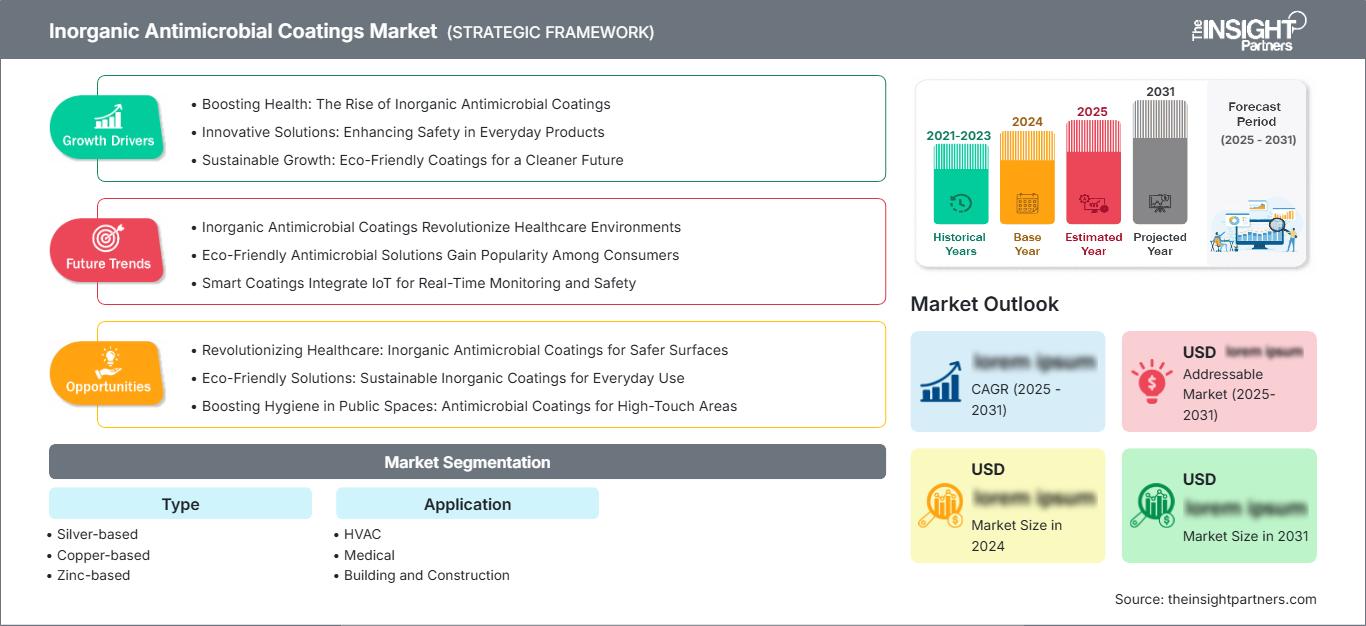
Inorganic Antimicrobial Coatings Market: Strategic Insights
Regional Insights
North America inorganic antimicrobial coatings market
North America is projected to take up the market share of 35-39% in 2025, with CAGR of 7.8-8.6% during 2034. The region holds an edge owing to presence of advanced healthcare infrastructure, well-established HVAC installations, renovation works and high standards of hygiene at surface levels. United States is the main hub for demand owing to the large presence of healthcare, food processing, institutional and commercial building segments.
The demand is driven by the need for replacements and not just constructions. Medical facilities, food facilities, laboratories, schools and transport infrastructure need durable coatings that will maintain their efficacy despite the frequent wash cycles. Low active loading, long-term adhesion property and the compatibility with the existing coating systems are the key focus area for the formulators in the North American region.
U.S. inorganic antimicrobial coatings market
The USA accounts for about 78-82% of North America's 2025 market and is projected to have a 7.9-8.7% CAGR during 2034. The demand emanates from healthcare facilities, HVAC, institutional structures, food processing plants, and high contact commercial structures. Large coating producers and coating technologies specialists retain their application development, product formulation, and distribution services across the country.
Current application practices increasingly emphasize multifunctional coatings which feature not only antimicrobial but also wear-resistant, chemical-resistant, moisture resistant, and cleanability enhanced properties. The healthcare facilities and food production plants continue to be key end users; the HVAC application segment offers coatings applied to ventilation structures. The USA has a very good cooperation between coating suppliers, universities, and organizations specializing in material sciences that facilitates better testing and validation of products.
Europe inorganic antimicrobial coatings market
Europe is forecasted to hold a share of 25-29% in 2025 and grow with a CAGR of 7.4-8.2%, with Germany as one of the most promising countries. The market demand is driven by hygiene norms, building renovations, healthcare sector development, food processing needs, and increasing demands regarding chemical management.
The UK is also a significant market due to hospitals, commercial properties, transportation infrastructure, and food processing facilities requiring hygienic surfaces. Germany has a good industrial manufacturing base, excellent coating formulations, and use of machinery and buildings. France, Italy, and Spain are contributing through their healthcare, hospitality, food processing, HVAC, and construction sectors, with France being one of the fastest-growing nations.
APAC inorganic antimicrobial coatings market
The APAC region accounts for 28–32% in 2025 and is anticipated to grow at a 9.1–10.0% CAGR. The largest markets include China, Japan, South Korea, India, and Australia. Industrial growth, healthcare spending, food processing modernization, and building development drive the growth.
China enjoys a strong manufacturing and construction base, while Japan and South Korea focus on advanced materials and high-performance coatings. India provides strong scope due to healthcare infrastructure development, urban construction, HVAC installation, and food processing capabilities. Australia provides scope due to healthcare, commercial building, and industrial applications.
Middle East & Africa inorganic antimicrobial coatings market
Middle East & Africa is forecasted to post a 7.0% – 8.0% CAGR, driven by infrastructure, healthcare spend, hospitality construction, and HVAC demand. Saudi Arabia is leading in terms of adoption in the region, with the UAE and South Africa contributing significant areas of application. Rest of MEA is more fragmented.
Saudi Arabia's extensive infrastructure development and urban development program provides a scope for advanced coatings for buildings and HVAC systems. The UAE has scope due to its hospitality and commercial construction and high HVAC penetration rates. South Africa has demand from healthcare, food processing, and industrial facilities. Cooling needs for energy-intensive applications make HVAC application areas important in the region.
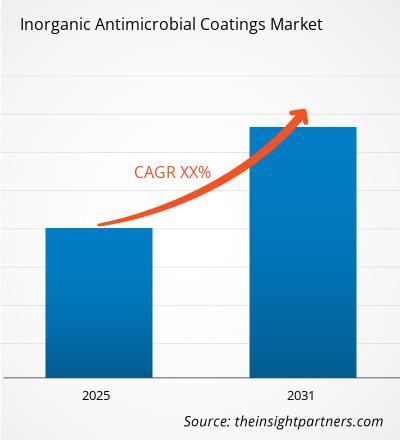
Segmentation Analysis
Type
Type is differentiated according to the antimicrobial active material incorporated into the coating system. The segment is expected to grow at a 7.7–8.6% CAGR from 2026–2034 as formulators balance antimicrobial efficacy, coating compatibility, durability, regulatory requirements, and material cost. Silver remains widely established, while copper and zinc gain attention as manufacturers optimize performance and economics.
- Silver-based: Silver-based systems maintain a strong market position because of established antimicrobial performance and compatibility with diverse coating technologies. Demand is concentrated in healthcare, high-touch surfaces, HVAC, and applications requiring reliable microbial inhibition.
- Copper-based: Copper-based coatings are gaining strategic importance where durable antimicrobial activity and material economics are important. Their adoption is supported by healthcare, transportation, HVAC, and building applications requiring robust surface protection.
- Zinc-based: Zinc-based formulations provide an alternative antimicrobial route for applications where cost, formulation stability, and broad material compatibility influence purchasing decisions. They are relevant across construction, HVAC, and industrial coating systems.
Application
Application is expected to expand at a 8.0–9.0% CAGR from 2026–2034, supported by increasing integration of antimicrobial functionality into environments where surface hygiene, air quality, contamination control, or product protection has operational significance. Healthcare, HVAC, construction, food processing, and textiles each impose different performance requirements.
- HVAC: HVAC applications require coatings that withstand moisture, temperature fluctuations, cleaning processes, and continuous airflow. Antimicrobial functionality is strategically relevant for air-handling equipment, coils, ducts, and ventilation components exposed to microbial growth conditions.
- Medical: Medical applications emphasize validated antimicrobial performance, coating adhesion, biocompatibility where relevant, and resistance to repeated cleaning. Demand is supported by infection-control priorities across medical equipment, high-touch surfaces, and healthcare infrastructure.
- Building and Construction: Building applications include high-touch surfaces, architectural components, interior systems, and moisture-prone areas. Adoption depends on durability, appearance retention, compatibility with substrates, and the ability to integrate antimicrobial performance into established coating systems.
- Foods and Beverages: Food and beverage facilities require surfaces that support sanitation and reduce microbial contamination risks. Coatings are strategically relevant for processing equipment, production environments, storage areas, and other surfaces exposed to frequent cleaning.
- Textiles: Textile applications use antimicrobial coatings to improve hygiene and odor-control characteristics in selected fabrics and finished products. Demand is linked to healthcare textiles, institutional fabrics, protective applications, and consumer-oriented performance requirements.
Opportunity Snapshot
| Application | Revenue Contribution (High/Medium/Low) | Trend Tag | Adoption Stage |
| HVAC | High | Coil Protection | Scaling |
| Medical | High | Infection Control | Mature |
| Building and Construction | High | Hygienic Surfaces | Scaling |
| Foods and Beverages | Medium | Sanitary Processing | Scaling |
| Textiles | Medium | Odor Control | Emerging |
Inorganic Antimicrobial Coatings Market Growth Drivers and Impact Analysis
Increasing healthcare infection-control requirements
The inorganic antimicrobial coatings market trends indicate that healthcare infrastructure remains a major demand catalyst because surfaces around patients, medical equipment, and frequently touched areas require consistent hygiene management. Antimicrobial coatings can complement cleaning and disinfection practices by providing persistent microbial inhibition between cleaning cycles. Growth in hospital construction and renovation across North America, Europe, and Asia Pacific expands the addressable installed base. The impact extends beyond hospitals to clinics, laboratories, elder-care facilities, and medical-device environments. Suppliers that can demonstrate reproducible antimicrobial performance while maintaining adhesion, chemical resistance, and finish quality are better positioned for institutional procurement. Increasing emphasis on infection prevention also encourages hospitals to evaluate coatings as part of broader environmental-control strategies rather than as standalone decorative products.
Expansion of hygienic HVAC and ventilation infrastructure
HVAC systems provide a growing application opportunity because coils, ducts, filters, and air-handling surfaces can encounter moisture and conditions conducive to microbial accumulation. Commercial buildings, healthcare facilities, industrial plants, and hospitality properties increasingly prioritize indoor environmental quality. Antimicrobial coatings can be incorporated into selected components to complement maintenance and sanitation procedures. Demand is particularly relevant in humid climates and densely occupied facilities where ventilation systems operate continuously. Manufacturers are responding by developing coatings capable of maintaining adhesion and performance under temperature cycling, condensation, airflow, and cleaning exposure. The commercial impact is significant because HVAC systems represent recurring replacement and maintenance opportunities rather than one-time construction demand. Suppliers with application-specific validation can therefore strengthen specification-based sales.
Modernization of food-processing and hygienic manufacturing facilities
Food and beverage producers are investing in facility modernization, equipment upgrades, and sanitation-focused production environments to maintain consistent hygiene and operational reliability. Antimicrobial coatings can support these objectives when applied to appropriate surfaces and equipment exposed to repeated cleaning. Demand depends on resistance to moisture, chemicals, abrasion, and temperature variation rather than antimicrobial performance alone. This creates opportunities for coating suppliers capable of combining several functional properties within a single formulation. Expansion of processed-food production in Asia Pacific and the Middle East adds geographic momentum, while established producers in North America and Europe increasingly focus on facility upgrades. As manufacturing environments become more automated, durable surface technologies can also help reduce maintenance interruptions and extend the service life of selected assets.
Inorganic Antimicrobial Coatings Market Future Trends
Low-loading high-efficiency antimicrobial formulations
Future formulation development is expected to focus on achieving reliable antimicrobial performance with lower concentrations of active materials. This approach can reduce material costs, improve coating transparency or appearance, and simplify compliance with increasingly demanding chemical-management requirements. Advances in particle engineering, dispersion technology, surface functionalization, and resin compatibility will support this transition. Silver, copper, and zinc suppliers are likely to compete increasingly on efficacy per unit of active material rather than simply on active concentration. Coating manufacturers may also integrate antimicrobial agents into multifunctional systems that provide water resistance, UV stability, abrasion resistance, and improved cleanability. The resulting products could expand adoption in applications where conventional high-loading formulations are constrained by cost, aesthetics, regulatory considerations, or processing limitations.
Multifunctional coatings combining hygiene and surface durability
The next stage of product development is likely to emphasize coatings that solve multiple surface-performance requirements simultaneously. Antimicrobial protection may increasingly be combined with stain resistance, water repellency, chemical resistance, UV stability, abrasion resistance, and improved cleanability. This trend can increase the economic value of each coating application by reducing the need for separate treatment steps. It is particularly relevant to building envelopes, flooring, furniture, transportation interiors, HVAC components, and institutional surfaces. Digital formulation tools and improved laboratory testing should allow suppliers to optimize several properties simultaneously. Over time, customers may evaluate coating systems based on total lifecycle performance rather than antimicrobial efficacy alone, creating opportunities for suppliers with broad formulation capabilities and application-specific testing infrastructure.
Inorganic Antimicrobial Coatings Market Opportunities
Regional manufacturing and application partnerships
Manufacturers can capture incremental demand by establishing localized formulation, technical-service, and application partnerships in India, Southeast Asia, the Middle East, and selected Latin American markets. Local production can shorten lead times, adapt formulations to regional substrates and climate conditions, and reduce logistics exposure for active materials and finished coatings. Partnerships with HVAC manufacturers, healthcare contractors, food-processing equipment suppliers, and architectural coating distributors can also accelerate specification. Investment priorities should focus on laboratory validation, local regulatory expertise, application engineering, and technical training rather than capacity expansion alone. Companies able to provide formulation customization and onsite technical support may gain an advantage as customers move from generic antimicrobial additives toward application-specific systems. This opportunity is particularly relevant in fast-growing markets where established coating distribution networks remain fragmented.
Premium medical and high-contact surface applications
High-contact medical and institutional surfaces offer opportunities for differentiated products where customers are willing to evaluate performance beyond basic coating price. Suppliers can develop premium formulations optimized for repeated cleaning, abrasion, chemical exposure, and consistent antimicrobial activity. Target applications include medical equipment housings, furniture, hand-contact surfaces, laboratory environments, and selected architectural components. Commercial success will depend on rigorous testing, transparent performance documentation, compatibility with substrate materials, and reliable application procedures. Companies can also create value through service models covering formulation selection, application training, validation, and maintenance guidance. Such approaches can increase switching costs and support longer customer relationships. Investment in independent testing and application-specific evidence should therefore remain a priority for suppliers targeting healthcare and other high-consequence environments.
Recent Developments
- September 2025: Microban International, Ltd. announced a partnership with Curie Co to advance preservation solutions for household, industrial, and institutional cleaners, paints, and coatings. The collaboration combines Curie's organic-acid preservation technology with Microban's Additive GS platform and targets water-soluble antimicrobial solutions designed to meet stringent regulatory requirements.
- April 2025: Microban International, Ltd. received a Silver Edison Award in the Materials Science category for its Ascera antimicrobial technology. The metal-free technology is designed to inhibit bacterial growth while reducing reliance on traditional metal-based antimicrobial chemistries, reinforcing the company's development focus on alternative antimicrobial technologies and broader material applications.
Frequently Asked Questions

- Comprehensive Market Sizing and Forecast Analysis
- Detailed Segmentation Analysis
- In-Depth Market Dynamics Assessment
- Regional and Country-Level Insights
- Competitive Landscape and Company Benchmarking
- Strategic Business Intelligence
Recent Reports
Testimonials

The Insight Partners' SCADA System Market report is comprehensive, with valuable insights on current trends and future forecasts. The team was highly professional, responsive, and supportive throughout. We are very satisfied and highly recommend their services.
RAN KEDEM Partner, Reali Technologies LTDs
I requested a report on a very specific software market and the team produced the report in a few days. The information was very relevant and well presented. I then requested some changes and additions to the report. The team was again very responsive and I got the final report in less than a week.
JEAN-HERVE JENN Chairman, Future Analytica
We worked with The Insight Partners for an important market study and forecast. They gave us clear insights into opportunities and risks, which helped shape our plans. Their research was easy to use and based on solid data. It helped us make smart, confident decisions. We highly recommend them.
PIYUSH NAGPAL Sr. Vice President, High Beam Global
The Insight Partners delivered insightful, well-structured market research with strong domain expertise. Their team was professional and responsive throughout. The user-friendly website made accessing industry reports seamless. We highly recommend them for reliable, high-quality research services
YUKIHIKO ADACHI CEO, Deep Blue, LLC.
This is the first time I have purchased a market report from The Insight Partners.While I was unsure at first, I visited their web site and felt more comfortable to take the risk and purchase a market report.I am completely satisfied with the quality of the report and customer service. I had several questions and comments with the initial report, but after a couple of dialogs over email with their analyst I believe I have a report that I can use as input to our strategic planning process.Thank you so much for taking the extra time and making this a positive experience.I will definitely recommend your service to others and you will be my first call when we need further market data.
JOHN SUZUKI President and Chief Executive Officer, Board Director, BK Technologies
I wish to appreciate your support and the professionalism you displayed in the course of attending to my request for information regarding to infectious disease IVD market in Nigeria. I appreciate your patience, your guidance, and the fact that you were willing to offer a discount, which eventually made it possible for us to close a deal. I look forward to engaging The Insight Partners in the future, all thanks to the impression you have created in me as a result of this first encounter.
DR CHIJIOKE ONYIA MANAGING DIRECTOR, PineCrest Healthcare Ltd.Reason to Buy
- Informed Decision-Making
- Understanding Market Dynamics
- Competitive Analysis
- Identifying Emerging Markets
- Customer Insights
- Market Forecasts
- Risk Mitigation
- Boosting Operational Efficiency
- Strategic Planning
- Investment Justification
- Tracking Industry Innovations
- Aligning with Regulatory Trends





 Get Free Sample for