
Insulated Shipping Packaging Market Growth, Trends & Forecast by 2034
Coverage: By Material (Glass, Plastic, Wood, Cupboard); Packaging type (Box and Container, Flexible Blanket, Bags, Wraps); Application (Food and Beverage, Industrial Goods, Personal Care, Others), and Geography (North America, Europe, Asia Pacific, and South and Central America)
- Status : Data Released
- Report Code : TIPRE00016134
- Category : Manufacturing and Construction
- No. of Pages : 150
- Available Report Formats :


- Last update date : July 10, 2026


2025 Market Size
US$ 9.30 Bn
Base year value
2034 Forecast
US$ 16.77 Bn
Projected by 2034
CAGR 2026-2034
6.77 %
Growth rate
Addressable Market
US$ 117.81 Bn
(2026-2034)
The Insulated Shipping Packaging Market size was valued at US$ 9.30 Billion in 2025 and is projected to reach US$ 16.77 Billion by 2034, expanding at a CAGR of 6.77% during 2026–2034. Growth is supported by temperature-sensitive food distribution, industrial sample movement, personal care fulfillment, and stricter expectations for shipment integrity. The market is shifting from commodity protective packaging toward engineered thermal systems that balance insulation performance, freight efficiency, and sustainability requirements.
North America is expected to expand at a CAGR range of 5.9–6.4% between 2026 and 2034, supported by mature cold-chain logistics, dense e-commerce fulfillment networks, and growing use of reusable temperature-control formats. Food delivery, clinical sample movement, and premium personal care shipments are reinforcing demand for packaging that prevents thermal excursions while reducing material waste across parcel and palletized distribution routes.
Insulated Shipping Packaging Market Assessment and Insights
- North America: The region accounted for 31–34% share in 2025 and is projected to grow at a CAGR of 5.9–6.4% during 2026–2034, led by validated cold-chain lanes and grocery delivery density.
- US: The country represented 78–82% of North America in 2025 and is expected to record a CAGR of 5.8–6.3% during 2026–2034, supported by parcelized healthcare and meal-kit logistics.
- Europe: Europe held 24–27% insulated shipping packaging market share in 2025 and is forecast to grow at a CAGR of 5.6–6.1% during 2026–2034, with Germany, the UK, and France leading regulated temperature-controlled distribution.
- Asia Pacific: Asia Pacific captured 26–29% share in 2025 and is expected to expand at a CAGR of 7.4–8.1% during 2026–2034, driven by China, India, Japan, and South Korea.
- Largest Segment: Box and Container held 45–49% insulated shipping packaging market share in 2025 and is projected to grow at a CAGR of 6.2–6.8% during 2026–2034, reflecting strong pallet and parcel utilization.
- High Growth Segment: Food and Beverage held 38–42% insulated shipping packaging market share in 2025 and is expected to grow at a CAGR of 7.0–7.6% during 2026–2034, supported by chilled meal delivery.
- Key companies analyzed in detail: Carry Cool Enterprise, Cascades Inc., Hydropac Limited, Innovative Energy Inc., Insulated Products Corporation, Peli BioThermal LLC, Sonoco Products Company, Therapak LLC, Valor Industries Inc., W.W. Grainger Inc.
Source: The Insight Partners' analysis based on proprietary research, government publications, company annual reports, investor presentations, industry databases, and expert interviews.
The insulated shipping packaging market has moved beyond expanded polystyrene cartons toward engineered multilayer, recyclable fiber, reflective barrier, and phase-change-compatible systems. Efforts are being made to improve cube efficiency, pre-conditioning processes, and lane qualification by producers to minimize spoilage and incur freight penalties. The increase in fragmentation of orders by retailers and manufactures has led to the development of insulated shipping containers that take into consideration automation, warehouse capacity, and validated transport durations.
The insulated shipping packaging market forecast highlights that forward-looking demand will be shaped by emerging grocery commerce in Asia, pharmaceutical sample logistics in North America, and EU packaging circularity rules that favor reusable or paper-based insulation. The investment will be made for lightweight liners, reusable shipper networks, and digital condition monitoring systems. The range of insulated shipping packaging solutions is expanding due to the need for compliant packaging, reduced waste, and improved product quality while being transported between borders.
Insulated Shipping Packaging Market Report Scope
| Report Attribute | Details |
|---|---|
| Market size in 2025 | US$ 9.30 Billion |
| Market Size by 2034 | US$ 16.77 Billion |
| Global CAGR (2026 - 2034) | 6.77% |
| Historical Data | 2021-2024 |
| Forecast period | 2026-2034 |
Insulated Shipping Packaging Market Analysis
Demand is being reinforced by temperature-sensitive food, specialty ingredients, cosmetics, and industrial samples that require stable protection without active refrigeration. The insulated shipping packaging size reflects a wider shift from bulk refrigerated transport to parcel-level thermal assurance, especially where delivery windows are short and product value is high.
The insulated shipping packaging market report includes resin suppliers, paperboard mills, insulation converters, refrigerant pack manufacturers, fulfillment centers, logistics providers, and end users. Supply dynamics are influenced by polymer pricing, recovered paper availability, energy costs, and qualification testing. Manufacturers that combine thermal modeling, ISTA-style validation, and regional production are better positioned to serve time-sensitive replenishment cycles.
The market consists of many fragmented players that are becoming more technologically advanced. Sonoco Products Company, Cascades Inc., Hydropac Limited, Peli BioThermal LLC, and Insulated Products Corporation compete by offering engineered materials, proven solutions, and customer-designed packout designs. W.W. Grainger Inc. improves its distribution networks, and Therapak LLC deals with the requirements of healthcare shipments.
Key investment areas focus on developing reusable materials and parcel containers, and on locations near clusters of demand. Carry Cool Enterprise, Innovative Energy Inc., and Valor Industries Inc. are key players in cases when reflectivity or other cold chain-related equipment matters. Strategic positioning is increasingly based on service capacity rather than on packaging alone.
● REPORT CUSTOMIZATION
Tailor This Report To Align With Your Specific Business Requirements
This report can be customized to align precisely with your business objectives, scope, and target markets. Customization options include tailored segmentation, geography, competitive analysis, and strategic insights to support informed decision-making.
Customize This Report →WHAT YOU CAN ADJUST
- ● Segmentations
- ● Geography
- ● Competitive Analysis
- ● Language Preferences
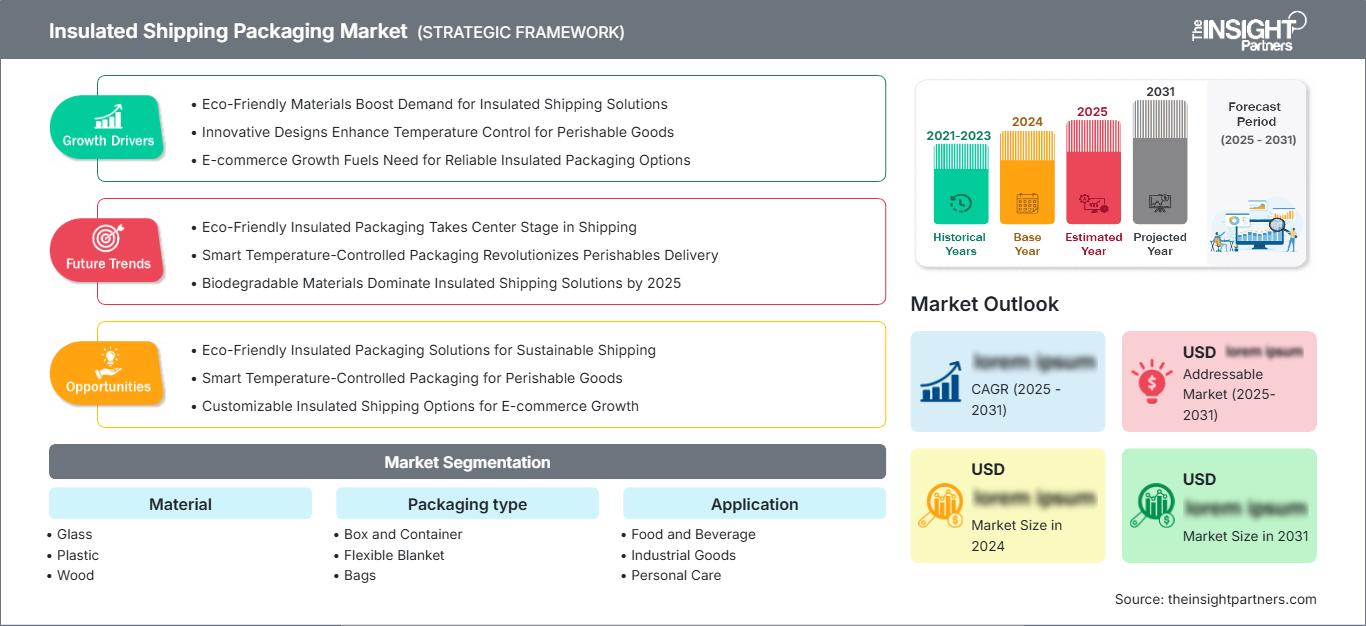
Insulated Shipping Packaging Market: Strategic Insights
Regional Insights
North America insulated shipping packaging
North America accounted for 31–34% insulated shipping packaging market share in 2025 and is expected to expand at a CAGR of 5.9–6.4% during 2026–2034. The market gains from high-end food distribution, sample-handling services, and parcel networks that require dependable insulation services as part of their two-day and next-day delivery strategies.
Adoption is highest in places where shippers can measure reductions in spoilage, replacement expenses, and customer satisfaction. Insulated shipping packaging market share is also aided by groceries, special seafoods, ready meals, and biologically associated healthcare shipments. Reusable shipping suppliers and those with regional manufacturing capabilities are preferred as purchasers cut disposal costs.
U.S. insulated shipping packaging Market
The U.S. represented 78–82% of North America in 2025 and is forecast to grow at a CAGR of 5.8–6.3% during 2026–2034. The demand is associated with multi-node fulfillment, health-care specimen handling, frozen subscriptions and demanding service levels from the country’s leading carriers.
Company coverage is extensive, with Sonoco Products Company, W.W. Grainger Inc., Therapak LLC, Peli BioThermal LLC, and Insulated Products Corporation offering packaging solutions to purchasers in healthcare, food, and industries. Application trends are towards recycling liners, returnable packagings and purposeful packouts reducing dimensional weight without compromising on thermal properties.
Europe insulated shipping packaging Market
Europe held 24–27% insulated shipping packaging market share in 2025 and is projected to grow at a CAGR of 5.6–6.1% during 2026–2034. Germany is the leading country, supported by advanced manufacturing exports, pharmaceutical logistics, and high compliance expectations for reusable and recyclable packaging formats.
The UK market is driven by direct to consumer food deliveries, specialty retailing, and healthcare sampling. Consumers have begun to consider the landed cost of total solution including warehousing, reverse logistics, and disposal costs. This creates a trend towards smaller insulated mailers, fiber-based packs, and lane-proven systems in domestic as well as international markets.
Demand in France, Italy, and Spain is increasing due to cold chain food, cosmetic products, and industrial specialty products. The importance of packaging waste policy pressure in these countries is driving the trend towards recycled insulation materials.
APAC insulated shipping packaging Market
APAC accounted for 26–29% insulated shipping packaging market share in 2025 and is expected to grow at a CAGR of 7.4–8.1% during 2026–2034, making it the fastest regional growth platform. China leads due to cold-chain infrastructure, e-commerce scale, and high-volume food distribution.
Precision packing of seafood, pharmaceutical, and luxury beauty items is favored by Japan and South Korea, whereas India focuses on temperature-controlled logistics for dairy, meat, and online groceries. Long distances of domestic transportation in Australia and high-quality food products increase the need there.
Middle East & Africa insulated shipping packaging Market
Middle East and Africa is projected to grow at a CAGR of 6.3–6.9% during 2026–2034. The UAE leads regional adoption because air-cargo connectivity, pharmaceutical re-export activity, and premium food imports require consistent temperature management in high-heat conditions.
The logistics, healthcare, and food security investments of Saudi Arabia all need a strong cold chain packaging infrastructure. South Africa generates demand via its pharmaceuticals and groceries industries, whereas the rest of MEA is opportunity driven with improving infrastructure.
Segmentation Analysis
Material
The material segment of the insulated shipping packaging market is expected to grow at a CAGR of 6.1–6.8% during 2026–2034. Selection depends on insulation value, recyclability, payload protection, and cost per shipment. Buyers are shifting from single-material choices to hybrid constructions that combine structural strength, reflective barriers, and moisture resistance for consistent performance.
- Glass remains niche, used where inertness and premium presentation matter, but fragility and weight limit broad parcel adoption in temperature-sensitive shipping applications.
- Plastic maintains strong demand through foam, molded, and film-based formats that offer reliable insulation, moisture resistance, and compatibility with reusable or validated cold-chain systems.
- Wood is strategically relevant for heavy industrial goods and export crates requiring strength, impact resistance, and thermal moderation across longer freight routes.
- Cupboard supports recyclable and paper-based insulation strategies, especially for food and personal care brands seeking lower disposal burden and improved sustainability positioning.
Packaging type
The packaging type segment of the insulated shipping packaging market is projected to grow at a CAGR of 6.4–7.1% during 2026–2034. Performance requirements vary by shipment duration, carrier handling, and payload value. Structured containers dominate validated movements, while flexible products gain traction where space efficiency, variable order size, and last-mile delivery are important.
- Box and Container is the largest segment because rigid formats support refrigerants, protect payloads, and simplify qualification across parcel, pallet, and healthcare logistics.
- Flexible Blanket is used for pallet covers, mixed-load protection, and temporary exposure control, particularly in warehouses, tarmac handling, and short-duration distribution lanes.
- Bags serve smaller shipments, meal kits, cosmetics, and specialty samples where lightweight handling, consumer convenience, and lower material use influence procurement decisions.
- Wraps support irregular products and supplemental insulation, offering practical protection for industrial goods, fresh items, and mixed shipments exposed to short thermal stress.
Application
The application segment of the insulated shipping packaging market is expected to grow at a CAGR of 6.7–7.4% during 2026–2034. Food and beverage leads adoption, while industrial goods and personal care are becoming more important as brands ship higher-value, temperature-sensitive items directly to customers. The insulated shipping packaging analysis shows application-specific testing is now a procurement requirement.
- Food and Beverage generates high recurring demand from chilled meals, seafood, dairy, frozen desserts, and grocery delivery, where spoilage reduction directly affects margins.
- Industrial Goods use insulated formats for chemicals, samples, precision materials, and components that require protection from temperature swings during regional or export shipments.
- Personal Care demand is rising as premium cosmetics, serums, and natural formulations require protection from heat exposure and packaging that supports brand quality expectations.
Opportunity Snapshot
| Application | Revenue Contribution | Trend Tag | Adoption Stage |
| Food and Beverage | High | Meal Kits | Scaling |
| Industrial Goods | Medium | Sample Integrity | Scaling |
| Personal Care | Medium | Heat Shielding | Emerging |
Insulated Shipping Packaging Market Growth Drivers and Impact Analysis
Expansion of Chilled Direct-to-Consumer Fulfillment
Chilled direct-to-consumer fulfillment is increasing the need for packaging that performs reliably without refrigerated vehicles on every delivery route. Meal kits, specialty grocery, premium seafood, and frozen desserts depend on insulation, refrigerants, and right-sized containers to preserve quality through parcel networks. The market impact is measurable in lower spoilage claims, fewer refunds, and improved customer retention. Brands are also using thermal packaging to extend delivery radius and support weekly subscription models, which creates repeat demand for standardized shipper designs and cost-efficient flexible liners.
Rising Compliance Pressure in Temperature-Sensitive Logistics
A need for performance documentation over general packaging statements has become necessary in temperature-controlled logistics. There is need for maintenance of healthcare samples, specialty chemicals, food ingredients, and cosmetics within acceptable limits despite any carrier delay, seasonality, or international transit issues. This makes it necessary for the buyer to opt for verified packout methods and assembly processes, as well as suppliers capable of conducting tests. The rationale behind this drives the ability of buyers to price their engineered insulated systems as a result of their comparison of packaging costs versus potential losses.
Shift Toward Recyclable and Reusable Thermal Formats
Packaging waste issues are influencing buying standards in the food, cosmetics, and manufacturing industries. Consumers require packaging that makes it easier to dispose of packaging but maintains its ability to keep the temperatures right. It is important in places where there are high expectations for the return of packaging materials. This includes recyclable paper packing, reusable boxes, and pallets that can be returned. The result is increased expenses on product design, greater cooperation between converters and logistical companies, and more differentiation of those suppliers who can deliver performance consistently in many shipments.
Insulated Shipping Packaging Market Future Trends
Condition-Monitored Passive Packaging Networks
Evidence-based shipping networks based on passive packaging combined with affordable condition monitoring will become prevalent. Thermal risks can be recognized by seasons, carriers, and lanes with the help of data loggers, sensors, and route analysis, thus enabling shippers to choose packaging not according to general assumptions but according to real exposure. This trend facilitates procurement approaches whereby performance data plays an important role in decision making concerning container reuse, amount of refrigerants used, and services level chosen. Eventually, suppliers who manage to combine packaging design and shipment information will earn more strategic business.
Fiber-Based Insulation Moving Into Premium Cold Chains
Fiber-based insulation is emerging as a significant insulated shipping packaging market trend, expanding beyond low-risk shipments into more demanding cold-chain applications as material science advances. Brands are evaluating paper, cellulose, and molded fiber solutions that combine curbside recyclability with improved moisture resistance and compression strength. While plastics will continue to play a role in certain logistics applications, product portfolios are expected to shift toward hybrid packaging systems that reduce foam usage and increase renewable content. Suppliers capable of validating fiber-based formats for extended transit durations are likely to capture higher-value opportunities across food, cosmetics, and regional healthcare logistics.
Insulated Shipping Packaging Market Opportunities
Reusable Parcel Shipper Programs for Urban Fulfillment
Reusability programs provide a distinct business case in urban areas where there is a concentration of food delivery, pharmacy delivery, and grocery delivery services. Operators find it easier to collect the packaging when deliveries are highly concentrated and there is regular demand from customers. This service can be provided by partnering with packagers, retailers, logistics operators, and lockers. The business case becomes better when the reusable items take the place of several single-use shipments.
Localized Manufacturing for High-Variability Cold Chains
Localized manufacturing can overcome high variability in weather, lane lengths, and order profiles. Localized manufacturing of the boxes, liners, and refrigerant-safe systems minimizes lead times and allows customers to cope with seasonality. Such an opportunity is available most for APAC, the Middle East, and Latin America regions, where the cold chain market grows faster than standardized packaging solutions are developed. For suppliers who will be able to provide localized conversion and testing, there is an opportunity to get customers demanding customized packaging solutions.
Recent Developments
- November 2025: Arsenal Capital Partners completed the acquisition of ThermoSafe from Sonoco Products Company, positioning ThermoSafe as an independent temperature-assurance platform serving pharmaceuticals, biologics, vaccines, and healthcare products with reusable and bio-based insulation technologies.
- April 2025: TOPPAN Holdings Inc. completed the acquisition of Sonoco Products Company’s Thermoformed and Flexibles Packaging business, adding food, retail, and medical packaging capabilities and expanding TOPPAN’s global packaging converter network across more than 60 manufacturing sites.
- November 2024: Nature-Pack Recyclable Packaging launched Fibrease at Pack Expo 2024. This award-winning cellulose wood foam is truly one-of-a-kind natural packaging foam that redefines everything. It’s lightweight, soft memory-foam like abilities make it an ideal replacement for traditional fossil-based PU foams used in variety of cushioning applications.
Frequently Asked Questions

- Comprehensive Market Sizing and Forecast Analysis
- Detailed Segmentation Analysis
- In-Depth Market Dynamics Assessment
- Regional and Country-Level Insights
- Competitive Landscape and Company Benchmarking
- Strategic Business Intelligence
Recent Reports
Testimonials

The Insight Partners provided valuable market intelligence that supported our global go-to-market strategy. Their team was professional, responsive, and attentive to our feedback, providing thoughtful analysis and helpful methodological clarifications throughout the project.
Junmo Kim Chief Financial Officer (CFO), Enertech Co., Ltd.
The Insight Partners' SCADA System Market report is comprehensive, with valuable insights on current trends and future forecasts. The team was highly professional, responsive, and supportive throughout. We are very satisfied and highly recommend their services.
RAN KEDEM Partner, Reali Technologies LTDs
I requested a report on a very specific software market and the team produced the report in a few days. The information was very relevant and well presented. I then requested some changes and additions to the report. The team was again very responsive and I got the final report in less than a week.
JEAN-HERVE JENN Chairman, Future Analytica
We worked with The Insight Partners for an important market study and forecast. They gave us clear insights into opportunities and risks, which helped shape our plans. Their research was easy to use and based on solid data. It helped us make smart, confident decisions. We highly recommend them.
PIYUSH NAGPAL Sr. Vice President, High Beam Global
The Insight Partners delivered insightful, well-structured market research with strong domain expertise. Their team was professional and responsive throughout. The user-friendly website made accessing industry reports seamless. We highly recommend them for reliable, high-quality research services
YUKIHIKO ADACHI CEO, Deep Blue, LLC.
This is the first time I have purchased a market report from The Insight Partners.While I was unsure at first, I visited their web site and felt more comfortable to take the risk and purchase a market report.I am completely satisfied with the quality of the report and customer service. I had several questions and comments with the initial report, but after a couple of dialogs over email with their analyst I believe I have a report that I can use as input to our strategic planning process.Thank you so much for taking the extra time and making this a positive experience.I will definitely recommend your service to others and you will be my first call when we need further market data.
JOHN SUZUKI President and Chief Executive Officer, Board Director, BK Technologies
I wish to appreciate your support and the professionalism you displayed in the course of attending to my request for information regarding to infectious disease IVD market in Nigeria. I appreciate your patience, your guidance, and the fact that you were willing to offer a discount, which eventually made it possible for us to close a deal. I look forward to engaging The Insight Partners in the future, all thanks to the impression you have created in me as a result of this first encounter.
DR CHIJIOKE ONYIA MANAGING DIRECTOR, PineCrest Healthcare Ltd.Reason to Buy
- Informed Decision-Making
- Understanding Market Dynamics
- Competitive Analysis
- Identifying Emerging Markets
- Customer Insights
- Market Forecasts
- Risk Mitigation
- Boosting Operational Efficiency
- Strategic Planning
- Investment Justification
- Tracking Industry Innovations
- Aligning with Regulatory Trends





 Get Free Sample for