
Magnesium Stearate Market Size, Share & Growth by 2034
Coverage: by Form (Powder, Flakes); Application (Food additive, Binders and Fillers, Texturizers, Thickeners, Others); End-Use Industry (Plastic, Paints and Coatings, Personal Care, Food and Beverages, Pharmaceuticals, Others) , and Geography (North America, Europe, Asia Pacific, and South and Central America)
- Status : Data Released
- Report Code : TIPRE00009494
- Category : Chemicals and Materials
- No. of Pages : 150
- Available Report Formats :


- Last update date : July 14, 2026


2025 Market Size
US$ 637.85 Mn
Base year value
2034 Forecast
US$ 1,046.23 Mn
Projected by 2034
CAGR 2026-2034
5.65 %
Growth rate
Addressable Market
US$ 7,632.60 Mn
(2026-2034)
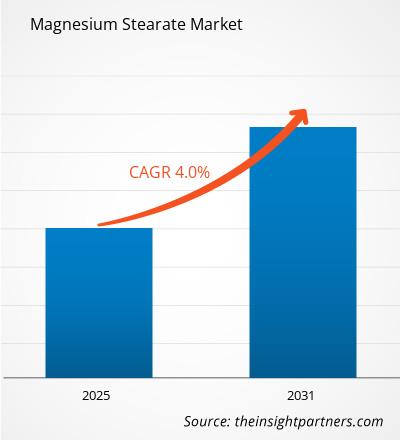
The magnesium stearate market size was valued at US$ 637.85 million in 2025 and is projected to reach US$ 1,046.23 million by 2034, registering a CAGR of 5.65% during 2026–2034. Magnesium stearate remains an essential multifunctional excipient and processing aid across pharmaceutical, food, nutraceutical, cosmetics, and industrial manufacturing. Consistent demand for high-purity grades, expanding pharmaceutical production, and increasing consumption of processed foods continue to reinforce long-term market expansion across both developed and emerging economies.
Across North America, manufacturers continue investing in pharmaceutical-grade production capabilities to meet stringent quality and regulatory requirements. The magnesium stearate market size in the region is supported by growing domestic drug manufacturing, expanding dietary supplement production, and increasing adoption of continuous manufacturing technologies. These structural factors are expected to support regional growth at an estimated CAGR of 5.0–5.6% through 2034 while sustaining stable demand from established pharmaceutical and food processing industries.
Magnesium Stearate Market Assessment and Insights
- North America: Supported by mature pharmaceutical manufacturing, strong dietary supplement consumption, and stringent quality regulations, North America accounted for 31–34% of the magnesium stearate market share in 2025 and is anticipated to expand at a CAGR of 5.0–5.6% during 2026–2034.
- US: The United States remains the regional leader owing to its extensive pharmaceutical production base and growing nutraceutical sector, representing 78–82% of North American demand in 2025 while registering a CAGR of 5.1–5.7% during 2026–2034.
- Europe: Europe maintained a 27–30% share in 2025, driven by Germany, France, Italy, the UK, and Spain. Strong pharmaceutical manufacturing, food processing, and regulatory compliance are expected to support a CAGR of 5.2–5.8% through 2034.
- Asia Pacific: Rapid pharmaceutical manufacturing expansion across China, India, Japan, and South Korea helped Asia Pacific secure 28–31% share in 2025. Continued industrial investment is projected to drive a CAGR of 6.1–6.8% during 2026–2034.
- Largest Segment: Powder represented the leading form with a market share of 84–88% in 2025 owing to its superior flowability, mixing efficiency, and compatibility with pharmaceutical tableting, while advancing at a CAGR of 5.4–5.9%.
- High Growth Segment: Food additive is expected to record the strongest expansion, accounting for 31–35% market share in 2025 and growing at a CAGR of 6.0–6.6% due to rising processed food production and clean-label formulation innovations.
- Key companies analyzed in detail: Peter Greven GmbH & Co. KG, Thermo Fisher Scientific Inc., No.1 Health Additive Co., Ltd., Nippon Stearic Acid Co., Ltd., Riken Vitamin Co., Ltd., Hindustan Zinc Limited, Kemie Chemical Co., Ltd., Procter & Gamble Company, Vitamins & Fine Chemicals, Sakai Chemical Industry Co., Ltd., Siegfried Holding AG, Mahr Polymers, Shanxi Hengtai Biological Technology Co., Ltd., Ferro Corporation, Avian Brands.
Source: The Insight Partners' analysis based on proprietary research, government publications, company annual reports, investor presentations, industry databases, and expert interviews.
Magnesium stearate production has evolved alongside advances in pharmaceutical manufacturing, food processing technologies, and specialty chemical purification methods. Improvements in raw material traceability, automated blending systems, and particle-size control have enabled manufacturers to produce consistent grades suited for high-speed tablet compression and precision food formulations. Increasing regulatory scrutiny has further encouraged investments in GMP-certified manufacturing facilities, sustainable fatty acid sourcing, and advanced quality assurance systems, strengthening supply chain reliability across major consuming industries.
Future industry expansion is expected to be supported by investments in Asia Pacific manufacturing facilities, localized pharmaceutical supply chains, and growing nutraceutical production across emerging economies. Regulatory emphasis on excipient quality, increasing adoption of continuous pharmaceutical manufacturing, and expansion of functional food production are anticipated to create new opportunities for manufacturers capable of delivering high-purity products with consistent performance, regulatory compliance, and sustainable manufacturing practices.
Magnesium Stearate Market Report Scope
| Report Attribute | Details |
|---|---|
| Market size in 2025 | US$ 637.85 Million |
| Market Size by 2034 | US$ 1,046.23 Million |
| Global CAGR (2026 - 2034) | 5.65% |
| Historical Data | 2021-2024 |
| Forecast period | 2026-2034 |
Magnesium Stearate Market Analysis
The continued growth in pharmaceutical manufacturing, increased consumption of nutraceuticals and the growth in production of processed foods is continuously propelling the global magnesium stearate market growth. This is since magnesium stearate is an important ingredient used as a lubricant, anti-caking agent, emulsifier and release agent. It increases the efficiency of the manufacturing process, at the same time maintaining the consistency of the products. Increased production of generic drugs, dietary supplements and functional foods in the regions of North America, Europe and Asia Pacific has been fueling the demand for food and pharmaceutical grade magnesium stearate. Regulations related to excipients quality, together with increasing emphasis on improved yields and performance of tablets is continuing to favor the demand in diversified end use industries.
Vegetable oils, fatty acids from animal sources and magnesium compounds are the major raw materials required in the production of magnesium stearate. There has been increasing importance attached to the aspects of vertically integrated supply, quality certification and purification technology by the manufacturers in order to maintain consistent particle size and functional properties.
The magnesium stearate market report provides in-depth insight that the level of competition is moderately consolidated with an increasing focus among the global players on innovation in pharmaceutical grade product, capacity expansion in various regions, and developing partnerships with customers. Some of the players like Peter Greven GmbH & Co. KG, Thermo Fisher Scientific Inc., Siegfried Holding AG, Nippon Stearic Acid Co., Ltd., Sakai Chemical Industry Co., Ltd., and Riken Vitamin Co., Ltd. are continuously investing in the development of specialized product range for pharmaceutical and food applications.
Increasing investments in high purity production lines, digital quality control systems, and green production processes are now being made by the companies. Firms like Hindustan Zinc Limited, Kemie Chemical Co., Ltd., Shanxi Hengtai Biological Technology Co., Ltd., Vitamins & Fine Chemicals, Ferro Corporation, Procter & Gamble Company, Mahr Polymers, No.1 Health Additive Co., Ltd., and Avian Brands have been optimizing their production processes, diversifying their products, and providing formulation according to their customers. These steps will not only enhance their supply but will help them cater to the growing demands from the pharmaceutical, nutraceutical, cosmetics, and specialty foods industries.
● REPORT CUSTOMIZATION
Tailor This Report To Align With Your Specific Business Requirements
This report can be customized to align precisely with your business objectives, scope, and target markets. Customization options include tailored segmentation, geography, competitive analysis, and strategic insights to support informed decision-making.
Customize This Report →WHAT YOU CAN ADJUST
- ● Segmentations
- ● Geography
- ● Competitive Analysis
- ● Language Preferences
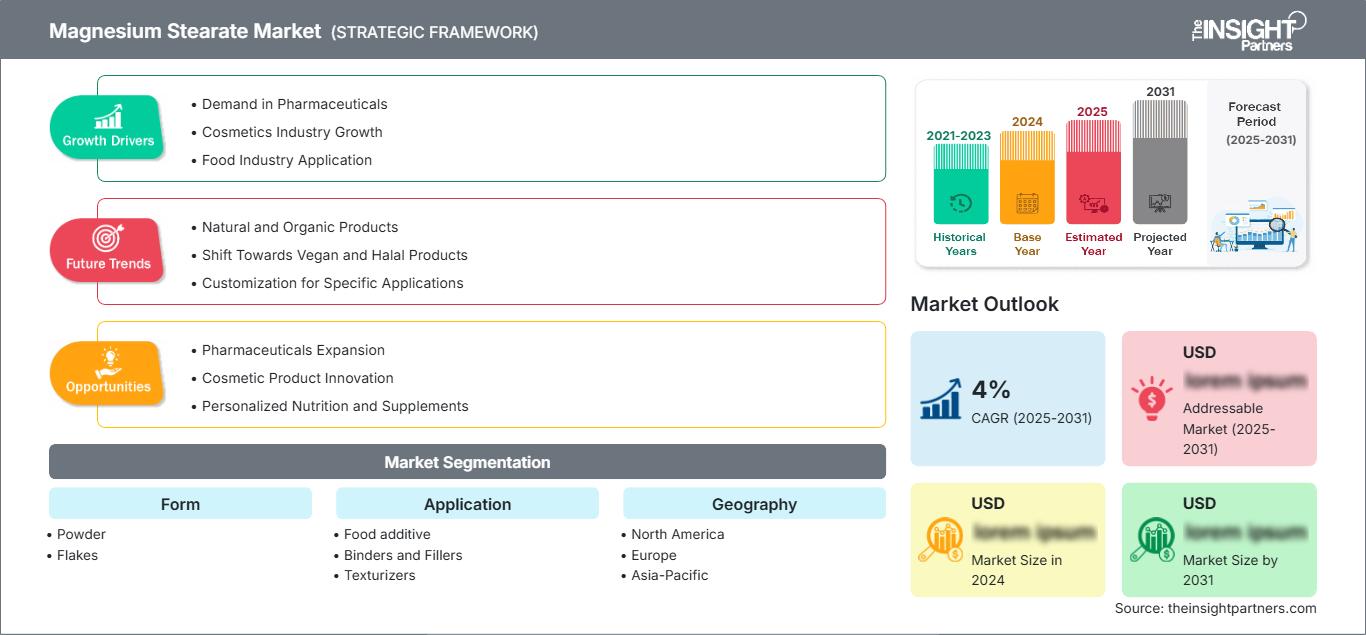
Magnesium Stearate Market: Strategic Insights
Regional Insights
North America Magnesium Stearate Market
North America accounted for 31–34% of the magnesium stearate market share in 2025 and is projected to register a CAGR of 5.0–5.6% during 2026–2034. The sector is favored by an advanced system of manufacture of pharmaceuticals, strict quality of excipients, and the presence of a highly developed dietary supplement industry. Growing production of generic drugs, over-the-counter healthcare products, and nutraceutical ingredients will continue driving steady demand. The companies are also making efforts in automation, continuous manufacture, and validation of the process to assure consistency and regulatory compliance.
Growing demand for pharmaceutical excipients featuring high purity levels and defined particle properties continues boosting the competitive edge of the region. Manufacturers of food products are also increasingly relying on the use of magnesium stearate in powdered food products and nutraceuticals which require improved flow and processing properties. Investments in pharmaceutical production facilities at home, reliable supply chain networks, and growth of contract manufacturing are expected to drive further Magnesium Stearate market growth.
U.S. Magnesium Stearate Market
The United States represented 78–82% of North American demand in 2025 and is anticipated to expand at a CAGR of 5.1–5.7% during 2026–2034. The country's leadership is supported by one of the world's largest pharmaceutical manufacturing industries, extensive dietary supplement production, and strong regulatory oversight governing excipient quality. Increasing investments in biologics, generic drug manufacturing, and contract development and manufacturing organizations (CDMOs) continue to create stable demand for premium magnesium stearate grades.
Major global suppliers maintain commercial operations, technical support, or distribution networks across the United States to serve pharmaceutical, food, and specialty chemical manufacturers. Growing production of tablets, capsules, and nutraceutical formulations has increased demand for consistent lubricant performance, while food manufacturers continue adopting high-purity processing aids to improve manufacturing efficiency. Continuous investment in advanced manufacturing technologies and resilient domestic pharmaceutical supply chains is expected to reinforce the country's dominant position within the regional market.
Europe Magnesium Stearate Market
Europe captured 27–30% of the global magnesium stearate market share in 2025 and is expected to record a CAGR of 5.2–5.8% during 2026–2034. Germany remains the leading market owing to its advanced pharmaceutical manufacturing base, extensive chemical industry, and strong export capabilities. The United Kingdom continues benefiting from expanding nutraceutical production and pharmaceutical research activities, while manufacturers increasingly prioritize excipients meeting stringent European quality standards.
France, Italy, and Spain collectively represent a substantial share of regional consumption due to their diversified pharmaceutical, food processing, and cosmetics industries. Investments in pharmaceutical production capacity, modernization of manufacturing facilities, and increasing exports of finished dosage formulations continue supporting market demand. Regulatory harmonization across the European pharmaceutical sector and growing emphasis on sustainable sourcing of raw materials are expected to further strengthen regional competitiveness throughout the forecast period.
APAC Magnesium Stearate Market
Asia Pacific accounted for 28–31% of the global market in 2025 and is forecast to register the fastest CAGR of 6.1–6.8% during 2026–2034. China leads regional production, while India, Japan, and South Korea continue expanding pharmaceutical manufacturing capacity through public and private investments.
Australia contributes through its growing nutraceutical industry and stringent product quality standards. Rising healthcare expenditure, expanding generic medicine exports, government initiatives supporting domestic pharmaceutical manufacturing, and increasing processed food production collectively position Asia Pacific as the fastest-growing regional market during the forecast period.
Middle East & Africa Magnesium Stearate Market
The Middle East & Africa is projected to witness a CAGR of 5.3–5.9% during 2026–2034. Saudi Arabia and the United Arab Emirates continue investing in pharmaceutical manufacturing under industrial diversification initiatives, while South Africa maintains a significant position through its established healthcare and food processing sectors.
Growing pharmaceutical self-sufficiency programs, expansion of food manufacturing facilities, and increasing healthcare investments across the Gulf countries are expected to create sustained demand for pharmaceutical-grade excipients. Improving industrial infrastructure and expanding regional distribution networks are further supporting long-term market development across the Middle East and Africa.
Segmentation Analysis
Form
The Form segment is projected to expand at a CAGR of 5.5–6.0% during 2026–2034. The magnesium stearate market forecast continues to broaden as manufacturers increasingly require product formats tailored to high-speed pharmaceutical processing, food production, and specialty industrial applications. Selection between powder and flakes primarily depends on processing efficiency, handling characteristics, storage requirements, and blending performance. Continuous improvements in particle engineering and manufacturing technologies are further enhancing product consistency, enabling suppliers to address evolving customer specifications across regulated industries.
- Powder – Powder remains the dominant sub-segment due to its excellent flow properties, uniform particle distribution, and compatibility with tablet compression, capsule filling, powdered food formulations, and nutraceutical manufacturing processes requiring precise blending performance.
- Flakes – Flake magnesium stearate is preferred where reduced dust generation, improved material handling, and controlled storage characteristics are important, particularly in specialty chemical processing and selected industrial manufacturing environments.
Application
The Application segment in the magnesium stearate market is anticipated to register a CAGR of 5.8–6.4% during 2026–2034. Expanding pharmaceutical manufacturing, increasing consumption of processed foods, and rising demand for nutraceutical products continue to diversify application areas. Manufacturers are developing high-purity formulations to satisfy evolving regulatory requirements while improving lubrication, flow enhancement, anti-caking performance, and processing efficiency across multiple end-use industries.
- Food additive – Food additive applications account for a significant share of demand as magnesium stearate improves flowability, prevents ingredient agglomeration, and enhances manufacturing efficiency across processed foods, nutritional products, confectionery, and powdered beverage formulations.
- Binders and Fillers – Magnesium stearate is widely incorporated into pharmaceutical tablets and capsules to improve manufacturing consistency, facilitate compression, minimize sticking during production, and maintain product uniformity throughout large-scale manufacturing operations.
- Texturizers – Demand for texturizer applications is increasing across specialty food formulations where ingredient dispersion, mouthfeel optimization, and formulation stability contribute to consistent product quality and improved consumer acceptance.
- Thickeners – Thickener applications continue expanding in selected food and industrial formulations requiring enhanced viscosity control, formulation stability, processing consistency, and extended product shelf life under varying manufacturing conditions.
Opportunity Snapshot
| Application | Revenue Contribution | Trend Tag | Adoption Stage |
| Food additive | High | Clean Label | Mature |
| Binders and Fillers | High | Tablet Compression | Mature |
| Texturizers | Medium | Functional Foods | Scaling |
| Thickeners | Low | Process Stability | Emerging |
Magnesium Stearate Market Growth Drivers and Impact Analysis
Expansion of Global Pharmaceutical Manufacturing
The pharmaceutical sector still remains the biggest buyer of magnesium stearate due to the fact that magnesium stearate serves as an excellent lubricating agent during the process of tablets compaction and capsule making. The development of generics, over-the-counter medications, dietary supplements and pharmaceutical contract manufacturing has stimulated the need for excipients which can assure reliable performance at fast production rates. Regulatory bodies still continue stressing the importance of excipient quality, tracing and manufacturing consistency, thus urging the manufacturers to develop innovative purification and manufacturing processes. With the expansion of pharmaceutical manufacturing facilities in North America, Europe, India and Southeast Asia, the suppliers of pharmacopeia-compliant magnesium stearate will be able to benefit from long-term supply contracts and increased production rates.
Increasing Consumption of Processed Foods and Nutraceutical Products
The growing trend of urbanization, change in eating habits, and growing consciousness about health have led to the consumption of processed foods, enriched foods, and food supplements all around the world. The magnesium stearate is widely used as an anticaking agent and process aid, providing enhanced properties of flow of food ingredients in powdered form. The food companies are now turning towards the use of high purity food ingredients that adhere to food safety regulations and make production more effective. The growth in sports nutrition products, functional beverages, meal replacements, and vitamins will further increase its demand.
Advancements in Manufacturing Technology and Sustainable Production
Companies are developing automated production systems, advanced particle technology, and efficient purification techniques to manufacture magnesium stearate that meets strict standards of quality. Digital quality management, energy-efficient technologies, and sustainable procurement of vegetable-based fatty acids have become key factors that set apart the competition. This development not only decreases variability but increases efficiency and facilitates regulatory compliance. Since sustainability is fast becoming an important criterion for purchasing products both in pharmaceuticals and foods, the companies that focus on sustainable sourcing, low carbon footprint, and transparency in supply chain management will certainly gain the upper hand in the future.
Magnesium Stearate Market Future Trends
Rising Preference for Plant-Based and Sustainable Raw Materials
With rising levels of environmental consciousness and changing procurement practices, suppliers are being forced to rely on vegetable sources of fatty acids for the manufacture of magnesium stearate. The magnesium stearate market trends suggest that customers from the pharmaceuticals and food segments are looking for ingredients which are sustainably sourced, have clear supply chain management, and low environmental footprints. This development is prompting suppliers to ramp up their efforts towards sourcing certified raw materials, better lifecycle traceability, and energy efficient manufacturing processes. The measures are expected not only to boost customer trust but also ensure regulatory compliance. With rising importance of environmental, social, and governance considerations, sustainable product lines will become the future of competition.
Integration of Advanced Excipient Engineering in Pharmaceutical Production
Increasingly popular continuous manufacturing processes in the pharmaceutical industry as well as fast tablet manufacturing require excipients with precisely regulated particle parameters and good lubricating properties. There is a trend of producing magnesium stearate with controlled particle size distribution, high compressibility and superior blending capabilities to serve the most innovative manufacturing technologies in the pharmaceutical field. Advanced digital monitoring systems and automated quality control help to achieve better batch uniformity and minimize production variability. The more the pharmaceutical companies modernize their manufacturing plants and produce increasingly sophisticated formulations, the higher will be the demand for innovative excipients.
Magnesium Stearate Market Opportunities
Expansion into Emerging Pharmaceutical Manufacturing Hubs
The swift rise in the investment in manufacturing of pharmaceuticals in India, Vietnam, Indonesia, Brazil, Saudi Arabia and various African countries is presenting some promising prospects for the producers of magnesium stearate. The magnesium stearate market forecast suggests that due to the localized production of excipients along with government encouragement in terms of healthcare investments, there will be less dependency on imports as well as increased security in the region. Companies setting up localized manufacturing units, technical centers and distribution arrangements will have the opportunity to capitalize on the increase in manufacturing of generic drugs and increased demand for pharmaceuticals in their own regions.
Development of High-Purity Specialty Grades for Premium Applications
Need for tailored formulations of magnesium stearate is on the rise in the pharmaceutical, nutraceutical, specialty foods, and cosmetics markets where reliability and adherence to regulations are vital factors. There are opportunities for producers to produce highly purified forms of magnesium stearate with better particle engineering and application-based performance properties. Investment in state-of-the-art analytical laboratories, continuous manufacturing technologies, and customer-centric product development efforts will help differentiate players in premium segments of the market. Companies that can provide custom-tailored technical expertise and faster formulation support services will be able to win lucrative contracts and gain competitive edge.
Recent Developments
- March 2026: BASF signed an Asset Purchase Agreement to sell its Softex business to GOVI CAST Sdn. Bhd., a leading supplier of specialty chemicals. The transaction includes the customer list, formulation and production know-how, and a tolling/supply agreement to ensure continuity during the transition. Physical assets will be excluded from the agreement.
- July 2026: Solstice announced that it will acquire fellow specialty chemical company Element Solutions in a cash-and-stock transaction valued at roughly US$14.5 billion.
Frequently Asked Questions

- Comprehensive Market Sizing and Forecast Analysis
- Detailed Segmentation Analysis
- In-Depth Market Dynamics Assessment
- Regional and Country-Level Insights
- Competitive Landscape and Company Benchmarking
- Strategic Business Intelligence
Recent Reports
Testimonials

The Insight Partners provided valuable market intelligence that supported our global go-to-market strategy. Their team was professional, responsive, and attentive to our feedback, providing thoughtful analysis and helpful methodological clarifications throughout the project.
Junmo Kim Chief Financial Officer (CFO), Enertech Co., Ltd.
The Insight Partners' SCADA System Market report is comprehensive, with valuable insights on current trends and future forecasts. The team was highly professional, responsive, and supportive throughout. We are very satisfied and highly recommend their services.
RAN KEDEM Partner, Reali Technologies LTDs
I requested a report on a very specific software market and the team produced the report in a few days. The information was very relevant and well presented. I then requested some changes and additions to the report. The team was again very responsive and I got the final report in less than a week.
JEAN-HERVE JENN Chairman, Future Analytica
We worked with The Insight Partners for an important market study and forecast. They gave us clear insights into opportunities and risks, which helped shape our plans. Their research was easy to use and based on solid data. It helped us make smart, confident decisions. We highly recommend them.
PIYUSH NAGPAL Sr. Vice President, High Beam Global
The Insight Partners delivered insightful, well-structured market research with strong domain expertise. Their team was professional and responsive throughout. The user-friendly website made accessing industry reports seamless. We highly recommend them for reliable, high-quality research services
YUKIHIKO ADACHI CEO, Deep Blue, LLC.
This is the first time I have purchased a market report from The Insight Partners.While I was unsure at first, I visited their web site and felt more comfortable to take the risk and purchase a market report.I am completely satisfied with the quality of the report and customer service. I had several questions and comments with the initial report, but after a couple of dialogs over email with their analyst I believe I have a report that I can use as input to our strategic planning process.Thank you so much for taking the extra time and making this a positive experience.I will definitely recommend your service to others and you will be my first call when we need further market data.
JOHN SUZUKI President and Chief Executive Officer, Board Director, BK Technologies
I wish to appreciate your support and the professionalism you displayed in the course of attending to my request for information regarding to infectious disease IVD market in Nigeria. I appreciate your patience, your guidance, and the fact that you were willing to offer a discount, which eventually made it possible for us to close a deal. I look forward to engaging The Insight Partners in the future, all thanks to the impression you have created in me as a result of this first encounter.
DR CHIJIOKE ONYIA MANAGING DIRECTOR, PineCrest Healthcare Ltd.Reason to Buy
- Informed Decision-Making
- Understanding Market Dynamics
- Competitive Analysis
- Identifying Emerging Markets
- Customer Insights
- Market Forecasts
- Risk Mitigation
- Boosting Operational Efficiency
- Strategic Planning
- Investment Justification
- Tracking Industry Innovations
- Aligning with Regulatory Trends





 Get Free Sample for