
Media Streaming Market Share, Size & Demand by 2034
Coverage: By Services (Audio Streaming, Video Streaming, Others); Applications (Real Time Entertainment, Web Browsing and Advertising, Gaming, Social Networking, E-Learning) , and Geography (North America, Europe, Asia Pacific, and South and Central America)
- Status : Data Released
- Report Code : TIPRE00004109
- Category : Electronics and Semiconductor
- No. of Pages : 150
- Available Report Formats :


- Last update date : September 30, 2026


2025 Market Size
US$ 111.45 Bn
Base year value
2034 Forecast
US$ 225.23 Bn
Projected by 2034
CAGR 2026-2034
8.13 %
Growth rate
Addressable Market
US$ 1,513.08 Bn
(2026-2034)
The media streaming market size was valued at US$ 111.45 Billion in 2025 and is projected to reach US$ 225.23 Billion by 2034, registering a CAGR of 8.13% during the forecast period 2026–2034. The market is being shaped by increasing digital content consumption, expansion of connected devices, improvements in network infrastructure, and the growing preference for on-demand entertainment services across consumer and enterprise environments.
The media streaming market is expanding in North America due to strong consumer adoption of subscription-based platforms, widespread broadband connectivity, and continued investments in original content production. The region is estimated to register a CAGR range of 7.5–8.5% during 2026–2034, supported by advancements in cloud delivery, advertising-supported streaming models, and increasing integration of streaming services into smart televisions and mobile ecosystems.
Media Streaming Market Assessment and Insights
- North America: North America remains a leading regional contributor, supported by mature streaming ecosystems, high digital media penetration, and strong platform presence. The region accounted for an estimated 38–42% share in 2025 and is projected to grow at a CAGR of 7.5–8.5% between 2026–2034.
- US: The US represents the largest national market within North America, driven by established streaming platforms, advanced consumer infrastructure, and high subscription adoption. The country held an estimated 75–80% share of North America in 2025 and is expected to expand at a CAGR of 7.5–8.5% during 2026–2034.
- Europe: Europe demonstrates steady market development due to rising digital entertainment consumption, regulatory support for online media ecosystems, and investments across major economies including the UK, Germany, France, and Italy. The region represented an estimated 25–29% share in 2025 and is forecast to grow at a CAGR of 8.0–8.8% between 2026–2034.
- Asia Pacific: Asia Pacific is experiencing accelerated adoption due to increasing smartphone penetration, expanding internet accessibility, and localized content strategies in China, Japan, India, and South Korea. The region captured an estimated 22–26% share in 2025 and is anticipated to record a CAGR of 9.0–10.0% from 2026–2034.
- Largest Segment: Video Streaming represented the largest service category, supported by consumer preference for visual entertainment, live broadcasts, and premium subscription platforms. The segment held an estimated 65–70% market share in 2025 and is expected to grow at a CAGR of 8.0–9.0% during 2026–2034.
- High Growth Segment: Audio Streaming is emerging as a rapidly expanding segment due to podcast adoption, mobile listening behavior, and personalized content recommendations. The segment accounted for an estimated 15–20% market share in 2025 and is projected to register a CAGR of 9.0–10.0% between 2026–2034.
- Key companies analyzed in detail: Adobe Systems Incorporated, Akamai Technologies, Inc., Amazon.com, Inc., Apple Inc., Huya Inc., Microsoft Corporation, Netflix, Inc., Pandora Media, LLC, RealNetworks, Inc., Spotify AB, Google LLC, and Tencent Holdings Limited.
Source: The Insight Partners' analysis based on proprietary research, government publications, company annual reports, investor presentations, industry databases, and expert interviews.
The media streaming market has evolved from basic online content delivery platforms into complex digital ecosystems integrating cloud infrastructure, artificial intelligence-based recommendations, advertising technologies, and multi-device accessibility. Advances in high-speed connectivity, smart device adoption, and content localization have transformed consumer engagement patterns. Streaming providers increasingly focus on scalable delivery networks, hybrid monetization models, and personalized experiences to improve retention. The shift from traditional broadcasting toward internet-based consumption has accelerated investments in content libraries, platform capabilities, and technology partnerships. These developments have encouraged service providers to strengthen infrastructure while addressing bandwidth efficiency, cybersecurity, and user experience requirements across global markets.
Future expansion of the Media Streaming Market share is expected to be influenced by emerging digital economies, increasing investments in regional content production, and broader deployment of advanced connectivity networks. Countries across Asia Pacific, Latin America, and the Middle East are becoming important growth areas due to rising online audiences and expanding digital payment adoption. Regulatory frameworks supporting digital transformation and local content creation are encouraging platform innovation. Companies are expected to explore interactive streaming, immersive entertainment formats, and targeted advertising solutions to improve revenue opportunities. Strategic collaborations between technology providers, content creators, and telecom operators will continue shaping the competitive landscape through 2034.
Media Streaming Market Report Scope
| Report Attribute | Details |
|---|---|
| Market size in 2025 | US$ 111.45 Billion |
| Market Size by 2034 | US$ 225.23 Billion |
| Global CAGR (2026 - 2034) | 8.13% |
| Historical Data | 2021-2024 |
| Forecast period | 2026-2034 |
Media Streaming Market Analysis
The media streaming market growth is supported by changing consumer behavior, increasing availability of affordable internet services, and the transition from scheduled broadcasting toward flexible digital consumption. Increasing demand exists in entertainment, education, games, and social applications where consumers want personalized content and better accessibility. The value chain players include content producers, content streaming services, infrastructure providers, telecom service providers, payment solutions providers, and advertising technology companies. There is continued improvement of network infrastructure that is supporting increased capacity in terms of fiber broadband and advanced mobile connectivity. Data analytics and AI tools are being used by providers of the service to enhance the recommendations, content delivery optimization, and audience engagement from multiple devices.
The supply in the market is driven by investment in original content, licensing deals, platform development, and infrastructure. Streaming service companies are striving to balance the cost of content with sustainable monetization strategies using subscription, advertisement, or hybrid models. Cloud networks and content delivery technologies are becoming key components of the value chain in terms of minimizing latency and accessibility globally. Increased competition among digital platforms is making companies diversify their portfolios and offer languages across regions, interactive content, and live streaming, among other innovations.
The media streaming market analysis indicates a highly competitive environment characterized by platform differentiation, content investment, technological innovation, and strategic partnerships. Large enterprises like Netflix, Inc., Amazon.com, Inc., Apple Inc., Microsoft Corporation, Spotify AB, and Adobe Systems Incorporated have been consolidating their market presence via content ecosystems, cloud offerings, advertisement offerings, and advanced user interaction technologies. Akamai Technologies, Inc. offers support for streaming services through network optimization technologies, while RealNetworks, Inc. maintains its focus on digital media technologies. Companies are increasingly relying on customer retention, market extension, and entertainment offerings.
The investment trends within the industry revolve around artificial intelligence-based personalization technology, cloud native streaming service technology, advertisement technology, and future content formats. Positioning has shifted from subscription business models towards mixed revenue models combining subscriptions, advertisements, partnerships, and premium services. New entrants and technology companies are making investments into scalable platforms due to increasing demand from emerging markets. Huya Inc. has strengthened its position in live streaming and gaming-related content, while Pandora Media, LLC and Spotify AB continue expanding audio entertainment ecosystems. Competitive differentiation within the Media Streaming Market report will increasingly depend on technology integration, content quality, operational efficiency, and the ability to deliver customized experiences across global audiences.
● REPORT CUSTOMIZATION
Tailor This Report To Align With Your Specific Business Requirements
This report can be customized to align precisely with your business objectives, scope, and target markets. Customization options include tailored segmentation, geography, competitive analysis, and strategic insights to support informed decision-making.
Customize This Report →WHAT YOU CAN ADJUST
- ● Segmentations
- ● Geography
- ● Competitive Analysis
- ● Language Preferences
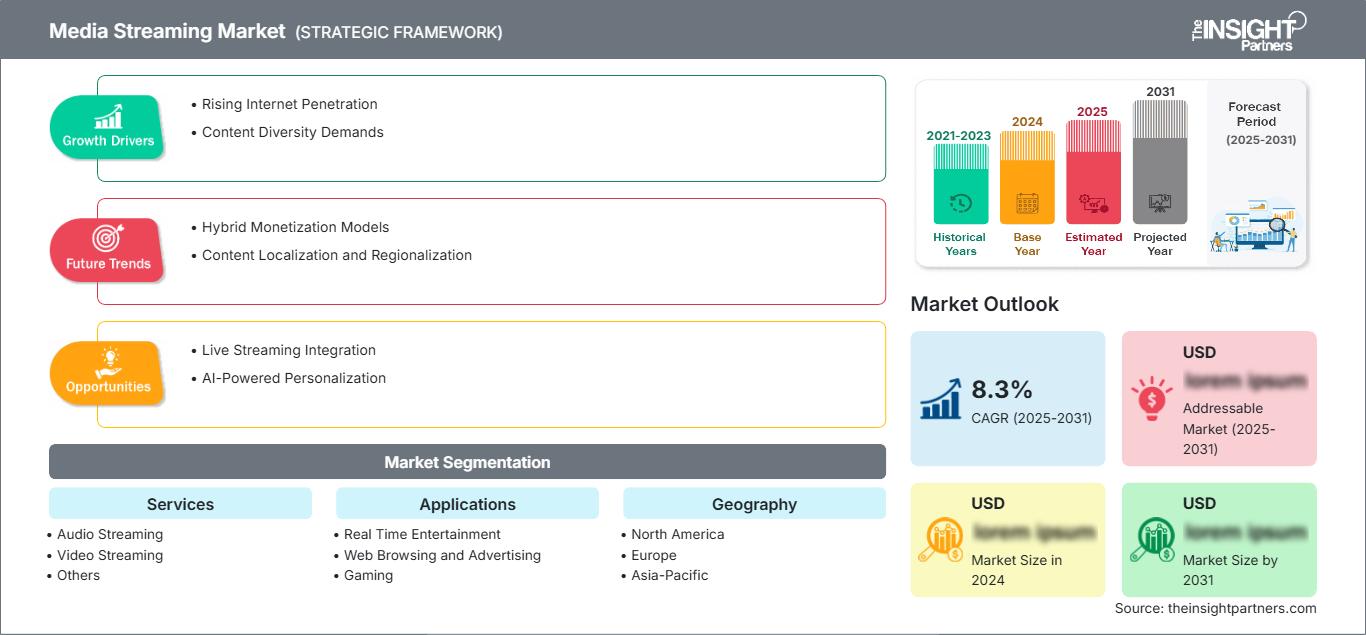
Media Streaming Market: Strategic Insights
Regional Insights
North America Media Streaming Market
North America remains the dominant regional contributor to the media streaming market, supported by strong digital infrastructure, widespread broadband penetration, high smart device adoption, and established streaming ecosystems. The region accounted for an estimated 38–42% share in 2025 and is projected to register a CAGR of 7.5–8.5% between 2026–2034. The United States stands out as the principal participant owing to wide consumer use of subscription services, quality content creation, and huge investments in streaming technology.
This regional ecosystem includes such firms as Netflix, Inc., Amazon.com, Inc., Apple Inc., Microsoft Corporation, Akamai Technologies, Inc., and Adobe Systems Incorporated. The rise in the usage of the paid video streaming approach, cloud computing, and interactive digital entertainment solutions will ensure the ongoing development of the market. Also, the contribution from Canada has to be taken into account due to the rise in online video usage and investments in digital media services.
U.S. Media Streaming Market
The U.S. media streaming market represents the largest national market within North America, supported by mature digital consumption patterns, strong platform availability, and high consumer spending on entertainment services. The country accounted for an estimated 75–80% share of North America in 2025 and is expected to grow at a CAGR of 7.5–8.5% during 2026–2034. The major technology firms are still allocating their funds to the production of original content, cloud services and advertisements.
Some of the major companies in the market include Netflix, Inc., Amazon.com, Inc., Apple Inc., Microsoft Corporation, and Spotify AB, which have been operating in content distribution and entertainment technologies as well as digital services. There has been a growing use of subscription and advertisement-based hybrid monetization models. Some of the growth areas include connected TVs, gaming, podcast services and personalized entertainment. Artificial intelligence and content analytics are some of the key technologies to be adopted for industry development.
Europe Media Streaming Market
Europe represents a significant regional market with an estimated 25–29% share in 2025 and is projected to expand at a CAGR of 8.0–8.8% between 2026–2034. The region benefits from increasing digital content consumption, expanding broadband networks, and growing demand for localized entertainment services. The UK remains a leading country due to strong streaming adoption, advanced media infrastructure, and high consumer engagement with digital platforms, supporting the Media Streaming Market forecast.
Germany makes its contribution to this process via more use of online videos, investments in technologies, and a need for flexible entertainment solutions by households and businesses. France, Italy, and Spain also face an increased adoption rate due to a growth in the number of regional language content libraries offered by streaming services and increased accessibility. Digital transformation and production of local content regulations in European countries affect the strategy of platforms. More attention is paid to collaboration with content producers, telecommunications and technology companies for developing their positions in the region.
APAC Media Streaming Market
The APAC media streaming market is developing rapidly, supported by increasing internet connectivity, smartphone adoption, expanding digital payment systems, and rising demand for regional entertainment content. The region accounted for an estimated 22–26% share in 2025 and is expected to grow at a CAGR of 9.0–10.0% from 2026–2034. China, Japan, South Korea, India, and Australia are major contributors to regional growth.
China leads the regional landscape due to its large digital audience and strong domestic streaming ecosystem. India is experiencing accelerated adoption through affordable mobile data services and regional language content platforms. Japan and South Korea contribute through advanced technology adoption and strong entertainment industries. Government initiatives supporting digital infrastructure development and expanding online ecosystems are strengthening regional opportunities. Streaming providers are increasingly investing in localized content, mobile-first experiences, and scalable technology solutions to capture growing audiences across APAC markets.
Middle East & Africa Media Streaming Market
The Middle East & Africa Media Streaming Market trends are gradually expanding due to increasing internet availability, digital transformation initiatives, and growing consumer interest in online entertainment. The region is estimated to grow at a CAGR of 8.5–9.5% during 2026–2034. Saudi Arabia and the UAE are leading markets due to investments in digital infrastructure, entertainment ecosystems, and smart technology initiatives.
South Africa contributes through expanding broadband access and rising demand for digital content services. Other Middle Eastern and African countries are adopting streaming platforms as mobile connectivity improves and online consumption patterns evolve. Investments in telecommunications infrastructure, cloud services, and regional content production are supporting market development. The combination of energy sector diversification initiatives, smart city programs, and increasing digital engagement is creating additional opportunities for streaming providers across the region.

Segmentation Analysis
Services
The services segment of the media streaming market includes Audio Streaming, Video Streaming, and Others. The segment is expected to register a CAGR of 8.0–9.0% during 2026–2034 due to increasing consumer preference for digital entertainment, flexible access models, and personalized content experiences. Service providers are expanding offerings through subscription platforms, advertising-supported solutions, and bundled entertainment packages. The segment continues to benefit from advancements in content delivery networks, cloud technologies, and artificial intelligence-based recommendation systems.
- Audio Streaming: Audio streaming is gaining importance due to rising podcast consumption, mobile listening trends, and demand for personalized music experiences. Platforms are enhancing engagement through curated playlists, creator-focused content, and integration with connected devices.
- Video Streaming: Video streaming remains the largest service category due to strong demand for movies, series, live events, and user-generated content. Providers are investing in original programming, regional libraries, and advanced viewing technologies.
Applications
The applications segment includes Real Time Entertainment, Web Browsing and Advertising, Gaming, Social Networking, and E-Learning. The segment is projected to grow at a CAGR of 8.5–9.5% during 2026–2034 as streaming technologies become integrated into diverse digital experiences. Enterprises, consumers, and content providers are adopting streaming applications to improve engagement, communication, and accessibility. Growth is supported by expanding digital ecosystems and increasing demand for interactive online experiences.
- Real Time Entertainment: Real-time entertainment applications represent a major use case due to increasing demand for live sports, concerts, gaming streams, and interactive digital events. Platforms are improving low-latency delivery to enhance user experiences.
- Web Browsing and Advertising: Streaming-based advertising solutions are expanding as businesses seek targeted marketing approaches. Digital platforms are using audience analytics and personalized advertisements to improve campaign effectiveness.
- Gaming: Gaming applications are gaining traction through live game streaming, cloud gaming services, and esports content. Companies are investing in infrastructure to support high-quality interactive experiences.
- Social Networking: Social networking applications increasingly incorporate live video, creator content, and community engagement features. Streaming capabilities are becoming essential for user interaction and platform retention.
- E-Learning: E-learning applications are expanding through online courses, virtual classrooms, and educational content delivery. Streaming technologies enable scalable access to training and knowledge resources.
Opportunity Snapshot
| Application | Revenue Contribution | Trend Tag | Adoption Stage |
| Real Time Entertainment | High | Live Content | Mature |
| Web Browsing and Advertising | Medium | Targeted Ads | Scaling |
| Gaming | Medium | Cloud Gaming | Scaling |
| Social Networking | Medium | Creator Streaming | Mature |
| E-Learning | Low | Virtual Learning | Scaling |
Media Streaming Market Growth Drivers and Impact Analysis
Expansion of High-Speed Connectivity Infrastructure
The deployment of broadband networks, fiber connections, and modern mobile communications infrastructure is one of the key drivers that plays an important role in influencing adoption in both consumer and enterprise segments. Higher reliability of networks makes it possible for users to stream videos, audio, games, and educational materials without buffering and delays. Telecommunication service providers have started to collaborate with streaming platforms in order to deliver the best content and attract more customers. Emerging markets are able to get inexpensive internet connections along with the growing usage of smartphones, which creates a new audience for digital content providers. Infrastructure changes are helping platforms to scale while stimulating companies to create region-specific services.
Increasing Demand for Personalized Digital Content Experiences
Changing expectations among consumers are driving their demand for a tailored entertainment experience, which prompts streaming service providers to make investments in artificial intelligence and recommendation engines. Providers are using analytics on viewer habits and preferences to recommend personalized content and increase user retention. This driver is influencing decisions on investments in content creation, platform building, and advertising technology. Content creators are using data-driven methods to tailor their programming strategy and monetize it better. Personalized experiences also provide the ability to expand into additional verticals such as podcasts, interactive entertainment, and creator-owned content. As competition grows, the success of integrating intelligent discovery engines and user-friendly functions will help build consumer loyalty.
Growth of Hybrid Monetization and Advertising-Supported Models
Growing use of hybrid business models that leverage subscriptions, advertising, and premium content services is paving the way for streaming companies. Subscriptions alone do not work anymore as companies look for ways of expanding their audience and generating additional revenues. With advertising-supported streaming, companies can attract price-sensitive users and at the same time give brands more chances to do effective digital marketing. Technologies related to audience measurements, programmatic advertising, and content analysis are helping improve the efficiency of streaming ads. Technology companies are working together with media players to create effective advertising ecosystems. It has an impact on the competitive strategy of the industry since the platforms are encouraged to diversify sources of revenue and maintain the level of user involvement.
Media Streaming Market Future Trends
Integration of Artificial Intelligence Across Streaming Platforms
The introduction of AI is projected to be among the major trends as the streaming industry will make advances in personalization, content discovery, operational efficiency, and audience analytics. It is becoming increasingly common to use AI-powered solutions for the analysis of viewer preferences, automation of content recommendation, optimization of streaming performance, and advertising effectiveness. The future developments in this field are going to incorporate generative technology into interactive entertainment platforms. In addition, there is the potential for using AI for localization, automatic generation of metadata, and enhanced user interfaces. The described capabilities are going to affect the competitive positioning of companies through increased customizability of the experiences that they offer. The ongoing growth of intelligent streaming ecosystems is projected to present new business prospects for tech vendors and service providers.
Expansion of Interactive and Immersive Streaming Experiences
Interactive and immersive approaches are projected to transform the way audiences interact with digital media in the future years. Streaming companies are experimenting with tools like virtual experiences, interactive narratives, audience participation elements, and improved gaming integrations to make their content more engaging. With the rise of esports, live events, and creator-centric platforms, streaming companies have been motivated to design more interactive content formats. Technological advancements in the areas of cloud computing, hardware, and networking are presenting new possibilities for digital engagement. Future streaming systems will most likely evolve from being purely passive to becoming more interactive, where audience participation in content interactions becomes a significant element.
Media Streaming Market Opportunities
Expansion into Emerging Digital Economies
The emergence of such markets presents numerous opportunities owing to the growing number of internet users, increasing number of smartphone users, and greater need for regionalized digital content. Various countries in the Asia Pacific, Middle East, Africa, and Latin America regions are undergoing a digital revolution, and they present new audiences for streaming services. These opportunities can be utilized through the creation of affordable pricing strategies, regional language libraries, and partnerships with regional content creators. Investments in payment systems and telecom networks are providing access to previously inaccessible consumers. Streaming companies that are able to align their services to the preferences of the regional market can improve their market position and enhance their subscriber engagement levels.
Development of Advanced Enterprise Streaming Solutions
Enterprise adoption of streaming technologies presents opportunities beyond consumer entertainment applications. Organizations are increasingly using streaming platforms for employee training, virtual events, corporate communications, and digital collaboration. The expansion of remote and hybrid work environments has increased demand for reliable video delivery solutions across business operations. Technology providers can develop specialized platforms offering enhanced security, analytics, and integration capabilities to address enterprise requirements. Educational institutions and professional training providers are also adopting streaming solutions to deliver scalable learning experiences. Companies focusing on enterprise-grade streaming infrastructure, cloud services, and content management capabilities are positioned to benefit from increasing organizational demand. This opportunity highlights the broader role of streaming technologies as digital communication tools across multiple industries.
Frequently Asked Questions

- Comprehensive Market Sizing and Forecast Analysis
- Detailed Segmentation Analysis
- In-Depth Market Dynamics Assessment
- Regional and Country-Level Insights
- Competitive Landscape and Company Benchmarking
- Strategic Business Intelligence
Recent Reports
Testimonials

The Insight Partners provided valuable market intelligence that supported our global go-to-market strategy. Their team was professional, responsive, and attentive to our feedback, providing thoughtful analysis and helpful methodological clarifications throughout the project.
Junmo Kim Chief Financial Officer (CFO), Enertech Co., Ltd.
The Insight Partners' SCADA System Market report is comprehensive, with valuable insights on current trends and future forecasts. The team was highly professional, responsive, and supportive throughout. We are very satisfied and highly recommend their services.
RAN KEDEM Partner, Reali Technologies LTDs
I requested a report on a very specific software market and the team produced the report in a few days. The information was very relevant and well presented. I then requested some changes and additions to the report. The team was again very responsive and I got the final report in less than a week.
JEAN-HERVE JENN Chairman, Future Analytica
We worked with The Insight Partners for an important market study and forecast. They gave us clear insights into opportunities and risks, which helped shape our plans. Their research was easy to use and based on solid data. It helped us make smart, confident decisions. We highly recommend them.
PIYUSH NAGPAL Sr. Vice President, High Beam Global
The Insight Partners delivered insightful, well-structured market research with strong domain expertise. Their team was professional and responsive throughout. The user-friendly website made accessing industry reports seamless. We highly recommend them for reliable, high-quality research services
YUKIHIKO ADACHI CEO, Deep Blue, LLC.
This is the first time I have purchased a market report from The Insight Partners.While I was unsure at first, I visited their web site and felt more comfortable to take the risk and purchase a market report.I am completely satisfied with the quality of the report and customer service. I had several questions and comments with the initial report, but after a couple of dialogs over email with their analyst I believe I have a report that I can use as input to our strategic planning process.Thank you so much for taking the extra time and making this a positive experience.I will definitely recommend your service to others and you will be my first call when we need further market data.
JOHN SUZUKI President and Chief Executive Officer, Board Director, BK Technologies
I wish to appreciate your support and the professionalism you displayed in the course of attending to my request for information regarding to infectious disease IVD market in Nigeria. I appreciate your patience, your guidance, and the fact that you were willing to offer a discount, which eventually made it possible for us to close a deal. I look forward to engaging The Insight Partners in the future, all thanks to the impression you have created in me as a result of this first encounter.
DR CHIJIOKE ONYIA MANAGING DIRECTOR, PineCrest Healthcare Ltd.Reason to Buy
- Informed Decision-Making
- Understanding Market Dynamics
- Competitive Analysis
- Identifying Emerging Markets
- Customer Insights
- Market Forecasts
- Risk Mitigation
- Boosting Operational Efficiency
- Strategic Planning
- Investment Justification
- Tracking Industry Innovations
- Aligning with Regulatory Trends





 Get Free Sample for