
Microencapsulated Pesticide Market Growth, Trends & Forecast by 2034
Coverage: By Type (Insecticides, Fungicides, Herbicides, Others); Crop Type (Cereals and Grains, Oilseeds and Pulses, Fruits and Vegetables, Others); Mode of Application (Foliar Spray, Fertigation, Others) , and Geography (North America, Europe, Asia Pacific, and South and Central America)
- Status : Data Released
- Report Code : TIPRE00021445
- Category : Chemicals and Materials
- No. of Pages : 150
- Available Report Formats :


- Last update date : August 06, 2026


2025 Market Size
US$ 642.7 Mn
Base year value
2034 Forecast
US$ 1,398.35 Mn
Projected by 2034
CAGR 2026-2034
9.02 %
Growth rate
Addressable Market
US$ 9,131.12 Mn
(2026-2034)
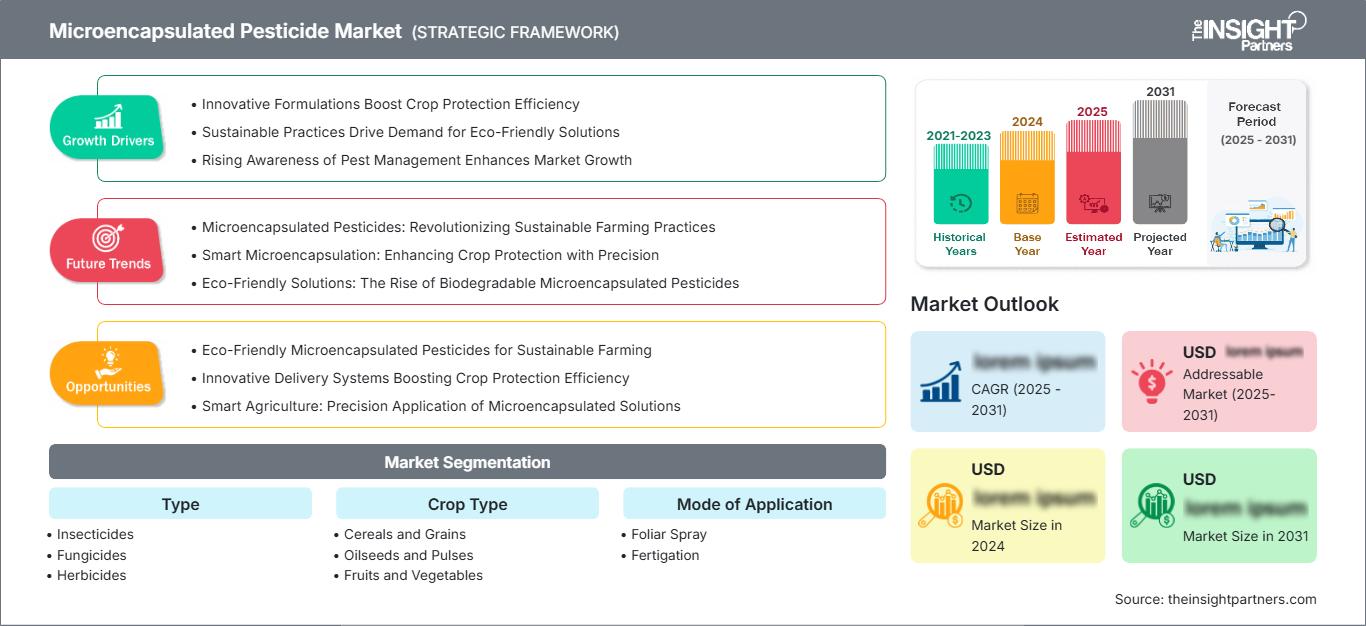
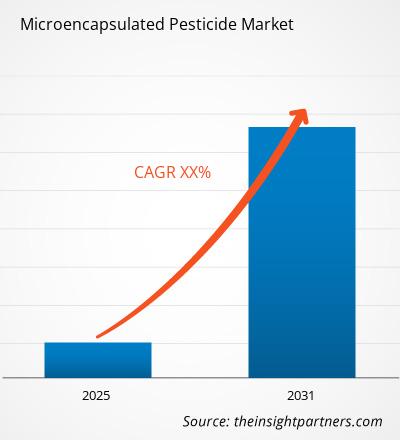
The microencapsulated pesticide market size was worth US$ 642.7 Million in 2025 and estimated to be US$ 1,398.35 Million by 2034, growing at a CAGR of 9.02% from 2026 to 2034. The market is growing owing to an increasing adoption of controlled-release pesticide technology among agriculturists due to better efficiency of pesticides, reduced environmental losses, and sustainable farming practice. Improvements in encapsulating material and precision agriculture are further driving the commercialization of these products in both developed and developing countries.
North America holds considerable market share for encapsulated pesticides on account of strict environmental regulations and increased adoption of precision farming techniques in the region. The market is growing owing to an increase in the need for better pesticide efficacy, reduced frequency of pesticide applications, and effective resistance management of the crops. The region is likely to experience CAGR between 8.4%-9.0% over the forecast period.
Microencapsulated Pesticide Market Assessment and Insights
- North America: North America accounted for 30%–33% microencapsulated pesticide market share in 2025 and is anticipated to register a CAGR of 8.4%–9.0% during 2026–2034. Strong regulatory support for sustainable crop protection, widespread precision agriculture, and continuous innovation in pesticide formulations support regional market expansion.
- U.S.: The U.S. represented 74%–78% of the North American market in 2025 and is projected to expand at a CAGR of 8.5%–9.1% during 2026–2034, supported by large-scale commercial farming and rapid adoption of advanced pesticide delivery technologies.
- Europe: Europe captured 25%–28% share in 2025 and is expected to grow at a CAGR of 8.1%–8.7% during 2026–2034. Germany, France, Spain, and Italy continue leading regional demand owing to sustainable farming initiatives and strict pesticide regulations.
- Asia Pacific: Asia Pacific held 33%–36% share in 2025 and is forecast to register the fastest CAGR of 9.8%–10.4% during 2026–2034. China, India, Japan, and Australia are strengthening demand through modernization of agriculture and increasing crop productivity initiatives.
- Largest Segment: Type – Insecticides accounted for 44%–48% market share in 2025 and is projected to grow at a CAGR of 8.8%–9.4% during 2026–2034, supported by rising pest pressure and increasing adoption of controlled-release formulations.
- High Growth Segment: Crop Type – Fruits and Vegetables represented 28%–32% share in 2025 and is anticipated to expand at a CAGR of 10.1%–10.7% during 2026–2034, driven by high-value crop cultivation and increasing demand for residue management.
- Key companies analyzed in detail: Bayer AG, Syngenta AG, EcoSafe Natural Products Inc., BASF SE, Belchim Crop Protection NV, Dow Inc., FMC Corporation, UPL Limited, ADAMA Agricultural Solutions Ltd., and China National Chemical Corporation (ChemChina).
Source: The Insight Partners' analysis based on proprietary research, government publications, company annual reports, investor presentations, industry databases, and expert interviews.
The microencapsulated pesticide market has experienced a great deal of technological change with the growing use of pesticide formulations being overtaken by controlled release systems that help improve efficiency of pesticides without harming the environment. New developments in polymer chemistry, biodegradable encapsulating agents, interfacial polymerization, spray drying, and microencapsulation have improved pesticide stability while lowering the risk of pesticide volatility, leaching, and photo-degradation. They allow for better application of pesticides and ensure that environmental requirements related to the use of crop protection products are met.
The future development of the market will be fueled by investments in precision agriculture, biological crop protection techniques, and environmentally-friendly pesticides. The increasing concern about the availability of food, stricter regulations aimed at reducing the amount of pesticide that can leak into the environment, and greater acceptance of integrated pest management approaches will drive the development of encapsulated pesticides in developed and developing agricultural countries.
Microencapsulated Pesticide Market Report Scope
| Report Attribute | Details |
|---|---|
| Market size in 2025 | US$ 642.7 Million |
| Market Size by 2034 | US$ 1,398.35 Million |
| Global CAGR (2026 - 2034) | 9.02% |
| Historical Data | 2021-2024 |
| Forecast period | 2026-2034 |
Microencapsulated Pesticide Market Analysis
Increasing worries about pesticide effectiveness, sustainability, and food security have continued to drive the market growth of microencapsulated pesticides in the global agriculture industry. The use of microencapsulation helps in controlled release of active ingredients, reduces losses through volatilization, photodegradation, and loss of chemicals, besides promoting persistence of the product in the field. All this helps farmers to effectively carry out pest control using reduced applications, reduced use of active ingredients and increased crop production. Increased adoption of technologies in agriculture, integrated pest management systems and climate smart farming also promotes market growth.
The value chain of the industry comprises of active ingredients producers, technology suppliers of encapsulation, formulators, agrochemical producers, distributors and agricultural cooperatives. Collaborations among polymer manufacturers, agricultural biotechnology firms and agrochemical producers have been promoting the development of novel pesticide delivery systems. Increased investment in environmentally friendly encapsulating materials and sustainable manufacturing processes has helped in boosting supply chain resilience.
The competitive dynamics in the microencapsulated pesticides market analysis have become centered around innovation, product differentiation, and sustainable crop protection technologies. Bayer AG, Syngenta AG, BASF SE, FMC Corporation, ADAMA Agricultural Solutions Ltd., and UPL Limited are continuously working on new formulations to enhance the efficiency of their products while minimizing their environmental footprint. Dow Inc. and Belchim Crop Protection NV are developing their specialty crop protection technology base through formulation innovation and collaborations, whereas EcoSafe Natural Products Inc. is strengthening its market position in environmentally sustainable agricultural solutions.
The growing investment trends include biodegradable microencapsulation systems, biological delivery platform for pesticides, and digitization of agriculture. The leading agrochemical firms are increasing their manufacturing capacities in the Asia-Pacific region along with formulating research centers in North America and Europe. The integration of precision agriculture technologies, AI-based crop monitoring system, and controlled release of the pesticide will enhance the performance of encapsulated pesticide in the field as well as reduce operational costs.
● REPORT CUSTOMIZATION
Tailor This Report To Align With Your Specific Business Requirements
This report can be customized to align precisely with your business objectives, scope, and target markets. Customization options include tailored segmentation, geography, competitive analysis, and strategic insights to support informed decision-making.
Customize This Report →WHAT YOU CAN ADJUST
- ● Segmentations
- ● Geography
- ● Competitive Analysis
- ● Language Preferences
Microencapsulated Pesticide Market: Strategic Insights
Regional Insights
North America Microencapsulated Pesticide Market
North America occupied 30%–33% of the worldwide market in 2025 and is expected to have a CAGR of 8.4%–9.0% during 2026–2034. North America is a highly advanced region where agricultural activities are largely mechanized and precision agriculture is widely practiced. There is an ever-growing emphasis on decreasing the drift and contamination of the environment by pesticides by various government organizations, such as U.S. Environmental Protection Agency and Agriculture and Agri-Food Canada. In addition, the governments are also encouraging farmers for adopting sustainable practices and using modern pesticide formulations for effective pest control and resource utilization.
Increasing investments in digital agriculture, aerial spraying using drones, and pest management strategies will continue to help in expanding the regional market. Some of the major agrochemicals companies are also establishing their research collaboration with agricultural universities and technology companies for introducing biodegradable encapsulation system that will improve the performance of pesticides and reduce the frequency of applications.
U.S. Microencapsulated Pesticide Market
In 2025, the U.S. accounted for 74%–78% of the North American market and is projected to maintain a CAGR of 8.5%–9.1% from 2026 to 2034. The presence of big commercial farms, cultivation of corn, soybeans, cotton, fruits, and vegetables, coupled with increasing adoption of precision farming practices, is expected to drive demand for controlled-release pesticides. Furthermore, the presence of leading agrochemical companies and agriculture research institutes is expected to provide a further fillip.
Increasing focus on minimizing chemical runoff, pollinator protection, and efficient application of pesticides are expected to push farmers to use encapsulated pesticides. Growth of intelligent sprayers and variable rate application and digital crop scouting technology are expected to increase efficient application of pesticides and increase productivity. Sustainable crop protection technologies are expected to remain a key focus area going forward.
Europe Microencapsulated Pesticide Market
Europe held a market share of 25% to 28% in 2025 and is expected to grow at a rate of 8.1% to 8.7% CAGR from 2026 to 2034. With the Farm to Fork Strategy and Sustainable Use of Pesticides being pursued in the European Union, the use of crop protection products which are environmentally friendly is still on the rise.
Germany holds the largest market share due to superior agrochemical manufacturing infrastructure, advanced agricultural research, and a conducive regulatory landscape to foster innovation. The United Kingdom is still making efforts toward precision agriculture, integrated pest management, and digital farming technologies. This will enhance agricultural productivity and reduce chemicals used in the process.
Germany has a number of advantages such as a highly competitive agrochemical industry, superior formulating technology, and excellent collaboration between the research organizations and agricultural technology companies. Repeated investment in biodegradable encapsulants and precise pesticide applicators is contributing to Germany's dominance in innovations related to sustainable crop protection.
France, Italy, and Spain continue to drive regional demand through extensive production of cereals, vineyards, fruits, vegetables, and specialty crops. Growing acceptance of environmentally-friendly formulations, precision irrigation, and modern farming techniques are helping to build opportunities for advanced crop protection encapsulation technologies in Southern Europe.
APAC Microencapsulated Pesticide Market
Asia Pacific accounted for 33%–36% of the global market in 2025 and is forecast to register the fastest CAGR of 9.8%–10.4% during 2026–2034. China remains the largest regional market owing to extensive agricultural production and increasing investments in sustainable farming technologies. India, Japan, South Korea, and Australia are also expanding adoption of advanced crop protection products to improve productivity and reduce pesticide losses.
Government programs supporting agricultural modernization, efficient water utilization, and food security continue encouraging precision pesticide application across the region. Expansion of domestic agrochemical manufacturing and increasing investment in agricultural biotechnology further strengthen regional competitiveness.
Middle East & Africa Microencapsulated Pesticide Market
The Middle East & Africa is anticipated to register a CAGR of 8.7%–9.3% during 2026–2034, supported by increasing investments in modern agriculture, irrigation infrastructure, and food security initiatives. Saudi Arabia leads regional adoption through investments in protected cultivation and precision farming, while the United Arab Emirates continues promoting sustainable agricultural technologies suitable for water-constrained environments.
South Africa remains a key agricultural producer with growing demand for efficient crop protection technologies across fruit, grain, and horticultural production. Increasing modernization of farming practices and expansion of commercial agriculture across the Rest of MEA are expected to support long-term market development.
Segmentation Analysis
Type
The Type segment is projected to expand at a CAGR of 9.0%–9.6% during 2026–2034. Increasing emphasis on improving pesticide efficiency, minimizing environmental losses, and enhancing controlled release continues driving adoption across insecticides, fungicides, and herbicides. The microencapsulated pesticide market scope is expanding as manufacturers develop advanced biodegradable encapsulation systems capable of improving field performance while supporting sustainable agricultural practices.
- Insecticides – Encapsulated insecticides represent the largest product category owing to widespread use in cereal, fruit, vegetable, and cotton cultivation. Controlled-release technologies improve residual activity, reduce repeated spraying, and enhance resistance management.
- Fungicides – Microencapsulated fungicides improve protection against environmental degradation while providing longer-lasting disease control under varying climatic conditions. These formulations are increasingly adopted for high-value horticultural crops and commercial agriculture.
- Herbicides – Encapsulation enhances herbicide stability, reduces volatilization and off-target movement, and supports gradual release of active ingredients, improving weed management while minimizing environmental contamination.
Crop Type
The Crop Type segment is expected to register a CAGR of 9.3%–9.9% during 2026–2034. Growing global food demand, increasing cultivation of high-value crops, and expansion of sustainable farming practices continue supporting adoption of advanced pesticide delivery technologies. Controlled-release formulations improve crop protection while reducing chemical usage and supporting regulatory compliance across multiple agricultural systems.
- Cereals and Grains – Large cultivation areas and increasing demand for efficient pest management continue supporting extensive utilization of encapsulated pesticides across wheat, rice, maize, and other staple crops worldwide.
- Oilseeds and Pulses – Farmers increasingly adopt encapsulated crop protection products to improve pest control efficiency, reduce application frequency, and enhance productivity across soybean, sunflower, rapeseed, and pulse cultivation.
- Fruits and Vegetables – High-value horticultural production increasingly depends on precision pesticide application, improved residue management, and enhanced crop quality, making encapsulated formulations particularly attractive for commercial growers.
Mode of Application
The Mode of Application segment is forecast to grow at a CAGR of 8.8%–9.4% during 2026–2034. Increasing adoption of precision agriculture equipment and improved irrigation systems is enabling more efficient utilization of encapsulated pesticide formulations while reducing environmental losses and optimizing active ingredient performance.
- Foliar Spray – Foliar spraying remains the dominant application method because it provides rapid field coverage, compatibility with existing spraying equipment, and effective delivery of encapsulated formulations across multiple crop types.
- Fertigation – Fertigation enables simultaneous nutrient and pesticide application through irrigation systems, improving input efficiency, reducing labor requirements, and supporting precision agriculture practices in high-value crop cultivation.
Opportunity Snapshot
| Crop Type | Revenue Contribution | Trend Tag | Adoption Stage |
|---|---|---|---|
| Cereals and Grains | High | Broad Acreage | Mature |
| Oilseeds and Pulses | Medium | Yield Protection | Scaling |
| Fruits and Vegetables | High | Residue Control | Scaling |
Microencapsulated Pesticide Market Growth Drivers and Impact Analysis
Growing adoption of sustainable crop protection technologies
The rising focus on sustainable farming across the globe will boost the demand for new pesticide formulations that can provide superior field efficacy while causing minimal harm to the environment. The microencapsulation technology allows better control over the delivery of active ingredients, which reduces any loss through drift, volatilization, or leaching. This technology also helps in meeting the regulatory standards along with allowing better efficiencies in crop protection by making applications less frequent. Even the Food and Agriculture Organization (FAO) is recommending integrated pest management systems, where optimal pesticide usage does not affect agriculture output. With increased demand for sustainable farming from the governments, the need for encapsulated crop protection products is anticipated to grow during the forecast period.
Expansion of precision agriculture and smart farming systems
The widespread use of technology used in precision agriculture is setting good grounds for efficient delivery of pesticides in new formats. GPS guided spray nozzles, drones for crop inspection, remote sensing technology and variable rate equipment allow farmers to take advantage of the use of encapsulated pesticides as compared to the regular formulations. Digital agriculture, together with controlled release technology, will help achieve higher efficiency of active ingredients while decreasing application of chemicals. All these advancements help reduce costs and increase effectiveness of pest management techniques. Growing investments in agricultural automation in North America, Europe, China, Australia, and India contribute to good prospects for new encapsulated pesticide formulations.
Increasing demand for higher agricultural productivity and food security
Growing global food demand, changing dietary patterns, and limited availability of arable land continue increasing pressure on agricultural productivity. Farmers are adopting advanced crop protection technologies capable of improving pest control while preserving crop quality and maximizing yields. Microencapsulated pesticides offer extended residual activity and enhanced formulation stability, enabling better protection throughout critical crop growth stages. Governments are also investing in modern agricultural practices to strengthen domestic food security and reduce production losses caused by pests and diseases. These structural trends are expected to sustain long-term demand for innovative pesticide delivery technologies across commercial agriculture, horticulture, and specialty crop production.
Microencapsulated Pesticide Market Future Trends
Increasing commercialization of biodegradable encapsulation materials
Growing environmental awareness and stricter pesticide regulations are encouraging manufacturers to replace conventional synthetic encapsulating materials with biodegradable alternatives derived from natural polymers, starches, cellulose, proteins, and other renewable resources. The microencapsulated pesticide market trends increasingly indicate greater investment in environmentally compatible delivery systems capable of maintaining pesticide effectiveness while reducing long-term ecological impact. Research institutions and agrochemical manufacturers continue collaborating to develop encapsulation technologies that improve degradation characteristics without compromising field performance. Commercial availability of sustainable encapsulated formulations is expected to increase steadily during the forecast period.
Integration of biological crop protection with encapsulation technologies
Biological pesticides are becoming an increasingly important component of integrated crop protection programs worldwide. Encapsulation technologies improve the stability and shelf life of microbial pesticides, botanical extracts, and naturally derived active ingredients that are often sensitive to environmental conditions. Advanced delivery systems also enhance field persistence and targeted release, improving biological product performance under commercial farming conditions. As biological crop protection gains regulatory support and farmer acceptance, encapsulation technologies will play an essential role in expanding commercialization and improving product reliability across multiple agricultural applications.
Microencapsulated Pesticide Market Opportunities
Expansion into high-value horticulture and specialty crop production
Commercial cultivation of fruits, vegetables, vineyards, ornamental crops, and greenhouse production presents attractive opportunities for advanced encapsulated pesticide formulations. The microencapsulated pesticide market Forecasts indicate strong investment potential in horticultural applications where crop quality, residue management, and export compliance are critical purchasing considerations. Controlled-release technologies enable growers to improve pest management efficiency while reducing chemical residues and supporting premium crop production. Companies capable of developing application-specific formulations for high-value crops are expected to strengthen competitive positioning and expand market penetration across international agricultural markets.
Partnerships supporting next-generation precision crop protection
Strategic collaboration between agrochemical manufacturers, agricultural technology companies, drone solution providers, and digital farming platforms is expected to accelerate innovation throughout the value chain. Integrating encapsulated pesticide formulations with precision application equipment creates opportunities for optimized dosage, improved pest targeting, and reduced chemical consumption. Companies investing in artificial intelligence-enabled crop monitoring, automated spraying systems, and biodegradable formulation technologies can strengthen long-term competitiveness while supporting regulatory compliance. Expansion of localized manufacturing and technical service networks in emerging agricultural economies is expected to generate additional commercial opportunities through 2034.
Recent Developments
- July 2026: China approved its first fluopyram-based microcapsule suspension-suspension concentrate (ZC) formulations for the control of root-knot nematodes, marking a significant advancement in nematicide formulation technology. The newly registered products comprise 7 percent abamectin + fluopyram ZC for use in cucumber and 15 percent abamectin + fluopyram ZC for tomato, both targeting root-knot nematodes (Meloidogyne spp.).
- August 2025: Insecticides India launched a new broad-spectrum insecticide, SPARCLE, in partnership with global agricultural technology firm Corteva Agriscience. The product targets brown plant hopper, a pest that damages rice crops, and is designed to help farmers improve yields, the companies said in a joint statement.
Frequently Asked Questions

- Comprehensive Market Sizing and Forecast Analysis
- Detailed Segmentation Analysis
- In-Depth Market Dynamics Assessment
- Regional and Country-Level Insights
- Competitive Landscape and Company Benchmarking
- Strategic Business Intelligence
Recent Reports
Testimonials

The Insight Partners' SCADA System Market report is comprehensive, with valuable insights on current trends and future forecasts. The team was highly professional, responsive, and supportive throughout. We are very satisfied and highly recommend their services.
RAN KEDEM Partner, Reali Technologies LTDs
I requested a report on a very specific software market and the team produced the report in a few days. The information was very relevant and well presented. I then requested some changes and additions to the report. The team was again very responsive and I got the final report in less than a week.
JEAN-HERVE JENN Chairman, Future Analytica
We worked with The Insight Partners for an important market study and forecast. They gave us clear insights into opportunities and risks, which helped shape our plans. Their research was easy to use and based on solid data. It helped us make smart, confident decisions. We highly recommend them.
PIYUSH NAGPAL Sr. Vice President, High Beam Global
The Insight Partners delivered insightful, well-structured market research with strong domain expertise. Their team was professional and responsive throughout. The user-friendly website made accessing industry reports seamless. We highly recommend them for reliable, high-quality research services
YUKIHIKO ADACHI CEO, Deep Blue, LLC.
This is the first time I have purchased a market report from The Insight Partners.While I was unsure at first, I visited their web site and felt more comfortable to take the risk and purchase a market report.I am completely satisfied with the quality of the report and customer service. I had several questions and comments with the initial report, but after a couple of dialogs over email with their analyst I believe I have a report that I can use as input to our strategic planning process.Thank you so much for taking the extra time and making this a positive experience.I will definitely recommend your service to others and you will be my first call when we need further market data.
JOHN SUZUKI President and Chief Executive Officer, Board Director, BK Technologies
I wish to appreciate your support and the professionalism you displayed in the course of attending to my request for information regarding to infectious disease IVD market in Nigeria. I appreciate your patience, your guidance, and the fact that you were willing to offer a discount, which eventually made it possible for us to close a deal. I look forward to engaging The Insight Partners in the future, all thanks to the impression you have created in me as a result of this first encounter.
DR CHIJIOKE ONYIA MANAGING DIRECTOR, PineCrest Healthcare Ltd.Reason to Buy
- Informed Decision-Making
- Understanding Market Dynamics
- Competitive Analysis
- Identifying Emerging Markets
- Customer Insights
- Market Forecasts
- Risk Mitigation
- Boosting Operational Efficiency
- Strategic Planning
- Investment Justification
- Tracking Industry Innovations
- Aligning with Regulatory Trends





 Get Free Sample for