
Nanofiber Market Growth, Size & Forecast by 2034
Coverage: By Material (Polymeric Nanofiber, Carbon Nanofiber, Ceramic Nanofiber, Glass Nanofiber, and Others) and Application (Industrial Air Filtration, Defense & Security, Consumer Goods & Textiles, Electronic Components, Power & Energy, Healthcare & Life Sciences, Chemical & Environment, and Others), and Geography (North America, Europe, Asia Pacific, and South and Central America)
- Status : Data Released
- Report Code : TIPTE100001062
- Category : Chemicals and Materials
- No. of Pages : 150
- Available Report Formats :


- Last update date : June 15, 2026


2025 Market Size
US$ 2.98 Bn
Base year value
2034 Forecast
US$ 7.01 Bn
Projected by 2034
CAGR 2026-2034
9.99 %
Growth rate
Addressable Market
US$ 44.49 Bn
(2026-2034)
The global nanofiber market size is projected to reach US$ 7.01 billion by 2034 from US$ 2.98 billion in 2025. The market is anticipated to register a CAGR of 9.99% during the forecast period 2026–2034.
Key market dynamics include the escalating demand for high-efficiency filtration media in urban industrial hubs, rapid breakthroughs in regenerative medicine using biocompatible scaffolds, and the critical role of nanofibers in improving the energy density of next-generation lithium-ion batteries. Additionally, the market is expected to benefit from the rising utilization of lightweight carbon nanofibers in the aerospace and automotive industries, the expansion of the electronics industry requiring ultra-fine conductive materials, and the increasing integration of antimicrobial nanofibers in consumer textiles and personal protective equipment.
Nanofiber Market Analysis
The nanofiber market analysis shows a significant shift toward specialized material engineering as industries prioritize surface area efficiency and functional precision. The market trends indicate a move from pilot-scale production to high-throughput industrial lines such as needleless electrospinning and centrifugal spinning. Strategic opportunities are emerging in the healthcare and life sciences, where polymeric nanofiber scaffolds for tissue engineering offer superior cellular adhesion compared to traditional materials. The market growth depends on overcoming the technical complexity of scaling carbon and ceramic nanofibers while maintaining consistent fiber diameter. Competitive differentiation now stands out through the development of green nanofibers derived from sustainable biopolymers to meet global environmental mandates.
Nanofiber Market Overview
Nanofibers have evolved from niche laboratory research to essential components in high-performance industrial systems. The nanofiber includes carbon nanofibers for structural reinforcement, ceramic nanofibers for high-temperature insulation, and glass nanofibers for specialized filtration. Both global chemical leaders and specialized nanotechnology firms compete in this market, using advanced fabrication methods like electrospinning and melt blowing. Growing demand for ultra-pure environments in semiconductor manufacturing and high-efficiency air purification has increased the popularity of nanofiber membranes. North America leads in R&D and defense adoption, while Asia-Pacific region is advancing in manufacturing capacity and consumer electronics integration. The US market remains highly developed, driven by robust funding for nanotechnology and a mature medical device industry. Competition among brands is fueling the discovery of new applications, including self-cleaning textiles and high-capacity supercapacitors.
Market Assessment and Insights
- Global market for Nanofiber was valued at US$ 2.98 Billion in 2025
- Annual market size is expected to reach US$ 7.01 Billion by 2034
- Total addressable market (TAM) during 2026-2034 is projected to reach approximately US$ 44.49 Billion
- Market is anticipated to register a CAGR of 9.99% during the forecast period
- The United States represents a key market, supported by Advancements in material science, Growing applications in medical and textile sectors, as well as evolving industry dynamics
- Market analysis covers North America, Europe, Asia-Pacific, South and Central America, Middle East and Africa, with growth evaluated across the forecast period
- Market opportunities such as Growth in medical, textile, and filtration applications, Rising demand for nanofibers in multiple industries are expected to influence market dynamics and addressable market
- Report profiles industry participants, including Ahlstrom-Munksjo, Asahi Kasei Corporation, Donaldson Company, Inc, DuPont, Nanofibers Solution LLC, Inc., Toray Industries, Inc, Espin Technologies, Elmarco S.R.O., Mempro Ltd., Revolution Fibers Ltd., while analyzing competitive strategies and innovation developments
-
Source: The Insight Partners' analysis based on proprietary research, government publications, company annual reports, investor presentations, industry databases, and expert interviews.
● REPORT CUSTOMIZATION
Tailor This Report To Align With Your Specific Business Requirements
This report can be customized to align precisely with your business objectives, scope, and target markets. Customization options include tailored segmentation, geography, competitive analysis, and strategic insights to support informed decision-making.
Customize This Report →WHAT YOU CAN ADJUST
- ● Segmentations
- ● Geography
- ● Competitive Analysis
- ● Language Preferences
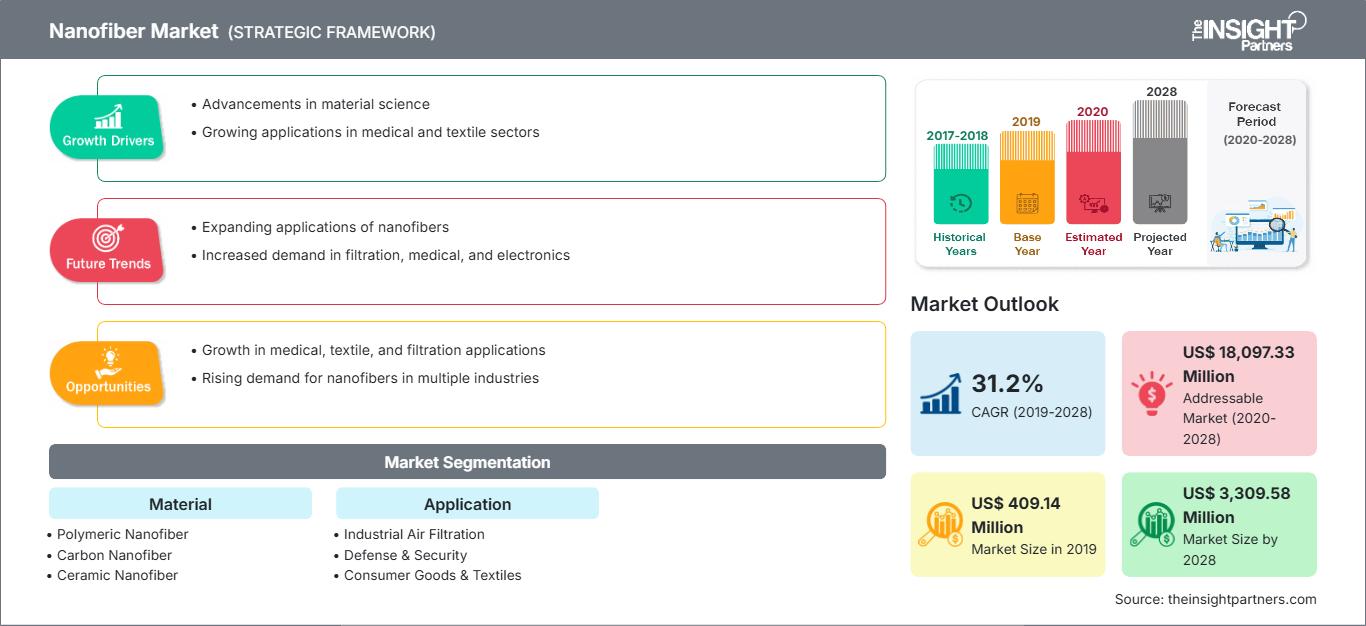
Nanofiber Market: Strategic Insights
-
Get Top Key Market Trends of this report.This FREE sample will include data analysis, ranging from market trends to estimates and forecasts.
Nanofiber Market Drivers and Opportunities
Market Drivers:
- Superior Filtration Performance: Nanofibers provide exceptionally high particle capture efficiency with low air resistance, making them the preferred material for industrial air filtration and water purification systems worldwide.
- Advances in Biomedical Engineering: The ability to mimic the extracellular matrix allows nanofibers to revolutionize wound healing, drug delivery, and tissue regeneration, driving demand in the healthcare sector.
- Energy Efficiency and Storage: Nanofiber separators and electrodes enhance the performance of batteries and fuel cells, supporting the global transition toward electric mobility and renewable energy storage.
Market Opportunities:
- Defense and Security Applications: Developing lightweight, breathable, and chemically resistant nanofiber layers for military uniforms and protective gear offers a high-margin growth path.
- Electronics and Smart Sensors: The high surface-area-to-volume ratio of nanofibers enables the creation of highly sensitive biosensors and flexible electronic components for the wearable technology market.
- Sustainable Packaging Solutions: Utilizing bio-based polymeric nanofibers for food packaging can provide enhanced barrier properties while addressing the global push for biodegradable and plastic-free alternatives.
Nanofiber Market Report Segmentation Analysis
The Nanofiber Market share is analyzed across various segments to provide a clearer understanding of its structure, growth potential, and emerging trends. Below is the standard segmentation approach used in most industry reports:
By Material:
- Polymeric Nanofiber: Holds the largest market share due to its wide availability, ease of production via electrospinning, and extensive use in filtration and medical applications.
- Carbon Nanofiber: A high-value segment characterized by extreme strength and electrical conductivity, primarily used in aerospace composites and energy storage devices.
- Ceramic Nanofiber: Utilized in specialized industrial applications requiring high thermal stability and chemical resistance, such as catalyst supports.
- Glass Nanofiber: Primarily used in high-efficiency liquid filtration and specialized insulation materials.
- Others: Includes metallic nanofibers and hybrid composite fibers used in niche research and industry.
By Application:
- Industrial Air Filtration: The dominant application segment, driven by tightening environmental regulations and the need for sub-micron particle removal in manufacturing.
- Healthcare & Life Sciences: A rapidly growing segment focusing on advanced wound care, drug delivery systems, and tissue engineering.
- Power & Energy: Includes the integration of nanofibers in battery separators, solar cells, and supercapacitors to improve efficiency.
- Defense & Security: Focuses on protective apparel and filtration for chemical, biological, radiological, and nuclear (CBRN) defense.
- Consumer Goods & Textiles: Covers performance apparel, antimicrobial fabrics, and specialized sportswear.
- Electronic Components: Utilizes nanofibers for flexible circuits, sensors, and electromagnetic interference (EMI) shielding.
- Chemical & Environment: Includes water treatment membranes and catalytic materials for industrial chemical processing.
- Others: Covers agricultural applications and specialized food packaging technologies.
By Geography:
- North America
- Europe
- Asia Pacific
- South & Central America
- Middle East & Africa
Nanofiber Market Report Scope
| Report Attribute | Details |
|---|---|
| Market size in 2025 | US$ 2.98 Billion |
| Market Size by 2034 | US$ 7.01 Billion |
| Global CAGR (2026 - 2034) | 9.99% |
| Historical Data | 2021-2024 |
| Forecast period | 2026-2034 |
| Segments Covered |
By Material
|
| Regions and Countries Covered |
North America
|
| Market leaders and key company profiles |
|
Nanofiber Market Players Density: Understanding Its Impact on Business Dynamics
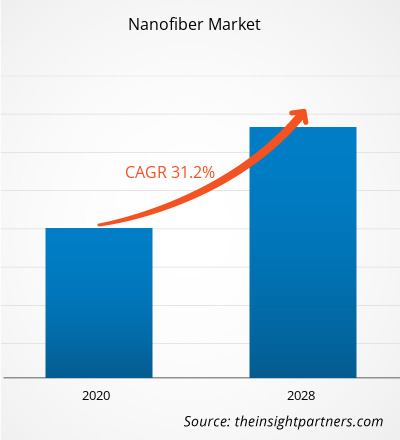
The Nanofiber Market is growing rapidly, driven by increasing end-user demand due to factors such as evolving consumer preferences, technological advancements, and greater awareness of the product's benefits. As demand rises, businesses are expanding their offerings, innovating to meet consumer needs, and capitalizing on emerging trends, which further fuels market growth.
Nanofiber Market Share Analysis by Geography
Asia-Pacific is expected to grow fastest in the coming years. Emerging markets in South & Central America, the Middle East, and Africa also have many untapped opportunities for technical textile producers and specialized filtration manufacturers to expand.
The nanofiber market is undergoing a significant transformation, moving from a niche laboratory material to a global high-value industrial component. Growth is driven by the rising prevalence of respiratory health concerns, a surge in demand for portable electronics, and the expansion of the luxury automotive sector. Below is a summary of market share and trends by region:
1. North America
- Market Share: Holds a significant share, anchored by established aerospace, defense, and healthcare industries.
- Key Drivers:
- Robust investment in nanotechnology research and development through government initiatives.
- High demand for advanced medical implants and specialized defense-grade textiles.
- Leading-edge innovations in carbon nanofiber composites for the aviation industry.
- Trends: Strategic focus on domestic production of high-performance filtration media and the integration of nanofibers in personalized medicine.
2. Europe
- Market Share: A mature market with a strong focus on environmental sustainability and automotive engineering.
- Key Drivers:
- Strict EU mandates for air and water quality are driving the adoption of nanofiber filtration systems.
- Strong presence of global chemical and automotive companies integrating nanofibers into vehicle components.
- Growing research into bio-based polymeric nanofibers to meet circular economy goals.
- Trends: Increased adoption of nanofiber-based separators in the expanding European EV battery gigafactory network.
3. Asia-Pacific
- Market Share: The fastest-growing region, with China, Japan, and South Korea serving as the global manufacturing for nanofibers.
- Key Drivers:
- Massive demand for air purification solutions in rapidly urbanizing economies.
- Dominance in global electronics manufacturing and battery production for electric vehicles.
- Government-backed industrialization programs emphasizing advanced materials and nanotechnology.
- Trends: Heavy utilization of high-throughput needleless electrospinning for mass production of filtration membranes and masks.
4. South and Central America
- Market Share: An emerging market with a growing industry in Brazil and Argentina.
- Key Drivers:
- Increasing awareness of nanofiber benefits in water treatment and agricultural applications.
- Modernization of local healthcare systems leading to higher demand for advanced wound care.
- Trends: Development of regional manufacturing hubs for industrial filters to supply the mining and chemical industries.
5. Middle East and Africa
- Market Share: Developing market focusing on specialized applications in the energy and water sectors.
- Key Drivers:
- High demand for advanced desalination membranes and air filtration operations.
- Strategic investments in smart city infrastructure requiring high-performance building materials.
- Trends: Shift toward localized production of nanofiber-based water purification systems to ensure regional water security.
High Market Density and Competition
Competition is intensifying due to the presence of established leaders such as Donaldson Company, Inc., Toray Industries, Inc., and Teijin Limited. Regional experts and niche players like Finetex EnE (South Korea), Elmarco (Czech Republic), and Nanova Medical (USA), alongside technical textile leaders such as Ahlstrom and Hollingsworth & Vose, also contribute to a diverse and rapidly expanding market landscape.
This competitive environment pushes vendors to differentiate through:
- Material Customization: Developing tailored nanofibers with specific chemical or electrical properties for niche applications like biosensors or hydrogen fuel cells.
- Scalable Production Technology: Investing in continuous, high-volume manufacturing methods to reduce the cost per square meter of nanofiber media.
- Strategic Collaboration: Partnering with major end-users in the automotive and pharmaceutical sectors to co-develop proprietary nanofiber-integrated products.
Opportunities and Strategic Moves
- Diversification into Clean Energy: Targeting the hydrogen economy by providing high-surface-area nanofiber catalysts and membranes for fuel cell stacks.
- Sustainability Branding: Adopting recycled polymers and plant-derived feedstocks to appeal to the growing segment of eco-conscious industrial buyers and consumers.
Major Companies operating in the Nanofiber Market are:
- Ahlstrom-Munksjo
- Asahi Kasei Corporation
- Donaldson Company, Inc
- DuPont
- Nanofibers Solution LLC, Inc.
- Toray Industries, Inc
- Espin Technologies
- Elmarco S.R.O.
- Mempro Ltd.
- Revolution Fibers Ltd.
Disclaimer: The companies listed above are not ranked in any particular order.
Nanofiber Market News and Recent Developments
- In December 2025, Toray Industries, Inc., announced that it had developed technology to scale up a new high-durability, high-selectivity nanofiltration membrane element that can efficiently recover high yields of high-purity lithium when recycling automotive lithium-ion batteries. This advance should significantly increase the recovery of lithium that conventional recycling processes largely discard.
- In October 2024, Asahi Kasei signed a memorandum of understanding (MOU) with Aquafil S.p.A., an Italian manufacturer of polyamide 6 (PA6). The two companies agreed to develop a novel material for 3D printing (3DP) applications utilizing Aquafil’s ECONYL® Polymer, chemically recycled PA6, and Asahi Kasei’s cellulose nanofiber (CNF), with the support of ITOCHU Corporation, which has made a capital investment in Aquafil. Pellets or filaments of this compound achieve superior formability and strength, which make them suitable for use in automotive and aeronautical applications.
Nanofiber Market Report Coverage and Deliverables
The Nanofiber Market Size and Forecast (2021–2034) report provides a detailed analysis of the market covering below areas:
- Nanofiber Market size and forecast at global, regional, and country levels for all the key market segments covered under the scope
- Nanofiber Market trends, as well as market dynamics such as drivers, restraints, and key opportunities
- Detailed PEST and SWOT analysis
- Nanofiber Market analysis covering key market trends, global and regional framework, major players, regulations, and recent market developments
- Industry landscape and competition analysis covering market concentration, heat map analysis, prominent players, and recent developments in the Nanofiber Market.
- Detailed company profiles
Frequently Asked Questions

- Comprehensive Market Sizing and Forecast Analysis
- Detailed Segmentation Analysis
- In-Depth Market Dynamics Assessment
- Regional and Country-Level Insights
- Competitive Landscape and Company Benchmarking
- Strategic Business Intelligence
Recent Reports
Testimonials

The Insight Partners' SCADA System Market report is comprehensive, with valuable insights on current trends and future forecasts. The team was highly professional, responsive, and supportive throughout. We are very satisfied and highly recommend their services.
RAN KEDEM Partner, Reali Technologies LTDs
I requested a report on a very specific software market and the team produced the report in a few days. The information was very relevant and well presented. I then requested some changes and additions to the report. The team was again very responsive and I got the final report in less than a week.
JEAN-HERVE JENN Chairman, Future Analytica
We worked with The Insight Partners for an important market study and forecast. They gave us clear insights into opportunities and risks, which helped shape our plans. Their research was easy to use and based on solid data. It helped us make smart, confident decisions. We highly recommend them.
PIYUSH NAGPAL Sr. Vice President, High Beam Global
The Insight Partners delivered insightful, well-structured market research with strong domain expertise. Their team was professional and responsive throughout. The user-friendly website made accessing industry reports seamless. We highly recommend them for reliable, high-quality research services
YUKIHIKO ADACHI CEO, Deep Blue, LLC.
This is the first time I have purchased a market report from The Insight Partners.While I was unsure at first, I visited their web site and felt more comfortable to take the risk and purchase a market report.I am completely satisfied with the quality of the report and customer service. I had several questions and comments with the initial report, but after a couple of dialogs over email with their analyst I believe I have a report that I can use as input to our strategic planning process.Thank you so much for taking the extra time and making this a positive experience.I will definitely recommend your service to others and you will be my first call when we need further market data.
JOHN SUZUKI President and Chief Executive Officer, Board Director, BK Technologies
I wish to appreciate your support and the professionalism you displayed in the course of attending to my request for information regarding to infectious disease IVD market in Nigeria. I appreciate your patience, your guidance, and the fact that you were willing to offer a discount, which eventually made it possible for us to close a deal. I look forward to engaging The Insight Partners in the future, all thanks to the impression you have created in me as a result of this first encounter.
DR CHIJIOKE ONYIA MANAGING DIRECTOR, PineCrest Healthcare Ltd.Reason to Buy
- Informed Decision-Making
- Understanding Market Dynamics
- Competitive Analysis
- Identifying Emerging Markets
- Customer Insights
- Market Forecasts
- Risk Mitigation
- Boosting Operational Efficiency
- Strategic Planning
- Investment Justification
- Tracking Industry Innovations
- Aligning with Regulatory Trends





 Get Free Sample for