
Oral Liquid Dosage Pharmaceutical Formulation Market Outlook to 2034
Coverage: By Product Type (Oral Solutions, Oral Suspensions, Oral Syrups, Oral Emulsions, Oral Drops, Oral Elixirs, Oral Concentrates, Other Oral Liquid Dosage Forms), Formulation Type (Ready-to-Use Formulations, Concentrated Formulations Requiring Dilution, Other Formulation Types), Drug Type (Branded Drugs, Generic Drugs), Type (Prescription-based, OTC), Patient Population (Pediatric, Adult, Geriatric), Application (Cold Cough and Allergy, Pain and Fever Management, Gastrointestinal Disorders, Infectious Diseases, Vitamins Minerals and Nutritional Products, Respiratory Disorders, Cardiovascular Disorders, CNS and Neurological Disorders, Metabolic and Endocrine Disorders, Oncology and Supportive Care, Other Therapeutic Areas), Distribution Channel (Hospital Pharmacies, Retail Pharmacies, Specialty Pharmacies, Online Pharmacies) and Geography (North America, Europe, Asia Pacific, Middle East & Africa, South and Central America and Asia Pacific)
- Status : Published
- Report Code : TIPRE00044101
- Category : Life Sciences
- No. of Pages : 547
- Available Report Formats :


- Last update date : November 24, 2026


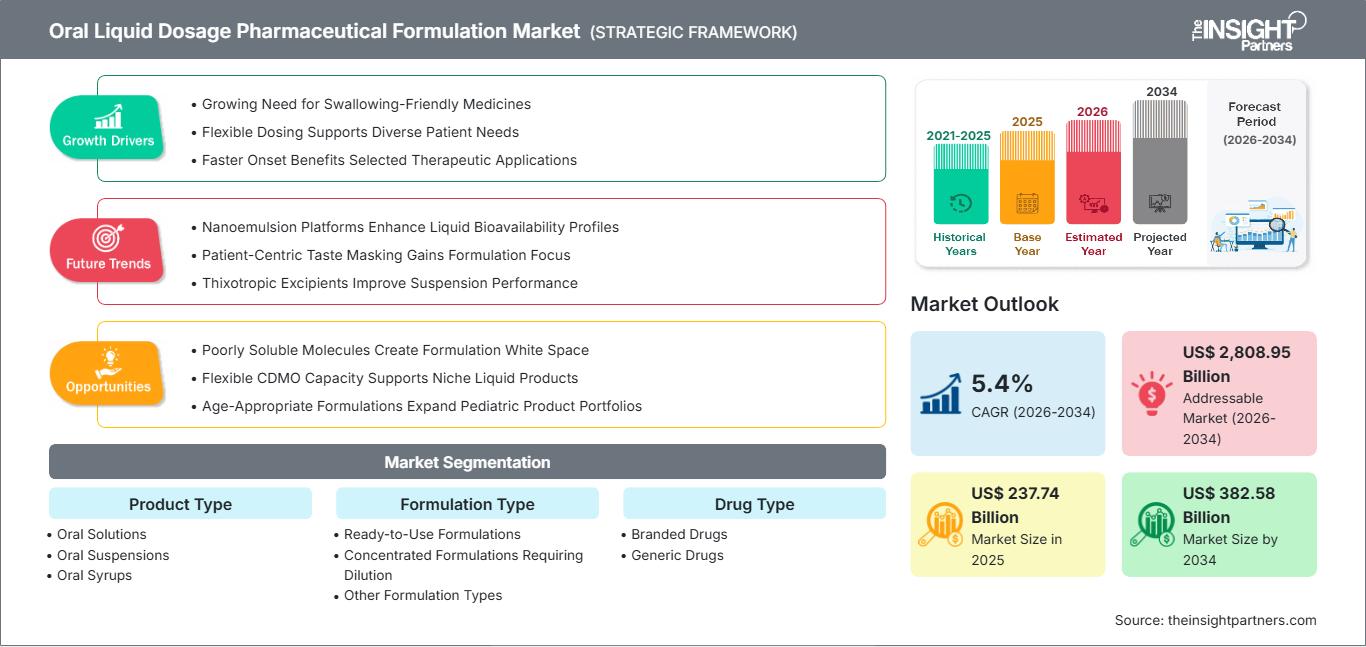
2025 Market Size
US$ 237.74 Bn
Base year value
2034 Forecast
US$ 382.58 Bn
Projected by 2034
CAGR 2026-2034
5.4 %
Growth rate
Addressable Market
US$ 2,808.95 Bn
(2026-2034)
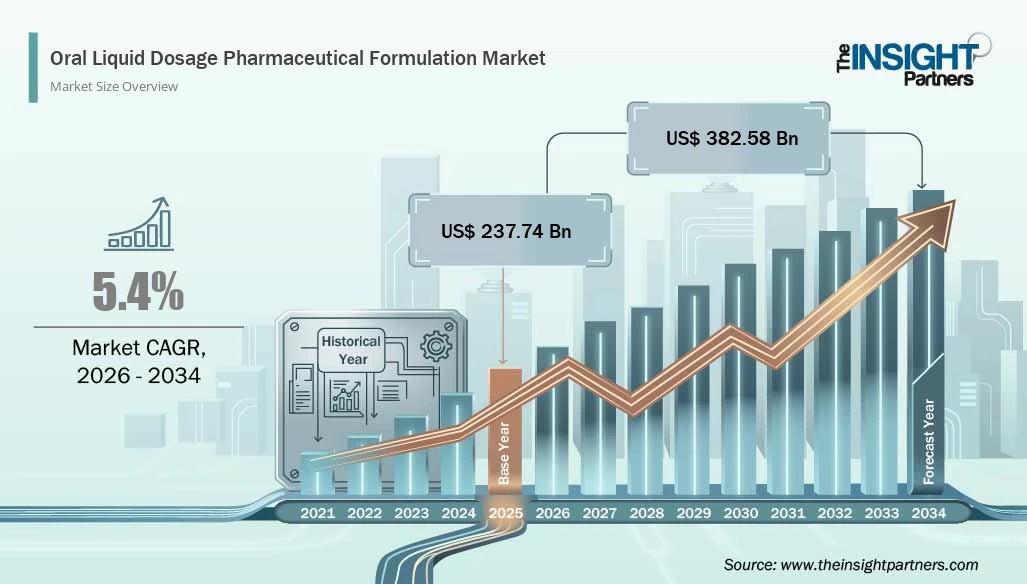
The Oral Liquid Dosage Pharmaceutical Formulation Market was valued at US$ 237.74 billion in 2025 and is projected to reach US$ 382.58 billion by 2034, recording a CAGR of 5.4% during 2026–2034. Expansion is fuelled by rising demand for flexible dosing, effective drug delivery for pediatric and geriatric populations, and availability of treatment options for individuals with difficulty swallowing. Progress in areas such as taste masking, solubilization, preservative systems, and unit-dose packaging has made for more stable products and higher levels of acceptance.
Across North America, the Oral Liquid Dosage Pharmaceutical Formulation Market size is expected to expand at a ~5% CAGR through 2034. Demand will be boosted by robust prescription and OTC distribution channels, extensive usage of therapies by elderly patients, and further development of proprietary suspensions and solutions. An increased regulatory focus on precise dosing, pharmaceutical quality, pediatric development, and effective drug delivery mechanisms makes for an environment that encourages innovation and investment.
Oral Liquid Dosage Pharmaceutical Formulation Market Assessment and Insights
Regional Outlook
- North America: ~36% of the global market in 2025 | ~5% CAGR through 2034. Market position: North America is a leader owing to wide availability of medicines, high use of branded and generics, formulations experience, and requirement for convenient patient administration in pediatric, geriatrics, neurology, and chronic conditions.
- US: ~82% of North American market revenue in 2025 | ~5% CAGR through 2034. Market position: The US is the driver of regional income generation due to high treated population, presence of numerous retail pharmacies, ongoing generic product launches, and prescription liquids development for flexible dose.
- Europe: ~29% of the global market in 2025 | ~5% CAGR through 2034. Market position: Europe is a mature market, characterized by health care access, regulation of pediatric formulation, generics' presence, and pharmaceutical manufacturing in Germany, the UK, France, Italy, and Spain.
- Asia Pacific: ~26% of the global market in 2025 | ~7% CAGR through 2034. Market position: Asia-Pacific is the region with the highest growth rate because of growing access to medicines, local generics production, pediatric demand, and modernization of pharmacies in China, India, Japan, South Korea, and Australia.
Segment Outlook
- Product Type: ~100% Share in 2025 | ~6% CAGR through 2034. Market position: This group covers various liquid delivery needs with oral solutions being the most widely used, while suspensions give significant formulation options for insoluble drugs.
- Online Pharmacies: ~12% Share in 2025 | ~8% CAGR through 2034. Market position: Digital prescription dispensing, home delivery services, ease of refills, and increasing availability of e-pharmacies are driving online distribution, especially for repetitive medications and OTC liquids.
Competitive Coverage
Pfizer Inc., Johnson & Johnson, AbbVie Inc., Merck & Co., Inc., F. Hoffmann-La Roche Ltd, AstraZeneca PLC, Novartis AG, GSK plc, Teva Pharmaceutical Industries Ltd., Sanofi
Methodology
The Insight Partners follows Data Collection & Secondary Research, Primary Research, Data Analysis, and Data Triangulation & Final Review to validate market estimates and insights.
Source: The Insight Partners' analysis based on proprietary research, government publications, company annual reports, investor presentations, industry databases, and expert interviews.
The development of new products has been advanced from conventional syrup containing sugar to stabilized products not containing sugar and alcohol and having optimal preservatives for particular patient populations. Batch-to-batch consistency is being improved through consistent manufacturing control, high-shear mixing, particle size control, and online viscosity measurement. Contract development and manufacturing organizations have also assisted in small volume projects through combining formulation development, analysis, clinical supply, and commercial manufacturing.
Going forward, until the year 2034, investment will be made not only in current consumer health liquids but also in prescription products specifically designed for supportive care in oncology, neurology, metabolic diseases, and cardiovascular ailments. The emergence of other markets is another option owing to higher government funding, local production, and structured pharmacy distribution. Regulatory focus on pediatric studies, excipient safety, measurement devices, and stability studies will benefit integrated firms in this industry.
Oral Liquid Dosage Pharmaceutical Formulation Market Report Scope
| Report Attribute | Details |
|---|---|
| Market size in 2025 | US$ 237.74 Billion |
| Market Size by 2034 | US$ 382.58 Billion |
| Global CAGR (2026 - 2034) | 5.4% |
| Historical Data | 2021-2025 |
| Forecast period | 2026-2034 |
Oral Liquid Dosage Pharmaceutical Formulation Market Analysis
The development of Oral Liquid Dosage Pharmaceutical Formulation Market stems from the necessity of providing accurate dosage to those patients who have problems with using regular dosage forms such as tablets and capsules. Proper weighing of dosages is needed for children while older people may have swallowing difficulty, polypharmacy or lack of manual skills. Liquids become really useful for hospitals and caregivers when they help to provide the exact dosage by means of oral syringe or feeding tube. The supply chain involves API producers, excipients providers, flavouring companies, packagers, formulation company, contract manufacturers, distributors and pharmacies.
Solubility, viscosity, microbial issues, compatibility with the package and stability after opening of the bottle are the factors affecting the manufacturing economics. Ready to use preparations become more comfortable to use, but their logistic and storing expenses are much higher in comparison with the concentrates. The manufacturer has to find the equilibrium between the convenience of usage and the volume of the package, cold chain and preservative use.
In the market for Oral Liquid Dosage Pharmaceutical Formulations, there is competition between the innovator drugs, brands, generics, and portfolios in consumer health. The companies which hold well-known brand names along with pharmacy distribution are Pfizer Inc., Johnson & Johnson, GSK plc, and Sanofi, whereas Teva Pharmaceutical Industries Ltd. faces the competition in generics and manufacturing segment. Novartis AG, AbbVie Inc., Merck & Co., Inc., AstraZeneca PLC, and F. Hoffmann-La Roche Ltd have the advantage of therapeutic strength and life cycle management.
The key investment areas include novel delivery forms, reformulations of existing molecules, reduction in preservatives usage, taste-masking technology, and manufacturing automation. The company ensures competitiveness of its products by virtue of proprietary compositions, delivery systems, indication specific labelling, and continuous supply. Furthermore, collaborations with experts in formulating helps portfolio holder reach niche markets without having liquid formulations manufacturing facilities themselves.
● REPORT CUSTOMIZATION
Tailor This Report To Align With Your Specific Business Requirements
This report can be customized to align precisely with your business objectives, scope, and target markets. Customization options include tailored segmentation, geography, competitive analysis, and strategic insights to support informed decision-making.
Customize This Report →WHAT YOU CAN ADJUST
- ● Segmentations
- ● Geography
- ● Competitive Analysis
- ● Language Preferences
Oral Liquid Dosage Pharmaceutical Formulation Market: Strategic Insights
Regional Insights
North America Oral Liquid Dosage Pharmaceutical Formulation Market
North America accounted for an estimated ~36% of worldwide revenue in 2025 and is projected to register a ~5.4% CAGR through 2034. The Oral Liquid Dosage Pharmaceutical Formulations Market share held by the region is attributed to high expenditures on drugs, insurance-covered treatment access, health consumer brand presence, and the use of pediatric, geriatric, and specialty medications.
There is healthy generic competition and the availability of specialized manufacturing facilities in the market. Regulatory focus on dose uniformity, microbial purity, container closure integrity, and administration devices presents hurdles for inadequately equipped competitors and motivates companies to invest in advanced analytical and manufacturing infrastructure. Canada has publicly financed access to medicine, whereas Mexico provides manufacturing facilities and growing retail pharmacy opportunities.
U.S. Oral Liquid Dosage Pharmaceutical Formulation Market
The US represented approximately ~82% of North American revenue in 2025 and is forecast to expand at a ~5.3% CAGR through 2034. This positioning is backed by high prescriptions, over-the-counter drug usage, presence of specialty pharmacies, and hospital, LTC, paediatrician, and at-home caregiver demands.
The big names in the industry possess business, regulatory, or manufacturing operations within the country, while generic and specialty drug makers offer competitors for known drugs. The application demand includes pain/fever management, infectious disease treatments, GI conditions, respiratory diseases, neurology, and supportive care. Use of calibrated oral syringes and unit-of-use packaging is becoming more common.
Europe Oral Liquid Dosage Pharmaceutical Formulation Market
Europe held an estimated ~29% of the global market in 2025 and is expected to record a ~5.7% CAGR through 2034. The market boasts prescription systems, extensive generic drugs use, good pharmacy penetration and regulation that fosters appropriate medications in terms of age. Europe has expertise in areas of flavors, functional excipients, analytical development and pharmaceutical packaging.
Germany ranks first among countries in Europe in terms of big pharmaceutical industry, expenditure on health care, community pharmacy distribution and demand for branded and generic drugs. UK has already shown application of liquid medications in pediatric cases, geriatric cases and in community prescribing. France makes its contribution by means of reimbursement coverage and consumer health channel development.
Italy and Spain are the countries providing demand for cough, colds, gastrointestinal problems, pain relief, fever and vitamins, prescription drugs. Ageing population of the countries makes the need for easy to swallow dosage forms even more evident. Retail pharmacies still play a key role in product choice of patients. Manufacturers are reconsidering their product portfolios in terms of sugar-free, alcohol-free and appropriate formulations. Compliance requirements in terms of excipients information, stability, pharmacovigilance and packaging benefit suppliers who can assure good quality across the whole number of national markets.
APAC Oral Liquid Dosage Pharmaceutical Formulation Market
Asia Pacific accounted for approximately ~26% of global revenue in 2025 and is projected to achieve a ~7% CAGR through 2034, making it the fastest-growing region. China is evaluated as the top country within Asia Pacific due to the country’s pharmaceutical production capacity, hospital requirements, consumer health sector, and large patient pool.
The Indian subcontinent has the advantage of large-scale generic production along with increasing pharmacy reach. Geriatric-focused products have demand in Japan whereas South Korea focuses on advanced manufacturing and formulation differentiation. Australia has a well-established market. Growth in the region is attributed to healthcare reach, increasing income levels, local manufacturing, and government policies.
Middle East & Africa Oral Liquid Dosage Pharmaceutical Formulation Market
The Middle East & Africa market is expected to expand at a ~6% CAGR through 2034. Saudi Arabia leads as the dominant nation in the MEA region, aided by investments in hospitals, localization policies for drugs, public procurement processes, and growing retail pharmacies. The UAE acts as a distribution hub and re-exportation point with well-developed private healthcare system infrastructure.
South Africa drives the demand in the Sub-Saharan region, thanks to its domestic production of drugs and the organized pharmacy network. In other markets, dependency on imports opens up potential for regional filling, packaging, and contract manufacturing. Growth will be based on supply chain security, heat-proof packaging, storage infrastructure, and pediatric and infectious disease drugs at low cost.
Segmentation Analysis
Product Type
Product Type defines the Oral Liquid Dosage Pharmaceutical Formulation Market scope by capturing products differentiated through physical state, administration requirements, drug solubility, dose concentration, and patient usability. Selection depends on active-ingredient properties, therapeutic dose, mouthfeel, stability, and target population. Oral solutions are projected to expand at a ~5.6% CAGR during 2026–2034, supported by dose uniformity and straightforward administration.
- Oral Solutions: Homogeneous drug formulation minimizes shaking requirement and facilitate accurate dosing. The technology finds best applications wherever active pharmaceutical ingredient stays soluble during shelf life and fast and convenient administration has clinical utility.
- Oral Suspensions: Suspension facilitates the liquid delivery of poorly soluble pharmaceuticals. The commercial success of oral suspensions requires controlled particle size, redispersibility, sedimentation profile, viscosity, taste, and clear directions of shaking before consumption.
- Oral Syrups: Syrups still play important role in cough & cold, allergies, pediatric and consumer health formulations. Manufacturers tend to rely more on low sugar base formulations and alternatives to sucrose.
- Oral Emulsions: Emulsions facilitate the liquid delivery of lipophilic ingredients and fat-soluble vitamins. Stabilization, droplet size control, prevention of oxidation and taste development are important aspects of their commercial application.
- Oral Drops: High concentrated drop formulations find applications in infant administration and cases when small volume of administration is necessary. Accurate dosing requires accurate dosing device, clearly marked concentration and clear instructions.
- Oral Elixirs: The elixir provides the advantage of flavoured, clear delivery of the soluble substance, but alcohol content and compatibility of excipients may limit its use in young, elderly patients, and special groups.
- Oral Concentrates: The concentrates reduce bulk during transportation and allow preparation just before administering them. They need accurate dilution methods, proper quality of water used, and proper labelling to avoid confusion between the concentration level and dose.
- Other Oral Liquids: The other dosage forms of oral liquids involve mixtures, linctuses, oral liquids and other presentations. These forms have commercial value if they provide a benefit to patients.
Formulation Type
Preparation of formulation type impacts ease of administration, logistics, risks of contamination, and the convenience of use. Hospitals and families usually prefer simple formulations; however, institutions will opt for concentrated formulations if economical logistics are considered. Ready-to-use formulations are expected to grow at a ~5.6% CAGR until 2034 due to convenience and reduced errors during the purchase process.
- Ready-to-Use Formulations: This type of formulations saves preparation and dilution time. However, this formulation comes with a few trade-offs such as larger transportation volumes and increased use of packaging.
- Concentrated Formulations that Need Dilution: Concentrated formulations have better logistics and storage management, but need proper dilution to work effectively.
- Other Formulations: Other formulation types include reconstitute powder/ granules and other liquid oral formulations. Uptake of this kind of formulation is determined by whether portability and improved shelf life make up for the extra steps of preparation.
Drug Type
Category of Drug divides the portfolio on the basis of branding, intellectual property, pricing, substitution, and prescription trends. Innovator drug companies utilize the liquid formulation to widen their reach or extend the lifecycle of the products, whereas generics compete via cost and consistency in delivery. The generics are anticipated to witness a ~5.6% CAGR between 2026 and 2034 due to increased opportunities for substitution.
- Branded Drugs: Branded drugs have a competition base on clinical data, proven physician trust, flavors variety, proprietary drug delivery systems, and indications-based formulations. The cost of branded drugs should be justified by their clinical or operational benefits.
- Generic Drugs: Generic drugs make medication affordable but are competitive in terms of regulatory compliance, consistent manufacturing, drug dispensing in pharmacies, and reliable sources for excipients and packaging.
Type
Type indicates differences in clinical supervision, consumer choice-making, payment, promotion, and distribution channels. Prescription products play an important role in complicated and chronic conditions, while over-the-counter liquids gain from accessibility and clear indications. Over-the-counter products are expected to grow at ~5% CAGR until 2034.
- Prescription based: This category of products consists of those which treat conditions that require diagnoses, doses or monitoring. The choice of this kind of formulation is affected by hospitals, specialty pharmacies and healthcare practitioners especially in cases involving infections, neurology, cardiology, metabolism and oncology support therapy.
- Over-the-counter (OTC): The OTC products are extensively used in treatment of coughs, cold, allergy, pain, fever, digestive issues, and nutritional deficiencies.
Patient Population
Patient Population impacts dose strength, choice of excipients, flavor, administration device, and labeling. The importance of age-appropriate formulation is crucial due to the differences in swallowing capability, metabolism, patient compliance, and the presence of caregivers. Geriatric formulations are expected to record a CAGR of about 7% up to 2034 due to increased demand for alternative medicines.
- Pediatric: Pediatric product development focuses on weight-based dosing, palatability, lower dosage volume, and ease of administration by caregivers. Excipient safety and tamper-proof packaging are still important factors in development and packaging.
- Adult: Adult needs include immediate self-treatment, treatment of diseases, oncology, and options for patients who have temporary or permanent difficulties swallowing. Portability and discreetness play a role in acceptance of the product.
- Geriatric: Elderly patients can take advantage of formulations which make swallowing easier and allow dose flexibility. Development should consider polypharmacy, decreased dexterity, impaired cognition, sugar intake, and feeding tube administration.
Application
The application addresses the varied treatment needs ranging from urgent self-medication to specialist prescription medications. The selection of formulations varies depending on dosage, period of treatment, timing of effects, patient group, and performance of the active ingredient. The Cold Cough and Allergy formulation is anticipated to exhibit a CAGR of around 5% till 2034.
- Cold Cough and Allergies: Liquids are important due to familiarity, ease of use, and ability to combine ingredients. Seasonality and retail availability create repeat business.
- Pain and Fever Reduction: The market demand is centered on pediatric applications and household medicines with dosage variation and speed being advantageous. Measuring instruments are important since common ingredients have dosing limitations.
- Gastrointestinal Diseases: These include liquids for heartburn, constipation, diarrhea, nausea, and indigestion. Consistency, taste, onset time, and compatibility with antacid or protection agents determine preference.
- Infectious Diseases: Liquids provide antibiotics and antifungals for children and difficult swallowing patients. Stability on reconstitution, antimicrobial stewardship, dose completion and pharmacy compounding capability contribute to usage.
- Vitamins, Minerals, and Nutritional Products: Liquid supplements attract children, senior adults and those requiring convenience of taking the product. Taste, ingredient compatibility, sugar content, and wellness effects influence purchase decisions.
- Respiratory Diseases: Formulas help treat symptoms and some chronic conditions. Flexibility of dosing is beneficial for demand; however, combination formulas need accurate labeling to avoid duplicating the ingredients.
- Cardiovascular disorders: Liquid cardiovascular drugs cater to patients requiring personalized doses or not suitable for tablets. Potential exists in anticoagulation therapy and long-term care where simple administration would be an advantage.
- CNS and Neurological disorders: Liquids enable dose titration in epilepsy therapy, psychiatric conditions, and other neurological disorders. Exact concentration control and proper conversion guidance are necessary when changing to liquid formulation.
- Metabolic and endocrine disorders: The use of such application caters to patients requiring customized doses or administration via feeding tube. Long-term acceptance demands considerations to the inclusion of sweeteners, preservatives and compatibility with certain dietary restrictions.
- Oncology and supportive care: Orally administered liquids might help patients who experience nausea, mucositis, dysphagia, or personalized dose requirements. Specialty pharmacies and caregivers play vital role in the preparation and administration.
- Other therapeutic areas: Dermatological conditions, urological conditions, orthopedic and hematology disorders, others. The commercial attractiveness will depend on unmet administration needs and patient population sizes.
Distribution Channel
Distribution Channel analysis encompasses the impact of dispensing settings on inventory management, counselling, reimbursement, and availability of medicines. The retail segment is responsible for a large part of the ongoing and self-medication needs whereas the hospital and specialty pharmacies handle complex therapies. Online pharmacies are estimated to grow with an annual rate of 8% during 2034 as a result of digital prescriptions and deliveries.
- Hospital Pharmacies: Hospital pharmacies source acute care, paediatrics, specialists and unit-dose products. Product choice is based on the formulary compliance, supply stability, administration safety, and integration with hospital processes.
- Retail Pharmacies: Retail pharmacies offer extensive access to both prescription and over-the-counter liquids. Pharmacist advice, brand loyalty, local stock, and seasonal purchases are the main drivers of sales.
- Specialty Pharmacies: Specialty pharmacies deal with complex therapies which require additional counselling and coordinated reimbursement programs. This channel relates to neurological, oncology, metabolic and rare disease medicines.
- Online Pharmacies: e-pharmacies help to increase accessibility due to ordering convenience, pricing comparison, subscription, and home delivery. Packaging security and temperature control are essential for liquids.
Opportunity Snapshot
| Application | Revenue Contribution | Trend Tag | Adoption Stage |
| Cold Cough and Allergy | High | Seasonal Care | Mature |
| Pain and Fever Management | High | Pediatric Dosing | Mature |
| Gastrointestinal Disorders | High | Digestive Relief | Mature |
| Infectious Diseases | High | Reconstituted Antibiotics | Mature |
| Vitamins Minerals and Nutritional Products | High | Liquid Nutrition | Scaling |
| Respiratory Disorders | Medium | Combination Therapy | Mature |
| Cardiovascular Disorders | Medium | Liquid Anticoagulation | Emerging |
| CNS and Neurological Disorders | Medium | Dose Titration | Scaling |
| Metabolic and Endocrine Disorders | Medium | Chronic Dosing | Scaling |
| Oncology and Supportive Care | Medium | Supportive Therapy | Scaling |
| Other Therapeutic Areas | Low | Niche Formulations | Emerging |
Oral Liquid Dosage Pharmaceutical Formulation Market Growth Drivers and Impact Analysis
Growing Need for Age-Appropriate and Swallowing-Friendly Medicines
Swallowing tablets can pose challenges for children, geriatrics, neurologic and post-operative patients. Oral liquids permit dose adjustment based on age, weight, response and swallowing capability. This allows for compliance and avoids the problem associated with crushing tablets which can vary the drug-release properties and result in dosage loss. The market is impacted not only by the size of the product but also in terms of how it tastes and whether excipients are safe, what the delivery mechanism will be and appropriate instructions for dosing.
Expansion of Self-Care and Accessible Pharmacy Channels
Consumers nowadays receive coughs, colds, allergies, pain relief, fevers, digestive aids, and nutritional products from retail and internet pharmacies. Oral liquids are common in these indications, allowing home use by all age groups. Pharmacy chain expansion in developing countries enhances the accessibility of these products, whereas online ordering mitigates geographic restrictions and facilitates follow-up sales. This translates into greater market coverage and reduced distribution hurdles for existing brands and standardized OTC products. Despite this, manufacturers still require packaging which prevents leaks, has tamper resistance, child-proof caps, and shipping tests due to handling vulnerabilities associated with liquids.
Formulation Technologies Improve Stability and Patient Acceptance
Suspension systems, solubility improvement, taste masking, flavors systems, preservation, and packaging advancements make possible the formulation of those molecules that have been thought to be challenging to formulate using liquid delivery. Particle engineering can minimize settling, whereas optimal rheology will allow redispersibility and accurate dispensing. Barrier packaging ensures protection against moisture, oxygen, and light. This is commercially significant since bad taste, poor stability, and inaccurate dosing may hinder adherence and shelf-life. Formulation platforms that perform better will decrease development risks, facilitate lifecycle management, and help pharmaceutical companies manufacture distinctive medicines for poorly served patients.
Oral Liquid Dosage Pharmaceutical Formulation Market Future Trends
Patient-Centric Formulation Design Becomes More Precise
The trends in Oral Liquid Dosage Pharmaceutical Formulations market will be shaped by the formulations that are designed for specific target population segments instead of broader age ranges. It is anticipated that the developers will perform assessment on sweetness level, mouth feel, dosage volume, swallowing mechanism, caregiver handling, and device handling early in the development process. Digital taste prediction, advanced sensory profiling, and physiological dissolution modeling can facilitate the rapid formulation optimization process. In addition, formulations can adopt lower sugar bases, minimal preservative formulations, and appropriate excipients for the pediatric and geriatric population.
Unit-Dose and Ready-to-Administer Packaging Gains Importance
Single-use packets, stick packets, calibrated cups, and pre-filled syringes are anticipated to become popular wherever accuracy of dosing and portability warrant an extra packaging expense. Such packaging can help prevent contamination after opening, facilitate drug delivery in hospital settings, and add convenience for travel and home use. Material compatibility, extractables, sealing ability, and environmental considerations will all require evaluation by manufacturers. Use of such packaging is likely to be most pronounced for high value prescription medicines, institutional applications, and products needing accurate dosing. Bottles will still be used for bulk over-the-counter medications. Packaging will be a more powerful differentiator until 2034.
Oral Liquid Dosage Pharmaceutical Formulation Market Opportunities
Reformulation of Established Molecules for Underserved Patients
Pharmaceutical Market Forecasts for Oral Liquid-Dosage Dosage Forms suggest opportunities for the creation of stable liquids from existing solid dosage forms for pediatric, geriatric, dysphagic, and tube-fed patients. Developers can select products that have been frequently compounded on demand, have known difficulties with administration, or need weight-based dosing. Developers must ensure that the approved product provides advantages over pharmacy compounded products in terms of stability, dose uniformity, and/or convenience. Success depends on intellectual property evaluation, clinical bridging studies, excipient rationalization, manufacturing scalability, and administration device validation. Collaboration between drug portfolios and specialized formulators can fast track products without excessive capital expenditures.
Localized Manufacturing in High-Growth Emerging Markets
Investments may be made in regional capacities for formulation, filling, and packaging in such regions as Asia Pacific, the Middle East, Africa, and some Latin American countries. Local manufacture will enable the shortening of replenishment times, reduction of risk of paying high rates for freight, and increase in flexibility for responding to government procurement. Local product strategies must take into consideration local prevalence of diseases, tastes, temperatures, pharmacy routines, and prices. Lines that could work in several batch sizes may help in building up a portfolio without spending on much dedicated capacity.
Recent Developments
- October 2026: Triastek (Nanjing) Pharmaceutical Technology Co., Ltd. and Johnson & Johnson – Triastek (Nanjing) Pharmaceutical Technology Co., Ltd. and Johnson & Johnson sigend License Agreement combining J&J’s expertise in drug development with Triastek’s capabilities in 3D printing pharmaceutical technology and oral delivery of peptides and other therapeutic modalities to jointly develop novel oral medicines.
- October 2026: AstraZeneca – AstraZeneca has opened a new global strategic research and development (R&D) facility in Massachusetts, US, as part of an investment of more than $1bn in the state.
- August 2026: Teva Pharmaceuticals – Teva Pharmaceuticals announced a shared commitment with the Trump Administration to lower the cost of select medicines for American patients covered by Medicaid. When finalized, this agreement will support continued investment in scientific innovation and pharmaceutical manufacturing capabilities.
Frequently Asked Questions

- Comprehensive Market Sizing and Forecast Analysis
- Detailed Segmentation Analysis
- In-Depth Market Dynamics Assessment
- Regional and Country-Level Insights
- Competitive Landscape and Company Benchmarking
- Strategic Business Intelligence
Recent Reports
Testimonials

The Insight Partners provided valuable market intelligence that supported our global go-to-market strategy. Their team was professional, responsive, and attentive to our feedback, providing thoughtful analysis and helpful methodological clarifications throughout the project.
Junmo Kim Chief Financial Officer (CFO), Enertech Co., Ltd.
The Insight Partners' SCADA System Market report is comprehensive, with valuable insights on current trends and future forecasts. The team was highly professional, responsive, and supportive throughout. We are very satisfied and highly recommend their services.
RAN KEDEM Partner, Reali Technologies LTDs
I requested a report on a very specific software market and the team produced the report in a few days. The information was very relevant and well presented. I then requested some changes and additions to the report. The team was again very responsive and I got the final report in less than a week.
JEAN-HERVE JENN Chairman, Future Analytica
We worked with The Insight Partners for an important market study and forecast. They gave us clear insights into opportunities and risks, which helped shape our plans. Their research was easy to use and based on solid data. It helped us make smart, confident decisions. We highly recommend them.
PIYUSH NAGPAL Sr. Vice President, High Beam Global
The Insight Partners delivered insightful, well-structured market research with strong domain expertise. Their team was professional and responsive throughout. The user-friendly website made accessing industry reports seamless. We highly recommend them for reliable, high-quality research services
YUKIHIKO ADACHI CEO, Deep Blue, LLC.
This is the first time I have purchased a market report from The Insight Partners.While I was unsure at first, I visited their web site and felt more comfortable to take the risk and purchase a market report.I am completely satisfied with the quality of the report and customer service. I had several questions and comments with the initial report, but after a couple of dialogs over email with their analyst I believe I have a report that I can use as input to our strategic planning process.Thank you so much for taking the extra time and making this a positive experience.I will definitely recommend your service to others and you will be my first call when we need further market data.
JOHN SUZUKI President and Chief Executive Officer, Board Director, BK Technologies
I wish to appreciate your support and the professionalism you displayed in the course of attending to my request for information regarding to infectious disease IVD market in Nigeria. I appreciate your patience, your guidance, and the fact that you were willing to offer a discount, which eventually made it possible for us to close a deal. I look forward to engaging The Insight Partners in the future, all thanks to the impression you have created in me as a result of this first encounter.
DR CHIJIOKE ONYIA MANAGING DIRECTOR, PineCrest Healthcare Ltd.Reason to Buy
- Informed Decision-Making
- Understanding Market Dynamics
- Competitive Analysis
- Identifying Emerging Markets
- Customer Insights
- Market Forecasts
- Risk Mitigation
- Boosting Operational Efficiency
- Strategic Planning
- Investment Justification
- Tracking Industry Innovations
- Aligning with Regulatory Trends





 Get Free Sample for