
Pest Control Market Demand, Trends & Forecast by 2034
Coverage: by Type (Chemical, Mechanical, Biological, Others); Pest Type (Insects, Termites, Rodents, Others); Application (Commercial, Residential, Agricultural, Industrial, Others), and Geography (North America, Europe, Asia Pacific, and South and Central America)
- Status : Data Released
- Report Code : TIPRE00003556
- Category : Chemicals and Materials
- No. of Pages : 150
- Available Report Formats :


- Last update date : July 08, 2026


2025 Market Size
US$ 29.47 Bn
Base year value
2034 Forecast
US$ 52.14 Bn
Projected by 2034
CAGR 2026-2034
6.54 %
Growth rate
Addressable Market
US$ 368.96 Bn
(2026-2034)
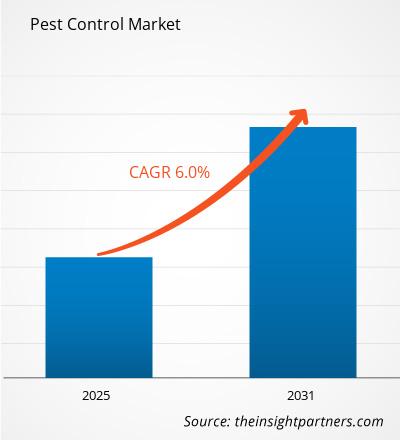
The global Pest Control market was valued at US$ 29.47 billion in 2025 and is expected to reach US$ 52.14 billion by 2034; it is estimated to record a CAGR of 6.54% during 2026-2034.
Pest Control Market Assessment and Insights
- North America: North America accounted for 36–40% share in 2025 and is projected to expand at a CAGR of 6.8%–7.3% during 2026–2034. Growth is supported by stringent regulatory frameworks, high urban population density, and increasing adoption of professional pest management services.
- U.S.: The U.S. represented 84–87% of the North American market in 2025 and is anticipated to grow at a CAGR of 6.9%–7.4% during 2026–2034, driven by strong regulatory enforcement, rising consumer awareness, and widespread commercialization of pest control solutions.
- Europe: Europe held 25–29% market share in 2025 and is expected to register a CAGR of 6.5%–7.0% during 2026–2034. Germany, the United Kingdom, and France remain the key markets, supported by sustainability initiatives and strict pesticide usage regulations.
- Asia Pacific: Asia Pacific accounted for 24–28% share in 2025 and is forecast to expand at a CAGR of 8.3%–8.9% during 2026–2034. China, India, and Japan continue to drive regional growth through rapid urbanization, infrastructure development, and increasing food safety compliance requirements.
- Largest Segment: End Use – The residential segment represented the largest market share and is projected to grow at a CAGR of 7.0%–7.5% during 2026–2034, driven by rising household awareness and consistent demand for preventive pest management services.
- High Growth Segment: Product Type – Baits is expected to register the fastest growth with a CAGR of 8.1%–8.7% during 2026–2034, supported by increasing preference for targeted, low-toxicity pest control solutions.
- Key companies analyzed in detail: BASF SE; Bayer AG; Ecolab Inc.; Ensystex; FMC Corporation; Rollins, Inc.; Arrow Exterminators; Syngenta AG; Rentokil Initial plc; and The Terminix International Company LP
Source: The Insight Partners' analysis based on proprietary research, government publications, company annual reports, investor presentations, industry databases, and expert interviews.
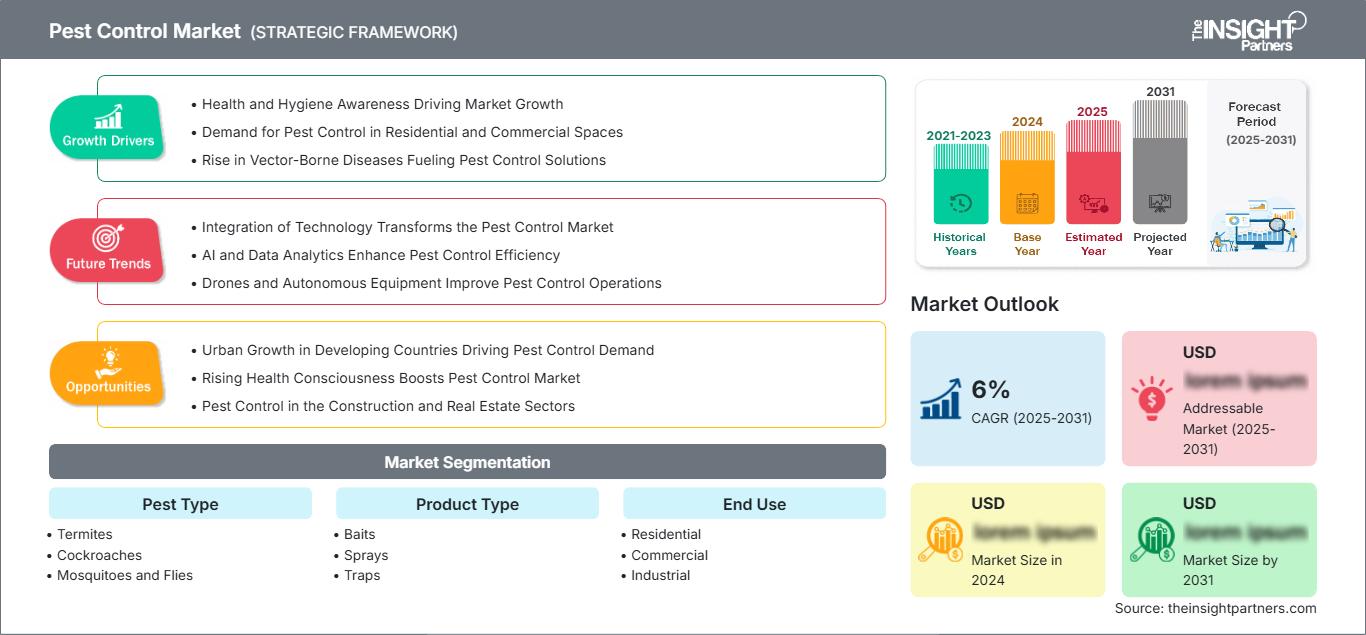
The pest control market has transformed from a predominantly reactive service industry into a preventive risk management ecosystem. Demand increasingly extends beyond insect elimination toward long-term monitoring, compliance management, and environmentally responsible treatment methods. Technological improvements in detection systems, baiting solutions, and targeted chemical formulations have enhanced service effectiveness while reducing environmental impact.
It is expected that during the next ten years, the companies operating in the market will concentrate on developing their data-based pest surveillance solutions, sustainable formulations, and service contracts. Growing urbanization, construction of the necessary infrastructure, food safety standards, and changes in pest behavior due to climate change create new areas for the services offered by the firms.
Pest Control Market Report Scope
| Report Attribute | Details |
|---|---|
| Market size in 2025 | US$ 29.47 Billion |
| Market Size by 2034 | US$ 52.14 Billion |
| Global CAGR (2026 - 2034) | 6.54% |
| Historical Data | 2021-2024 |
| Forecast period | 2026-2034 |
Pest Control Market Analysis
Growing concern regarding public health and hygiene remains a central driver for the pest control market. Mosquitoes, rodents, termites, and cockroaches continue to pose risks across residential, commercial, and industrial settings. Increasing outbreaks of vector-borne diseases have elevated the importance of preventive pest management, encouraging households, healthcare facilities, hospitality establishments, and food processing units to adopt structured control programs.
The value chain encompasses chemical manufacturers, biological solution providers, equipment suppliers, distributors, service providers, and end users. Companies increasingly collaborate with regulatory bodies and facility managers to deliver customized pest management strategies. Demand for integrated solutions that combine monitoring, inspection, treatment, and compliance reporting continues to reshape pest control market share and industry operations.
Competition remains characterized by a mix of multinational corporations and regional service specialists. Major participants such as BASF SE, Bayer AG, Syngenta, FMC Corporation, Ecolab, Rollins, Inc., Arrow Exterminators, Ensystex, Lindsey Pest Services, and The Terminix International Company Limited Partnership compete through product innovation, geographic expansion, and service differentiation.
Investment in the industry is still focused on acquisition, route density, productivity of technicians, and digitalization. Smart traps, remote monitoring technologies, prediction technologies, and green formulations are increasingly used in companies. Acquisitions are especially critical in fragmented markets that facilitate service reach and efficiencies through consolidation.
● REPORT CUSTOMIZATION
Tailor This Report To Align With Your Specific Business Requirements
This report can be customized to align precisely with your business objectives, scope, and target markets. Customization options include tailored segmentation, geography, competitive analysis, and strategic insights to support informed decision-making.
Customize This Report →WHAT YOU CAN ADJUST
- ● Segmentations
- ● Geography
- ● Competitive Analysis
- ● Language Preferences
Pest Control Market: Strategic Insights
Regional Insights
North America Pest Control Market
North America accounts for the largest share of the pest control market and is expected to register a CAGR of approximately 6.8% through 2034. The region benefits from extensive awareness regarding pest-related health concerns, mature service infrastructure, and widespread adoption of annual pest management contracts. Climate variability has contributed to longer pest activity periods, increasing demand for professional services.
Commercial facilities, food service establishments, warehouses, healthcare institutions, and residential communities continue to invest in preventive pest management. Regulatory compliance requirements and insurance-related risk mitigation further strengthen the pest control market size and demand. Technological integration, including smart monitoring devices and digital service management platforms, is accelerating operational efficiency across the region.
U.S. Pest Control Market
The U.S. represents the dominant national market within North America and is projected to expand at a CAGR of roughly 6.7% through 2034. The country contributes an estimated 75–80% share of the regional market, supported by large-scale residential demand, commercial facility management requirements, and increasing awareness of vector-borne disease prevention.
Industry leaders, including Rollins, Inc., Arrow Exterminators, Ecolab, and The Terminix International Company Limited Partnership, maintain extensive service networks throughout the country. Demand for termite management remains particularly strong in southern states, while rodent control programs continue to expand across urban centers. According to the pest control market report, digital inspection tools, subscription-based service models, and environmentally responsible treatment methods are increasingly shaping customer preferences.
Europe Pest Control Market
Europe accounts for an estimated 22–27% share of the global pest control market and is anticipated to record a CAGR of approximately 6.9% through 2034. Strict food safety regulations, public health initiatives, and increasing urban density support demand across the region. Germany remains the leading national market due to its industrial base and regulatory focus on hygiene management.
The United Kingdom continues to experience steady demand for pest control services driven by urban rodent populations, hospitality sector requirements, and municipal sanitation programs. Growing adoption of integrated pest management approaches is encouraging service providers to emphasize preventive monitoring and documentation, supporting a positive pest control market forecast.
Germany benefits from active industrial activities, food production, and warehouse construction. Firms are now more concerned with pest protection to meet quality requirements and auditing. Digital inspection systems are now being used frequently in business premises.
France, Italy, and Spain together provide considerable regional demand. The tourism industry, food production industries, and development of urban infrastructures have provided sustained demands for pest control services. The impact of climate change on the insects’ behavior is also aiding the adoption of such services in southern Europe.
APAC Pest Control Market
Asia Pacific is projected to be the fastest-growing regional market, advancing at an estimated CAGR of approximately 9.1% through 2034 while accounting for roughly 25–30% of global demand. Rapid urbanization, expanding middle-class populations, and increasing awareness of public health risks are creating substantial opportunities. China represents the leading country within the region.
China's extensive urban development, commercial construction activity, and food production infrastructure continue to drive pest management requirements. Regulatory emphasis on food safety and sanitation compliance supports the adoption of professional services across industrial and commercial environments, contributing to the pest control market.
Japan, South Korea, India, and Australia are also contributing to regional expansion. Industrial facilities, healthcare institutions, educational campuses, and residential communities increasingly seek preventive pest management solutions. Government initiatives focused on sanitation, disease prevention, and urban health management are creating favorable conditions for market growth.
Middle East & Africa Pest Control Market
The Middle East & Africa pest control market is anticipated to expand at a CAGR of approximately 7.4% through 2034. Infrastructure development, hospitality sector growth, and increasing urban populations are supporting market demand. Saudi Arabia currently represents the leading country within the region due to extensive commercial and residential construction activity.
The United Arab Emirates continues to benefit from tourism-driven demand and stringent hygiene standards across hotels, retail facilities, and food service establishments. Smart city initiatives are encouraging the adoption of advanced monitoring technologies and integrated pest management programs, supporting pest control market growth.
South Africa and the broader Rest of MEA market are witnessing increasing demand from agriculture-adjacent industries, logistics facilities, and expanding urban centers. Energy projects, industrial developments, and large-scale infrastructure investments are creating sustained requirements for professional pest control services throughout the region.
Segmentation Analysis
Pest Type
- Termites: Termite control generates substantial revenue due to the high cost of structural damage prevention. Long-term monitoring systems, bait stations, and preventive inspections continue to support strong demand across residential and commercial properties.
- Cockroaches: Cockroach management remains essential in food service, hospitality, healthcare, and residential settings. Rising hygiene awareness and stricter sanitation regulations continue to support recurring treatment requirements.
- Mosquitoes and Flies: Growing concern regarding vector-borne diseases has strengthened demand for mosquito and fly control programs. Municipal initiatives and residential outdoor treatment services are expanding market penetration.
- Rodents: Rodent control demand is increasing across urban centers, warehouses, logistics facilities, and food processing plants. Advanced trapping technologies and continuous monitoring programs are improving service effectiveness.
Product Type
- Baits: Baits are widely utilized for termites, rodents, and ants due to their targeted treatment capabilities. Their effectiveness, reduced chemical exposure, and long-term monitoring benefits support strong market adoption.
- Sprays: Sprays remain a widely used treatment option across residential and commercial environments. Product innovations increasingly focus on enhanced efficacy, safety, and lower environmental impact.
- Traps: Traps are gaining acceptance due to non-chemical treatment preferences and improved monitoring capabilities. Smart trap technologies are creating new opportunities for commercial pest management programs.
- Powder: Powder formulations continue to serve specialized applications involving cracks, crevices, and hard-to-reach areas. Their extended residual performance supports continued demand in specific treatment scenarios.
End Use
- Residential: Residential applications represent the leading segment due to widespread household demand for termite, mosquito, rodent, and cockroach control. Subscription-based services are expanding customer retention.
- Commercial: Commercial facilities increasingly require pest management to maintain regulatory compliance, brand reputation, and operational continuity. Hospitality, retail, healthcare, and food service sectors remain key customers.
- Industrial: Industrial users prioritize pest prevention to protect manufacturing processes, inventory, and compliance standards. Warehouses, food processing facilities, and pharmaceutical plants generate significant demand.
Opportunity Snapshot
| End Use | Revenue Contribution | Trend Tag | Adoption Stage |
| Residential | High | Home Protection | Mature |
| Commercial | High | Compliance Focus | Mature |
| Industrial | Medium | Facility Safety | Scaling |
| Others | Low | Specialized Services | Emerging |
Pest Control Market Growth Drivers and Impact Analysis
Expansion of Urban Populations and Infrastructure Development
Urban expansion continues to create favorable conditions for pest proliferation due to increased population density, construction activity, waste generation, and transportation networks, positively influencing the pest control market. Residential complexes, commercial buildings, transit hubs, and industrial facilities provide environments where pests can thrive if preventive measures are inadequate. As cities expand, pest management becomes a vital part of the overall public health and facilities maintenance approach. The municipal government bodies, property managers, and individuals have been spending increasing amounts of money on preventative pest management solutions to reduce the risk of infestations. As a result, there are more opportunities for market players to develop new products and services to support pest management needs in the newly constructed urban areas and large-scale projects.
Rising Incidence of Vector-Borne Diseases and Health Awareness
Growing awareness of diseases transmitted by mosquitoes, flies, rodents, and other pests is significantly influencing purchasing behavior. Public health agencies, healthcare providers, and local governments continue to emphasize prevention strategies aimed at reducing disease transmission risks. Consumers are increasingly viewing pest control as a means of safeguarding their health rather than an elective service. Campaigns carried out through educational programs and the media due to disease outbreaks further boost the need for services in the pest control market. The benefits are not limited to individual consumers; they also extend to schools, hospitals, hotels, and public places that require pest-free environments.
Increasing Regulatory Standards for Hygiene and Food Safety
The standards set for food production, storage, hospitality, healthcare, and business enterprises are becoming much stricter within the pest control market. It is necessary to show proper management of pests not only to preserve certification but also to avoid sanctions and ensure a good reputation. There has been a trend towards companies offering compliance-based services, which encompass inspections, reporting, documenting, and prevention procedures for controlling pests. In light of globalization and the growing complexity of supply chains, pest-free facilities have become one of the key objectives.
Pest Control Market Future Trends
Integration of Digital Monitoring and Predictive Pest Management
Connected sensors, smart traps, cloud-based reporting systems, and predictive analytics have been revolutionizing pest management. Pest management service providers are now utilizing digital solutions in order to monitor pest activity in real-time as well as detect infestations in good time before any major challenges arise. The technology makes for more efficient use of resources, fast response, and increased customer transparency. Data is especially important for commercial customers who need it to comply with their regulations and make decisions regarding facilities management. Other technologies likely to be seen in the future include AI and integrated facility management software.
Shift Toward Sustainable and Integrated Pest Management Solutions
Environmental concerns are driving consumers to look for substitutes that reduce the use of chemicals but still ensure efficacy. The integrated pest management approach uses monitoring, exclusion, sanitation, biocontrol, and targeted applications. The regulatory agencies and corporate sustainability efforts are driving such approaches as well. Formulations and application technology are still improving to provide more environmentally friendly solutions consistent with changing customer requirements. In the next ten years, sustainability concerns will drive the purchasing decisions of consumers in residential, commercial, and industrial sectors.
Pest Control Market Opportunities
Growth Potential in Emerging Urban Centers Across Asia and Africa
The development of rapid urbanization in developing countries creates considerable potential for pest control firms, product producers, and technology companies. Residential areas, transport networks, industries, and business establishments need effective pest management programs. High disposable income levels and hygiene consciousness are making people more willing to invest in such services. Businesses that venture into these markets can take advantage of lower levels of service penetration and changing regulations. Organizations that invest in partnerships, training, and service programs will find themselves well placed in competitive situations.
Commercial Facility Management and Smart Building Integration
The convergence of pest control and smart building operation services presents lucrative avenues for companies offering services. More and more commercial property managers are looking for ways to help them become compliant, efficient, and safe. With smart building services, data is created that can be integrated with pest control systems to improve prevention measures and service scheduling within the pest control market. This is especially true for healthcare, food processing, logistics, and hotel sectors. Firms that have capabilities for investing in digital technologies will definitely have better chances of capturing lucrative contracts.
Recent Developments
- April, 2026: Rollins, Inc. announced the acquisition of Romex Pest Control, a fast-growing pest management company operating across multiple U.S. states. The transaction strengthens Rollins' market reach and reflects continued consolidation within the pest control industry as major operators seek geographic expansion and enhanced service density.
- April, 2026: Terminix announced the launch of "The pest collective: From root cause to real solutions," a new podcast series designed for commercial business owners. Hosted by industry experts and certified entomologists, Dr. Nancy Troyano and Jen Fox, the series delivers practical, science-based insights to help facilities, operations, property, and procurement leaders understand the biological and operational factors that drive pest pressure.
- May, 2025: Rentokil Initial Indonesia announced the acquisition of Pest Terminator, a leading pest control company under PT Reliance Dewata Sejahtera, PT Reliance Sukses Sejahtera, and PT Reliance Anugerah Sejahtera. The acquisition was officially completed and became effective on May 1, 2025.
Frequently Asked Questions

- Comprehensive Market Sizing and Forecast Analysis
- Detailed Segmentation Analysis
- In-Depth Market Dynamics Assessment
- Regional and Country-Level Insights
- Competitive Landscape and Company Benchmarking
- Strategic Business Intelligence
Recent Reports
Testimonials

The Insight Partners' SCADA System Market report is comprehensive, with valuable insights on current trends and future forecasts. The team was highly professional, responsive, and supportive throughout. We are very satisfied and highly recommend their services.
RAN KEDEM Partner, Reali Technologies LTDs
I requested a report on a very specific software market and the team produced the report in a few days. The information was very relevant and well presented. I then requested some changes and additions to the report. The team was again very responsive and I got the final report in less than a week.
JEAN-HERVE JENN Chairman, Future Analytica
We worked with The Insight Partners for an important market study and forecast. They gave us clear insights into opportunities and risks, which helped shape our plans. Their research was easy to use and based on solid data. It helped us make smart, confident decisions. We highly recommend them.
PIYUSH NAGPAL Sr. Vice President, High Beam Global
The Insight Partners delivered insightful, well-structured market research with strong domain expertise. Their team was professional and responsive throughout. The user-friendly website made accessing industry reports seamless. We highly recommend them for reliable, high-quality research services
YUKIHIKO ADACHI CEO, Deep Blue, LLC.
This is the first time I have purchased a market report from The Insight Partners.While I was unsure at first, I visited their web site and felt more comfortable to take the risk and purchase a market report.I am completely satisfied with the quality of the report and customer service. I had several questions and comments with the initial report, but after a couple of dialogs over email with their analyst I believe I have a report that I can use as input to our strategic planning process.Thank you so much for taking the extra time and making this a positive experience.I will definitely recommend your service to others and you will be my first call when we need further market data.
JOHN SUZUKI President and Chief Executive Officer, Board Director, BK Technologies
I wish to appreciate your support and the professionalism you displayed in the course of attending to my request for information regarding to infectious disease IVD market in Nigeria. I appreciate your patience, your guidance, and the fact that you were willing to offer a discount, which eventually made it possible for us to close a deal. I look forward to engaging The Insight Partners in the future, all thanks to the impression you have created in me as a result of this first encounter.
DR CHIJIOKE ONYIA MANAGING DIRECTOR, PineCrest Healthcare Ltd.Reason to Buy
- Informed Decision-Making
- Understanding Market Dynamics
- Competitive Analysis
- Identifying Emerging Markets
- Customer Insights
- Market Forecasts
- Risk Mitigation
- Boosting Operational Efficiency
- Strategic Planning
- Investment Justification
- Tracking Industry Innovations
- Aligning with Regulatory Trends





 Get Free Sample for