
Pesticides Market Share, Demand & Growth by 2034
Coverage: by Type (Synthetic, Biological); Product Type (Herbicides, Fungicides, Insecticides, Others); Formulation (Dry, Liquid); Application (Cereal, Fruit, Plantation Crop, Vegetable, Others) , and Geography (North America, Europe, Asia Pacific, and South and Central America)
- Status : Data Released
- Report Code : TIPRE00003949
- Category : Chemicals and Materials
- No. of Pages : 150
- Available Report Formats :


- Last update date : July 17, 2026


2025 Market Size
US$ 14.17 Bn
Base year value
2034 Forecast
US$ 18.0 Bn
Projected by 2034
CAGR 2026-2034
2.69 %
Growth rate
Addressable Market
US$ 145.97 Bn
(2026-2034)
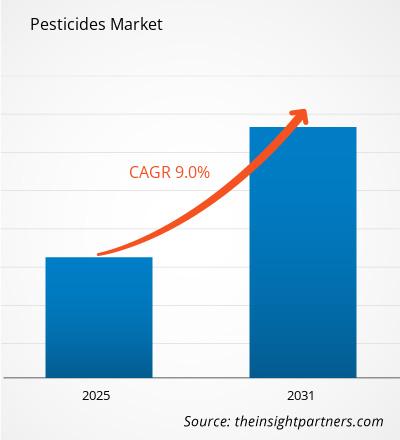
The global Pesticides market was valued at US$ 14.17 billion in 2025 and is expected to reach US$ 18 billion by 2034; it is estimated to record a CAGR of 2.69% during 2026-2034.
Pesticides Market Assessment and Insights
- North America: North America accounted for 31–35% share in 2025 and is projected to expand at a CAGR of 2.8%–3.3% during 2026–2034. Growth is supported by precision agriculture adoption and sustained demand from commercial farming operations.
- U.S.: The U.S. represented 84–87% of the North American market in 2025 and is anticipated to grow at a CAGR of 2.9%–3.4% during 2026–2034, driven by advanced farming practices, strong agricultural output, and continued modernization of crop protection systems.
- Europe: Europe held 22–26% market share in 2025 and is expected to register a CAGR of 2.5%–3.0% during 2026–2034. Germany, France, and Spain remain key markets supported by modern agricultural practices and evolving regulatory frameworks.
- Asia Pacific: Asia Pacific accounted for 32–36% share in 2025 and is forecast to grow at a CAGR of 3.8%–4.4% during 2026–2034. China, India, and Japan continue to drive regional expansion through agricultural modernization and increasing food production requirements.
- Largest Segment: Product Type – Synthetic represented the largest market segment and is projected to grow at a CAGR of 2.8%–3.3% during 2026–2034, supported by broad-spectrum efficacy and well-established production infrastructure.
- High Growth Segment: Product Type – Biological is expected to register the fastest growth with a CAGR of 5.2%–5.8% during 2026–2034, driven by increasing adoption of sustainable farming practices and eco-friendly crop protection solutions.
- Key companies analyzed in detail: ADAMA Ltd.; AMVAC Chemical Corporation; BASF SE; Bayer AG; Corteva Agriscience; FMC Corporation; Nufarm Limited; Sumitomo Chemical Co., Ltd.; Syngenta AG; and UPL Limited
Source: The Insight Partners' analysis based on proprietary research, government publications, company annual reports, investor presentations, industry databases, and expert interviews.
Agricultural production systems have become increasingly dependent on integrated crop protection solutions capable of addressing evolving pest pressures and climatic variability. The market has transitioned from a volume-driven industry toward a more technology-focused ecosystem where formulation efficiency, resistance management, and environmental compatibility are becoming equally important. Companies are investing in advanced active ingredients, biological solutions, and digital agronomy tools to enhance field performance.
In the coming years, market dynamics will be driven by sustainable farming goals, food security issues, and new regulations. Demand is anticipated to stay strong as farmers continue to look for technologies that increase productivity but reduce resource wastage. Biological technologies being used together with chemical substances will define the competitive landscape in the agricultural sector.
Pesticides Market Report Scope
| Report Attribute | Details |
|---|---|
| Market size in 2025 | US$ 14.17 Billion |
| Market Size by 2034 | US$ 18.0 Billion |
| Global CAGR (2026 - 2034) | 2.69% |
| Historical Data | 2021-2024 |
| Forecast period | 2026-2034 |
Pesticides Market Analysis
The market is driven by the need to protect crop yields from insects, weeds, fungi, and emerging biological threats. Population growth and changing dietary patterns continue to increase pressure on agricultural productivity, encouraging farmers to adopt effective crop protection programs. Climatic fluctuations are also altering pest migration patterns, resulting in greater demand for broad-spectrum and targeted pesticide solutions.
The value chain of the industry includes raw material suppliers, producers of active ingredients, formulators, distributors, agronomists, and farms. Improved cooperation among them makes it easier to provide products and develop customized solutions for pest control. Monitoring tools and prediction algorithms are helping to integrate pesticides into agronomic decisions.
Competition remains concentrated among multinational crop protection companies, including ADAMA Ltd., AMVAC Chemical Corporation, BASF SE, Bayer AG, China National Chemical Corporation Ltd., DowDuPont, FMC Corporation, Nufarm Limited, Sumitomo Chemical Co., Ltd., and Syngenta AG. These companies compete through product innovation, regulatory approvals, portfolio diversification, and regional expansion strategies, according to the pesticides market report.
Investment in biological insecticides, management of resistance methods, and precision application techniques is becoming more common. Collaboration, mergers and acquisitions, and research collaboration are being used to increase innovation pipelines for the benefit of market players. There is also investment in sustainable formulations and active ingredients, which are environmentally friendly while at the same time competitive.
● REPORT CUSTOMIZATION
Tailor This Report To Align With Your Specific Business Requirements
This report can be customized to align precisely with your business objectives, scope, and target markets. Customization options include tailored segmentation, geography, competitive analysis, and strategic insights to support informed decision-making.
Customize This Report →WHAT YOU CAN ADJUST
- ● Segmentations
- ● Geography
- ● Competitive Analysis
- ● Language Preferences
Pesticides Market: Strategic Insights
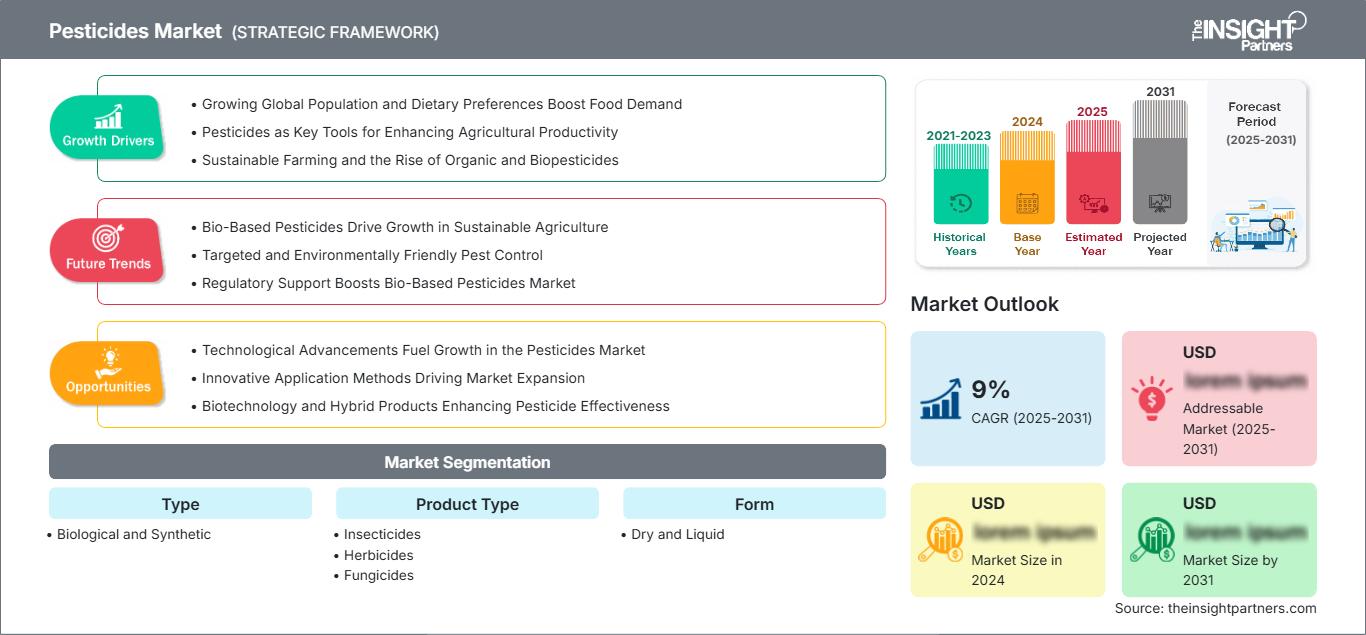
Regional Insights
North America Pesticides Market
North America remains a significant market for advanced pesticide technologies and is projected to record a CAGR of approximately 2.8%–3.1% through 2034. Strong mechanization levels, extensive cultivation of corn and soybean crops, and widespread adoption of precision agriculture create consistent demand, supporting the pesticides market size for herbicides, fungicides, and insecticides. Regulatory oversight encourages continuous innovation in formulation technologies and application efficiency.
The area also benefits from significant research and development work by large crop protection firms. With increasing worries about pest resistance and weather changes, there is a greater need for integrated crop protection systems. There is an increase in the popularity of biological pesticides as farmers look for other ways of doing things in their agriculture while maintaining efficiency.
U.S. Pesticides Market
The U.S. accounts for approximately 70%–75% of North American pesticide demand and is anticipated to grow at a CAGR near 2.9% through the forecast period. Large-scale commercial farming operations, high-value specialty crops, and extensive use of precision farming technologies continue to support market expansion. Herbicides remain particularly important due to persistent weed resistance challenges across major crop-producing states.
Major industry participants, including Bayer AG, BASF SE, FMC Corporation, Corteva-related businesses originating from DowDuPont, and Syngenta, maintain strong operational footprints in the country. Demand is increasingly shifting toward integrated solutions combining chemical, biological, and digital tools. Applications in row crops, fruits, vegetables, and specialty agriculture continue to create diversified revenue opportunities, supporting pesticides market share across the pesticide ecosystem.
Europe Pesticides Market
Europe represents approximately 22%–27% of global pesticide demand and is expected to advance at a CAGR of around 2.4%–2.8%. The region is characterized by stringent environmental regulations, increasing adoption of integrated pest management practices, and growing interest in biological crop protection solutions. Innovation is largely directed toward products capable of meeting sustainability objectives, supporting the pesticides market forecast while maintaining crop productivity.
The UK is experiencing constant demand as a result of productivity-based agricultural practices and investments made in precision agriculture. Farmers are looking for methods that increase application efficiency while reducing negative impact on the environment, thus providing an opportunity for formulation improvements.
Germany remains the leading European market due to its strong agricultural technology base, extensive research capabilities, and presence of major industry participants. Demand is supported by high-value crops and a strong focus on sustainable agricultural production systems. Market growth is expected to remain moderate but innovation-intensive.
France, Italy, and Spain collectively represent an important agricultural cluster within the market, characterized by diverse crop portfolios including cereals, vineyards, fruits, and vegetables. Climate-related pest pressures and increasing emphasis on yield stability continue to support demand for fungicides, insecticides, and biological alternatives across these markets.
APAC Pesticides Market
Asia Pacific holds the largest share of the market, estimated at approximately 40%–45%, and is expected to record a CAGR of 3.8%–4.2% through 2034. Rapid population growth, food security priorities, and intensive agricultural activity contribute to strong demand. The region's diverse climatic conditions create recurring pest and disease management requirements across multiple crop categories.
China leads regional consumption and production due to its extensive agricultural sector and established agrochemical manufacturing infrastructure. Government initiatives supporting agricultural modernization and productivity improvements continue to influence market development. Domestic and international companies are expanding investments in advanced formulations and sustainable crop protection technologies, reflecting key pesticides market trends.
Japan, South Korea, India, and Australia are contributing to regional growth through the modernization of farming practices and increased awareness of crop quality requirements. India, in particular, benefits from expanding agricultural input demand, while Australia emphasizes precision agriculture and resistance management strategies. Policy support for food security and agricultural efficiency further strengthens long-term market prospects.
Middle East & Africa Pesticides Market
The Middle East & Africa pesticides market is projected to expand at a CAGR of approximately 3.4%–3.8% during the forecast period. Growing efforts to enhance agricultural productivity under challenging climatic conditions are encouraging the adoption of crop protection products. Water scarcity and limited arable land increase the importance of protecting yields from pest-related losses.
Saudi Arabia represents a leading market due to investments in agricultural modernization and food security initiatives. The United Arab Emirates is increasingly utilizing controlled-environment agriculture and precision farming systems that require specialized crop protection solutions. These developments support demand for advanced pesticide formulations.
South Africa remains a key agricultural producer within the region, supporting demand across fruit, grain, and horticultural applications. Across the rest of the Middle East and Africa, infrastructure development, agricultural investment programs, and diversification efforts beyond energy-dependent economies are creating favorable conditions for gradual market expansion.
Segmentation Analysis
Type
- Biological: Biological pesticides are gaining traction due to sustainability objectives, residue management requirements, and compatibility with integrated pest management programs. Advances in microbial and naturally derived solutions are expanding commercial adoption across high-value crops.
- Synthetic: Synthetic pesticides continue to dominate global demand because of their proven efficacy, broad-spectrum performance, and large-scale availability. Ongoing formulation improvements are enhancing application efficiency while supporting resistance management strategies.
Product Type
- Insecticides: Insecticides remain essential for controlling crop-damaging pests across cereals, fruits, vegetables, and plantation crops. Increasing insect resistance challenges are encouraging the development of novel active ingredients and integrated control solutions.
- Herbicides: Herbicides constitute the leading product category due to widespread weed management requirements in large-scale agriculture. Adoption is particularly strong in row crops where weed competition can significantly reduce productivity and profitability.
- Fungicides: Fungicides benefit from growing concerns regarding disease outbreaks linked to changing climatic conditions. Demand is particularly strong in specialty crops, cereals, and horticulture, where disease pressure directly impacts quality and yield.
Form
- Dry: Dry formulations offer advantages in storage stability, transportation efficiency, and extended shelf life. These products are widely utilized across broad-acre farming systems where logistical considerations influence purchasing decisions.
- Liquid: Liquid formulations are preferred for their ease of mixing, uniform application characteristics, and compatibility with modern spraying equipment. Increasing adoption of precision application systems supports continued demand for liquid products.
Opportunity Snapshot
| Product Type | Revenue Contribution | Trend Tag | Adoption Stage |
| Insecticides | High | Resistance Control | Mature |
| Herbicides | High | Weed Management | Mature |
| Fungicides | Medium | Disease Prevention | Scaling |
| Others | Low | Crop Quality | Emerging |
Pesticides Market Growth Drivers and Impact Analysis
Rising Global Food Production Requirements
The expanding global population and changing consumption patterns are increasing pressure on agricultural systems to produce more food from finite land resources. Farmers face the challenge of maximizing yields while managing pest infestations that can significantly reduce crop productivity. Pesticides remain a critical component of modern farming systems because they help prevent losses caused by insects, weeds, and fungal diseases. As agricultural intensification continues across developing economies, the need for reliable crop protection solutions is becoming increasingly important.
The market impact is substantial because higher crop productivity directly supports food security objectives and agricultural profitability. Demand for advanced pesticide formulations is increasing in regions where yield improvement remains a strategic priority within the market. Manufacturers are responding through innovation in active ingredients, application technologies, and integrated pest management solutions that enhance field performance while addressing environmental concerns.
Expansion of Precision Agriculture and Digital Farming
These precision agriculture technologies are changing pesticide application strategies by offering farmers better ways to apply pesticides more effectively and productively. The technology enables farmers to detect pest infestations early through satellite imaging, drones, sensing equipment, and predictive analytics, making their pesticide application more effective.
The consequence of these changes for market dynamics is increased demand for services and platforms in addition to the product itself. Within the pesticides market, crop protection providers are exploring the possibility of embedding digital technologies into their product lines to build stronger relationships with customers and deliver better results.
Growing Threat of Pest Resistance and Climate Variability
Resistance of pests has become one of the biggest problems in contemporary farming practices. Repeated exposure to the same type of active ingredients may render products less effective, thereby necessitating diversified approaches to management within the market. Climate change also plays a role in affecting the distribution and prevalence of pests and diseases, as well as the intensity of infestations.
These changes create a need for innovative chemistry and biologics that would be able to combat the emerging threat. Firms that focus on R&D can leverage their efforts and gain access to the opportunities in the realm of resistance management. Resistance is also a reason for collaboration between farmers, regulators, and producers to design sustainable approaches to crop protection.
Pesticides Market Future Trends
Acceleration of Biological and Nature-Based Crop Protection
Products made from biological sources are evolving from a specialized group of products into a strategic element in crop protection programs. Innovations in microbial technology, natural active substances, and biostimulants are contributing to an increase in the commercial success of biological solutions. In general, farmers see these types of solutions as supplementary products that could help manage resistance and achieve sustainability.
In the coming years, biological solutions will attract more investments and innovation activity within the market. Regulatory acceptance, customer demand for sustainable agriculture practices, and efficiency improvements are expected to contribute to increased use of biological solutions. Companies that are able to integrate biological and synthetic products into a single platform will be well-positioned to satisfy the evolving demands of growers.
Integration of Digital Decision Support with Crop Protection
Digital intelligence will be an important part of the pesticides market moving forward, with data-based agronomy platforms allowing farmers to manage field conditions, predict pests, and optimize the timing of pesticide applications. This helps improve financial returns while minimizing excessive product use and reducing adverse environmental impacts.
In the next ten years, artificial intelligence, remote sensing, and analytics are anticipated to be more tightly connected with the crop protection process. The companies that will integrate chemistry, biologicals, and digital aspects in one package will enjoy competitive advantages. The shift to precision-focused crop management will affect product innovation, distribution, and customer engagement.
Pesticides Market Opportunities
Expansion in Emerging Agricultural Economies
Agricultural modernization still goes on in many developing nations, which provides openings for the manufacturing and sale of pesticides. Greater understanding of the advantages of protecting crops, increased mechanization, and policies by the government in support of food security is increasing the size of the target market. Nations across Asia, Africa, and Latin America are making efforts aimed at improving efficiency in production through effective pest management products.
For those who want to participate in the sector either as investors or industry participants, success in the pesticides market will depend on localizing product portfolios, building distribution alliances, and educating farmers about pesticide use. Companies that are able to tailor their products to regional crop types will be better positioned to establish long-term growth platforms for themselves.
Development of Resistance-Management Solutions
Resistance among weeds, insects, and plant diseases provides a considerable avenue for innovation. Farmers need innovative means of action, innovative formulations, and management techniques that ensure efficacy even amid changing conditions in the field. There is not only a need for the products but also for consultative services and monitoring technologies.
Firms that engage in research, formulation sciences, and biological substitutes are best placed to capture premium market sectors. Insecticides and herbicides technology offers avenues for innovation. The value of resistance management will increase amidst tough regulation and difficult agronomy.
Recent Developments
- June 2026: BASF Agricultural Solutions announced that its latest fungicide innovation, Adapzo Active, has been recognized by the Fungicide Resistance Action Committee (FRAC) as a new and distinct mode of action. The active ingredient, flufenoxadiazam, is the crop protection industry's first histone deacetylase (HDAC) inhibitor and the only member of the newly established FRAC Group Code 56.
- April 2026: FMC Corporation, a leading global agricultural sciences company, announced that Isoflex Active, the trade name for bixlozone, has received regulatory approval in the European Union (EU). This approval is a critical milestone in FMC's commercialization process, paving the way for the introduction of formulated products across more than 55 million planted hectares of cereals, corn, oilseed rape, and potato in the EU.
- March 2026: Syngenta announced a USD 130 million (GBP 100 million) investment to build a new agricultural bioscience research center at its existing R&D hub in Jealott's Hill. The facility, named the Biological Sciences Technology and Research Center (BioSTaR), will focus on biological sciences, molecular and analytical research, and digital innovation.
Frequently Asked Questions

- Comprehensive Market Sizing and Forecast Analysis
- Detailed Segmentation Analysis
- In-Depth Market Dynamics Assessment
- Regional and Country-Level Insights
- Competitive Landscape and Company Benchmarking
- Strategic Business Intelligence
Recent Reports
Testimonials

The Insight Partners provided valuable market intelligence that supported our global go-to-market strategy. Their team was professional, responsive, and attentive to our feedback, providing thoughtful analysis and helpful methodological clarifications throughout the project.
Junmo Kim Chief Financial Officer (CFO), Enertech Co., Ltd.
The Insight Partners' SCADA System Market report is comprehensive, with valuable insights on current trends and future forecasts. The team was highly professional, responsive, and supportive throughout. We are very satisfied and highly recommend their services.
RAN KEDEM Partner, Reali Technologies LTDs
I requested a report on a very specific software market and the team produced the report in a few days. The information was very relevant and well presented. I then requested some changes and additions to the report. The team was again very responsive and I got the final report in less than a week.
JEAN-HERVE JENN Chairman, Future Analytica
We worked with The Insight Partners for an important market study and forecast. They gave us clear insights into opportunities and risks, which helped shape our plans. Their research was easy to use and based on solid data. It helped us make smart, confident decisions. We highly recommend them.
PIYUSH NAGPAL Sr. Vice President, High Beam Global
The Insight Partners delivered insightful, well-structured market research with strong domain expertise. Their team was professional and responsive throughout. The user-friendly website made accessing industry reports seamless. We highly recommend them for reliable, high-quality research services
YUKIHIKO ADACHI CEO, Deep Blue, LLC.
This is the first time I have purchased a market report from The Insight Partners.While I was unsure at first, I visited their web site and felt more comfortable to take the risk and purchase a market report.I am completely satisfied with the quality of the report and customer service. I had several questions and comments with the initial report, but after a couple of dialogs over email with their analyst I believe I have a report that I can use as input to our strategic planning process.Thank you so much for taking the extra time and making this a positive experience.I will definitely recommend your service to others and you will be my first call when we need further market data.
JOHN SUZUKI President and Chief Executive Officer, Board Director, BK Technologies
I wish to appreciate your support and the professionalism you displayed in the course of attending to my request for information regarding to infectious disease IVD market in Nigeria. I appreciate your patience, your guidance, and the fact that you were willing to offer a discount, which eventually made it possible for us to close a deal. I look forward to engaging The Insight Partners in the future, all thanks to the impression you have created in me as a result of this first encounter.
DR CHIJIOKE ONYIA MANAGING DIRECTOR, PineCrest Healthcare Ltd.Reason to Buy
- Informed Decision-Making
- Understanding Market Dynamics
- Competitive Analysis
- Identifying Emerging Markets
- Customer Insights
- Market Forecasts
- Risk Mitigation
- Boosting Operational Efficiency
- Strategic Planning
- Investment Justification
- Tracking Industry Innovations
- Aligning with Regulatory Trends





 Get Free Sample for