
Phosphate Fertilizers Market Share, Growth & Demand by 2034
Coverage: by Type (Diammonium Phosphate (DAP), Monoammonium Phosphate (MAP), Superphosphate, Others); Applications (Grains and Oilseeds, Fruits and Vegetables, Others) , and Geography (North America, Europe, Asia Pacific, and South and Central America)
- Status : Data Released
- Report Code : TIPRE00011053
- Category : Chemicals and Materials
- No. of Pages : 150
- Available Report Formats :


- Last update date : July 15, 2026


2025 Market Size
US$ 74.45 Bn
Base year value
2034 Forecast
US$ 98.14 Bn
Projected by 2034
CAGR 2026-2034
3.51 %
Growth rate
Addressable Market
US$ 799.36 Bn
(2026-2034)
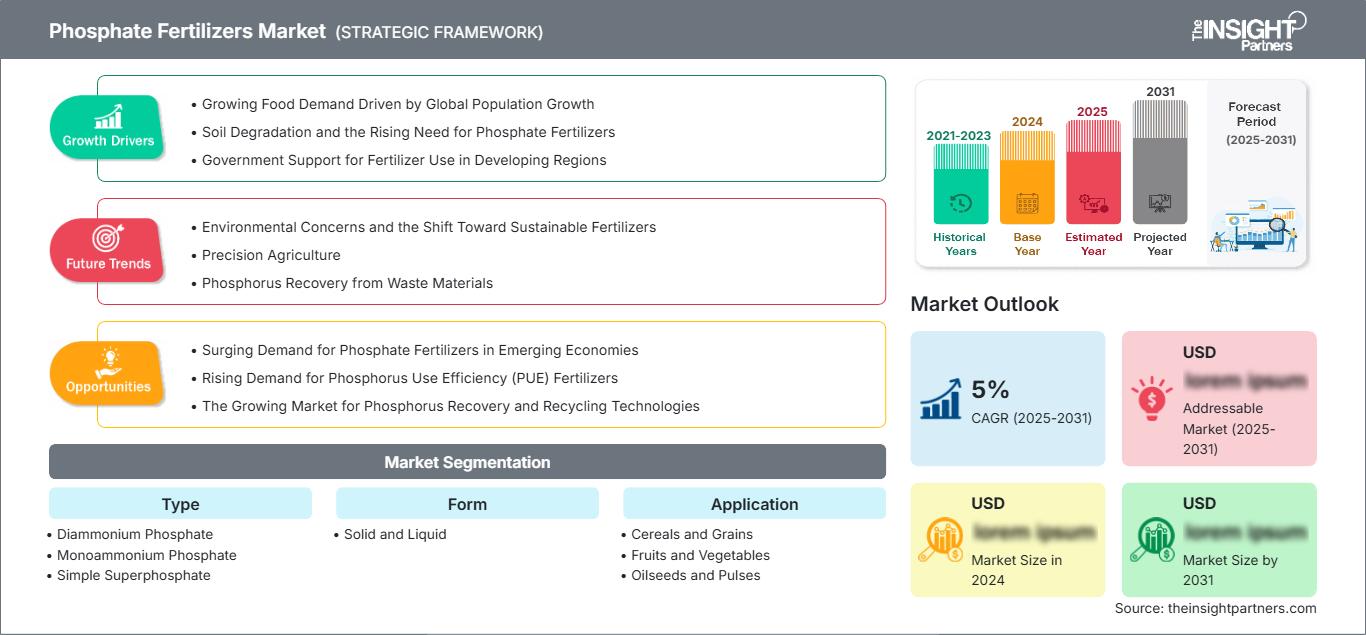
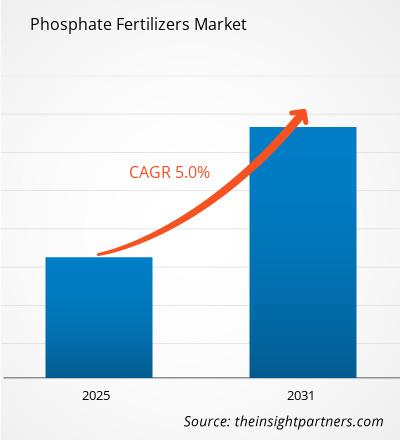
The Phosphate Fertilizers Market was valued at US$ 74.45 billion in 2025 and is projected to reach US$ 98.14 billion by 2034, gowing at a CAGR of 3.51% during the forecast period (2026–2034). Demand is being shaped by the need to improve agricultural productivity, restore phosphorus-deficient soils, and support food security initiatives across both developed and emerging economies. Increasing crop intensity, shrinking arable land per capita, and precision nutrient management practices continue to strengthen the market’s long-term outlook.
North America remains a significant contributor to the phosphate fertilizers market size and is anticipated to expand at an estimated CAGR of around 3.2% through 2034. Growth is supported by large-scale commercial farming, widespread adoption of nutrient stewardship programs, and continued investment in crop yield optimization. Demand for high-efficiency phosphate formulations, particularly in corn, soybean, and wheat cultivation, is reinforcing regional market expansion while encouraging innovation in fertilizer application technologies.
Phosphate Fertilizers Market Assessment and Insights
- North America: North America accounted for 18–22% market share in 2025 and is projected to expand at a CAGR of 2.8%–3.6% during 2026–2034. Growth is driven by improving crop productivity initiatives, nutrient optimization programs, and increasing adoption of efficient fertilizer solutions.
- U.S.: The U.S. represented 65–75% of the North American Phosphate Fertilizers market share in 2025 and is anticipated to register a CAGR of 2.7%–3.5% during 2026–2034, supported by advanced agricultural practices, rising fertilizer efficiency programs, and sustained focus on soil nutrient management.
- Europe: Europe held 20–24% market share in 2025 and is expected to grow at a CAGR of 2.5%–3.3% during 2026–2034. Germany, France, and the United Kingdom remain the leading regional markets, supported by advanced farming techniques and fertilizer efficiency initiatives.
- Asia Pacific: Asia Pacific accounted for 38–42% market share in 2025 and is forecast to expand at a CAGR of 4.0%–4.8% during 2026–2034. China, India, and Japan drive regional growth through agricultural expansion, rising food security needs, and increasing fertilizer consumption.
- Largest Segment – Diammonium Phosphate: The Diammonium Phosphate segment represented the largest market segment and is expected to grow at a CAGR of 3.4%–4.1% during 2026–2034, driven by its high nutrient concentration and widespread application in cereal crop cultivation.
- High Growth Segment – Liquid: The Liquid segment is projected to register the fastest growth with a CAGR of 4.2%–5.0% during 2026–2034, supported by increasing adoption of fertigation practices and improved nutrient delivery efficiency in modern agriculture.
- Key companies analyzed in detail: Agrium Inc.; CF Industries Holdings Inc.; Coromandel International Limited; EuroChem Group AG; ICL Group Ltd.; OCP Group; PhosAgro PJSC; Potash Corporation of Saskatchewan Inc.; The Mosaic Company; and Yara International ASA
Source: The Insight Partners' analysis based on proprietary research, government publications, company annual reports, investor presentations, industry databases, and expert interviews.
The Phosphate Fertilizers Market has evolved alongside changing agricultural practices, rising food consumption, and increasing awareness of soil nutrient balance. Producers are focusing on improving phosphorus use efficiency while addressing environmental concerns associated with nutrient runoff. Advances in fertilizer formulation, digital agriculture tools, and integrated crop nutrition programs are reshaping purchasing decisions across major agricultural economies.
Over the coming decade, the Phosphate Fertilizers market participants are expected to prioritize sustainable sourcing, supply chain resilience, and customized nutrient solutions. Strategic investments by companies such as Agrium Inc., CF Industries Holdings Inc., Coromandel International Ltd., Eurochem, Israel Chemicals Limited, OCP, Phosagro, Potash Corp. of Saskatchewan Inc., The Mosaic Co., and Yara International ASA are likely to influence production capacity, innovation, and global trade dynamics.
Phosphate Fertilizers Market Report Scope
| Report Attribute | Details |
|---|---|
| Market size in 2025 | US$ 74.45 Billion |
| Market Size by 2034 | US$ 98.14 Billion |
| Global CAGR (2026 - 2034) | 3.51% |
| Historical Data | 2021-2024 |
| Forecast period | 2026-2034 |
Phosphate Fertilizers Market Analysis
Growing demand for cereals, oilseeds, fruits, and vegetables remains the primary driver of phosphate fertilizer consumption. Phosphorus plays a critical role in root development, energy transfer, and crop establishment, making it indispensable across modern agricultural systems. Population growth and changing dietary preferences are increasing pressure on farmers to achieve higher yields from existing farmland, supporting sustained fertilizer demand.
The Phosphate Fertilizers market ecosystem extends from phosphate rock mining and beneficiation to phosphoric acid production, fertilizer manufacturing, distribution, and farm-level application. Raw material availability, sulfur prices, logistics infrastructure, trade policies, and environmental regulations influence supply chain performance. Producers are increasingly integrating upstream and downstream operations to improve cost competitiveness and supply security.
Competition is characterized by the presence of vertically integrated multinational companies alongside regional manufacturers. OCP, The Mosaic Co., Phosagro, Eurochem, and Yara International ASA continue to strengthen their positions through capacity expansions, sustainability initiatives, and product diversification. Companies are also investing in agronomic services that help farmers optimize nutrient application and improve return on investment.
Investment activity is increasingly directed toward low-carbon production technologies, renewable energy integration, and advanced fertilizer products with enhanced nutrient efficiency. Strategic partnerships, digital farming platforms, and localized manufacturing capabilities are becoming important differentiators. Firms that combine reliable supply, agronomic expertise, and environmental stewardship are expected to achieve stronger competitive positioning throughout the forecast period.
● REPORT CUSTOMIZATION
Tailor This Report To Align With Your Specific Business Requirements
This report can be customized to align precisely with your business objectives, scope, and target markets. Customization options include tailored segmentation, geography, competitive analysis, and strategic insights to support informed decision-making.
Customize This Report →WHAT YOU CAN ADJUST
- ● Segmentations
- ● Geography
- ● Competitive Analysis
- ● Language Preferences
Phosphate Fertilizers Market: Strategic Insights
Regional Insights
North America Phosphate Fertilizers Market
North America is expected to grow at a CAGR of approximately 3.2% through 2034, supported by its well-developed agricultural sector and increasing focus on improving crop productivity. The region has a strong commercial farming industry, efficient fertilizer distribution networks, and widespread adoption of modern nutrient management practices. Farmers are increasingly using phosphate fertilizers to improve soil fertility, promote healthy plant growth, and achieve higher crop yields. The use of advanced farming technologies is also helping producers apply fertilizers more efficiently, reducing waste while maximizing agricultural output.
The growing adoption of precision farming techniques is further supporting the predicted Phosphate Fertilizers market forecast by enabling farmers to apply the right amount of nutrients at the right time and in the right locations. This approach helps improve fertilizer efficiency, lower production costs, and meet increasingly strict environmental regulations related to nutrient management. The demand for phosphate fertilizers is high for the production of major crops such as corn, wheat, soy, and other oilseeds. In addition, there will be growth prospects for companies producing phosphate fertilizers, driven by continued investments in sustainable agriculture and nutrient management.
U.S. Phosphate Fertilizers Market
The United States accounts for approximately 70–75% of the North American phosphate fertilizer market and is expected to grow at a CAGR of around 3.1% through 2034. The country has one of the world's largest agricultural industries, with extensive cultivation of crops such as corn, soybeans, and wheat, as well as a wide variety of fruits, vegetables, and specialty crops. Maintaining high crop yields and improving soil fertility remain key priorities for farmers, which continues to drive steady demand for phosphate fertilizers. In addition, the country's strong fertilizer manufacturing base and well-established distribution network ensure a reliable supply of phosphate products to agricultural producers across different regions.
Several leading fertilizer manufacturers operate production facilities, distribution centers, and research facilities across the United States, supporting product availability and continuous innovation in fertilizer technologies. Farmers have been incorporating precision agricultural techniques such as using equipment controlled by the Global Positioning System, applying fertilizer at variable rates, and conducting soil analyses to ensure that phosphorus is applied efficiently. At the same time, growing demand from high-value fruit, vegetable, and specialty crop production is creating opportunities for advanced phosphate fertilizer formulations that provide targeted nutrient delivery and improved crop performance. These trends are expected to support the long-term growth of the U.S. phosphate fertilizer market.
Europe Phosphate Fertilizers Market
Europe accounts for approximately 20–25% of the global phosphate fertilizer market and is expected to grow at a CAGR of around 2.8% through 2034. The region's agricultural sector is increasingly focused on improving productivity while minimizing environmental impact. As a result, government regulations, nutrient management policies, and sustainability goals are playing a major role in fertilizer purchasing decisions. Farmers are adopting more efficient phosphorus management practices to reduce nutrient losses, improve soil health, and comply with stricter environmental standards. This shift is encouraging the use of advanced phosphate fertilizers that deliver better crop performance while supporting sustainable farming practices.
Germany is the largest market in Europe, supported by its highly developed agricultural sector, strong farming expertise, and widespread use of precision agriculture technologies. Farmers in the country are increasingly adopting modern nutrient management practices, soil analysis, and precision fertilizer application to improve phosphorus efficiency and maximize crop yields. Continued investment in sustainable farming technologies and environmentally responsible fertilizer use is expected to support steady Phosphate Fertilizers market growth in Germany.
The UK, France, Italy, and Spain contribute significantly to regional demand. The UK emphasizes nutrient stewardship and sustainable farming practices. France maintains strong fertilizer consumption across cereal-producing regions, while Italy and Spain support demand through intensive fruit, vegetable, and horticultural cultivation systems that require balanced phosphorus nutrition.
APAC Phosphate Fertilizers Market
The Phosphate Fertilizers market in Asia Pacific holds the largest share, estimated at 40–45%, and is expected to grow at a CAGR of approximately 4.0% through 2034. Expanding food demand, population growth, and government support for agricultural productivity continue to drive fertilizer consumption across the region.
China lead the Phosphate Fertilizers market owing to its extensive agricultural base and significant phosphate production capacity. Ongoing modernization of farming practices and efforts to enhance nutrient-use efficiency are influencing product demand. India also represents a major growth center, supported by fertilizer subsidy programs and increasing focus on crop productivity.
Japan, South Korea, and Australia contribute through technologically advanced agricultural systems and a growing interest in sustainable nutrient management. Policy initiatives promoting balanced fertilization, soil health improvement, and agricultural modernization are expected to support long-term market expansion across the region.
Middle East & Africa Phosphate Fertilizers Market
The Middle East & Africa Phosphate Fertilizers market is projected to be the fastest-growing market, with a CAGR exceeding 4.2% through 2034. Expanding agricultural investments, food security initiatives, and increasing adoption of modern farming techniques are creating favorable conditions for phosphate fertilizer demand.
Saudi Arabia and the UAE continue to invest in agricultural sustainability and controlled-environment farming, thereby supporting fertilizer consumption despite climatic challenges. Regional infrastructure improvements and supply chain development are enhancing fertilizer accessibility across multiple markets.
South Africa remains a leading consumer within Sub-Saharan Africa due to its comparatively advanced agricultural sector. Broader regional growth is supported by government programs aimed at increasing crop yields, improving soil fertility, and reducing dependence on food imports. Rising investments in agricultural infrastructure and nutrient management practices are expected to sustain Phosphate Fertilizers market momentum.
Segmentation Analysis
Type
- Diammonium Phosphate: The most widely utilized phosphate fertilizer, valued for its high nutrient concentration and broad suitability across cereals, oilseeds, and commercial crop cultivation systems globally.
- Monoammonium Phosphate: Preferred for crops requiring efficient phosphorus delivery and controlled nitrogen levels, particularly in precision agriculture programs and nutrient-sensitive cultivation environments.
- Simple Superphosphate: Maintains relevance in regions seeking cost-effective phosphorus supplementation while simultaneously providing sulfur, supporting soil fertility improvement and balanced crop nutrition.
- Triple Superphosphate: Increasingly adopted where high phosphorus concentration is required, enabling efficient nutrient delivery, reduced transportation requirements, and enhanced application flexibility.
Form
- Solid: Dominates market demand due to ease of storage, transportation, and application across large-scale farming operations and established fertilizer distribution networks.
- Liquid: Gaining traction through compatibility with precision agriculture systems, fertigation methods, and targeted nutrient delivery strategies that improve application efficiency.
Application
- Cereals and Grains: Represents the largest consumption segment because of extensive cultivation acreage and the essential role of phosphorus in crop establishment and yield performance.
- Fruits and Vegetables: Demand is supported by intensive farming systems requiring balanced nutrient management to improve quality, productivity, and post-harvest performance.
- Oilseeds and Pulses: Increasing cultivation of soybean, canola, and pulse crops is driving phosphorus requirements for root development and reproductive growth stages.
- Turf and Ornamentals: Specialized applications utilize phosphate fertilizers to support root health, plant vigor, and aesthetic quality in landscaping and recreational environments.
Opportunity Snapshot
| Application | Revenue Contribution | Trend Tag | Adoption Stage |
| Cereals and Grains | High | Yield Focus | Mature |
| Fruits and Vegetables | Medium | Quality Farming | Scaling |
| Oilseeds and Pulses | Medium | Protein Crops | Scaling |
| Turf and Ornamentals | Low | Landscape Care | Mature |
Phosphate Fertilizers Market Growth Drivers and Impact Analysis
Rising Global Food Production Requirements
Growing population levels and changing dietary patterns are increasing pressure on agricultural systems to deliver higher yields from limited arable land. Phosphorus remains one of the most critical nutrients for plant growth, making phosphate fertilizers essential for maintaining productivity across major crop categories. Farmers increasingly depend on phosphate-based nutrition programs to improve root development, enhance nutrient uptake, and maximize harvest outcomes.
The impact on the Phosphate Fertilizers market is substantial because productivity gains often require balanced nutrient management rather than simple acreage expansion. Countries focused on food security are promoting efficient fertilizer use through subsidy programs, extension services, and agricultural modernization initiatives. This dynamic creates sustained demand across both developed and emerging economies while encouraging manufacturers to expand production capacity and improve fertilizer efficiency.
Expansion of Precision Agriculture and Nutrient Stewardship
The growing adoption of precision farming technologies is transforming fertilizer application practices worldwide. Soil testing, satellite imagery, remote sensing, and variable-rate application technologies enable producers to apply phosphate fertilizers more accurately according to crop requirements. These advancements improve nutrient-use efficiency and reduce unnecessary application costs.
As farmers become more data-driven, demand is shifting toward fertilizers that deliver measurable agronomic benefits. Manufacturers are responding through enhanced formulations, digital advisory services, and integrated crop nutrition programs. The resulting improvement in fertilizer effectiveness supports stronger farmer returns while promoting sustainable agricultural practices. This trend is strengthening market value even in regions where overall fertilizer consumption growth remains moderate.
Government Support for Soil Health and Agricultural Productivity
Many governments consider phosphorus management as a strategic element of agricultural development and food security policy. Government policies promoting the balance in fertilization, restoring soil fertility, and agricultural development are still boosting the market demand. Efforts in providing subsidies, educating farmers, and building infrastructure are helping increase the availability of fertilizer in many developing regions.
This effect goes further than just increased consumption. Improved awareness of soil nutrient deficiencies leads to better practices and increased productivity. Participants of the market gain from a wider use of scientifically proven methods of nutrient management, while farmers get better crop results. These are good conditions for investment in the phosphorus fertilizer market.
Phosphate Fertilizers Market Future Trends
Shift Toward Sustainable and Low-Carbon Fertilizer Production
Environmental considerations are increasingly influencing production strategies across the fertilizer industry. Companies are investing in renewable energy integration, emissions reduction technologies, water conservation systems, and circular economy initiatives. Sustainability objectives are becoming important purchasing considerations for both agricultural producers and downstream food value chains.
In the coming decade, competitive advantage will be derived not only from being able to show a reduced environmental footprint but also through being able to sustain production efficiencies. Businesses that succeed in combining sustainable practices with supply and agronomic values will gain competitive advantages. There is also a regulatory push and growing expectation from investors for environmentally friendly production practices.
Development of Crop-Specific and Customized Nutrient Solutions
Current Phosphate Fertilizers market trends indicate a gradual shift away from standard fertilizer products toward customized crop nutrient packages based on specific soil characteristics and agricultural requirements. Modern agronomic science and technological advancements in the digital agro sector allow for the more accurate formulation of recommendations for managing the use of phosphorus in specific crops and regions.
In the future, growth potential is likely to lie in value-added innovations, not just volume gains. Value-added innovations will be characterized by customized formulation, advisory services, and precision application assistance. These innovations could potentially lead to improved performance by farmers as well as stronger relationships with customers.
Phosphate Fertilizers Market Opportunities
Growth Potential in Emerging Agricultural Economies
Many emerging economies continue to experience significant gaps between actual and attainable crop yields due to nutrient deficiencies and limited fertilizer usage. Expanding agricultural development programs, improving rural infrastructure, and increasing farmer awareness create substantial opportunities for phosphate fertilizer suppliers.
Investment options are even more appealing in areas where the government gives a high priority to food security and agricultural independence. This is where companies will be able to create local networks for the production, distribution, and agronomy of food. It might be beneficial to engage early on with farmers and agriculture entities.
Expansion of Enhanced Efficiency Fertilizer Portfolios
The increasing focus on nutrient use efficiency offers potential for phosphate fertilizers that are highly efficient in phosphorus availability and minimize phosphorus losses to the environment. Such advanced forms of fertilizers will enable farmers to increase yields sustainably.
Investment in innovation, research, and product differentiation will position companies in a favorable manner within premium market segments. The ability to engage technology partners, agricultural co-operatives, and institutions will hasten adoption and commercialization. Given the increased focus on efficiency in purchase decisions, it is likely that innovative firms will reap benefits from higher margins and customer loyalty.
Recent Developments
- April, 2026: OCP Group raised US$1.5 billion through its first international hybrid bond issuance, strengthening funding capacity for strategic phosphate and fertilizer investments. The company also highlighted an ongoing production shift toward triple superphosphate products, reflecting changing global demand patterns and efforts to improve production efficiency.
- May, 2025: Yara International ASA expanded its long-term partnership with PepsiCo across Latin America to provide crop nutrition programs, agronomic support, and precision farming solutions aimed at reducing agricultural emissions and improving productivity among potato growers in multiple countries. The initiative highlights increasing demand for sustainable fertilizer management across food supply chains.
- May, 2025: OCP Nutricrops announced a major investment program to increase phosphate fertilizer production capacity by approximately 9 million tonnes by 2028 through new industrial hubs in Mzinda and Meskala, Morocco. The facilities are designed around renewable energy, automation, and water sustainability principles, with a significant focus on triple superphosphate production to serve global agricultural demand.
Frequently Asked Questions

- Comprehensive Market Sizing and Forecast Analysis
- Detailed Segmentation Analysis
- In-Depth Market Dynamics Assessment
- Regional and Country-Level Insights
- Competitive Landscape and Company Benchmarking
- Strategic Business Intelligence
Recent Reports
Testimonials

The Insight Partners' SCADA System Market report is comprehensive, with valuable insights on current trends and future forecasts. The team was highly professional, responsive, and supportive throughout. We are very satisfied and highly recommend their services.
RAN KEDEM Partner, Reali Technologies LTDs
I requested a report on a very specific software market and the team produced the report in a few days. The information was very relevant and well presented. I then requested some changes and additions to the report. The team was again very responsive and I got the final report in less than a week.
JEAN-HERVE JENN Chairman, Future Analytica
We worked with The Insight Partners for an important market study and forecast. They gave us clear insights into opportunities and risks, which helped shape our plans. Their research was easy to use and based on solid data. It helped us make smart, confident decisions. We highly recommend them.
PIYUSH NAGPAL Sr. Vice President, High Beam Global
The Insight Partners delivered insightful, well-structured market research with strong domain expertise. Their team was professional and responsive throughout. The user-friendly website made accessing industry reports seamless. We highly recommend them for reliable, high-quality research services
YUKIHIKO ADACHI CEO, Deep Blue, LLC.
This is the first time I have purchased a market report from The Insight Partners.While I was unsure at first, I visited their web site and felt more comfortable to take the risk and purchase a market report.I am completely satisfied with the quality of the report and customer service. I had several questions and comments with the initial report, but after a couple of dialogs over email with their analyst I believe I have a report that I can use as input to our strategic planning process.Thank you so much for taking the extra time and making this a positive experience.I will definitely recommend your service to others and you will be my first call when we need further market data.
JOHN SUZUKI President and Chief Executive Officer, Board Director, BK Technologies
I wish to appreciate your support and the professionalism you displayed in the course of attending to my request for information regarding to infectious disease IVD market in Nigeria. I appreciate your patience, your guidance, and the fact that you were willing to offer a discount, which eventually made it possible for us to close a deal. I look forward to engaging The Insight Partners in the future, all thanks to the impression you have created in me as a result of this first encounter.
DR CHIJIOKE ONYIA MANAGING DIRECTOR, PineCrest Healthcare Ltd.Reason to Buy
- Informed Decision-Making
- Understanding Market Dynamics
- Competitive Analysis
- Identifying Emerging Markets
- Customer Insights
- Market Forecasts
- Risk Mitigation
- Boosting Operational Efficiency
- Strategic Planning
- Investment Justification
- Tracking Industry Innovations
- Aligning with Regulatory Trends





 Get Free Sample for