
Phosphine Fumigation Market Growth, Trends & Demand by 2034
Coverage: by Type (Aluminum Phosphide, Magnesium Phosphide, Calcium Phosphide, Others); Form (Liquid, Solid); Application (Stored Processed Food, Raw Agricultural Commodities, Warehouse, Others) , and Geography (North America, Europe, Asia Pacific, and South and Central America)
- Status : Data Released
- Report Code : TIPRE00010381
- Category : Chemicals and Materials
- No. of Pages : 150
- Available Report Formats :


- Last update date : July 08, 2026


2025 Market Size
US$ 2.03 Bn
Base year value
2034 Forecast
US$ 2.84 Bn
Projected by 2034
CAGR 2026-2034
3.80 %
Growth rate
Addressable Market
US$ 22.12 Bn
(2026-2034)
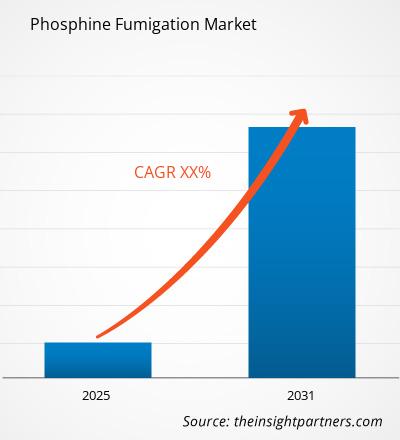
The Phosphine Fumigation Market continues to play a critical role in global post-harvest protection by safeguarding stored grains, processed foods, and agricultural commodities from insect infestations and quality deterioration. The market was valued at US$ 2.03 Billion in 2025 and is projected to reach US$ 2.84 Billion by 2034, advancing at a CAGR of 3.80% during 2026–2034. Growing emphasis on food security, reduction of post-harvest losses, and compliance with international trade standards continues to support demand for phosphine-based fumigation solutions across commercial storage networks.
North America remains a significant contributor to the Phosphine Fumigation Market, with an estimated regional CAGR of approximately 3.4% through 2034. Expansion of large-scale grain storage infrastructure, increasing focus on integrated pest management programs, and stringent requirements for maintaining commodity quality during domestic distribution and export activities are reinforcing market growth. The region also benefits from continued investment in advanced fumigation monitoring technologies and warehouse management systems.
Phosphine Fumigation Market Assessment and Insights
- North America: North America accounted for 28–32% share in 2025 and is projected to grow at a CAGR of 3.20%–4.10% during 2026–2034. Growth is driven by grain storage modernization, enhanced food safety regulations, and increasing adoption of advanced fumigation practices.
- U.S.: The U.S. represented 70–75% of the North American market in 2025 and is expected to register a CAGR of 3.30%–4.20% during 2026–2034, supported by strong investments in storage infrastructure upgrades and stringent food safety compliance standards.
- Europe: Europe held 22–26% of the Phosphine Fumigation market share in 2025 and is anticipated to expand at a CAGR of 3.00%–3.80% during 2026–2034. Germany, France, and the United Kingdom remain the leading markets due to established agricultural storage systems and sustained demand for grain preservation solutions.
- Asia Pacific: Asia Pacific accounted for 30–35% share in 2025 and is forecast to grow at a CAGR of 4.00%–4.80% during 2026–2034. China, India, and Japan continue to drive regional growth through expanding commodity storage capacity and increasing export-oriented agricultural activities.
- Largest Segment: Product Type – Solid Phosphine Fumigation Products represented the largest market segment and is expected to grow at a CAGR of 3.60%–4.40% during 2026–2034, supported by their widespread use in grain storage and post-harvest protection applications.
- High Growth Segment: Application – Warehouse is projected to record the fastest growth with a CAGR of 4.20%–5.00% during 2026–2034, driven by expanding organized storage infrastructure and rising demand for inventory protection solutions.
- Key companies analyzed in detail: ADAMA Agricultural Solutions Ltd.; Agrosynth Chemical Limited; Cytec Solvay Group; Degesch America Inc.; Excel Crop Care Limited; National Fumigants (Pty) Ltd; Nippon Chemical Industrial Co., Ltd; Nufarm Limited; Royal Agro Organic Pvt. Ltd; and United Phosphorus Limited.
Source: The Insight Partners' analysis based on proprietary research, government publications, company annual reports, investor presentations, industry databases, and expert interviews.
The Phosphine Fumigation Market has evolved from a predominantly grain-storage-focused industry into a broader post-harvest protection ecosystem serving warehouses, food processors, exporters, and logistics operators. Advancements in gas distribution systems, monitoring equipment, and application protocols have improved treatment effectiveness while supporting compliance with increasingly rigorous food safety requirements.
Future market development will be influenced by the modernization of agricultural storage infrastructure, increasing international food trade volumes, and efforts to minimize losses across supply chains. Companies are placing greater emphasis on stewardship programs, operator training, and technologies that enhance fumigation performance while addressing concerns related to insect resistance and operational safety.
Phosphine Fumigation Market Report Scope
| Report Attribute | Details |
|---|---|
| Market size in 2025 | US$ 2.03 Billion |
| Market Size by 2034 | US$ 2.84 Billion |
| Global CAGR (2026 - 2034) | 3.80% |
| Historical Data | 2021-2024 |
| Forecast period | 2026-2034 |
Phosphine Fumigation Market Analysis
Comprehensive Phosphine Fumigation market analysis indicates that demand for phosphine fumigation remains closely linked to global grain production, food storage capacity expansion, and export-oriented agricultural activities. The growing need to protect cereals, pulses, processed foods, and other commodities from storage pests has strengthened adoption across commercial warehouses and bulk storage facilities. As food supply chains become more interconnected, preserving commodity quality during storage and transportation has become increasingly important.
The market ecosystem includes phosphide manufacturers, fumigation service providers, warehouse operators, grain handling companies, and agricultural cooperatives. Aluminum phosphide remains the dominant active ingredient due to its effectiveness, cost efficiency, and established regulatory acceptance across numerous agricultural economies. Research continues to focus on optimizing dosage, exposure periods, and resistance management strategies.
Competition is shaped by product reliability, technical expertise, regulatory compliance capabilities, and service quality. Major participants, including ADAMA Agricultural Solutions Ltd, Nufarm Limited, United Phosphorus Ltd, Degesch America Inc., and Nippon Chemical Industrial Co., Ltd continue expanding their technical service offerings to strengthen customer relationships.
Investment activity increasingly targets digital monitoring systems, gas concentration management technologies, and improved formulations designed to enhance efficacy under diverse storage conditions, strengthening long-term Phosphine Fumigation market size. Market participants are also exploring cylinderized phosphine solutions and integrated pest management approaches that can improve operational efficiency while supporting regulatory compliance.
● REPORT CUSTOMIZATION
Tailor This Report To Align With Your Specific Business Requirements
This report can be customized to align precisely with your business objectives, scope, and target markets. Customization options include tailored segmentation, geography, competitive analysis, and strategic insights to support informed decision-making.
Customize This Report →WHAT YOU CAN ADJUST
- ● Segmentations
- ● Geography
- ● Competitive Analysis
- ● Language Preferences
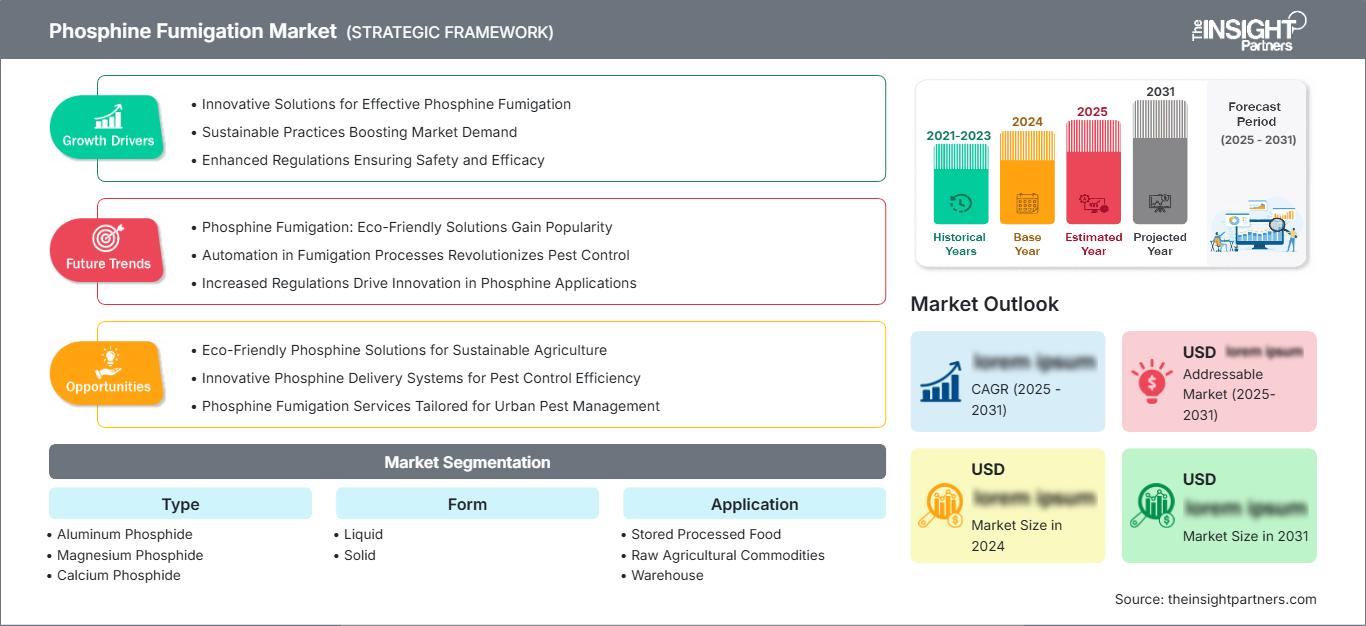
Phosphine Fumigation Market: Strategic Insights
Regional Insights
North America Phosphine Fumigation Market
North America is projected to expand at a CAGR of approximately 3.4% throughout the Phosphine Fumigation market forecast period. The region benefits from extensive grain handling infrastructure, sophisticated logistics networks, and strong adoption of professional fumigation services. Large-scale storage facilities handling wheat, corn, soybeans, and processed food products rely on phosphine treatments to maintain commodity quality and minimize economic losses associated with pest infestations.
Regulatory oversight and food safety standards encourage consistent fumigation practices across commercial operations. Investments in automated monitoring equipment, warehouse modernization, and integrated pest management programs further support market stability. The presence of specialized fumigation service providers and technology suppliers also contributes to sustained adoption across agricultural and food-processing sectors.
U.S. Phosphine Fumigation Market
The U.S. accounts for approximately 70–75% of the North American market and is anticipated to record a CAGR near 3.5% through 2034. The country's extensive grain production and export activities create a substantial requirement for post-harvest pest management solutions across storage and transportation networks.
Strong participation from industry players, including fumigation technology providers and agricultural chemical companies, supports innovation and service expansion. Warehouse fumigation and stored agricultural commodity applications remain dominant, while food processors increasingly implement preventive fumigation programs to meet quality assurance requirements. Adoption of digital monitoring systems and enhanced safety protocols continues to strengthen operational efficiency across the U.S. Phosphine Fumigation market.
Europe Phosphine Fumigation Market
Europe represents approximately 24–29% of global market revenue and is projected to grow at a CAGR of around 3.2% through 2034. Regulatory emphasis on food quality preservation, export compliance, and sustainable pest management supports steady demand across the region. Modern grain storage facilities and advanced logistics networks contribute to consistent fumigation activity.
The UK continues to utilize phosphine fumigation extensively within grain storage and food distribution operations. Market growth is supported by increasing attention to storage efficiency, commodity quality maintenance, and compliance with food safety standards governing domestic and international trade.
Germany remains the leading European market due to its substantial grain handling capacity and advanced warehousing infrastructure. Ongoing investment in agricultural logistics and integrated pest management programs enhances demand for professional fumigation services and precision application technologies.
France, Italy, and Spain collectively contribute significant demand driven by agricultural exports, food processing activities, and commercial storage requirements. These markets are increasingly adopting monitoring technologies and resistance-management practices to improve fumigation effectiveness while maintaining compliance with evolving regulatory expectations.
APAC Phosphine Fumigation Market
Asia Pacific accounts for approximately 38–43% of global revenue and is expected to register the fastest regional CAGR of around 4.5% through 2034. The region's leadership is supported by large agricultural output, expanding storage infrastructure, and rising investments aimed at reducing post-harvest losses.
China leads the regional Phosphine Fumigation market due to extensive grain reserves, large warehouse networks, and continued modernization of agricultural logistics systems. Government initiatives focused on food security further reinforce demand for effective fumigation practices.
India represents a rapidly growing market driven by increasing storage capacity additions and efforts to improve grain preservation. Japan and South Korea emphasize high-quality food storage standards, while Australia relies heavily on phosphine fumigation to support grain export operations and maintain commodity integrity during long-distance transportation.
Middle East & Africa Phosphine Fumigation Market
The Middle East & Africa market is projected to grow at approximately 3.6% CAGR throughout the Phosphine Fumigation market forecast period. Expansion of food import infrastructure, strategic grain reserves, and warehousing facilities is supporting adoption across multiple countries.
Saudi Arabia leads regional demand due to substantial investments in food security programs and storage infrastructure. Growing reliance on imported agricultural commodities necessitates effective pest management solutions to preserve product quality during storage.
The UAE continues to strengthen logistics and distribution capabilities supporting regional food trade, while South Africa remains an important agricultural market with established grain storage operations. Across the broader MEA region, modernization of warehousing networks and increasing food consumption are creating favorable conditions for market expansion.
Segmentation Analysis
Type
- Aluminum Phosphide – The dominant segment due to widespread acceptance in grain storage, strong efficacy against storage pests, cost efficiency, and extensive use across agricultural supply chains and commercial warehouse environments.
- Magnesium Phosphide – Gains traction in specialized fumigation applications requiring controlled phosphine release characteristics and enhanced performance under varying environmental conditions encountered in commodity storage facilities.
- Calcium Phosphide – Maintains niche demand in selected industrial and agricultural fumigation operations where specific handling characteristics and treatment requirements support its practical application.
Form
- Liquid – Emerging adoption in advanced fumigation systems where precise application control, operational efficiency, and integration with modern dispensing technologies are prioritized.
- Solid – The leading form owing to widespread availability, ease of transportation, established application methods, and extensive use in agricultural storage and warehouse fumigation programs.
Application
- Stored Processed Food – Growing adoption driven by stringent food safety standards and increasing emphasis on protecting packaged and processed products from infestation during storage.
- Raw Agricultural Commodities – Represents the largest application segment due to extensive grain, cereal, pulse, and oilseed storage requirements across global agricultural supply chains.
- Warehouse – Strong demand supported by expanding logistics infrastructure, centralized storage networks, and growing need for preventive pest management strategies.
Opportunity Snapshot
| Application | Revenue Contribution | Trend Tag | Adoption Stage |
| Stored Processed Food | Medium | Food Safety | Scaling |
| Raw Agricultural Commodities | High | Grain Protection | Mature |
| Warehouse | High | Storage Expansion | Scaling |
Phosphine Fumigation Market Growth Drivers and Impact Analysis
Rising Global Focus on Post-Harvest Loss Reduction
Food losses occurring after harvest continue to represent a significant challenge across both developed and developing economies. Governments, agricultural cooperatives, grain boards, and food companies are investing heavily in storage infrastructure to preserve crop quality and improve food availability. Phosphine fumigation has become a critical component of these efforts because it provides effective control of insects that can damage stored commodities and reduce commercial value.
The growing volume of agricultural output in the Asia-Pacific, Latin America, and certain regions of Africa has increased demand for reliable fumigation technologies. Given that storage time has been extended and the supply chain has become more complex, there is a need for effective methods to protect commodities in large quantities. This particular driver directly contributes to the growing demand for phosphide products, fumigation services, and fumigation monitoring equipment.
Expansion of International Agricultural Commodity Trade
Global trade in grains, pulses, oilseeds, and processed food products continues to expand, increasing the need for effective phytosanitary protection. Exporters must meet strict quality standards and prevent pest contamination during storage and transportation. Phosphine fumigation remains one of the most widely accepted solutions for achieving these objectives across international markets.
With the increase in cross-border food movement, storage companies and exporters are becoming more inclined to use standardized fumigation procedures. This leads to steady demand in the industry through ports, silos, warehouses, and logistics companies. The effects on the market would be an increased investment in fumigation, compliance, and gas detection equipment.
Increasing Adoption of Professional Storage Infrastructure
Many agricultural economies are transitioning from traditional storage practices toward modern warehouse and silo systems. These facilities require structured pest management programs to maintain commodity quality and support long-term storage objectives. Phosphine fumigation is frequently incorporated into standard operating procedures because of its effectiveness and scalability.
Modern storage facilities typically require more consistent treatment, higher safety standards, and proper documentation. Therefore, there is an increasing need for innovative application technology and technical assistance services This shift creates more opportunities for manufacturers and service providers and, at the same time, reinforces Phosphine Fumigation market growth. Another advantage of this trend is the increased use of computerized treatment monitoring.
Phosphine Fumigation Market Future Trends
Integration of Digital Monitoring and Smart Fumigation Systems
Current Phosphine Fumigation market trends show that sensors, remote monitoring systems, and data analysis are being implemented across fumigation processes. There is increasing demand for better visibility of gas levels, exposure time, and treatment success. It provides better management of the process while minimizing risks and making documentation easier.
Over the coming years, there will be an increasing implementation of digital monitoring in large storage facilities. The information gathered from the process in real time will allow for increased treatment efficiency and maintenance of storage facilities through predictive maintenance. Companies that integrate fumigation solutions with digital services will have an edge over their competition.
Development of Enhanced Resistance-Management Approaches
The growing problem of phosphine resistance in storage pests has led to the development of more effective treatment procedures and integrated pest management strategies. Studies have started focusing on the optimization of fumigation conditions and technology integration in order to preserve the effectiveness of treatments.
In the future, the development of the market would revolve around stewardship programs, operator training, and precise application practices. The manufacturers would have to provide more technical support and advanced methods for delivery in order to enable their clients to apply phosphine efficiently and reduce the chances of resistance development.
Phosphine Fumigation Market Opportunities
Modernization of Grain Storage Infrastructure in Emerging Economies
Emerging Phosphine Fumigation market trends indicate that increasing investment in grain warehouse construction across Asia, Africa, and parts of the Middle East is creating significant opportunities for market participants. The authorities and the businesses are increasing the storage capacities to enhance food safety and decrease commodity waste. Each newly constructed warehouse or silo complex provides an opportunity to sell pest control products during its entire lifetime.
Manufacturing companies can make use of their possibilities in setting up a local distribution network, providing technical support, and training operators. Companies providing fumigation services together with monitoring systems will be especially competitive. Long-term contracts related to strategic warehouses can become a source of stable income and market expansion.
Expansion of Advanced Cylinderized Phosphine Solutions
Cylinderized phosphine technology offers a compelling avenue for differentiation to businesses that go beyond the usual phosphides. The technology is characterized by greater control, better precision, and efficiencies that appeal to big businesses. Industry trends show that there is a growing interest in this market.
There can be a focus on the use of specialized equipment, training of technicians, and creation of a service structure. Businesses that manage to commercialize their advanced delivery system stand to benefit from capturing the premium market segment.
Recent Developments
- January, 2026: Rentokil Initial, the world’s leading provider of pest control services, has acquired Killem Pest Pte Ltd, a Singapore-based pest control company. This acquisition strengthens Rentokil Initial’s pest control service capabilities in Singapore, combining trusted local expertise with global standards, innovation, and industry-leading technical practices
- September, 2025: Global law firm Dentons provided legal advice to INTRESO Group BV and Descroes BV in connection with the sale of their subsidiaries, Fumico Holding B.V. (Fumico) in the Netherlands and DDD, d.o.o. Koper (DDD) in Slovenia, to Detia Degesch Group. The transaction represents a significant milestone for INTRESO Group as it refocuses its strategy on wholesale operations and the provision of sustainable fumigant solutions. With the acquisition, Detia Degesch Group will expand its service portfolio in the Netherlands and Slovenia, strengthening its position in the international fumigation market.
- May, 2025: Rentokil Initial Indonesia announced the acquisition of Pest Terminator, a leading pest control company under PT Reliance Dewata Sejahtera, PT Reliance Sukses Sejahtera, and PT Reliance Anugerah Sejahtera. The merger of these two companies will offer enhanced benefits to customers in key regions through expanded, comprehensive pest control services. This acquisition represents a strategic move for Rentokil Initial Indonesia, reinforcing its leadership position in the commercial pest control market.
Frequently Asked Questions

- Comprehensive Market Sizing and Forecast Analysis
- Detailed Segmentation Analysis
- In-Depth Market Dynamics Assessment
- Regional and Country-Level Insights
- Competitive Landscape and Company Benchmarking
- Strategic Business Intelligence
Recent Reports
Testimonials

The Insight Partners provided valuable market intelligence that supported our global go-to-market strategy. Their team was professional, responsive, and attentive to our feedback, providing thoughtful analysis and helpful methodological clarifications throughout the project.
Junmo Kim Chief Financial Officer (CFO), Enertech Co., Ltd.
The Insight Partners' SCADA System Market report is comprehensive, with valuable insights on current trends and future forecasts. The team was highly professional, responsive, and supportive throughout. We are very satisfied and highly recommend their services.
RAN KEDEM Partner, Reali Technologies LTDs
I requested a report on a very specific software market and the team produced the report in a few days. The information was very relevant and well presented. I then requested some changes and additions to the report. The team was again very responsive and I got the final report in less than a week.
JEAN-HERVE JENN Chairman, Future Analytica
We worked with The Insight Partners for an important market study and forecast. They gave us clear insights into opportunities and risks, which helped shape our plans. Their research was easy to use and based on solid data. It helped us make smart, confident decisions. We highly recommend them.
PIYUSH NAGPAL Sr. Vice President, High Beam Global
The Insight Partners delivered insightful, well-structured market research with strong domain expertise. Their team was professional and responsive throughout. The user-friendly website made accessing industry reports seamless. We highly recommend them for reliable, high-quality research services
YUKIHIKO ADACHI CEO, Deep Blue, LLC.
This is the first time I have purchased a market report from The Insight Partners.While I was unsure at first, I visited their web site and felt more comfortable to take the risk and purchase a market report.I am completely satisfied with the quality of the report and customer service. I had several questions and comments with the initial report, but after a couple of dialogs over email with their analyst I believe I have a report that I can use as input to our strategic planning process.Thank you so much for taking the extra time and making this a positive experience.I will definitely recommend your service to others and you will be my first call when we need further market data.
JOHN SUZUKI President and Chief Executive Officer, Board Director, BK Technologies
I wish to appreciate your support and the professionalism you displayed in the course of attending to my request for information regarding to infectious disease IVD market in Nigeria. I appreciate your patience, your guidance, and the fact that you were willing to offer a discount, which eventually made it possible for us to close a deal. I look forward to engaging The Insight Partners in the future, all thanks to the impression you have created in me as a result of this first encounter.
DR CHIJIOKE ONYIA MANAGING DIRECTOR, PineCrest Healthcare Ltd.Reason to Buy
- Informed Decision-Making
- Understanding Market Dynamics
- Competitive Analysis
- Identifying Emerging Markets
- Customer Insights
- Market Forecasts
- Risk Mitigation
- Boosting Operational Efficiency
- Strategic Planning
- Investment Justification
- Tracking Industry Innovations
- Aligning with Regulatory Trends





 Get Free Sample for