
Plant Hormones Market Size, Trends & Growth by 2034
Coverage: By Type (Auxins, Cytokinins, Ethylene, Gibberellins, Others); Form (Powder and granules, Liquid); Crop Type (Oilseeds and pulses, Fruits and vegetables, Cereals and grains, Others) , and Geography (North America, Europe, Asia Pacific, and South and Central America)
- Status : Data Released
- Report Code : TIPRE00018477
- Category : Chemicals and Materials
- No. of Pages : 150
- Available Report Formats :


- Last update date : June 29, 2026


2025 Market Size
US$ 3.18 Bn
Base year value
2034 Forecast
US$ 6.94 Bn
Projected by 2034
CAGR 2026-2034
9.07 %
Growth rate
Addressable Market
US$ 45.30 Bn
(2026-2034)
The global plant hormones market was valued at US$ 3.18 billion in 2025 and is projected to reach US$ 6.94 billion by 2034, expanding at a CAGR of 9.07% during 2026–2034. The market is gaining momentum as agricultural producers increasingly adopt advanced crop management tools to improve productivity, crop quality, and resilience against environmental stress. Plant hormones play a critical role in regulating physiological processes such as growth, flowering, fruit development, and ripening, making them indispensable in modern farming systems.
North America continues to represent a major market for plant hormones and is expected to register a CAGR of approximately 8.5%–9.0% through 2034. Growth is supported by widespread adoption of precision agriculture technologies, increasing cultivation of high-value crops, and rising investments in sustainable crop productivity enhancement solutions. Strong agricultural research capabilities further contribute to regional market expansion.
Plant Hormones Market Assessment and Insights
- North America and US: 30–34% share in 2025, 8.5–9.1% CAGR during 2026–2034.
- US holds 82–86% of regional demand, CAGR 8.6–9.2% during 2026-2034. Precision farming adoption and high-value crop cultivation drive hormone usage.
- Europe: 25–29% share in 2025, 8.2–8.8% CAGR during 2026-2034. Germany, France, Italy lead due to sustainable farming regulations and controlled agriculture expansion.
- Asia Pacific: 31–35% share in 2025, 9.3–10.0% CAGR during 2026-2034. China, India, Japan dominate through intensive agriculture and rising food security programs.
- Largest Segment: Auxins: 8.8–9.4% CAGR during 2026-2034. Widely used for root development and crop yield optimization in commercial farming systems.
- High Growth Segment: Gibberellins: 9.2–9.8% CAGR during 2026-2034. Increasing application in fruit size enhancement and cereal crop yield improvement.
- Key companies analyzed: BASF SE, Syngenta AG, The Dow Chemical Company, Nufarm Limited, FMC Corporation, Bayer CropScience AG, ADAMA Agricultural Solutions Ltd., Tata Chemicals Limited, Shanghai Xinyi Industry Co., Ltd., Valent BioSciences LLC.
Source: The Insight Partners' analysis based on proprietary research, government publications, company annual reports, investor presentations, industry databases, and expert interviews.
The plant hormones market has evolved from a specialized agricultural input category into a strategic component of modern crop management. Growers increasingly utilize hormone-based solutions to optimize plant development, improve stress tolerance, and enhance harvest quality. Rising concerns regarding food security and agricultural productivity have elevated the importance of technologies capable of improving biological efficiency within crop production systems.
Market development is expected to be shaped by advances in formulation technologies, increased integration with digital agriculture platforms, and growing adoption of sustainable farming practices. Leading companies including BASF SE, Syngenta AG, The Dow Chemical Company, Nufarm Australia Ltd., FMC Corporation, Bayer CropScience AG, Adama Agricultural Solutions Ltd., Tata Chemicals Ltd., Shanghai Xinyi Industry Co., Ltd., and Valent BioSciences Corporation continue investing in product innovation and agronomic research to strengthen their competitive positions.
Plant Hormones Market Report Scope
| Report Attribute | Details |
|---|---|
| Market size in 2025 | US$ 3.18 Billion |
| Market Size by 2034 | US$ 6.94 Billion |
| Global CAGR (2026 - 2034) | 9.07% |
| Historical Data | 2021-2024 |
| Forecast period | 2026-2034 |
Plant Hormones Market Analysis
Demand for plant hormones is increasing as agricultural producers seek greater control over crop development and productivity. These compounds help regulate key physiological functions including root growth, flowering, fruit setting, maturation, and stress response. Their ability to improve crop performance under varying environmental conditions has strengthened adoption across both commercial and specialty farming systems.
The market ecosystem comprises active ingredient manufacturers, formulation developers, agricultural distributors, agronomists, and growers. Research institutions and biotechnology companies contribute significantly to product development through studies focused on plant physiology and hormonal regulation mechanisms. Technological advancements continue to improve formulation stability, application efficiency, and crop-specific performance outcomes.
Competition remains intense as multinational agricultural input suppliers and specialized crop science companies expand their portfolios. Product efficacy, technical support, and regulatory compliance remain important differentiators. Market participants are increasingly focusing on customized solutions designed to address specific crop requirements and regional agricultural conditions.
Investment activity is concentrated in biological research, sustainable formulation development, and digital agriculture integration. Strategic collaborations between agricultural technology firms and crop science companies are accelerating innovation. Manufacturers are also expanding production capacities and strengthening distribution networks in emerging agricultural regions to capitalize on future growth opportunities.
● REPORT CUSTOMIZATION
Tailor This Report To Align With Your Specific Business Requirements
This report can be customized to align precisely with your business objectives, scope, and target markets. Customization options include tailored segmentation, geography, competitive analysis, and strategic insights to support informed decision-making.
Customize This Report →WHAT YOU CAN ADJUST
- ● Segmentations
- ● Geography
- ● Competitive Analysis
- ● Language Preferences
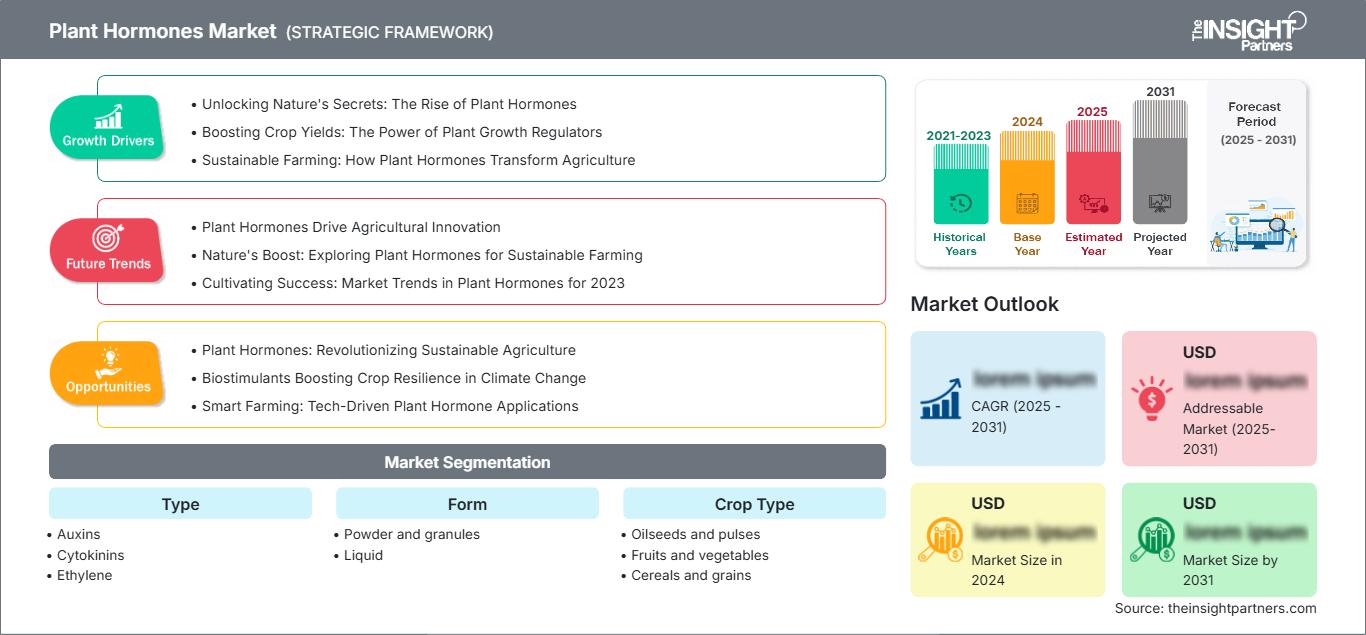
Plant Hormones Market: Strategic Insights
Regional Insights
North America Plant Hormones Market
North America is expected to maintain its leadership position in the plant hormones market, expanding at an estimated CAGR of approximately 8.8% through 2034. The region benefits from advanced agricultural infrastructure, extensive mechanization, and strong adoption of precision farming practices. High-value crops including fruits, vegetables, and specialty horticultural products remain important application areas.
The increasing focus on productivity optimization and resource efficiency continues to drive demand. Agricultural producers are incorporating plant hormones into integrated crop management programs to improve consistency, yield quality, and operational profitability. Continuous investment in agricultural innovation supports the region’s long-term market development.
U.S. Plant Hormones Market
The U.S. represents approximately 74%–79% of the North American market and is projected to register a CAGR of around 8.9% during the forecast period. Demand is driven by large-scale agricultural operations, sophisticated crop management systems, and growing emphasis on maximizing crop performance. Applications span fruits, vegetables, cereals, grains, and ornamental crop production.
Major companies including Bayer CropScience AG, FMC Corporation, Valent BioSciences Corporation, and BASF SE maintain significant operations within the country. Growers increasingly use plant hormones to improve fruit quality, regulate growth cycles, enhance flowering, and optimize harvest timing. Expanding adoption of precision application technologies further strengthens market prospects.
Europe Plant Hormones Market
Europe accounts for approximately 27%–31% of global market demand and is anticipated to grow at a CAGR of around 8.7% through 2034. Agricultural sustainability initiatives, increasing focus on crop productivity, and advanced farming techniques support regional market expansion. The adoption of plant hormones is particularly notable in horticulture, vineyards, and high-value crop production systems.
Germany remains the leading country within Europe due to its strong agricultural research ecosystem, advanced crop science capabilities, and extensive use of modern farming technologies. Farmers increasingly utilize hormone-based products to improve productivity and crop quality while meeting sustainability objectives.
The UK, France, Italy, and Spain continue expanding adoption across cereals, vegetables, fruits, and specialty crops. Demand is supported by increasing pressure to improve agricultural efficiency while maintaining environmental compliance. Investments in precision farming and crop optimization technologies further reinforce regional growth opportunities.
APAC Plant Hormones Market
Asia Pacific is expected to emerge as the fastest-growing regional market, advancing at a CAGR exceeding 10.0% while accounting for approximately 30%–35% of global demand. Rapid agricultural modernization, population growth, and increasing food security concerns are creating strong demand for productivity-enhancing agricultural inputs.
China leads the regional market due to its extensive agricultural sector, large-scale crop production, and government initiatives supporting modern farming practices. Investments in agricultural technology and improved crop management systems continue to encourage adoption of plant hormone products across diverse crop categories.
Japan, South Korea, India, and Australia are also witnessing increasing utilization of plant hormones. Growing awareness among farmers regarding crop quality enhancement, stress management, and yield optimization is supporting market expansion. Government-backed modernization programs and agricultural extension services are expected to accelerate adoption throughout the forecast period.
Middle East & Africa Plant Hormones Market
The Middle East & Africa market is forecast to register a CAGR of approximately 9.1% through 2034. Agricultural productivity challenges related to climate variability, water scarcity, and soil limitations are encouraging growers to adopt advanced crop management solutions. Plant hormones are increasingly utilized to improve crop performance under challenging environmental conditions.
Saudi Arabia represents the leading market within the region due to substantial investments in agricultural modernization, greenhouse farming, and food security initiatives. Hormone-based crop management products are being used to improve yields and optimize controlled-environment agriculture operations.
The UAE, South Africa, and other regional economies are also increasing adoption across horticulture and specialty crop production. Investments in irrigation infrastructure, protected cultivation, and precision agriculture technologies are creating favorable conditions for market growth. Continued efforts to strengthen agricultural productivity are expected to support long-term demand.
Segmentation Analysis
Type
- Auxins: Widely used to stimulate root development, improve fruit setting, support tissue differentiation, and enhance overall plant growth performance across diverse agricultural applications.
- Cytokinins: Important for promoting cell division, delaying leaf aging, improving nutrient mobilization, and supporting crop vigor in horticultural and commercial farming systems.
- Ethylene: Utilized extensively for regulating fruit ripening, flowering, senescence management, and harvest synchronization to improve crop quality and market readiness.
- Gibberellins: Applied to stimulate stem elongation, seed germination, fruit enlargement, and flowering processes, particularly in high-value crop cultivation.
Form
- Powder and granules: Preferred for extended storage stability, ease of transportation, and suitability for large-scale agricultural distribution and field application programs.
- Liquid: Maintains strong market demand due to rapid absorption, convenient application, compatibility with spraying systems, and integration with precision farming practices.
Crop Type
- Oilseeds and pulses: Adoption is increasing as growers seek improved flowering, pod development, stress tolerance, and yield optimization across diverse growing conditions.
- Fruits and vegetables: Represents the leading segment owing to intensive crop management requirements, quality enhancement goals, and premium market expectations.
- Cereals and grains: Utilized to support growth regulation, improve crop uniformity, enhance productivity, and strengthen resilience against environmental stress factors.
Opportunity Snapshot
| Crop Type | Revenue Contribution | Trend Tag | Adoption Stage |
| Oilseeds and pulses | Medium | Pod Formation | Scaling |
| Fruits and vegetables | High | Quality Yield | Mature |
| Cereals and grains | High | Yield Efficiency | Mature |
Plant Hormones Market Growth Drivers and Impact Analysis
Increasing Demand for Yield Optimization and Crop Quality Enhancement
Agricultural producers face ongoing pressure to increase crop output while maintaining quality standards required by processors, retailers, and export markets. Plant hormones provide growers with valuable tools to regulate physiological processes that directly influence crop productivity and quality. Through controlled management of flowering, fruit setting, maturation, and growth patterns, these products help maximize agricultural returns.
The growing importance of high-value crops such as fruits and vegetables further strengthens demand. Producers seek technologies capable of delivering consistent quality, improved appearance, and enhanced shelf life. Plant hormones support these objectives by influencing developmental processes that determine marketability and harvest performance.
The market impact is significant across both developed and emerging agricultural economies. As food demand rises and land availability remains constrained, technologies that improve biological efficiency are becoming increasingly important. Plant hormones are therefore positioned as strategic tools within modern crop production systems.
Expansion of Precision Agriculture and Controlled Crop Management
Precision agriculture technologies are reshaping crop management practices worldwide. Growers increasingly rely on data-driven approaches to optimize agricultural inputs and improve resource efficiency. Plant hormones are particularly well-suited to precision farming because their effectiveness often depends on application timing, dosage accuracy, and crop-specific management strategies.
Advanced technologies, such as remote sensing, predictive analytics, and variable rate applicators, ensure optimal function of hormones. These help make interventions precise to improve crop yield of crops and reduce the wastage of inputs. Better monitoring facilities also facilitate better assessment of plant reaction.
Incorporation of plant hormones in precision farming techniques is offering new avenues for the expansion of markets. With the growing availability of digital agriculture technology, increased adoption is anticipated.
Growing Focus on Climate Resilience in Agriculture
Climate variability continues to present significant challenges for agricultural productivity. Drought conditions, temperature fluctuations, irregular rainfall patterns, and environmental stress factors can negatively affect crop development and yields. Plant hormones help crops adapt to these challenges by influencing physiological responses associated with stress tolerance and recovery.
Farmers increasingly seek solutions that increase resilience without making significant infrastructure investments. Hormonal regulation technology can be considered a useful solutions that help to deal with the impact of environmental uncertainties on crop performance. Its potential to increase resilience and productivity leads to increased popularity on the market.
Climate change resilience strategies have a wide effect on many crops and geographical areas. Increased focus on adaptation will promote the adoption of hormone-based crop management solutions, which is expected to strengthen further.
Plant Hormones Market Future Trends
Development of Bio-Based Hormonal Formulations
The market is witnessing increasing interest in bio-based hormone formulations derived from natural sources and biological processes. Agricultural producers are seeking products that align with sustainability objectives while maintaining effectiveness. Manufacturers are responding through investments in biological research and environmentally compatible product development.
Future research and development efforts will be geared toward making innovations in formulation stability and effectiveness. Bio-solutions might get more popular as legislation changes and sustainability requirements intensify. Organizations that can manage to balance effectiveness and sustainability will probably dominate the market during the next decade.
Integration of Hormone Management with Digital Agronomy Platforms
Digital agriculture platforms are becoming more sophisticated, enabling real-time monitoring of crop growth and environmental conditions. Plant hormone applications are increasingly being integrated into these systems to improve timing, dosage decisions, and performance evaluation.
AI, predictive analysis, and sensing techniques will aid in developing an advanced hormone administration strategy. In the future, agricultural practices might involve automatic advice, based on crop development phases and unique characteristics of the particular field. This innovation will help enhance the efficacy of products and encourage market adoption.
Plant Hormones Market Opportunities
Rising Adoption Across High-Value Horticultural Crops
The growth of commercial horticulture offers many opportunities for manufacturers of plant hormones. High-value plants need to be managed properly regarding their flower, fruit formation, and ripening processes. Plant hormones allow growers to accomplish all these objectives while improving economic returns.
Investment opportunities are particularly strong in regions expanding fruit and vegetable production for domestic consumption and export markets. Companies that develop crop-specific solutions supported by strong agronomic guidance may achieve significant competitive advantages. Continued growth in premium produce demand is expected to reinforce this opportunity over the long term.
Expansion into Emerging Agricultural Markets
The emerging agricultural economies in Asia, Africa, and Latin America present significant potential for growth in sales by plant hormone suppliers. Food demand, modernization drives, and the understanding of modern crop management practices create favorable market conditions.
The suppliers can improve their market presence through regional product development, farmer education programs, and well-timed distribution alliances. It will be essential to adapt to the crop conditions of the region. With agriculture becoming an important issue for many developing countries, the plant hormones are going to become increasingly important in crop management.
Recent Developments
- January, 2025: MustGrow Biologics Corp. acquired key plant-growth and biostimulant technology assets to strengthen its biological agriculture platform. The acquisition expands the company’s capabilities in crop enhancement technologies that influence plant growth and development pathways associated with hormone-regulated processes.
- June, 2025: Syngenta AG announced expanded investments in biological and crop enhancement technologies, including innovation initiatives designed to support sustainable crop productivity and advanced plant development management solutions.
- September, 2025: Valent BioSciences launched Promalin® PRO, an advanced plant growth regulator formulation designed to improve fruit shape, size uniformity, and overall crop quality in apples and other specialty crops. The product builds on the company's plant hormone portfolio and supports growers seeking higher-value yields and improved marketability.
Frequently Asked Questions

- Comprehensive Market Sizing and Forecast Analysis
- Detailed Segmentation Analysis
- In-Depth Market Dynamics Assessment
- Regional and Country-Level Insights
- Competitive Landscape and Company Benchmarking
- Strategic Business Intelligence
Recent Reports
Testimonials

The Insight Partners' SCADA System Market report is comprehensive, with valuable insights on current trends and future forecasts. The team was highly professional, responsive, and supportive throughout. We are very satisfied and highly recommend their services.
RAN KEDEM Partner, Reali Technologies LTDs
I requested a report on a very specific software market and the team produced the report in a few days. The information was very relevant and well presented. I then requested some changes and additions to the report. The team was again very responsive and I got the final report in less than a week.
JEAN-HERVE JENN Chairman, Future Analytica
We worked with The Insight Partners for an important market study and forecast. They gave us clear insights into opportunities and risks, which helped shape our plans. Their research was easy to use and based on solid data. It helped us make smart, confident decisions. We highly recommend them.
PIYUSH NAGPAL Sr. Vice President, High Beam Global
The Insight Partners delivered insightful, well-structured market research with strong domain expertise. Their team was professional and responsive throughout. The user-friendly website made accessing industry reports seamless. We highly recommend them for reliable, high-quality research services
YUKIHIKO ADACHI CEO, Deep Blue, LLC.
This is the first time I have purchased a market report from The Insight Partners.While I was unsure at first, I visited their web site and felt more comfortable to take the risk and purchase a market report.I am completely satisfied with the quality of the report and customer service. I had several questions and comments with the initial report, but after a couple of dialogs over email with their analyst I believe I have a report that I can use as input to our strategic planning process.Thank you so much for taking the extra time and making this a positive experience.I will definitely recommend your service to others and you will be my first call when we need further market data.
JOHN SUZUKI President and Chief Executive Officer, Board Director, BK Technologies
I wish to appreciate your support and the professionalism you displayed in the course of attending to my request for information regarding to infectious disease IVD market in Nigeria. I appreciate your patience, your guidance, and the fact that you were willing to offer a discount, which eventually made it possible for us to close a deal. I look forward to engaging The Insight Partners in the future, all thanks to the impression you have created in me as a result of this first encounter.
DR CHIJIOKE ONYIA MANAGING DIRECTOR, PineCrest Healthcare Ltd.Reason to Buy
- Informed Decision-Making
- Understanding Market Dynamics
- Competitive Analysis
- Identifying Emerging Markets
- Customer Insights
- Market Forecasts
- Risk Mitigation
- Boosting Operational Efficiency
- Strategic Planning
- Investment Justification
- Tracking Industry Innovations
- Aligning with Regulatory Trends





 Get Free Sample for