
Polyphenylsulfone Market Growth, Size & Forecast by 2034
Coverage: By Type (Granules, Powder); Application (Electronics and Electrical, Vehicle Construction, Food Industry, Medical Industry, Others), and Geography (North America, Europe, Asia Pacific, and South and Central America)
- Status : Data Released
- Report Code : TIPRE00016186
- Category : Chemicals and Materials
- No. of Pages : 150
- Available Report Formats :


- Last update date : July 03, 2026


2025 Market Size
US$ 455.36 Mn
Base year value
2034 Forecast
US$ 925.8 Mn
Projected by 2034
CAGR 2026-2034
8.20 %
Growth rate
Addressable Market
US$ 6,204.22 Mn
(2026-2034)
Polyphenylsulfone market was valued at US$ 455.36 million in 2025 and is projected to reach US$ 925.8 million by 2034, registering a CAGR of 8.20% during 2026–2034. The market is supported by rising demand for high-performance thermoplastics capable of withstanding extreme temperatures, repeated sterilization, and aggressive chemical environments. Increasing adoption across medical devices, electronics, food processing, and automotive applications continues to strengthen the global polyphenylsulfone market size while encouraging manufacturers to expand production capabilities and develop specialized material grades.
North America remains one of the most mature regional markets for polyphenylsulfone owing to its well-established medical device manufacturing base, advanced aerospace and electronics industries, and stringent material performance requirements. The regional market is expected to expand at an estimated CAGR of 7.4%–7.9% during 2026–2034, supported by sustained investments in healthcare infrastructure, increasing demand for reusable sterilizable medical components, and the replacement of conventional engineering plastics with high-performance polymers across industrial applications.
Polyphenylsulfone Market Assessment and Insights
- North America: North America remains the leading regional market, supported by advanced healthcare manufacturing, aerospace production, and strong demand for high-performance engineering plastics. Continuous material innovation and established supply chains sustain demand. Share in 2025: 34–38%; CAGR (2026–2034): 7.4–7.9%.
- U.S.: The U.S. dominates regional consumption through its medical technology, electronics, and industrial manufacturing sectors, supported by ongoing investments in advanced polymer processing. Share of North America in 2025: 78–82%; CAGR (2026–2034): 7.5–8.0%.
- Europe: Europe maintains a significant position, driven by Germany, the UK, France, and Italy, where automotive engineering, healthcare manufacturing, and industrial automation encourage adoption of premium engineering thermoplastics. Share in 2025: 25–29%; CAGR (2026–2034): 7.6–8.1%.
- Asia Pacific: Asia Pacific is projected to record the fastest regional expansion owing to rapid industrialization, electronics manufacturing, healthcare investments, and automotive production in China, Japan, South Korea, and India. Share in 2025: 28–32%; CAGR (2026–2034): 9.2–9.7%.
- Largest Segment: Medical remains the largest end-use industry due to stringent sterilization requirements, excellent biocompatibility, and long service life of polyphenylsulfone components. Market share in 2025: 33–37%; CAGR (2026–2034): 8.1–8.6%.
- High Growth Segment: Electronics and Electrical is expected to witness the fastest expansion as manufacturers increasingly require flame-resistant, dimensionally stable, and heat-resistant engineering plastics. Market share in 2025: 24–28%; CAGR (2026–2034): 8.8–9.4%.
- Key companies analyzed in detail: BASF SE, Ensinger GmbH, NYTEF Plastics Ltd., Polymer Dynamix, Mitsubishi Chemical Advanced Materials AG, RTP Company, SABIC, Syensqo SA, Sumitomo Chemical Co., Ltd., Westlake Plastics Company.
Source: The Insight Partners' analysis based on proprietary research, government publications, company annual reports, investor presentations, industry databases, and expert interviews.
The evolution of the polyphenylsulfone market has been driven by ongoing developments in terms of polymer technology, compounding technology, and processing technology that have improved the thermal stability, impact resistance, and hydrolysis properties of the material. Increasing need for durable and light engineering materials has led to increased adoption of polyphenylsulfones in lieu of traditional metals and other inferior grade plastics in applications such as health care, electronics, and transportation segments.
As the future looks ahead, development of the health care industry in developing countries, semiconductor fabrication investment activities, and electric vehicle production activities are set to drive growth in this market. Focus of regulators on durable products and devices, reusable medical devices, and superior materials that can work under harsh environments would continue to stimulate innovation in the market. Capacity additions, partnerships, and local manufacturing facilities are expected to make the supply chain more resilient, thereby driving polyphenylsulfone market growth, polyphenylsulfone market trends, polyphenylsulfone market analysis, polyphenylsulfone market share, and global polyphenylsulfone market scope.
Polyphenylsulfone Market Report Scope
| Report Attribute | Details |
|---|---|
| Market size in 2025 | US$ 455.36 Million |
| Market Size by 2034 | US$ 925.8 Million |
| Global CAGR (2026 - 2034) | 8.20% |
| Historical Data | 2021-2024 |
| Forecast period | 2026-2034 |
Polyphenylsulfone Market Analysis
Demand for polyphenylsulfone is driven by manufacturers' growing preference for engineering thermoplastics with excellent heat and hydrolytic resistance and high mechanical strength. This plastic material is widely used in reusable medical devices, food-contact equipment, automotive parts, and electrical systems where exposure to high temperatures and multiple sterilizations is required. Regulations on patient safety, food safety, and electrical insulation are driving the shift from traditional plastics to superior products. Therefore, the polyphenylsulfone market value will continue to benefit from the long life cycles of its products and their wider applications in high-value industrial uses.
The market value chain includes monomer suppliers, polymer producers, compounding companies, part makers, OEMs, and distributors in the regulated industry. A reliable source of high-purity raw materials and injection molding technology will remain crucial for producing quality PPSU parts. Raw material cost fluctuations and energy prices will affect manufacturing costs, but improvements in manufacturing processes and production efficiency will help strengthen the supply chain and facilitate the commercialization of this product.
Competition within the market is characterized by innovation, customized material development, and strategic collaboration with downstream manufacturers. Companies such as BASF SE, SABIC, Syensqo SA, Ensinger GmbH, RTP Company, and Sumitomo Chemical Co., Ltd. continue expanding high-performance polymer portfolios to address evolving requirements in medical, electrical, and transportation applications. Meanwhile, Westlake Plastics Company, Mitsubishi Chemical Advanced Materials AG, NYTEF Plastics Ltd., and Polymer Dynamix focus on application-specific grades, machining capabilities, and customer support to strengthen their competitive positioning.
Investment in the industry is increasingly focused on expanding production capabilities, sustainable manufacturing, and advanced materials development, driven by rising global demand. Manufacturers are focusing on low-emission manufacturing, using recyclable materials in their products whenever possible, and adopting digital systems for quality control. Collaboration among resin producers, medical device manufacturers, and electronics Original Equipment Manufacturers (OEMs) is leading to innovative products and reducing time-to-market for specialized applications. These developments continue to reinforce the polyphenylsulfone market analysis, broaden the polyphenylsulfone market scope, and strengthen long-term competitiveness across regional and international markets.
● REPORT CUSTOMIZATION
Tailor This Report To Align With Your Specific Business Requirements
This report can be customized to align precisely with your business objectives, scope, and target markets. Customization options include tailored segmentation, geography, competitive analysis, and strategic insights to support informed decision-making.
Customize This Report →WHAT YOU CAN ADJUST
- ● Segmentations
- ● Geography
- ● Competitive Analysis
- ● Language Preferences
Polyphenylsulfone Market: Strategic Insights
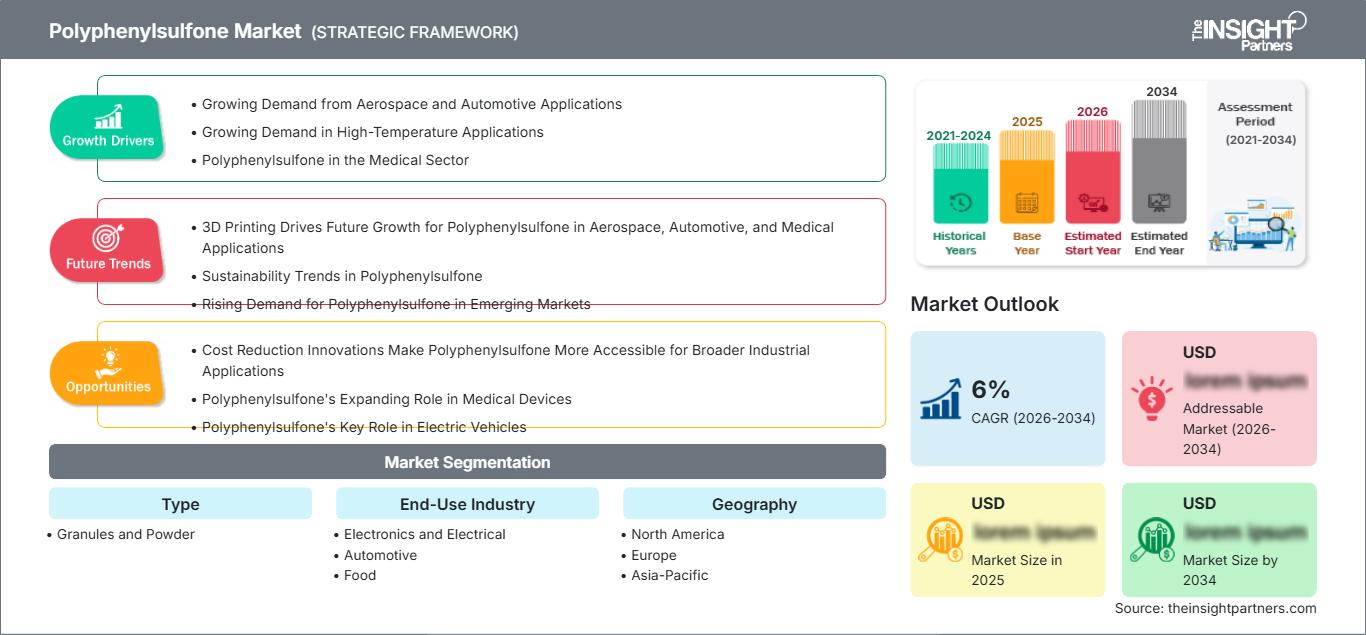
Regional Insights
North America Polyphenylsulfone Market
North America holds around 34–38% share of the global market in 2025 and is anticipated to grow with a CAGR of 7.4–7.9% between 2026 and 2034. This region has a well-established healthcare industry, a developed aerospace industry, and an increasing demand for engineering thermoplastics that can retain their mechanical properties despite repeated sterilization and high-temperature operation. Regulatory standards for medical devices and food-contact equipment further favor the use of polyphenylsulfones in premium-value applications.
The availability of top-notch polymer manufacturing companies, efficient processing units, and R&D centers supports the innovation of new products in this region. Increasing expenditure on the healthcare sector, electric vehicles, and premium-quality electrical parts helps sustain demand, along with an increased focus on durable, recyclable products to support future market growth in North America.
U.S. Polyphenylsulfone Market
The U.S. accounted for 78%–82% of the share in North America in 2025 and is projected to record a CAGR of 7.5%–8.0% over 2034. Growth in demand would be fueled by the developed medical devices and electronics manufacturing industries, and ongoing investments in the aerospace and defense industries. Polyphenylsulfone is used in the production of sterilizable surgical instruments, fluid-handling equipment, electrical connectors, and transportation parts that require excellent dimensional stability.
The presence of companies, compounders, and research institutes helps accelerate the development and commercialization of engineering plastics. The growing use of reusable health care products, along with increasing investments in manufacturing and automation, is likely to consolidate the country's leading market position in North America.
Europe Polyphenylsulfone Market
Europe has secured 25–29% of the global market share in 2025 and is expected to record a CAGR of 7.6–8.1% during the forecast period. Germany holds a prominent position due to its robust automotive, industrial machinery, and advanced manufacturing sectors, which require lightweight, heat-resistant engineered materials.
The UK demonstrates consistent demand driven by its medical technology, pharmaceuticals, and research-oriented industries. With rising investments in healthcare infrastructures and precision engineering, there will be continued growth in the application of high-performance polymers in reusable medical devices and industrial processes.
The collective share of France, Italy, and Spain comes from increased production in the healthcare equipment, transportation, and food processing industries. As regulations become increasingly stringent regarding product safety, longevity, and sustainable manufacturing, polyphenylsulfone is seeing increased use, with Germany still holding the highest national market share in Europe.
APAC Polyphenylsulfone Market
Asia Pacific accounted for 28–32% of the global market in 2025 and is expected to register the fastest regional expansion at a CAGR of 9.2–9.7% through 2034. China leads regional demand due to its extensive electronics, medical device, and automotive manufacturing industries.
Japan and South Korea continue investing in advanced engineering materials for electronics and healthcare applications. India benefits from expanding industrial manufacturing and medical infrastructure, while Australia supports demand through specialized healthcare and industrial sectors. Government-led manufacturing initiatives and industrial modernization continue strengthening regional growth.
Middle East & Africa Polyphenylsulfone Market
The Middle East & Africa market is projected to grow at a CAGR of 7.1–7.6% during 2026–2034, supported by increasing industrial diversification and expanding healthcare infrastructure. Saudi Arabia remains the leading regional market due to investments in advanced manufacturing and petrochemical value chains.
The UAE continues strengthening demand through healthcare expansion and industrial modernization initiatives. South Africa supports consumption across healthcare and industrial processing, while the Rest of the Middle East & Africa gradually adopts high-performance engineering polymers for infrastructure, energy, and specialized manufacturing applications, contributing to steady long-term market development.
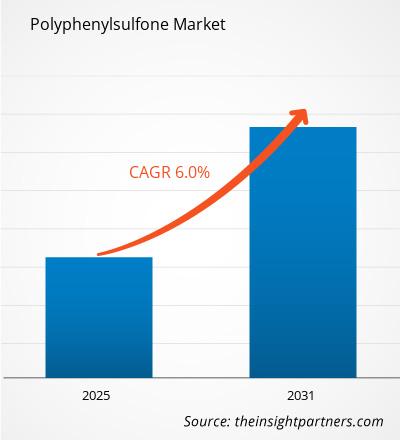
Segmentation Analysis
Type
The type segment is projected to expand at a CAGR of 8.0–8.5% during 2026–2034, supported by increasing demand for processing flexibility across injection molding, extrusion, machining, and additive manufacturing applications. Material selection depends on component complexity, production volume, dimensional tolerance, and end-use performance requirements. Continuous product innovation and customized formulations are enabling manufacturers to address the stringent quality standards of the healthcare, electronics, automotive, and food industries.
- Granules: Granules account for the majority of commercial demand because they are widely used in injection molding and extrusion processes for manufacturing medical devices, electrical connectors, automotive components, and food-contact equipment with excellent dimensional stability and mechanical strength.
- Powder: Powder grades are primarily utilized in specialized processing techniques, compounding operations, coatings, and research applications. Their versatility supports customized material development and enables manufacturers to produce application-specific formulations for demanding industrial environments.
End-Use Industry
The end-use industry segment is anticipated to register a CAGR of 8.2–8.7% between 2026 and 2034 as demand increases for durable, chemically resistant, and high-temperature engineering plastics. Polyphenylsulfone continues to replace conventional materials in critical applications where long service life, repeated sterilization capability, and superior mechanical performance are essential. Expanding healthcare investments and industrial automation are expected to sustain growth across all major end-use industries.
- Electronics and Electrical: The segment benefits from rising demand for flame-resistant insulating materials used in connectors, switches, circuit protection devices, and electrical housings requiring long-term thermal stability and dimensional precision under demanding operating conditions.
- Automotive: Automotive manufacturers increasingly adopt polyphenylsulfone for lightweight under-the-hood components, fluid handling systems, and electrical assemblies to improve durability, heat resistance, and overall vehicle efficiency while supporting electrification initiatives.
- Food: The food industry utilizes polyphenylsulfone in reusable food-processing equipment, beverage dispensing systems, and commercial kitchen components because of its hydrolytic stability, chemical resistance, and ability to withstand repeated cleaning and sterilization procedures.
- Medical: Medical remains the leading end-use industry, driven by extensive use in reusable surgical instruments, sterilization trays, dental equipment, diagnostic devices, and fluid management systems where exceptional biocompatibility, transparency, and repeated steam sterilization resistance are critical performance requirements.
Opportunity Snapshot
| Segment Name | Revenue Contribution | Trend Tag | Adoption Stage |
| Electronics and Electrical | Medium | Miniaturization | Scaling |
| Automotive | Medium | Vehicle Electrification | Scaling |
| Food | Low | Reusable Equipment | Mature |
| Medical | High | Steam Sterilization | Mature |
Polyphenylsulfone Market Growth Drivers and Impact Analysis
Rising demand for reusable sterilizable medical devices
Healthcare providers are increasingly adopting reusable medical instruments and equipment to improve cost efficiency while reducing clinical waste. Polyphenylsulfone offers outstanding resistance to repeated steam sterilization, hydrolysis, and aggressive disinfectants, making it well suited for surgical instrument handles, sterilization trays, dialysis components, dental equipment, and fluid management systems. Regulatory requirements emphasizing patient safety and product durability continue to encourage manufacturers to replace conventional engineering plastics with higher-performance alternatives. Expanding healthcare infrastructure, increasing surgical procedures, and greater investment in advanced medical technologies across developed and emerging economies are expected to sustain demand. This driver continues to reinforce long-term market expansion while encouraging material innovation and application development throughout the healthcare value chain.
Growing adoption of high-performance polymers in electronics and electrical applications
The fast pace of technological evolution in the field of electronics production is resulting in an increasing need for engineering materials that ensure thermal stability, flame retardance, and electrical insulation at high temperatures. Polyphenylsulfone is increasingly used in production of connectors, switches, housings for sensors, circuit breakers, and industrial electrical equipment due to the high-level performance provided by this material. Data center growth, automation, renewable energy infrastructure development, and electronics production is creating ongoing needs for the use of high-quality thermoplastics. As electronics grow smaller and their requirements grow more rigorous, manufacturers are working on special polymer grades.
Expansion of lightweight engineering materials in transportation industries
Automotive manufacturers are accelerating the use of lightweight, durable engineering plastics to improve fuel efficiency, extend electric vehicle range, and reduce overall vehicle weight without compromising safety or performance. Polyphenylsulfone meets demanding requirements for thermal resistance, chemical stability, and mechanical strength in fluid handling systems, electrical assemblies, pump components, and under-the-hood applications. Increasing production of electric vehicles, stricter emission regulations, and greater investment in advanced mobility technologies are encouraging broader adoption of high-performance polymers. Continuous research into innovative processing technologies and customized material formulations further strengthens the material's competitiveness, enabling manufacturers to develop components that meet evolving performance, sustainability, and regulatory expectations across global transportation markets.
Polyphenylsulfone Market Future Trends
Expansion of bio-based and sustainable high-performance polymer development
Sustainability objectives are increasingly influencing research and development strategies across the engineering plastics industry. Manufacturers are investing in cleaner production technologies, energy-efficient polymerization processes, and circular economy initiatives to reduce environmental impact while maintaining the exceptional performance characteristics of polyphenylsulfone. Future product development is expected to emphasize lower-carbon manufacturing, responsible sourcing of raw materials, and improved production efficiency without compromising thermal stability or chemical resistance. Growing customer preference for environmentally responsible materials, combined with stricter environmental regulations and corporate sustainability commitments, will encourage broader adoption of sustainable manufacturing practices. Companies that successfully integrate environmental performance with high-value material innovation are expected to strengthen their competitive position over the coming decade.
Increasing customization for advanced industrial and healthcare applications
The market is expected to witness growing demand for application-specific polyphenylsulfone grades designed to satisfy increasingly specialized performance requirements. Manufacturers are developing customized formulations with enhanced transparency, impact resistance, dimensional stability, and chemical compatibility for use in next-generation medical devices, electronics, industrial equipment, and transportation systems. Advances in precision compounding, digital manufacturing technologies, and simulation-based product design are accelerating the commercialization of tailored polymer solutions. Close collaboration between material suppliers, component manufacturers, and original equipment manufacturers is also shortening development cycles and improving product performance. This trend is expected to expand high-value applications while creating new opportunities in emerging industries requiring durable, lightweight, and highly reliable engineering materials.
Polyphenylsulfone Market Opportunities
Capacity expansion in emerging manufacturing hubs
Rapid industrialization across Asia Pacific, the Middle East, and selected Latin American economies presents significant investment opportunities for polyphenylsulfone manufacturers seeking to diversify production and strengthen regional supply chains. Establishing localized compounding and processing facilities can reduce transportation costs, improve delivery timelines, and enhance responsiveness to customer requirements in healthcare, electronics, and automotive industries. Government incentives supporting advanced manufacturing, coupled with rising foreign direct investment in high-value industrial sectors, are creating favorable conditions for capacity expansion. Companies that develop strategic partnerships with regional distributors, component manufacturers, and original equipment manufacturers can strengthen market access while mitigating supply chain risks. These investments are expected to improve production resilience and support sustained long-term demand across fast-growing industrial economies.
Innovation in next-generation medical and electrical components
The increasing complexity of medical technologies and electrical systems creates substantial opportunities for manufacturers to develop specialized polyphenylsulfone solutions with enhanced functional performance. Demand is expected to rise for materials offering greater transparency, superior chemical resistance, improved dimensional stability, and compatibility with advanced sterilization techniques. Continuous innovation in minimally invasive surgical devices, diagnostic equipment, wearable healthcare technologies, electric vehicles, and smart industrial electronics will expand the range of high-value applications. Collaborative research between polymer producers, healthcare companies, and electronics manufacturers can accelerate commercialization of customized material grades while addressing evolving regulatory and performance requirements. Organizations that prioritize application-driven innovation and long-term product development are likely to secure stronger competitive positions in premium engineering plastics markets.
Recent Developments
- In March 2026: BASF SE expanded its Ultrason® P portfolio by introducing six new polyphenylsulfone (PPSU) grades compliant with the European Union's Regulation 2024/3190 on bisphenols in food-contact materials. The new portfolio supports manufacturers transitioning from affected materials while maintaining high thermal performance, chemical resistance, and regulatory compliance for reusable food-contact applications.
- In October 2025: Syensqo SA announced a proprietary chemical recycling technology for sulfone polymers, enabling the recovery of purified monomers from post-industrial and post-consumer PSU, PPSU, and PESU materials. The innovation supports infinite circularity of high-performance sulfone polymers and reinforces sustainability initiatives across medical, industrial, and electronics applications.
- In May 2025: Syensqo SA announced that Pigeon Corporation selected its Duradex™ PPSU ECHO material for premium SofTouch™ baby bottles. Produced using 38% certified circular feedstock under the ISCC PLUS mass-balance framework, the material enables reduced reliance on fossil resources while maintaining the durability, transparency, and food-contact performance required for reusable infant feeding products.
Frequently Asked Questions

- Comprehensive Market Sizing and Forecast Analysis
- Detailed Segmentation Analysis
- In-Depth Market Dynamics Assessment
- Regional and Country-Level Insights
- Competitive Landscape and Company Benchmarking
- Strategic Business Intelligence
Recent Reports
Testimonials

The Insight Partners provided valuable market intelligence that supported our global go-to-market strategy. Their team was professional, responsive, and attentive to our feedback, providing thoughtful analysis and helpful methodological clarifications throughout the project.
Junmo Kim Chief Financial Officer (CFO), Enertech Co., Ltd.
The Insight Partners' SCADA System Market report is comprehensive, with valuable insights on current trends and future forecasts. The team was highly professional, responsive, and supportive throughout. We are very satisfied and highly recommend their services.
RAN KEDEM Partner, Reali Technologies LTDs
I requested a report on a very specific software market and the team produced the report in a few days. The information was very relevant and well presented. I then requested some changes and additions to the report. The team was again very responsive and I got the final report in less than a week.
JEAN-HERVE JENN Chairman, Future Analytica
We worked with The Insight Partners for an important market study and forecast. They gave us clear insights into opportunities and risks, which helped shape our plans. Their research was easy to use and based on solid data. It helped us make smart, confident decisions. We highly recommend them.
PIYUSH NAGPAL Sr. Vice President, High Beam Global
The Insight Partners delivered insightful, well-structured market research with strong domain expertise. Their team was professional and responsive throughout. The user-friendly website made accessing industry reports seamless. We highly recommend them for reliable, high-quality research services
YUKIHIKO ADACHI CEO, Deep Blue, LLC.
This is the first time I have purchased a market report from The Insight Partners.While I was unsure at first, I visited their web site and felt more comfortable to take the risk and purchase a market report.I am completely satisfied with the quality of the report and customer service. I had several questions and comments with the initial report, but after a couple of dialogs over email with their analyst I believe I have a report that I can use as input to our strategic planning process.Thank you so much for taking the extra time and making this a positive experience.I will definitely recommend your service to others and you will be my first call when we need further market data.
JOHN SUZUKI President and Chief Executive Officer, Board Director, BK Technologies
I wish to appreciate your support and the professionalism you displayed in the course of attending to my request for information regarding to infectious disease IVD market in Nigeria. I appreciate your patience, your guidance, and the fact that you were willing to offer a discount, which eventually made it possible for us to close a deal. I look forward to engaging The Insight Partners in the future, all thanks to the impression you have created in me as a result of this first encounter.
DR CHIJIOKE ONYIA MANAGING DIRECTOR, PineCrest Healthcare Ltd.Reason to Buy
- Informed Decision-Making
- Understanding Market Dynamics
- Competitive Analysis
- Identifying Emerging Markets
- Customer Insights
- Market Forecasts
- Risk Mitigation
- Boosting Operational Efficiency
- Strategic Planning
- Investment Justification
- Tracking Industry Innovations
- Aligning with Regulatory Trends





 Get Free Sample for