
Sludge Dewatering Equipment Market Size, Growth & Trends by 2034
Coverage: By Type (Screw Presses, Decanter Centrifuges, Belt Filter Presses, Vaccum Filters, Others); Application (Industrial Waste, Municipal Waste); End User (Food and Beverages, Pharma Sector, Engineering, Mining) , and Geography (North America, Europe, Asia Pacific, and South and Central America)
- Status : Data Released
- Report Code : TIPRE00027568
- Category : Manufacturing and Construction
- No. of Pages : 150
- Available Report Formats :


- Last update date : July 28, 2026


2025 Market Size
US$ 5.29 Bn
Base year value
2034 Forecast
US$ 8.13 Bn
Projected by 2034
CAGR 2026-2034
4.89 %
Growth rate
Addressable Market
US$ 60.91 Bn
(2026-2034)
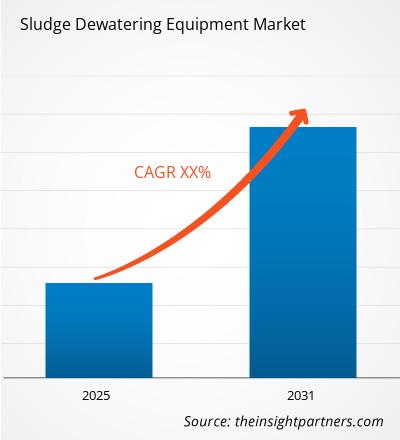
The Sludge Dewatering Equipment Market was worth US$ 5.29 Billion in 2025 and is anticipated to grow to US$ 8.13 Billion by 2034. The market is anticipated to have a CAGR of 4.89% between 2026 and 2034. The growth is propelled by municipal modernization of wastewater, industrial water regulations, and a desire to minimize difficulties in handling, transporting, and disposing of sludge.
In North America, the Sludge Dewatering Equipment Market size depends on aging wastewater infrastructure, biosolids regulations, and industrial discharge regulations. The market in North America is anticipated to grow at a CAGR of 4.4-4.8% between 2026 and 2034. In the United States, treatment plants have been focusing on centrifuges and screw presses for minimizing the volume of hauled sludge, while food & beverage, pharmaceuticals, and mining companies need reliable separation results.
Sludge Dewatering Equipment Market Assessment and Insights
- North America accounted for 29–31% share in 2025 and is growing at a CAGR of 4.4–4.8% during 2026–2034, supported by utility upgrades, landfill diversion goals, and industrial compliance spending.
- US represented 74–78% of North America in 2025 and is growing at a CAGR of 4.5–4.9% during 2026–2034, led by municipal retrofits and food processing wastewater upgrades.
- Europe held 24–26% share in 2025 and is growing at a CAGR of 4.1–4.5% during 2026–2034, with Germany, the UK, France, Italy, and Spain leading demand.
- Asia Pacific captured 32–35% share in 2025 and is growing at a CAGR of 5.3–5.8% during 2026–2034, driven by China, India, Japan, South Korea, and Australia.
- Largest Segment Decanter Centrifuges held 36–39% market share in 2025 and is growing at a CAGR of 4.6–5.0% during 2026–2034 due to high-throughput municipal use.
- High Growth Segment Screw Presses held 24–27% market share in 2025 and is growing at a CAGR of 5.4–5.9% during 2026–2034, supported by low-energy and compact installations.
- Key companies analyzed in detail: Alfa Laval AB, ANDRITZ AG, Veolia Environnement SA, HUBER SE, AMCON Inc., Kontek Process Water Management, Evoqua Water Technologies LLC, SUEZ SA, Gruppo Pieralisi, Hitachi Zosen Corporation.
Source: The Insight Partners' analysis based on proprietary research, government publications, company annual reports, investor presentations, industry databases, and expert interviews.
Technology choices have advanced from simple volume minimization through lifecycle cost efficiency, automation, and reduced polymer use. Decanter centrifuges continue to be the choice in applications with unstable sludge volumes and space constraints, while screw presses find increasing acceptance in small municipal and decentralized industrial sites. Innovations include feed zone technology, fully enclosed processing, and remote monitoring aimed at cake dryness improvement, minimizing odor exposure, and keeping operating costs stable.
Moving into the forecast period, capital spending is seen as migrating towards Asia Pacific, the Middle East, and developing industrial belts that require growing wastewater treatment installations. Landfill restrictions, nutrient recovery requirements, and efficient biosolids processing will drive purchase decisions. Hence, the Sludge Dewatering Equipment Market is expected to emerge on the back of retrofit opportunities in developed areas and the first application of mechanical dewatering in developing treatment infrastructures.
Sludge Dewatering Equipment Market Report Scope
| Report Attribute | Details |
|---|---|
| Market size in 2025 | US$ 5.29 Billion |
| Market Size by 2034 | US$ 8.13 Billion |
| Global CAGR (2026 - 2034) | 4.89% |
| Historical Data | 2021-2024 |
| Forecast period | 2026-2034 |
Sludge Dewatering Equipment Market Analysis
Market Growth for Sludge Dewatering Equipment is driven by three inter-related demand factors: compliance with discharge, growing amounts of waste water, and cost of transportation of wet sludge. Increasingly, city operators measure equipment efficiency through dry solids generation, polymer consumption, maintenance and energy requirements instead of initial cost only. In industrial environment, companies operating in food and beverages, pharmaceuticals, engineering, and mining need equipment capable of handling different levels of solids without interrupting manufacturing process.
The supply chain is composed of chemical sludge conditioners, pumps, polymer units, mechanical presses, centrifuges, control panels, conveyors and post-delivery service. Engineering-driven supply dynamics persist because equipment needs to be customized to sludge properties, flow rates, space constraints, and disposal options. Public information suggests that mechanical dewatering helps in significantly decreasing sludge amount.
The competitive positioning for the Sludge Dewatering Equipment Market study is defined by installed base, service capability, and experience with applications. Alfa Laval AB and ANDRITZ AG are strong competitors in the centrifuge and screw press segments, whereas Veolia Environnement SA, SUEZ SA, and Evoqua Water Technologies LLC offer equipment solutions together with their water technology product portfolio. HUBER SE, AMCON Inc., Kontek Process Water Management, Gruppo Pieralisi, and Hitachi Zosen Corporation meet specific municipal and industrial needs.
Investment considerations reveal that buyers value equipment which is compact and enclosed, uses less energy, and can be remotely operated and automated as part of the process in the facility. Competitive differentiation is related more to providing process assurance, pilot studies, and lifecycle services. Suppliers who can prove low energy consumption, increased cake dryness, and adaptability to all types of sludge will probably protect market share in terms of total cost ownership.
● REPORT CUSTOMIZATION
Tailor This Report To Align With Your Specific Business Requirements
This report can be customized to align precisely with your business objectives, scope, and target markets. Customization options include tailored segmentation, geography, competitive analysis, and strategic insights to support informed decision-making.
Customize This Report →WHAT YOU CAN ADJUST
- ● Segmentations
- ● Geography
- ● Competitive Analysis
- ● Language Preferences
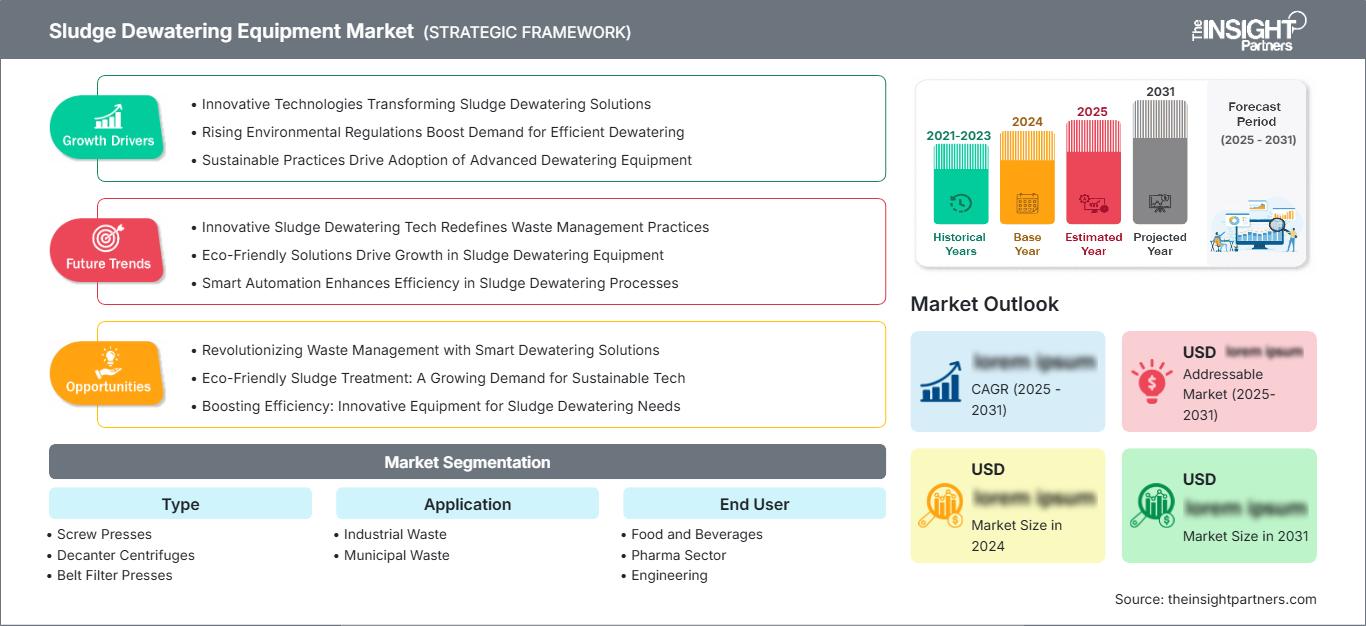
Sludge Dewatering Equipment Market: Strategic Insights
Regional Insights
North America Sludge Dewatering Equipment Market
The North American market share stood at 29%–31% in 2025 and is anticipated to grow at a CAGR of 4.4% to 4.8% through 2026 to 2034. The Sludge Dewatering Equipment Market shares in North America depend on comprehensive coverage of wastewater management, rigorous enforcement of discharge regulations, and costly sludge disposal.
Steady industrial demand is witnessed as there are strict norms regarding wastewater solids removal in food processing industry, pharmaceutical companies, engineering works, and mines. In Canada and the US, the capital expenditure plans have focused on the need for robustness of biosolids, control of odors, and hauling distances. The suppliers with services and retrofit capability will be well-placed in brownfield treatment facilities.
U.S. Sludge Dewatering Equipment Market
In 2025, the share of the United States in North America was 74-78%, with an expected CAGR of 4.5-4.9% from 2026 to 2034. The demand is seen in municipal wastewater treatment plants, food & beverage processing plants, pharmaceutical manufacturing plants, and mining wastewater treatment processes. Companies' presence is wide, with Alfa Laval AB, ANDRITZ AG, Veolia Environnement SA, Evoqua Water Technologies LLC, and SUEZ SA working on national and regional projects.
The market trend is moving towards decanter centrifuges in large capacity plants and screw presses in smaller plants to reduce the energy consumption and simplicity. Infrastructure projects, rising population, and biosolids disposal regulations are driving the upgrade cycle. Customers are also demanding automated and operator safety solutions.
Europe Sludge Dewatering Equipment Market
The Europe region accounted for 24–26% market share in 2025 and is anticipated to have a CAGR of 4.1–4.5% from 2026 to 2034. Germany leads the region because of efficient wastewater treatment standards, phosphorus recovery strategy, and demand for engineering. In the UK, the emphasis is more on asset renewal and stormwater management, whereas water utilities concentrate on minimizing sludge transport and optimizing the quality of biosolids.
The German market is backed by regulations governing sludge disposal along with drying, incineration, and dewatering systems investment in cities. In the UK, the need for closed presses and centrifuges for large utilities can be seen. In the case of France, Italy, and Spain, the regions are influenced by treatment plant renewal in the region, wastewater discharge regulations, and circular economy.
APAC Sludge Dewatering Equipment Market
APAC has held the market share of 32–35% in 2025 and is estimated to expand at a CAGR of 5.3–5.8% from 2026 to 2034. The major demand comes from China due to the high capacity of wastewater infrastructure, stringent regulations of discharge from industries, and municipal sludge management programs.
In addition, Japan and South Korea prefer automation and smaller space requirements due to the dense population in urban areas. India and Australia contribute to market growth due to urban sanitation projects, mining wastewater management, and industrial applications. Hence, the Sludge Dewatering Equipment Market in APAC comprises municipal facilities, industrial complexes, and small-scale units utilizing screw presses and centrifuges.
Middle East & Africa Sludge Dewatering Equipment Market
Middle East & Africa is expected to grow at a CAGR of 4.7–5.2% during 2026–2034. Saudi Arabia is the leading country, driven by wastewater reuse, industrial city development, and desalination-linked sludge handling needs. The UAE is adopting compact and enclosed technologies for urban utilities and commercial wastewater treatment.
South Africa shows demand from municipal rehabilitation and mining water management, while the Rest of MEA is influenced by infrastructure financing and sanitation coverage expansion. Energy-intensive sites are evaluating dewatering systems that reduce sludge transport and support integrated drying or thermal treatment.
Segmentation Analysis
Type
Type is expected to grow at a CAGR of 4.8–5.2% during 2026–2034. The Sludge Dewatering Equipment Market scope across type is defined by throughput, solids loading, maintenance capacity, and plant footprint. Decanter centrifuges dominate large municipal and industrial installations, while screw presses are increasingly selected for lower energy intensity and simpler operation.
- Screw Presses are gaining adoption in decentralized municipal plants and industrial facilities where lower operator intervention, compact design, and moderate solids loading create practical lifecycle advantages.
- Decanter Centrifuges remain strategically important for high-flow plants requiring continuous operation, consistent cake dryness, enclosed separation, and flexible response to changing sludge characteristics.
- Belt Filter Presses retain demand in cost-sensitive projects where operators have space, established maintenance routines, and sludge profiles suited to gravity drainage and mechanical pressing.
- Vaccum Filters serve niche applications where continuous filtration, established process familiarity, and specific sludge conditioning requirements justify continued use despite newer mechanical alternatives.
Application
Application is expected to grow at a CAGR of 4.6–5.0% during 2026–2034. Municipal waste remains the larger application because treatment plants generate continuous biosolids volumes and face rising disposal scrutiny. Industrial waste offers faster equipment replacement opportunities where process water reuse, discharge limits, and production uptime require reliable solids-liquid separation.
- Industrial Waste demand is tied to food, pharmaceutical, engineering, and mining sites seeking predictable sludge handling, compliance assurance, lower hauling costs, and reduced production disruption.
- Municipal Waste remains the core demand base as wastewater utilities modernize biosolids trains, reduce landfill dependence, and improve cake dryness before composting, digestion, or thermal treatment.
End User
End User is expected to grow at a CAGR of 4.9–5.4% during 2026–2034. Adoption differs by effluent profile, solids variability, compliance exposure, and disposal cost. Food and beverages generate organic sludge requiring reliable dewatering, pharma sites need controlled and compliant handling, engineering facilities seek process resilience, and mining operations require robust equipment for abrasive solids.
- Food and Beverages users prioritize hygienic operation, odor control, and organic solids management, making enclosed presses and centrifuges valuable for production-linked wastewater treatment.
- Pharma Sector demand reflects regulated waste handling, batch variability, and the need for validated wastewater systems that limit compliance risk and improve sludge traceability.
- Engineering facilities use dewatering equipment to manage metalworking, fabrication, and process wastewater solids while lowering disposal frequency and improving internal water management.
- Mining users need durable separation systems capable of handling abrasive sludge, high solids loading, and remote operations where reliability and serviceability are critical.
Opportunity Snapshot
| End User | Revenue Contribution | Trend Tag | Adoption Stage |
| Food and Beverages | High | Organic Sludge | Scaling |
| Pharma Sector | Medium | Validated Waste | Scaling |
| Engineering | Medium | Process Solids | Mature |
| Mining | High | Abrasive Slurry | Scaling |
Sludge Dewatering Equipment Market Growth Drivers and Impact Analysis
Stricter Wastewater Compliance and Biosolids Disposal Rules
Regulatory oversight is pushing municipalities and industries to treat sludge as a controlled waste stream rather than a residual byproduct. As landfill access tightens and biosolids quality requirements become more demanding, operators need equipment that improves dryness, reduces odors, and supports downstream composting, digestion, incineration, or reuse. The practical impact is a stronger replacement cycle for older belt presses and drying beds. Procurement is also shifting toward systems with enclosed operation, automated controls, and measurable reductions in polymer, water, and energy use.
Rising Cost of Sludge Transportation and Final Disposal
Wet sludge is expensive to move because water weight dominates hauling costs and increases landfill or treatment fees. Mechanical dewatering directly addresses this cost exposure by reducing volume before offsite transport or onsite treatment. Utilities and industrial facilities therefore evaluate equipment payback through avoided truck trips, lower disposal fees, reduced storage needs, and better scheduling flexibility. This driver is particularly visible in urban areas where land scarcity, odor complaints, and logistics restrictions make high-moisture sludge handling increasingly difficult.
Industrial Water Reuse and Production Continuity Requirements
Industrial facilities are investing in wastewater systems that support water reuse, stable discharge quality, and uninterrupted production. Dewatering equipment is becoming part of broader process resilience because solids accumulation can limit treatment capacity, increase maintenance downtime, and expose plants to compliance penalties. Food and beverage, pharmaceutical, engineering, and mining users need equipment matched to variable sludge chemistry and solids load. The market impact is stronger demand for pilot-tested systems, service contracts, and automation that helps operators maintain consistent throughput.
Sludge Dewatering Equipment Market Future Trends
Digitally Optimized Dewatering Systems
Automation will increasingly influence Sludge Dewatering Equipment Market trends as operators seek real-time control of polymer dosing, torque, vibration, cake dryness, and energy consumption. Digital monitoring can reduce operator dependency and support predictive maintenance in plants facing labor shortages. The next phase will connect equipment data with plant supervisory systems, enabling utilities and industrial users to adjust operating parameters based on feed variability, disposal requirements, and energy pricing. Vendors that combine process expertise with analytics will gain stronger service differentiation.
Resource Recovery Integrated with Sludge Treatment
Future dewatering systems will be selected not only for water removal, but also for their compatibility with nutrient recovery, biogas production, thermal treatment, and biosolids reuse. As circular economy policies expand, higher and more consistent cake dryness will improve downstream process economics. Equipment providers are expected to design systems that support phosphorus recovery, safer handling, and lower greenhouse gas exposure. This trend will strengthen collaboration among dewatering manufacturers, drying technology providers, and municipal resource recovery planners.
Sludge Dewatering Equipment Market Opportunities
Retrofit Programs in Aging Municipal Wastewater Plants
Many mature wastewater plants operate legacy dewatering equipment that consumes excessive energy, needs frequent maintenance, or produces inconsistent cake solids. Retrofit projects create opportunities for vendors offering compact systems that fit existing buildings and integrate with installed conveyors, polymer units, and control rooms. Sludge Dewatering Equipment Market Forecasts indicate that replacement demand will remain important where utilities must improve biosolids handling without building entirely new treatment trains. Suppliers can win by combining site audits, pilot testing, and phased installation support.
Industrial Clusters in Emerging Economies
Industrial parks, mining zones, pharmaceutical hubs, and food processing corridors in emerging economies are expanding wastewater treatment capacity. These projects need modular dewatering systems that can be installed quickly and scaled as production grows. Equipment providers can target shared treatment facilities, build-own-operate models, and packaged systems for plants with limited technical staffing. The opportunity is strongest where environmental enforcement is tightening and water reuse is becoming part of industrial licensing, making reliable solids management a prerequisite for expansion.
Recent Developments
- January 2026: SUEZ has been awarded the contract for supplying sludge dewatering solution for the Relocation of Sha Tin Sewage Treatment Works to Caverns by the Drainage Services Department (DSD) of Hong Kong SAR Government. The project will be delivered by SUEZ, leveraging a sludge dewatering technology developed and continuously improved over more than 15 years through SUEZ’s collaboration with Bucher Unipektin AG.
- September 2025: RBB KSVA Vermögensgesellschaft mbH & Co. KG (RBB) has selected international technology group ANDRITZ to build a cutting-edge sewage sludge mono-incineration plant at the Böblingen waste incineration site in Germany.
- May 2025: As a global leader in Water Technologies, Veolia confirms the success of its strategic positioning in this dynamic market, with several key contract wins announced in the first quarter of 2025, including two major ones in energy and semiconductors, corresponding to its priority offers, and to a series of strategic contracts for the implementation of sulfate removal technologies from injection water to optimize the efficiency of oil operations. These gains located in Brazil, the United States, and the United Arab Emirates represent a total amount of more than 750 million dollars.
Frequently Asked Questions

- Comprehensive Market Sizing and Forecast Analysis
- Detailed Segmentation Analysis
- In-Depth Market Dynamics Assessment
- Regional and Country-Level Insights
- Competitive Landscape and Company Benchmarking
- Strategic Business Intelligence
Recent Reports
Testimonials

The Insight Partners provided valuable market intelligence that supported our global go-to-market strategy. Their team was professional, responsive, and attentive to our feedback, providing thoughtful analysis and helpful methodological clarifications throughout the project.
Junmo Kim Chief Financial Officer (CFO), Enertech Co., Ltd.
The Insight Partners' SCADA System Market report is comprehensive, with valuable insights on current trends and future forecasts. The team was highly professional, responsive, and supportive throughout. We are very satisfied and highly recommend their services.
RAN KEDEM Partner, Reali Technologies LTDs
I requested a report on a very specific software market and the team produced the report in a few days. The information was very relevant and well presented. I then requested some changes and additions to the report. The team was again very responsive and I got the final report in less than a week.
JEAN-HERVE JENN Chairman, Future Analytica
We worked with The Insight Partners for an important market study and forecast. They gave us clear insights into opportunities and risks, which helped shape our plans. Their research was easy to use and based on solid data. It helped us make smart, confident decisions. We highly recommend them.
PIYUSH NAGPAL Sr. Vice President, High Beam Global
The Insight Partners delivered insightful, well-structured market research with strong domain expertise. Their team was professional and responsive throughout. The user-friendly website made accessing industry reports seamless. We highly recommend them for reliable, high-quality research services
YUKIHIKO ADACHI CEO, Deep Blue, LLC.
This is the first time I have purchased a market report from The Insight Partners.While I was unsure at first, I visited their web site and felt more comfortable to take the risk and purchase a market report.I am completely satisfied with the quality of the report and customer service. I had several questions and comments with the initial report, but after a couple of dialogs over email with their analyst I believe I have a report that I can use as input to our strategic planning process.Thank you so much for taking the extra time and making this a positive experience.I will definitely recommend your service to others and you will be my first call when we need further market data.
JOHN SUZUKI President and Chief Executive Officer, Board Director, BK Technologies
I wish to appreciate your support and the professionalism you displayed in the course of attending to my request for information regarding to infectious disease IVD market in Nigeria. I appreciate your patience, your guidance, and the fact that you were willing to offer a discount, which eventually made it possible for us to close a deal. I look forward to engaging The Insight Partners in the future, all thanks to the impression you have created in me as a result of this first encounter.
DR CHIJIOKE ONYIA MANAGING DIRECTOR, PineCrest Healthcare Ltd.Reason to Buy
- Informed Decision-Making
- Understanding Market Dynamics
- Competitive Analysis
- Identifying Emerging Markets
- Customer Insights
- Market Forecasts
- Risk Mitigation
- Boosting Operational Efficiency
- Strategic Planning
- Investment Justification
- Tracking Industry Innovations
- Aligning with Regulatory Trends





 Get Free Sample for