
Smart LED Bulb Market Trends, Size & Forecast by 2034
Coverage: by Compatibility Type (Smartphones, Tablets, Laptops, Others (Smartwatch)); Technology (Wi-Fi, Bluetooth); Application (Residential, Commercial, Others) , and Geography (North America, Europe, Asia Pacific, and South and Central America)
- Status : Data Released
- Report Code : TIPRE00008398
- Category : Electronics and Semiconductor
- No. of Pages : 150
- Available Report Formats :


- Last update date : August 17, 2026


2025 Market Size
US$ 21.66 Bn
Base year value
2034 Forecast
US$ 86.65 Bn
Projected by 2034
CAGR 2026-2034
16.66 %
Growth rate
Addressable Market
US$ 455.35 Bn
(2026-2034)
The Smart LED Bulb Market was valued at US$ 21.66 billion in 2025 and is projected to reach US$ 86.65 billion by 2034, registering a CAGR of 16.66% over the forecast period from 2026 to 2034. The market expansion is underpinned by the widespread shift toward energy-efficient lighting systems and the increasing integration of smart home automation platforms. Demand for app-controlled and voice-activated lighting solutions continues to accelerate across residential and commercial sectors, supported by declining costs of wireless modules and LED chips.
North America accounts for 28–32% of the global Smart LED Bulb Market size in 2025, expanding at an estimated CAGR of 15–17% through 2034. The regional market is propelled by high smart home penetration, with over 70 million U.S. households owning at least one smart device. Demand is further reinforced by utility-led energy efficiency programs that incentivize the adoption of connected lighting solutions.
Smart LED Bulb Market Assessment and Insights
- North America – Estimated to hold 28-32% of the global market in 2025, growing at a CAGR of 15-17% from 2026 to 2034. Growth is driven by high smart home adoption rates, utility rebate programs for energy-efficient lighting, and strong consumer demand for voice-activated and app-controlled lighting systems .
- US – Represents approximately 85-90% of the North American market in 2025, with a CAGR of 15-17% projected through 2034. Market leadership is reinforced by the presence of major players, early adoption of smart home ecosystems, and favorable energy efficiency regulations at state and federal levels .
- Europe – Accounts for 24-28% of the global market in 2025, growing at an estimated CAGR of 16-18% during the forecast period. Germany and the UK are leading countries, supported by stringent EU energy efficiency directives and the European Green Deal's focus on sustainable building solutions.
- Asia Pacific – Captures 30-34% of global market share in 2025 and is projected to grow at the fastest CAGR of 18-20% through 2034. China leads regional adoption with high production capacity and government incentives for energy-efficient lighting, followed by Japan, South Korea, and India .
- Largest Segment – Wi-Fi technology represented the largest segment with 42-46% market share in 2025, growing at a CAGR of 16-18% through 2034, supported by direct router connectivity and compatibility with existing home networks.
- High Growth Segment – Bluetooth technology is projected as the fastest-growing segment with a CAGR of 18-20% from 2026 to 2034, driven by low power consumption, mesh networking capabilities, and increasing smartphone integration.
- Key companies analyzed in detail – Acuity Brands Lighting, Inc., Eaton, Evluma, General Electric Company, ilumi solutions inc., LEDVANCE GmbH, LIFX, OSRAM GmbH, Svarochi, and Syska.
Source: The Insight Partners' analysis based on proprietary research, government publications, company annual reports, investor presentations, industry databases, and expert interviews.
The smart LED bulb market has evolved from basic remote-controlled lighting to sophisticated IoT-connected devices offering tunable white light, color customization, and seamless integration with virtual assistants such as Amazon Alexa and Google Assistant . The production process has undergone changes to embrace the new approach that utilizes energy-efficient LED chips, wireless technology, and driver circuits. The industry is experiencing a trend towards consolidation due to conventional lighting companies diversifying their product line by means of acquiring other firms and making strategic partnerships. Regulatory measures to stop using the traditional bulb, along with consumer education on energy conservation, have made smart LED lights indispensable elements of smart homes.
Emerging markets in Southeast Asia, Latin America, and the Middle East present significant growth opportunities, as highlighted in the Smart LED Bulb Market report, with rising disposable incomes and accelerating smart home adoption supporting demand. Government-led smart city initiatives, such as the EU's commitment to 100 climate-neutral cities by 2030, are creating substantial demand for connected lighting infrastructure. Investments in 5G network expansion and the increasing interoperability offered by the Matter protocol are reducing setup friction and expanding the addressable market.
Smart LED Bulb Market Report Scope
| Report Attribute | Details |
|---|---|
| Market size in 2025 | US$ 21.66 Billion |
| Market Size by 2034 | US$ 86.65 Billion |
| Global CAGR (2026 - 2034) | 16.66% |
| Historical Data | 2021-2024 |
| Forecast period | 2026-2034 |
Smart LED Bulb Market Analysis
The need for smart LED lights is ultimately rooted in the overlap of energy efficiency needs and the rise of the use of smart homes. As government initiatives aimed at pushing consumers to use alternative forms of energy-efficient lighting as opposed to incandescent and halogen lighting, the use of LED lights has been boosted, while wireless technology has made lighting products intelligent.
Smart LED lights come with a host of intelligent functions such as programming, dimming, color adjustment and remote control using mobile apps and smart home systems. The voice control interface has become popular for smart homes as a means to integrate them with home automation systems. The proliferation of connected devices has pushed people to embrace smart home lighting.
The value chain includes LED chip manufacturers, wireless communication module suppliers, bulb assemblers, software developers, and ecosystem platform providers such as Amazon and Google. Collaboration among these participants is essential for delivering integrated solutions that offer interoperability, reliability, and enhanced user experiences across multiple smart home platforms.
The competitive landscape of the Smart LED Bulb Market features established lighting companies, including General Electric Company, OSRAM GmbH, and Acuity Brands, alongside specialized providers such as LIFX and ilumi solutions. Investment trends are increasingly focused on software differentiation, proprietary applications, and analytics capabilities that improve customer engagement and create recurring revenue opportunities. At the same time, growing competition from technology firms and private-label brands is driving innovation in areas such as circadian rhythm tuning, advanced automation, and energy monitoring, strengthening competition across the Smart LED Bulb Market.
● REPORT CUSTOMIZATION
Tailor This Report To Align With Your Specific Business Requirements
This report can be customized to align precisely with your business objectives, scope, and target markets. Customization options include tailored segmentation, geography, competitive analysis, and strategic insights to support informed decision-making.
Customize This Report →WHAT YOU CAN ADJUST
- ● Segmentations
- ● Geography
- ● Competitive Analysis
- ● Language Preferences
Smart LED Bulb Market: Strategic Insights
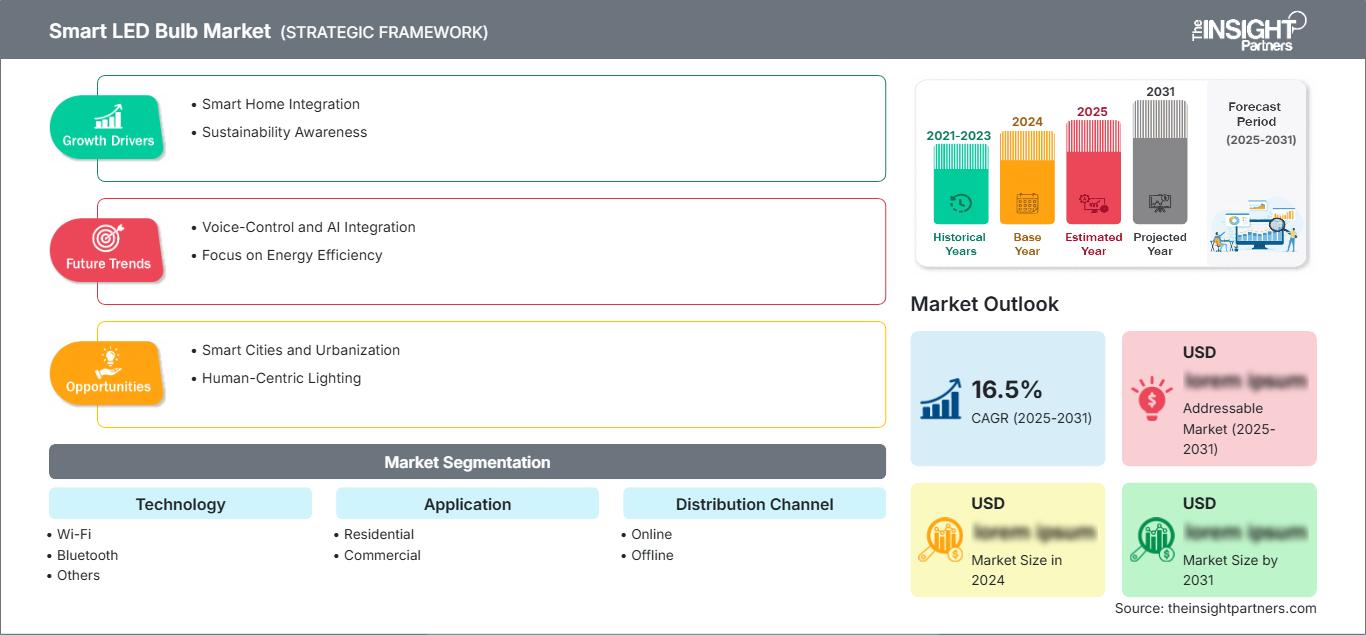
Regional Insights
North America Smart LED Bulb Market
North America is estimated to hold 28–32% of the global Smart LED Bulb Market share in 2025, with a projected CAGR of 15–17% through 2034. The United States serves as the primary growth engine, supported by the highest smart home penetration rate globally and significant investments in connected infrastructure. Continued federal and state-level energy efficiency programs, including rebates for smart LED adoption, have created a favorable demand environment. Major players, including General Electric and Acuity Brands, are expanding their connected lighting portfolios through product innovations and strategic acquisitions. Canada and Mexico are emerging as growth markets, driven by increasing retail availability and declining product costs.
U.S. Smart LED Bulb Market
The Smart LED Bulb Market forecast indicates that the U.S. market accounts for approximately 85–90% of North American revenue, with a CAGR of 15–17% projected through 2034. Over 70 million households now own at least one smart home device, with smart lighting serving as the most accessible entry point to home automation. Major retailers, including Amazon, Best Buy, and Home Depot, have expanded smart bulb offerings, making connected lighting widely available across price tiers. Utility providers in California, New York, and Texas offer incentives for energy-efficient lighting, further accelerating adoption. Vendor investments in Matter-compliant products and AI-driven automation features are converting basic smart bulbs into comprehensive lighting management solutions.
Europe Smart LED Bulb Market
Europe is estimated to capture 24–28% of the global market in 2025, growing at a CAGR of 16–18% through 2034, reflecting key Smart LED Bulb Market trends across the region. Germany leads regional adoption, driven by the country's strong manufacturing base and the government's Energiewende policy promoting energy efficiency. The UK market benefits from high smart home penetration and widespread availability of voice-controlled lighting solutions. France, Italy, and Spain are emerging as significant markets, supported by EU directives mandating energy-efficient lighting and the European Green Deal's focus on sustainable building retrofits. Major players, including LEDVANCE and OSRAM, are investing in connected product portfolios to meet growing demand across residential and commercial sectors.
APAC Smart LED Bulb Market
The Smart LED Bulb Market in Asia Pacific accounted for 30–34% of global market share in 2025 and is projected to grow at the fastest CAGR of 18–20% through 2034. China leads regional adoption with massive production capacity and government incentives promoting LED adoption. The country's "Made in China 2025" initiative prioritizes smart manufacturing, while nationwide urbanization projects drive demand for connected lighting solutions. Japan and South Korea demonstrate strong growth driven by advanced smart home ecosystems and widespread 5G network coverage. India's adoption is accelerating through the "UJALA" scheme, promoting LED replacement and increasing smartphone penetration, enabling app-based control. Australia benefits from high consumer disposable income and a growing awareness of energy conservation.
Middle East & Africa Smart LED Bulb Market
The Smart LED Bulb Market in the MEA region exhibits emerging adoption of smart lighting technologies, with a projected CAGR of 14–16% through 2034. Saudi Arabia leads regional investment through Vision 2030 infrastructure development, with smart city projects in Riyadh and NEOM driving demand for connected lighting. UAE adoption is accelerated by Dubai's Smart City initiative and the rapid expansion of retail and hospitality sectors adopting intelligent lighting solutions. South Africa represents the largest African market, with growing commercial adoption and retail availability expanding the consumer base. Infrastructure development and hospitality sector investments create additional application opportunities across the region.
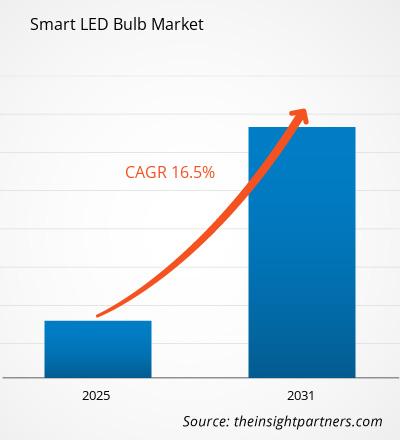
Segmentation Analysis
Technology
The technology segment includes Wi-Fi, Bluetooth, and Others (including Zigbee and Z-Wave protocols). Wi-Fi technology dominates with approximately 42-46% market share in 2025, supported by direct router connectivity and compatibility with existing home networks. Bluetooth technology represents the fastest-growing sub-segment with a CAGR of 18-20% through 2034, driven by low power consumption and mesh networking capabilities. The broader adoption of the Matter protocol is expected to improve interoperability and simplify device setup across different platforms.
- Wi-Fi – Enables direct internet connectivity without additional hubs. Dominates residential applications due to widespread router availability and simple setup, though higher power consumption limits battery-dependent applications.
- Bluetooth – Offers low power consumption and mesh networking capabilities. Fastest-growing sub-segment, driven by smartphone integration and increasing adoption in portable lighting solutions.
- Others – Includes Zigbee and Z-Wave protocols, preferred in professional installations requiring robust mesh networking and low power consumption. Growing Matter protocol adoption supports cross-platform compatibility.
Application
The application segment encompasses the residential and Commercial sectors. Residential applications dominate the market, accounting for 75-80% of revenue in 2025, with a CAGR of 16-18% through 2034. Residential adoption is driven by smart home integration, convenience features, and energy savings. Commercial applications, including offices, retail spaces, and hospitality, represent a high-growth opportunity with a CAGR of 17-19%, supported by energy efficiency requirements and the need for centralized lighting management.
- Residential – Largest application segment, driven by smart home adoption and consumer demand for convenience, customization, and energy savings. Voice control and scheduling features enhance user experience.
- Commercial – Growing adoption in offices, retail, and hospitality sectors. Energy savings, centralized control, and lighting automation capabilities create compelling ROI for commercial installations.
Distribution Channel
The distribution channel segment includes Online and Offline channels. Online channels are gaining prominence, with 40-45% market share in 2025 and a CAGR of 19-21% through 2034, driven by e-commerce penetration and consumer preference for product comparison and reviews. Offline channels, including home improvement stores and electronics retailers, maintain a strong presence, particularly for professional installations and bundled purchases.
- Online – Fastest-growing distribution channel, driven by e-commerce platforms offering broad product selection, price comparison, and user reviews. Direct-to-consumer sales by manufacturers are increasing.
- Offline – Includes home improvement stores, electronics retailers, and electrical supply outlets. Preferred for professional installations and customers seeking physical product inspection.
Opportunity Snapshot
| Application | Revenue Contribution | Trend Tag | Adoption Stage |
| Residential | High | Smart Home Integration | Mature |
| Commercial | Medium | Energy Optimization | Scaling |
Smart LED Bulb Market Growth Drivers and Impact Analysis
Smart Home Ecosystem Integration Driving Demand
The increasing adoption of smart home devices, including voice assistants, security systems, and automation platforms, has significantly boosted demand for smart LED bulbs. Consumers seek lighting solutions that integrate seamlessly with existing ecosystems, enabling voice control, automated schedules, and scene creation that enhances convenience and energy savings. The interoperability offered by platforms such as Amazon Alexa, Google Home, and Apple HomeKit has reduced setup friction and expanded the addressable consumer base. As smart home penetration continues to rise, particularly among millennial and Gen Z consumers, smart LED bulbs serve as an accessible entry point to home automation, driving sustained demand growth across residential applications and supporting expansion of the Smart LED Bulb Market.
Regulatory Mandates and Energy Efficiency Standards
Regulatory initiatives that seek to phase out inefficient lighting systems and promote energy-efficient lighting options have created a conducive regulatory landscape for the implementation of smart LEDs . The Ecodesign Directive in the EU, the lighting efficiency standards of the U.S. Department of Energy, and other such regulations around the world have helped speed up the process of transitioning from inefficient lighting options like incandescent and halogen bulbs to LED technology. Rebates offered by utility firms and subsidies provided by governments of countries like India, China, and the USA have also been creating an incentive for adopting the lighting solution.
Declining Component Costs and Improved Affordability
The further decrease in the costs of LED chips, wireless modules, and circuitry has helped to decrease the price premium of the smart LED bulbs in comparison with ordinary lighting alternatives . Cost reductions achieved through the process of production, due to economies of scale, have enabled manufacturers to produce the bulbs at affordable prices. The decreasing price of smart bulbs has allowed the market of such bulbs to attract customers other than technology enthusiasts. Once the price difference is equal to zero, the economic rationale becomes the lifetime savings.
Smart LED Bulb Market Future Trends
Artificial Intelligence and Contextual Lighting Automation
The use of artificial intelligence is revolutionizing the smart LED bulbs, making them intelligent and not user-controlled devices. Artificial intelligence algorithms are used to examine the user behaviors, daily schedules, and the environment and change the light intensity, color, and timing without the need for manual input. The circadian rhythms that replicate the natural daylight and enhance sleep quality and alertness have been identified as one of the critical features fueled by consumer focus on health issues. The combination of technology with wearable devices and health monitoring systems creates a personalized light system for various activities.
Ambient IoT and Mesh Networking Expansion
With the growth of ambient IoT networks, as well as the advancement of mesh networking technology, smart lightbulbs are becoming increasingly advanced and reliable. Mesh networking technologies like Bluetooth and Zigbee make it possible for light bulbs to act as repeaters, thus increasing their reach and reliability over large residential or commercial areas. The introduction of the Matter interoperability protocol is solving fragmentation problems by allowing for easy device setup and control within multiple ecosystems. With these advancements, smart lights have become simpler to install, more affordable to acquire and even incorporate other features like geofencing and motion detection.
Smart LED Bulb Market Opportunities
Commercial Sector Expansion and Smart Building Integration
In the commercial market segment, smart lights have the potential for tremendous growth owing to the adoption by business organizations in order to save energy costs and ensure operational efficiency. Commercial properties such as offices, shops, and hotels are implementing smart lighting systems that can be controlled from dashboards and help facility managers control and monitor thousands of lights from one dashboard. Building automation system integration, occupancy sensors, and daylight harvesting help companies achieve further energy savings and improve their return on investment from the deployment of smart lighting.
Human-Centric Lighting for Wellness Applications
Human-centric lighting, which is being developed as a way of simulating natural circadian rhythms in order to enhance well-being and productivity, is one of the major opportunities that the manufacturer of smart LED bulbs can explore. The scientific research that proves the importance of light for the quality of people's sleep, their mood and cognitive abilities opens new opportunities for consumers and creates demand for tunable light bulbs. Smart LED bulbs, which have the ability to regulate light temperature throughout the day, are becoming more popular in healthcare facilities, schools and workspaces. The concern of elderly consumers about their health and well-being and growing awareness of the biological effects of light, create a stable demand for wellness-oriented lighting.
Recent Developments
- April 2026: Yeelight Launches D1 Smart LED Light Bulb with Matter over Thread, Tunable White and Dynamic Color Control. The Yeelight D1 smart LED light bulb is a high-performance RGBCW smart lighting solution engineered for the modern, unified smart home. Designed to meet the expectations of professionals, lighting designers, integrators, and tech-forward homeowners, the D1 goes beyond basic illumination to deliver a fully connected, human-centric lighting experience.
- November 2025: IKEA is launching 21 new smart home products focusing on lighting, sensors, and control — all built to work with Matter, the universal smart home standard. The launch marks a significant step in making smart home technology easier to use, more affordable, and better adapted to real-life needs in the home. With this launch, IKEA is rebuilding its smart home system and product range from the ground up. The new launch reflects years of development and testing in real homes, and a growing understanding of how people want smart products to work in their daily life.
- April 2023: Signify (Euronext: LIGHT), the world leader in lighting, introduces new Philips Ultra Efficient LED bulbs that deliver up to 50,000 hours of light, more than 3x the lifetime usage as compared to standard Philips LED bulbs. Using advanced LED design and optics technology, the Philips Ultra Efficient bulb can help consumers save 40% in energy, with an estimated energy cost of only $0.55 - $1.03 each year. Available in 60W A19, 100 W A21 and 65W BR30 formats, the Ultra Efficient bulbs are now available exclusively at Walmart.
Frequently Asked Questions

- Comprehensive Market Sizing and Forecast Analysis
- Detailed Segmentation Analysis
- In-Depth Market Dynamics Assessment
- Regional and Country-Level Insights
- Competitive Landscape and Company Benchmarking
- Strategic Business Intelligence
Recent Reports
Testimonials

The Insight Partners' SCADA System Market report is comprehensive, with valuable insights on current trends and future forecasts. The team was highly professional, responsive, and supportive throughout. We are very satisfied and highly recommend their services.
RAN KEDEM Partner, Reali Technologies LTDs
I requested a report on a very specific software market and the team produced the report in a few days. The information was very relevant and well presented. I then requested some changes and additions to the report. The team was again very responsive and I got the final report in less than a week.
JEAN-HERVE JENN Chairman, Future Analytica
We worked with The Insight Partners for an important market study and forecast. They gave us clear insights into opportunities and risks, which helped shape our plans. Their research was easy to use and based on solid data. It helped us make smart, confident decisions. We highly recommend them.
PIYUSH NAGPAL Sr. Vice President, High Beam Global
The Insight Partners delivered insightful, well-structured market research with strong domain expertise. Their team was professional and responsive throughout. The user-friendly website made accessing industry reports seamless. We highly recommend them for reliable, high-quality research services
YUKIHIKO ADACHI CEO, Deep Blue, LLC.
This is the first time I have purchased a market report from The Insight Partners.While I was unsure at first, I visited their web site and felt more comfortable to take the risk and purchase a market report.I am completely satisfied with the quality of the report and customer service. I had several questions and comments with the initial report, but after a couple of dialogs over email with their analyst I believe I have a report that I can use as input to our strategic planning process.Thank you so much for taking the extra time and making this a positive experience.I will definitely recommend your service to others and you will be my first call when we need further market data.
JOHN SUZUKI President and Chief Executive Officer, Board Director, BK Technologies
I wish to appreciate your support and the professionalism you displayed in the course of attending to my request for information regarding to infectious disease IVD market in Nigeria. I appreciate your patience, your guidance, and the fact that you were willing to offer a discount, which eventually made it possible for us to close a deal. I look forward to engaging The Insight Partners in the future, all thanks to the impression you have created in me as a result of this first encounter.
DR CHIJIOKE ONYIA MANAGING DIRECTOR, PineCrest Healthcare Ltd.Reason to Buy
- Informed Decision-Making
- Understanding Market Dynamics
- Competitive Analysis
- Identifying Emerging Markets
- Customer Insights
- Market Forecasts
- Risk Mitigation
- Boosting Operational Efficiency
- Strategic Planning
- Investment Justification
- Tracking Industry Innovations
- Aligning with Regulatory Trends





 Get Free Sample for