
Smart Oven Market Trends, Size & Forecast by 2034
Coverage: By Type (Single Function, Multi-Function); Structure Type (Built-in, Counter Top); Connectivity (Bluetooth, Wi-Fi, NFC, Others); Application (Residential, Commercial); Distribution channel (Electronic Stores, Online) , and Geography (North America, Europe, Asia Pacific, and South and Central America)
- Status : Data Released
- Report Code : TIPRE00010494
- Category : Electronics and Semiconductor
- No. of Pages : 150
- Available Report Formats :


- Last update date : August 26, 2026


2025 Market Size
US$ 469.36 Mn
Base year value
2034 Forecast
US$ 1,938.49 Mn
Projected by 2034
CAGR 2026-2034
17.07 %
Growth rate
Addressable Market
US$ 10,077.26 Mn
(2026-2034)
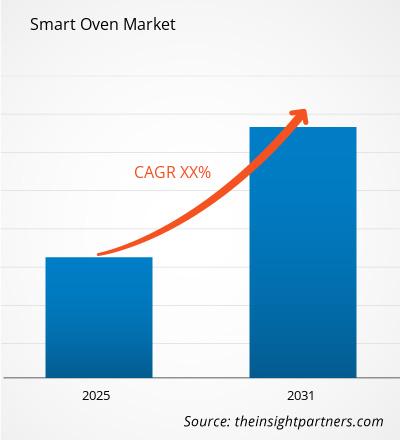
The Smart Oven Market size was valued at US$ 469.36 million in 2025 and is projected to reach US$ 1938.49 million by 2034, registering a CAGR of 17.07% over the forecast period from 2026 to 2034. This robust growth trajectory is driven by the increasing integration of smart home technologies, rising consumer demand for convenience and automation in cooking, and the growing popularity of multifunctional appliances that support healthy cooking methods such as air frying and steaming.
North America holds a significant share of 32-36% of the global market in 2025, with a projected CAGR of 16-18% through 2034. The region's market is propelled by high smart home adoption rates, with the U.S. accounting for a 77% share of the North American market, driven by consumer appetite for Wi-Fi enabled appliances and voice-activated controls. The market is also supported by ongoing kitchen renovation activities and the growing popularity of built-in appliance suites.
Smart Oven Market Assessment and Insights
- North America – Estimated to hold 32-36% of the global Smart Oven Market share in 2025, growing at a CAGR of 16-18% from 2026 to 2034. This dominance is driven by high consumer disposable income, rapid smart home adoption, and a strong preference for premium, built-in kitchen appliances.
- US – Represents approximately 85-90% of the North American market in 2025, with a CAGR of 16-18% projected through 2034. The U.S. market is fueled by high smart home penetration, a strong culture of home cooking, and the presence of key players innovating with AI and voice-controlled features.
- Europe – Accounts for 24-28% of the global market in 2025, growing at an estimated CAGR of 16-18% during the forecast period. Germany, the UK, and France are leading countries, driven by stringent energy efficiency regulations and a consumer preference for high-quality, sustainable appliances.
- Asia Pacific – Captures 28-32% of global market share in 2025 and is projected to grow at the fastest CAGR of 18-20% through 2034. China leads the region with rapid urbanization and a growing middle class, followed by Japan, South Korea, and India.
- Largest Segment – The multi-function smart ovens type segment held the largest share with 60-65% of the market in 2025, growing at a CAGR of 16-18% through 2034, driven by their versatility and ability to replace several separate appliances.
- High Growth Segment – The built-in structure type segment is projected as a high-growth segment with a CAGR of 17-19% from 2026 to 2034, supported by the trend of complete kitchen renovations and integrated appliance designs.
- Key companies analyzed in detail – BSH Hausgeräte GmbH, Candy Hoover Group S.r.l., Dacor, Inc., AB Electrolux, Haier Group, June Life, Inc., LG Electronics, Panasonic Corporation, Sharp Corporation, and TTK Prestige Ltd.
Source: The Insight Partners' analysis based on proprietary research, government publications, company annual reports, investor presentations, industry databases, and expert interviews.
The Smart Oven market has transformed from basic heating appliances into highly advanced and intelligent smart ovens that can be integrated into a smart home network. Modern smart ovens have various functionalities, such as wireless technology, voice-activated functionality, and AI-driven cooking where the cooking process is optimized in terms of time and temperature. Such technological innovation changes the consumer approach to food preparation.
New markets, especially those located in the Asia-Pacific region and Latin America, provide an interesting opportunity for growth because of increasing urbanization and disposable incomes. The investment in new infrastructure such as 5G network and e-commerce platforms makes product awareness easier and leads to increased market penetration. Favorable regulatory trends, including the focus on energy efficiency in Europe, make the manufacturers develop energy-efficient models of smart ovens.
Smart Oven Market Report Scope
| Report Attribute | Details |
|---|---|
| Market size in 2025 | US$ 469.36 Million |
| Market Size by 2034 | US$ 1,938.49 Million |
| Global CAGR (2026 - 2034) | 17.07% |
| Historical Data | 2021-2024 |
| Forecast period | 2026-2034 |
Smart Oven Market Analysis
The Smart Oven Market is greatly impacted by the increasing preference of consumers towards having smart homes and appliances. The need for connectivity and automation among consumers for their kitchen appliances is increasing with the increase in IoT devices among families. Remote pre-heating, voice commands, and app controls are now basic requirements rather than just premium features. According to the United States Department of Commerce, states such as Connecticut and Utah have a great percentage of smart homes, indicating that consumers are increasingly embracing digital integration in their living spaces.
According to the Smart Oven Market report, competitive scenario comprises well-established home appliance firms including BSH Hausgeräte GmbH, LG Electronics, Panasonic, and Whirlpool along with up-and-coming D2C startups such as June Oven and Tovala. The investment scenarios suggest that there is an emphasis on software and artificial intelligence skills with companies developing platforms that offer customized cooking and feature updates via the air. Ecosystem compatibility has become an important factor in positioning strategy for firms that ensure integration with the Amazon Alexa, Google Assistant, and other home automation systems. There is an increasing trend towards collaborations between appliance and technology firms.
● REPORT CUSTOMIZATION
Tailor This Report To Align With Your Specific Business Requirements
This report can be customized to align precisely with your business objectives, scope, and target markets. Customization options include tailored segmentation, geography, competitive analysis, and strategic insights to support informed decision-making.
Customize This Report →WHAT YOU CAN ADJUST
- ● Segmentations
- ● Geography
- ● Competitive Analysis
- ● Language Preferences
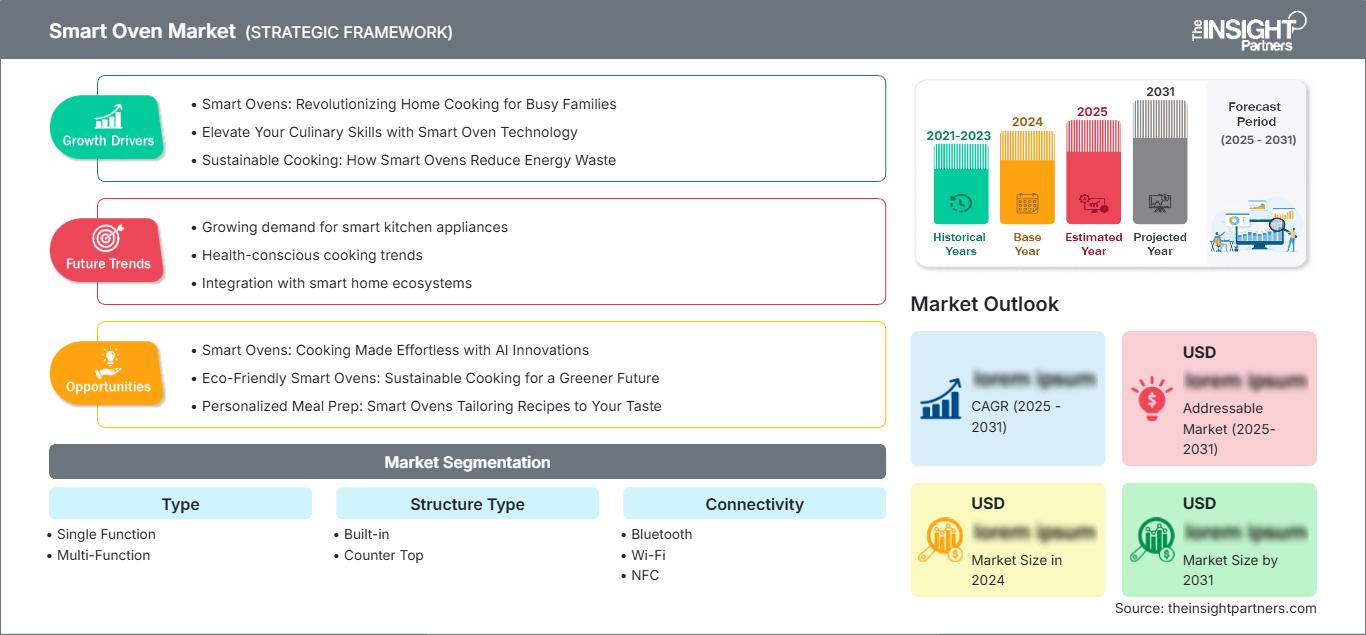
Smart Oven Market: Strategic Insights
Regional Insights
North America Smart Oven Market
North America is estimated to hold 32-36% of the global market in 2025, with a projected CAGR of 16-18% through 2034. The USA emerges as the major growth driver owing to the high demand for smart home products and premium kitchen renovations. More than 63 million homes in the USA have adopted smart home devices, thus providing a perfect platform for selling smart ovens. The kitchen renovations in the region also support its growth, since companies are now selling entire integrated suites instead of replacement models. Leading players like GE Appliances are even making investments in the USA for manufacturing their products, which shows the significance of the country for the growth of the segment.
U.S. Smart Oven Market
According to the Smart Oven Market forecast, the U.S. market accounts for approximately 85-90% of North American revenue, with a CAGR of 16-18% projected through 2034. The market was valued at USD 83.5 million in 2024, driven by a strong culture of home cooking and high smart device penetration. U.S. consumers are increasingly incorporating smart ovens into new homes and kitchen renovations, making them a standard feature in many households [citation:4]. Health-conscious buyers are drawn to models with advanced capabilities like air frying and nutrient monitoring, while busy families value remote preheating and automated cooking programs. The market is characterized by a high demand for premium, feature-rich appliances, with a focus on design integration and voice compatibility.
Europe Smart Oven Market
Europe is estimated to capture 24-28% of the global Smart Oven Market in 2025, growing at a CAGR of 16-18% through 2034. Germany leads the region, accounting for the largest share, with a focus on high-quality, energy-efficient products. UK and France are other important regions with high demands for inbuilt ovens and smart technology. Europe is a market that puts much emphasis on sustainability with consumers focusing on energy-efficient features and sustainable materials [citation:6]. The EU Ecodesign Directive has led to manufacturers improving the energy efficiency of their appliances, making smart ovens with energy management capabilities more attractive. France, Italy, and Spain have started showing signs of growth due to the region’s rich food culture and growing use of smart homes.
APAC Smart Oven Market
Asia Pacific accounted for 28-32% of global market share in 2025 and is projected to grow at the fastest CAGR of 18-20% through 2034. The region's market is expanding rapidly due to urbanization, a growing middle class, and rapid digital adoption. China is a powerhouse, with a young, tech-savvy population driving demand for connected kitchen appliances. The case of Japan and South Korea shows impressive growth owing to the high degree of technology acceptance and inclination towards the use of compact and multi-purpose household appliances that can be used in small urban dwellings. India is rapidly becoming an important market due to a rise in the number of professionals and disposable incomes.
Middle East & Africa Smart Oven Market
The MEA region exhibits emerging adoption of smart oven technologies, with a projected CAGR of 15-17% through 2034. In Saudi Arabia and the UAE, they are currently spearheading the region due to higher disposable incomes, greater preference for luxuries, and smart city infrastructure. In the case of the UAE, which is a regional hub for tourism and businesses, there is a need for luxurious smart appliances. South Africa is considered to be the biggest market in Africa in the coming years due to the increasing number of urban dwellers and internet connectivity. The adoption of technology in Saudi Arabia through its vision 2030 will favor growth in the market.
Segmentation Analysis
Type
The type segment comprises Single Function and Multi-Function smart ovens. Multi-Function ovens dominate the segment, accounting for 60-65% of the market in 2025, driven by their ability to combine baking, grilling, air frying, and steaming in one unit. The segment is growing at a CAGR of 16-18%. This buyer preference reflects a desire to reduce countertop clutter and maximize value, as one connected appliance can replace several separate specialty devices. The versatility of multi-function models makes them central to the smart oven value proposition and supports higher average selling prices.
- Single Function – Designed for a specific primary cooking method, offering a simpler and often more affordable entry point into smart cooking technology.
- Multi-Function – Dominant segment, combining multiple cooking modes such as baking, grilling, air frying, and steaming. Highly valued for versatility and counter space efficiency.
Structure Type
The structure type segment includes Built-in and Countertop ovens. Built-in smart ovens dominated the market in 2025, driven by rising demand for seamless, integrated kitchen designs. The segment is growing at a CAGR of 17-19%. In modern urban homes, built-in ovens are gaining popularity for their aesthetic appeal, space-saving attributes, and integration with overall kitchen design. The countertop segment is also experiencing significant growth, particularly among smaller households and renters.
- Built-in – Fastest-growing structure type, popular for aesthetic appeal and modern kitchen designs. Features advanced connectivity and energy efficiency, appealing to urban households.
- Counter Top – Popular among small households and individuals with limited kitchen space. Compact models and versatility are key growth drivers.
Connectivity
The connectivity segment includes Bluetooth, Wi-Fi, and NFC technologies. Wi-Fi-enabled smart ovens dominate the segment, driven by their ability to offer richer cloud services, remote diagnostics, and seamless integration with smart home ecosystems. Bluetooth solutions are valued for simplicity in proximity interactions, while NFC remains useful for one-tap pairing and secure authentication. The Matter-based interoperability standard is expected to further simplify device integration across different platforms.
- Bluetooth – Simplifies proximity interactions and pairing. Useful for setup and local control without a Wi-Fi network.
- Wi-Fi – Dominant connectivity type, enabling richer cloud services, remote access, voice assistant integration, and over-the-air updates.
- NFC – Enables one-tap pairing for secure and effortless smartphone connections and authentication.
Application
The application segment includes Residential and Commercial sectors. The Residential sector holds the largest market share, driven by the integration of smart ovens as key components of smart home ecosystems. The segment is growing at a CAGR of 16-18%. The Commercial sector is anticipated to grow at a higher rate, supported by the need for operational efficiency and consistent food quality in hotels and restaurants [citation:5]. The ability to program settings and monitor cooking remotely is particularly valuable in commercial environments.
- Residential – Largest application, driven by smart home integration, convenience features, and growing interest in home cooking and baking.
- Commercial – High-growth segment, encompassing hotels, restaurants, and food services. Valued for operational efficiency, consistent food quality, and reduced costs.
Opportunity Snapshot
| Application | Revenue Contribution | Trend Tag | Adoption Stage |
|---|---|---|---|
| Residential | High | Home Automation | Scaling |
| Commercial | Medium | Operational Efficiency | Emerging |
Smart Oven Market Growth Drivers and Impact Analysis
Rising Smart Home and Voice Assistant Integration
The growth of smart home ecosystems and voice assistants is one of the key drivers of the smart oven market. People who have already embraced their lives being connected to different devices would tend to opt for ovens that easily blend into this digital world. Companies are equipping their products with voice control by Bixby, SmartThings integration, and remote monitoring. It is important to note that this kind of approach is important due to the fact that people nowadays make decisions concerning purchasing an oven together with the refrigerator, display device, application, and even services. Once people are locked into one ecosystem, switching becomes too costly.
Demand for Multi-Function and Healthy Cooking Appliances
The rising consumer preference for healthy cooking methods and multi-functional appliances is significantly boosting the smart oven market. Buyers are increasingly seeking ovens that offer air frying, steaming, roasting, and grilling in a single unit, effectively replacing several separate appliances. This trend supports higher average selling prices without changing the basic kitchen footprint. Health-oriented modes that minimize fat usage and preserve nutrients are particularly attractive to millennials and Gen Z. As consumers become more health-conscious, the value proposition of smart ovens extends beyond convenience to encompass healthier eating, supporting sustained demand for these intelligent appliances.
Energy Efficiency Regulations and Sustainability Concerns
Stringent energy efficiency regulations and growing consumer environmental awareness are compelling the adoption of smart ovens. Government mandates, such as the EU's Ecodesign Directive, are promoting the use of energy-efficient appliances. Smart ovens are designed to optimize energy usage through precise temperature control, shorter preheating times, and intelligent scheduling. These features not only align with global sustainability goals but also offer consumers significant savings on utility bills. As regulatory bodies continue to tighten efficiency standards, smart ovens are positioned as a crucial solution for meeting compliance while providing modern cooking capabilities.
Smart Oven Market Future Trends
AI-Driven Precision Cooking and Personalization
The Smart Oven Market trends indicate that artificial intelligence is becoming a core component of future smart oven systems, moving beyond basic automation to enable personalized cooking experiences. AI algorithms can recognize food types, suggest optimal cooking settings, and learn user preferences over time. Integrated cameras allow consumers to monitor their food in real-time without opening the oven door, while machine learning models enable systems to predict and adjust for variables like altitude and ingredient variations. This technological evolution is transforming smart ovens from simple appliances into intelligent kitchen assistants capable of delivering consistently perfect results.
Expansion of Integrated Kitchen Ecosystems and Built-In Designs
The smart oven market is increasingly tied to broader kitchen renovation trends, with consumers opting for complete suites of smart appliances. This trend is driving demand for ovens that are part of a coordinated design, which lifts the chance of higher-value orders and brand-wide suite wins. Launches from companies like LG and GE Appliances show that leading suppliers want the oven to anchor a broader renovation sale rather than compete only on one appliance. As a result, the market is becoming more closely linked to premium home improvement spending and new-built kitchen specification decisions.
Smart Oven Market Opportunities
Expansion of Online Direct-to-Consumer (D2C) Sales Channels
Significant opportunities exist in the expansion of online and direct-to-consumer sales channels for smart ovens. The shift toward digital discovery is giving brands more control over the customer relationship, enabling them to bundle hardware with accessories, services, and content in a single buying journey. Electrolux described D2C as a strategic channel for growth, margin expansion, and direct engagement. Haier reported that DTC-fulfilled orders accounted for 57% of total volume in 2025, demonstrating how direct channel execution can scale when manufacturers invest in platform control and dealer participation. This trend shortens the path from product discovery to purchase and enables suppliers to coordinate commerce, service, and software through a single channel architecture.
Integration with E-Commerce and Mobile Platforms in Developing Markets
The easy availability of smart ovens on e-commerce platforms is a major opportunity, particularly in fast-developing regions. Manufacturers are optimizing their e-commerce websites and apps for mobile devices, providing a smooth and user-friendly online shopping experience. According to the GSMA, smartphone penetration is expected to reach 91% by 2030, further fueling online sales. This channel expansion is critical in Asia-Pacific and Latin America, where online retail is the primary driver of product discovery and comparison. Vendors that invest in robust e-commerce strategies with localized content and competitive pricing are well-positioned to capture market share in emerging regions.
Recent Developments
- July 2026: Smart appliances startup upliance.ai has launched a 12L Smart Air Fryer Oven, marking the startup’s expansion beyond its existing 5L and 6L personal-sized air fryers into the large-family cooking segment. The launch is aimed at urban households looking to upgrade their kitchen appliances for everyday, full-scale cooking rather than occasional use.
- July 2026: Midea India, a leading global home appliance brand, announced the launch of its new range of Solo Digital and Convection Microwave Ovens, designed to simplify everyday cooking while delivering greater convenience, healthier meal preparation and superior performance. The newly launched portfolio includes a 20L Solo Digital Microwave Oven, 24L Convection Microwave Oven and 28L Convection Microwave Oven, catering to a wide range of cooking requirements for Indian consumers.
- February 2026: GE Appliances, a Haier company, is introducing a new robust portfolio of smart wall ovens that help take the complexities out of everyday shopping and cooking. Available across the Monogram, GE Profile, and CAFÉ brands, the innovative line-up features 39 new models that combine reliable performance with intuitive design to simplify everyday cooking at home.
Frequently Asked Questions

- Comprehensive Market Sizing and Forecast Analysis
- Detailed Segmentation Analysis
- In-Depth Market Dynamics Assessment
- Regional and Country-Level Insights
- Competitive Landscape and Company Benchmarking
- Strategic Business Intelligence
Recent Reports
Testimonials

The Insight Partners' SCADA System Market report is comprehensive, with valuable insights on current trends and future forecasts. The team was highly professional, responsive, and supportive throughout. We are very satisfied and highly recommend their services.
RAN KEDEM Partner, Reali Technologies LTDs
I requested a report on a very specific software market and the team produced the report in a few days. The information was very relevant and well presented. I then requested some changes and additions to the report. The team was again very responsive and I got the final report in less than a week.
JEAN-HERVE JENN Chairman, Future Analytica
We worked with The Insight Partners for an important market study and forecast. They gave us clear insights into opportunities and risks, which helped shape our plans. Their research was easy to use and based on solid data. It helped us make smart, confident decisions. We highly recommend them.
PIYUSH NAGPAL Sr. Vice President, High Beam Global
The Insight Partners delivered insightful, well-structured market research with strong domain expertise. Their team was professional and responsive throughout. The user-friendly website made accessing industry reports seamless. We highly recommend them for reliable, high-quality research services
YUKIHIKO ADACHI CEO, Deep Blue, LLC.
This is the first time I have purchased a market report from The Insight Partners.While I was unsure at first, I visited their web site and felt more comfortable to take the risk and purchase a market report.I am completely satisfied with the quality of the report and customer service. I had several questions and comments with the initial report, but after a couple of dialogs over email with their analyst I believe I have a report that I can use as input to our strategic planning process.Thank you so much for taking the extra time and making this a positive experience.I will definitely recommend your service to others and you will be my first call when we need further market data.
JOHN SUZUKI President and Chief Executive Officer, Board Director, BK Technologies
I wish to appreciate your support and the professionalism you displayed in the course of attending to my request for information regarding to infectious disease IVD market in Nigeria. I appreciate your patience, your guidance, and the fact that you were willing to offer a discount, which eventually made it possible for us to close a deal. I look forward to engaging The Insight Partners in the future, all thanks to the impression you have created in me as a result of this first encounter.
DR CHIJIOKE ONYIA MANAGING DIRECTOR, PineCrest Healthcare Ltd.Reason to Buy
- Informed Decision-Making
- Understanding Market Dynamics
- Competitive Analysis
- Identifying Emerging Markets
- Customer Insights
- Market Forecasts
- Risk Mitigation
- Boosting Operational Efficiency
- Strategic Planning
- Investment Justification
- Tracking Industry Innovations
- Aligning with Regulatory Trends





 Get Free Sample for