South and Central America Food Safety Testing Market Analysis and Opportunities by 2028
South and Central America Food Safety Testing Market Forecast to 2028 - COVID-19 Impact and Regional Analysis By Contaminant (Pathogens, Pesticides, Toxins, GMOs, and Others), Technology (Traditional and Rapid), and Food Type (Meat, Poultry, & Seafood Products, Dairy Products, Cereals & Grains, Processed Food, Fruits & Vegetables, and Others)
Historic Data: 2019-2020 | Base Year: 2021 | Forecast Period: 2022-2028- Status : Published
- Report Code : TIPRE00026210
- Category : Consumer Goods
- No. of Pages : 127
- Available Report Formats :


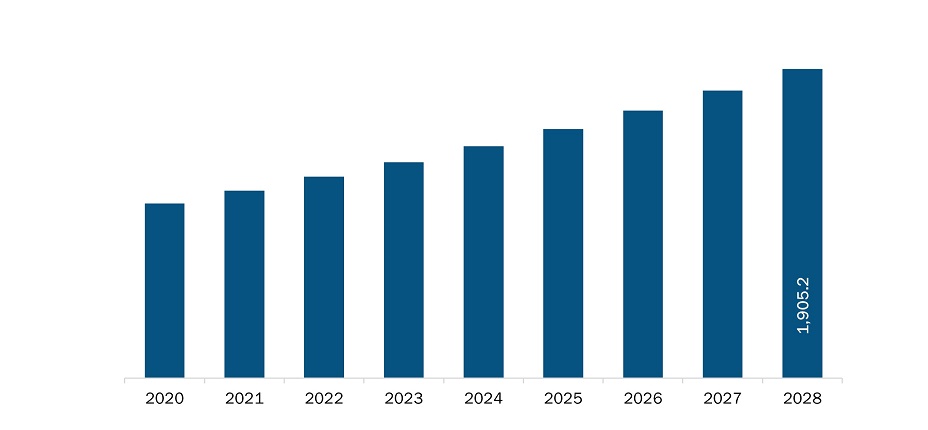
The South and Central America food safety testing market is projected to reach US$ 1,905.2 million by 2028 from an estimated value of US$ 1,140.3 million in 2021; it is estimated to grow at a CAGR of 7.6% from 2021 to 2028.
The major factors driving the market's growth are the greater emergence of foodborne illness and the ascension of South and Central America food and beverage industry. However, the insufficient food safety testing methods are hampering the market growth.
Foodborne illnesses are caused by chemical substances, parasites, and viruses entering the body through contaminated water or food. Examples of unsafe food include raw shellfish containing marine biotoxins, vegetables and fruits contaminated with feces, and uncooked foods of animal origin. E. coli, campylobacter, and salmonella are among the common foodborne pathogens that affect millions of people worldwide annually and result in fatal or severe outcomes. Symptoms include diarrhea, abdominal pain, vomiting, nausea, headache, and fever. Various types of seafood, millet gruel, vegetables, and rice have been implicated in cholera outbreaks. Further, the misuse and overuse of antimicrobials in human and veterinary medicine have been linked to the emergence of resistant bacteria rendering the treatment of humans and animals ineffective. Antimicrobial medicine is identified as one of the biggest threats to modern medicine. Therefore, it has become essential to detect the contaminants beforehand and prevent them from entering the food chain. Thus, the importance of food safety testing has been increasing globally in terms of volume. As per data published by WHO, unsafe food causes 420,000 deaths and 600 million cases of foodborne diseases are reported worldwide each year. Foodborne diseases are preventable; hence, numerous organizations along with governments are leading coordinated action across multiple industries to build resilient and strong food safety systems. The involved parties are heavily investing in providing consumers with tools to make safe food choices. Moreover, a 2018 World Bank report estimated that the economic burden through a total loss of productivity faced due to foodborne illnesses was estimated to be US$ 95.2 billion per year. The annual cost of treating foodborne illnesses is estimated to be US$ 15 billion.
Brazil reported the highest number of COVID-19 cases, followed by Ecuador, Chile, Peru, and Argentina. South America's government has taken various actions to protect its citizens and contain the spread of COVID-19. It is anticipated that South America will face lower export revenues, both from the drop-in commodity prices and reduction in export volumes, especially to China, Europe, and the US, which are important trade partners. Containment measures in several South American countries had reduced economic activity in the food & beverages industry for at least the next quarter, with a rebound once the epidemic is contained. Manufacturers are comprehending strategies to revive from the current situation by reshaping their strategies and product innovation. One of the marketing strategy manufacturers prefer adopting is food safety assurance due to growing consumer awareness, which has led to growth of the food safety testing market.
South and Central America Food Safety Testing Market Revenue and Forecast to 2028 (US$ Mn)
- This FREE sample will include data analysis, ranging from market trends to estimates and forecasts.
SOUTH AND CENTRALL AMERICA FOOD SAFETY TESTING MARKET SEGMENTATION
By Contaminant
- Pathogens
- Salmonella
- E. coli
- Listeria
- Others
- Pesticides
- Toxins
- GMOs
- Others
By Technology
- Traditional
- Rapid
-
- PCR-Based Testing
- Immunoassay-Based Testing
- Others
By Food Type
- Meat, Poultry, & Seafood Products
- Dairy Products
- Cereals & Grains
- Processed Food
- Fruits & Vegetables
- Others
By Country
- Brazil
- Argentina
- Rest of South and Central America
Company Profiles
- SGS SA
- Eurofins Scientific
- Intertek Group Plc
- TÜV SÜD
- TÜV NORD GROUP.
- Bureau Veritas
- NEOGEN Corporation
- ALS Limited
South and Central America Food Safety Testing Report Scope
| Report Attribute | Details |
|---|---|
| Market size in 2021 | US$ 1,140.3 Million |
| Market Size by 2022-2028 | US$ 1,905.2 Million |
| CAGR (2021 - 2028) | 7.6% |
| Historical Data | 2019-2020 |
| Forecast period | 2022-2028 |
| Segments Covered |
By Contaminant
|
| Regions and Countries Covered |
South and Central America
|
| Market leaders and key company profiles |
|

- Historical Analysis (2 Years), Base Year, Forecast (7 Years) with CAGR
- PEST and SWOT Analysis
- Market Size Value / Volume - Regional, Country
- Industry and Competitive Landscape
- Excel Dataset
Recent Reports
Testimonials

The Insight Partners' SCADA System Market report is comprehensive, with valuable insights on current trends and future forecasts. The team was highly professional, responsive, and supportive throughout. We are very satisfied and highly recommend their services.
RAN KEDEM Partner, Reali Technologies LTDs
I requested a report on a very specific software market and the team produced the report in a few days. The information was very relevant and well presented. I then requested some changes and additions to the report. The team was again very responsive and I got the final report in less than a week.
JEAN-HERVE JENN Chairman, Future Analytica
We worked with The Insight Partners for an important market study and forecast. They gave us clear insights into opportunities and risks, which helped shape our plans. Their research was easy to use and based on solid data. It helped us make smart, confident decisions. We highly recommend them.
PIYUSH NAGPAL Sr. Vice President, High Beam Global
The Insight Partners delivered insightful, well-structured market research with strong domain expertise. Their team was professional and responsive throughout. The user-friendly website made accessing industry reports seamless. We highly recommend them for reliable, high-quality research services
YUKIHIKO ADACHI CEO, Deep Blue, LLC.
This is the first time I have purchased a market report from The Insight Partners.While I was unsure at first, I visited their web site and felt more comfortable to take the risk and purchase a market report.I am completely satisfied with the quality of the report and customer service. I had several questions and comments with the initial report, but after a couple of dialogs over email with their analyst I believe I have a report that I can use as input to our strategic planning process.Thank you so much for taking the extra time and making this a positive experience.I will definitely recommend your service to others and you will be my first call when we need further market data.
JOHN SUZUKI President and Chief Executive Officer, Board Director, BK Technologies
I wish to appreciate your support and the professionalism you displayed in the course of attending to my request for information regarding to infectious disease IVD market in Nigeria. I appreciate your patience, your guidance, and the fact that you were willing to offer a discount, which eventually made it possible for us to close a deal. I look forward to engaging The Insight Partners in the future, all thanks to the impression you have created in me as a result of this first encounter.
DR CHIJIOKE ONYIA MANAGING DIRECTOR, PineCrest Healthcare Ltd.Reason to Buy
- Informed Decision-Making
- Understanding Market Dynamics
- Competitive Analysis
- Identifying Emerging Markets
- Customer Insights
- Market Forecasts
- Risk Mitigation
- Boosting Operational Efficiency
- Strategic Planning
- Investment Justification
- Tracking Industry Innovations
- Aligning with Regulatory Trends




 Get Free Sample For