
Ultrasonic Welding Machine Market Trends, Size & Forecast by 2034
Coverage: By Product Type (Automatic ultrasonic welding machine, Semi-automatic ultrasonic welding machine, Manual ultrasonic welding machine); Application (Electronics, Packaging and Clothing, Medical, Automotive) , and Geography (North America, Europe, Asia Pacific, and South and Central America)
- Status : Data Released
- Report Code : TIPRE00022739
- Category : Manufacturing and Construction
- No. of Pages : 150
- Available Report Formats :


- Last update date : September 18, 2026


2025 Market Size
US$ 540.11 Mn
Base year value
2034 Forecast
US$ 749.07 Mn
Projected by 2034
CAGR 2026-2034
4.17 %
Growth rate
Addressable Market
US$ 5,995.86 Mn
(2026-2034)
The ultrasonic welding machine market is projected to grow from US$ 540.11 million in 2025 to US$ 749.07 million by 2034, registering a CAGR of 4.17% during 2026–2034. Demand is supported by the broader adoption of high-speed, consumables-free joining systems in electronics, automotive, medical device, packaging, and clothing production. Manufacturers are prioritizing repeatable weld quality, lower thermal impact, energy efficiency, and tighter process control as product designs become smaller, lighter, and more material-sensitive.
North America remains a structurally important market as medical device manufacturing, automotive electronics, battery components, and regulated packaging applications require precise joining performance. The ultrasonic welding machine market size in the region is supported by automation upgrades, reshoring of critical production, and strong demand for validated plastic and nonferrous metal joining. Regional growth is expected to remain steady, with investment concentrated in semi-automatic and automatic systems for higher-throughput production environments.
Ultrasonic Welding Machine Market Assessment and Insights
- North America: The region accounted for an estimated 23–26% share in 2025 and is expected to grow at a CAGR of 3.8–4.4% during 2026–2034, driven by medical, automotive, and electronics applications.
- U.S.: The U.S. represented about 72–76% of North America demand in 2025 and is expected to grow at a CAGR of 3.9–4.5% through 2034.
- Europe: Europe held an estimated 19–22% share in 2025, with Germany, the UK, France, and Italy leading adoption across automotive, packaging, and industrial electronics.
- Asia Pacific: Asia Pacific accounted for 42–46% share in 2025 and is expected to grow at a CAGR of 4.6–5.3%, supported by China, Japan, South Korea, and India.
- Largest Segment: Automatic ultrasonic welding machines held a 46–50% market share in 2025 and are expected to grow at a CAGR of 4.4–5.0% during 2026–2034.
- High Growth Segment: Medical applications held a 12–15% share in 2025 and are projected to grow at a CAGR of 5.0–5.7% as device manufacturers expand precision joining capacity.
- Key companies analyzed in detail: Sonics & Materials, Inc.; Herrmann Ultraschalltechnik GmbH & Co. KG; Telsonic AG; Emerson Electric Co.; NUCLEUS GmbH; Seidensha Electronics Co., Ltd.; KORMAX SYSTEM Inc.; Forward Technology; Hornwell Ultrasonic; Maxwide Ultrasonic; KLN Ultraschall AG.
Source: The Insight Partners' analysis based on proprietary research, government publications, company annual reports, investor presentations, industry databases, and expert interviews.
Technology evolution is shifting demand from basic manual welders toward programmable systems with force, amplitude, distance, and energy monitoring. The ultrasonic welding machine market growth is increasingly tied to automated assembly lines where short cycle times, low heat exposure, and repeatable weld strength improve output quality. These systems are employed by automotive suppliers for harnessing wires, interior components, sensors, and components near the battery. At the same time, electronics makers are keen to benefit from the procedure to create component enclosures and connectors.
Future needs in emerging manufacturing regions will grow as suppliers are moving their production closer to their customers for electronics, disposable medical products, and light-weight car components. Moreover, investment in Industry 4.0-compliant welding machines is rising in response to traceability and low scrap rate requirements.
Ultrasonic Welding Machine Market Report Scope
| Report Attribute | Details |
|---|---|
| Market size in 2025 | US$ 540.11 Million |
| Market Size by 2034 | US$ 749.07 Million |
| Global CAGR (2026 - 2034) | 4.17% |
| Historical Data | 2021-2024 |
| Forecast period | 2026-2034 |
Ultrasonic Welding Machine Market Analysis
Demand is shaped by the need for faster joining processes that avoid adhesives, screws, solder, and external heat. The ultrasonic welding machine market analysis indicates that equipment buyers are prioritizing cycle-time reduction, validated process windows, and compatibility with thermoplastics and nonferrous metals. Electrical cars, miniaturized electronics, and sterile medical packaging are among the growing fields of application where weld quality and appearance become significant in purchase decisions.
Balanced supply conditions exist in favor of global technology leaders and specialized regional companies. Competing on software for weld control, transducers’ reliability, application engineering and integration into manufacturing lines, recognized brand names include component availability, tool design, and setup capabilities, particularly for smaller companies converting manual assembly lines into semi-automatic or automatic ones.
Market competition is driven by companies with well-established application laboratories, global after-sales services and expertise in plastic and metal welding. Emerson Electric Co., Herrmann Ultraschalltechnik GmbH & Co. KG, Telsonic AG, and Sonics & Materials, Inc. still retain their positions in high-end applications, while companies like KLN Ultraschall AG, Seidensha Electronics Co., Ltd., and Maxwide Ultrasonic take care of specialized machinery needs. Investment trends are moving toward modular systems that integrate with robotic cells, inspection equipment, and digital quality records, according to the Ultrasonic Welding Machine market report. Suppliers are differentiating through software-based parameter control, acoustic tooling design, and application-specific platforms for batteries, medical devices, wire terminals, and packaging. This positioning supports both replacement demand and new capacity formation.
● REPORT CUSTOMIZATION
Tailor This Report To Align With Your Specific Business Requirements
This report can be customized to align precisely with your business objectives, scope, and target markets. Customization options include tailored segmentation, geography, competitive analysis, and strategic insights to support informed decision-making.
Customize This Report →WHAT YOU CAN ADJUST
- ● Segmentations
- ● Geography
- ● Competitive Analysis
- ● Language Preferences
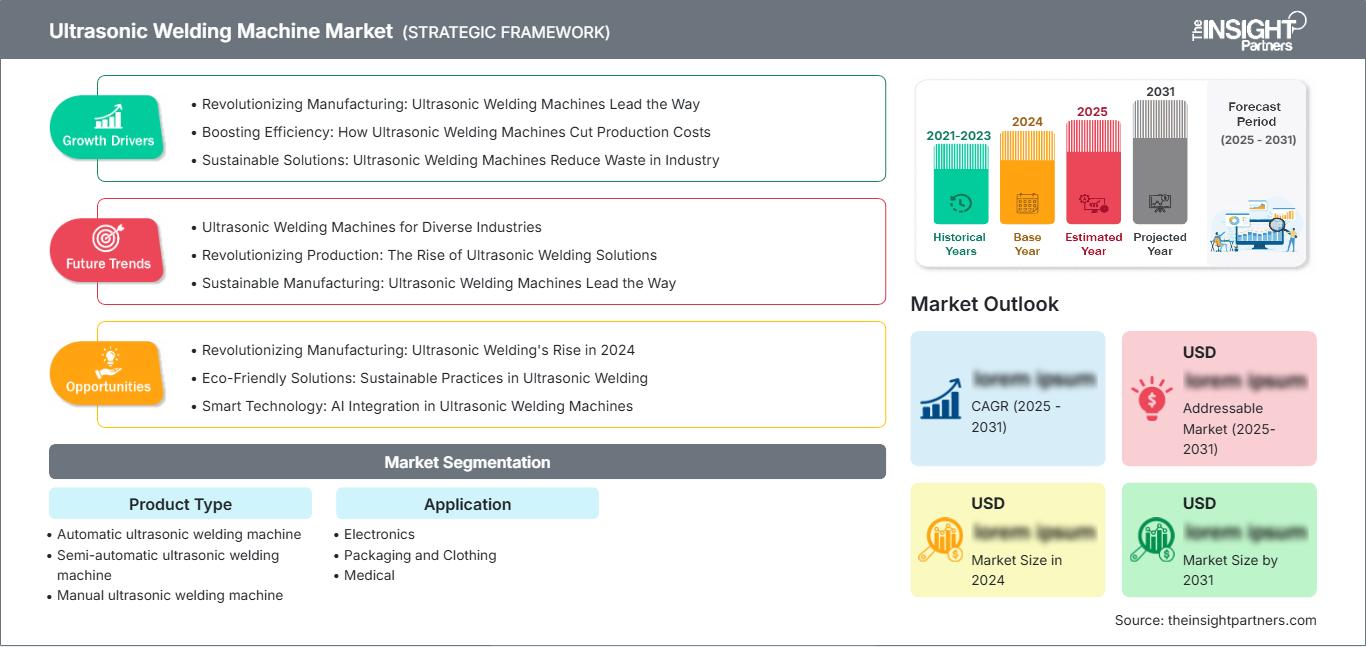
Ultrasonic Welding Machine Market: Strategic Insights
Regional Insights
North America Ultrasonic Welding Machine Market
North America is expected to maintain a 23–26% ultrasonic welding machine market share in 2025, supported by advanced medical device production, automotive electronics, and regulated packaging lines. The region’s CAGR is estimated at 3.8–4.4% during 2026–2034 as companies invest in automation, process validation, and clean joining methods.
Demand is strongest in the U.S., where suppliers serve electronics, mobility, medical, and consumer goods manufacturers. Canada and Mexico contribute through automotive supply chains and nearshore production. Buyers in the region increasingly require weld data traceability, stable tooling performance, and equipment that can support repeatable quality across multi-shift operations.
U.S. Ultrasonic Welding Machine Market
The U.S. represented 72–76% of North American demand in 2025 and is expected to grow at a CAGR of 3.9–4.5% through 2034. Adoption is concentrated in medical disposables, diagnostic devices, battery-related assemblies, electronics housings, and automotive interior parts.
Company presence is strong because leading vendors maintain application engineering, service centers, and distribution channels for manufacturers that require rapid tooling support. The market benefits from reshoring initiatives and higher demand for validated joining processes in sectors where cleanliness, weld repeatability, and production uptime directly affect qualification timelines.
Europe Ultrasonic Welding Machine Market
Europe accounted for an estimated 19–22% share in 2025 and is expected to grow at a CAGR of 3.5–4.1% during 2026–2034, according to the Ultrasonic Welding Machine market forecast. Germany leads demand due to automotive engineering, battery component production, and industrial automation, while the UK supports medical and electronics applications
France, Italy, and Spain contribute through packaging, consumer goods, and automotive supply chains. European buyers are emphasizing energy-efficient joining, lower material waste, and equipment that meets strict quality and safety expectations. Sustainability requirements are also reinforcing demand for adhesive-free and solvent-free bonding alternatives.
APAC Ultrasonic Welding Machine Market
APAC held an estimated 42–46% share in 2025 and is expected to grow at a CAGR of 4.6–5.3% during 2026–2034. China remains the leading country due to electronics assembly, battery manufacturing, and strong automation investment. Japan and South Korea support high-precision machinery demand.
India and Australia are expanding adoption in automotive components, packaging, and medical supplies. Regional growth is supported by manufacturing scale, supplier localization, industrial policy support, and rising demand for reliable joining methods in export-oriented production environments.
Middle East & Africa Ultrasonic Welding Machine Market
The Middle East & Africa market is expected to grow at a CAGR of 3.1–3.8% during 2026–2034, led by the UAE, Saudi Arabia, and South Africa. The demand is mostly for packaging, hygiene goods, after-market parts of vehicles, and manufacturing in relation to infrastructure.
The growth is slow due to the use of capital equipment, which will require industry diversification and local manufacturing operations. Nevertheless, food packaging, healthcare products, and the manufacturing of components for the energy sector present prospects for semi-automated operations.
Segmentation Analysis
Product Type
Product Type is expected to grow at a CAGR of 4.1–4.8% during 2026–2034. The ultrasonic welding machine market scope across product categories reflects different production needs, from flexible manual workstations to fully automated systems integrated into high-volume lines. Automatic models lead revenue because they improve repeatability, reduce operator variability, and support digital control requirements.
- Automatic ultrasonic welding machine: Automatic systems support high-throughput manufacturing where cycle consistency, weld traceability, and integration with robotic handling are essential for automotive, electronics, battery, and medical production.
- Semi-automatic ultrasonic welding machine: Semi-automatic systems balance operator flexibility with repeatable weld settings, making them suitable for mid-volume manufacturers upgrading from manual joining without fully automated investment.
- Manual ultrasonic welding machine: Manual units remain relevant for prototyping, repair, low-volume assembly, and specialized production where flexibility, lower capital cost, and rapid setup outweigh automation requirements.
Application
Application is expected to grow at a CAGR of 4.2–4.9% during 2026–2034. Electronics and automotive applications generate steady equipment demand, while medical use cases are expanding faster due to sterile assembly, disposable devices, and precision joining. Packaging and clothing applications benefit from clean sealing, short cycle times, and reduced dependence on adhesives.
- Electronics: Electronics manufacturers use ultrasonic welding for housings, connectors, sensors, and delicate assemblies where controlled energy input helps protect components and maintain dimensional accuracy.
- Packaging and Clothing: Packaging and clothing applications rely on ultrasonic sealing and bonding for clean edges, repeatable joints, reduced consumables, and efficient production of flexible materials.
- Medical: Medical applications require validated joining of devices, filters, diagnostic components, and sterile packaging where particle control, repeatability, and limited thermal exposure are critical.
- Automotive: Automotive adoption is supported by interior components, wire harnesses, sensors, battery-related assemblies, and lightweight plastic structures that require durable and fast joining methods.
Opportunity Snapshot
| Application | Revenue Contribution | Trend Tag | Adoption Stage |
| Electronics | High | Miniaturized Housings | Mature |
| Packaging and Clothing | Medium | Clean Sealing | Scaling |
| Medical | Medium | Sterile Assembly | Scaling |
| Automotive | High | EV Components | Mature |
Ultrasonic Welding Machine Market Growth Drivers and Impact Analysis
Automation of High-Volume Manufacturing Lines
Ultrasonic welding machines are being increasingly employed by manufacturers for fastening and gluing due to their capability of performing operations in quick cycles. The automated machines eliminate the need for operators, balance the lines and ensure controlled parameter settings in highly controlled environments and high-volume productions. This trend is particularly applicable in the field of automotive electronics, medical packaging and consumer electronics, where the manufacturing process demands uniform strength and less rework on the welds. With the increasing automation of the factory, welding machines are easy to incorporate into the entire cell.
Rising Use of Lightweight Plastics and Nonferrous Metals
The trend towards material substitution in vehicles, electronic equipment and biomedical devices is causing a rise in demand for joining processes that would be capable of bonding thermoplastic materials together and some select non-ferrous metals using low temperatures. The advantage of ultrasonic welding lies in the limited heat input, cleanliness of the weld and the low consumption of material. Such advantages are driving automotive suppliers towards the use of ultrasonic welding for sensors, interior decoration, electrical connections and battery-adjacent components.
Clean Assembly Requirements in Medical and Packaging Applications
The medical and packaging industries need technologies that help in reducing contamination risks and eliminate the use of solvents while ensuring reliable seals. These needs are met using ultrasonic welding technology, as it creates bonds through mechanical vibrations as opposed to the use of bonding agents and heat. This technology is ideal for making filters, medical diagnostic equipment, sterile packaging, hygiene products, and flexible packaging applications.
Ultrasonic Welding Machine Market Future Trends
Connected Welding Platforms
Ultrasonic welding machine market trends increasingly point toward connected equipment that captures weld parameters, supports remote diagnostics, and enables predictive maintenance. Higher visibility regarding amplitude, energy, force, distance, and cycle efficiency is needed by manufacturers to minimize waste and perform quality investigations quickly. Factory integration software will be used more often since customers demand traceability in medical, automotive, and electronics manufacturing. Companies providing reliable hardware and analytical software will have an edge when it comes to replacements and automation initiatives.
Application-Specific Tooling for Battery and Medical Devices
The demands of the future will give preference to companies that have the capability to develop tooling and platform solutions for emerging use cases, such as battery contacts, diagnostic cartridges, filters, wearable devices, and precision plastic housings. The standard machines will continue meeting general requirements, while more advanced requests from customers will include application lab work, weld feasibility testing, and custom-made sonotrodes. This development will put emphasis on the engineering support and after-sales service.
Ultrasonic Welding Machine Market Opportunities
Capacity Expansion in Emerging Electronics Hubs
Market Prospects of Ultrasonic Welding Machine suggest an increasing number of prospects in nations with increasing their electronics and components manufacturing capabilities. India, markets from Southeast Asia, and some regions of Eastern Europe have become potential destinations for relocating manufacturing due to diverse business strategies and localization of assembly processes. Suppliers of ultrasonic equipment have an opportunity to sell semi-automatic and modular automatic systems for upgrading production in these countries.
Medical Device and Sterile Packaging Qualification Support
For companies that produce medical devices, it is important to have partners in terms of equipment that will help them validate, document, do repeatability studies, and optimize tooling. There is an area for business beyond just selling machines, since potential customers appreciate application knowledge when qualifying new products. Companies that can test, develop parameters, and assist with regulatory compliance can improve their margins and customer loyalty. Such demand exists in diagnostic equipment, filters, drug delivery components, and sterile packaging.
Frequently Asked Questions

- Comprehensive Market Sizing and Forecast Analysis
- Detailed Segmentation Analysis
- In-Depth Market Dynamics Assessment
- Regional and Country-Level Insights
- Competitive Landscape and Company Benchmarking
- Strategic Business Intelligence
Recent Reports
Testimonials

The Insight Partners' SCADA System Market report is comprehensive, with valuable insights on current trends and future forecasts. The team was highly professional, responsive, and supportive throughout. We are very satisfied and highly recommend their services.
RAN KEDEM Partner, Reali Technologies LTDs
I requested a report on a very specific software market and the team produced the report in a few days. The information was very relevant and well presented. I then requested some changes and additions to the report. The team was again very responsive and I got the final report in less than a week.
JEAN-HERVE JENN Chairman, Future Analytica
We worked with The Insight Partners for an important market study and forecast. They gave us clear insights into opportunities and risks, which helped shape our plans. Their research was easy to use and based on solid data. It helped us make smart, confident decisions. We highly recommend them.
PIYUSH NAGPAL Sr. Vice President, High Beam Global
The Insight Partners delivered insightful, well-structured market research with strong domain expertise. Their team was professional and responsive throughout. The user-friendly website made accessing industry reports seamless. We highly recommend them for reliable, high-quality research services
YUKIHIKO ADACHI CEO, Deep Blue, LLC.
This is the first time I have purchased a market report from The Insight Partners.While I was unsure at first, I visited their web site and felt more comfortable to take the risk and purchase a market report.I am completely satisfied with the quality of the report and customer service. I had several questions and comments with the initial report, but after a couple of dialogs over email with their analyst I believe I have a report that I can use as input to our strategic planning process.Thank you so much for taking the extra time and making this a positive experience.I will definitely recommend your service to others and you will be my first call when we need further market data.
JOHN SUZUKI President and Chief Executive Officer, Board Director, BK Technologies
I wish to appreciate your support and the professionalism you displayed in the course of attending to my request for information regarding to infectious disease IVD market in Nigeria. I appreciate your patience, your guidance, and the fact that you were willing to offer a discount, which eventually made it possible for us to close a deal. I look forward to engaging The Insight Partners in the future, all thanks to the impression you have created in me as a result of this first encounter.
DR CHIJIOKE ONYIA MANAGING DIRECTOR, PineCrest Healthcare Ltd.Reason to Buy
- Informed Decision-Making
- Understanding Market Dynamics
- Competitive Analysis
- Identifying Emerging Markets
- Customer Insights
- Market Forecasts
- Risk Mitigation
- Boosting Operational Efficiency
- Strategic Planning
- Investment Justification
- Tracking Industry Innovations
- Aligning with Regulatory Trends





 Get Free Sample for