
Amniotic Membrane Perforator Market Size, Trends & Demand by 2034
Coverage: by Product (Sterile, and Non Sterile); End Use (Hospital, Clinic, and Other), and Geography (North America, Europe, Asia Pacific, and South and Central America)
- Status : Data Released
- Report Code : TIPRE00023282
- Category : Life Sciences
- No. of Pages : 150
- Available Report Formats :


- Last update date : July 22, 2026


2025 Market Size
US$ 135.44 Mn
Base year value
2034 Forecast
US$ 248.68 Mn
Projected by 2034
CAGR 2026-2034
7.89 %
Growth rate
Addressable Market
US$ 1,816.40 Mn
(2026-2034)
The Amniotic Membrane Perforator Market is expected to grow from US$ 135.44 Million in 2025 to US$ 248.68 Million by 2034; it is anticipated to record a CAGR of 7.89% from 2026 to 2034. Demand is linked to obstetric procedural standardization, higher use of sterile disposable instruments, and sustained institutional focus on safe artificial rupture of membranes during managed labor.
Across North America, procurement momentum is expected to remain steady, with regional growth modeled in the high single-digit range through 2034. The Amniotic Membrane Perforator Market size in the region is supported by large hospital delivery volumes, centralized purchasing through group purchasing organizations, and clinical preference for single-use sterile obstetric devices that reduce cross-contamination risk in labor and delivery settings.
Amniotic Membrane Perforator Market Assessment and Insights
- North America: The region accounted for 35–38% share in 2025 and is expected to grow at a CAGR of 7.4–8.0% between 2026–2034, supported by hospital-based births, standardized obstetric kits, and mature distributor networks.
- US: The US represented 78–82% share of North America in 2025 and is projected to grow at a CAGR of 7.3–7.9% between 2026–2034, driven by large delivery volumes and integrated health systems.
- Europe: Europe held 27–30% share in 2025 and is expected to grow at a CAGR of 7.0–7.6% between 2026–2034, led by Germany, France, the UK, Italy, and Spain.
- Asia Pacific: Asia Pacific captured 22–25% share in 2025 and is forecast to expand at a CAGR of 8.7–9.4% between 2026–2034, with China, India, Japan, South Korea, and Australia strengthening capacity.
- Largest Segment: Hospital end use held 70–74% market share in 2025 and is expected to grow at a CAGR of 7.6–8.1% between 2026–2034, reflecting delivery-room purchasing concentration.
- High Growth Segment: Sterile products accounted for 74–78% market share in 2025 and are projected to grow at a CAGR of 8.1–8.6% between 2026–2034, supported by infection-control protocols.
- Key companies analyzed in detail: Viomedex Limited, Narang Medical Limited, DeRoyal Industries, Inc., MedGyn Products, Inc., Laboratoire CCD, RI.MOS. S.r.l., Kerma Medical Products, Inc., Batra Group, Ardo Medical AG, Kolplast CI S.A.
Source: The Insight Partners' analysis based on proprietary research, government publications, company annual reports, investor presentations, industry databases, and expert interviews.
Disposable obstetric instruments have evolved from simple plastic hooks into more controlled, ergonomic devices designed to reduce tissue trauma during amniotomy. In the Amniotic Membrane Perforator Market, production dynamics favor medical-grade polymers, ethylene oxide sterilization, individual packaging, and batch traceability. The vendors are also improving molded tips, grip design, and latex-free versions to cater to hospital procurement requirements without affecting the unit economics of high throughput distribution centers.
During the forecast period, penetration will extend into medium-end maternity hospitals, public health care institutions, and private clinics in developing countries. The key areas of focus for investments will be clean room manufacturing, registration, distribution, and compliance with obstetric safety standards. Positive regulatory winds driven by medical device traceability and infection control standards are anticipated to aid capable companies with sterilized products.
Amniotic Membrane Perforator Market Report Scope
| Report Attribute | Details |
|---|---|
| Market size in 2025 | US$ 135.44 Million |
| Market Size by 2034 | US$ 248.68 Million |
| Global CAGR (2026 - 2034) | 7.89% |
| Historical Data | 2021-2024 |
| Forecast period | 2026-2034 |
Amniotic Membrane Perforator Market Analysis
Demand in the Amniotic Membrane Perforator Market is tied to procedural birth management, especially where clinicians induce or augment labor under controlled conditions. The market growth is supported by WHO-tracked expansion of skilled birth attendance and by national programs that move deliveries into licensed facilities. Sterile single-use products gain preference because they simplify workflow, reduce reprocessing burden, and fit standard labor-room packs.
The value chain is relatively lean, but quality expectations are high. Resin sourcing, injection molding, tip finishing, sterilization validation, pouch integrity, labeling, and distributor fulfillment all affect buyer confidence. Hospitals typically evaluate product reliability, protected hook design, package sterility, and compatibility with bulk purchasing. Supply dynamics favor manufacturers that can maintain low defect rates while navigating freight costs and periodic sterilization capacity constraints.
Competitive positioning is fragmented across global distributors, obstetric device specialists, and regional manufacturers. The market analysis indicates that companies such as DeRoyal Industries, Inc., MedGyn Products, Inc., and Viomedex Limited compete on clinical familiarity and distributor reach, while Narang Medical Limited, RI.MOS. S.r.l., and Kolplast CI S.A. strengthen access in export-led and regional procurement channels.
Trends in investment are practical and not focused on technology. Businesses are investing in the automation of sterile packages, catalogue size, regulatory documentation, and working together with hospital suppliers' platforms. Both Laboratoire CCD and Ardo medical AG will have an advantage due to their specialization in women's health. The companies Kerma Medical Products, Inc. and Batra Group may use their wide medical consumables product portfolio.
● REPORT CUSTOMIZATION
Tailor This Report To Align With Your Specific Business Requirements
This report can be customized to align precisely with your business objectives, scope, and target markets. Customization options include tailored segmentation, geography, competitive analysis, and strategic insights to support informed decision-making.
Customize This Report →WHAT YOU CAN ADJUST
- ● Segmentations
- ● Geography
- ● Competitive Analysis
- ● Language Preferences
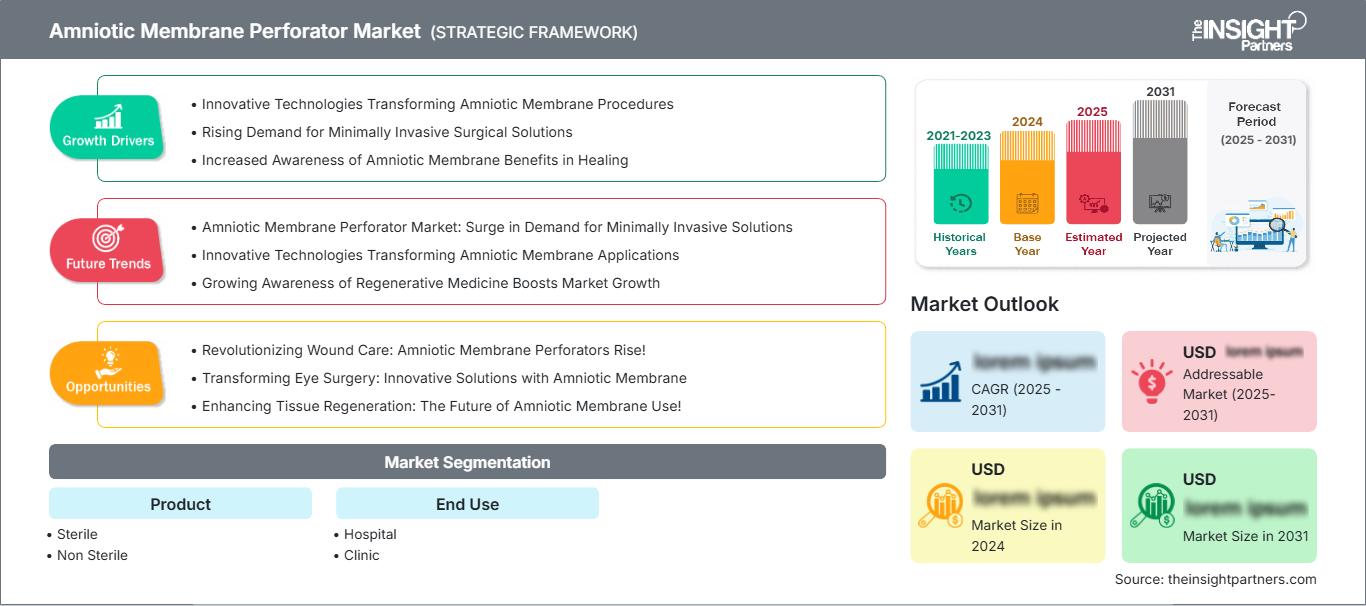
Amniotic Membrane Perforator Market: Strategic Insights
Regional Insights
North America Amniotic Membrane Perforator Market
North America held 35–38% share in 2025 and is projected to grow at a CAGR of 7.4–8.0% from 2026 to 2034. The Amniotic Membrane Perforator Market share in the region reflects high institutional delivery rates, extensive use of single-use obstetric supplies, and mature procurement through distributors serving hospitals, ambulatory centers, and physician-owned maternity clinics.
Clinical standardization remains the main structural driver. US and Canadian hospitals emphasize sterile packs, latex-free plastics, and clear labeling to reduce variability in labor rooms. Established vendors benefit from recurring demand attached to delivery volumes, while new entrants must prove consistent manufacturing, complaint handling, and distributor service levels before securing preferred-supplier status.
U.S. Amniotic Membrane Perforator Market
The US accounted for 78–82% of North America in 2025 and is expected to grow at a CAGR of 7.3–7.9% between 2026 and 2034. Demand is shaped by large hospital networks, high cesarean monitoring awareness, and continued use of controlled amniotomy where clinically indicated during labor induction or augmentation.
Company presence is strongest through acute-care distributors and online medical supply platforms. DeRoyal Industries, Inc., MedGyn Products, Inc., and Aspen-linked labor and delivery catalogs have influenced product expectations around protected tips, ergonomic grips, and individual sterile packaging. Application trends favor ready-to-use devices that shorten setup time, maintain asepsis, and support consistent procedural handling by obstetric teams.
Europe Amniotic Membrane Perforator Market
Europe represented 27–30% share in 2025 and is forecast to grow at a CAGR of 7.0–7.6% through 2034. Germany remains a leading country because of disciplined hospital procurement and strong medical device compliance culture. The United Kingdom enjoys reliable demand from NHS maternity clinics, where standardization, pricing transparency, and infection control contribute to supplier selection.
France enjoys homegrown know-how in the field of women’s health, such as Laboratoire CCD’s expanded offering of obstetrics and gynecology. Italy boasts specialized manufacturers such as RI.MOS. S.r.l., whereas Spain demonstrates reliable replacement demand for both public and private maternity institutions. EU Medical Device Regulation compliance increases documentation needs, but it favors manufacturers who have quality systems and multilingual packaging capabilities.
APAC Amniotic Membrane Perforator Market
Asia Pacific accounted for 22–25% share in 2025 and is expected to grow at a CAGR of 8.7–9.4% from 2026 to 2034, making it the fastest regional cluster. China leads in the Institutional Delivery Scale ranking, whereas the increasing number of maternity facilities in India is leading to an increased need for affordable sterilized disposables.
Countries such as Japan, South Korea, and Australia stress the importance of quality certifications and distributor credibility. The proportion of institutional deliveries in India touched over nine-tenths of all deliveries during the last national survey cycle, thus making the potential market base for disposable obstetrics goods bigger.
Middle East & Africa Amniotic Membrane Perforator Market
The Middle East & Africa market is projected to grow at a CAGR of 6.5–7.1% between 2026 and 2034. Demand is driven by Saudi Arabia via its hospitals' modernization, maternity ward development, and central purchasing. The UAE promotes the use of high-quality products through its private hospitals and women's health-related services from medical tourism.
The major customer of Africa is South Africa due to its well-developed private hospital facilities and birth volumes in the public sector. Demand in other Middle East & Africa (MEA) is erratic, influenced by deficiencies in infrastructure, import dependence, and tenders. Funding of healthcare by energy revenues in the Gulf is an important factor in repeat sales.
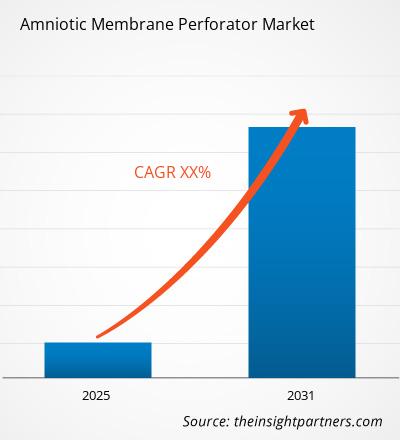
Segmentation Analysis
Product
The Product segment is expected to grow at a CAGR of 7.8–8.4% from 2026 to 2034. The market scope across product types is defined by sterility level, packaging format, ergonomic design, and compliance with hospital infection-prevention policies. Sterile versions dominate clinical purchasing, while non-sterile formats remain selective in training, bundled packs, or markets with different procurement practices.
- Sterile: Sterile products hold the strongest position because they align with labor-room asepsis, single-use workflows, and distributor catalog requirements. Their strategic value lies in reducing reprocessing steps and standardizing procedural readiness.
- Non-Sterile: Non-Sterile products serve a narrower demand where facilities manage separate sterilization workflows or require economical bulk items. Their relevance is concentrated in price-sensitive procurement and selected non-acute channels.
End Use
The End Use segment is projected to grow at a CAGR of 7.5–8.0% from 2026 to 2034. Hospitals remain the anchor customers because amniotomy is generally performed within monitored labor settings. Clinics contribute incremental demand where maternity care, prenatal assessment, or affiliated birth centers operate under physician supervision and maintain procedural consumables.
- Hospital: Hospital end use dominates due to delivery-room volumes, standardized labor protocols, and bulk purchasing through central supply teams. Strategic importance comes from predictable repeat orders and formal vendor qualification.
- Clinic: Clinic demand is smaller but relevant in private maternity networks and outpatient women’s health settings. Adoption depends on physician practice patterns, local regulations, and access to sterile disposable obstetric supplies.
Opportunity Snapshot
| Segment Name | Revenue Contribution | Trend Tag | Adoption Stage |
| Hospital | High | Delivery Kits | Mature |
| Clinic | Medium | Private Birth | Scaling |
Amniotic Membrane Perforator Market Growth Drivers and Impact Analysis
Rising Facility-Based Deliveries
The shift from home births to facility-based maternity care is expanding the procedural base for sterile obstetric instruments. Countries with maternal health programs are improving antenatal attendance, skilled birth attendance, and referral pathways, which increases exposure to standardized labor-room consumables. For the Amniotic Membrane Perforator Market, this translates into repeat purchasing by hospitals and public health facilities rather than sporadic individual procurement. The impact is strongest in Asia Pacific and parts of the Middle East, where maternity infrastructure investments are increasing monitored deliveries. Manufacturers that offer affordable sterile packs, distributor training, and compliant labeling can convert institutional birth growth into recurring demand while reducing dependence on high-income markets.
Preference for Single-Use Sterile Obstetric Devices
The need for infection control is driving maternity departments to adopt single-use items, which come in a pre-sterilized form that can be put into practice immediately. Amniotic membrane perforators are inexpensive items, but owing to their procedure-oriented use, sterility, tip safety, and reliable packaging become major considerations. Hospital administrators favor single-use items due to their reduced need for cleaning validation, reduced cross-contamination possibilities, and ease of assembly by nurses before any physician involvement. This is a driver that helps in premiumizing the product category since cost-conscious buyers may judge the entire procedural cost rather than the item cost.
Growth of Obstetric Supply Standardization
Healthcare systems are increasingly standardizing delivery-room supply chains to improve clinical consistency and reduce stockouts. Obstetric kits, central stores, barcode tracking, and group purchasing agreements support predictable consumption of disposable instruments. This trend benefits the Amniotic Membrane Perforator Market because perforators can be embedded into labor and delivery catalogs, emergency obstetric packs, or routine maternity supply lists. The market impact is visible in stronger distributor relationships and lower switching rates once a device earns clinician acceptance. Vendors that maintain dependable fill rates, clear product specifications, and flexible pack sizes can capture larger account-level volumes while helping hospitals reduce SKU complexity.
Amniotic Membrane Perforator Market Future Trends
Ergonomic and Atraumatic Design Refinement
The next phase of the Amniotic Membrane Perforator Market trends will focus on subtle design refinements rather than radical device changes. Manufacturers must enhance geometry of the hook, handling grip, surface texture, and control for easier manipulation and safer engagement of membranes during amniotomy. There will be increasing need for products that minimize unwanted contact with tissue, increase visibility through non-reflective materials, and facilitate easy use by clinicians at different experience levels. Such innovations could make it possible for manufacturers to differentiate their products from competitors where sterility remains an established minimum requirement.
Localized Manufacturing and Regional Registration
Supply chain resilience is likely to be one of the most crucial factors in purchasing decisions for disposable obstetrics devices. More organizations are considering suppliers’ resilience and their ability to keep their operations going in case of transport-related, sterilization process-related, material-related, or customs-related disruptions. Increasingly, healthcare providers are favoring suppliers that employ multiple sourcing strategies, have good inventory management, and have contingency plans in place. Having regional manufacturing plants, engaging in contract molding relationships, and registering in local markets will become increasingly critical for reliable supplies and regulatory approval. Building packaging, warehousing, or distribution facilities in the Asia Pacific, Latin American, and Gulf regions can result in quicker response, shorter lead time, and higher level of services without any deterioration of product quality or quality control practices.
Amniotic Membrane Perforator Market Opportunities
Expansion in Public Maternity Procurement
Public-sector maternity programs offer a sizable opportunity because institutional deliveries are rising in several emerging economies. Suppliers can pursue Amniotic Membrane Perforator Market Forecasts by aligning products with tender requirements, local language labeling, and affordable sterile pack configurations. The most attractive opportunities are in countries upgrading district hospitals, maternal referral centers, and emergency obstetric care networks. Winning public procurement requires more than price; manufacturers need registration support, distributor accountability, stable sterilization documentation, and consistent packaging. Companies that build educational material for safe amniotomy handling can strengthen acceptance while creating a defensible position in recurring government supply cycles.
Integration into Labor and Delivery Procedure Kits
Bundling of the Perforators within kits may enhance their visibility and increase usage frequency by the eligible supplier. Hospitals have grown to favor procedure kits that reduce the need for gathering single pieces of equipment and decrease the probability of losing any equipment due to rush during work hours. It is through the bundling of the products that the manufacturer benefits from channel power through collaborations with medical supply companies, group purchasing organizations, and maternity supply distributors. This is especially true for North American and European hospitals, which emphasize efficiency in work flow.
Recent Developments
- January 2026: Aspen Surgical Products, Inc. announced the acquisition of Ruhof Healthcare, expanding its global infection-prevention and reprocessing solutions portfolio. While not specific to amniotic perforators, the transaction strengthens Aspen’s broader hospital supply positioning and reinforces its focus on perioperative and procedural safety categories relevant to labor and delivery procurement
- March 2025: DeRoyal Industries, Inc. acquired Skyline Medical’s Streamway wall suction waste fluid management assets, adding an automated direct-to-drain system used in clinical environments. The acquisition broadens DeRoyal’s hospital workflow portfolio and supports its positioning with healthcare facilities that value safety, waste handling efficiency, and operational reliability across procedural departments
- November 2025: Narang Medical Limited promoted its participation at MEDICA 2025 in Düsseldorf, highlighting medical equipment, hospital consumables, and export-oriented product lines. The event participation supports distributor engagement in Europe and reinforces the company’s strategy of expanding international visibility for medical consumables and hospital supplies
Frequently Asked Questions

- Comprehensive Market Sizing and Forecast Analysis
- Detailed Segmentation Analysis
- In-Depth Market Dynamics Assessment
- Regional and Country-Level Insights
- Competitive Landscape and Company Benchmarking
- Strategic Business Intelligence
Recent Reports
Testimonials

The Insight Partners' SCADA System Market report is comprehensive, with valuable insights on current trends and future forecasts. The team was highly professional, responsive, and supportive throughout. We are very satisfied and highly recommend their services.
RAN KEDEM Partner, Reali Technologies LTDs
I requested a report on a very specific software market and the team produced the report in a few days. The information was very relevant and well presented. I then requested some changes and additions to the report. The team was again very responsive and I got the final report in less than a week.
JEAN-HERVE JENN Chairman, Future Analytica
We worked with The Insight Partners for an important market study and forecast. They gave us clear insights into opportunities and risks, which helped shape our plans. Their research was easy to use and based on solid data. It helped us make smart, confident decisions. We highly recommend them.
PIYUSH NAGPAL Sr. Vice President, High Beam Global
The Insight Partners delivered insightful, well-structured market research with strong domain expertise. Their team was professional and responsive throughout. The user-friendly website made accessing industry reports seamless. We highly recommend them for reliable, high-quality research services
YUKIHIKO ADACHI CEO, Deep Blue, LLC.
This is the first time I have purchased a market report from The Insight Partners.While I was unsure at first, I visited their web site and felt more comfortable to take the risk and purchase a market report.I am completely satisfied with the quality of the report and customer service. I had several questions and comments with the initial report, but after a couple of dialogs over email with their analyst I believe I have a report that I can use as input to our strategic planning process.Thank you so much for taking the extra time and making this a positive experience.I will definitely recommend your service to others and you will be my first call when we need further market data.
JOHN SUZUKI President and Chief Executive Officer, Board Director, BK Technologies
I wish to appreciate your support and the professionalism you displayed in the course of attending to my request for information regarding to infectious disease IVD market in Nigeria. I appreciate your patience, your guidance, and the fact that you were willing to offer a discount, which eventually made it possible for us to close a deal. I look forward to engaging The Insight Partners in the future, all thanks to the impression you have created in me as a result of this first encounter.
DR CHIJIOKE ONYIA MANAGING DIRECTOR, PineCrest Healthcare Ltd.Reason to Buy
- Informed Decision-Making
- Understanding Market Dynamics
- Competitive Analysis
- Identifying Emerging Markets
- Customer Insights
- Market Forecasts
- Risk Mitigation
- Boosting Operational Efficiency
- Strategic Planning
- Investment Justification
- Tracking Industry Innovations
- Aligning with Regulatory Trends





 Get Free Sample for