
BPA Free Cans Market Share, Growth & Demand by 2034
Coverage: By Material Type (Plastic, Aluminium, Steel); End Use Industry (Food and Beverage, Pharmaceuticals, Personal and Home care, Others) , and Geography (North America, Europe, Asia Pacific, and South and Central America)
- Status : Data Released
- Report Code : TIPRE00021616
- Category : Chemicals and Materials
- No. of Pages : 150
- Available Report Formats :


- Last update date : July 16, 2026


2025 Market Size
US$ 8.61 Bn
Base year value
2034 Forecast
US$ 12.35 Bn
Projected by 2034
CAGR 2026-2034
4.10 %
Growth rate
Addressable Market
US$ 95.24 Bn
(2026-2034)
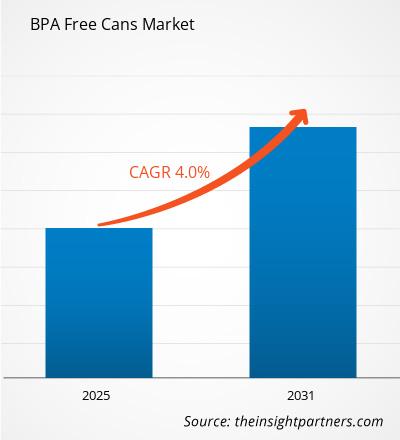
The global BPA Free Cans Market held a valuation of US$ 8.61 billion in 2025 and is expected to reach a value of US$ 12.35 billion by 2034 growing at a CAGR of 4.10% from 2026 to 2034. The shift towards more safe food contact packaging, regulatory requirements for chemical migration from packaging material, and increasing awareness among consumers about BPA free packaging keeps on driving the market for the use of BPA Free Cans in the food & beverages, pharma and personal care sectors.
Across North America, demand continues to benefit from well-established food processing industries, extensive beverage production, and widespread adoption of recyclable packaging solutions. The BPA Free Cans Market size in the region is supported by investments in aluminum can manufacturing, continuous innovation in non-BPA coating technologies, and evolving regulations surrounding food-contact materials. The regional market is anticipated to expand at a CAGR of 3.8%–4.3% through 2034, supported by growing sustainability commitments from brand owners and packaging manufacturers.
BPA Free Cans Market Assessment and Insights
- North America: North America accounted for 34%–36% share in 2025 and is projected to grow at a CAGR of 3.8%–4.3% during 2026–2034. Demand is supported by stringent food-contact regulations, high packaged food consumption, expanding beverage can production, and increasing investments in recyclable metal packaging infrastructure.
- US: The U.S. represented 72%–75% of the North American market in 2025 and is anticipated to register a CAGR of 3.9%–4.4% through 2034, driven by beverage packaging innovation, strong food manufacturing capacity, and increasing adoption of BPA-free coating systems.
- Europe: Europe held 27%–29% share in 2025 and is forecast to expand at a CAGR of 3.9%–4.4% during 2026–2034. Germany, France, the UK, Italy, and Spain continue to lead regional demand owing to circular economy initiatives, recycling regulations, and mature food and beverage packaging industries.
- Asia Pacific: Asia Pacific accounted for 29%–31% share in 2025 and is expected to record the fastest regional CAGR of 4.8%–5.3% during 2026–2034. China, Japan, South Korea, India, and Southeast Asian countries are expanding production capacity to serve growing packaged food and beverage demand.
- Largest Segment: Food and Beverage represented 67%–70% market share in 2025 and is anticipated to grow at a CAGR of 4.1%–4.5% during 2026–2034, supported by increasing consumption of canned beverages, ready-to-eat meals, and shelf-stable packaged foods.
- High Growth Segment: Aluminum accounted for 52%–55% market share in 2025 and is projected to expand at a CAGR of 4.5%–4.9% during 2026–2034, benefiting from lightweight characteristics, high recyclability, and strong preference among beverage manufacturers.
- Key companies analyzed in detail: CPMC Holdings Limited, Kian Joo Can Factory Berhad, Toyo Seikan Co., Ltd., CANPACK S.A., Ardagh Metal Packaging S.A., Silgan Holdings Inc., Ball Corporation, Crown Holdings, Inc., CCL Industries Inc., PPG Industries, Inc.
Source: The Insight Partners' analysis based on proprietary research, government publications, company annual reports, investor presentations, industry databases, and expert interviews.
The metal packaging technologies have been advancing by using more advanced BPA free internal coating solutions instead of traditional epoxy coatings, which comply with the highest food safety and environmental standards. The technological developments in improved coating technologies, lightweight can production, fast production lines, and recycling have contributed to improved product performance and a reduced carbon footprint throughout the lifecycle of these products. At the same time, beverage and food manufacturers are focused on providing sustainable, safe, and long-life packaging solutions that meet consumer needs to support the future development of the BPA Free Cans market.
In the future, the investments are likely to grow in Asia Pacific, Latin America and some countries in the Middle East due to the increasing packaged food consumption, urbanization and development of retail chains. The governmental regulations related to the usage of recyclable materials and advancement in the areas of water-based and polyester coating technologies will contribute to the implementation of new generation of BPA-free packaging solutions.
BPA Free Cans Market Report Scope
| Report Attribute | Details |
|---|---|
| Market size in 2025 | US$ 8.61 Billion |
| Market Size by 2034 | US$ 12.35 Billion |
| Global CAGR (2026 - 2034) | 4.10% |
| Historical Data | 2021-2024 |
| Forecast period | 2026-2034 |
BPA Free Cans Market Analysis
Increased consumer awareness about safety, non-chemical packaging, and sustainability is boosting the BPA Free Cans Market growth prospects. There have been changes in regulatory requirements for food-contact materials, which are pushing manufacturers to move from conventional epoxy coatings to BPA-free alternatives. The increased consumption of canned drinks, prepared meals, infant formula products, and pharmaceuticals in packaged form is driving market demand. Simultaneously, the increased recycling rate of aluminum and steel cans, along with the adoption of advanced coating technology, is enhancing the sustainability of metal containers.
The value chain consists of material suppliers, coating manufacturers, can manufacturers, fillers, brand owners, distributors, and recyclers that work together in enhancing the packaging process and sustainability. Aluminum makers are increasingly working on the production of low-carbon metals, whereas coating manufacturers are developing polyester, acrylic, and oleoresin-based coatings for food safety regulations. Strong coordination between packaging and consumer goods companies is resulting in shorter product development cycles and large-scale commercialization of BPA-free packaging systems.
The BPA Free Cans Market analysis indicates continuous investment into increased manufacturing efficiencies, product development, and regional manufacturing growth. The key market participants, such as Ball Corporation, Crown Holdings, Inc., Ardagh Metal Packaging S.A., Silgan Holdings Inc., CANPACK S.A., Toyo Seikan Co., Ltd., and CPMC Holdings Limited, continue building their competitive positions through manufacturing capacity expansion, development of lightweight packaging technologies, and sustainable coatings innovations. The strategic partnership with beverage and food companies helps secure long-term contracts and increase operational resilience across regions.
Digital manufacturing, automation technologies, high-speed manufacturing lines, and coating innovations that comply with environmental regulations are used to improve production efficiency and reduce lifecycle emissions. The BPA-free coating formulations are continuously developed by the PPG Industries, Inc., while the innovations in labeling and packaging are provided by CCL Industries Inc. The Kian Joo Can Factory Berhad is still investing in its packaging capacity expansion within the Southeast Asia region.
● REPORT CUSTOMIZATION
Tailor This Report To Align With Your Specific Business Requirements
This report can be customized to align precisely with your business objectives, scope, and target markets. Customization options include tailored segmentation, geography, competitive analysis, and strategic insights to support informed decision-making.
Customize This Report →WHAT YOU CAN ADJUST
- ● Segmentations
- ● Geography
- ● Competitive Analysis
- ● Language Preferences
BPA Free Cans Market: Strategic Insights

Regional Insights
North America BPA Free Cans Market
North America represents 34% to 36% share of the total market in 2025 and is predicted to grow at a CAGR of 3.8% to 4.3% over 2026–2034. The BPA Free Cans Market share in North America is driven by healthy consumption of food packaging, beverage cans, and pharmaceutical applications demanding food-grade packaging. Regulatory control exerted by authorities like the U.S. Food and Drug Administration and Health Canada is aiding the adoption of BPA free coatings, prompting producers to upgrade their plant capacities.
There is a good aluminum can recycling infrastructure, higher beverage can consumption, and a focus on sustainable packaging in the region. Major manufacturers are increasing their production capacity in line with coating companies improving the barrier properties and corrosion resistance of the coating. Growth in consumer preference for recyclable packaging is anticipated to fuel consistent growth of the market in the coming years.
U.S. BPA Free Cans Market
The U.S. represented 72%–75% of the North American market in 2025 and is anticipated to register a CAGR of 3.9%–4.4% through 2034. Strong packaged food production, a mature beverage industry, and increasing demand for canned energy drinks, carbonated beverages, and ready-to-eat meals continue supporting market expansion. Investments in domestic aluminum can manufacturing and advanced BPA-free coating technologies have further strengthened the country's competitive position within North America.
Major packaging companies, including Ball Corporation, Crown Holdings, Inc., Silgan Holdings Inc., PPG Industries, Inc., and CCL Industries Inc., maintain significant manufacturing and innovation activities across the country. Growing adoption of lightweight aluminum packaging, improvements in recycling rates, and increasing sustainability initiatives among consumer goods manufacturers are expected to reinforce long-term demand for BPA-free can solutions across multiple end-use industries.
Europe BPA Free Cans Market
Europe secured 27%–29% market share in 2025 and is expected to record a CAGR of 3.9%–4.4% during 2024–2034. Europe is driven by strict chemical safety norms, highly focused circular economy goals, and one of the leading recycling rates for metal packages globally. Environmental policies will continue to drive the use of BPA-free coatings in food, beverage, and healthcare packaging applications, ensuring sustained demand for sustainable can manufacturing processes.
Germany holds the dominant position in the European market due to its developed food processing industry, advanced packaging manufacturing capabilities, and significant investments in recyclable aluminum packaging products. The presence of a powerful industrial base and sustainable manufacturing in the country continues to attract investment in advanced coating and lightweight can manufacturing.
On the other hand, the UK shows steady demand because of its well-developed beverage industry and rising awareness of environmentally responsible packaging solutions. At the same time, France, Italy, and Spain further support the growth of the region's market due to increased food exports, higher canned food consumption, and more widespread use of recyclable packaging materials.
APAC BPA Free Cans Market
Asia Pacific accounted for 29%–31% of the global market in 2025 and is expected to register the fastest regional CAGR of 4.8%–5.3% through 2034. China remains the leading producer and consumer, while Japan and South Korea continue investing in advanced packaging technologies. India is experiencing rapid expansion due to rising urbanization, packaged food consumption, and organized retail development.
Government initiatives promoting sustainable packaging, expanding beverage manufacturing capacity, and increasing investments in aluminum recycling are strengthening regional competitiveness. Australia also contributes through growing demand for recyclable beverage packaging and environmentally compliant food-contact materials.
Middle East & Africa BPA Free Cans Market
The Middle East & Africa market is projected to grow at a CAGR of 4.2%–4.7% during 2026–2034. Saudi Arabia and the United Arab Emirates continue investing in food manufacturing, beverage production, and modern packaging infrastructure to support rising domestic consumption. South Africa remains an important manufacturing and distribution hub within Sub-Saharan Africa.
Infrastructure development, expanding retail networks, and increasing awareness of sustainable packaging are creating favorable conditions for BPA-free can adoption across the region. Continued diversification of manufacturing activities beyond the energy sector is expected to support long-term demand for safe and recyclable metal packaging solutions.
Segmentation Analysis
Material
The Material segment plays a pivotal role in determining product performance, recyclability, and manufacturing efficiency within the BPA Free Cans Market scope. The segment is projected to expand at a CAGR of 4.2%–4.6% during 2026–2034, supported by increasing preference for lightweight, recyclable, and chemically safe packaging materials. Growing investments in advanced metal processing technologies and BPA-free coating systems continue to improve corrosion resistance, shelf life, and sustainability across food, beverage, and pharmaceutical packaging applications.
- Plastic: Plastic BPA-free cans are utilized for selected consumer products where lightweight construction, impact resistance, and cost efficiency are prioritized. Continuous material innovation is improving recyclability and expanding niche applications across personal care and household products.
- Aluminum: Aluminum remains the preferred packaging material due to its lightweight characteristics, excellent recyclability, corrosion resistance, and compatibility with BPA-free internal coatings. Beverage manufacturers increasingly adopt aluminum cans to support sustainability goals and circular economy initiatives.
- Steel: Steel cans continue to maintain strong demand for canned foods requiring superior mechanical strength and extended shelf life. Advances in coating technologies and improved recycling infrastructure are supporting continued adoption across industrial and food packaging applications.
End Use Industry
The End Use Industry segment is anticipated to grow at a CAGR of 4.3%–4.7% during 2026–2034, driven by expanding packaged food consumption, increasing beverage production, and rising regulatory emphasis on food-contact safety. BPA-free packaging solutions are gaining wider acceptance as manufacturers prioritize compliance, sustainability, and consumer health while responding to evolving packaging regulations across developed and emerging markets.
- Food and Beverage: This segment represents the largest application, supported by growing demand for canned beverages, ready-to-eat meals, fruits, vegetables, seafood, dairy products, and nutritional foods requiring safe, durable, and recyclable packaging solutions.
- Pharmaceuticals: Pharmaceutical manufacturers increasingly adopt BPA-free metal packaging for nutritional supplements, medical nutrition products, and specialized formulations where product integrity, contamination prevention, and regulatory compliance remain essential throughout storage and distribution.
- Personal and Home Care: Personal and home care manufacturers continue expanding the use of BPA-free cans for aerosol products, deodorants, air fresheners, hair care products, and household cleaners, benefiting from improved coating durability and growing sustainability commitments.
Opportunity Snapshot
| Segment Name | Revenue Contribution | Trend Tag | Adoption Stage |
| Food and Beverage | High | Clean Label | Mature |
| Pharmaceuticals | Medium | Drug Safety | Scaling |
| Personal and Home Care | Medium | Sustainable Aerosols | Scaling |
| Others | Low | Specialty Packaging | Emerging |
BPA Free Cans Market Growth Drivers and Impact Analysis
Stringent Regulations Promoting BPA-Free Food Contact Packaging
Regulatory initiatives by government authorities in North America, Europe, and certain regions of the Asia-Pacific are continually enhancing guidelines on food-contact materials to limit consumer exposure to bisphenol-containing chemicals. The regulatory environment has forced food manufacturers, beverage makers, and the pharmaceutical industry to move towards BPA-free internal can coatings in line with safety standards. This is driving manufacturers of packaging materials to develop coatings using polyester, acrylic, and other coating technologies that offer comparable levels of corrosion resistance and product protection while ensuring food safety. It is driving modernization in metal packaging manufacturing plants while opening new avenues for suppliers of coatings, raw materials, and cans.
Growing Consumption of Packaged Foods and Ready-to-Drink Beverages
With shifts in consumer behavior, urbanization, and rising disposable incomes, demand for packaged products and RTD beverages remains robust in the global market. Modern consumers prefer convenient, long-lasting products with good portability and safe packaging. Metal cans offer many such benefits and are therefore an ideal choice for various applications. At the same time, the introduction of healthy beverages and nutritional products, along with premium canned foods with advanced coatings (BPA-free), demands high-quality packaging. The growth in organized retail and online grocery shopping platforms also boosts the demand for packaged products.
Expansion of Sustainable Metal Packaging and Circular Economy Initiatives
Sustainability objectives established by governments, consumer brands, and packaging manufacturers are significantly increasing investment in recyclable metal packaging solutions. Aluminum and steel cans offer high recycling rates, reduced material losses, and strong compatibility with circular economy strategies, making them preferred alternatives to several single-use packaging formats. Manufacturers continue improving lightweight designs, production efficiency, and recycled metal utilization to lower carbon emissions throughout the packaging lifecycle. Brand owners are simultaneously incorporating sustainability targets into procurement strategies, increasing demand for BPA-free coated cans capable of supporting environmental commitments without compromising product performance. Continued advancements in recycling infrastructure and low-carbon manufacturing technologies are expected to reinforce long-term market competitiveness.
BPA Free Cans Market Future Trends
Development of Advanced Non-BPA Internal Coating Technologies
Continuous innovation in coating chemistry is expected to reshape the BPA Free Cans Market trends over the coming decade. Manufacturers are investing in polyester, acrylic, oleoresin, and other next-generation formulations that provide improved corrosion resistance, enhanced product compatibility, and regulatory compliance without using bisphenol-based compounds. Advances in coating application processes, curing technologies, and material science are expected to improve manufacturing efficiency while extending shelf life for packaged food and beverage products. These innovations will support broader commercial adoption across multiple end-use industries.
Increasing Adoption of Low-Carbon and Recyclable Packaging Solutions
Packaging manufacturers and consumer brands are increasingly aligning with global decarbonization objectives by expanding the use of recyclable aluminum and steel containers produced with lower lifecycle emissions. Investments in renewable energy-powered manufacturing facilities, recycled metal utilization, lightweight packaging designs, and digital production monitoring are expected to improve operational efficiency while supporting corporate sustainability commitments. Growing collaboration between raw material suppliers, coating manufacturers, and brand owners is likely to accelerate commercialization of environmentally responsible BPA-free packaging technologies across developed and emerging markets.
BPA Free Cans Market Opportunities
Expansion into High-Growth Emerging Food and Beverage Markets
Rapid urbanization, rising disposable incomes, and changing dietary habits across Asia Pacific, Latin America, and parts of the Middle East are creating attractive investment opportunities for manufacturers of BPA-free cans. The BPA Free Cans Market Forecasts indicate that expanding packaged food consumption, increasing beverage production, and the rapid growth of modern retail channels will continue supporting demand for compliant metal packaging. Companies investing in localized manufacturing facilities, advanced coating technologies, and strategic partnerships with regional food and beverage producers can strengthen supply chain resilience while reducing transportation costs. Establishing production capacity closer to end markets also enables manufacturers to respond more effectively to evolving regulatory requirements and customer preferences for sustainable, food-safe packaging solutions.
Innovation in Premium and Specialty Packaging Applications
The growing popularity of premium beverages, functional drinks, infant nutrition, specialty foods, and healthcare products is creating new opportunities for value-added BPA-free can solutions. Manufacturers can differentiate their offerings through enhanced barrier coatings, lightweight materials, improved graphics, and smart packaging features that strengthen product appeal while maintaining food safety standards. Investment in digital printing technologies, customized packaging formats, and recyclable material innovations can help companies address evolving consumer expectations and brand owner sustainability objectives. Collaboration with food processors, pharmaceutical companies, and personal care manufacturers will further accelerate commercialization of specialized packaging solutions while supporting long-term revenue growth across higher-value market segments.
Recent Developments
- July 2025: PPG Industries, Inc. expanded its portfolio of BPA-NI (Bisphenol A Non-Intent) and PFAS-free internal coatings for beverage can ends. The new coating technologies are designed to help beverage manufacturers comply with evolving food-contact regulations while maintaining corrosion resistance, product integrity, and manufacturing efficiency.
- March 2026: BASF SE launched Ultrason® P, a new high-performance polyethersulfone (PESU) grade that is free from BPA and BPS in its formulation. The material is intended for food-contact and consumer applications requiring enhanced chemical safety and regulatory compliance, supporting broader industry adoption of BPA-free materials across packaging value chains.
Frequently Asked Questions

- Comprehensive Market Sizing and Forecast Analysis
- Detailed Segmentation Analysis
- In-Depth Market Dynamics Assessment
- Regional and Country-Level Insights
- Competitive Landscape and Company Benchmarking
- Strategic Business Intelligence
Recent Reports
Testimonials

The Insight Partners provided valuable market intelligence that supported our global go-to-market strategy. Their team was professional, responsive, and attentive to our feedback, providing thoughtful analysis and helpful methodological clarifications throughout the project.
Junmo Kim Chief Financial Officer (CFO), Enertech Co., Ltd.
The Insight Partners' SCADA System Market report is comprehensive, with valuable insights on current trends and future forecasts. The team was highly professional, responsive, and supportive throughout. We are very satisfied and highly recommend their services.
RAN KEDEM Partner, Reali Technologies LTDs
I requested a report on a very specific software market and the team produced the report in a few days. The information was very relevant and well presented. I then requested some changes and additions to the report. The team was again very responsive and I got the final report in less than a week.
JEAN-HERVE JENN Chairman, Future Analytica
We worked with The Insight Partners for an important market study and forecast. They gave us clear insights into opportunities and risks, which helped shape our plans. Their research was easy to use and based on solid data. It helped us make smart, confident decisions. We highly recommend them.
PIYUSH NAGPAL Sr. Vice President, High Beam Global
The Insight Partners delivered insightful, well-structured market research with strong domain expertise. Their team was professional and responsive throughout. The user-friendly website made accessing industry reports seamless. We highly recommend them for reliable, high-quality research services
YUKIHIKO ADACHI CEO, Deep Blue, LLC.
This is the first time I have purchased a market report from The Insight Partners.While I was unsure at first, I visited their web site and felt more comfortable to take the risk and purchase a market report.I am completely satisfied with the quality of the report and customer service. I had several questions and comments with the initial report, but after a couple of dialogs over email with their analyst I believe I have a report that I can use as input to our strategic planning process.Thank you so much for taking the extra time and making this a positive experience.I will definitely recommend your service to others and you will be my first call when we need further market data.
JOHN SUZUKI President and Chief Executive Officer, Board Director, BK Technologies
I wish to appreciate your support and the professionalism you displayed in the course of attending to my request for information regarding to infectious disease IVD market in Nigeria. I appreciate your patience, your guidance, and the fact that you were willing to offer a discount, which eventually made it possible for us to close a deal. I look forward to engaging The Insight Partners in the future, all thanks to the impression you have created in me as a result of this first encounter.
DR CHIJIOKE ONYIA MANAGING DIRECTOR, PineCrest Healthcare Ltd.Reason to Buy
- Informed Decision-Making
- Understanding Market Dynamics
- Competitive Analysis
- Identifying Emerging Markets
- Customer Insights
- Market Forecasts
- Risk Mitigation
- Boosting Operational Efficiency
- Strategic Planning
- Investment Justification
- Tracking Industry Innovations
- Aligning with Regulatory Trends





 Get Free Sample for