
Diuretic Drugs Market Size, Growth & Trends by 2034
Coverage: By Type ( Osmotic Diuretics, Carbonic Anhydrase Inhibitors, Loop Diuretics, Thiazides and Thiazide-Like Diuretics, Aldosterone Antagonists ); Application ( Hypertension, Glaucoma, Heart Failure, Kidney Stones ); Route of Administration ( Intravenous, Oral ), and Geography (North America, Europe, Asia Pacific, and South and Central America)
- Status : Data Released
- Report Code : TIPRE00020003
- Category : Life Sciences
- No. of Pages : 150
- Available Report Formats :


- Last update date : July 15, 2026


2025 Market Size
US$ 3.95 Bn
Base year value
2034 Forecast
US$ 5.63 Bn
Projected by 2034
CAGR 2026-2034
4.02 %
Growth rate
Addressable Market
US$ 43.52 Bn
(2026-2034)
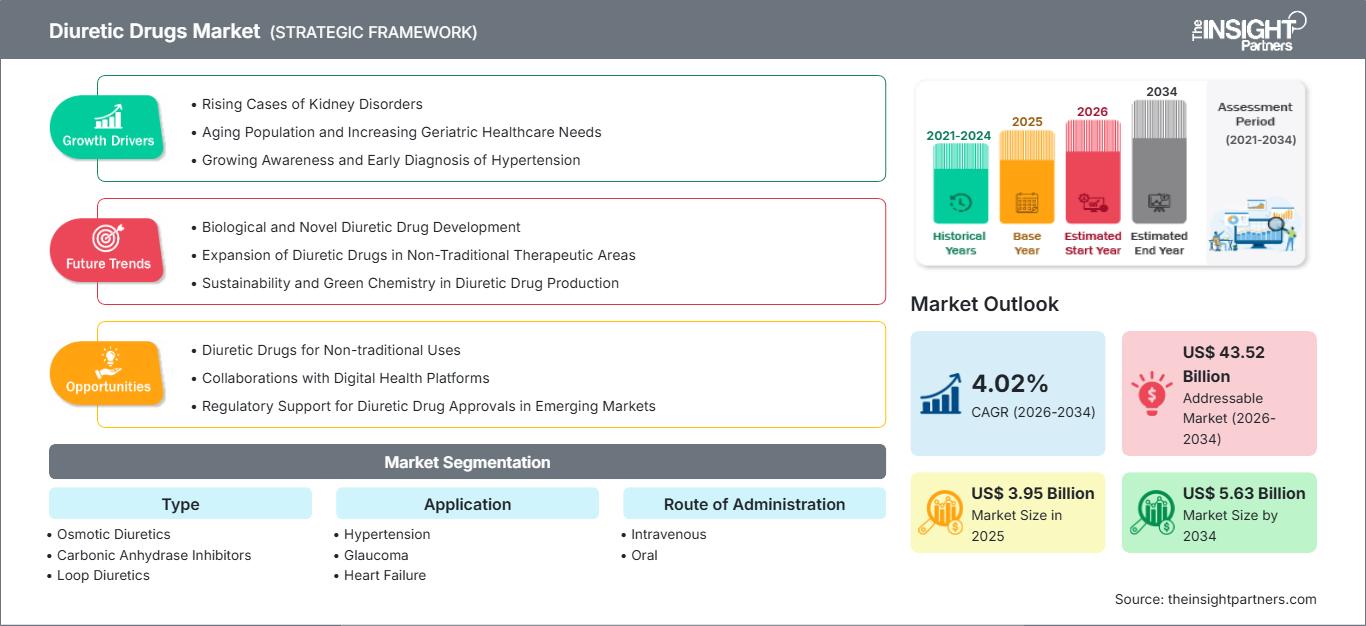
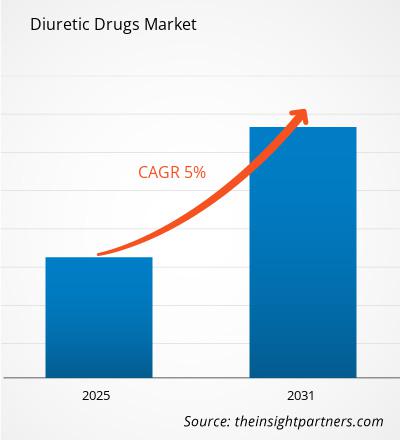
The Diuretic Drugs Market size was estimated at US$ 3.95 Billion in 2025 and is projected to reach approximately US$ 5.63 Billion by 2034, advancing at an estimated 4.02% CAGR during the forecast period. Rising prevalence of hypertension, heart failure, and chronic kidney disorders remains central to long-term market expansion.
North America represents a mature yet steadily advancing landscape for the diuretic drugs market, supported by high diagnosis rates and established treatment protocols. The regional market is anticipated to expand at an estimated 3.8–4.1% CAGR through 2034. Increasing incidence of cardiovascular diseases, growing elderly populations, and broader adoption of combination therapies are strengthening prescription volumes. Continuous optimization of hospital-based heart failure management programs further supports demand across both oral and injectable diuretic formulations.
Diuretic Drugs Market Assessment and Insights
- North America: North America accounted for a 33–37% share in 2025 and is anticipated to expand at a CAGR of 3.6%–4.2% during 2026–2034. High prevalence of hypertension and heart failure, well-established treatment guidelines, and extensive generic drug availability continue to support regional market leadership.
- U.S.: The U.S. represented 79–83% of the North American diuretic drugs market in 2025 and is projected to register a CAGR of 3.7%–4.3% during 2026–2034, supported by increasing heart failure admissions, high hypertension prevalence, and a well-developed generic drug dispensing infrastructure.
- Europe: Europe held 26–30% diuretic drugs market share in 2025 and is expected to grow at a CAGR of 3.4%–4.0% during 2026–2034. Germany, the United Kingdom, and France remain the leading regional markets due to established hypertension treatment pathways, aging populations, and continued hospital utilization of injectable diuretics.
- Asia Pacific: Asia Pacific accounted for 24–28% diuretic drugs market share in 2025 and is forecast to expand at a CAGR of 4.7%–5.3% during 2026–2034. China, Japan, and India continue to drive regional growth through the rising burden of cardiovascular diseases, improving access to chronic therapies, and expanding penetration of generic medicines.
- Largest Segment: Drug Class – Thiazides and Thiazide-Like Diuretics represented the largest market segment and are expected to record a CAGR of 3.8%–4.4% during 2026–2034, reflecting their first-line use in hypertension management, cost-effectiveness, and widespread availability across retail and hospital settings.
- High Growth Segment: Drug Class – Aldosterone Antagonists is projected to grow at a CAGR of 5.0%–5.6% during 2026–2034, driven by increasing use in resistant hypertension, heart failure management, and expanding adoption of mineralocorticoid receptor antagonist therapies.
- Key companies analyzed in detail: Alembic Pharmaceuticals Limited; Amneal Pharmaceuticals, Inc.; Aurobindo Pharma Limited; Bausch Health Companies Inc.; Centaur Pharmaceuticals Private Limited; Cipla Limited; Endo, Inc.; Hikma Pharmaceuticals PLC; Meda Pharma GmbH & Co. KG; Merck & Co., Inc.
Source: The Insight Partners' analysis based on proprietary research, government publications, company annual reports, investor presentations, industry databases, and expert interviews.
The Diuretic Drugs Market has evolved alongside changing patterns of cardiovascular and renal disease management. Growing awareness of hypertension-related complications, wider access to generic medicines, and increasing emphasis on preventive cardiovascular care have expanded treatment penetration globally. Clinical guidelines continue to reinforce the role of diuretics as first-line or adjunct therapies across multiple chronic disease indications.
The diuretic drugs market forecast indicates that future growth will be shaped by aging populations, the rising prevalence of chronic diseases, and expanding access to healthcare services in emerging markets. Manufacturers are enhancing their product portfolios through innovative formulations, lifecycle optimization strategies, and injectable solutions designed for hospital settings. The continued integration of diuretics into combination therapies and multidrug treatment approaches is expected to support consistent demand across a broad range of patient groups.
Diuretic Drugs Market Report Scope
| Report Attribute | Details |
|---|---|
| Market size in 2025 | US$ 3.95 Billion |
| Market Size by 2034 | US$ 5.63 Billion |
| Global CAGR (2026 - 2034) | 4.02% |
| Historical Data | 2021-2024 |
| Forecast period | 2026-2034 |
Diuretic Drugs Market Analysis
Demand dynamics in the diuretic drugs market are closely linked to the growing prevalence of hypertension, congestive heart failure, edema, glaucoma, and nephrological disorders. Healthcare systems increasingly prioritize cost-effective therapeutic interventions, making diuretics an essential component of chronic disease treatment pathways. Expanding screening programs and early diagnosis initiatives are improving patient identification rates, thereby increasing prescription volumes.
The diuretic drugs market value chain encompasses active pharmaceutical ingredient manufacturers, formulation developers, contract manufacturers, distributors, hospitals, retail pharmacies, and healthcare providers. Generic competition remains strong across several therapeutic classes, contributing to broad accessibility while maintaining consistent market demand. Regulatory approvals for novel dosage forms and fixed-dose combinations continue to enhance treatment convenience.
The diuretic drugs market report highlights a competitive landscape featuring established pharmaceutical manufacturers such as Alembic Pharmaceuticals Limited, Amneal Pharmaceuticals LLC, Aurobindo Pharma Limited, Bausch Health Companies Inc., Centaur Pharmaceuticals Pvt Ltd, Cipla Ltd, Endo Pharmaceuticals Inc., Hikma Pharmaceuticals Inc., Meda Manufacturing GmbH, and Merck & Co., Inc. Market participants are focusing on strengthening their positions through diversified product portfolios, advanced manufacturing capabilities, expansion across regional markets, and strong regulatory expertise.
Investment activity increasingly focuses on generic injectable manufacturing, cardiovascular drug portfolios, and specialty therapeutic applications. Companies are strengthening supply chain resilience while pursuing partnerships that enhance distribution efficiency. Emerging markets are attracting strategic investments due to improving healthcare infrastructure, expanding insurance coverage, and growing demand for affordable chronic disease therapies.
● REPORT CUSTOMIZATION
Tailor This Report To Align With Your Specific Business Requirements
This report can be customized to align precisely with your business objectives, scope, and target markets. Customization options include tailored segmentation, geography, competitive analysis, and strategic insights to support informed decision-making.
Customize This Report →WHAT YOU CAN ADJUST
- ● Segmentations
- ● Geography
- ● Competitive Analysis
- ● Language Preferences
Diuretic Drugs Market: Strategic Insights
Regional Insights
North America Diuretic Drugs Market
North America accounts for the largest share of the Diuretic Drugs Market and is projected to register a CAGR of approximately 3.9% through 2034. The region benefits from extensive healthcare coverage, high disease awareness, and well-established cardiovascular treatment pathways. Large patient populations diagnosed with hypertension and heart failure continue to generate consistent prescription demand.
More healthcare professionals are using evidence-based treatment algorithms which make use of diuretics as primary or complementary therapy. Hospitalization due to fluid overload, heart conditions, and renal complications also contributes to increased demand for intravenous preparations. Having prominent drug companies in the market coupled with solid reimbursement systems provides market stability.
U.S. Diuretic Drugs Market
The United States represents roughly 75–80% of the North American diuretic drugs market and is expected to advance at a CAGR of around 4.0% during the forecast period. High prevalence of obesity, cardiovascular disease, and chronic kidney disease creates a substantial treatment population requiring long-term pharmacological management.
Large corporations have large commercial and manufacturing facilities across the country, thus ensuring the availability of their products at competitive prices. The rise in the number of patients using combination drugs for treating resistant hypertension, along with an increased uptake of outpatient disease management programs, is continuously contributing to the demand.
Europe Diuretic Drugs Market
Europe contributes approximately 25–30% of the global diuretic drugs market revenue and is projected to grow at a CAGR of nearly 3.7%. Strong healthcare systems, aging populations, and widespread implementation of cardiovascular disease prevention strategies support stable market expansion. Germany remains the leading country due to its large patient base and advanced pharmaceutical infrastructure.
The UK is continuing to experience continuous demand, thanks to the increase in initiatives to screen for hypertension and the management of heart-related diseases. This will continue to result in continuous prescriptions in the area of primary care.
Germany is leading the region owing to its extensive expenditure in health care, use of generics, and high levels of compliance. The presence of a strong pharmaceutical industry in Germany is another factor that boosts supply and product availability in the region.
France, Italy, and Spain together contribute significantly to market demand by virtue of an increasing population of the aged and cardiovascular diseases.
APAC Diuretic Drugs Market
Asia Pacific is expected to record the fastest expansion, with a projected CAGR of approximately 5.4–5.8% through 2034. The region currently represents around 22–27% of global revenue and is benefiting from rapid urbanization, changing lifestyles, and increasing prevalence of hypertension and diabetes-related complications. China remains the largest regional market.
China has been contributing immensely to the regional growth through its reform initiatives within the healthcare sector, expanding insurance coverage and increasing the rate of diagnosis of various diseases.
There is significant demand in Japan due to the country’s aging population and the presence of many cases of heart disease. South Korea is benefitting from its advanced healthcare infrastructure and treatment availability. India has emerged as an attractive region for high growth because of the expansion of healthcare infrastructure and awareness about hypertension treatments.
Middle East & Africa Diuretic Drugs Market
The Middle East & Africa diuretic drugs market is expected to expand at a CAGR of approximately 4.5–4.8% through the forecast period. Rising healthcare investments, improving diagnostic capabilities, and growing awareness of cardiovascular health are supporting market development. Saudi Arabia remains the leading national market within the region.
Improvement of the healthcare infrastructure in Saudi Arabia is continuing due to the modernization process and increased programs for the management of chronic diseases. The high rates of obesity and hypertension provide an opportunity for the demand for cardiovascular drugs to remain high, especially the use of diuretics.
The UAE is experiencing growth due to digitalization in healthcare and the development of specialty care. South Africa continues to be one of the major markets in Africa due to improved access to essential drugs.
Segmentation Analysis
Type
- Osmotic Diuretics – Primarily utilized in acute care settings for reducing intracranial and intraocular pressure. Demand is supported by hospital-based neurological and ophthalmic interventions where rapid fluid management is clinically necessary.
- Carbonic Anhydrase Inhibitors – Widely prescribed in glaucoma treatment and selected renal conditions. Their specialized therapeutic role supports steady utilization despite a comparatively narrower patient population.
- Loop Diuretics – Represent one of the most frequently prescribed classes for heart failure and edema management. Rapid onset and strong efficacy make them essential across inpatient and outpatient treatment settings.
- Thiazides and Thiazide-Like Diuretics – Commonly used as first-line therapies for hypertension. Their affordability, clinical effectiveness, and guideline support contribute to significant prescription volumes globally.
- Aldosterone Antagonists – Increasingly integrated into cardiovascular treatment regimens, particularly for heart failure and resistant hypertension. Clinical evidence supporting mortality benefits strengthens long-term adoption.
Application
- Hypertension – The largest application segment, supported by expanding patient populations, preventive healthcare initiatives, and long-term medication adherence across both developed and emerging markets.
- Glaucoma – Sustained demand arises from rising diagnosis rates and aging populations. Certain diuretic classes remain valuable adjunctive therapies within ophthalmology treatment protocols.
- Heart Failure – Strong utilization reflects increasing global prevalence of cardiac disorders and the critical role of diuretics in fluid management and symptom control.
- Kidney Stones – Specific diuretic therapies assist in reducing recurrence risk and supporting long-term renal health management among susceptible patient groups.
Route of Administration
- Intravenous – Essential for acute care, emergency medicine, and hospital-based treatment of severe fluid overload conditions requiring rapid therapeutic response.
- Oral – Dominates overall consumption due to long-term chronic disease management, convenience, patient compliance, and widespread availability through retail and hospital pharmacies.
Opportunity Snapshot
| Application | Revenue Contribution | Trend Tag | Adoption Stage |
| Hypertension | High | BP Control | Mature |
| Glaucoma | Medium | Eye Pressure | Mature |
| Heart Failure | High | Fluid Relief | Scaling |
| Kidney Stones | Low | Stone Prevention | Emerging |
Diuretic Drugs Market Growth Drivers and Impact Analysis
Rising Global Burden of Hypertension and Cardiovascular Disorders
The increasing prevalence of hypertension remains the most significant growth driver for the diuretic drugs market. Sedentary lifestyles, obesity, dietary changes, smoking, and aging populations continue to elevate cardiovascular risk globally. Healthcare providers frequently recommend diuretics as first-line or combination therapies because of their proven efficacy and cost-effectiveness. As screening programs expand, more patients are being diagnosed earlier and initiated on long-term treatment regimens.
The impact extends beyond prescription volume growth. Rising cardiovascular disease prevalence increases demand across hospitals, specialty clinics, and retail pharmacies. Pharmaceutical companies benefit from sustained recurring demand, while healthcare systems rely on diuretics as economical therapeutic options that help reduce complications associated with uncontrolled blood pressure and fluid retention.
Expanding Elderly Population and Chronic Disease Management
Population aging is creating substantial demand for therapies targeting heart failure, renal impairment, and edema-related conditions. Older adults often require continuous medication management and frequently experience comorbidities that necessitate diuretic use. Increased life expectancy across major markets is steadily enlarging the addressable patient population.
This demographic shift influences healthcare spending patterns and treatment priorities. Hospitals, long-term care facilities, and outpatient centers increasingly depend on diuretics to manage chronic conditions effectively. The resulting expansion in therapeutic utilization supports stable revenue generation while encouraging manufacturers to strengthen supply capabilities and improve treatment accessibility.
Growing Adoption of Combination Therapeutic Approaches
Modern treatment guidelines increasingly favor multidrug strategies for managing complex cardiovascular disorders. Diuretics are commonly combined with antihypertensive agents, heart failure medications, and renal therapies to improve clinical outcomes. Such integration expands utilization across multiple treatment pathways.
The market impact is substantial because combination regimens improve adherence and therapeutic effectiveness. Pharmaceutical manufacturers continue exploring differentiated formulations and fixed-dose combinations that simplify treatment protocols. These developments enhance physician confidence, strengthen patient compliance, and create opportunities for portfolio expansion across mature and emerging healthcare markets.
Diuretic Drugs Market Future Trends
Increasing Development of Advanced Injectable Formulations
Healthcare providers are placing greater emphasis on rapid-response treatments for acute cardiovascular and renal emergencies. This trend is driving interest in advanced injectable diuretic formulations capable of delivering predictable therapeutic outcomes in hospital environments. Manufacturers are investing in formulation improvements that enhance stability, dosing flexibility, and clinical efficiency.
Looking ahead, hospital-based treatment demand is expected to support continued innovation within injectable product categories. Companies with strong sterile manufacturing capabilities may gain competitive advantages as healthcare systems prioritize effective management of acute heart failure, pulmonary edema, and severe fluid overload conditions.
Expansion of Generic and Affordable Therapeutic Portfolios
The diuretic drugs market trends indicate that affordability will remain a critical factor influencing prescribing patterns worldwide. As healthcare systems seek cost-effective solutions for the long-term management of chronic conditions, generic diuretics are expected to play an increasingly significant role across both developed and emerging markets. Pharmaceutical manufacturers are expanding production capabilities to address growing demand and improve supply availability.
Future market growth is expected to benefit companies that effectively integrate large-scale manufacturing, regulatory adherence, and extensive distribution networks. Increased access to generic therapies will support patient affordability while contributing to healthcare system sustainability, especially in regions facing a rising burden of chronic diseases.
Diuretic Drugs Market Opportunities
Untapped Potential in Emerging Healthcare Economies
Many developing countries continue to experience substantial gaps in cardiovascular disease diagnosis and treatment. Expanding healthcare infrastructure, broader insurance coverage, and increasing awareness of hypertension create favorable conditions for market penetration. Pharmaceutical companies have opportunities to strengthen distribution networks and improve medicine accessibility.
Innovations in manufacturing capacity, alliances, and training for physicians can speed up adoption. Companies that set a strong presence in the regions early on could see long-term growth in prescriptions as healthcare systems become more modernized in Asia, Africa, and some countries in Latin America.
Growth Opportunities Through Specialty Cardiovascular Care Programs
Modern healthcare systems place increased importance on integrated models of disease management with the goal of decreasing hospital admissions and enhancing patient outcomes. Diuretics still play a vital role in these programs, especially those that involve the management of heart failure. The situation presents opportunities for companies to work together with healthcare institutions.
Innovative investment in clinical education, adherence technology, and differentiating formulations will help improve market position. Firms whose products complement the changing treatment models will be able to derive value and help in the better management of chronic cardiovascular diseases.
Recent Developments
- May 2026: SQ Innovation announced that results of the SUBCUT HF II trial of its product Lasix ONYU will be presented at Heart Failure 2026, the annual congress of the Heart Failure Association (HFA) of the European Society of Cardiology (ESC), in Barcelona, Spain. SUBCUT HF II is a randomized controlled investigator-sponsored clinical trial that compared at-home treatment with Lasix ONYU with conventional inpatient treatment with intravenous diuretics.
- December 2025: AstraZeneca’s New Drug Application (NDA) for baxdrostat has been accepted for Priority Review by the US Food and Drug Administration (FDA) in the US for the treatment of adult patients with hard-to-control (uncontrolled or treatment-resistant) hypertension as an add-on to other antihypertensive medicines when these do not provide adequate lowering of blood pressure.
- September 2025: Corstasis Therapeutics Inc., an innovative biopharmaceutical company providing enhanced outpatient therapeutic options for patients with cardiovascular and renal disease, today announced that the U.S. Food and Drug Administration (FDA) has approved ENBUMYST™ (bumetanide nasal spray). ENBUMYST is indicated for the treatment of edema associated with congestive heart failure (CHF) and hepatic and renal disease, including nephrotic syndrome in adults. ENBUMYST is the first and only intranasal loop diuretic approved in the U.S., offering a self-administered alternative between oral and intravenous diuretics.
Frequently Asked Questions

- Comprehensive Market Sizing and Forecast Analysis
- Detailed Segmentation Analysis
- In-Depth Market Dynamics Assessment
- Regional and Country-Level Insights
- Competitive Landscape and Company Benchmarking
- Strategic Business Intelligence
Recent Reports
Testimonials

The Insight Partners provided valuable market intelligence that supported our global go-to-market strategy. Their team was professional, responsive, and attentive to our feedback, providing thoughtful analysis and helpful methodological clarifications throughout the project.
Junmo Kim Chief Financial Officer (CFO), Enertech Co., Ltd.
The Insight Partners' SCADA System Market report is comprehensive, with valuable insights on current trends and future forecasts. The team was highly professional, responsive, and supportive throughout. We are very satisfied and highly recommend their services.
RAN KEDEM Partner, Reali Technologies LTDs
I requested a report on a very specific software market and the team produced the report in a few days. The information was very relevant and well presented. I then requested some changes and additions to the report. The team was again very responsive and I got the final report in less than a week.
JEAN-HERVE JENN Chairman, Future Analytica
We worked with The Insight Partners for an important market study and forecast. They gave us clear insights into opportunities and risks, which helped shape our plans. Their research was easy to use and based on solid data. It helped us make smart, confident decisions. We highly recommend them.
PIYUSH NAGPAL Sr. Vice President, High Beam Global
The Insight Partners delivered insightful, well-structured market research with strong domain expertise. Their team was professional and responsive throughout. The user-friendly website made accessing industry reports seamless. We highly recommend them for reliable, high-quality research services
YUKIHIKO ADACHI CEO, Deep Blue, LLC.
This is the first time I have purchased a market report from The Insight Partners.While I was unsure at first, I visited their web site and felt more comfortable to take the risk and purchase a market report.I am completely satisfied with the quality of the report and customer service. I had several questions and comments with the initial report, but after a couple of dialogs over email with their analyst I believe I have a report that I can use as input to our strategic planning process.Thank you so much for taking the extra time and making this a positive experience.I will definitely recommend your service to others and you will be my first call when we need further market data.
JOHN SUZUKI President and Chief Executive Officer, Board Director, BK Technologies
I wish to appreciate your support and the professionalism you displayed in the course of attending to my request for information regarding to infectious disease IVD market in Nigeria. I appreciate your patience, your guidance, and the fact that you were willing to offer a discount, which eventually made it possible for us to close a deal. I look forward to engaging The Insight Partners in the future, all thanks to the impression you have created in me as a result of this first encounter.
DR CHIJIOKE ONYIA MANAGING DIRECTOR, PineCrest Healthcare Ltd.Reason to Buy
- Informed Decision-Making
- Understanding Market Dynamics
- Competitive Analysis
- Identifying Emerging Markets
- Customer Insights
- Market Forecasts
- Risk Mitigation
- Boosting Operational Efficiency
- Strategic Planning
- Investment Justification
- Tracking Industry Innovations
- Aligning with Regulatory Trends





 Get Free Sample for