
Microspheres Market Growth, Share & Trends by 2034
Coverage: by Type (Hollow Microspheres, Solid Microspheres); Raw Material (Glass Microspheres, Ceramic Microspheres, Fly ASH Microspheres, Polymer Microspheres, Metallic Microspheres); Application (Construction Composites, Medical Technology, Life Science and Biotechnology, Paints and Coatings, Cosmetics and Personal Care, Oil and Gas, Automotive, Others) , and Geography (North America, Europe, Asia Pacific, and South and Central America)
- Status : Data Released
- Report Code : TIPRE00005854
- Category : Chemicals and Materials
- No. of Pages : 150
- Available Report Formats :


- Last update date : August 13, 2026


2025 Market Size
US$ 5.48 Bn
Base year value
2034 Forecast
US$ 11.14 Bn
Projected by 2034
CAGR 2026-2034
9.27 %
Growth rate
Addressable Market
US$ 78.86 Bn
(2026-2034)
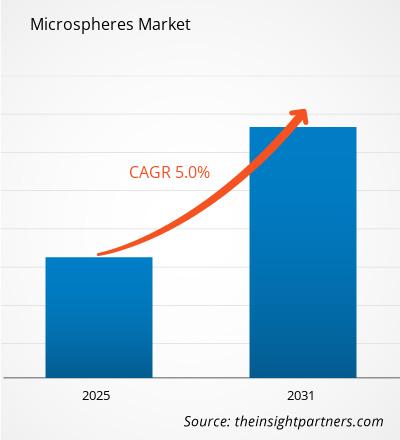
The microspheres market was valued at US$ 5.48 Billion in 2025 and is projected to reach US$ 11.14 Billion by 2034, registering a CAGR of 9.27% during 2026–2034. Increasing application of engineered light weight materials, rising usage of advance fillers in the construction and automotive industry segments, and rising use in the medical diagnostics and biotechnology sectors will further boost commercial demand. Advances in the field of glass, polymers, ceramics, and metals will enhance the application scope as well as encourage the manufacturers to offer high performance and sustainable product range.
Increasing industrialization in North America is expected to contribute towards positive demand conditions for engineered microsphere solutions. The market size for microspheres in North America region is expected to grow at a CAGR of 8.3% to 8.9% during 2034, driven by investments in light weight automobile parts, advanced healthcare technologies, oilfield services, and high performance coatings.
Microspheres Market Assessment and Insights
- North America: Accounted for 31–33% share in 2025 and is expected to expand at a CAGR of 8.3–8.9% during 2026–2034, supported by advanced healthcare manufacturing, lightweight composites, specialty coatings, and increasing adoption of engineered materials across industrial sectors.
- U.S.: Represented 79–82% of the North American market in 2025 and is projected to register a CAGR of 8.4–9.0%, driven by strong investments in medical technology, aerospace materials, automotive innovation, and energy infrastructure.
- Europe: Held 26–28% share in 2025 and is estimated to grow at a CAGR of 8.1–8.7%, with Germany, the UK, France, and Italy leading demand through advanced manufacturing, automotive production, and specialty chemical industries.
- Asia Pacific: Captured 30–32% share in 2025 and is forecast to expand at a CAGR of 10.3–10.9%, led by China, Japan, South Korea, and India owing to expanding construction activities, electronics manufacturing, and industrial production.
- Largest Segment: Application – Construction Composites accounted for 26–29% market share in 2025 and is anticipated to grow at a CAGR of 8.9–9.5%, supported by increasing demand for lightweight insulation materials and high-performance construction products.
- High Growth Segment: Raw Material – Polymer Microspheres represented 20–23% market share in 2025 and is projected to record a CAGR of 10.8–11.4%, benefiting from expanding use in medical devices, cosmetics, biotechnology, and specialty coatings.
- Key companies analyzed in detail: 3M Company, Chase Corporation, Luminex Corporation, Matsumoto Yushi Seiyaku Co., Ltd., MO SCI Corporation, Momentive Technologies, Nouryon Chemicals Holding B.V., Potters Industries LLC, Sigmund Lindner GmbH, and Trelleborg AB.
Source: The Insight Partners' analysis based on proprietary research, government publications, company annual reports, investor presentations, industry databases, and expert interviews.
The development of engineered particle technology has come a long way from specialty materials to a must-have performance improver in various industries. Advancements in terms of manufacturing accuracy, particle sizing, density management, and surface modifications have helped tremendously in increasing its commercial applications. Manufacturers are now focusing on adopting automated manufacturing processes and better quality assurance to meet the exacting standards in the health care, aerospace, automotive, and construction industry segments.
Market growth in the coming years will be driven by increased investments in modern manufacturing in the Asia Pacific region, improvements in infrastructure in North America, and sustainable regulations in Europe. Governmental policies on the use of lightweight materials in transport, energy-efficient construction, and sustainable industrial production have spurred the development of innovative microsphere technologies as well as research on biodegradable material technology.
Microspheres Market Report Scope
| Report Attribute | Details |
|---|---|
| Market size in 2025 | US$ 5.48 Billion |
| Market Size by 2034 | US$ 11.14 Billion |
| Global CAGR (2026 - 2034) | 9.27% |
| Historical Data | 2021-2024 |
| Forecast period | 2026-2034 |
Microspheres Market Analysis
Rising industrial requirements for lightweight engineered materials are contributing to higher growth of microspheres in various end-user markets. Companies engaged in construction activities are adding hollow glass microspheres in cementitious materials for improved insulation and reduced structural weight. Auto makers are using advanced microsphere technologies to reduce weight and improve fuel efficiency without compromising on the mechanical properties. The healthcare industry is generating further demand for polymer and glass microspheres with applications ranging from diagnostic assays, controlled drug delivery systems, and biotechnology.
Further consolidation is happening in the market value chain through collaborations among material providers, specialty chemicals manufacturers, microsphere producers, component manufacturers, and industrial users. Better manufacturing technologies, increasing material customization, and technical support services have added to product consistency and commercialization opportunities in paints and coatings, medical technology, and energy markets.
The competition is going to become more intense as the existing firms look to innovate, expand capacity, and form alliances in order to gain an edge in their respective markets. This microspheres market report explains that firms like 3M Company, Potters Industries LLC, Momentive Technologies, Sigmund Lindner GmbH, and Nouryon Chemicals Holding B.V. continue to invest in application-based products development in healthcare, construction, coatings, and manufacturing industries. MO SCI Corporation and Matsumoto Yushi Seiyaku Co., Ltd. are also making investments in specialized material offerings to cater to new customer demands.
The investments in the industry are now being made in technologies that can offer better particle size distribution, increased durability, and environmental friendliness. With the help of digital manufacturing facilities, automation, and process controls, the manufacturers are able to make manufacturing processes more efficient while meeting higher quality standards. Increased partnerships between the material science institutions and the industrial manufacturers are speeding up the development of microsphere technologies.
● REPORT CUSTOMIZATION
Tailor This Report To Align With Your Specific Business Requirements
This report can be customized to align precisely with your business objectives, scope, and target markets. Customization options include tailored segmentation, geography, competitive analysis, and strategic insights to support informed decision-making.
Customize This Report →WHAT YOU CAN ADJUST
- ● Segmentations
- ● Geography
- ● Competitive Analysis
- ● Language Preferences
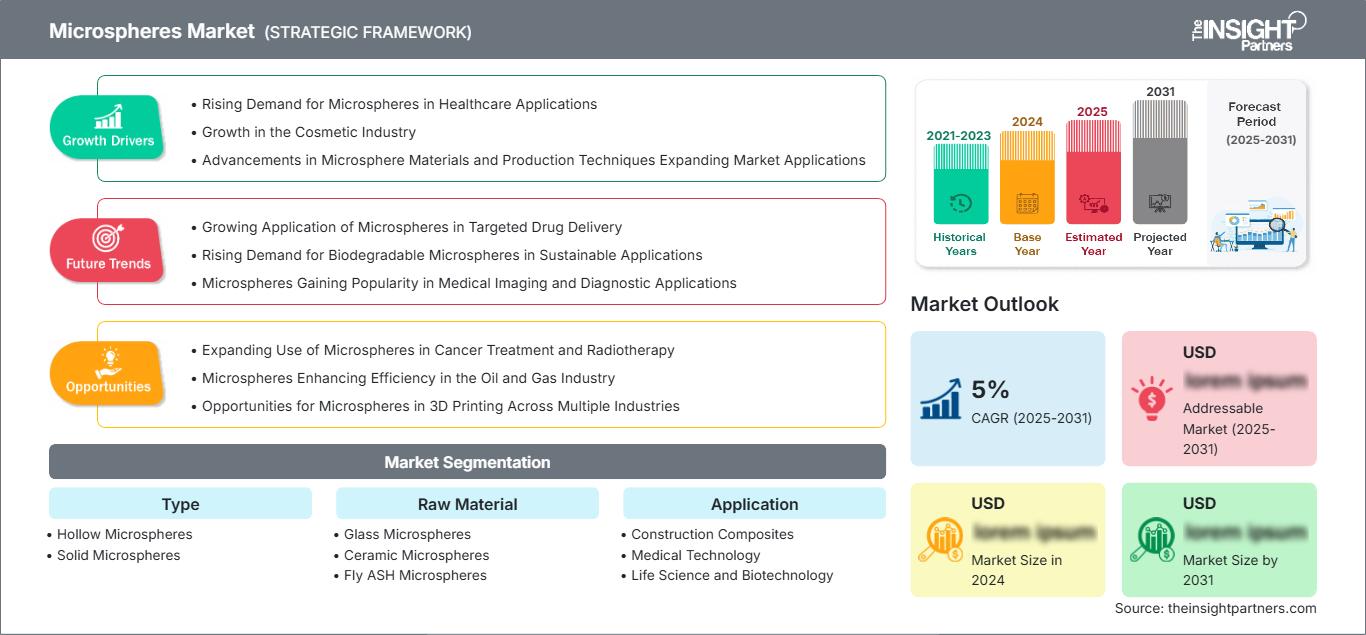
Microspheres Market: Strategic Insights
Regional Insights
North America Microspheres Market
North America microspheres market share held 31% to 33% in 2025 and expected to grow at a CAGR of 8.3% to 8.9% between 2026 to 2034. Region enjoys good demand for advanced materials in the construction, aerospace, automobile, healthcare, and oil and gas industries. Rising investments towards lightweight materials for transportation application and higher demand for hollow glass microspheres in cement, plastic, and composite applications further augment demand. Stringent policies towards emissions and energy efficiency also drive the need for advanced materials technology.
United States continues to be the manufacturing hub of region while Canada keeps growing its demand through rehabilitation and energy projects. Mexico experiences growing demand due to rise in automotive manufacturing operations and industrial production activities. Investments in advanced medical devices, biotechnology, and specialty coating sectors add to the strength of region's competitiveness. Microspheres market share will continue to gain from established manufacturers, advanced research capabilities, and strong distribution networks to market their high-end microspheres products.
U.S. Microspheres Market
The US accounted for 79%-82% of the market share in North America in 2025 and is projected to witness CAGR growth of 8.4%-9.0% till 2034. The presence of efficient industrial sector, high expenditures in healthcare, and continued investments in aerospace, defense, and automotive manufacturing supports the need for microsphere products. The development of construction industry and use of lightweight composites are other factors driving the growth of the market.
The major players in the business such as 3M Company, Potters Industries LLC, MO SCI Corporation, and Chase Corporation have well-established production facilities across the country. Increasing demand for multiplex diagnostics, drug delivery systems, specialty coatings, engineered plastics, and oil field products is generating diverse application prospects. Government spending on advanced manufacturing and supply chain reliability is likely to increase innovation and the use of sustainable engineered materials.
Europe Microspheres Market
Europe is expected to hold a 26–28% share of the total market in 2025 and is anticipated to witness a CAGR of 8.1–8.7%. Germany is the largest regional market on account of a robust automotive, specialty chemicals, and industrial manufacturing sector. The UK capitalizes on biotechnology and healthcare R&D, whereas France, Italy, and Spain are expanding their usage in the construction materials, paints, and advanced composites.
Germany has been the largest regional consumer owing to the development of engineering sector, automotive exports, and chemical manufacturing. Growing use of lightweight fillers in order to meet stringent emissions norms in Europe is driving the demand for advanced microspheres in the region.
In the UK, there is always a constant demand owing to the utilization of biotechnology, pharmaceutical research and development, and diagnostics technology. The countries such as France, Italy, and Spain assist in driving demand for advanced microspheres in the region owing to increased constructions of sustainable buildings, industrial coating, production of cosmetics, and infrastructure development projects.
APAC Microspheres Market
Asia Pacific accounted for 30–32% of the global market in 2025 and is anticipated to expand at a CAGR of 10.3–10.9%, making it the fastest-growing regional market. China leads regional consumption owing to its large manufacturing base, followed by Japan, South Korea, India, and Australia.
Industrialization, infrastructure projects, production of electronics, investment in healthcare, and government programs for advanced materials remain key drivers of market growth. Increasing production of automobiles, the need for lightweight materials for construction, and biotechnology R&D make Asia-Pacific an important region for microsphere manufacturers.
Middle East & Africa Microspheres Market
CAGR in Middle East & Africa market during 2026-2034 is estimated to be in the range of 8.6-9.2%. In Middle East, Saudi Arabia will be driving demand with its huge infrastructure projects and downstream petrochemical projects. In UAE, consumption is set to grow in construction, specialty coatings, and energy segments. South Africa will remain a key consumer in mining and industrial materials segments.
Efforts towards energy diversification, growth in industries, and increase in infrastructure expenditure will help drive adoption of lightweight composites in the region in coming years.
Segmentation Analysis
Type
The Type segment is expected to register a CAGR of 9.1–9.7% during 2026–2034. The microspheres market scope continues expanding as manufacturers develop customized hollow and solid microspheres for construction, healthcare, industrial coatings, and composite applications. Demand is increasingly driven by requirements for lightweight materials, improved thermal insulation, dimensional stability, and enhanced mechanical performance across multiple industries.
- Hollow Microspheres – Widely adopted across lightweight construction composites, automotive plastics, marine materials, aerospace components, and oilfield cementing because they reduce density while improving insulation, compressive strength, and processing efficiency.
- Solid Microspheres – Extensively utilized in medical diagnostics, chromatography, precision polishing, laboratory research, electronics manufacturing, and specialty coatings where dimensional accuracy, chemical resistance, and controlled particle distribution remain critical performance requirements.
Raw Material
The Raw Material segment is projected to expand at a CAGR of 9.6–10.2% during 2026–2034. Ongoing material innovation continues improving durability, density control, chemical compatibility, and sustainability. Manufacturers increasingly invest in advanced polymer chemistry, engineered ceramics, specialty glass formulations, and recycled raw materials to address evolving industrial requirements and environmental objectives.
- Glass Microspheres – Extensively used in construction materials, traffic markings, composites, aerospace components, and industrial coatings because of excellent strength-to-weight ratio, thermal insulation, and dimensional stability.
- Ceramic Microspheres – Preferred in high-temperature industrial applications, refractory products, advanced coatings, and metal matrix composites where superior heat resistance and mechanical durability improve long-term operational performance.
- Fly Ash Microspheres – Increasingly utilized in cement, concrete, drilling fluids, insulation products, and infrastructure projects owing to their lightweight characteristics, cost efficiency, and contribution to industrial waste utilization.
- Polymer Microspheres – Witness strong adoption across medical diagnostics, biotechnology, cosmetics, drug delivery systems, specialty coatings, and laboratory applications because of customizable chemistry, controlled particle size, and excellent biocompatibility.
- Metallic Microspheres – Used in defense, aerospace, additive manufacturing, conductive coatings, and specialized industrial applications requiring high density, electrical conductivity, magnetic properties, and enhanced mechanical strength.
Application
The Application segment is anticipated to register a CAGR of 9.4–10.0% during 2026–2034. Expanding industrial adoption across construction, healthcare, transportation, energy, and consumer products continues supporting sustained market expansion. Growing investments in lightweight engineering materials and advanced medical technologies are expected to diversify commercial opportunities over the forecast period.
- Construction Composites – Represent the largest application owing to increasing demand for lightweight concrete, insulation systems, repair materials, and high-performance infrastructure capable of improving durability while reducing structural weight.
- Medical Technology – Continues expanding through diagnostic assays, imaging technologies, controlled drug delivery systems, implantable devices, and advanced therapeutic solutions requiring precision-engineered particles.
- Life Science and Biotechnology – Supports laboratory research, molecular diagnostics, immunoassays, cell separation, and analytical testing through highly specialized polymer and glass microsphere technologies.
- Paints and Coatings – Improve scratch resistance, thermal insulation, opacity, durability, and application efficiency while reducing coating density and supporting energy-efficient building materials.
- Cosmetics and Personal Care – Used in skincare, color cosmetics, and personal care formulations to enhance texture, oil absorption, soft-focus effects, and controlled ingredient delivery.
- Oil and Gas – Applied in drilling fluids, cementing operations, buoyancy systems, insulation, and well integrity solutions to improve operational efficiency under demanding environments.
- Automotive – Increasingly incorporated into lightweight plastics, structural composites, sealants, adhesives, underbody coatings, and acoustic insulation to support vehicle weight reduction and improved fuel efficiency.
Opportunity Snapshot
| Application | Revenue Contribution | Trend Tag | Adoption Stage |
|---|---|---|---|
| Construction Composites | High | Lightweight Concrete | Mature |
| Medical Technology | High | Precision Diagnostics | Scaling |
| Life Science and Biotechnology | Medium | Cell Analysis | Scaling |
| Paints and Coatings | High | Thermal Coatings | Mature |
| Cosmetics and Personal Care | Medium | Soft Focus | Scaling |
| Oil and Gas | Medium | Well Cementing | Mature |
| Automotive | High | Vehicle Lightweighting | Scaling |
Microspheres Market Growth Drivers and Impact Analysis
Growing adoption of lightweight engineered materials across industrial sectors
The transition toward lightweight materials continues to reshape manufacturing strategies across construction, transportation, aerospace, and industrial processing industries. Hollow glass, polymer, and ceramic microspheres help reduce component weight while maintaining mechanical strength, thermal insulation, and dimensional stability. Automotive manufacturers increasingly incorporate these materials into plastics and composite structures to improve fuel efficiency and support electric vehicle range optimization. Similarly, construction companies are adopting lightweight concrete and insulation products to improve building energy performance while reducing structural loads. Rising investment in sustainable infrastructure, together with stricter energy efficiency regulations across North America and Europe, is expected to accelerate commercial adoption of engineered microsphere technologies throughout the forecast period, strengthening long-term market demand across multiple end-use industries.
Expansion of healthcare diagnostics and biotechnology applications
Rapid advances in molecular diagnostics, immunoassays, precision medicine, and laboratory automation continue creating significant demand for high-performance polymer and glass microspheres. Healthcare providers increasingly rely on bead-based diagnostic technologies for infectious disease testing, oncology research, and multiplex biomarker analysis. Growing investments in biotechnology research, pharmaceutical development, and personalized medicine further expand commercial opportunities for specialized microsphere manufacturers. Organizations including the World Health Organization continue emphasizing improved diagnostic accessibility, encouraging broader adoption of advanced laboratory technologies worldwide. As research institutions and biotechnology companies increase investment in high-throughput analytical platforms, demand for precision-engineered microspheres with consistent particle size distribution and superior surface functionality is expected to rise steadily across developed and emerging healthcare markets.
Rising infrastructure investment supporting advanced construction materials
Infrastructure modernization initiatives across both developed and emerging economies continue driving demand for innovative construction materials that improve durability while reducing environmental impact. Hollow glass and fly ash microspheres are increasingly utilized in cementitious systems, grouts, insulation materials, and specialty construction composites owing to their lightweight characteristics and improved thermal performance. Government programs supporting sustainable buildings, transportation infrastructure, and industrial facilities encourage wider adoption of advanced material technologies capable of reducing resource consumption and lifecycle costs. Growing emphasis on green construction certifications, together with expanding commercial and residential development in Asia Pacific and the Middle East, is expected to strengthen long-term opportunities for microsphere manufacturers serving infrastructure and construction markets.
Microspheres Market Future Trends
Development of sustainable and recyclable engineered microspheres
Sustainability is becoming a primary innovation focus across the microspheres market trends landscape as manufacturers develop recyclable glass microspheres, bio-based polymer formulations, and production technologies with lower energy consumption. Industrial customers increasingly evaluate materials based on lifecycle performance, carbon footprint, and recyclability alongside traditional performance metrics. Research collaborations between specialty chemical producers and academic institutions are accelerating commercialization of environmentally responsible microsphere solutions. Future product development is expected to prioritize renewable raw materials, closed-loop manufacturing systems, and circular economy principles while maintaining high mechanical performance. These developments will strengthen supplier competitiveness and support broader adoption across industries seeking sustainable material alternatives.
Increasing integration with advanced manufacturing technologies
Advanced manufacturing technologies, including automated processing, digital quality monitoring, and additive manufacturing, are expected to reshape microsphere production over the coming decade. Manufacturers continue investing in precision particle engineering, surface modification technologies, and automated inspection systems capable of delivering consistent quality at higher production volumes. Integration with digital manufacturing platforms enables tighter process control and greater product customization for specialized industrial applications. As additive manufacturing expands across aerospace, healthcare, and automotive sectors, demand for highly engineered microsphere materials with controlled density and functional properties is anticipated to increase substantially. These technological developments are expected to improve production efficiency while supporting commercialization of next-generation material solutions.
Microspheres Market Opportunities
Expanding investment in Asia Pacific manufacturing capabilities
Asia Pacific continues to present substantial microspheres market Forecasts for manufacturers seeking production expansion and long-term revenue growth. Rapid industrialization, increasing domestic consumption, favorable manufacturing economics, and supportive government policies are encouraging investments in advanced materials production throughout China, India, South Korea, and Southeast Asia. International manufacturers are expanding regional production capacity while establishing research partnerships to serve growing automotive, electronics, healthcare, and construction industries. Investments in localized manufacturing also improve supply chain resilience and reduce transportation costs. Companies capable of developing application-specific products tailored to regional industrial requirements are expected to strengthen competitive positioning while capturing emerging demand across high-growth economies.
Innovation in multifunctional microsphere technologies
Future investment opportunities increasingly center on multifunctional microspheres capable of delivering mechanical reinforcement, thermal insulation, electrical conductivity, controlled drug delivery, or sensing capabilities within a single engineered material. Such innovations are expected to support next-generation applications across medical technology, aerospace, electronics, renewable energy, and industrial manufacturing. Continuous collaboration between material science companies, universities, and industrial manufacturers will accelerate commercialization of advanced products with improved functionality and greater customer value. Organizations investing in intellectual property development, scalable manufacturing technologies, and specialized application expertise are expected to secure stronger long-term competitive advantages while addressing increasingly sophisticated customer requirements across global end-use industries.
Recent Developments
- April 2026: Global specialty chemicals leader Nouryon introduced its Expancel 081 microspheres grade at the Pulp and Beyond 2026 event in Helsinki, Finland. An innovative bulking agent, Expancel 081 addresses two of the biggest cost and sustainability drivers in paperboard production – fiber use and energy consumption. Specifically, Expancel 081 microspheres uniquely address the rising pressure faced by paperboard mills to increase the use of recycled fiber or fillers without losing key sheet properties like stiffness, bulk and thickness, and keep energy use in check.
- June 2025: Global specialty chemicals leader Nouryon and Ningbo Actmix New Materials Co., Ltd. (Actmix) announced an expanded strategic partnership aimed at accelerating the adoption of lightweight solutions in Asia's automotive industry and beyond. The collaboration will also enhance the regional supply capacity of Nouryon’s Expancel thermoplastic expandable microspheres, fueling the rapid growth of the lightweight materials market.
Frequently Asked Questions

- Comprehensive Market Sizing and Forecast Analysis
- Detailed Segmentation Analysis
- In-Depth Market Dynamics Assessment
- Regional and Country-Level Insights
- Competitive Landscape and Company Benchmarking
- Strategic Business Intelligence
Recent Reports
Testimonials

The Insight Partners' SCADA System Market report is comprehensive, with valuable insights on current trends and future forecasts. The team was highly professional, responsive, and supportive throughout. We are very satisfied and highly recommend their services.
RAN KEDEM Partner, Reali Technologies LTDs
I requested a report on a very specific software market and the team produced the report in a few days. The information was very relevant and well presented. I then requested some changes and additions to the report. The team was again very responsive and I got the final report in less than a week.
JEAN-HERVE JENN Chairman, Future Analytica
We worked with The Insight Partners for an important market study and forecast. They gave us clear insights into opportunities and risks, which helped shape our plans. Their research was easy to use and based on solid data. It helped us make smart, confident decisions. We highly recommend them.
PIYUSH NAGPAL Sr. Vice President, High Beam Global
The Insight Partners delivered insightful, well-structured market research with strong domain expertise. Their team was professional and responsive throughout. The user-friendly website made accessing industry reports seamless. We highly recommend them for reliable, high-quality research services
YUKIHIKO ADACHI CEO, Deep Blue, LLC.
This is the first time I have purchased a market report from The Insight Partners.While I was unsure at first, I visited their web site and felt more comfortable to take the risk and purchase a market report.I am completely satisfied with the quality of the report and customer service. I had several questions and comments with the initial report, but after a couple of dialogs over email with their analyst I believe I have a report that I can use as input to our strategic planning process.Thank you so much for taking the extra time and making this a positive experience.I will definitely recommend your service to others and you will be my first call when we need further market data.
JOHN SUZUKI President and Chief Executive Officer, Board Director, BK Technologies
I wish to appreciate your support and the professionalism you displayed in the course of attending to my request for information regarding to infectious disease IVD market in Nigeria. I appreciate your patience, your guidance, and the fact that you were willing to offer a discount, which eventually made it possible for us to close a deal. I look forward to engaging The Insight Partners in the future, all thanks to the impression you have created in me as a result of this first encounter.
DR CHIJIOKE ONYIA MANAGING DIRECTOR, PineCrest Healthcare Ltd.Reason to Buy
- Informed Decision-Making
- Understanding Market Dynamics
- Competitive Analysis
- Identifying Emerging Markets
- Customer Insights
- Market Forecasts
- Risk Mitigation
- Boosting Operational Efficiency
- Strategic Planning
- Investment Justification
- Tracking Industry Innovations
- Aligning with Regulatory Trends





 Get Free Sample for