
Wastewater Treatment Equipment Market Trends, Size & Growth by 2034
Coverage: by Equipment Type (Disinfection Equipment, Sludge Treatment Equipment, Filtration Equipment, Biological Equipment, and Others); Component (Motors & Generators, Drives, Pumps, Softstarters, Valves, Filters & Clarifiers, and Others); End-User (Industrial and Municipal), and Geography (North America, Europe, Asia Pacific, and South and Central America)
- Status : Data Released
- Report Code : TIPRE00003040
- Category : Manufacturing and Construction
- No. of Pages : 150
- Available Report Formats :


- Last update date : September 28, 2026


2025 Market Size
US$ 70.28 Bn
Base year value
2034 Forecast
US$ 92.59 Bn
Projected by 2034
CAGR 2026-2034
3.11 %
Growth rate
Addressable Market
US$ 739.49 Bn
(2026-2034)
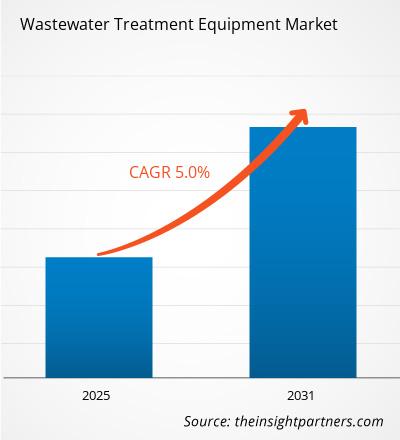
The wastewater treatment equipment market was valued at US$ 70.28 billion in 2025 and is projected to reach US$ 92.59 billion by 2034, expanding at a CAGR of 3.11% during 2026–2034. Demand is supported by municipal infrastructure modernization, tighter wastewater discharge rules, and rising industrial reuse requirements across water-intensive sectors.
North America remains a major demand center, supported by aging utility networks, industrial compliance spending, and water reuse programs. The regional wastewater treatment equipment market size is strengthened by federal and state investments in water infrastructure, with growth expected to remain steady as utilities prioritize pumps, filtration systems, biological treatment units, and digital monitoring equipment.
Wastewater Treatment Equipment Market Assessment and Insights
- North America: The region accounted for an estimated 34–38% share in 2025 and is expected to grow at a CAGR of 2.8–3.4% during 2026–2034, supported by replacement demand and water reuse investments.
- U.S.: The U.S. represented 76–80% of North America in 2025, with a projected CAGR of 2.9–3.5%, driven by municipal upgrades and industrial compliance projects.
- Europe: Europe held an estimated 24–28% share in 2025 and is expected to grow at a CAGR of 2.7–3.3%, led by Germany, France, the UK, Italy, and Spain.
- Asia Pacific: Asia Pacific represented 26–30% share in 2025 and is projected to grow at a CAGR of 3.6–4.2%, with China, India, Japan, South Korea, and Australia leading demand.
- Largest Segment: Filtration equipment held an estimated 29–33% market share in 2025 and is expected to grow at a CAGR of 3.2–3.8% during 2026–2034.
- High Growth Segment: Biological equipment held an estimated 18–22% share in 2025 and is expected to grow at a CAGR of 3.8–4.4% as nutrient removal requirements expand.
- Key companies analyzed in detail: 3M Company, Aquatech International LLC, SUEZ SA, Ecolab Inc., Siemens AG, Veolia Environnement S.A., Thermax Limited, Xylem Inc., Kurita Water Industries Ltd., and Pentair plc.
Source: The Insight Partners' analysis based on proprietary research, government publications, company annual reports, investor presentations, industry databases, and expert interviews.
The market has moved from traditional wastewater treatment components to a more sophisticated system involving filtration, biological treatment, disinfection, sludge treatment, drive, pump, valve, and monitoring systems. Growth in this market is increasingly dependent on the need for water reuse, energy savings, and reduced footprint sizes for wastewater treatment plants.
The Wastewater Treatment Equipment Market report indicates that future demand will be shaped by investment in decentralized treatment systems, stricter nutrient discharge requirements, and industrial initiatives aimed at reducing freshwater withdrawal. Utilities and industrial operators are expected to prioritize modular treatment plants, membrane-based technologies, and predictive maintenance tools that improve compliance reliability while helping manage lifecycle costs.
Wastewater Treatment Equipment Market Report Scope
| Report Attribute | Details |
|---|---|
| Market size in 2025 | US$ 70.28 Billion |
| Market Size by 2034 | US$ 92.59 Billion |
| Global CAGR (2026 - 2034) | 3.11% |
| Historical Data | 2021-2024 |
| Forecast period | 2026-2034 |
Wastewater Treatment Equipment Market Analysis
The demand for the market is due to the increasing urban population, aging sewer systems, industrial water shortages, and tougher effluent regulations. The cities are working to enhance their capacity for secondary and tertiary treatment of wastewater because of the growing amount of wastewater and toughening of environmental standards. In addition, industries such as food & beverages, chemicals, pharmaceuticals, power plants, and semiconductors are making efforts toward the use of wastewater recycling technologies to lessen their dependency on fresh water.
The supply chain is affected by such items as pumps, motors, filters, clarifiers, disinfection plants, valves, drives, and process automation. Suppliers of equipment have been trying to differentiate themselves on the basis of energy-efficient aeration systems, digital control systems, treatment plants, and post-sales services, which can help decrease downtime and achieve better performance in terms of regulatory compliance. Increasingly, customers want to implement solutions that would minimize their operating costs, simplify maintenance, and allow easy extension of their facilities.
Wastewater treatment equipment market analysis shows a competitive landscape shaped by integrated water technology companies and specialized equipment suppliers. Veolia Environnement S.A., Xylem Inc., SUEZ SA, Ecolab Inc., Siemens AG, and Aquatech International LLC have been placed in the municipal, industrial, and advanced treatment segments. Competitiveness is now driven by technology, implementation capabilities, post-installation services, and the ability to provide consistent treatment results under different operating conditions. Strategic alliances, service capabilities, and engineering know-how are key to successful market positioning.
The trends within the investments include membrane filters, water reuse, digital water management, sludge valorization, and industrial high-purity water systems. Equipment suppliers that have robust regional service networks and modular engineering capabilities are best placed to benefit from retrofits and large-scale greenfield projects. The trend towards smart monitoring systems and remote asset management is providing another opportunity for equipment suppliers. With the continued prioritization of water efficiency and compliance by both government agencies and industries, investments in wastewater treatment infrastructure will continue to be robust during the forecast period.
● REPORT CUSTOMIZATION
Tailor This Report To Align With Your Specific Business Requirements
This report can be customized to align precisely with your business objectives, scope, and target markets. Customization options include tailored segmentation, geography, competitive analysis, and strategic insights to support informed decision-making.
Customize This Report →WHAT YOU CAN ADJUST
- ● Segmentations
- ● Geography
- ● Competitive Analysis
- ● Language Preferences
Wastewater Treatment Equipment Market: Strategic Insights

Regional Insights
North America wastewater treatment equipment market
North America accounted for an estimated 34–38% wastewater treatment equipment market share in 2025 and is projected to grow at a CAGR of 2.8–3.4% during 2026–2034. Growth will be fueled by the need for replacement of aging infrastructure of municipal treatment facilities, industrial compliance, and reuse systems as demand for water intensifies in drought-prone states.
Pumps, filtration units, sludge treatment units, and digitization will be the focus of utilities. Industrial users will increasingly rely on packaged and modular systems amid growing regulations, particularly in chemicals, food processing, electronics, and energy sectors.
U.S. wastewater treatment equipment market
The U.S. represented an estimated 76–80% of North America in 2025 and is expected to grow at a CAGR of 2.9–3.5%. The demand will be fueled by federal spending on infrastructure, stricter permits, and the requirement for regular replacements at wastewater plants.
Key players Xylem Inc., Ecolab Inc., 3M Company, Pentair plc, and Aquatech International LLC have significant operations in the U.S. in pumping, filtration, treatment chemicals, and water recycling technologies. Uses related to the data center industry, semiconductor industry, food processing industry, and pharmaceutical industry are driving demand for high-performance equipment.
Europe wastewater treatment equipment market
Europe held an estimated 24–28% share in 2025 and is projected to grow at a CAGR of 2.7–3.3%. Germany is ahead in this region because of its compliance with environmental regulations, high wastewater treatment rates of industrial effluent, and upgrades of the municipal plants.
The United Kingdom and France still continue working on solving the problems associated with sewer overflows, tertiary treatments, and reuse of water.
Italy and Spain are building their capacity to treat more water because of water scarcity, tourist-associated wastewater loads, and industrial compliance regulations for manufacturing and food processing.
APAC wastewater treatment equipment market
Asia Pacific accounted for an estimated 26–30% share in 2025 and is expected to grow at a CAGR of 3.6–4.2%. China maintains its dominance because of municipal capacity enhancement, industrial park wastewater requirements, and deployment of modern treatment methods.
India, Japan, South Korea, and Australia are building up their demand through wastewater recycling measures, urban infrastructure development, and industrial compliance improvements. APAC growth is driven by compact biological treatment systems, filtration systems, pumps, and monitoring devices.
Middle East & Africa wastewater treatment equipment market
The Middle East and Africa is expected to grow at a CAGR of 3.4–4.0% during 2026–2034. The leading investments include desalination-related water recycling, expansion of infrastructure in municipalities, and industrial water security.
South Africa and other regional markets are making selective investments in wastewater treatment equipment, as the need arises from urban areas and industries. Projects in the energy sector, mining, and infrastructure developments drive the requirement for pumps, disinfection, filtration, and sludge treatment equipment.
Segmentation Analysis
Equipment Type
Equipment Type is expected to grow at a CAGR of 3.1–3.7% during 2026–2034. Wastewater treatment equipment market scope across this segment is shaped by the need for contaminant removal, sludge reduction, reuse-quality effluent, and operational reliability across municipal and industrial plants.
- Disinfection Equipment supports final pathogen control through UV, chlorination, and ozone systems, with demand rising where utilities need safe discharge and industrial operators require reuse-grade water.
- Sludge Treatment Equipment addresses dewatering, stabilization, and volume reduction needs, helping utilities reduce disposal costs and comply with increasingly strict biosolids management requirements.
- Filtration Equipment remains the leading equipment category, supported by tertiary treatment, membrane adoption, reuse applications, and the need to remove suspended solids before disinfection or discharge.
- Biological Equipment is gaining strategic importance as nutrient removal rules intensify and operators seek lower chemical consumption through aerobic, anaerobic, and membrane bioreactor systems.
Component
Component is projected to grow at a CAGR of 2.9–3.5% during 2026–2034. Demand is supported by asset replacement cycles, plant automation, and higher uptime requirements across pumps, drives, valves, motors, filters, and clarifiers.
- Motors & Generators support continuous plant operation and backup reliability, particularly in regions where outages affect aeration, pumping, and sludge management performance.
- Drives improve energy efficiency by controlling pump and blower speed, helping operators reduce electricity consumption and align with sustainability targets.
- Pumps remain essential for influent transfer, sludge handling, recirculation, and reuse distribution, making reliability and corrosion resistance key procurement criteria.
- Softstarters reduce mechanical stress during equipment start-up, supporting longer motor life and lower maintenance costs in high-duty wastewater environments.
- Valves regulate flow, pressure, and process isolation across treatment trains, with rising demand for automated valves in digitally monitored facilities.
- Filters & Clarifiers support solids separation and polishing, helping treatment plants meet discharge requirements and reduce downstream load on disinfection assets.
End-User
End-User is expected to grow at a CAGR of 3.0–3.6% during 2026–2034. Municipal demand remains stable due to public infrastructure upgrades, while industrial users increasingly invest in on-site treatment to reduce freshwater intake and compliance risk.
- Industrial users invest in advanced treatment to manage variable effluent quality, reduce discharge penalties, and support reuse programs in chemicals, food processing, power, pharmaceuticals, and electronics.
- Municipal utilities prioritize capacity expansion, nutrient removal, sludge reduction, and network resilience as urban wastewater volumes rise and public health standards become more demanding.
Opportunity Snapshot
| End-User | Revenue Contribution | Trend Tag | Adoption Stage |
| Industrial | Medium | Water Reuse | Scaling |
| Municipal | High | Infrastructure Renewal | Mature |
Wastewater Treatment Equipment Market Growth Drivers and Impact Analysis
Tightening discharge compliance across municipal and industrial facilities
More focus is being put on nutrient removal, pathogen reduction, industrial wastewater purification and discharge into receiving waterbodies in a safe way. This is driving more demands for filtration systems, biological treatment facilities, disinfection systems, sludge treatment facilities and automated controls. The effect is mostly evident in municipalities with old facilities, as well as industries putting up their own facilities.
Rising water reuse and circular water management investments
The issue of water shortage has turned waste into a resource that needs to be recovered rather than disposed of. Industries have started using recycling systems to cut down the amount of freshwater withdrawn, while cities have started to treat wastewater for reuse, irrigation and industrial use through tertiary treatment. This provides a rationale for the need for membranes, filtration, and disinfection systems.
Modernization of aging wastewater infrastructure
Most existing treatment facilities work on the basis of treatment equipment installed many years ago, leading to a need to replace pumps, motors, clarifiers, valves, aerators, and process control equipment. The modernization processes focus on energy efficiency and automation along with storm flow fluctuations. This is an ongoing chance for equipment suppliers with a high degree of mechanical reliability and digital diagnostics.
Wastewater Treatment Equipment Market Future Trends
Digital optimization of treatment operations
The wastewater treatment equipment market trends increasingly point toward sensor-enabled assets, remote monitoring, predictive maintenance, and automated process control. Utility and industrial users require solutions that help conserve energy, identify equipment failure in advance, and ensure effluent quality without much manual intervention. Digitalization will be the differentiation factor for those vendors who manufacture pumps, motors, filters, and biological systems.
Advanced treatment for micropollutants and high-quality reuse
The future investments will be targeted at the elimination of trace level contaminants, persistent organic chemicals, nutrients, and complex industrial pollutants. The membrane separation technology, advanced oxidation process, activated carbon, and hybrid biological systems are projected to become significant as the requirements for water reuse become stringent. The companies capable of offering contaminant elimination capabilities with lower operational costs will succeed.
Wastewater Treatment Equipment Market Opportunities
Industrial reuse systems for water-intensive sectors
The wastewater Treatment Equipment market Forecasts indicate a strong opportunity in industrial reuse, particularly across semiconductors, food and beverage, power generation, chemicals, and pharmaceuticals. Such consumers need dependable treatment train systems that operate with variable load and lower freshwater consumption and discharge levels. Providers who offer modular solutions, automation, and maintenance services will be able to grab lucrative deals where water security is critical to business continuity.
Decentralized and modular treatment plants
Decentralized systems provide an attractive pathway for industrial parks, distant locations, commercial facilities, and rapidly growing cities to treat wastewater through decentralized means without relying on large centralized treatment systems. Decentralized modular plants can help in achieving this objective by reducing commissioning time, lowering civil works construction complexities, and facilitating capacity expansion through phasing.
Frequently Asked Questions

- Comprehensive Market Sizing and Forecast Analysis
- Detailed Segmentation Analysis
- In-Depth Market Dynamics Assessment
- Regional and Country-Level Insights
- Competitive Landscape and Company Benchmarking
- Strategic Business Intelligence
Recent Reports
Testimonials

The Insight Partners provided valuable market intelligence that supported our global go-to-market strategy. Their team was professional, responsive, and attentive to our feedback, providing thoughtful analysis and helpful methodological clarifications throughout the project.
Junmo Kim Chief Financial Officer (CFO), Enertech Co., Ltd.
The Insight Partners' SCADA System Market report is comprehensive, with valuable insights on current trends and future forecasts. The team was highly professional, responsive, and supportive throughout. We are very satisfied and highly recommend their services.
RAN KEDEM Partner, Reali Technologies LTDs
I requested a report on a very specific software market and the team produced the report in a few days. The information was very relevant and well presented. I then requested some changes and additions to the report. The team was again very responsive and I got the final report in less than a week.
JEAN-HERVE JENN Chairman, Future Analytica
We worked with The Insight Partners for an important market study and forecast. They gave us clear insights into opportunities and risks, which helped shape our plans. Their research was easy to use and based on solid data. It helped us make smart, confident decisions. We highly recommend them.
PIYUSH NAGPAL Sr. Vice President, High Beam Global
The Insight Partners delivered insightful, well-structured market research with strong domain expertise. Their team was professional and responsive throughout. The user-friendly website made accessing industry reports seamless. We highly recommend them for reliable, high-quality research services
YUKIHIKO ADACHI CEO, Deep Blue, LLC.
This is the first time I have purchased a market report from The Insight Partners.While I was unsure at first, I visited their web site and felt more comfortable to take the risk and purchase a market report.I am completely satisfied with the quality of the report and customer service. I had several questions and comments with the initial report, but after a couple of dialogs over email with their analyst I believe I have a report that I can use as input to our strategic planning process.Thank you so much for taking the extra time and making this a positive experience.I will definitely recommend your service to others and you will be my first call when we need further market data.
JOHN SUZUKI President and Chief Executive Officer, Board Director, BK Technologies
I wish to appreciate your support and the professionalism you displayed in the course of attending to my request for information regarding to infectious disease IVD market in Nigeria. I appreciate your patience, your guidance, and the fact that you were willing to offer a discount, which eventually made it possible for us to close a deal. I look forward to engaging The Insight Partners in the future, all thanks to the impression you have created in me as a result of this first encounter.
DR CHIJIOKE ONYIA MANAGING DIRECTOR, PineCrest Healthcare Ltd.Reason to Buy
- Informed Decision-Making
- Understanding Market Dynamics
- Competitive Analysis
- Identifying Emerging Markets
- Customer Insights
- Market Forecasts
- Risk Mitigation
- Boosting Operational Efficiency
- Strategic Planning
- Investment Justification
- Tracking Industry Innovations
- Aligning with Regulatory Trends





 Get Free Sample for