
3D Bioprinting Market Size, Share & Growth Forecast Report 2034
Coverage: by Type (Organ Transplantation, Tissue Engineering); Technology (Inkjet Based, Laser Based, Extrusion Based, Magnetic); Application (Clinical Application, Research Application), and Geography (North America, Europe, Asia Pacific, and South and Central America)
- Status : Data Released
- Report Code : TIPTE100000771
- Category : Life Sciences
- No. of Pages : 150
- Available Report Formats :


- Last update date : July 30, 2026


2025 Market Size
US$ 2.00 Bn
Base year value
2034 Forecast
US$ 4.92 Bn
Projected by 2034
CAGR 2026-2034
13.7 %
Growth rate
Addressable Market
US$ 36.11 Bn
(2026-2034)
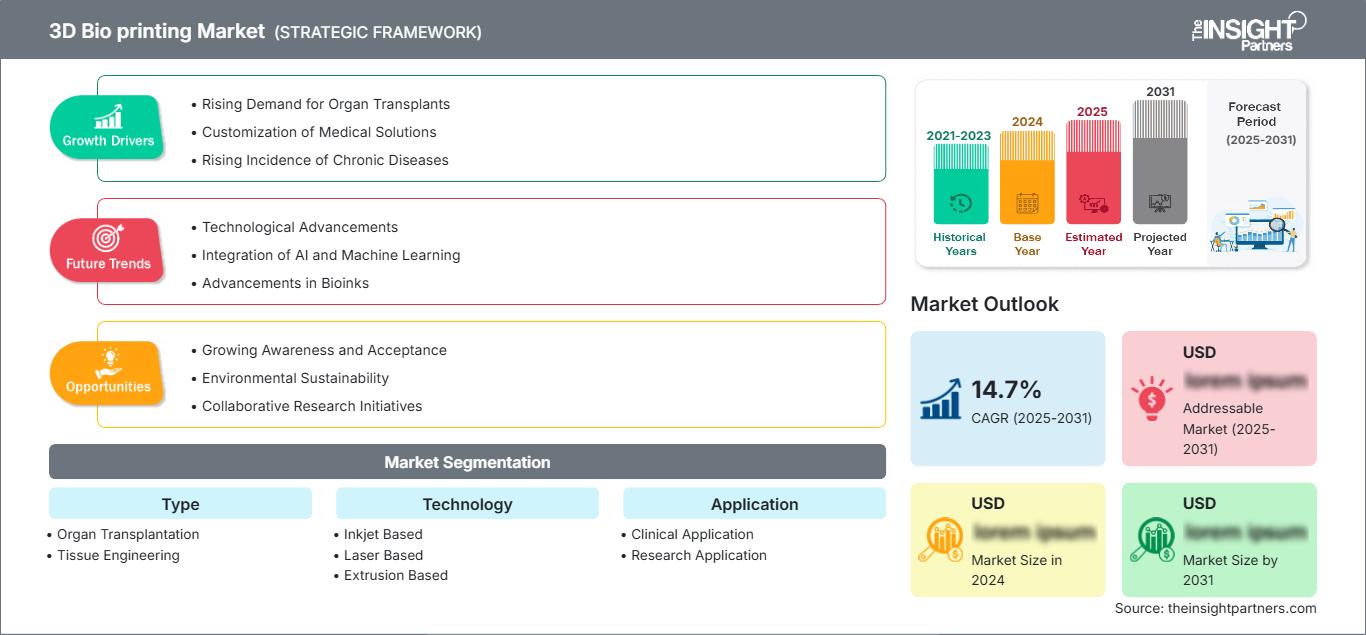
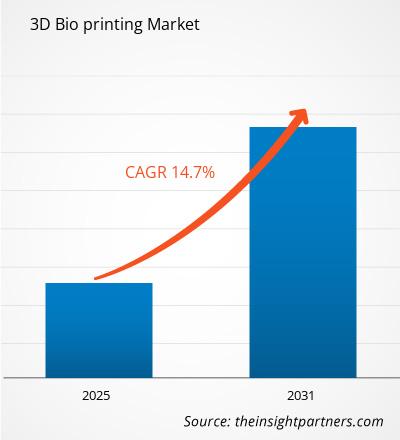
The 3D bioprinting market was valued at US$ 2.00 Billion in 2025 and is projected to reach US$ 4.92 Billion by 2034, registering a CAGR of 13.7% during 2026–2034. The market will be growing owing to the transition of bioprinting technology, bio-inks, stem cells, and tissue engineering approaches from the fabrication stage towards translational research, drug discovery, disease modeling, and early application of regenerative medicine.
The market size in North America will be driven by robust investment in biomedical R&D, collaboration between universities and industries, demand for more humanized models from the pharmaceutical industry, and openness in regulations towards new approach methodologies. The market growth in this region will be within the CAGR range of 12.8-13.6% for 2026-2034. The 2025 FDA roadmap favoring organoids, organ-on-chips, and in vitro advanced assays adds to the demand.
3D Bioprinting Market Assessment and Insights
- North America held 38–41% share in 2025 and is projected to grow at a CAGR between 2026–2034 of 12.8–13.6%, supported by pharmaceutical R&D, organ shortage research, and regenerative medicine funding.
- US represented 86–89% of North America in 2025 and is expected to grow at a CAGR between 2026–2034 of 12.7–13.5%, led by drug screening, academic bioprinting centers, and translational tissue platforms.
- Europe accounted for 27–30% share in 2025 and is forecast to expand at a CAGR between 2026–2034 of 12.1–12.9%, with Germany, France, the UK, Switzerland, and Sweden leading adoption.
- Asia Pacific captured 22–25% share in 2025 and is projected to grow at a CAGR between 2026–2034 of 14.7–15.6%, driven by China, Japan, South Korea, India, and Australia.
- Largest Segment Research Application held 62–66% market share in 2025 and is expected to grow at a CAGR range of 12.9–13.8% during 2026–2034 due to pharmaceutical and academic use.
- High Growth Segment Organ Transplantation represented 34–38% share in 2025 and is forecast to grow at a CAGR range of 15.2–16.1% during 2026–2034 as vascularized tissue research advances.
- Key companies analyzed in detail: Nano3D Biosciences, Inc., EnvisionTEC GmbH, Organovo Holdings, Inc., Cyfuse Biomedical K.K., regenHU Ltd., Aspect Biosystems Ltd., CELLINK AB, Regenovo Biotechnology Co., Ltd., 3Dynamic Systems Ltd., and Poietis.
Source: The Insight Partners' analysis based on proprietary research, government publications, company annual reports, investor presentations, industry databases, and expert interviews.
The market has transitioned away from single material laboratory printing to biofabrication platforms incorporating cells, hydrogels, growth media, imaging, robots, and computational design. Production trends have shifted towards multiple head printers, sterile processes, validated bioinks, and reproducible tissue maturation techniques. Additionally, the 3D bioprinting market has seen an increasing trend driven by the need for pharmaceutical companies to have predictive human models to decrease attrition in pre-clinical testing and disease-specific screening.
Future demands for the market will depend on translational tissue programs, organ shortages, and regulatory approval of human biology-based evidence. Data on global transplantations reveal that in 2024 there were over 173,700 solid organ transplants performed; however, the demand continues to remain significantly higher, underscoring the sustained long-term focus on tissue substitution technologies. Investment is heading towards vascularization, organoids, immune-protected cell therapies, and automated research solutions.
3D Bioprinting Market Report Scope
| Report Attribute | Details |
|---|---|
| Market size in 2025 | US$ 2.00 Billion |
| Market Size by 2034 | US$ 4.92 Billion |
| Global CAGR (2026 - 2034) | 13.7% |
| Historical Data | 2021-2024 |
| Forecast period | 2026-2034 |
3D Bioprinting Market Analysis
Demand is driven by drug discovery, disease modeling, regenerative medicine research, cosmetic testing alternatives, and the persistent gap between organ demand and supply. 3D bioprinting market growth is supported by U.S. data showing more than 100,000 people waiting for lifesaving organ transplants and 13 people dying each day while waiting.
Value Chain includes bioinks vendors, printer manufacturers, cell vendors, university labs, pharmaceutical end-users, contract research organizations, tissue engineering firms, software developers, and regulatory science. The supply dynamics are such that platforms combining hardware reliability with consumables, protocols, sterility, and service would enjoy an advantage.
The competition within the industry is innovative and collaborative. According to the 3D bioprinting market report, competitors include CELLINK AB, regenHU Ltd., Poietis, EnvisionTEC GmbH, and Regenovo Biotechnology Co., Ltd. Competing by means of printer portfolio, biomaterials, and laboratories. Aspect Biosystems Ltd. and Cyfuse Biomedical K.K. have a focus on tissue platforms for therapeutics and complex cell constructs.
Organovo Holdings, Inc., Nano3D Biosciences, Inc., and 3Dynamic Systems Ltd. differentiate by disease modeling, scaffold free or magnetic assemblies and tissue research. Key factors for differentiation include reproducibility, cell viability, print resolution, bioinks compatibility, automation, regulatory compliance, and superiority of models over two-dimensional cultures.
● REPORT CUSTOMIZATION
Tailor This Report To Align With Your Specific Business Requirements
This report can be customized to align precisely with your business objectives, scope, and target markets. Customization options include tailored segmentation, geography, competitive analysis, and strategic insights to support informed decision-making.
Customize This Report →WHAT YOU CAN ADJUST
- ● Segmentations
- ● Geography
- ● Competitive Analysis
- ● Language Preferences
3D Bioprinting Market: Strategic Insights
Regional Insights
North America 3D bioprinting Market
North America held 38–41% share in 2025 and is projected to grow at a CAGR of 12.8–13.6% during 2026–2034. Advantages for the area include well-funded biotechnology, centers for biomanufacturing, outsourcing of pharmaceuticals, as well as early adoption of organoids and organs-on-a-chip technologies. FDA's 2025 initiative to decrease animal testing dependence creates an additional motivation for the use of human-based experimental models.
The market share of 3D bioprinting in North America is supported by the awareness of the transplantation shortage, venture capital investment, and cooperation among universities, hospitals, and cell therapy companies. U.S. transplantation statistics indicate that more than 48,000 transplants have been performed in 2024; however, the list of those waiting was still above 100,000 people.
U.S. 3D bioprinting Market
The U.S. represented 86–89% of North America in 2025 and is expected to grow at a CAGR of 12.7–13.5% during 2026–2034. The size is attributed to tissue engineering, drug screening use, organ shortage studies, and good start-up involvement in regenerative medicine and advanced in vitro technologies.
Company coverage is done through research clients, biopharmaceutical collaborations, and university laboratories. Examples of the companies of interest include Organovo Holdings, Inc., Nano3D Biosciences, Inc., CELLINK AB, Aspect Biosystems Ltd., and EnvisionTEC GmbH. The applications are most pronounced in liver models, tumor microenvironment, vascular tissues, neural constructs, and implantable tissue study.
Europe 3D bioprinting Market
Europe accounted for 27–30% share in 2025 and is forecast to expand at a CAGR of 12.1–12.9% during 2026–2034. Germany is the top-ranking country due to medical engineering, research on biomaterials, and production capabilities. France, the UK, Switzerland, and Sweden facilitate adoption via tissue engineering facilities and translational projects.
The German market is enhanced by precision engineering capabilities, bioprocessing equipment vendors, and universities’ regenerative medicine programs. The UK has excellent biomedical research capabilities and collaboration with pharmaceutical companies, while Switzerland participates in the development via RegenHU Ltd. and advanced life sciences infrastructure.
Regenerative medicine, oncology, cosmetic testing alternatives, and biofabrication initiatives sponsored by the EU are driving the growth of France, Italy, and Spain. Poietis strengthens the French initiative through the development of bioprinting platforms based on lasers and robots. The growth of these countries is evidenced by the use of tissue printing for drug testing and translation.
APAC 3D bioprinting Market
APAC held 22–25% share in 2025 and is projected to grow at a CAGR of 14.7–15.6% during 2026–2034. China is a regional leader in terms of volume as a result of research financing, domestic printer production, and initiatives in regenerative medicine, whereas Japan, South Korea, India, and Australia contribute to tissue engineering via academia and hospitals.
The industrial factors driving the market are the production of printers domestically, stem cell research, and government-led biotech development. Japan promotes scaffold-free and regenerative technologies by way of Cyfuse Biomedical K.K., whereas China has benefited from Regenovo Biotechnology Co., Ltd.
Middle East & Africa 3D bioprinting Market
Middle East & Africa is projected to grow at a CAGR of 9.4–10.2% during 2026–2034. Innovation in healthcare and investment in biotechnology drive demand for Saudi Arabia regionally. Demand for the UAE is driven by innovation in medicine, partnerships with universities, and top-notch healthcare infrastructure.
South Africa drives adoption on the African continent through university-based research and biomedical engineering programs. RO-MEA is an early adopter region. Investment in energy-related healthcare in the Gulf drives high-end lab infrastructure, but limited specialty workforce, cost of consumables, and small-scale biomanufacturing ecosystems hinder widespread adoption.
Segmentation Analysis
Type
The Type segment is expected to grow at a CAGR of 13.4–14.2% during 2026–2034. 3D bioprinting market scope across type is shaped by the difference between near-term tissue engineering use and long-term organ replacement ambition. Tissue engineering currently supports research, drug testing, and regenerative constructs, while organ transplantation remains technically complex because vascularization, innervation, immune compatibility, maturation, and functional integration must be solved.
- Organ Transplantation is strategically important because organ shortages remain severe and clinically visible. Demand is research-led, with priority on vascularized tissues, immune-protected constructs, and implantable cell-based therapies.
- Tissue Engineering maintains the broader current base because laboratories use printed tissues for disease modeling, toxicity testing, wound healing studies, cartilage research, and regenerative medicine development.
Technology
The Technology segment is projected to grow at a CAGR of 13.1–13.9% during 2026–2034. Adoption depends on print resolution, cell viability, viscosity tolerance, throughput, cost, and compatibility with multi-material constructs. Extrusion-based systems dominate due to versatility, while laser and magnetic methods support higher precision or scaffold-free assembly in specialized applications.
- Inkjet Based technology is used where low-viscosity bioinks, droplet control, and cost-efficient patterning are important. Its relevance is strongest in research models requiring repeatable microscale deposition.
- Laser Based technology supports high-resolution cell placement and nozzle-free deposition. It is strategically relevant for complex constructs, skin models, and applications requiring precision with strong cell viability.
- Extrusion Based technology leads adoption because it handles wider bioink viscosities, larger constructs, and multi-material printing. It remains central to academic, pharmaceutical, and tissue engineering workflows.
- Magnetic technology enables scaffold-free or label-enabled cellular assembly, supporting rapid three-dimensional culture models. Its role is specialized but valuable for spheroids, toxicity testing, and disease modeling.
Application
The Application segment is forecast to grow at a CAGR of 13.5–14.3% during 2026–2034. Research Application dominates because printed tissues are most commercially mature in pharmaceutical screening and academic development. Clinical Application is advancing, but adoption depends on sterility, regulatory validation, reproducibility, biocompatibility, and proof that printed tissues deliver measurable clinical benefit.
- Clinical Application is emerging through skin, cartilage, soft tissue, and cell therapy programs. Its strategic importance is high because successful translation could reshape transplant medicine and personalized therapies.
- Research Application generates the largest revenue contribution through drug discovery, toxicology, oncology, organoids, and disease models. It provides recurring demand for printers, bioinks, services, and protocols.
Opportunity Snapshot
| Segment Name | Revenue Contribution | Trend Tag | Adoption Stage |
| Clinical Application | Medium | Implantable Tissues | Emerging |
| Research Application | High | Drug Models | Scaling |
3D Bioprinting Market Growth Drivers and Impact Analysis
Shift Toward Human-Relevant Drug Testing Models
Pharmaceutical companies are under pressure to improve preclinical predictability because animal models often fail to replicate human tissue biology. FDA’s 2025 roadmap encourages new approach methodologies, including organoids, organ-on-chip systems, computational models, and advanced in vitro assays for investigational drug submissions. The 3D bioprinting market benefits because printed tissues can reproduce spatial cell organization, extracellular matrix properties, and disease-specific microenvironments more effectively than flat cultures. Real-world impact is strongest in hepatotoxicity, oncology, fibrosis, cardiovascular modeling, and rare disease research. Suppliers that validate tissue performance, publish protocols, and integrate data capture can win pharmaceutical customers seeking reproducible, auditable systems.
Persistent Organ Shortage and Regenerative Medicine Investment
Transplant need continues to exceed donor organ availability, creating long-term demand for regenerative alternatives. U.S. donation statistics show more than 100,000 people are waiting for lifesaving organ transplants, and 13 people die each day while waiting. Global Observatory data also show more than 173,700 solid organ transplants reported in 2024, reflecting progress but not full demand coverage. This environment supports investment in vascularized tissues, immune-protective cell therapies, cartilage, skin, and organ patches. The market impact is not immediate full-organ commercialization; rather, it is steady funding for enabling platforms, bioinks, stem cell differentiation, perfusion systems, and translational tissue programs.
Advances in Bioinks, Automation, and Multi-Material Printing
Technical progress is improving print fidelity, cell survival, and workflow reproducibility. CELLINK AB reports more than 2,300 publications involving its bioprinters, bioinks, and related technologies, indicating broad research use across tissue models and biomaterials. Poietis describes modular robotic platforms integrating laser-assisted, extrusion, microvalve bioprinting, in-line microscopy, and GMP-oriented designs for research and clinical applications. These advances support larger constructs, better patterning, and more standardized experiments. Market impact is visible in growing demand for integrated platforms rather than standalone printers, especially where users require validated consumables, sterile workflows, and automated quality control.
3D Bioprinting Market Future Trends
Vascularized Tissue Constructs
Vascularization will define 3D bioprinting market trends because thicker tissues require oxygen, nutrient delivery, waste removal, and mechanical stability. Research is progressing toward perfusable channels, endothelialized networks, and embedded vessel structures that can support cardiac, liver, and soft tissue models. A 2025 industry review highlighted co-SWIFT work from Harvard’s Wyss Institute for multilayer perfusable blood vessels within dense cardiac tissues. Future platforms will likely combine extrusion, embedded printing, sacrificial inks, microfluidics, and bioreactors. Commercial advantage will depend on whether systems can produce vascular constructs repeatably enough for drug testing, tissue maturation, and eventual implantable prototypes.
Regulatory-Ready Bioprinting Workflows
Bioprinting is expected to move from flexible research experimentation toward validated, documented, and quality-controlled workflows. FDA’s animal testing roadmap and broader NAM adoption create a stronger incentive for standard operating procedures, traceable materials, software-controlled print parameters, and data packages accepted by sponsors. In clinical translation, systems will need sterility, GMP-compatible design, operator controls, and batch release criteria. This trend favors companies offering not only printers but also bioinks, training, analytics, and regulatory documentation support. Laboratories that can demonstrate reproducibility across sites will be better positioned for pharmaceutical and hospital partnerships.
3D Bioprinting Market Opportunities
Pharma Partnerships for Predictive Tissue Models
3D bioprinting market forecasts indicate strong opportunity in pharmaceutical partnerships that use printed tissues for toxicity testing, mechanism studies, and patient-relevant disease models. Companies can build annuity-like revenue through printer placement, bioink supply, custom model development, assay validation, and data services. The FDA’s shift toward human-relevant methods creates a commercial opening for standardized liver, cardiac, tumor, kidney, and immune tissue platforms. Success will depend on reproducibility, throughput, cost per assay, and evidence that bioprinted models improve decision-making compared with animal studies and two-dimensional culture.
Implantable Tissue and Cell Therapy Platforms
A second opportunity lies in bioprinted tissue therapeutics that combine cells, biomaterials, and immune-protective designs. Aspect Biosystems Ltd. raised US$ 115 million in Series B financing in January 2025 to advance bioprinted tissue therapeutics and expand its platform, underscoring investor appetite for translational programs. Early commercial pathways may focus on endocrine tissues, skin, cartilage, and soft-tissue repair rather than full organs. Companies that integrate cell sourcing, biomaterial design, robotic printing, maturation, and surgical delivery can create defensible positions as regenerative medicine moves toward functional replacement.
Recent Developments
- January 2026: Aspect Biosystems Ltd. expanded its relationship with Novo Nordisk to advance cellular medicines and functional cures for serious metabolic and endocrine diseases, including islet replacement therapy for type 1 diabetes designed to restore blood glucose control without chronic immune suppression. The update reinforced bioprinting’s transition from research tooling toward therapeutic platform development.
- April 2025: Organovo Holdings, Inc. announced that it would carry forward its 3D bioprinting and legacy technology as VivoSim Labs, Inc., with the name change effective April 24 2025 and trading under the new Nasdaq ticker VIVS. The update positioned the company’s legacy tissue technology around simulation and human tissue research continuity.
- January 2025: Aspect Biosystems Ltd. closed a US$ 115 million Series B financing round led by Dimension, with participation from Novo Nordisk and other investors. Proceeds were directed toward advancing multiple bioprinted tissue therapeutics toward the clinic and expanding its platform integrating AI-powered bioprinting, computational design, therapeutic cells, and biomaterials.
Frequently Asked Questions

- Comprehensive Market Sizing and Forecast Analysis
- Detailed Segmentation Analysis
- In-Depth Market Dynamics Assessment
- Regional and Country-Level Insights
- Competitive Landscape and Company Benchmarking
- Strategic Business Intelligence
Recent Reports
Testimonials

The Insight Partners' SCADA System Market report is comprehensive, with valuable insights on current trends and future forecasts. The team was highly professional, responsive, and supportive throughout. We are very satisfied and highly recommend their services.
RAN KEDEM Partner, Reali Technologies LTDs
I requested a report on a very specific software market and the team produced the report in a few days. The information was very relevant and well presented. I then requested some changes and additions to the report. The team was again very responsive and I got the final report in less than a week.
JEAN-HERVE JENN Chairman, Future Analytica
We worked with The Insight Partners for an important market study and forecast. They gave us clear insights into opportunities and risks, which helped shape our plans. Their research was easy to use and based on solid data. It helped us make smart, confident decisions. We highly recommend them.
PIYUSH NAGPAL Sr. Vice President, High Beam Global
The Insight Partners delivered insightful, well-structured market research with strong domain expertise. Their team was professional and responsive throughout. The user-friendly website made accessing industry reports seamless. We highly recommend them for reliable, high-quality research services
YUKIHIKO ADACHI CEO, Deep Blue, LLC.
This is the first time I have purchased a market report from The Insight Partners.While I was unsure at first, I visited their web site and felt more comfortable to take the risk and purchase a market report.I am completely satisfied with the quality of the report and customer service. I had several questions and comments with the initial report, but after a couple of dialogs over email with their analyst I believe I have a report that I can use as input to our strategic planning process.Thank you so much for taking the extra time and making this a positive experience.I will definitely recommend your service to others and you will be my first call when we need further market data.
JOHN SUZUKI President and Chief Executive Officer, Board Director, BK Technologies
I wish to appreciate your support and the professionalism you displayed in the course of attending to my request for information regarding to infectious disease IVD market in Nigeria. I appreciate your patience, your guidance, and the fact that you were willing to offer a discount, which eventually made it possible for us to close a deal. I look forward to engaging The Insight Partners in the future, all thanks to the impression you have created in me as a result of this first encounter.
DR CHIJIOKE ONYIA MANAGING DIRECTOR, PineCrest Healthcare Ltd.Reason to Buy
- Informed Decision-Making
- Understanding Market Dynamics
- Competitive Analysis
- Identifying Emerging Markets
- Customer Insights
- Market Forecasts
- Risk Mitigation
- Boosting Operational Efficiency
- Strategic Planning
- Investment Justification
- Tracking Industry Innovations
- Aligning with Regulatory Trends





 Get Free Sample for