
Lubricants Market Analysis and Opportunities by 2028
Published Report - Lubricants Market Forecast to 2028 - COVID-19 Impact and Global Analysis By Base Oil (Mineral Oil, Synthetic, Bio-Based Lubricants, and Others), Product Type (Engine Oil, Hydraulic Oil, Gear Oil, Grease, Compressor Oil, and Others), and End Use (Oil and Gas, Industrial, Chemical, Automotive, Marine, and Others)
- Status : Published
- Report Code : TIPAR00003547
- Category : Chemicals and Materials
- No. of Pages : 157
- Available Report Formats :


- Last update date : June 13, 2024


2020 Market Size
US$ 148.18 Bn
Base year value
2028 Forecast
US$ 190.64 Bn
Projected by 2028
CAGR 2021-2028
2.7 %
Growth rate
Addressable Market
US$ 1,338.92 Bn
(2021-2028)
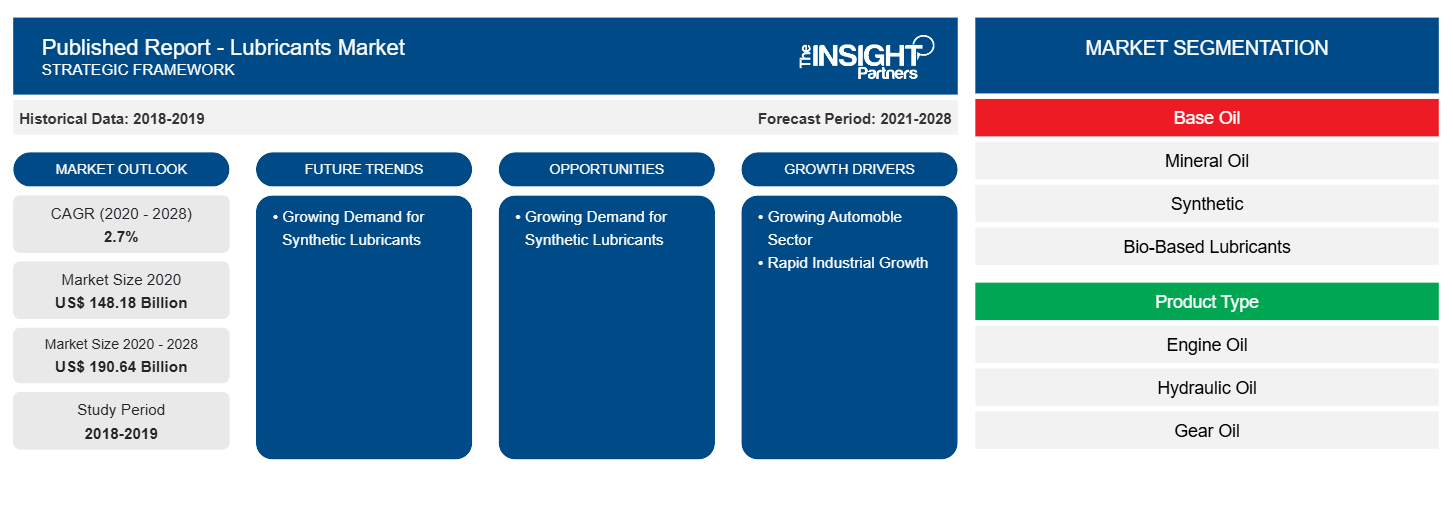
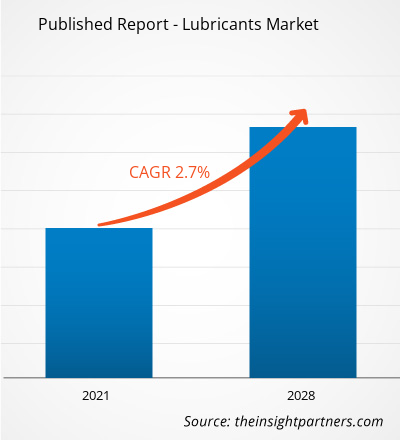
[Research Report] The lubricants market was valued at US$ 148.18 billion in 2020 and is projected to reach US$ 190.64 billion by 2028; it is expected to grow at a CAGR of 2.7% from 2021 to 2028.
MARKET INSIGHTS AND ANALYST VIEW
Lubricants are substances used to reduce friction between two surfaces in contact. They are primarily used to minimize wear and tear, heat generation, and energy loss when two moving parts come into contact. Lubricants can be liquids, such as oils, or semi-solids, like greases. The main purpose of lubricants is to provide a protective layer between the surfaces, forming a barrier that prevents direct metal-to-metal contact. By doing so, lubricants reduce friction and enable smoother movement, which helps to extend the lifespan of the equipment or machinery involved. The ongoing industrialization and infrastructure development in many countries is driving the demand for lubricants. As industries expand and infrastructure projects increase, there is a growing need for lubricants in various sectors, including manufacturing, construction, mining, and transportation.
KEY INSIGHTS
GROWTH DRIVERS AND CHALLENGES
The lubricants market has experienced significant growth in recent years, driven by factors such as increasing demand from the aerospace, automotive, marine, and construction industries. The automotive industry is a significant consumer of lubricants. As the global population continues to rise and economies develop, there is an increasing demand for personal and commercial vehicles. This leads to higher consumption of lubricants for automobile engines, transmissions, and other automotive components. Continuous research and development efforts in lubricant formulations lead to the introduction of new and improved products with enhanced performance characteristics. These innovations attract customers who seek lubricants that offer better protection, efficiency, and environmental sustainability. In addition, with growing knowledge about the importance of lubrication in equipment maintenance and performance, there is a rising awareness among industries and consumers about the benefits of using quality lubricants. This awareness drives the demand for lubricants that can deliver optimal results and protect valuable assets. These factors are leading to an increase in the lubricants market share.
● REPORT CUSTOMIZATION
Tailor This Report To Align With Your Specific Business Requirements
This report can be customized to align precisely with your business objectives, scope, and target markets. Customization options include tailored segmentation, geography, competitive analysis, and strategic insights to support informed decision-making.
Customize This Report →WHAT YOU CAN ADJUST
- ● Segmentations
- ● Geography
- ● Competitive Analysis
- ● Language Preferences
Published Report - Lubricants Market: Strategic Insights
-
Get Top Key Market Trends of this report.This FREE sample will include data analysis, ranging from market trends to estimates and forecasts.
However, lubricants are often derived from petroleum-based feedstocks, which are influenced by fluctuations in crude oil prices. If crude oil prices rise significantly, it can lead to higher raw material costs for lubricant manufacturers, which may be passed on to consumers. This can impact the affordability and demand for lubricants. Furthermore, while technological advancements have enabled the development of more efficient and high-performance lubricants, they can also pose a challenge for the industry. For instance, the rise of electric vehicles (EVs) reduces the demand for certain lubricants used in internal combustion engines. These factors could limit the lubricants market growth.
REPORT SEGMENTATION AND SCOPE
On the basis of base oil, the lubricants market is divided into mineral oil, synthetic, bio-based oil, and others. Based on product type, the lubricants market is segmented into engine oil, hydraulic oil, gear oil, grease, compressor oil, and others. In terms of the end-use industry, the lubricants market is divided into oil & gas, industrial, chemical, automotive, marine, and others. Based on geography, the lubricants market is segmented into North America, Europe, Asia Pacific (APAC), the Middle East & Africa (MEA), and South & Central America.
SEGMENTAL ANALYSIS
On the basis of base oil, the lubricants market is bifurcated into mineral oil, synthetic, bio-based oil, and others. In 2022 the mineral oil segment accounted for the largest market share in the lubricants market. Mineral oil lubricants are primarily composed of hydrocarbons derived from crude oil. Mineral oil based are often more cost-effective compared to synthetic lubricants. The production process of mineral oils is well-established and relatively less expensive, making them a more affordable option for many industries and consumers. The cost advantage of mineral oil-based lubricants can be particularly important for price-sensitive applications or in regions with budget constraints.
Based on product type, the lubricants market is segmented into engine oil, hydraulic oil, gear oil, grease, compressor oil, and others. The hydraulic oil segment is expected to register the highest CAGR during the forecast period. As industries expand and modernize, the demand for hydraulic systems increases. Hydraulic systems are widely used in the construction, agriculture, manufacturing, and transportation sectors. These systems rely on hydraulic oil lubricants for smooth operations and to provide power, control, and movement to machinery and equipment. The overall growth in industrial activities and infrastructure development contributes to the increased demand for hydraulic oil lubricants. These factors are driving the hydraulic oil segment growth in the lubricants market.
In terms of the end-use industry, the lubricants market is divided into oil & gas, industrial, chemical, automotive, marine, and others. In 2022, the automotive segment held the largest market share. The global automotive industry continues to grow, and with it, the number of vehicles on the road is increasing. As more people purchase cars and commercial vehicles, the demand for lubricants rises to meet the maintenance and lubrication needs of these industries. These factors led to the growth of the automotive segment in the lubricants market.
REGIONAL ANALYSIS
The lubricants market is segmented into five main regions—North America, Europe, Asia Pacific (APAC), the Middle East & Africa (MEA), and South & Central America. Asia Pacific region was estimated to be around US$ 70 billion in 2022. The Asia Pacific region has been experiencing rapid economic growth, with countries like China, India, Japan, and Southeast Asian nations emerging as major industrial and manufacturing hubs. This growth has led to increased production activities across various sectors, including automotive, manufacturing, construction, and energy. As a result, there is a greater need for lubricants to ensure the smooth functioning of machinery and equipment. The Asia Pacific region has witnessed significant growth in the automotive industry, with rising vehicle production and sales. Lubricants are essential for automobiles to reduce friction, dissipate heat, and protect engine components. The increasing number of vehicles on the road necessitates a larger supply of lubricants for regular maintenance and servicing. These factors led to the lubricants market growth.
Furthermore, the North America region is estimated to register a CAGR of approximately 3% during the forecast period. North America has a strong and diverse industrial sector, including manufacturing, construction, transportation, and mining. These industries heavily rely on lubricants to ensure the smooth operation and maintenance of machinery, equipment, and vehicles. As industrial activities expand and modernize, the demand for lubricants increases accordingly. In addition, construction activities, including residential, commercial, and infrastructural projects, contribute to the lubricants market growth in Europe.
Europe is forecasted to be valued at around US$ 35 billion in 2028. Europe’s energy sector includes oil refineries, power plants, and renewable energy installations. Lubricants are used in various applications within this sector, such as turbines, compressors, generators, and other machinery. The demand for lubricants in the energy sector is driven by factors like energy production levels, maintenance schedules, and the expansion of renewable energy infrastructure. In addition, Europe has stringent environmental regulations that impact the lubricants market. The region has been moving towards more sustainable and environmentally friendly lubricants and those with lower emissions. As regulations become stricter, the demand for these types of lubricants is growing. These factors are creating a favorable environment for the lubricants market growth in Europe.
INDUSTRY DEVELOPMENTS AND FUTURE OPPORTUNITIES
Various strategies and developments taken by the key operating in the global lubricants market. Some of the recent developments are mentioned below.
- In December 2022, TotalEnergies established a partnership with SANY to launch lubricant solutions in the European market, and initiating cooperation in the European market will strongly strengthen the partnership.
- In September 2020, Total Lubrifiants acquired Lubrilog SAS, a French company based in Romans sur Isère, specializing in formulating and producing very high-performance synthetic lubricants.
- In November 2021, Chevron Products Company, a Chevron U.S.A. Inc. division, maker of the Havoline brand of advanced passenger car motor oils, developed Havoline PRO-RS Renewable Full Synthetic Motor Oil, its first renewable motor oil product and ultra-premium addition to the Havoline portfolio. The oil is made with 25 percent sustainably sourced plant-based oils.
- In August 2020, Chevron Products Company, a division of Chevron U.S.A. Inc., and Novvi LLC today developed the first 100% renewable base oil production from Novvi’s Deer Park, Houston Facility.
Lubricants
Published Report - Lubricants Market Report Scope
| Report Attribute | Details |
|---|---|
| Market size in 2020 | US$ 148.18 Billion |
| Market Size by 2028 | US$ 190.64 Billion |
| Global CAGR (2020 - 2028) | 2.7% |
| Historical Data | 2018-2019 |
| Forecast period | 2021-2028 |
| Segments Covered |
By Base Oil
|
| Regions and Countries Covered |
North America
|
| Market leaders and key company profiles |
|
Published Report - Lubricants Market Players Density: Understanding Its Impact on Business Dynamics
The Published Report - Lubricants Market is growing rapidly, driven by increasing end-user demand due to factors such as evolving consumer preferences, technological advancements, and greater awareness of the product's benefits. As demand rises, businesses are expanding their offerings, innovating to meet consumer needs, and capitalizing on emerging trends, which further fuels market growth.
COVID IMPACT
Before the onset of the COVID-19 pandemic, the lubricants market growth was mainly driven by the aerospace, automobile, building & construction, and marine industries. However, in 2020, various industries had to slow down their operations due to disruptions in value chains caused by the shutdown of national and international boundaries. The pandemic led to social restrictions and severe economic impact, hampering lubricant manufacturing and distribution. The decline in the growth of the automotive industry significantly impacted the lubricants market growth. The global automotive industry was severely affected due to the COVID-19 pandemic. The impacts of the COVID-19 pandemic also led to a dramatic decline in automotive sales. According to the International Organization of Motor Vehicle Manufacturers (OICA), the global sales of all types of vehicles decreased from 91,227 million in 2019 to 78,774 million in 2020. This negatively impacted the demand for lubricants.
In 2021, the economies started reviving their operations, and various industries resumed business activities. As a result, several industries, including the automotive industry, witnessed a recovery in their operations. According to the International Organization of Motor Vehicle Manufacturers (OICA), the global sales of all types of vehicles grew from 77.6 million in 2020 to 85.0 million in 2022. Thus, increased sales of vehicles increased demand for vehicle components, which bolstered the demand for lubricants. The recovery of the aerospace and automotive industries is driving the lubricants market growth.
COMPETITIVE LANDSCAPE AND KEY COMPANIES
Partnerships, acquisitions, and new product launches were found to be the major strategies adopted by the players operating in the global lubricants market. Some of the key players operating in the lubricants market include Shell Plc, Exxon Mobil Corp, TotalEnergies SE, Chevron Corp, BP Plc, Lukoil Oil Co, Fuchs Petrolub SE, Valvoline LLC, Indian Oil Corp Ltd, and China Petroleum & Chemical Corp.
Frequently Asked Questions

- Comprehensive Market Sizing and Forecast Analysis
- Detailed Segmentation Analysis
- In-Depth Market Dynamics Assessment
- Regional and Country-Level Insights
- Competitive Landscape and Company Benchmarking
- Strategic Business Intelligence
Recent Reports
Testimonials

The Insight Partners' SCADA System Market report is comprehensive, with valuable insights on current trends and future forecasts. The team was highly professional, responsive, and supportive throughout. We are very satisfied and highly recommend their services.
RAN KEDEM Partner, Reali Technologies LTDs
I requested a report on a very specific software market and the team produced the report in a few days. The information was very relevant and well presented. I then requested some changes and additions to the report. The team was again very responsive and I got the final report in less than a week.
JEAN-HERVE JENN Chairman, Future Analytica
We worked with The Insight Partners for an important market study and forecast. They gave us clear insights into opportunities and risks, which helped shape our plans. Their research was easy to use and based on solid data. It helped us make smart, confident decisions. We highly recommend them.
PIYUSH NAGPAL Sr. Vice President, High Beam Global
The Insight Partners delivered insightful, well-structured market research with strong domain expertise. Their team was professional and responsive throughout. The user-friendly website made accessing industry reports seamless. We highly recommend them for reliable, high-quality research services
YUKIHIKO ADACHI CEO, Deep Blue, LLC.
This is the first time I have purchased a market report from The Insight Partners.While I was unsure at first, I visited their web site and felt more comfortable to take the risk and purchase a market report.I am completely satisfied with the quality of the report and customer service. I had several questions and comments with the initial report, but after a couple of dialogs over email with their analyst I believe I have a report that I can use as input to our strategic planning process.Thank you so much for taking the extra time and making this a positive experience.I will definitely recommend your service to others and you will be my first call when we need further market data.
JOHN SUZUKI President and Chief Executive Officer, Board Director, BK Technologies
I wish to appreciate your support and the professionalism you displayed in the course of attending to my request for information regarding to infectious disease IVD market in Nigeria. I appreciate your patience, your guidance, and the fact that you were willing to offer a discount, which eventually made it possible for us to close a deal. I look forward to engaging The Insight Partners in the future, all thanks to the impression you have created in me as a result of this first encounter.
DR CHIJIOKE ONYIA MANAGING DIRECTOR, PineCrest Healthcare Ltd.Reason to Buy
- Informed Decision-Making
- Understanding Market Dynamics
- Competitive Analysis
- Identifying Emerging Markets
- Customer Insights
- Market Forecasts
- Risk Mitigation
- Boosting Operational Efficiency
- Strategic Planning
- Investment Justification
- Tracking Industry Innovations
- Aligning with Regulatory Trends





 Get Free Sample for